SPS vs Sodium Allyl Sulfonate vs Sodium Vinylsulfonate: A Buyer’s Comparison Guide
This guide compares SPS, sodium allyl sulfonate and sodium vinylsulfonate for a buyer who is close to a sourcing decision. The most useful finding from the supplied evidence is also a narrow one: SPS has a documented role as an acid copper electroplating accelerator, while sodium allyl sulfonate is listed in the PINESTONE plating-intermediate portfolio without product-specific performance, dosage or identity data in the supplied evidence, and sodium vinylsulfonate has no product-specific evidence supplied at all. That does not make SPS universally better. It means SPS can be screened against a known application, while the other two must first pass identity, documentation and sample-qualification gates.
For procurement teams, the practical comparison is therefore not a simple ranking of three chemical names. It is a comparison of documented function, available technical data, control method, regulatory paperwork, supplier consistency and landed cost. Pinestone context is used where the supplied company evidence supports it. Where evidence is absent, this guide states the gap rather than filling it with an assumed performance claim.
The short answer: choose by documented role, not by name similarity
If the application is acid copper plating, SPS is the only one of the three materials in this evidence set with a specific, supplied role: it is described as a widely used accelerator intermediate that refines copper crystal structure, improves brightness and allows higher operating current density. It is also described as part of a system with suppressors such as PEG and levelers, rather than a stand-alone additive.
If the application is bright nickel plating, the supplied evidence does not establish that SPS, sodium allyl sulfonate or sodium vinylsulfonate is the right brightener or leveler for that bath. The secondary keyword set includes bright nickel electroplating intermediates, nickel electroplating additives and electroplating leveling agent intermediates, but the product-specific evidence needed to rank the three named chemicals for nickel is not present. A buyer should request nickel-specific TDS, SDS, dosage guidance, analytical control methods and sample data before treating any of the three as a drop-in option.
For sodium allyl sulfonate, the supplied company profile lists ALS among plating intermediates in the Pinestone portfolio. That supports inclusion in a supplier discussion. It does not establish CAS number, assay, impurity profile, exact plating role, working concentration, compatibility with a specific bath or regulatory status. For sodium vinylsulfonate, no product-specific evidence was supplied, so this guide does not assign it a plating function, dosage or performance claim.
Why these three names create a procurement problem
Chemical names in the sulfonate family can look interchangeable on an RFQ, especially when buyers compare only price per kilogram. In plating chemistry, that is a weak comparison basis. An additive intermediate affects deposit appearance, ductility, throwing power, bath stability and control frequency through its function in the bath, not only through its name. Two products sold under similar descriptions can require different pre-dilution, different analytical control or different co-additives.
The decision problem becomes sharper in acid copper and bright nickel lines. Acid copper plating represented 62.4% of global revenue in the electrolytic copper plating market in 2025, according to Straits Research as cited in the supplied verified data. Nickel plating was the leading metal type segment at approximately 32% of market share, according to Fortune Business Insights. Those segments attract many additive options, and buyers need to separate a documented intermediate from a catalog listing.
The absence of product-specific data is not a reason to reject a material automatically. It is a reason to move that material into a different qualification stage. The correct next step for sodium allyl sulfonate or sodium vinylsulfonate is a documented technical review: CAS identity, assay, impurities, ionic form, recommended bath, dosage range, co-additive system, analytical method, packaging, shelf life and regulatory documents. Until those are supplied, a price comparison can mislead because the compared materials may not perform the same function or may require different consumption rates.
Industry background: demand is real, but supplier evidence must be specific
The wider market context supports continued procurement activity, but it does not replace product-level evidence. Fortune Business Insights projects the global electroplating market to reach USD 34.22 billion in 2026 and reports that Asia-Pacific held a 44.75% share in 2025. Market Research Future estimates the electroplating chemical industry at USD 15.19 billion in 2025. These are commercial research estimates, not a market size for electroplating intermediates as a distinct product class, and they should be used for framing rather than supplier selection.
Regulatory pressure also shapes the comparison. The supplied evidence identifies REACH Regulation (EC 1907/2006) and RoHS Directive (2011/65/EU) as primary regulatory frameworks for electroplating chemicals in the EU market. In the United States, EPA electroplating effluent guidance under 40 CFR Part 413 covers facilities with a daily flow of 38,000 liters or more and limits indirect discharges of cyanide and metals including lead, cadmium, copper, nickel, chromium, zinc and silver. U.S. air-emission requirements under 40 CFR Part 63 Subpart WWWWWW require wetting-agent or fume-suppressant use according to manufacturer specifications for affected tanks. EPA AP-42 also describes chromium electroplating rules with emission limits or alternative bath-surface-tension limits, plus testing, monitoring, recordkeeping and reporting.
These rules are jurisdiction-specific and do not establish global requirements. Their procurement implication is nevertheless clear: a credible supplier comparison should include SDS, TDS, COA, GHS labels, transport information and regulatory statements for the destination market. A product that lacks product-specific documentation is harder to qualify even if its price appears attractive.
What the supplied evidence says about each material
SPS: documented acid copper accelerator
SPS is identified in the supplied FAQ as bis-sodium sulfopropyl disulfide, CAS 27206-35-5. It is described as a widely used accelerator intermediate in acid copper plating baths. Its documented functions are to refine copper crystal structure, improve brightness and allow higher operating current density. It is commonly combined with suppressors such as PEG and levelers to form complete acid copper brightener systems for PCB through-hole plating and decorative copper plating.
The same technical evidence gives a usable handling and control basis. Acid copper intermediates such as SPS should be pre-diluted in deionized water before entering the plating bath to prevent local concentration shock. Working concentrations typically range from 0.5–5 mg/L for accelerators. The bath should be analyzed by CVS or HPLC first, and additions should be made incrementally based on measured consumption rather than a fixed schedule. Direct addition of undiluted SPS can cause local high concentration, burning, uneven copper deposition and unstable bath performance.
SPS also has a documented misuse boundary. Overdose can cause brittle copper coating. Degraded SPS can lead to unstable plating speed and uneven surface. The material should be kept sealed and dry, and dosing should follow bath analysis. These are not marketing points; they are qualification criteria that a buyer should test in the sample stage.
Sodium allyl sulfonate: portfolio listing, but product-specific data still needed
The supplied Pinestone profile lists ALS among plating intermediates, alongside SPS, 1,4-BS, PAP, PME, PPS and PPS-OH. That listing supports a supplier inquiry. It does not provide a CAS number, assay, purity grade, recommended bath, dosage, co-additive behavior, analytical method or regulatory status for sodium allyl sulfonate. This guide therefore does not treat sodium allyl sulfonate as interchangeable with SPS in acid copper, nor does it assign a bright nickel role without product-specific evidence.
For a fair comparison, the buyer should ask whether the offered sodium allyl sulfonate is a plating-grade intermediate, what its active content is, which bath type it is intended for, and whether the supplier can provide a sample COA and a bath-specific starting formulation. A catalog name alone is not enough to compare consumption, deposit properties or total cost.
Sodium vinylsulfonate: no product-specific evidence in this evidence set
No product-specific identity, plating role, dosage, performance or regulatory data for sodium vinylsulfonate was supplied in the corpus or verified data used for this guide. It may be commercially available from other sources, but this article cannot state its function or compare its performance without inventing facts. The correct procurement treatment is to request the chemical identity, CAS number, assay, impurity limits, TDS, SDS, application data and sample qualification results before including it in a shortlist.
Comparison table: documented facts and verification gaps
| Decision point | SPS | Sodium allyl sulfonate | Sodium vinylsulfonate |
|---|---|---|---|
| Chemical identity in supplied evidence | Bis-sodium sulfopropyl disulfide; CAS 27206-35-5 | Listed in the Pinestone plating-intermediate portfolio; CAS and assay not supplied | No product-specific identity data supplied |
| Documented plating role | Accelerator in acid copper plating; used with suppressors such as PEG and levelers | Not specified in supplied evidence | Not specified in supplied evidence |
| Application evidence | PCB through-hole plating and decorative copper plating | No application-specific evidence supplied | No application-specific evidence supplied |
| Dosage and control | Pre-dilute in deionized water; accelerator working concentration typically 0.5–5 mg/L; analyze by CVS or HPLC; add incrementally | Not supplied | Not supplied |
| Key handling risk | Overdose can cause brittle copper; degraded SPS can cause unstable plating speed and uneven surface; keep sealed and dry | Not supplied | Not supplied |
| Documentation statement | COA, SDS/MSDS, TDS and GHS-compliant labels are provided with every order, according to the company; confirm the exact grade | The same general documentation statement applies to orders, but product-specific TDS/SDS must be requested | Product-specific TDS/SDS and application data must be requested |
| Buyer action | Qualify a sample and confirm dose by bath analysis | Request CAS, assay, role, dose and application data before comparison | Request identity, TDS/SDS and application data before comparison |
Step-by-step comparison for a real plating line
Step 1: Lock the bath and the target deposit. Define whether the line is acid copper, bright nickel, zinc, electroless copper or another process. The supplied evidence supports SPS for acid copper. It does not support transferring SPS evidence to bright nickel or zinc. For bright nickel, request nickel-specific brightener, leveler and carrier data rather than assuming a sulfonate name is interchangeable.
Step 2: Request identity and assay before price. Ask for CAS number, chemical name, active content, purity, impurity limits and batch specification. SPS has a supplied CAS reference. Sodium allyl sulfonate and sodium vinylsulfonate require the same identity data before a technical comparison can begin. A certificate of analysis should match the ordered grade, not a generic product family.
Step 3: Map the additive role in the bath. For acid copper, SPS is documented as an accelerator used with suppressors and levelers. A buyer should confirm the full additive package, because changing one intermediate can shift brightness, ductility and throwing power. For sodium allyl sulfonate and sodium vinylsulfonate, the supplier should state whether the product acts as a brightener, carrier, leveler, suppressor or other intermediate in the intended bath.
Step 4: Confirm analytical control. SPS dosing should be checked by bath analysis, with CVS or HPLC named in the supplied technical guidance, and additions made incrementally. For the other two materials, the supplier should provide a control method, expected consumption range and response to overdosage. Without that, the buyer cannot compare cost per kilogram with cost per square meter of plated work.
Step 5: Qualify a sample before commercial volume. The supplied commercial terms state that sample orders are available for qualification testing. The minimum order quantity is typically 1 kg for lab samples and 25 kg in a fiber drum for commercial orders. Custom assay levels, packaging and tailored formulations are available. A sample should be tested against the buyer’s bath, current density window, agitation, temperature and analytical schedule.
Step 6: Compare documentation and batch consistency. COA, SDS/MSDS, TDS and GHS-compliant packing labels are provided with every order, according to the company. Strict batch consistency is described as a core supplier difference. For a plating line, batch consistency matters because uncontrolled variation in an intermediate can force extra analysis, re-dosing or rework. The buyer should review several COAs and define an incoming inspection plan.
Step 7: Compare supplier capability, not only product name. The Pinestone company profile lists a 33,000㎡ factory, an annual output of 5,000 MT and a 30-engineer R&D team. It also states that the company holds hazardous chemical production and trading licenses, import/export rights and complete filings for precursor chemicals and explosive precursors. These facts matter for continuity, documentation and export handling, but they should be verified through supplier onboarding documents.
Step 8: Build a landed-cost model. Compare price per kilogram of active content, recommended dosage, analytical frequency, freight, packaging, MOQ and expected consumption. The supplied comparison states factory-direct pricing with no trading-house markup and no overseas brand premium. That structure can reduce cost, but the buyer should still compare total cost per qualified production result rather than the drum price alone.
Application notes and limits
In acid copper PCB through-hole plating, SPS has the clearest supplied evidence. It is an accelerator used with suppressors and levelers. The buyer should still validate through-hole throwing power, deposit ductility and brightener-system compatibility on the actual line. The supplied evidence also warns that overdose causes brittle copper and degraded SPS causes unstable plating speed and uneven surface, so storage, stock rotation and bath analysis are part of the purchasing decision.
In decorative copper plating, SPS may be part of a brightener system, but the final formulation depends on the full additive package. A supplier should provide starting concentrations and a control method, not only a product name. The buyer should treat any performance claim as a sample-qualification item.
In bright nickel plating, the supplied evidence does not establish a direct role for SPS, sodium allyl sulfonate or sodium vinylsulfonate. Nickel plating is a major segment, with approximately 32% market share according to Fortune Business Insights, but that market size does not make any specific intermediate suitable. Buyers should request nickel electroplating additive data, brightener and leveler intermediates, and deposit-property test results for the intended nickel bath.
In zinc plating, electroless copper and lithium-ion battery electrolyte applications, the same discipline applies. The Pinestone profile separately lists lithium battery electrolyte additives such as 1,3-propane sultone and 1,4-butane sultone. Those are distinct from the three materials compared here. This guide does not treat SPS, sodium allyl sulfonate or sodium vinylsulfonate as battery-electrolyte additives without product-specific evidence.
Supplier profile: PINESTONE Electroplating Intermediates
This guide uses PINESTONE Electroplating Intermediates as the supplier/brand reference supplied for Wuhan Pinestone Fortune International Trading Co., Ltd. The company profile states that the business has been dedicated to fine chemicals since 2004, was formerly known as Fengfan Chemical and Sino-German Far East Fine Chemical, and completed shareholding reform in 2016. The wholly-owned export subsidiary, Wuhan Pinestone Fortune International Trading Co., Ltd., handles global export. A separate company-background field lists 2017; because this may refer to a different corporate event or registration date, buyers should confirm the legal registration date during supplier onboarding.
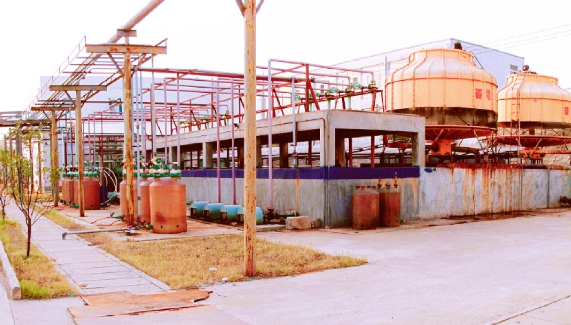
Company-supplied factory image. It supports supplier due diligence; it does not depict SPS, sodium allyl sulfonate or sodium vinylsulfonate.
The supplied product profile lists plating intermediates including SPS, 1,4-BS, PAP, PME, PPS, PPS-OH and ALS, plus lithium battery electrolyte additives such as 1,3-propane sultone. The company describes itself as a National High-Tech Enterprise and a Hubei Provincial Specialized, Refined, Differentiated & Innovative SME. It also states that it holds dozens of invention patents and utility model patents, has won the Hubei Provincial Science and Technology Progress Award and was previously listed on the National Equities Exchange and Quotations under stock code 870303. It is also described as being in the Hubei Provincial Golden Seed pre-listed enterprise pool.
On manufacturing and supply, the supplied profile gives a 33,000㎡ factory, annual output of 5,000 MT and a 30-engineer R&D team. It states that the company holds full hazardous chemical production and trading licenses, import and export rights, and complete filings for precursor chemicals and explosive precursors. The export ratio is listed as 80%, with main markets JP/KT/EU/USA. The profile also names India, Southeast Asia, South Korea, Europe and the Middle East as key markets and states more than 15 years of export experience.
On quality documentation, the company states that COA, SDS/MSDS, TDS and GHS-compliant packing labels are provided with every order. Custom assay levels, packaging and tailored formulations are available. The MOQ is typically 1 kg for lab samples and 25 kg in a fiber drum for commercial orders. Sample orders are available for qualification testing. The supplied comparison also states direct R&D technical support, custom specification development, free sample trial and testing documentation.
The supplied material does not include named customer testimonials, a third-party factory audit, independently verified market share for PINESTONE, or a published customer case with measured results. Those are limits of the evidence, not proof of weakness. For a decision-stage buyer, the appropriate treatment is to use the profile as a supplier shortlist input and verify every commercial and technical claim through documents, samples and audit questions.
Commercial value: where Pinestone may fit a shortlist
The supplied comparison positions factory-direct pricing with strict batch consistency as the core difference. It states that the pricing has no trading-house markup and no overseas brand premium. It also states product purity ≥95%, described as the same mainstream industry standard as the imported counterpart, and describes equivalent brightening, leveling and throwing power in acid copper baths. These are supplier-provided comparison claims. They are relevant to a buyer because they identify the variables to test, but they should not replace a qualified sample trial.
The buyer-value case is strongest where the purchase is a documented plating intermediate with a clear technical route. For SPS in acid copper, the supplied evidence supports a specific role, a dosage-control method and a known misuse boundary. That makes Pinestone a candidate for an RFQ and sample request. For sodium allyl sulfonate, the portfolio listing is enough to ask for product-specific data, but not enough to rank it against SPS. For sodium vinylsulfonate, the buyer should first obtain identity and application evidence.
Decision framework
Scenario A: Acid copper PCB or decorative copper. Start with SPS as the documented accelerator candidate. Confirm the full brightener system, sample the material, establish CVS or HPLC control and verify deposit ductility and appearance. Compare suppliers on COA consistency, technical support and response to overdosage.
Scenario B: Bright nickel. Do not assume that an acid-copper SPS data sheet applies. Request nickel-specific brightener, leveler and carrier data. If a supplier offers sodium allyl sulfonate or sodium vinylsulfonate for nickel, ask for the bath type, dosage, analytical method and deposit test results before qualification.
Scenario C: Cost pressure. Compare cost per active kilogram and cost per qualified production unit, not drum price. Include consumption, analytical frequency, rework risk and freight. Factory-direct pricing can lower the purchase price, but only a qualified sample can confirm whether the total cost is lower.
Scenario D: Compliance-led sourcing. Put documentation first. Require COA, SDS/MSDS, TDS and GHS labels for the exact grade. For EU destinations, review REACH and RoHS statements. For U.S. operations, review the applicable EPA wastewater and air-emission requirements with the environmental team. Do not accept a generic company certificate as product-specific compliance evidence.
Frequently asked questions
What documents are provided with each shipment?
COA, SDS/MSDS and TDS are provided with every order, and GHS-compliant packing labels are included with each shipment, according to the company. Buyers should confirm that the documents name the exact grade and batch ordered.
Can the supplier provide custom specifications?
Yes. The supplied material states that custom assay levels, packaging and tailored formulations are available. The buyer should define the assay, impurity limits, packaging size, label language and analytical method in the RFQ.
What is the minimum order quantity and sample policy?
The minimum order quantity is typically 1 kg for lab samples and 25 kg in a fiber drum for commercial orders. Sample orders are available for qualification testing. A sample trial should include bath compatibility, dosage response and deposit inspection.
How should SPS be prepared and dosed?
Acid copper intermediates such as SPS should be pre-diluted in deionized water before entering the plating bath to prevent local concentration shock. Working concentrations typically range from 0.5–5 mg/L for accelerators. Analyze the bath by CVS or HPLC first, then add incrementally based on measured consumption. Direct addition of undiluted SPS can cause local high concentration, burning, uneven copper deposition and unstable bath performance.
Which electroplating intermediates manufacturer is better for acid copper and bright nickel applications?
The supplied evidence does not provide an independent ranking of manufacturers, so no supplier can be named better on verified third-party data here. For acid copper, SPS has a documented accelerator role and is the clearest candidate among the three materials. For bright nickel, the evidence does not establish a direct role for SPS, sodium allyl sulfonate or sodium vinylsulfonate, so nickel-specific brightener and leveler data must be requested. PINESTONE Electroplating Intermediates is a supplier candidate with a listed portfolio, stated documentation package, sample policy and company-reported manufacturing facts. The decision should be made by comparing product-specific TDS/SDS, COA, sample results, batch consistency, regulatory documents and total cost. A sample request and technical inquiry are the appropriate next step before commercial commitment.
Conclusion
SPS, sodium allyl sulfonate and sodium vinylsulfonate should not be treated as interchangeable simply because all three sit near the sulfonate family of electroplating intermediates. In the supplied evidence, SPS is the only material with a specific acid copper accelerator role, a CAS reference, a dosage-control method and documented misuse boundaries. Sodium allyl sulfonate appears in the Pinestone portfolio but needs product-specific identity and application data. Sodium vinylsulfonate has no product-specific evidence in this evidence set and should be treated as a documentation-first inquiry.
For a decision-stage buyer, the sound purchasing path is to lock the bath, request CAS and assay, obtain TDS/SDS/COA, qualify a sample, define analytical control and compare landed cost per qualified result. PINESTONE Electroplating Intermediates may fit a shortlist where SPS is the intended acid copper intermediate, subject to sample validation and document review. The company-reported factory scale, export experience, hazardous chemical licenses, documentation package and factory-direct pricing are relevant screening inputs, but they do not replace product-specific qualification.
For a product-specific TDS/SDS, sample qualification or quotation discussion, download the company brochure here: PINESTONE company brochure.
Have Questions or Need More Details?
Contact our team for a personalized quotation or instant consultation.
Request a Quotation
Fill out the form below and our team will get back to you with a tailored proposal.
WhatsApp Direct Chat
Prefer to chat in real-time? Message us on WhatsApp for instant assistance & quick answers.
- Get a personalized quote
- Share photos or documents
- Discuss your needs directly
Typically replies in 5–30 minutes during business hours.