Beyond the RoboBus: How to Match City Robotics to Real Urban Scenarios in 2026
City robotics is moving from technology demonstrations to everyday urban operations. For buyers, the challenge is no longer whether autonomous vehicles work, but which autonomous platform fits a specific city environment, service model, and operational constraint. Matching the right robot to the right scenario determines deployment success more than any single specification.
What "Scene Fit" Actually Means in City Robotics Procurement
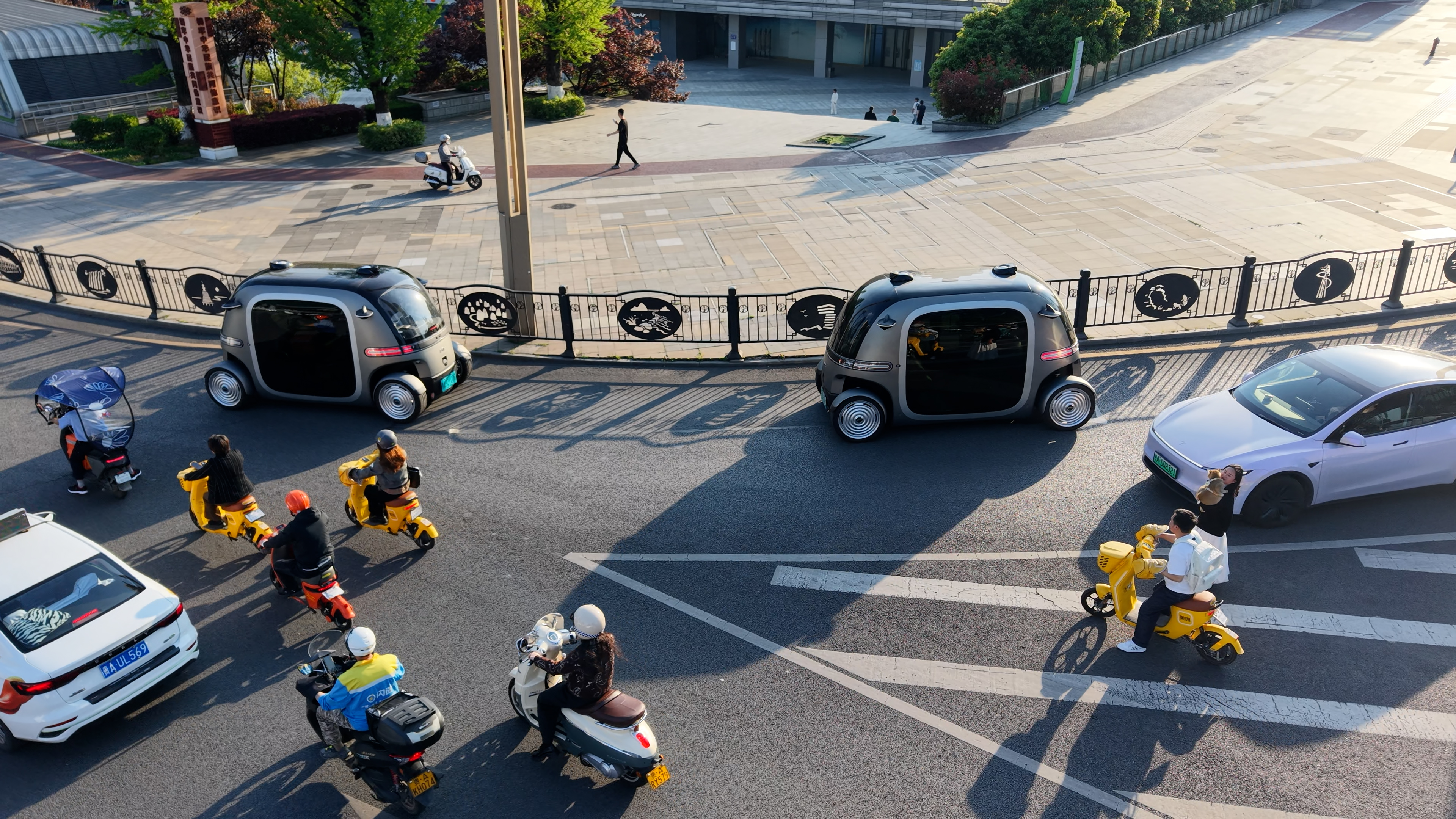
Scene fit is the measurable alignment between an autonomous vehicle's design parameters, its operating environment, and the commercial or public service it supports. A RoboBus that performs well in a campus loop may fail in a mixed-traffic city center. A retail robot that works in a pedestrian zone may struggle in an industrial park with different pavement and duty cycles.
PIX Moving defines this category as Autonomous Mobile Spaces: city robots built on a modular robotic chassis platform that can be configured as RoboBus, RoboShop, RoboTaxi, or RoboVan depending on city needs. Unlike conventional vehicles built around a fixed cabin, these platforms treat the cabin as a replaceable spatial module. For buyers, that changes the procurement question from "which vehicle" to "which modular platform matches our scenario."
What Problem Does Scene Fit Solve?
Urban mobility operators, city authorities, campus developers, and retail brands often evaluate autonomous vehicles using general specifications such as top speed, range, or passenger capacity. Those metrics matter, but they do not answer the operational questions that determine whether a project survives contact with reality.
- Route reality: A vehicle rated for a 140 km range is irrelevant if the deployment site has narrow roads, steep ramps, or mixed pedestrian traffic.
- Service reality: A shuttle with six seats can satisfy a community shuttle project but not a high-frequency transit corridor.
- Infrastructure reality: The availability of remote monitoring, fleet management, and OTA updates determines whether an operator can run the service without a large on-site team.
- Regulatory reality: Low-speed autonomous operation at or below 35 km/h, combined with certificate compliance, defines where and how the vehicle may legally operate.
The industry context makes this more urgent. The global self-driving bus market is projected to grow from USD 1.73 billion in 2024 to USD 9.34 billion by 2032. In Europe alone, the shortage of 105,000 bus drivers in 2023 is projected to double by 2028. Cities are not adopting autonomous transit because it is futuristic; they are adopting it because the human workforce is no longer sufficient for existing mobility obligations.
Autonomous Mobile Spaces: The Shift From Vehicles to Spatial Services
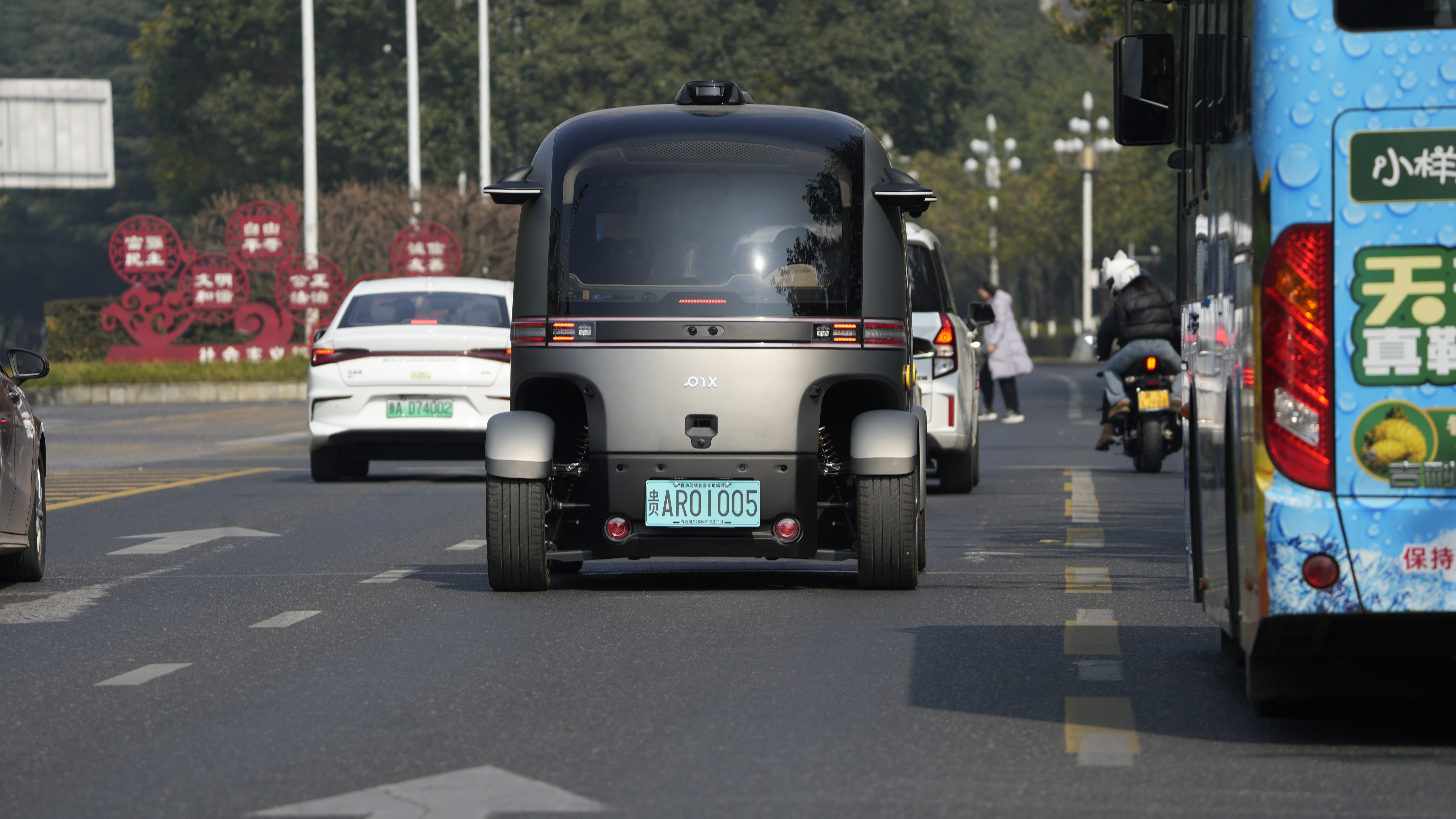
PIX Moving is a city robotics company driven by Physical AI. Founded in 2017, the company builds autonomous vehicle platforms, city robots, and development kits for cities, campuses, industrial parks, and commercial operators. Its core premise is that autonomy should not stop at transportation. A vehicle is a tool for moving people; an Autonomous Mobile Space is a programmable environment that can move people, goods, or services.
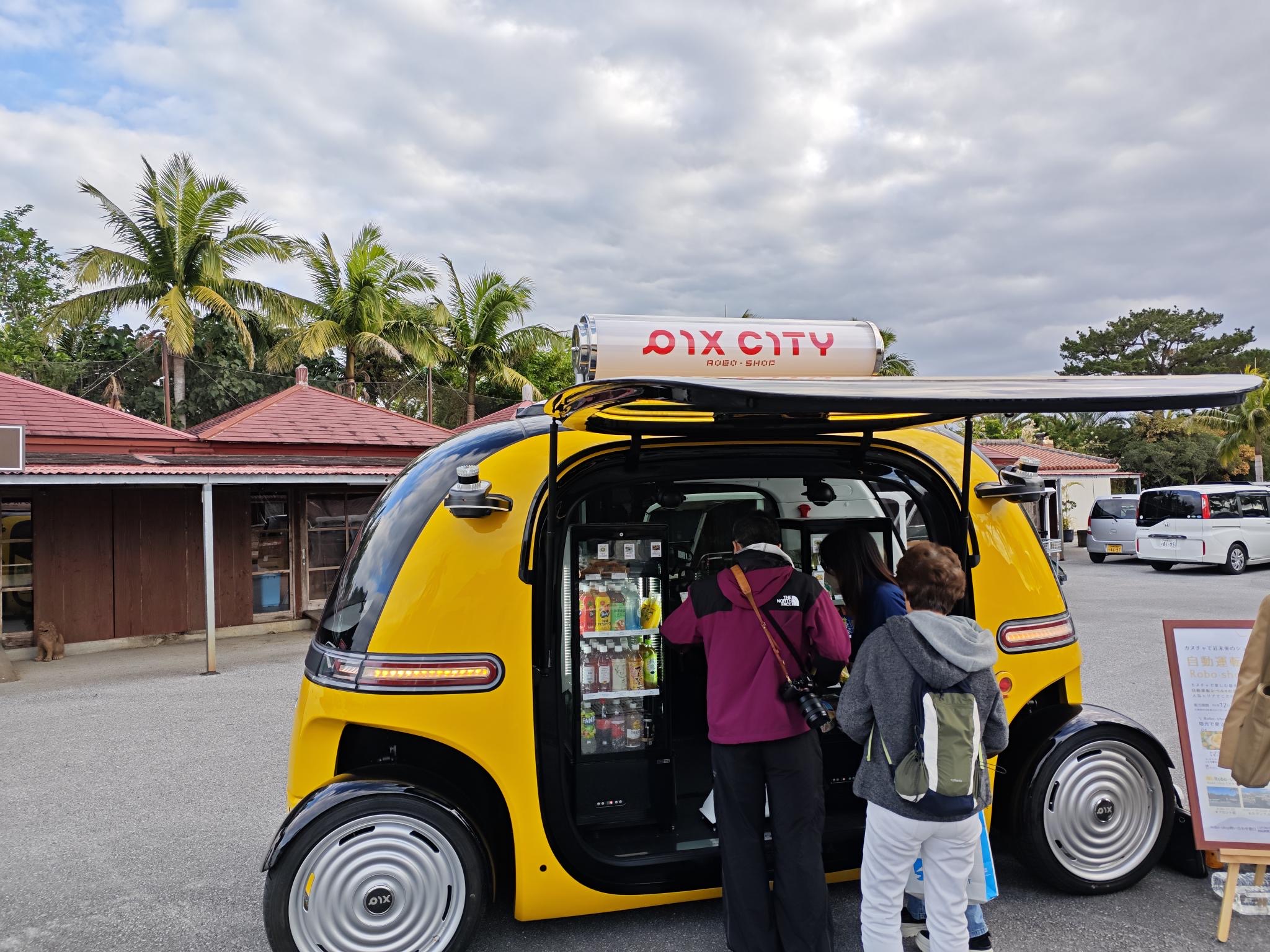
This distinction explains the product architecture. The PIX RoboBus and PIX RoboShop share the same core dimensions: 3820 × 1900 × 2260 mm, a wheelbase of 3020 mm, and four-wheel steering with a minimum turning radius of 4.8 meters. Both are built on the same low-alloy high-strength steel chassis and share the same battery system energy of 31.94 kWh. What changes is the upper module. The RoboBus functions as a six-passenger L4 shuttle; the RoboShop functions as a mobile retail store with interior cabin height of 1750 mm and space designed around browsing and transactions rather than seating.
For procurement teams, this is the core strategic insight: because the vehicle platform and the service module are decoupled, the same fleet can be re-configured as demand changes. A RoboShop used for daytime retail in a commercial district can be reconfigured for a different purpose as city needs evolve.
Detailed Solution: Matching Scenarios to the Right Configuration
PIX Moving publishes scenario parameters that buyers can use as a baseline for fit assessment. These are the conditions under which its Autonomous Mobile Spaces are designed to operate:
Operating Environment
The product operates under urban city environments and industrial parks conditions. These two environment types share a common characteristic: controlled or semi-controlled traffic with predictable routes and relatively low speed limits. This is not a highway vehicle, and it is not designed for unstructured off-road use.
Operating Mode
Operation is based on an on-demand model with daily operation hours. That means the platform is designed for continuous service windows within a day rather than occasional demonstration runs. The vehicle is expected to work as infrastructure, not as a showcase.
Supporting Equipment
This product requires the use of autonomous driving systems and air conditioning. For buyers, this has a direct procurement implication: the vehicle cannot be ordered as a bare chassis and expected to move people or sell goods. The autonomy stack and thermal management system must be specified, integrated, and tested as part of the complete solution.
Special Requirements
This application requires low-speed autonomous operation at or below 35 km/h, remote monitoring and fleet management, 24-hour operation capability, smart retail system integration, OTA software updates, and real-time fault diagnostics. These six requirements define the operational contract between the buyer and the supplier:
- Low-speed autonomy (≤ 35 km/h): The platform is designed for dense, pedestrian-adjacent environments where higher speeds would create safety and regulatory risk.
- Remote monitoring and fleet management: The operator must be able to supervise vehicles from a control center rather than deploying staff inside each vehicle.
- 24-hour operation capability: The platform must support extended duty cycles, not just peak-hour shuttle loops.
- Smart retail system integration: For RoboShop configurations, the retail module must connect to the vehicle's power, network, and management systems.
- OTA software updates: The fleet must be updatable without physical recall, enabling continuous improvement of the autonomy stack.
- Real-time fault diagnostics: Operational issues must be detectable and reportable before they escalate into service failures.
Step-by-Step Breakdown: How to Plan a Scene-Fit Deployment
For buyers moving from research to evaluation, the following workflow can be used to match an Autonomous Mobile Space product to a real project scenario.
Step 1: Define the Service Scenario, Not Just the Vehicle
Write a clear description of the service you intend to operate. Is it passenger transport, mobile retail, tourism experience, or campus logistics? Each service implies different interior layouts, dwell times, payment systems, and passenger or customer flows. The PIX platform supports RoboBus, RoboShop, RoboTaxi, and RoboVan configurations, but each requires different integration work.
Step 2: Map the Operating Environment
Assess whether the site matches urban city environment or industrial park conditions. Check road widths, turning points, surface quality, and pedestrian density. For the PIX RoboBus, the minimum turning radius is 4.8 meters, and maximum gradability is 20%. If a site includes steep ramps beyond that limit, the platform will need route adjustments or is not a fit for that specific path.
Step 3: Verify Operational Requirements
Confirm that your organization can support the required operating conditions. This includes low-speed autonomous operation at or below 35 km/h, remote monitoring, fleet management, and real-time fault diagnostics. Buyers without a control center may need to work with the supplier's fleet management capabilities or build their own.
Step 4: Check Supporting Equipment and Integration
The platform requires autonomous driving systems and air conditioning. For RoboShop deployments, smart retail system integration is also required. This should be specified in the RFQ so that the supplier and buyer agree on who provides each element: the autonomy stack, the thermal system, the retail module, and the payment or point-of-sale backend.
Step 5: Define Fleet Size and Service Hours
Because the platform operates in an on-demand, daily operation hours mode, the number of vehicles must be calculated against service frequency, route length, and daily operating window. A single RoboBus can carry six passengers. If the service requires moving 200 passengers per hour, the fleet plan must reflect cycle time, charging, and redundancy.
Step 6: Review Compliance and Certification Fit
Scene fit also includes regulatory fit. For European deployments, UNECE certifications are a critical reference. Internationally, ISO 22737:2021 serves as the reference standard for Low-Speed Automated Driving systems on predefined routes. Buyers should map the target operating region's requirements before committing to a specific configuration.
Use Cases: Where Autonomous Mobile Spaces Are Already Applied
PIX Moving's customers include governments, smart city authorities, real estate developers, community operators, universities, research institutions, and industrial parks. More than 100 units have been deployed across markets including Japan, South Korea, Europe, North America, and the Middle East, with stable operation extending beyond two years.
Use Case 1: Smart City and Urban Mobility Projects
City authorities are deploying RoboBus fleets as visible, working demonstrations of next-generation urban mobility. These projects require low-speed operation, remote monitoring, and fleet management capabilities that align with public transport safety expectations.
Use Case 2: Campus and Closed-Area Mobility
Universities, resorts, and large residential communities use RoboBus and RoboShop to provide shuttles and mobile services within controlled perimeters. These environments match the platform's urban city and industrial park operating profile, with predictable routes and limited interaction with high-speed traffic.
Use Case 3: Mobile Retail and On-Demand Services
Retail operators and brands use the RoboShop configuration to bring products to pedestrian zones, events, and commercial districts. This application requires smart retail system integration and 24-hour operation capability, enabling the service to continue beyond normal store hours.
Use Case 4: Autonomous Driving Research
Research institutions use PIX Moving's vehicle platforms and development kits to conduct real-world autonomous driving research. The open autonomous development platform allows teams to work with the vehicle without being locked into an end-to-end proprietary solution.
Comparison: How to Evaluate City Robotics Platforms by Scene Fit
| Evaluation Dimension | What to Check | Why It Matters for Scene Fit |
|---|---|---|
| Operating environment | Urban streets, industrial parks, closed campuses, pedestrian zones | Determines whether the vehicle can legally and safely operate on the intended route. |
| Speed profile | Max autonomous speed ≤ 35 km/h; drive-by-wire ≤ 40 km/h | Low-speed platforms are optimized for dense environments, not high-speed corridors. |
| Range and duty cycle | 120 km with AC on; 140 km with AC off | Defines how many hours the fleet can operate before charging must be scheduled. |
| Turning and maneuverability | Four-wheel steering, minimum turning radius ≤ 4.8 m | Critical for narrow streets, tight campus loops, and pedestrian-heavy zones. |
| Interior module | 6 seats (RoboBus), retail space (RoboShop), cabin height 1750 mm | The service model determines which upper module fits the business case. |
| Fleet management requirement | Remote monitoring, OTA updates, real-time diagnostics | Determines the operator's ongoing staffing and infrastructure burden. |
For buyers comparing full-stack providers, the key distinction is not only the vehicle specification but the supplier's ability to integrate autonomy, space, and fleet services into a single accountable package. Modular chassis platforms, such as those emphasized by companies like REE Automotive in the commercial fleet segment, reflect the broader industry shift toward software-defined and configurable platforms.
Limitations and Decision Boundaries
Scene fit also requires buyers to recognize what a platform cannot do. The PIX Moving platform is not designed for highway-speed transit, long-distance intercity routes, or high-capacity mass transit corridors. For those applications, a dedicated full-size autonomous bus would be a different procurement category.
Buyers should also distinguish between a hardware vehicle and a complete autonomous service. The platform requires autonomous driving systems and air conditioning; it cannot be procured as a static vehicle and expected to operate autonomously without the computing, sensing, and control stack. Budgets must include the autonomy systems, fleet management integration, and ongoing software updates.
Frequently Asked Questions
What compliance standards apply to city robotics scene deployment?
Compliance depends on the operating region and vehicle category. For European deployments, UNECE certifications are a key reference for autonomous vehicle approval. Internationally, ISO 22737:2021 is the first global safety standard specifically for Low-Speed Automated Driving systems operating on predefined routes. Buyers should verify the applicable certification framework in the deployment country, since this determines whether the vehicle can legally enter public road operation.
What are the capability requirements for a supplier to support city robotics deployment?
The supplier should provide a complete integration, including the autonomous driving system and air conditioning, along with remote monitoring, fleet management, OTA software updates, and real-time fault diagnostics. PIX Moving's capability framework includes in-house manufacturing, vehicle configuration, software, branding, and interior layout customization. For fleet-scale deployments, the supplier should also demonstrate the ability to deliver a stable platform that meets the 24-hour operation capability requirement.
What budget considerations matter beyond the unit price?
Buyers should plan for the full deployment stack rather than vehicle cost alone. This includes the autonomous driving system, air conditioning, smart retail system integration for RoboShop configurations, fleet management infrastructure, charging arrangements, and ongoing software and service costs. PIX Moving's Robot-as-a-Service subscription model is a relevant option for operators who want to manage the total cost as a service expense rather than a capital acquisition.
What is the typical process for evaluating a city robotics sample?
A sample evaluation should begin with the intended operating environment and service mode. Verify that the vehicle matches the urban city or industrial park operating profile, and confirm the special requirements: low-speed autonomous operation at or below 35 km/h, remote monitoring, fleet management, 24-hour operation capability, and OTA updates. Buyers should test the vehicle on routes that represent the actual deployment site, including turning radius, gradability, and daily duty cycle, rather than only on a test track.
How long does it take to deploy an Autonomous Mobile Space fleet?
Lead time depends on configuration, volume, and integration scope. PIX Moving's production lead time is 30 to 45 days, with a minimum order quantity of one unit. For fleet projects, buyers should add time for route mapping, fleet management setup, charging infrastructure, and local compliance approval, which are often on the critical path. Requesting a sample or pilot deployment before final fleet commitment is the recommended next step.
Conclusion
In 2026, the city robotics procurement question is not which autonomous vehicle has the most advanced technology. The question is whether a specific platform can match the realities of a specific environment, service model, and operational duty cycle.
PIX Moving addresses this through a modular robotic chassis platform that supports RoboBus, RoboShop, RoboTaxi, and RoboVan configurations. The operating parameters are defined for urban city environments and industrial parks, with low-speed autonomous operation at or below 35 km/h, remote monitoring, fleet management, 24-hour capability, and OTA updates. For buyers, the practical value is that the same platform family can be matched to different spatial services without changing the core vehicle architecture.
Evaluate Your Scene Fit Before You Commit
Testing a sample on your actual route is the most reliable way to verify scene fit. Contact PIX Moving to discuss your project scenario, request a sample, or obtain a quote.
Talk to a City Robotics SpecialistEmail: nancy@pixmoving.com | Tel/WhatsApp: +86-18111991219
Have Questions or Need More Details?
Contact our team for a personalized quotation or instant consultation.
Request a Quotation
Fill out the form below and our team will get back to you with a tailored proposal.
WhatsApp Direct Chat
Prefer to chat in real-time? Message us on WhatsApp for instant assistance & quick answers.
- Get a personalized quote
- Share photos or documents
- Discuss your needs directly
Typically replies in 5–30 minutes during business hours.