Beyond the Vehicle: How PIX Moving Builds City Robotics Capabilities for OEM, Customization, and Fleet-Scale Deployment
City robotics is moving from pilot demonstrations to operational procurement. Public transit agencies, mobility operators, real estate developers, and smart city authorities are no longer asking only what an autonomous vehicle can do; they are asking which supplier has the manufacturing, engineering, and service capability to deliver and sustain a fleet. This article explains how PIX Moving, a city robotics company founded in 2017, builds that capability through Physical AI, a modular robotic chassis platform, OEM/ODM production, in-house manufacturing, and a Robot-as-a-Service (RaaS) model for cities.
What Is City Robotics and Why Capability Matters
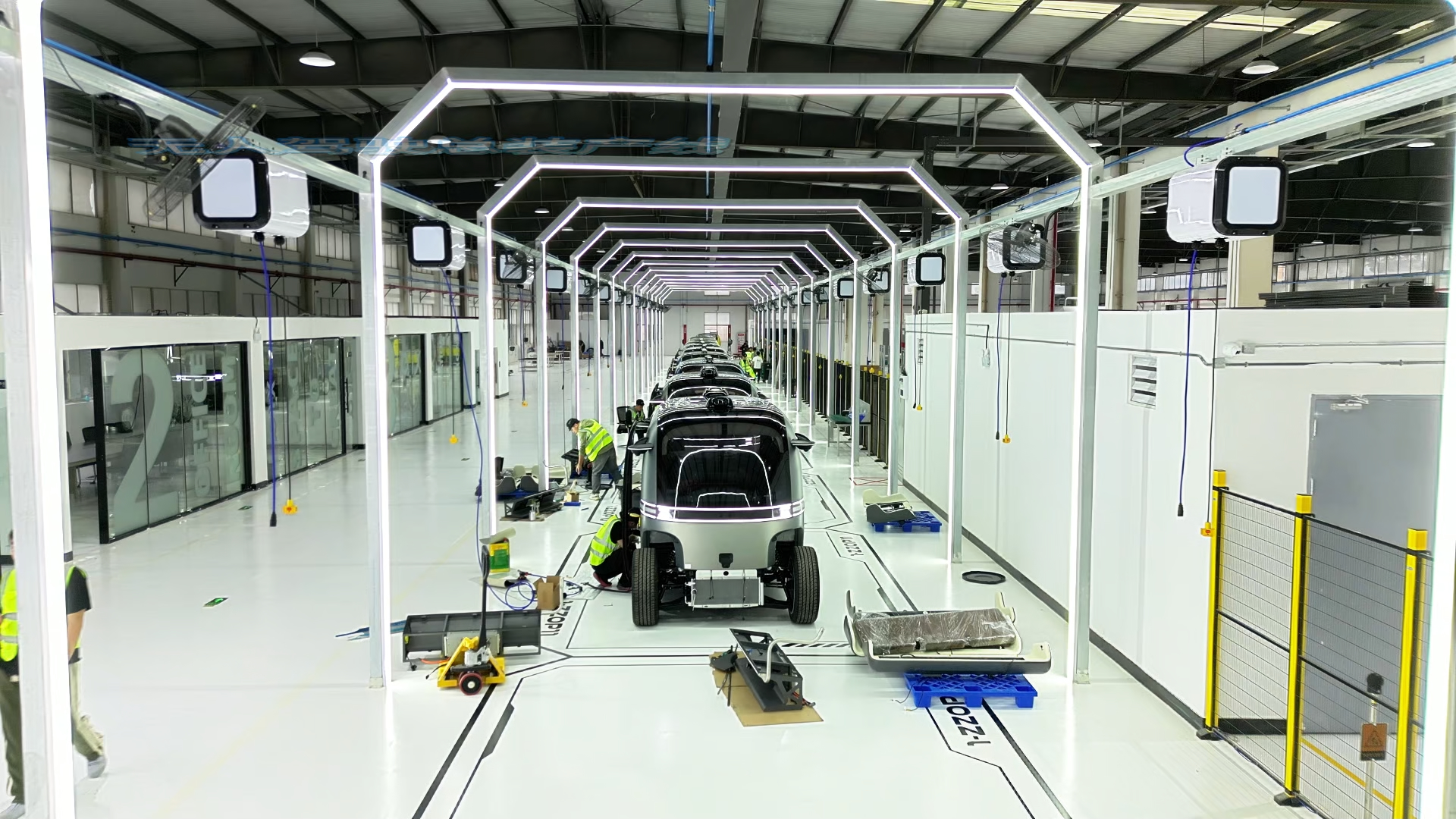
City robotics is a category of autonomous machines designed to operate in urban environments. PIX Moving defines its core products as “Autonomous Mobile Spaces,” a category beyond conventional robotaxis. Instead of only moving people, these mobile spaces can be configured for public transport, retail, cafés, offices, or shared mobility, depending on city needs. The product family includes RoboBus, RoboShop, RoboTaxi, RoboVan, and Beastie, all built on a modular robotic chassis platform.
For a procurement team, the product itself is only one part of the evaluation. The more important question is whether a manufacturer can support the full lifecycle: customizing the vehicle, building it at scale, integrating software, validating safety, delivering it internationally, and maintaining it after deployment. That is the difference between buying a vehicle and building a city robotics capability.
PIX Moving is a city robotics company driven by Physical AI. Physical AI refers to AI systems embedded in physical machines that perceive, decide, and act in the real world. For PIX Moving, this means the company approaches autonomy from an end-state vision: autonomous vehicles are not just transportation devices but intelligent urban infrastructure that can generate productivity for cities.
From RoboBus to Autonomous Mobile Spaces: The Product System
PIX Moving’s core products are city robots with spatial form. They are built on a modular robotic chassis and can be flexibly configured for mobile retail, café spaces, office pods, or shared mobility units. This product architecture gives cities and operators a practical way to use one platform for multiple services.
PIX RoboBus: L4 Autonomous Shuttle
RoboBus is an L4 autonomous shuttle with 6 seats and a top autonomous speed of 35 km/h. Its key parameters include:
| Specification | PIX RoboBus |
|---|---|
| Vehicle dimensions (L×W×H) | 3820 × 1900 × 2260 mm |
| Wheelbase | 3020 mm |
| Front/Rear wheeltrack | 1620 / 1620 mm |
| Seats | 6 |
| Vehicle protection rating | IP65 |
| Max autonomous speed | 35 km/h |
| Max drive-by-wire speed | 40 km/h |
| Driving range | 120 km (AC on) / 140 km (AC off) |
| Braking distance (20 km/h, half load) | ≤ 4.2 m |
| Minimum turning radius | Four-wheel steering ≤ 4.8 m |
| Maximum gradability | 20% |
| Battery system energy | 31.94 kWh |
| Frame material | Low-alloy high-strength steel |
These specifications make RoboBus suited for last-mile public transport, campus shuttles, and controlled urban routes. Its small footprint, six-seat layout, and compact turning radius are designed for dense environments where conventional buses are impractical.
RoboShop: Autonomous Mobile Retail
RoboShop is described as an Autonomous Mobile Retail Store. It shares the same 3820 × 1900 × 2260 mm dimensions and robotic chassis as RoboBus, but the interior is configured for retail rather than passenger seating. This allows the same platform to deliver on-demand retail services in parks, business districts, residential communities, and event spaces.
Beastie: Electric Microcar
Beastie (RoboEV) is an electric microcar classified as L7e. It has a 150 km range, a 95 km/h maximum speed (software-limited to 80 km/h), and a 14.97 kWh lithium iron phosphate battery. It is a separate product line from the RoboBus platform, aimed at personal mobility and light urban transport.
Manufacturing and Engineering Capability
Manufacturing capability is the foundation of any city robotics supply decision. A supplier must be able to produce vehicles consistently, customize them for different operators, and maintain quality across multiple production batches.
OEM, ODM, and In-House Manufacturing
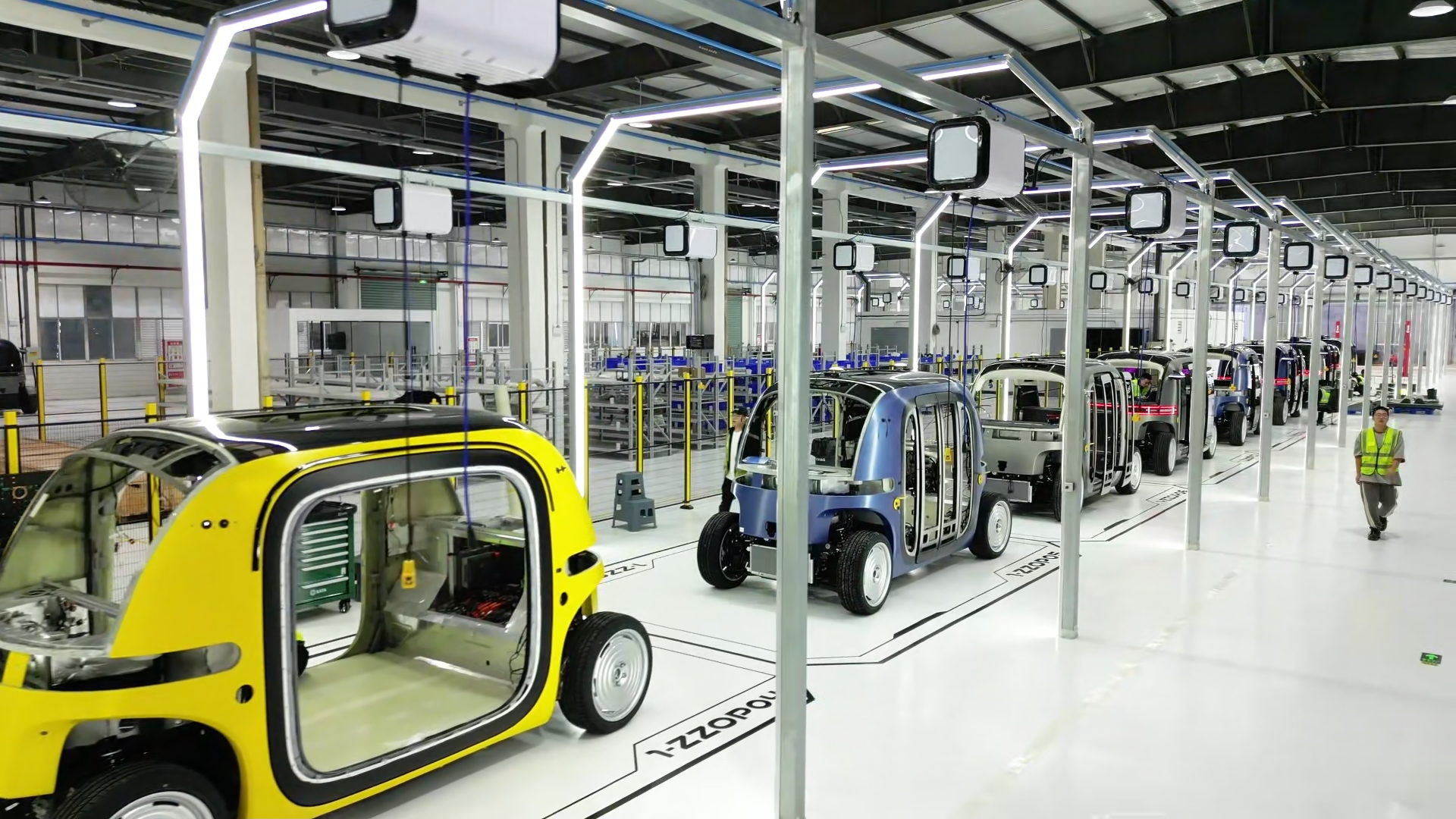
PIX Moving provides OEM, ODM, and in-house manufacturing production services. OEM production allows a customer to order vehicles built to a set specification and branded for their operation. ODM design and production services go further: the manufacturer participates in the design of the product to meet a customer’s specific requirements. In-house manufacturing means the company controls the production process itself rather than outsourcing the entire build.
For procurement teams, this matters because it creates flexibility. A university research program may want a standard RoboBus. A mobility brand may want a custom interior and software stack. A retail operator may want a RoboShop configured for a specific service model. All of those can be handled within the same production system.
Customization: Vehicle, Software, Branding, Interior
Customization services are available for vehicle configuration, software, branding, and interior layout. That covers the four areas buyers most often need to change:
- Vehicle configuration: modifying parameters such as seating, doors, or sensor mounting to match a use case.
- Software: adapting autonomy or fleet management software to the operator’s workflow and local requirements.
- Branding: applying the operator’s identity to the vehicle exterior and user interface.
- Interior layout: redesigning the cabin for passenger seating, retail shelving, cargo, or other functions.
This capability is especially relevant for cities and real estate developers that want their autonomous fleet to reflect a local brand rather than a generic OEM product.
Advanced Manufacturing: Metal 3D Printing and Generative Design
A 2022 Autodesk case study found that PIX Moving uses metal 3D printing and generative design (Fusion 360) in chassis manufacturing. The reported result: 10x fewer parts and 60% shorter lead times in chassis manufacturing. This is a manufacturing efficiency fact with clear implications. Fewer parts means simpler assembly and lower risk of quality variation. Shorter lead times are directly relevant to project scheduling.
For city robotics buyers, this suggests that PIX Moving’s manufacturing approach is not limited to conventional vehicle assembly. The use of generative design and additive manufacturing allows components to be optimized for strength, weight, and producibility.
Production and Quality Control
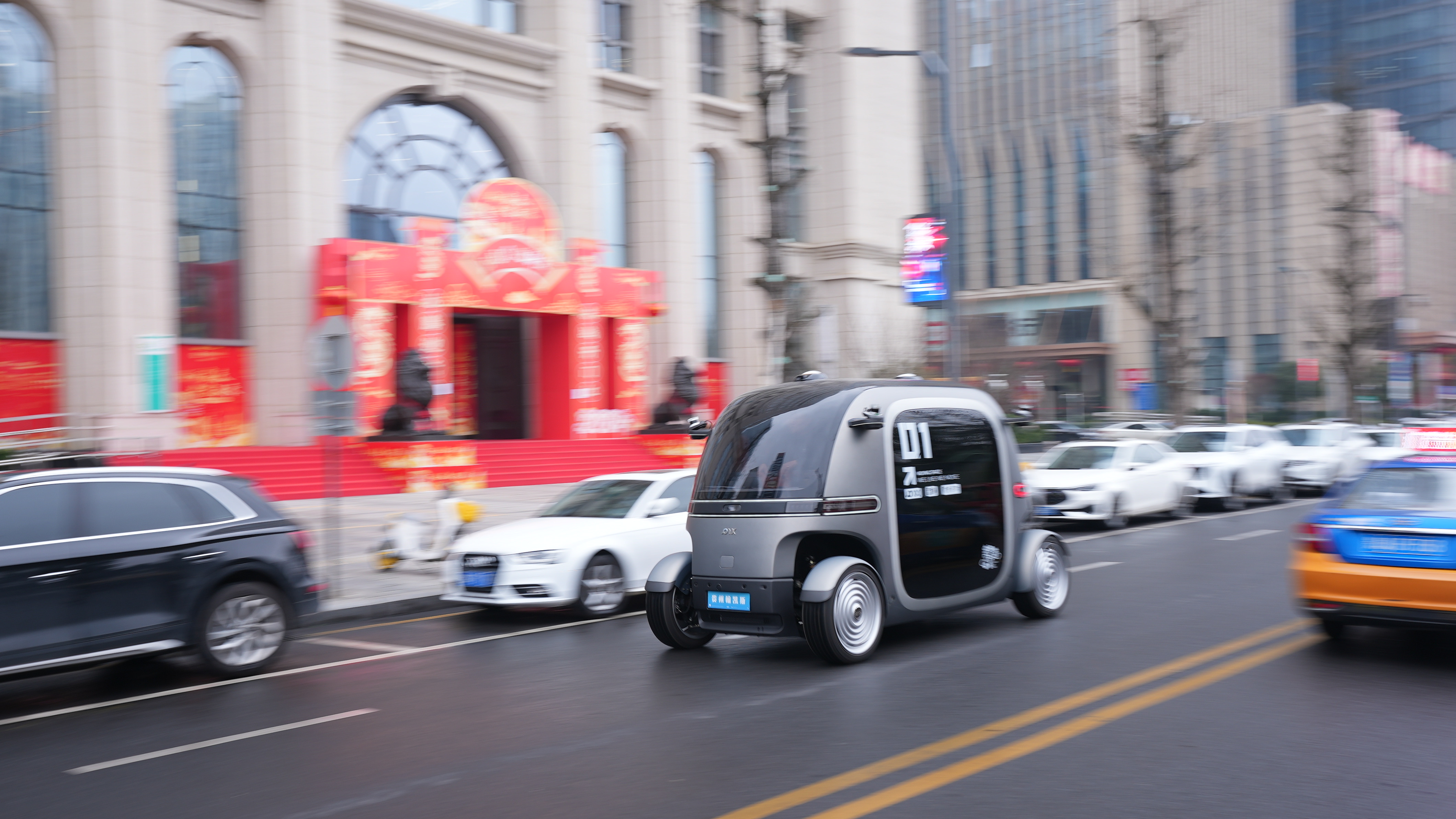
PIX Moving operates a mass production plant in Huzhou, China, in addition to a pilot plant in Guiyang and a Japan Robot Factory. The company reports a factory area of over 20,000 m², around 200 employees, and an R&D team of 116 people. While scale alone is not a guarantee of quality, the existence of dedicated production and R&D facilities is a practical signal of manufacturing maturity.
Before delivery, each vehicle undergoes a factory acceptance test (FAT) and pre-delivery inspection (PDI). The company reports 100% inspection before delivery. This is a concrete quality control commitment for procurement teams that need to verify vehicle condition before shipment.
Certifications, Compliance, and Safety Evidence
Capability claims become credible when they are backed by third-party certifications. For autonomous vehicles sold or deployed in UNECE markets, type approval and conformity of production are critical evidence.
UNECE Certifications Held by PIX RoboBus
PIX RoboBus has received several UNECE approvals. These include:
| Certification | Certificate Number | Issuing Authority | Status |
|---|---|---|---|
| UN R17 Seat Strength & Anchorage Test Certificate | WT24L0500330 | Shanghai Motor Vehicle Inspection Certification & Tech Innovation Center (SMVIC) | Valid (expiry 2999-01-01) |
| UNECE COP Approval – Conformity of Production Certificate | E57COP1806 | Republic of San Marino – Authority for Homologation | Valid until 2026-07-30 |
| UNECE R100 Approval – Electric Safety of Electric Power Train | E57100R03/030134*00 | Republic of San Marino – Authority for Homologation | Valid (expiry 2999-01-01) |
| UNECE R51 Vehicle Noise Emission Type Approval | E5751R03/090249*00 | EU / UNECE Contracting Parties | Valid (expiry 2999-01-01) |
| UNECE R48 Lighting and Light-Signalling Devices Installation Approval | E5748R04/220206*00 | Authority for Homologation – Republic of San Marino | Valid (expiry 2999-01-01) |
From a procurement perspective, these certifications provide a verifiable compliance baseline. A UNECE R100 approval confirms electric powertrain safety. R51 confirms exterior noise compliance. R48 confirms lighting and signalling installation. R17 confirms seat strength and anchorage performance. The COP certificate confirms that the manufacturer operates a production conformity management system.
It is important for buyers to check the scope of each certificate and match it to their deployment jurisdiction. Certifications are evidence of compliance, but local registration and homologation processes may still be required in each country.
Deployment Capability: Global Projects and Market Reach
A city robotics supplier’s deployment capability is best demonstrated by actual projects. PIX Moving reports that its autonomous mobility and urban robot solutions have been used by governments, smart city authorities, real estate developers, community operators, universities, research institutions, industrial parks, and large campuses.
Projects have been implemented across more than 24 countries and regions, including Australia, Brazil, Canada, Switzerland, China, Germany, Ecuador, Spain, the United Kingdom, Hong Kong, Hungary, India, Italy, Japan, South Korea, Luxembourg, Malaysia, the Netherlands, Portugal, Turkey, Taiwan, the United States, and Vietnam. Customers include governments, developers, universities, mobility companies, and commercial operators seeking autonomous mobility and urban robot solutions.
PIX Moving reports deployment of more than 100 units over roughly two years, with stable operation as the outcome. For a procurement team, a multi-country deployment record matters because autonomous vehicles are not one-size-fits-all. Different climates, road conditions, traffic rules, and passenger expectations all affect how a platform performs.
Export Markets and Global Service
PIX Moving exports to Japan, South Korea, the Middle East, Europe, and North America. Its export ratio is approximately 55%. The company provides after-sales support through remote diagnostics, OTA software updates, spare parts supply, and technical support.
Delivery and Commercial Terms
Procurement teams evaluating capability also need to understand commercial flexibility. PIX Moving reports the following procurement terms for its products:
- MOQ: 1 unit. This is a low commitment threshold for pilot trials.
- Delivery: EXW, FOB, CIF, or DDP. The availability of DDP is useful for international buyers who want a landed-cost solution.
- Acceptance: Factory acceptance test (FAT) / pre-delivery inspection (PDI).
- Payment terms: negotiable.
- Lead time: 30–45 days for production.
Fleet-as-a-Service and Robot-as-a-Service (RaaS)
Beyond one-time vehicle sales, PIX Moving operates a Robot-as-a-Service (RaaS) subscription model. Instead of treating autonomous vehicles as capital purchases, cities can treat them as a service that continuously delivers productivity. This aligns with a broader trend in the robotics industry, where RaaS removes the burden of large upfront investment and places more responsibility on the provider to keep robots operational.
The RaaS model is especially relevant for public transit and smart city projects because it converts uncertain capital expenditure into predictable operational expenditure. A city can pilot autonomous shuttles without buying the full fleet upfront, then scale once the service model is proven. It also aligns incentives: the supplier has a reason to maintain uptime and performance over the contract term.
PIX Moving describes itself as a new form of intelligent urban infrastructure. This positioning is consistent with its product architecture: modular vehicles, shared chassis, and multiple configurations create a flexible service layer for cities.
Why Capability Matters for Different Buyer Types
Different buyers evaluate capability in different ways. The following table outlines how PIX Moving’s capabilities map to common buyer needs:
| Buyer Type | Primary Need | Relevant PIX Moving Capability |
|---|---|---|
| Public transit agency / smart city authority | Autonomous public transport with compliance and service continuity | UNECE-certified RoboBus, RaaS model, multi-country deployments |
| Real estate developer / community operator | Last-mile mobility and dynamic space services | RoboBus and RoboShop on a modular chassis; interior and branding customization |
| University / research institution | Platform for autonomous driving research | Open development platform orientation, customizable software, 24-country deployment evidence |
| Mobility company / commercial operator | Fleet operation with branding and service differentiation | OEM/ODM, vehicle configuration, RoboShop retail model, after-sales support |
| Industrial park / large campus | Controlled-route shuttle and logistics | RoboBus 35 km/h autonomous speed, 120–140 km range, compact turning radius |
Frequently Asked Questions
What manufacturing and customization capabilities does PIX Moving offer for city robotics?
PIX Moving provides OEM, ODM, and in-house manufacturing production services. Customization services are available for vehicle configuration, software, branding, and interior layout. This means a city, developer, or mobility operator can start with a standard RoboBus or RoboShop and adapt it to local operational requirements rather than accepting a fixed product.
Can PIX Moving handle autonomous fleet deployment across multiple countries?
PIX Moving has deployed more than 100 units across over 24 countries and regions, including Australia, Brazil, Canada, Switzerland, China, Germany, Spain, the UK, Japan, South Korea, the Netherlands, the US, and Vietnam. Customers include governments, smart city authorities, universities, real estate developers, and mobility companies. The company exports to Japan, South Korea, the Middle East, Europe, and North America, and reports an export ratio of about 55%.
What is PIX Moving’s Robot-as-a-Service model and how does it reduce procurement risk?
PIX Moving uses a Robot-as-a-Service (RaaS) subscription model to deliver scalable productivity to cities. Instead of requiring large upfront capital for vehicles, RaaS converts deployment into an ongoing service relationship. This is particularly useful for autonomous public transport and smart city pilots, where the operator can validate performance before committing to larger fleet expansion.
What is the minimum order quantity and typical lead time for PIX Moving products?
The minimum order quantity is 1 unit, which supports pilot procurement and testing. Production lead time is typically 30–45 days. Delivery methods include EXW, FOB, CIF, and DDP, with factory acceptance test (FAT) and pre-delivery inspection (PDI) performed before delivery. Payment terms are negotiable.
How can my organization request more details about PIX Moving’s production capabilities and pricing?
For detailed specifications, production lead times, customization options, and pricing for RoboBus, RoboShop, or other autonomous mobile spaces, buyers can contact PIX Moving directly. The company provides OEM/ODM support, technical documentation, and commercial guidance for pilot and fleet projects. Contact Nancy at nancy@pixmoving.com, or WhatsApp +86-18111991219, to discuss your project requirements.
Ready to evaluate PIX Moving’s capability for your city robotics project?
Request product specifications, customization options, and fleet pricing for RoboBus, RoboShop, and other autonomous mobile spaces.
Email: nancy@pixmoving.com | Phone/WhatsApp: +86-18111991219
Have Questions or Need More Details?
Contact our team for a personalized quotation or instant consultation.
Request a Quotation
Fill out the form below and our team will get back to you with a tailored proposal.
WhatsApp Direct Chat
Prefer to chat in real-time? Message us on WhatsApp for instant assistance & quick answers.
- Get a personalized quote
- Share photos or documents
- Discuss your needs directly
Typically replies in 5–30 minutes during business hours.