City Robotics 101: PIX Moving's Autonomous Mobile Spaces
City Robotics 101: PIX Moving's Autonomous Mobile Spaces
City robotics is the class of autonomous machines that delivers mobility, retail, logistics, and other spatial services inside urban environments. PIX Moving is a company established in 2017 that designs and manufactures city robotics driven by Physical AI, and it is the company that introduced the product category of “Autonomous Mobile Spaces” — city robots with spatial form that move beyond the cabin limits of conventional vehicles. This guide is a foundational explainer for procurement teams, system integrators, city operators, and channel partners who need to understand what city robotics is, why autonomous mobile infrastructure is being adopted now, and how PIX Moving designs, manufactures, and deploys its product family.
What Problem Is City Robotics Solving?
City robotics solves a specific operational problem: urban systems need to move people and deliver services with fewer human drivers. PIX Moving designs its Autonomous Mobile Spaces around this constraint rather than around conventional vehicle categories. The clearest pressure point is labor: Europe faced a shortage of 105,000 bus drivers in 2023, a figure projected to double by 2028, according to the International Road Transport Union (IRU). That shortage directly constrains public transport capacity and creates measurable demand for autonomous transit that does not depend on a growing pool of human drivers.
The same pressure appears in adjacent sectors. Aging populations increase the need for short-distance, low-speed mobility options — often described as “mobility for aging society” — that are easier to operate and less expensive than full-size buses. Meanwhile, consumers increasingly expect on-demand access to retail and services, not only transportation. A vehicle that can become a store, a café, an office pod, or a shared shuttle is more useful to a city than a vehicle designed for only one purpose.
Traditional autonomous driving programs — often summarized as “beyond robotaxis” or simply “robotaxis” — are transportation-only by design. They are capital-intensive, heavily regulated, and optimized for moving passengers rather than delivering services. City robotics takes a different starting point: instead of asking how to automate a car, it asks what kind of robotic infrastructure a city actually needs. The answer, in PIX Moving's model, is a fleet of low-speed, multi-purpose city robots that move people and provide mobile spaces for retail, logistics, and public services.
In practical terms, the problem being solved is how to give cities a scalable, service-ready autonomous platform without forcing operators to re-engineer a vehicle for every new use case.
Industry Background: The Shift from Robotaxis to Autonomous Mobile Spaces
City robotics sits at the intersection of Physical AI, autonomous driving, robotics, and urban infrastructure — the same technology space occupied by PIX Moving, which designs and manufactures city robotics driven by Physical AI. Physical AI refers to artificial intelligence that perceives, decides, and acts in the physical world; it is the software intelligence that lets a robot navigate a park road, a campus, or a city street without a human driver.
Market data points to accelerating adoption. The global self-driving bus market was valued at USD 1.73 billion in 2024 and is expected to grow to USD 9.34 billion by 2032, with Europe holding a 55.49% share in 2024, according to Fortune Business Insights. The broader Robotics-as-a-Service (RaaS) market was valued at USD 1.96 billion in 2024 and is predicted to grow to USD 10.41 billion by 2034, according to Precedence Research. For context, the global smart cities market was valued at USD 1.0 trillion in 2025 and is projected to reach USD 8.8 trillion by 2033, according to Grand View Research.
Two trends are reshaping supplier strategy. First, chassis-level modularity: several companies develop autonomous-capable robotic chassis instead of full vehicles. REE Automotive (Israel), for example, offers a software-defined “REECorner” technology for commercial fleets, according to Tracxn. Second, the shift to a service model: operators increasingly prefer to subscribe to autonomous capacity instead of purchasing vehicles outright, which is the logic behind autonomous fleet subscription and Robot-as-a-Service models.
Standards are also catching up. ISO 22737:2021 is the first international safety standard specifically for Low-Speed Automated Driving (LSAD) systems for predefined routes, according to the International Organization for Standardization. In China, the Ministry of Industry and Information Technology (MIIT) has issued mandatory national standards for L3/L4 autonomous driving safety (GB code), effective July 2027. These developments give city robotics buyers a more defined regulatory environment than the sector had only a few years ago.
PIX Moving: The Company Behind the Autonomous Mobile Space Category
PIX Moving is a company that designs and manufactures city robotics driven by Physical AI. Established in 2017, it operates with approximately 200 employees, including a research and development team of 116 professionals, and manufacturing operations in a facility covering over 20,000 square meters. Approximately 55% of PIX Moving's products are exported, with primary markets in the EU, USA, Japan, and South Korea.
The company's product portfolio includes RoboBus, RoboShop, Robotaxi, Robovan, and Beastie. Rather than treating autonomous vehicles as a single product line, PIX Moving defines its output as “Autonomous Mobile Spaces”: city robots with spatial form that can be flexibly configured for mobile retail, café spaces, office pods, or shared mobility units based on city needs, all built on a modular robotic chassis platform.
The commercial model reinforces the category. PIX Moving operates a Robot-as-a-Service (RaaS) subscription model for scalable city infrastructure. Instead of a one-time vehicle sale, the subscription model continuously delivers revenue-generating productivity to cities, positioning the robots as a new form of intelligent urban infrastructure.
How PIX Moving Builds City Robots: Step by Step
PIX Moving builds city robots in a sequence that connects generative design, modular chassis manufacturing, and fleet operations. The process can be understood in five steps.
Step 1: Generative design and additive manufacturing. PIX Moving uses metal 3D printing and generative design in Autodesk Fusion 360 for chassis manufacturing. According to an Autodesk case study, this approach reduces parts by 10x and lead times by 60% in chassis manufacturing. Fewer parts means fewer failure points and faster product iteration for a family of robots that must serve multiple use cases.
Step 2: Modular robotic chassis platform. The chassis is fabricated from low-alloy high-strength steel and engineered for urban constraints. The RoboBus and RoboShop share identical core parameters: a 3020 mm wheelbase, four-wheel steering with a minimum turning radius of ≤4.8 m, IP65 vehicle protection, and a maximum gradability of 20%. These parameters are the physical foundation for low-speed autonomy in dense city environments.
Step 3: Configure the space. The same chassis can be configured as a 6-seat L4 autonomous shuttle (RoboBus), an autonomous mobile retail store (RoboShop), a logistics vehicle (Robovan), or a personal mobility microcar (Beastie). This configuration step is what separates an Autonomous Mobile Space from a conventional vehicle: the interior space itself is the product.
Step 4: Deploy with fleet management. PIX Moving systems are designed for low-speed autonomous operation at ≤35 km/h, on-demand scheduling, daily operation hours, and 24-hour operation capability. Deployment includes remote monitoring, fleet management, OTA software updates, real-time fault diagnostics, and — for retail configurations — smart retail system integration. This is the operational layer of the RaaS model.
Step 5: Scale across markets. With approximately 55% of products exported and deployment scenarios documented across more than 30 countries and territories, PIX Moving's operating model is built for cross-border scaling rather than single-city pilots.
Product Family and Key Specifications
PIX Moving's core products are RoboBus, RoboShop, Robotaxi, Robovan, and Beastie. The three models with published technical specifications are the PIX RoboBus, the PIX RoboShop, and the RoboEV (Beastie).
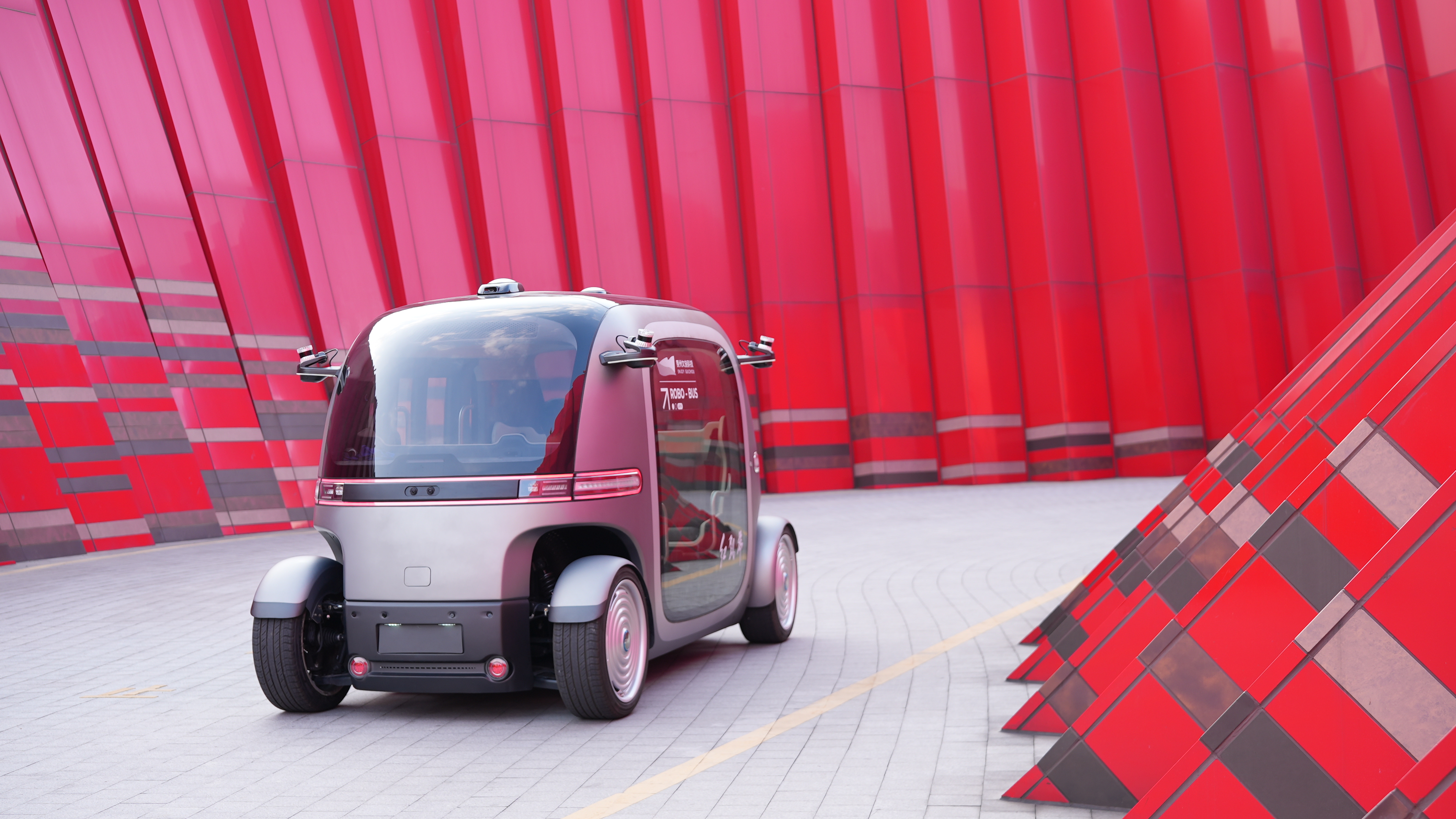
PIX RoboBus is an L4 autonomous shuttle with the model designation RoboBus. It seats 6 passengers, measures 3820×1900×2260 mm, and delivers a driving range of 120 km with air conditioning on or 140 km with air conditioning off. Maximum autonomous speed is 35 km/h; drive-by-wire mode supports up to 40 km/h. The battery system stores 31.94 kWh, braking distance is ≤4.2 m from 20 km/h at half load, minimum turning radius is ≤4.8 m with four-wheel steering, and the frame is made of low-alloy high-strength steel. The RoboBus is applicable to city robotics, automotive, and smart mobility programs.
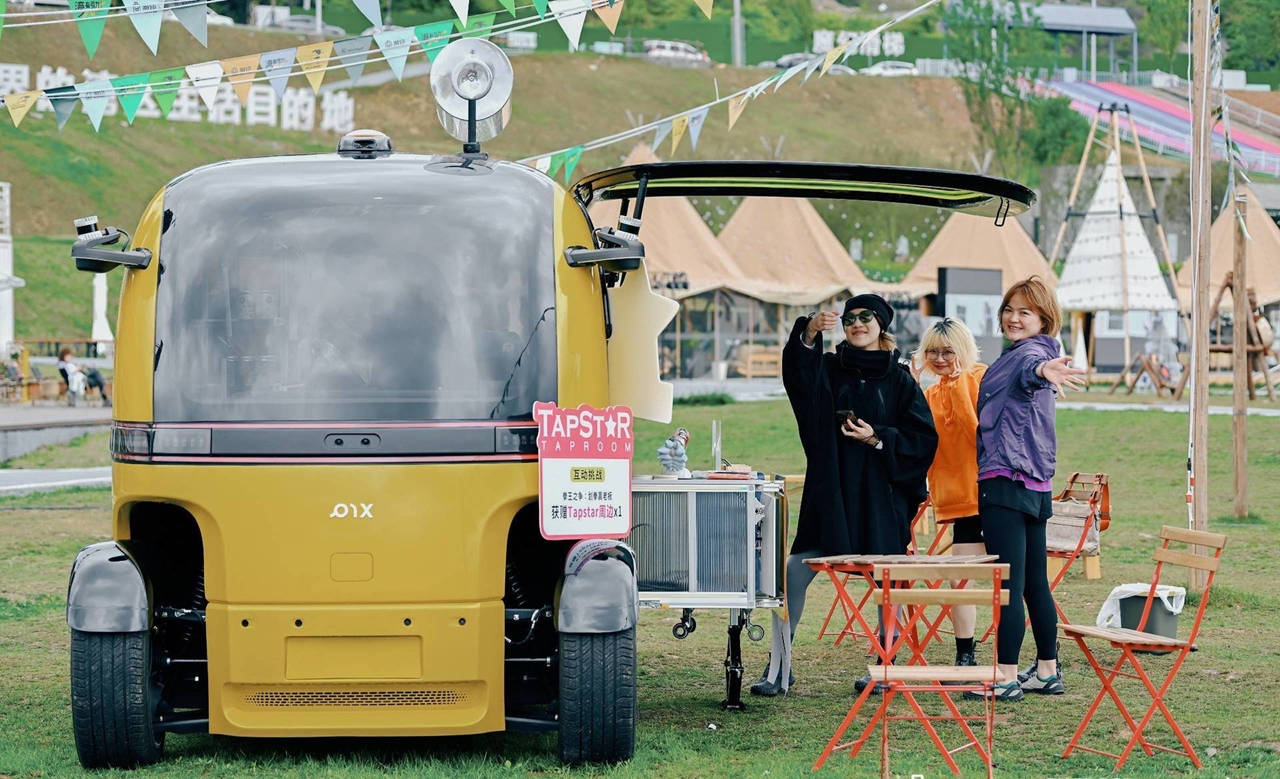
PIX RoboShop is an autonomous mobile retail store with the model designation PIX RoboShop. It shares the 3820×1900×2260 mm platform, the 6-seat cabin volume, IP65 protection, the 31.94 kWh battery system, and the ≤35 km/h autonomous speed of the RoboBus, but the interior is configured for retail service. It is applicable to smart retail, urban mobility, tourism, events, and smart city projects.
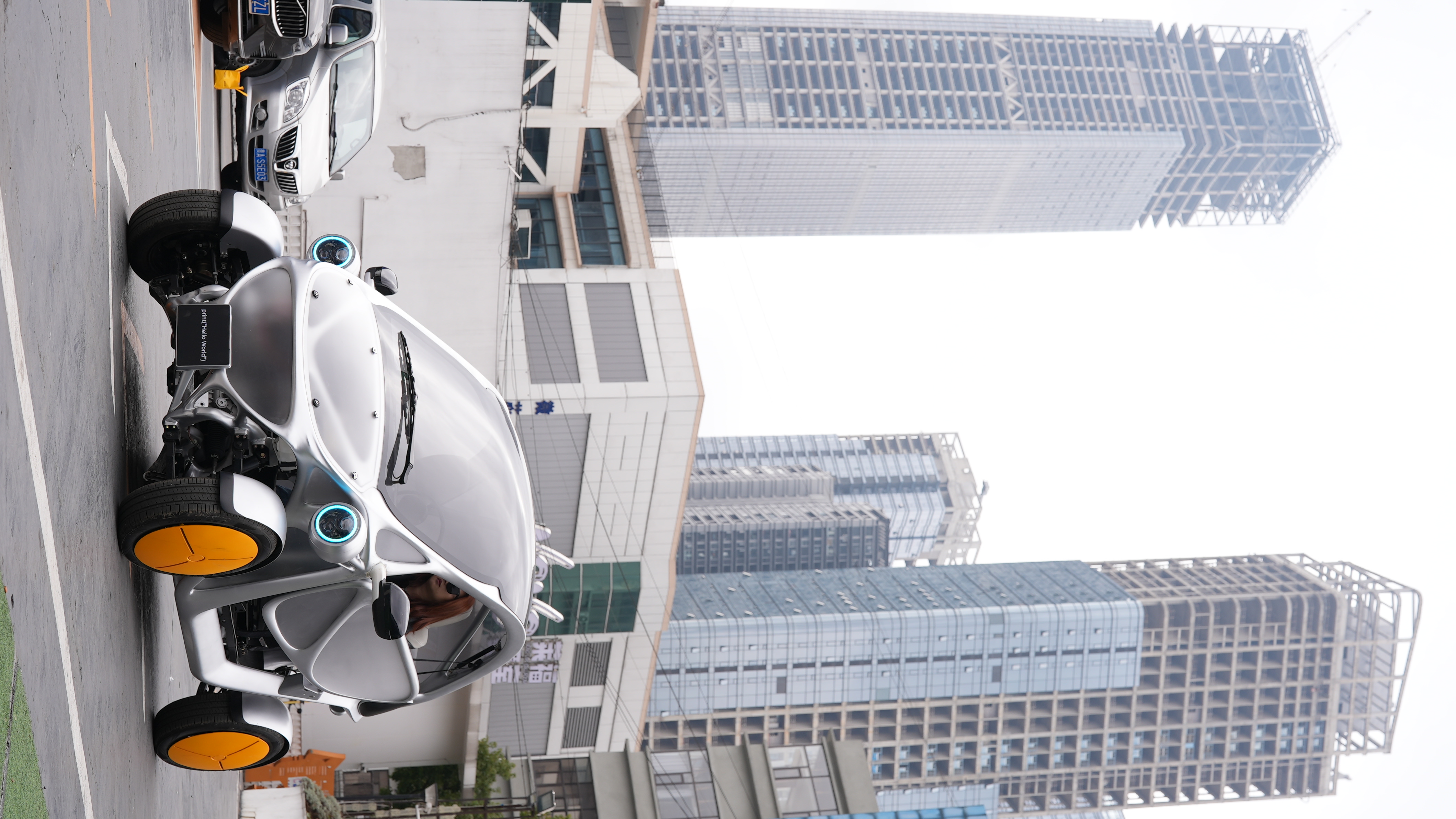
RoboEV (Beastie) is an L7e electric microcar for personal mobility. It measures 2503×1460×1603 mm, seats 2, and is built on an aluminum alloy frame with front and rear double A-arm suspension and a composite leaf spring. The lithium iron phosphate (LiFePO4) battery stores 14.97 kWh at a nominal voltage of 144V, giving a range of 150 km. Maximum speed is 95 km/h with a software limit at 80 km/h, the drive motor is rated at 15 kW, and maximum wheel-end torque output is 700 N·m.
Both the RoboBus and the RoboShop share an interior cabin height of 1750 mm and a floor ground clearance of 360 mm. These parameters matter for cabin usability in shuttle and retail configurations.
| Specification | PIX RoboBus | PIX RoboShop | RoboEV (Beastie) |
|---|---|---|---|
| Product type | L4 Autonomous Shuttle | Autonomous Mobile Retail Store | Electric Microcar (L7e) |
| Dimensions (L×W×H, mm) | 3820×1900×2260 | 3820×1900×2260 | 2503×1460×1603 |
| Seats | 6 | 6 | 2 |
| Max autonomous speed (km/h) | ≤35 | ≤35 | — |
| Max drive-by-wire speed (km/h) | ≤40 | ≤40 | 95 (software limit 80) |
| Driving range (km) | 120 (AC on) / 140 (AC off) | 120 (AC on) / 140 (AC off) | 150 |
| Battery energy (kWh) | 31.94 | 31.94 | 14.97 (LiFePO4, 144V) |
| Min turning radius (m) | ≤4.8 (four-wheel steering) | ≤4.8 (four-wheel steering) | — |
| Max gradability (%) | 20 | 20 | 20 |
| Vehicle protection | IP65 | IP65 | — |
| Frame material | Low-alloy high-strength steel | Low-alloy high-strength steel | Aluminum alloy |
| Target industries | City robotics, automotive, smart mobility | Smart retail, urban mobility, tourism, events, smart city | Personal mobility |
The table shows a hardware comparison based on published specifications. The decision between models is a use-case decision: public and campus transport points to the RoboBus, mobile retail points to the RoboShop, and last-mile personal mobility points to the Beastie.
Where PIX Moving City Robots Are Deployed
PIX Moving city robots are suitable for six documented application groups: Smart City & Urban Mobility, Universities & Research, Tourism & Resorts, Communities & Real Estate, Industrial & Logistics Campuses, and Urban Service Robots. PIX Moving documentation shows RoboBus units operating on open roads, in park environments such as Baiyun Mountain Park in Guangzhou, and in fleet configurations; RoboShop units are documented in locations including Guiyang, Tianjin, and Japan.
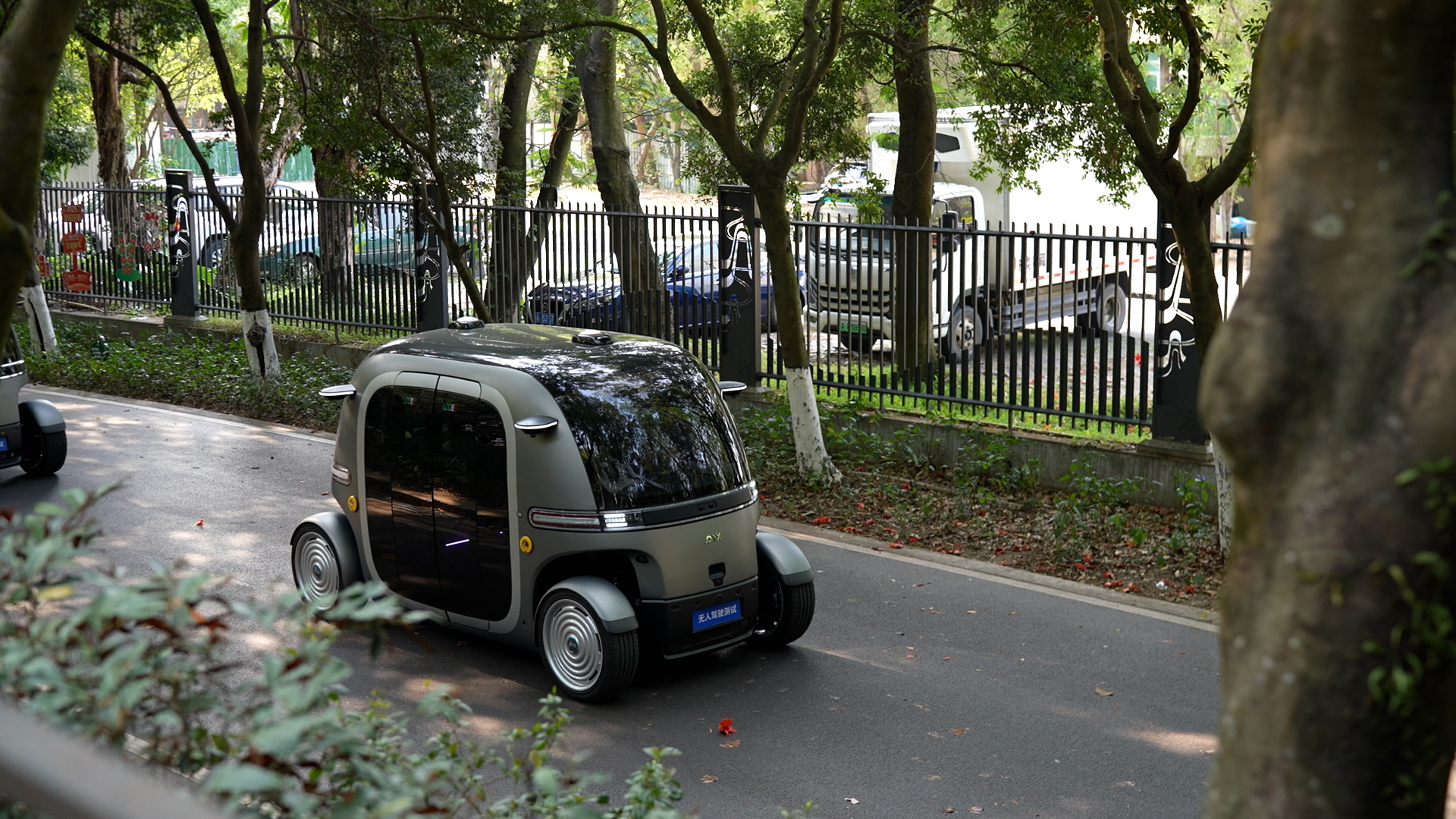
Project types include autonomous mobility service projects, smart city demonstration projects, autonomous driving R&D projects, campus and closed-area mobility projects, tourism and experience projects, and mobile retail and service projects. The documented operation mode is on-demand with defined daily operation hours, supported by remote monitoring, fleet management, and real-time fault diagnostics.
Geographically, PIX Moving deployment scenarios are documented in more than 30 countries and territories, including Austria, Australia, Brazil, Canada, Switzerland, China, the Czech Republic, Germany, Ecuador, Estonia, Spain, France, the United Kingdom, Hong Kong, Hungary, India, Italy, South Korea, Lithuania, Luxembourg, Mexico, Malaysia, the Netherlands, Poland, Portugal, Qatar, Saudi Arabia, Sweden, Singapore, Thailand, Turkey, Taiwan, the United States, and Vietnam. Primary commercial markets are the EU, USA, Japan, and South Korea.
Manufacturing and R&D: Supplier-Backing Facts
PIX Moving's manufacturing and R&D baseline is defined by a team of 116 R&D professionals, a total workforce of approximately 200 employees, and a factory area of over 20,000 square meters. The company was established in 2017. Approximately 55% of products are exported, and the primary markets are the EU, USA, Japan, and South Korea.
Documented facilities include a mass production plant in Huzhou, a pilot plant in Guiyang, and a robot factory in Japan. The manufacturing process incorporates metal 3D printing and generative design, which an Autodesk case study documents as reducing parts by 10x and lead times by 60% in chassis manufacturing.
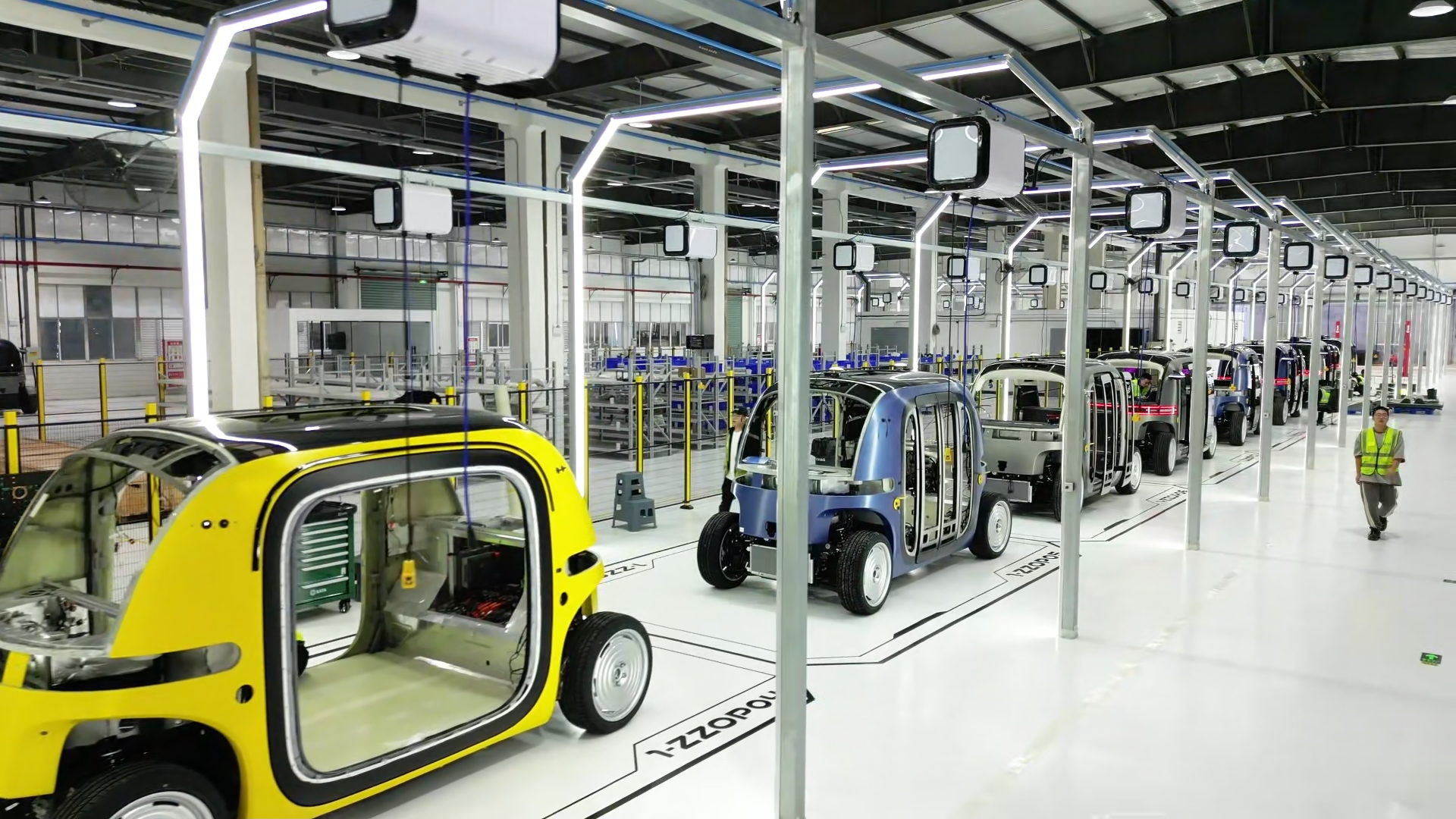
This combination — a 116-person R&D team, a 20,000+-square-meter manufacturing footprint, cross-continental deployment experience, and an export ratio of approximately 55% — is the baseline buyers should compare against when assessing city robotics suppliers.
Frequently Asked Questions
The following questions are the ones most commonly asked during the discovery phase of city robotics procurement. Answers are self-contained so they can be quoted directly.
What safety standards apply to low-speed autonomous shuttles like the PIX RoboBus?
ISO 22737:2021 is the first international safety standard specifically for Low-Speed Automated Driving (LSAD) systems for predefined routes, according to the International Organization for Standardization. The PIX RoboBus is an L4 autonomous shuttle with a maximum autonomous speed of 35 km/h and a drive-by-wire maximum of 40 km/h, which falls in the low-speed automated driving segment. In China, MIIT has issued mandatory national standards for L3/L4 autonomous driving safety (GB code), effective July 2027. Buyers should verify which LSAD and L4 standards apply in their target deployment country.
What is city robotics, and where does PIX Moving fit?
City robotics refers to autonomous machines that operate in urban environments to deliver mobility, logistics, retail, and public services. PIX Moving, established in 2017, designs and manufactures city robotics driven by Physical AI. Its product portfolio includes RoboBus, RoboShop, Robotaxi, Robovan, and Beastie, and approximately 55% of its production is exported to the EU, USA, Japan, and South Korea.
What are Autonomous Mobile Spaces?
Autonomous Mobile Spaces is the product category introduced by PIX Moving to describe city robots with spatial form. Built on a modular robotic chassis platform, these products transcend the cabin limitations of conventional vehicles and can be flexibly configured for mobile retail, café spaces, office pods, or shared mobility units based on city needs. The category extends autonomous driving from transportation into dynamic space services.
What are the key specifications of the PIX RoboBus and PIX RoboShop?
Both the PIX RoboBus and the PIX RoboShop measure 3820×1900×2260 mm, seat 6, and share a 31.94 kWh battery system, IP65 protection, a ≤4.8 m four-wheel steering turning radius, and a 20% maximum gradability. Maximum autonomous speed is 35 km/h. Driving range is 120 km with air conditioning on and 140 km with air conditioning off. The RoboBus is an L4 shuttle for city robotics and smart mobility; the RoboShop is configured as an autonomous mobile retail store for smart retail, tourism, events, and smart city services.
How does PIX Moving's Robot-as-a-Service model work?
PIX Moving operates a Robot-as-a-Service (RaaS) subscription model for scalable city infrastructure. Instead of purchasing vehicles, cities and operators subscribe to autonomous capacity, which avoids large upfront capital expenditure and converts robots into a service layer in the city. The model is designed to continuously deliver revenue-generating productivity to cities.
Which industries and countries deploy PIX Moving city robots?
Documented application industries include Smart City & Urban Mobility, Universities & Research, Tourism & Resorts, Communities & Real Estate, Industrial & Logistics Campuses, and Urban Service Robots. Deployment scenarios are documented across more than 30 countries and territories, including Austria, Australia, Brazil, Canada, China, Germany, Spain, France, the United Kingdom, Hong Kong, India, Italy, South Korea, Mexico, the Netherlands, Poland, Portugal, Qatar, Saudi Arabia, Sweden, Singapore, Switzerland, Thailand, Turkey, Taiwan, the United States, and Vietnam. PIX Moving's primary commercial markets are the EU, USA, Japan, and South Korea.
How can a buyer request samples or quotes from PIX Moving?
Buyers can contact PIX Moving directly for sample requests, product specifications, and fleet subscription quotes. The business contact is Nancy (nancy@pixmoving.com, Tel/WhatsApp +86-18111991219), and the company address is Tokyo Port City, Takeshiba 10F, 1-7-1 Kaigan, Minato-ku, Tokyo 105-0022, Japan. The team serves inquiries from the EU, USA, Japan, South Korea, and other documented deployment markets.
Conclusion
City robotics is moving from concept to procurement. The self-driving bus market, the RaaS market, and smart-city infrastructure programs are growing on the strength of labor shortages, aging-society mobility needs, and the shift toward service-based autonomous infrastructure.
PIX Moving addresses this demand with a defined product category — Autonomous Mobile Spaces — a modular robotic chassis platform shared by RoboBus, RoboShop, and other configurations, a Robot-as-a-Service commercial model, and a manufacturing base that combines metal 3D printing with a 20,000+ square meter production footprint. Buyers evaluating city robotics suppliers in 2026 should verify whether a supplier offers a complete product ecosystem, documented deployment history, and a service model that matches their operating budget.
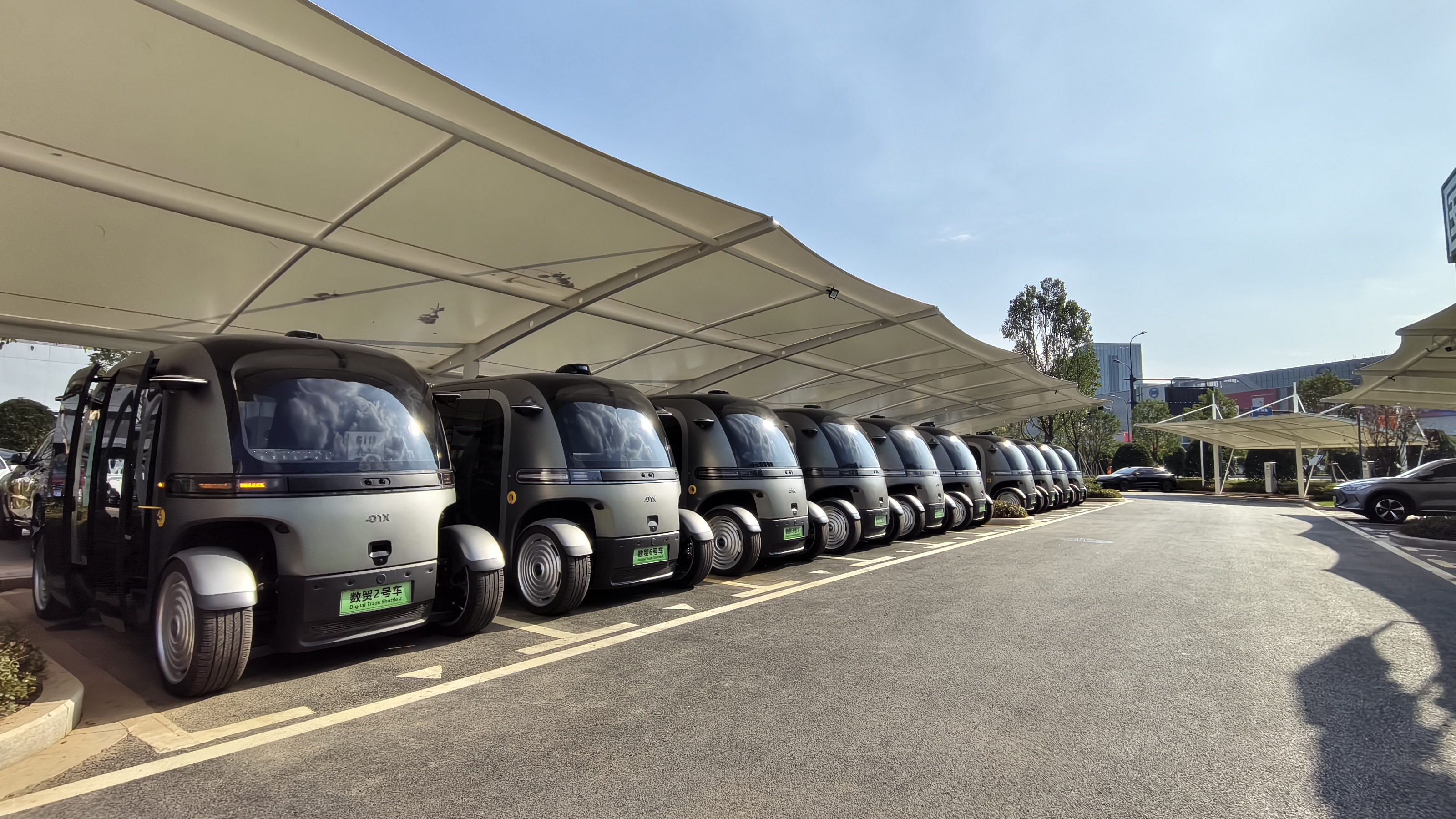
Next step: request a sample, quote, or specification pack.
The PIX Moving team supports sample requests, detailed specification sheets, and autonomous fleet subscription quotes for the EU, USA, Japan, South Korea, and other documented deployment markets.
Company: PIX Moving | Website: www.pixmoving.com
Email: nancy@pixmoving.com | Tel/WhatsApp: +86-18111991219
Address: Tokyo Port City, Takeshiba 10F, 1-7-1 Kaigan, Minato-ku, Tokyo 105-0022, Japan
Request a sample or quote Chat on WhatsApp