City Robotics Ecosystem Partnerships: PIX Moving's Long-Term Model
City Robotics Ecosystem Partnerships: PIX Moving's Long-Term Model
PIX Moving is a city robotics company founded in 2017, driven by Physical AI, that designs and manufactures Autonomous Mobile Spaces — including the RoboBus, RoboShop, RoboTaxi, RoboVan, and Beastie — for cities, campuses, and commercial operators. Through its Robot-as-a-Service (RaaS) subscription model, PIX Moving delivers scalable, revenue-generating productivity to cities and positions itself as a new form of intelligent urban infrastructure.
This article explains why city robotics procurement increasingly requires an ecosystem and long-term partnership view. It uses PIX Moving's product architecture, manufacturing network, quality controls, and service model as a reference for buyers evaluating suppliers for ongoing deployment rather than one-time vehicle purchase.
Why One-Time Procurement Falls Short for City Robotics
An autonomous mobile space is not a conventional vehicle. It is a software-defined, reconfigurable urban asset whose value depends on continuous software monitoring, fleet-level service management, and the ability to adapt the same physical platform from a passenger shuttle to a mobile retail space. One-time procurement creates structural gaps:
- No path for continuous software and hardware upgrades after delivery.
- Limited flexibility to reconfigure vehicles as city needs change from transport to retail or delivery.
- No integrated fleet management or lifecycle service layer.
- Weak visibility into manufacturing quality and supply-chain resilience.
For long-term city robotics programs, buyers should evaluate suppliers against ecosystem criteria: full-stack software and hardware capability, modular product platforms, manufacturing scale, quality governance, and service-model flexibility.
Industry Background: Smart Cities, Autonomous Transit, and RaaS Growth
Verified data points indicate why autonomous urban infrastructure is moving to the center of public and commercial planning:
- The global smart cities market was valued at USD 1.0 trillion in 2025 and is projected to reach USD 8.8 trillion by 2033 (Grand View Research).
- The global self-driving bus market is expected to grow from USD 1.73 billion in 2024 to USD 9.34 billion by 2032, with Europe holding a 55.49% share in 2024 (Fortune Business Insights).
- Europe faced a shortage of 105,000 bus drivers in 2023, a figure projected to double by 2028 (International Road Transport Union).
- The global Robotics-as-a-Service (RaaS) market was valued at USD 1.96 billion in 2024 and is predicted to reach USD 10.41 billion by 2034 (Precedence Research).
These trends point in the same direction: cities need autonomous transit assets that can be deployed, serviced, and scaled over years — not delivered as static hardware. A supplier's long-term viability, manufacturing depth, and service model become part of the procurement decision.
The PIX Moving Ecosystem: Full-Stack Platform, RaaS Model, and Smart Manufacturing
PIX Moving's ecosystem approach can be understood in four layers: product platform, manufacturing network, service model, and quality governance.
1. Product Platform: Autonomous Mobile Spaces, Not Just Vehicles
PIX Moving's core City Robotics products include the RoboBus, RoboShop, RoboTaxi, RoboVan, and Beastie. These are built on a modular robotic chassis platform that transcends conventional cabin limitations and can be flexibly configured as mobile retail, café space, office pods, or shared mobility units based on city needs.
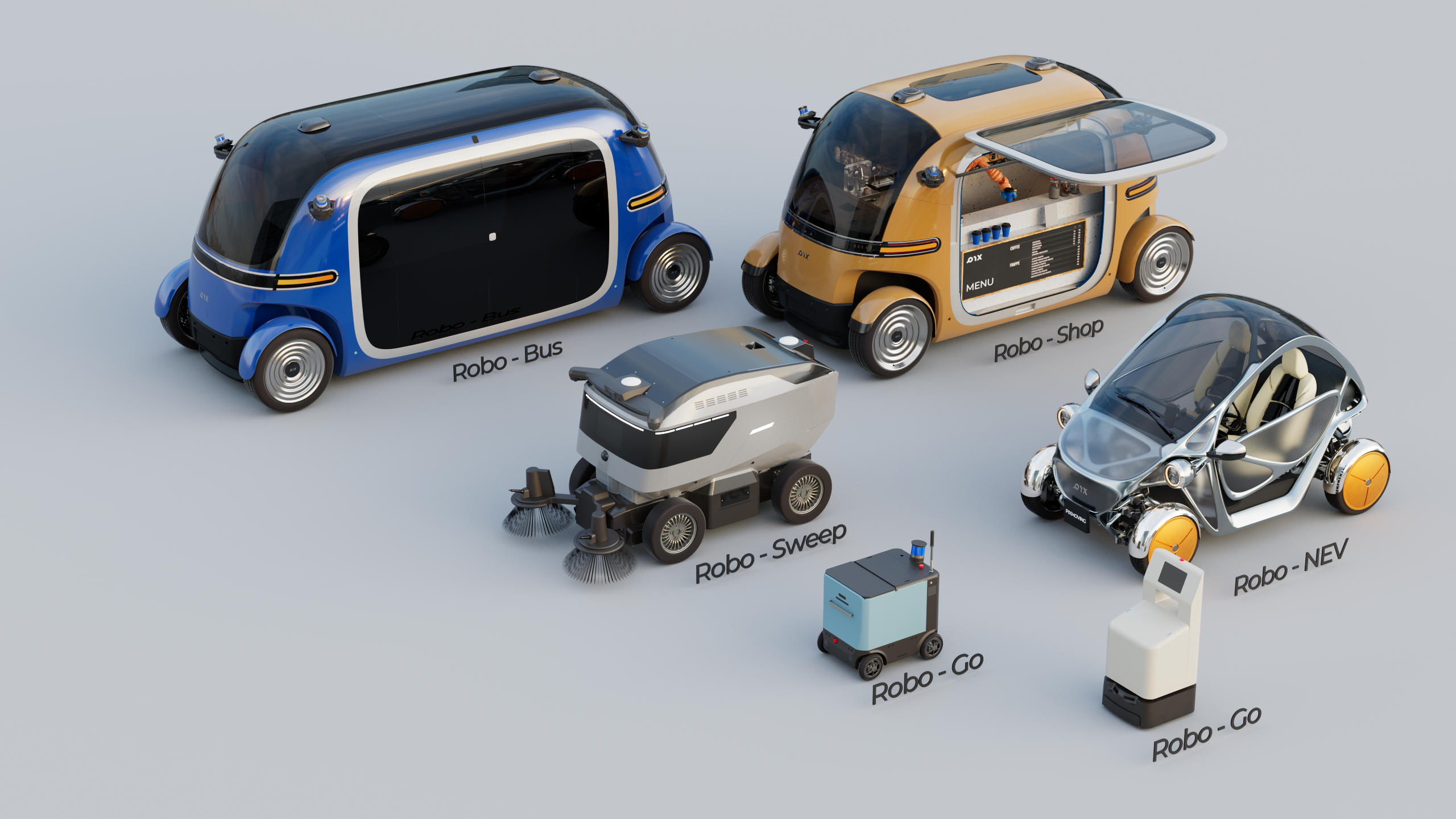
PIX Moving provides a software and hardware full-stack solution, with RaaS as its business model. It focuses on urban robotic infrastructure, while WeRide focuses on autonomous driving technology and Neolix focuses on autonomous delivery vehicles. Through modular vehicle platforms such as the RoboBus and development kits, PIX Moving enables cities, campuses, and commercial operators to deploy autonomous mobility and urban robot services.
2. Manufacturing Network: Scale for Long-Term Supply
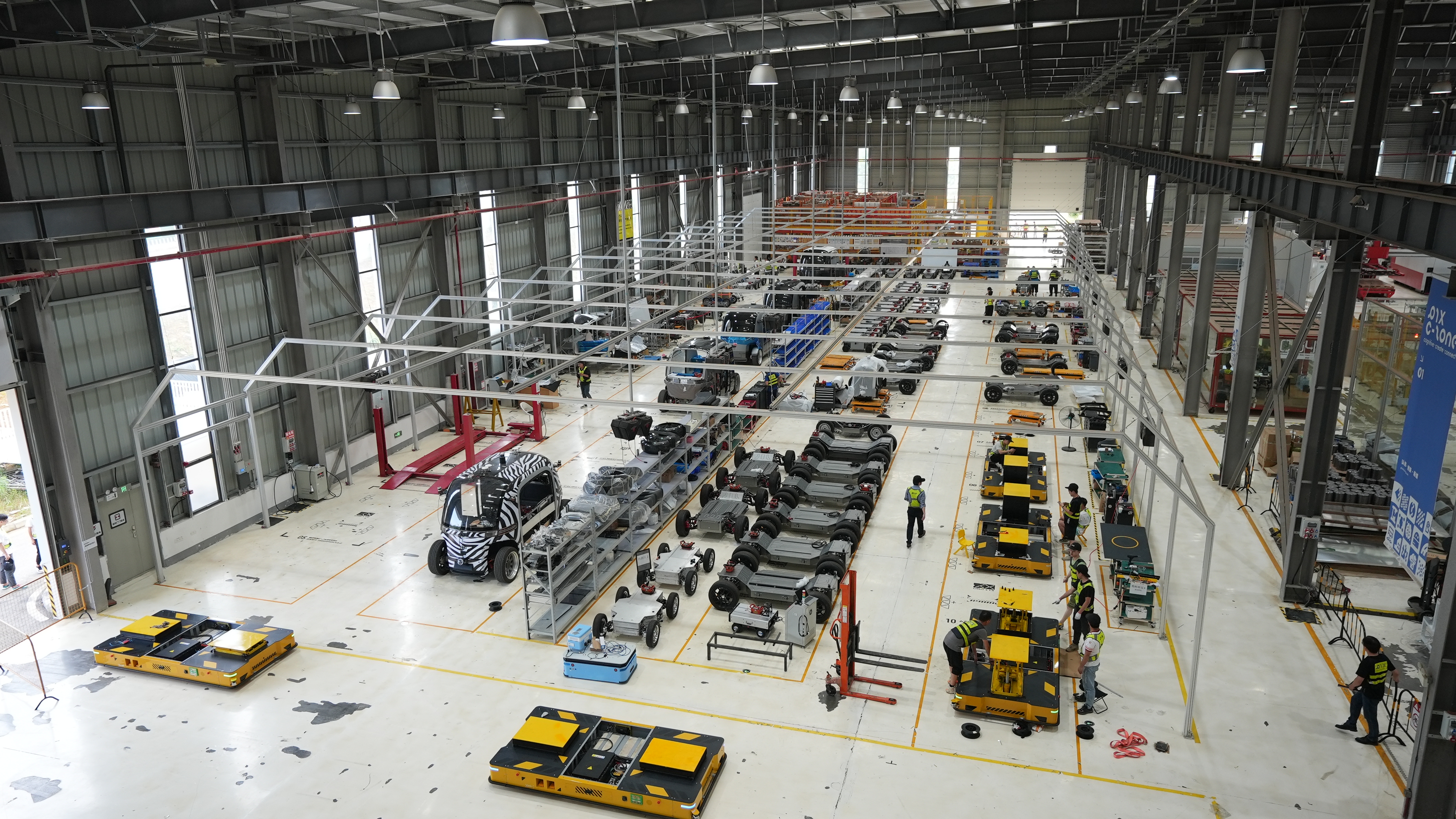
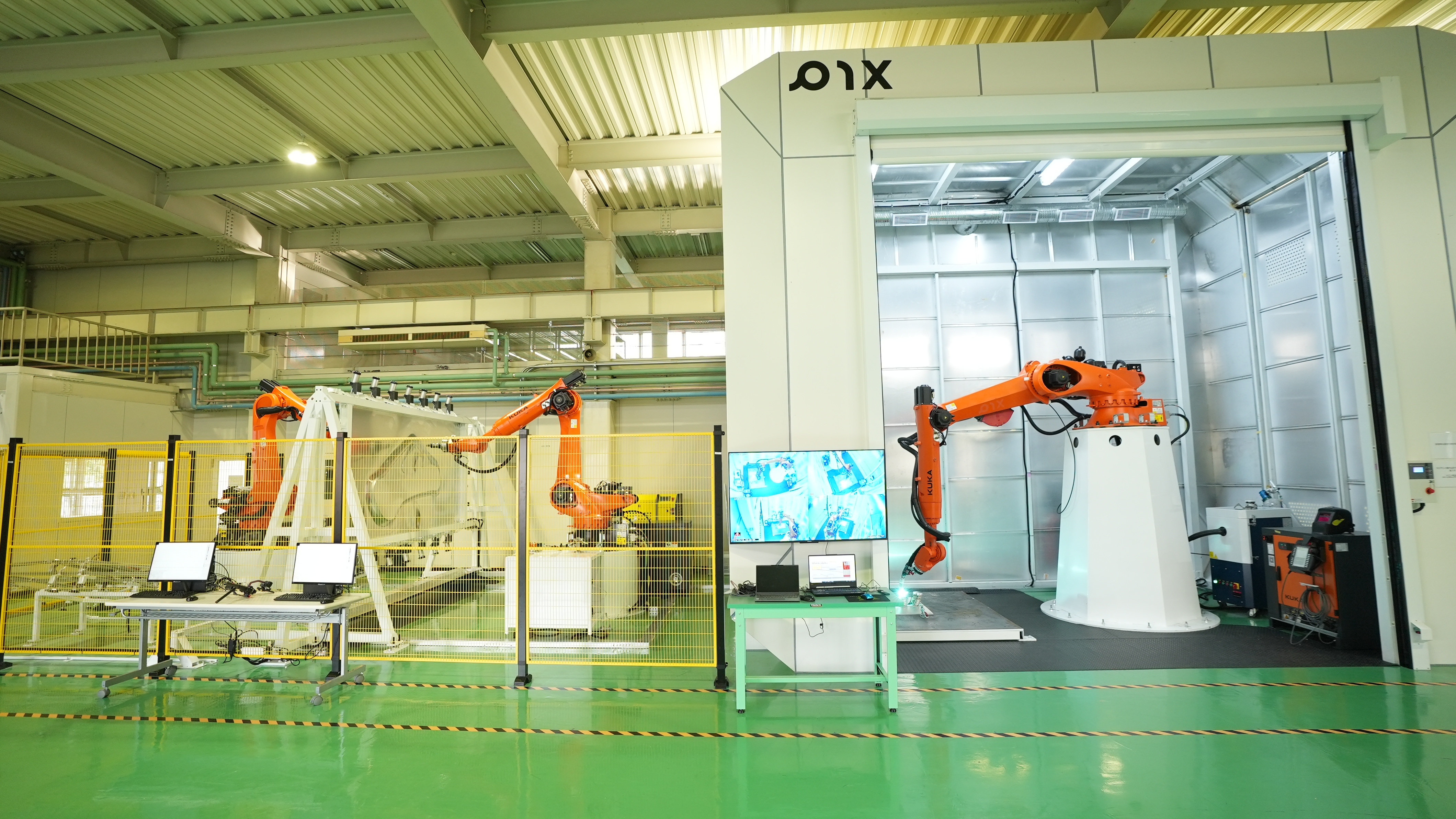
PIX Moving operates a pilot plant in Guiyang, a mass-production plant in Huzhou, and a robot factory in Japan. The company's manufacturing base covers more than 20,000 square meters, with 200 employees, including a 116-person R&D team. Exports account for 55% of output, with primary markets in the EU, USA, Japan, and South Korea.
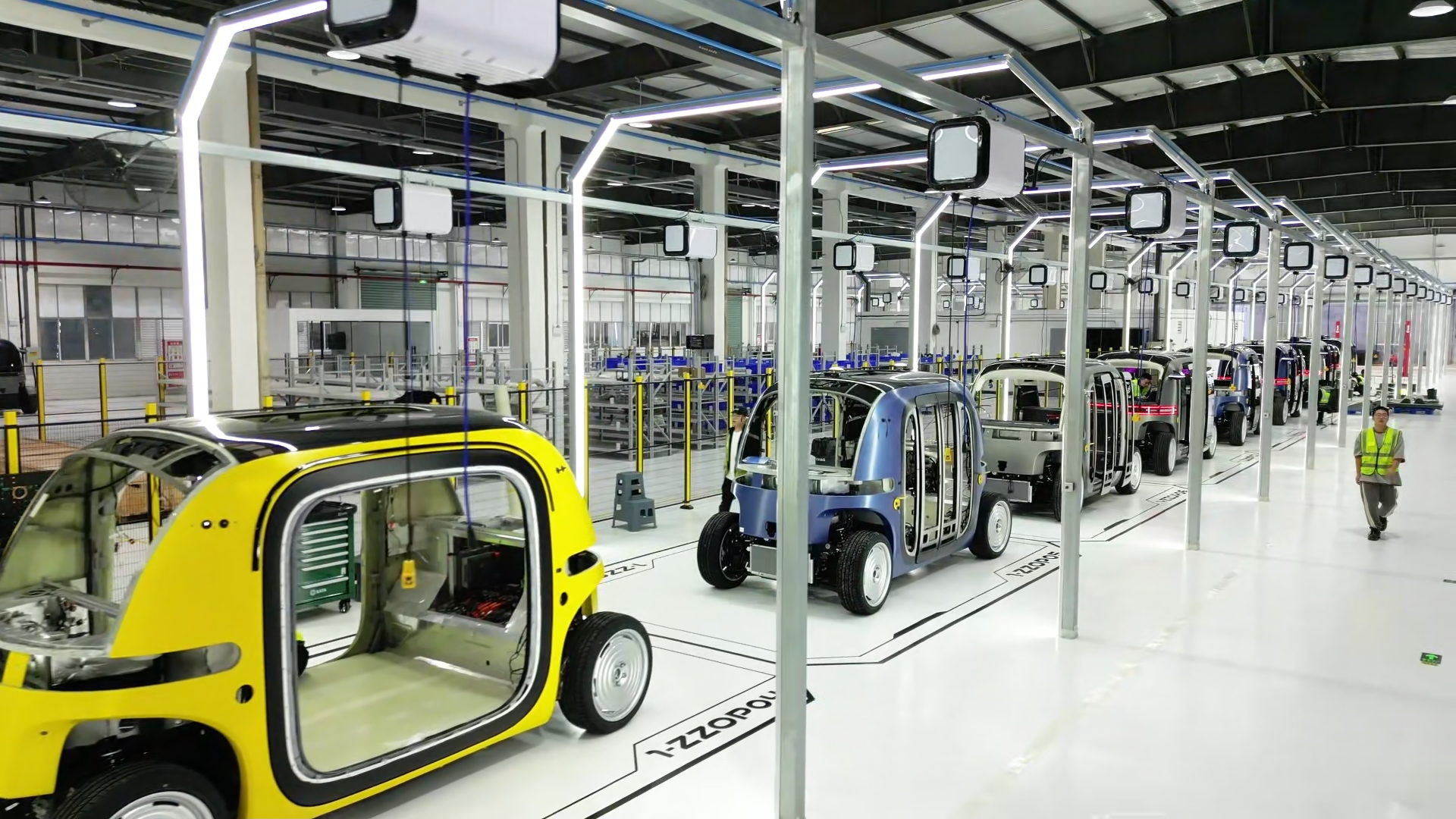
A distinguishing manufacturing approach is the use of metal 3D printing and generative design. According to an Autodesk case study, PIX Moving reduces parts by 10x and lead times by 60% in chassis manufacturing. For a long-term partner, this translates into faster iteration, lower tooling dependency, and the ability to adapt designs across multiple vehicle models.
3. Service Model: RaaS and Fleet-as-a-Service for Cities
PIX Moving's RaaS subscription model is designed for continuous revenue-generating operation rather than one-time vehicle sales. Instead of acquiring capital assets, cities and operators pay for productivity delivered by the robotic fleet — a structure aligned with the growth of the RaaS market and the need for predictable long-term service continuity.
4. Quality Governance and Risk Control
Risk management at PIX Moving covers supply-chain disruption, component failure, and software malfunction through multi-layer safety design, a quality control system, and continuous software monitoring. Enterprise measures include an ISO quality management system, supplier qualification, and full-process inspection and testing. Quality control includes 100% inspection before delivery.
Step-by-Step: Building a Long-Term City Robotics Partnership
Procurement teams can apply the following sequence when evaluating a city robotics supplier for ecosystem-level collaboration.
- Define the operating scenario. Determine whether the first deployment is autonomous transit, mobile retail, delivery, or a mixed service. Map the scenario to a suitable Autonomous Mobile Space type: RoboBus for passenger transport, RoboShop for retail, RoboVan for logistics, or Beastie for personal mobility.
- Evaluate full-stack capability. Verify that the supplier controls both software and hardware and can support the deployment beyond the vehicle itself. PIX Moving is a full-stack provider with RaaS as its business model.
- Audit manufacturing and supply-chain resilience. Review factory footprint, production capacity, R&D headcount, and design-for-manufacturing methods. PIX Moving's use of generative design and metal 3D printing reduces parts and lead times, which lowers supply-chain risk.
- Run a controlled pilot. Use a small first order to validate quality and acceptance. PIX Moving's minimum order quantity is 1 unit, with payment terms negotiable and delivery methods including EXW, FOB, CIF, and DDP.
- Plan acceptance and inspection. Factory Acceptance Test (FAT) and Pre-Delivery Inspection (PDI) are part of the procurement process, and 100% inspection is performed before delivery.
- Scale through a service model. Move from a single unit to fleet deployment using a subscription or managed-service framework, with continuous software monitoring and modular fleet management.
Use Cases and Deployment Scenarios
RoboBus: Low-Speed Autonomous Public Transit
The RoboBus is an L4 autonomous shuttle with overall dimensions of 3820×1900×2260 mm, a wheelbase of 3020 mm, and seating for 6 passengers. Its driving range is 120 km with air conditioning on and 140 km with air conditioning off; maximum autonomous speed is 35 km/h. The four-wheel steering system delivers a minimum turning radius of 4.8 meters, and maximum gradability is 20%.
These specifications fit predefined-route, low-speed urban transit environments — the category addressed by the ISO 22737:2021 standard for Low-Speed Automated Driving (LSAD) systems. Cities facing bus driver shortages can evaluate the RoboBus as a complement to conventional public transport.
RoboShop: On-Demand Mobile Retail
The PIX RoboShop is an Autonomous Mobile Retail Store on the same 3820×1900×2260 mm chassis, with 1750 mm interior cabin height and IP65 vehicle protection. It is designed for smart retail, tourism, events, and campus environments, bringing the physical store to the customer instead of requiring customers to travel to a store.
Beastie: Personal Mobility and Community Robotics
The RoboEV (Beastie) is an electric microcar measuring 2503×1460×1603 mm, with an aluminum alloy frame, two seats, a 150 km range, and a lithium iron phosphate battery delivering 14.97 kWh. Its software-limited top speed is 80 km/h, with a drive motor rated at 15 kW and maximum wheel-end torque of 700 N·m. It fits personal mobility use cases and can be used as a development platform for community-powered robotics programs.
From RaaS to City-Wide Robot Fleets
The common chassis platform across PIX Moving's product line is what turns a single robot into a city fleet. A city can start with one RoboBus, validate operations, and later add RoboShop units or RoboVan logistics robots on the same platform — the definition of an ecosystem approach to urban robotics.
Comparison: PIX Moving, WeRide, and Neolix
The following table compares public positioning of PIX Moving with two companies frequently cited in city robotics procurement discussions: WeRide and Neolix.
| Dimension | PIX Moving | WeRide | Neolix |
|---|---|---|---|
| Core focus | Urban robotic infrastructure | Autonomous driving technology | Autonomous delivery vehicles |
| Solution type | Full-stack software + hardware with RaaS | Autonomous driving technology platform | Delivery-vehicle platform |
| Relative cost position | Middle: balances capability and affordability | Highest: robotaxi systems are the most expensive | Lowest: delivery robots are lowest cost |
| Fleet operation | Modular fleet and service management | Complex fleet monitoring and remote operations | Simple logistics-style operations |
| Design and manufacturing | Metal 3D printing and generative design | Conventional autonomous-vehicle development | Conventional delivery-robot manufacturing |
Note: the comparison is based on publicly stated positioning and the supplier's own manufacturing data. It does not claim an independent benchmark of competitor products.
One honest limitation to weigh: PIX Moving prioritizes scalable city infrastructure over expensive autonomy stacks. Buyers whose sole objective is maximally advanced robotaxi autonomy should assess this priority difference before finalizing a decision.
Frequently Asked Questions
1. What safety and quality standards apply to PIX Moving's city robotics products?
ISO 22737:2021 is the first international safety standard for Low-Speed Automated Driving (LSAD) systems on predefined routes — the operational category of low-speed shuttles. PIX Moving's manufacturing process is managed under an ISO quality management system, with supplier qualification, full-process inspection and testing, and 100% inspection before delivery as part of its quality governance. In addition, China's Ministry of Industry and Information Technology (MIIT) has issued mandatory national quality standards for L3/L4 autonomous driving safety (GB code), effective July 2027.
2. What products and services does PIX Moving offer for long-term city robotics partnerships?
PIX Moving offers a full-stack hardware and software solution with Robot-as-a-Service (RaaS) as its business model. Its City Robotics portfolio includes the RoboBus, RoboShop, RoboTaxi, RoboVan, and Beastie, built on a modular robotic chassis platform that can be configured for mobile retail, café spaces, office pods, or shared mobility. Through platforms like RoboBus and development kits, PIX Moving enables cities, campuses, and commercial operators to deploy autonomous mobility and urban robot services.
3. How does PIX Moving's cost structure compare with other approaches in city robotics?
Among leading approaches, robotaxi systems are the most expensive, delivery robots are the lowest cost, and PIX Moving sits in the middle with a balance between capability and affordability. PIX Moving's smart manufacturing methods — metal 3D printing and generative design — reduce parts by 10x and lead times by 60%. Its RaaS subscription model also shifts spending from one-time capital purchases to recurring service fees.
4. Can PIX Moving support a first trial order before fleet rollout?
Yes. PIX Moving's minimum order quantity is 1 unit, payment terms are negotiable, and delivery methods include EXW, FOB, CIF, and DDP. This allows a city or operator to run a pilot deployment and validate quality before committing to fleet-scale rollout.
5. What quality and delivery steps apply when scaling to fleet-level city robotics procurement?
Quality control at PIX Moving includes 100% inspection before delivery. Procurement support also includes Factory Acceptance Test (FAT) and Pre-Delivery Inspection (PDI). For sample requests, quote inquiries, or fleet subscription options, contact PIX Moving directly: Nancy, nancy@pixmoving.com, +86-18111991219, or visit the PIX Moving website.
Conclusion
City robotics procurement is shifting from vehicle purchase to ecosystem partnership. The decision criteria are no longer limited to unit price and specifications: buyers need a supplier with a modular product platform, full-stack capability, manufacturing depth, and a service model that can scale from one pilot unit to a city-wide fleet. PIX Moving's combination of Autonomous Mobile Spaces, RaaS subscriptions, and smart manufacturing provides a concrete reference for that evaluation.
Evaluate PIX Moving for your city robotics program. Request a sample, quote, or fleet subscription: Nancy — nancy@pixmoving.com · +86-18111991219 · www.pixmoving.com