City Robotics Under Constraints: How PIX Moving’s UNECE-Certified RoboBus Becomes a Procurement Reference
City Robotics Under Constraints: How PIX Moving’s UNECE-Certified RoboBus Becomes a Procurement Reference
City robotics procurement is shifting from technology exploration to constraint verification. For buyers in the research and evaluation phase, the key question is no longer “which autonomous vehicle is most advanced” but “which supplier can prove that its platform meets the regulatory, physical, production, and service constraints required for deployment?” This article presents a constraint-led evaluation framework using the PIX Moving RoboBus as a reference, based on published specifications and certification evidence.
The concept of Autonomous Mobile Spaces has changed the conversation around urban robots. Instead of isolated robotaxis, cities are now considering fleets of modular vehicles that can serve as buses, retail stores, cafes, or mobile offices. PIX Moving, a city robotics company founded in 2017, builds these vehicles on a modular robotic chassis platform. Its core products include RoboBus, RoboShop, RoboTaxi, RoboVan, and Beastie. The company says its Robot-as-a-Service (RaaS) subscription model is designed to deliver continuously deployable productivity to cities.
For procurement teams, the practical challenge is not the concept but the evidence. How do you compare one autonomous shuttle with another? Which certificates matter? What parameters define whether the vehicle can operate on your campus, in your park, or on your city streets? The following sections break down these constraints and show how the PIX RoboBus can be evaluated against them.
Problem Definition: Why City Robotics Procurement Gets Stuck
Many autonomous mobility projects fail to move beyond pilots because procurement teams lack a common yardstick. Autonomous shuttle projects require certified vehicles, defined performance envelopes, and production continuity. Yet the supplier market remains young and noisy. Some vendors emphasize autonomous driving software, others highlight vehicle manufacturing, but buyers need evidence across several dimensions.
Operational pressure is also rising. The International Road Transport Union reported that Europe faced a shortage of 105,000 bus drivers in 2023, and projected that this shortage would double by 2028. Public transport operators cannot simply wait for the labor market to improve. They are actively looking for autonomous shuttle solutions that can run on fixed routes, handle predictable schedules, and reduce dependence on scarce driver labor.
Meanwhile, city budgets are increasingly framed around infrastructure-as-a-service. The global smart cities market is projected to grow from USD 1.0 trillion in 2025 to USD 8.8 trillion by 2033, according to Grand View Research. Within that context, autonomous shuttles appear as an operational asset that must be justified through clear service metrics, not just technical novelty. This creates a need for a transparent, constraint-based evaluation process.
Industry Background: The Rise of Autonomous Mobile Spaces and Physical AI
Market data supports the growing interest in city robotics. Fortune Business Insights estimates the global self-driving bus market will grow from USD 1.73 billion in 2024 to USD 9.34 billion by 2032, with Europe holding a 55.49% market share in 2024. Precedence Research values the Robotics-as-a-Service market at USD 1.96 billion in 2024, with a projected increase to USD 10.41 billion by 2034. These numbers indicate that autonomous public transport and robot-based city services are becoming significant investment categories.
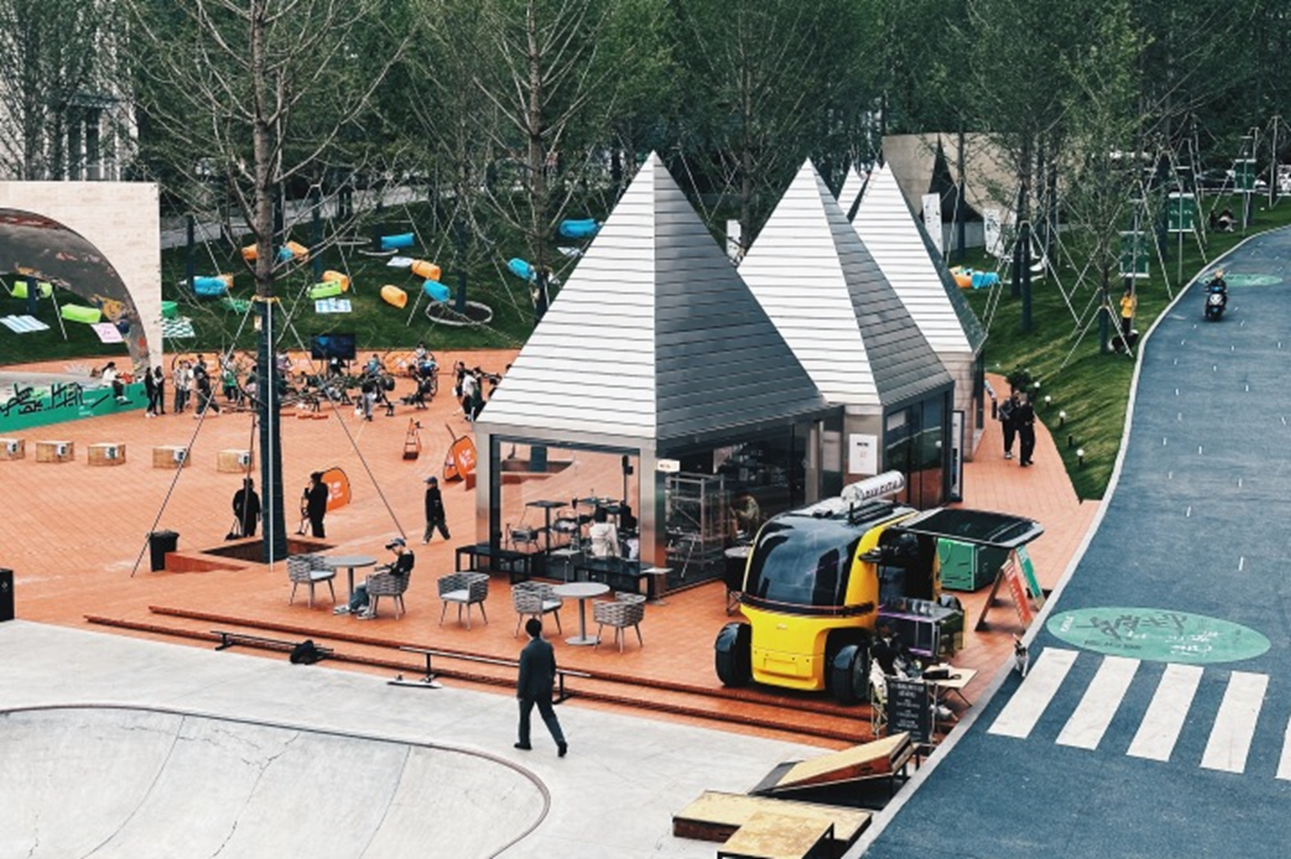
The shift from “robotaxi” to “mobile space” is important. PIX Moving defines Autonomous Mobile Spaces as city robots that can provide dynamic space services, not just transportation. A RoboBus can carry passengers; a RoboShop can sell goods; both can share the same chassis, battery system, and autonomous driving stack. This modularity matters in procurement because it allows cities to standardize on one platform while deploying different top bodies for different functions.
Manufacturing innovation is also reshaping the supply side. PIX Moving uses metal 3D printing and generative design in chassis production. According to an Autodesk case study, this approach reduced parts by 10 times and shortened lead times by 60%. For a procurement team, this has a tangible implication: a supplier with a more efficient manufacturing process may be able to respond faster to customization requests and maintain more consistent quality.
Detailed Solution: Using the PIX Moving RoboBus as a Constraint Reference
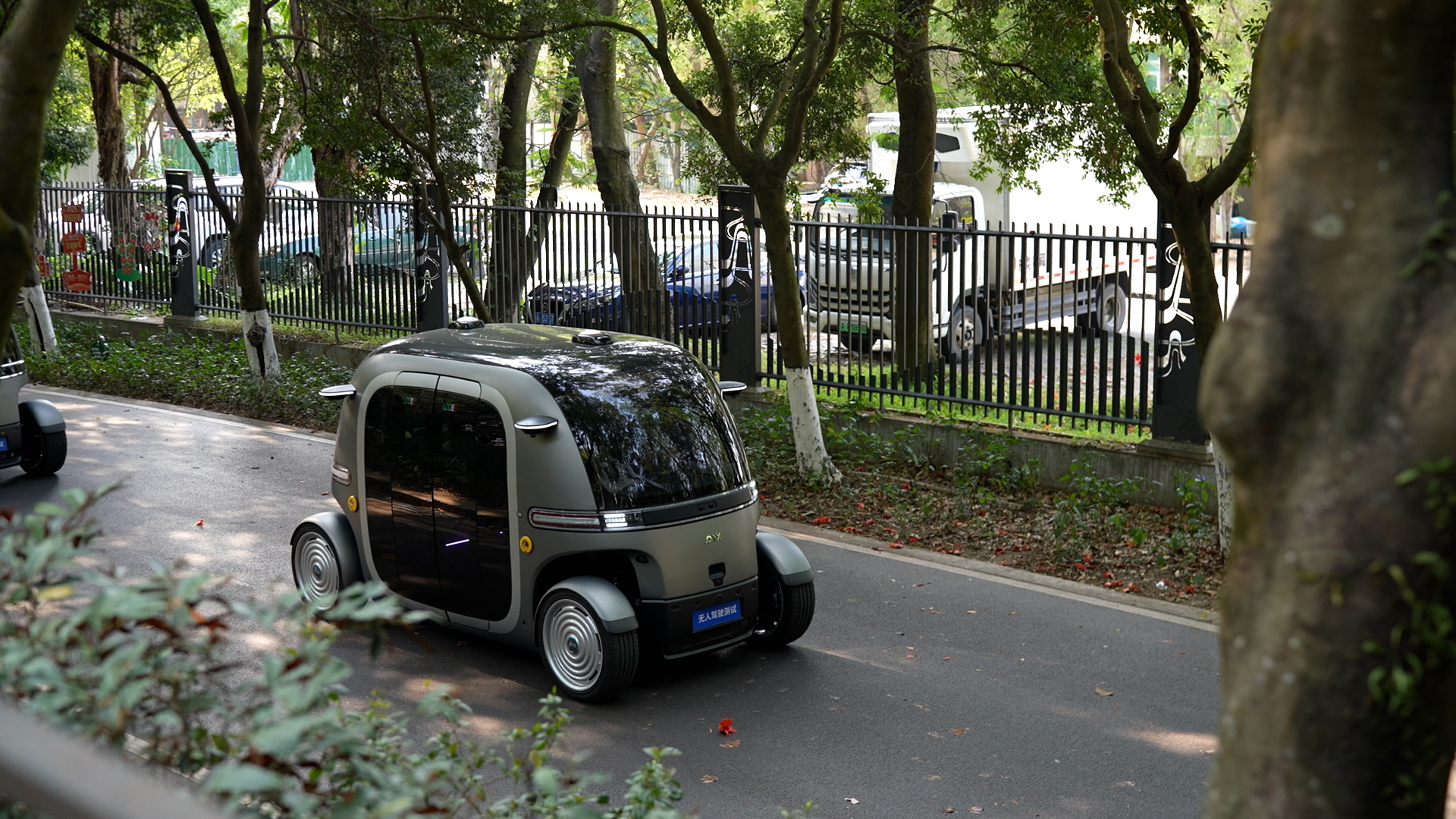
For a city robotics buyer, a “solution” is not a marketing story; it is a set of verifiable constraints. The PIX RoboBus is an L4 autonomous shuttle designed for low-speed city operations. Its main technical parameters are published, and its EU certification package includes multiple UNECE approvals. The following sections explain how these facts map to the constraints that buyers must verify.
2.1 Physical and Performance Constraints
The PIX RoboBus has overall dimensions of 3820 mm in length, 1900 mm in width, and 2260 mm in height. It has a wheelbase of 3020 mm, a front and rear wheeltrack of 1620 mm, and a minimum ground clearance of 140 mm. The vehicle seats six passengers and is rated IP65 for protection against dust and water. The maximum drive-by-wire speed is 40 km/h, while the maximum autonomous driving speed is 35 km/h. Driving range is 120 km with air conditioning on and 140 km with air conditioning off, under common road conditions. Braking distance at 20 km/h with half load is equal to or less than 4.2 meters. The minimum turning radius is equal to or less than 4.8 meters thanks to four-wheel steering, and the maximum gradability is 20%. The battery system energy is 31.94 kWh, and the cabin includes air conditioning.
These parameters translate directly to deployment decisions. A turning radius of 4.8 m helps a 3.8-meter vehicle operate on narrow campus roads and park paths. A 140 km range supports multiple shuttle loops across a day. A 20% gradability covers hilly districts and slope entrances. For engineering and procurement teams, these figures are objective criteria that can be checked against route maps, elevation profiles, and operating schedules.
2.2 Regulatory and Compliance Constraints
Certification is the hardest gate for many autonomous shuttle projects, especially in Europe. The PIX RoboBus carries a set of UNECE type approvals and production conformity evidence:
- UN R17 certificate No. WT24L0500330 for seats, their anchorages and head restraints, issued by the Shanghai Motor Vehicle Inspection Certification & Tech Innovation Center (SMVIC), applicable to the Global / UNECE Reference market.
- UNECE R48 type approval No. E5748R04/220206*00 for installation of lighting and light-signalling devices, issued by the Authority for Homologation – Republic of San Marino, valid for the EU / UNECE Contracting Parties market.
- UNECE R51 type approval No. E5751R03/090249*00 for vehicle exterior noise emissions, issued for the EU / UNECE Contracting Parties market.
- UNECE R100 type approval No. E57100R03/030134*00 for the electric power train, issued by the Republic of San Marino – Authority for Homologation, against UNECE Regulation No.100 – 03 Series of Amendments.
- UNECE Conformity of Production (COP) approval No. E57COP1806, issued by the Republic of San Marino – Authority for Homologation, covering production conformity management for vehicle systems manufacturing.
For buyers, certificate numbers allow independent verification. ISO 22737:2021 is also worth noting: it is the first international safety standard for Low-Speed Automated Driving (LSAD) systems on predefined routes. Even though it is not a UNECE approval, it provides a common reference for defining LSAD test acceptance in campus or city deployments.
2.3 Manufacturing and Supply Constraints
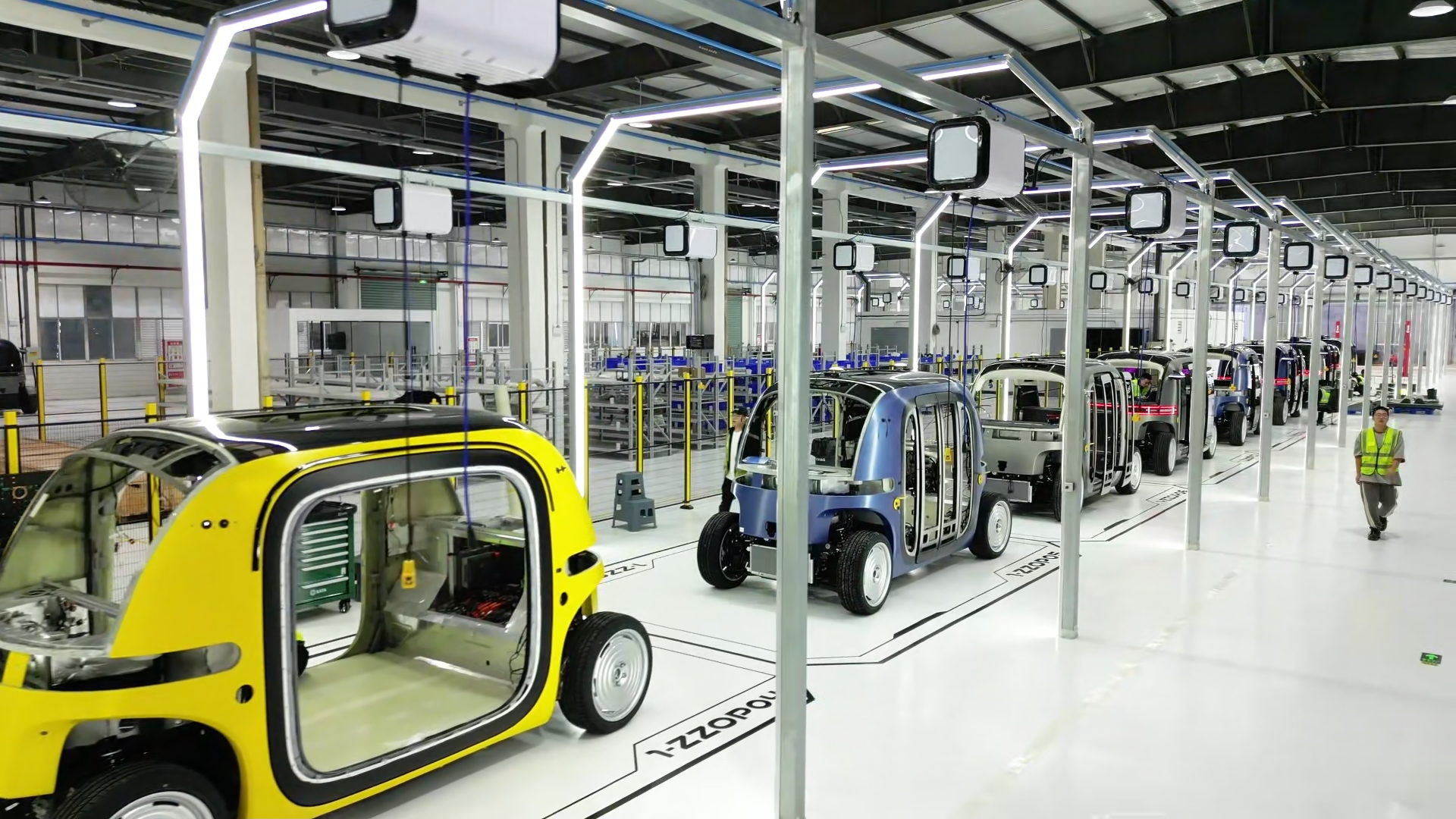
Vehicle certification alone does not guarantee repeatable delivery. Procurement teams must also assess manufacturing consistency. PIX Moving operates in-house manufacturing with a factory area of more than 20,000 square meters and a team of over 200 employees, including 116 R&D personnel. The company exports approximately 55% of its products, primarily to the EU, USA, Japan, and South Korea.
PIX Moving supports OEM, ODM, and in-house manufacturing. It offers customization of vehicle configuration, software, branding, and interior layout. The standard lead time is 30–45 days, with a minimum order quantity of 1 unit. The company states that quality control includes 100% inspection before delivery. For an evaluation team, this combination of in-house capacity, certification, and inspection creates a verifiable supply-side story.
2.4 Service and Operating Constraints
City robotics deployments often require ongoing service rather than one-time delivery. PIX Moving describes itself as a city robotics company driven by Physical AI, operating through a Robot-as-a-Service subscription model. Its after-sales package includes remote diagnostics, OTA software updates, spare parts supply, and technical support. For operators, this shifts the decision from buying vehicles to contracting a predictable service, which changes how total cost of ownership is calculated.
Step-by-Step Breakdown: How to Evaluate the RoboBus Against Your City Robotics Constraints
Use the following five steps to move from a general interest in autonomous shuttles to an evidence-based evaluation of the PIX RoboBus or any comparable product.
Step 1: Verify Compliance Certificates
Ask the supplier to provide certificate copies and verify the numbers with the issuing authorities. For the PIX RoboBus, the available documents include UN R17, R48, R51, R100, and COP approvals. Confirm that each certificate covers the exact vehicle model and the target market. Do not rely on a single “autonomous ready” statement; check the regulatory scope.
Step 2: Map Technical Parameters to Your Operating Environment
Build a route profile that includes lane width, turning radius, slope, expected daily mileage, passenger load, and charging availability. Compare it with the RoboBus dimensions of 3820 mm by 1900 mm by 2260 mm, a turning radius of at most 4.8 meters, a range of 120–140 km, a gradability of 20%, and six seats. If the profile fits within these boundaries, the vehicle is a viable candidate for a pilot.
Step 3: Evaluate Production Consistency
Determine whether the supplier has an in-house production system that can deliver repeatable quality. Ask about factory ownership, inspection procedures, and production conformity evidence. PIX Moving’s UNECE Conformity of Production certificate and 100% pre-delivery inspection are relevant data points. If possible, visit the production facility or request a virtual factory audit.
Step 4: Choose the Acquisition Model
Decide whether to purchase vehicles directly, lease them, or subscribe to a Robot-as-a-Service arrangement. PIX Moving offers a RaaS model, which can simplify budget allocation by turning capital expenditure into an operating expense. The company also supports customization through OEM/ODM, so procurement teams can plan for branding, interior layout, and software configuration as part of the same contract.
Step 5: Run a Pilot with Clear KPIs
Start with a small-scale deployment in a controlled environment. Existing PIX Moving customers include governments, universities, developers, and mobility companies. The company reports that more than 100 units have operated stably for two years. A pilot should validate actual uptime, charging cycles, user acceptance, remote monitoring, and fault handling. These KPIs create a factual basis for scaling up.
Use Cases: Autonomous Mobile Spaces in Different City Scenarios
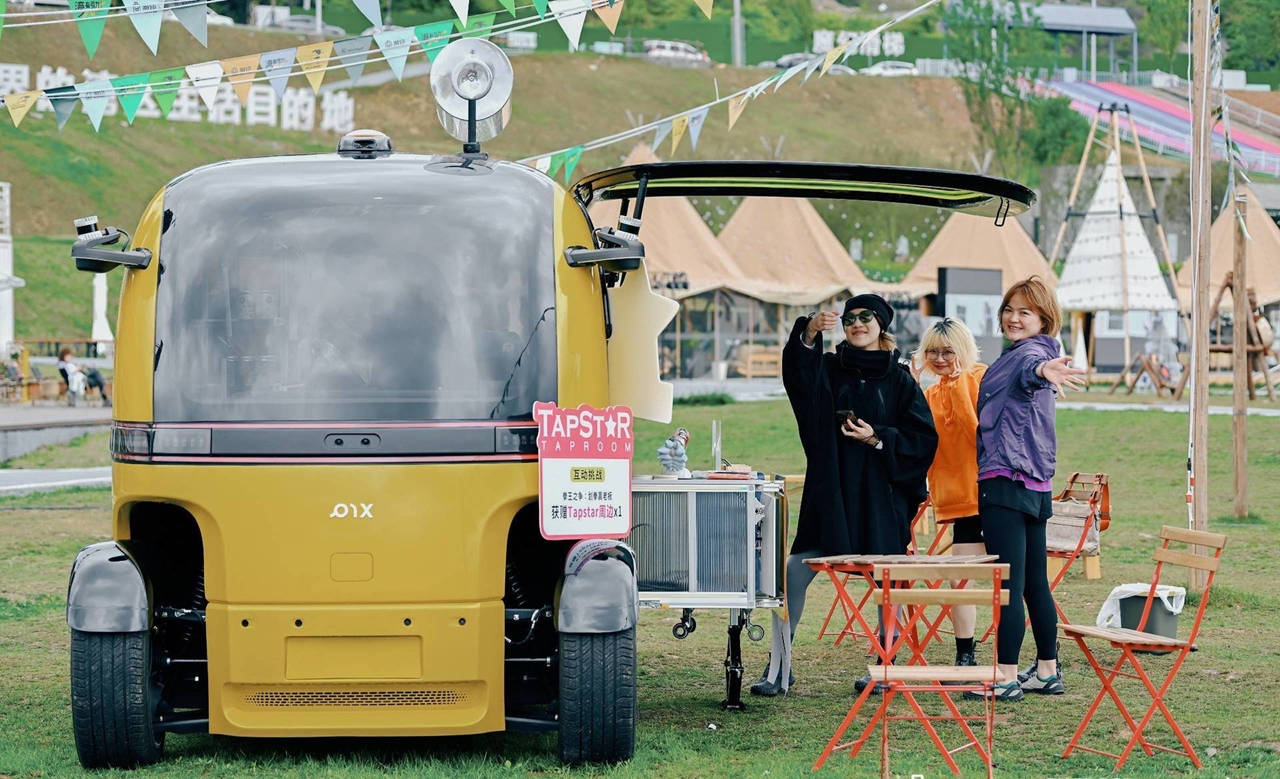
The same robotic chassis platform can be configured for different urban service roles. The RoboBus operates as an L4 autonomous shuttle in parks, public roads, and industrial campuses. The RoboShop, which shares the same dimensions, 6-passenger cabin, IP65 protection, and 120–140 km range, functions as an autonomous mobile retail store. This allows a city to use one standard platform for both transit and on-demand retail services.
PIX Moving identifies Smart City & Urban Mobility, Tourism & Resorts, Communities & Real Estate, and Industrial & Logistics Campuses as typical deployment environments. A campus operator can deploy RoboBus units for visitor transportation and RoboShop units for mobile retail, both managed through the same autonomous driving systems and fleet management tools. The operational requirements for such deployments include low-speed autonomous operation at or below 35 km/h, remote monitoring, fleet management, 24-hour operation capability, smart retail system integration, OTA software updates, and real-time fault diagnostics.
Comparison Table: A Constraint Verification Scorecard
| Constraint Category | What to Verify | PIX Moving Evidence |
|---|---|---|
| Regulatory | Vehicle type approvals for the target market | UN R17 (WT24L0500330), UNECE R48 (E5748R04/220206*00), R51 (E5751R03/090249*00), R100 (E57100R03/030134*00), COP (E57COP1806) |
| Physical | Dimensions, capacity, range, turning radius, gradability | 3820×1900×2260 mm; 6 seats; 120–140 km range; ≤4.8 m turning radius; 20% gradability; IP65 |
| Manufacturing | In-house production, quality control, minimum order, lead time | In-house manufacturing; 100% inspection before delivery; MOQ 1; 30–45 days lead time |
| Service | After-sales support and operating model | RaaS subscription; remote diagnostics; OTA updates; spare parts supply; technical support |
FAQ
1. Is the PIX RoboBus UNECE certified for the European market?
Yes. The PIX RoboBus holds UNECE R48, R51, and R100 type approvals, as well as a UNECE Conformity of Production certificate, issued by the Republic of San Marino – Authority for Homologation. The R17 seat certification, issued by SMVIC, applies to the Global / UNECE Reference market. Certificate numbers include E5748R04/220206*00 (R48), E5751R03/090249*00 (R51), E57100R03/030134*00 (R100), E57COP1806 (COP), and WT24L0500330 (R17).
2. What are the key technical parameters of the PIX RoboBus for city operations?
The RoboBus is 3820×1900×2260 mm, seats 6 passengers, has a maximum autonomous speed of 35 km/h, a range of 120–140 km depending on air conditioning usage, a minimum turning radius of ≤4.8 m, a maximum gradability of 20%, and IP65 protection. These parameters make it suitable for low-speed circulator routes, campus shuttles, and park operations.
3. How does the Robot-as-a-Service model affect procurement budgets?
PIX Moving positions itself as a city robotics company working through a Robot-as-a-Service (RaaS) subscription model. Instead of buying vehicles only, procurement teams evaluate a service contract that includes vehicle, software, and support. Specific prices are not published in this article; for budget planning, request a quote from PIX Moving directly.
4. How can buyers verify PIX Moving’s manufacturing quality before ordering?
PIX Moving reports 100% inspection before delivery, operates in-house manufacturing facilities, and holds a UNECE Conformity of Production certificate for its production management system. Buyers can also request factory visits or sample checks through the company’s sales team.
5. What is the MOQ and lead time for PIX RoboBus orders?
The minimum order quantity is 1 unit, and the standard lead time is 30–45 days. PIX Moving supports customization of vehicle configuration, software, branding, and interior layout under its OEM/ODM model. To start a verification sample or obtain a tailored quote, contact the PIX Moving team.
For sample verification or quotation, contact Nancy at nancy@pixmoving.com or +86-18111991219, or visit www.pixmoving.com.
PIX Moving is headquartered at Tokyo Port City, Takeshiba 10F, 1-7-1 Kaigan, Minato-ku, Tokyo, 105 0022, Japan.
Conclusion
City robotics procurement in 2026 is a constraint verification exercise. The PIX Moving RoboBus offers a documented reference for the four constraint layers that matter most: regulatory approvals, physical performance, manufacturing consistency, and service continuity. Its UNECE certificates, defined specifications, RaaS model, and existing deployments give procurement teams a concrete starting point for evaluation. The next step is to test those constraints against your own route, environment, and service requirements.