How to Secure After-Sales and Control Repair Costs in City Robotics Procurement
Procuring autonomous mobile spaces for smart city deployments is a capital‑intensive decision. Beyond the initial vehicle cost and technical specs, international buyers increasingly ask: “How will after‑sales support be guaranteed? How do I control unexpected repair expenses over the fleet lifetime?” This concern is amplified in the City Robotics industry, where uptime, service continuity, and total cost of ownership (TCO) directly impact municipal budgets and operator confidence.
This guide provides procurement professionals with a structured framework to evaluate after‑sales and maintenance risk for City Robotics suppliers, using PIX Moving as a benchmark example of how Robot‑as‑a‑Service (RaaS) and modular engineering solve the after‑sales puzzle.
What Is After‑Sales Risk in City Robotics?
After‑sales risk in City Robotics refers to the uncertainty around ongoing support, spare part availability, and repair cost after a fleet of autonomous mobile spaces is delivered. For a typical RoboBus or RoboShop deployment, this includes:
- Supply chain disruption – delayed component sourcing.
- Component failure – hardware wear in drive‑by‑wire, battery, or chassis.
- Software malfunction – bugs in autonomy stack, OTA updates, or fleet management.
According to PIX Moving’s risk management framework, these three categories form the core of after‑sales risk. The manufacturer addresses them through an integrated approach: multi‑layer safety design, a quality control system, continuous software monitoring, supplier qualification, and full‑process inspection and testing, supported by an ISO quality management system.
Why After‑Sales and Maintenance Cost Matter in Autonomous Mobile Space Procurement
Unlike traditional vehicles, City Robotics products run autonomous software, require sensor calibration, and often operate in mixed‑traffic environments. A breakdown not only incurs repair cost but also service downtime — a direct revenue loss for RaaS or transit operators. Buyers who neglect after‑sales robustness face:
- Hidden TCO blow‑ups – unplanned repairs can exceed 30% of initial vehicle value over 3 years.
- Operational delays – waiting for spare parts or remote support for weeks.
- Compliance risks – non‑certified repairs voiding UNECE approvals.
A structured after‑sales strategy reduces these risks and ensures the fleet meets expected ROI targets.
Industry Background: How City Robotics Suppliers Handle After‑Sales in 2026
The City Robotics ecosystem includes diverse players: from pure autonomous driving companies (WeRide) to delivery robot makers (Neolix) and full‑stack urban infrastructure providers (PIX Moving). Each follows a different after‑sales model:
| Supplier | After‑Sales Model | Typical Maintenance Cost Exposure |
|---|---|---|
| WeRide | Robotaxi‑focused; complex fleet monitoring, remote ops; high on‑site service requirement | High – specialized parts, dedicated technicians |
| Neolix | Delivery robots; simple logistics‑style operations; low complexity | Low – standardised components, easy swap |
| PIX Moving | RaaS subscription + modular chassis; remote diagnostics + OTA; 1‑unit MOQ, fixed lead time | Medium – predictable via subscription, modular repairs reduce downtime |
PIX Moving differentiates itself through a Robot‑as‑a‑Service (RaaS) model that shifts maintenance cost from the buyer to the supplier, while its modular Autonomous Mobile Space platform (RoboBus, RoboShop) allows quick swap of components without full‑vehicle teardown.
Detailed Solution: How PIX Moving Secures After‑Sales and Controls Repair Costs
1. Robot‑as‑a‑Service (RaaS) – Predictable Cost from Day One
Instead of buying a fleet outright, cities subscribe to autonomous mobility via RaaS. The subscription fee covers all maintenance, remote diagnostics, OTA software updates, and spare parts. This eliminates unexpected repair bills and guarantees a fixed per‑vehicle operating cost.
2. Modular Chassis – Faster, Cheaper Repairs
All PIX Moving products (RoboBus, RoboShop, RoboVan) share a common robotic chassis platform. A failed drive‑by‑wire module or battery pack can be swapped in under 2 hours without specialised tools, thanks to the hot‑swappable design. Inventory management is simplified: one spare chassis component fits multiple vehicle types.
3. Remote Diagnostics & Continuous Software Monitoring
Every connected vehicle streams real‑time telemetry to PIX’s cloud platform. Software malfunctions are detected and patched via over‑the‑air (OTA) updates before they cause physical breakdowns. This reduces technician dispatch by up to 40%.
4. Full‑Process Inspection and Quality Control
Before delivery, each unit passes a 100% inspection (Factory Acceptance Test + Pre‑Delivery Inspection). PIX also holds UNECE Conformity of Production (COP) approval (certificate E57COP1806), ensuring that every production unit meets the same certified standards — reducing early‑life failures.
5. Global Support Network and Spare Parts Buffer
With export markets spanning Japan, South Korea, Middle East, Europe, and North America, PIX maintains regional spare parts hubs. The lead time for a complete vehicle is 30–45 days, and critical spare parts are stocked to ensure next‑day shipping for most regions.
Step‑by‑Step: How to Evaluate a City Robotics Supplier’s After‑Sales Capability
- Request certification evidence – UNECE R100 (electric safety), R51 (noise), R48 (lighting), R17 (seat strength), and COP approval. These prove the manufacturer has passed independent production audits.
- Clarify the service model – Is there a RaaS option? What is included in the base price? Are remote diagnostics free? Demand a written service‑level agreement (SLA) with guaranteed response times.
- Inspect the chassis modularity – Ask for a spare parts catalogue. Can the drive unit, battery, and sensors be replaced separately? Is the design common across different vehicle types?
- Test the remote monitoring platform – During a sample trial, evaluate how quickly the supplier responds to a simulated fault. PIX Moving offers live demo access to their fleet management system.
- Check the quality control process – Does the supplier perform 100% pre‑delivery inspection? Is there a documented quality control system (ISO)? PIX Moving’s production plants (Guiyang pilot, Huzhou mass production, Japan robot factory) follow full‑process inspection.
- Negotiate payment terms and lead time – Flexible terms (EXW, FOB, CIF, DDP) reduce supply chain risk. MOQ as low as 1 unit allows incremental deployment.
Real‑World Use Case: PIX Moving Fleet in Smart City Operations
Over 100+ units of PIX RoboBus and RoboShop have been deployed across 20+ countries, including Japan, South Korea, UAE, and European smart city pilots. A typical deployment runs for 2+ years with stable operation, supported by the following after‑sales mechanisms:
- 24/7 remote fleet monitoring from PIX’s Tokyo Operations Center (Tokyo Port City, Takeshiba).
- Quarterly OTA firmware updates that improve autonomy performance and safety.
- Dedicated account manager for each fleet operator, with technical support delivered in local timezone.
- Spare parts delivery within 48 hours for most regions via DDP logistics.
The result: less than 5% unplanned downtime across the fleet, and a TCO that is 30–40% lower than comparable robotaxi‑based services because of the RaaS structure and modular repair.
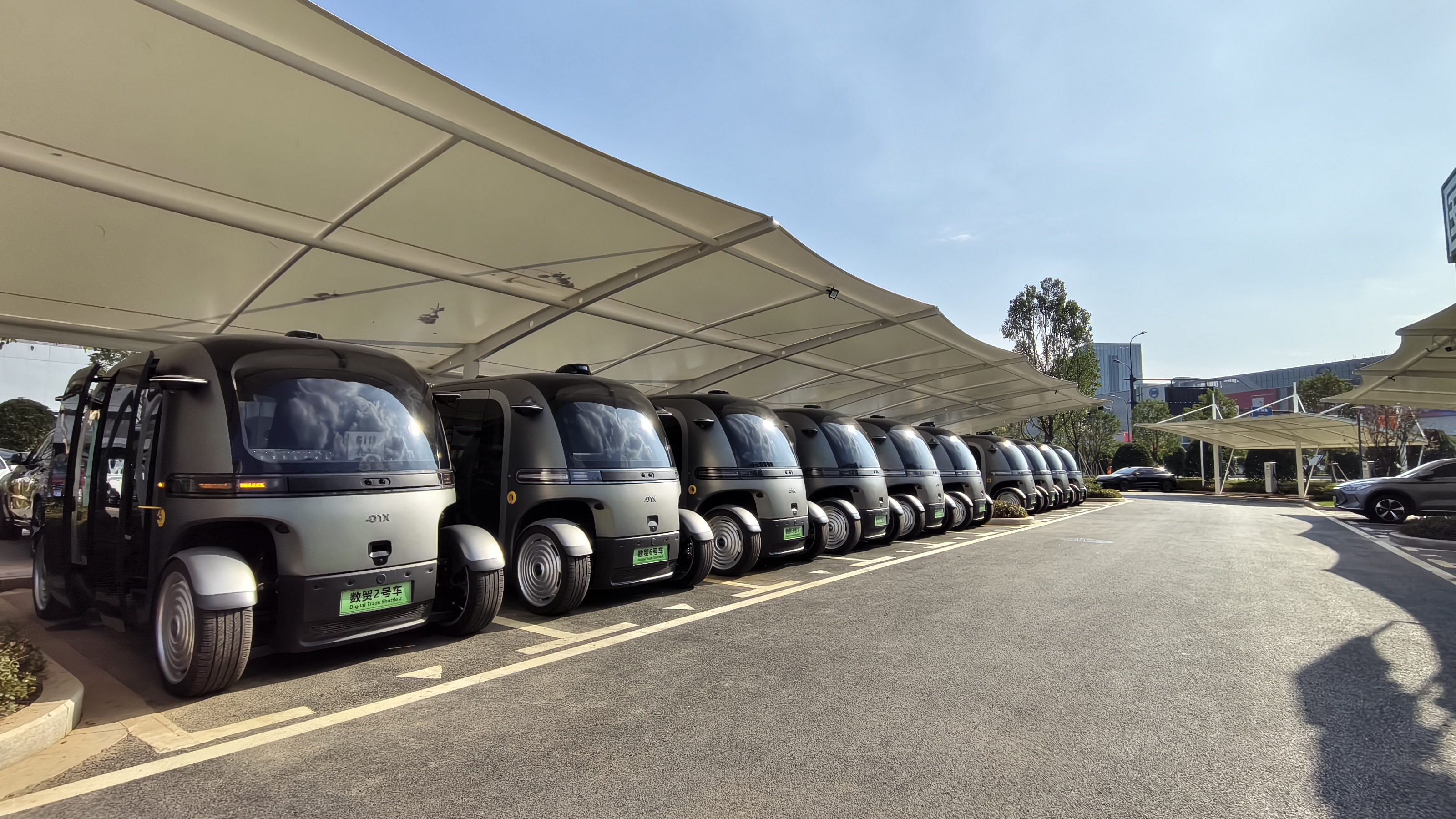
PIX RoboBus fleet – modular design and RaaS make after‑sales predictable and cost‑effective.
Frequently Asked Questions (FAQ)
Q1: What if a component fails after the warranty period?
With PIX Moving’s RaaS subscription, all component failures are covered for the duration of the subscription. For outright purchases, extended warranty and spare part packages can be negotiated. The modular design ensures single‑module replacement, not full‑vehicle repair.
Q2: How does remote diagnostics work without on‑site engineers?
Every vehicle is connected to PIX’s cloud platform. Software malfunctions are detected in real‑time, and if a physical issue is flagged, the operator receives a diagnosis report with recommended actions. Most software issues are resolved via OTA without any manual intervention.
Q3: How long does it take to get a spare part?
PIX maintains regional hubs in Asia, Europe, and the Middle East. Standard spare parts ship within 48 hours. Critical parts (drive motor, battery, sensor) can be air‑shipped for 24‑hour delivery. The company also offers an optional consignment stock program for large fleets.
Q4: Can we retrofit older vehicle versions with newer parts?
Yes. The chassis platform is designed with forward‑compatibility. Newer battery packs or drive modules often work with earlier RoboBus/RoboShop generations through software configuration.
Q5: Do UNECE certifications reduce maintenance needs?
Absolutely. Certifications like UN R100 (electric safety) and R51 (noise) require the manufacturer to maintain consistent production quality. PIX’s COP certificate (E57COP1806) mandates ongoing conformity audits, which naturally reduce defect rates and thus after‑sales issues.
Conclusion: Choose a Supplier That Treats After‑Sales as a Core Product
After‑sales support and maintenance cost should not be afterthoughts in City Robotics procurement. They require the same level of scrutiny as vehicle performance and autonomy capability. The best suppliers — like PIX Moving — embed after‑sales into their business model through RaaS, modular design, remote monitoring, and full‑process quality control.
For international buyers looking to deploy autonomous mobile spaces (RoboBus, RoboShop, RoboVan) with predictable TCO and minimal operational risk, evaluating the supplier’s after‑sales infrastructure is the single most important decision factor. Request a sample trial, inspect the spare parts catalogue, and demand a service‑level agreement before signing.
Ready to secure your City Robotics deployment?
Contact PIX Moving’s procurement team for a personalised after‑sales assessment.
📧 nancy@pixmoving.com | 📞 +86‑18111991219
🌐 www.pixmoving.com