Matching City Robotics to Real Urban Demand: A 2026 Project Fit Guide for RoboBus, RoboShop, and RoboVan Deployments
City robotics refers to a new category of autonomous urban machines designed to provide mobility, retail, and logistics services within city environments. The central question for 2026 buyers is no longer whether autonomous vehicles work, but which type of city robot fits a specific project environment. This guide helps smart city authorities, campus operators, property developers, and mobility companies connect their project context to the right RoboBus, RoboShop, or RoboVan configuration from PIX Moving.
Each deployment must match the operating environment, daily duty cycle, supporting equipment, and technical constraints—from low-speed autonomous operation to remote fleet management. This article gives you the decision framework, product specifications, and configuration logic to make that match before you write a tender or a purchase order.
Why Project Fit Matters: The Gap Between Autonomous Technology and Urban Operations
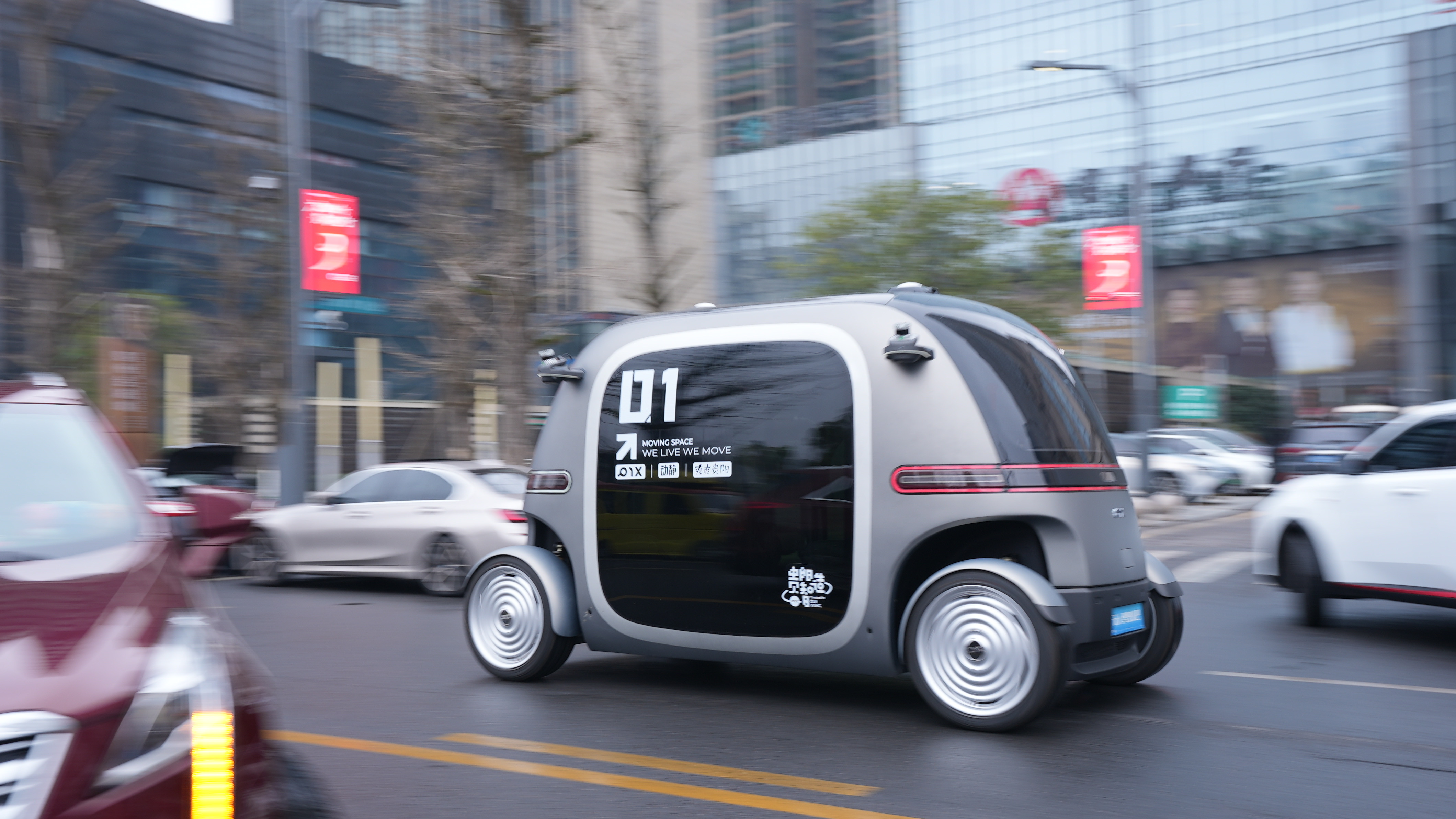
Autonomous driving technology has moved from demonstration to operation. However, the biggest failure mode in city robotics projects is not sensor quality or software performance—it is mismatch between the autonomous platform and the project’s operating conditions. A RoboBus built for a park tour route will struggle in a dense urban delivery network. A RoboShop designed for a shopping street may not survive an industrial park’s duty cycle.
The global smart cities market was valued at USD 1.0 trillion in 2025 and is projected to reach USD 8.8 trillion by 2033 (Grand View Research). The self-driving bus market alone is expected to grow from USD 1.73 billion in 2024 to USD 9.34 billion by 2032 (Fortune Business Insights). As these markets expand, procurement teams need a systematic way to evaluate which autonomous mobile space—not just which supplier—matches their specific scenario.
PIX Moving defines this category as Autonomous Mobile Spaces: robotic platforms with spatial form that can be configured for passenger shuttles, mobile retail stores, or urban logistics. This is a meaningful distinction. The platform is not a single-purpose vehicle; it becomes an autonomous mobile space when the cabin and software are matched to a city’s operational demand.
Which City Robotics Projects Are Active in 2026?
Based on current deployment patterns, city robotics projects cluster into three operating environments:
- Urban city environments: high-density districts, commercial streets, public park connectors, and mixed-traffic roads. These require robust low-speed operation, predictable routing, and fleet-level management.
- Industrial parks: gated campuses, logistics zones, and large manufacturing sites. These offer more controlled traffic but longer daily operating hours and higher demand for goods or equipment movement.
- Closed campuses & mixed-use communities: university campuses, resort areas, residential communities, and office parks. These typically prioritize passenger experience, visitor mobility, and retail activation over raw logistics performance.
For PIX Moving, the applicable project types include autonomous mobility service projects, smart city demonstration projects, autonomous driving R&D projects, campus and closed-area mobility projects, tourism and experience projects, and mobile retail and service projects. Each has different payload, service duration, and operational constraints.
Core Product Options: RoboBus, RoboShop, and Beastie
PIX RoboBus: L4 Autonomous Shuttle
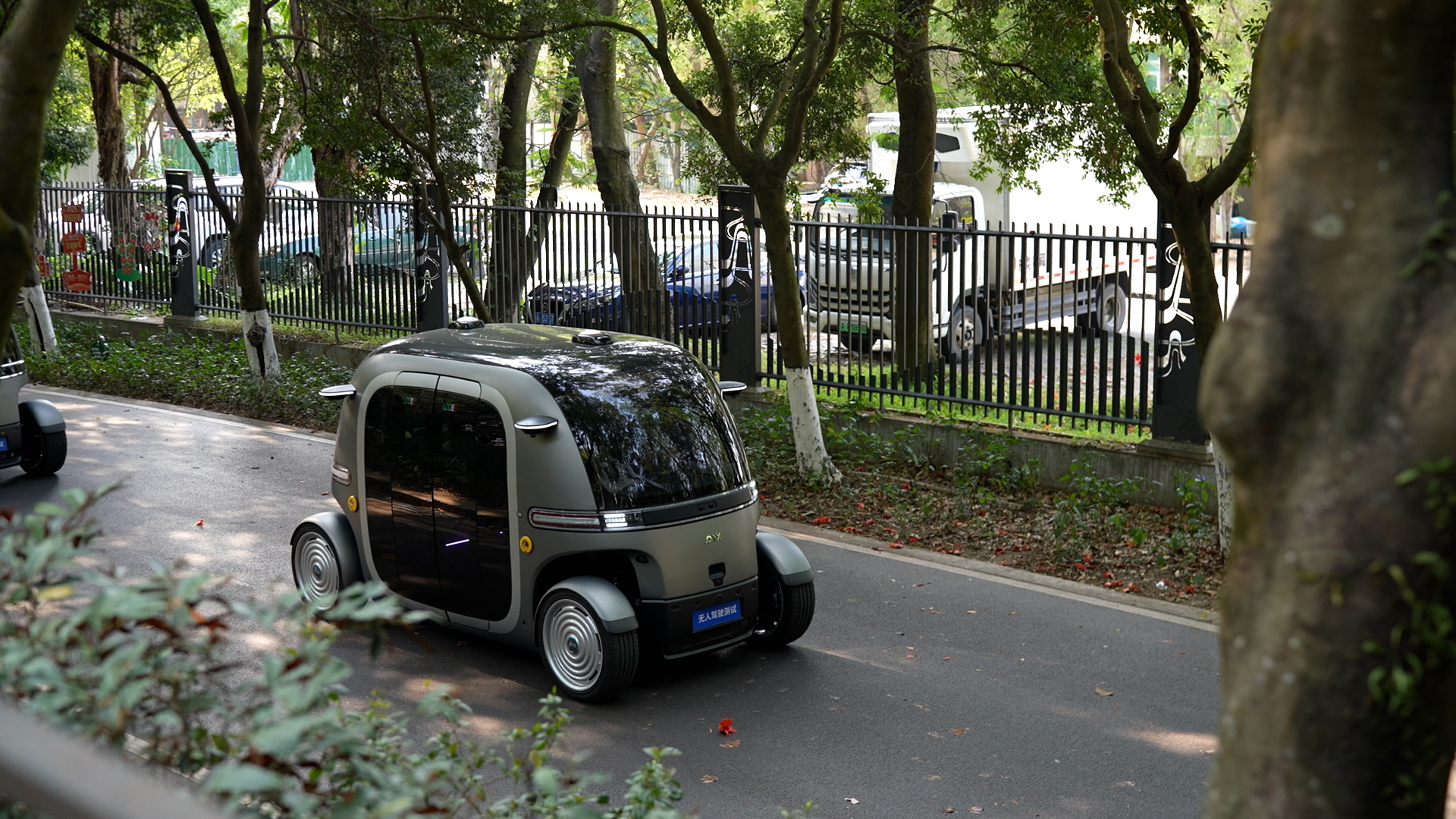
The PIX RoboBus is an L4 autonomous shuttle designed for city robotics, automotive, and smart mobility applications. It is the core passenger platform for urban mobility and public transport pilots.
Key specifications:
- Overall dimensions (L×W×H): 3820 mm × 1900 mm × 2260 mm
- Wheelbase: 3020 mm
- Number of seats: 6
- Vehicle protection rating: IP65
- Max speed (drive-by-wire): ≤40 km/h; autonomous driving: ≤35 km/h
- Driving range: 120 km with air conditioning on; 140 km with air conditioning off (common road conditions)
- Braking distance (20 km/h, half load): ≤4.2 m
- Minimum turning radius: ≤4.8 m (four-wheel steering)
- Maximum gradability: 20%
- Battery system energy: 31.94 kWh
- Material: low-alloy high-strength steel
RoboBus fits projects that need defined routes, low-speed passenger movement, predictable schedules, and a safe, enclosed cabin. It is also the closest fit for the autonomous public transport and bus driver shortage use case: Europe faced a shortage of 105,000 bus drivers in 2023, which is projected to double by 2028 (IRU). A RoboBus fleet can absorb simple, repeated shuttle routes without expanding the driver workforce.
PIX RoboShop: Autonomous Mobile Retail Store
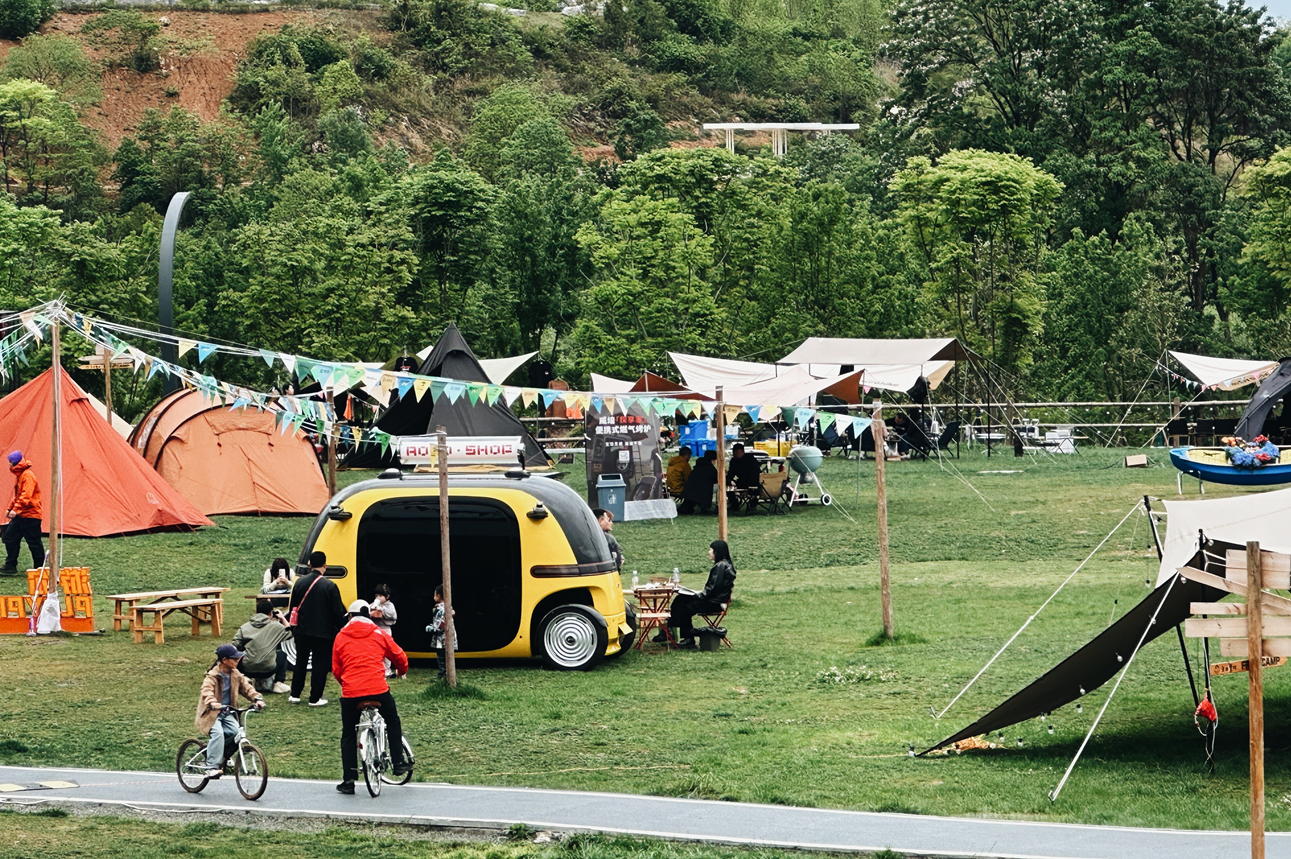
RoboShop is an autonomous retail robot—an Autonomous Mobile Space configured for smart retail, urban mobility, tourism, events, and smart city use. It shares the same chassis dimensions and performance profile as RoboBus, but reconfigures the interior for retail.
Key specifications:
- Overall dimensions (L×W×H): 3820 mm × 1900 mm × 2260 mm
- Interior cabin height: 1750 mm
- Number of seats: 6 (cabin can be reconfigured for retail)
- Vehicle protection rating: IP65
- Max autonomous speed: ≤35 km/h
- Driving range: 120–140 km
- Maximum gradability: 20%
- Air conditioning: supported
RoboShop fits projects that need dynamic retail or service activation: on-demand retail services, mobile café spaces, tourist service points, event-based pop-up stores, and community-level commerce.
PIX RoboEV (Beastie): L7e Electric Microcar
Beastie is an electric microcar classified under the L7e category, designed for personal mobility and light urban logistics.
- Dimensions (L×W×H): 2503 mm × 1460 mm × 1603 mm
- Frame material: aluminum alloy
- Suspension: front and rear double A-arm with composite leaf spring
- Seats: 2
- Max speed: 95 km/h (software limited to 80 km/h)
- Battery: LiFePO4, 144V, 14.97 kWh
- Range: 150 km
- Drive motor rated power: 15 kW
- Max wheel-end torque output: 700 N·m
Beastie suits projects involving last-mile personal mobility, low-speed logistics, or autonomous R&D on a smaller footprint. It is not designed for passenger shuttle duty cycles, but expands the city robotics portfolio to cover smaller vehicles.
Operating Requirements and Technical Fit Criteria
PIX Moving’s project references stress several technical requirements that buyers should treat as selection criteria. These requirements define whether a given autonomous mobile space can actually operate in a specific environment.
1. Low-Speed Autonomous Operation (≤35 km/h)
All PIX Moving city robots operate at low speed: the maximum autonomous driving speed is ≤35 km/h. This is not a limitation; it is a fit criterion. Projects that involve mixed public traffic at higher speeds require different vehicle classes. For urban environments and industrial parks, low-speed operation is acceptable and often desirable for safety. This speed envelope also aligns with the general direction of ISO 22737:2021, the first international safety standard for Low-Speed Automated Driving (LSAD) systems on predefined routes.
2. Remote Monitoring and Fleet Management
City robotics deployments are rarely single-vehicle projects. Once you operate multiple RoboBus or RoboShop units, the system must support remote monitoring and fleet management. Buyers should confirm that the supplier’s platform provides this capability, because it directly affects maintenance cost, fault response time, and operational control.
3. 24-Hour Operation Capability
Urban service robots must be able to support extended or overnight duty cycles—particularly for mobile retail restocking, cleaning, or service shifts. A 24-hour operation capability with scheduled charging means the fleet can be re-positioned or re-charged outside peak hours.
4. Smart Retail System Integration
For RoboShop deployments, the platform must accept smart retail system integration: digital payment, inventory management, security monitoring, and remote storefront control. This is a software and electrical integration requirement, not just a cabin customization.
5. OTA Software Updates
Over-the-air (OTA) updates are essential for software-defined city robots. They allow the fleet operator to improve autonomous behavior, fix bugs, and add features without physically recalling every unit.
6. Real-Time Fault Diagnostics
Real-time fault diagnostics reduce downtime by identifying issues before they become service interruptions. Combined with remote monitoring, this gives fleet operators a single view of vehicle health across the project.
Step-by-Step: How to Match a City Robotics Project to the Right Platform
Use the following workflow to translate a project brief into a vehicle configuration.
- Define the service mission. Is the primary service passenger transport, mobile retail, tourism experience, or logistics? This decides whether you start from RoboBus, RoboShop, or Beastie.
- Map the operating environment. Does the route pass through urban city environments, industrial parks, or a closed campus? This determines speed limits, safety requirements, and traffic interaction complexity.
- Confirm the duty cycle. How many hours per day will the vehicle operate? On-demand daily operation is the baseline; 24-hour capability is required if the project includes overnight retail, logistics, or repositioning.
- Check dependence on supporting equipment. PIX Moving city robots require integration with autonomous driving systems and air conditioning. Verify that your site can support charging, connectivity, and equipment maintenance.
- Validate the payload and cabin layout. A 6-seat RoboBus cabin can be reconfigured for mobile retail, café space, or office pods. Specify your interior requirement early.
- Evaluate fleet software requirements. Do you need remote monitoring, fleet management, OTA updates, and real-time fault diagnostics? Confirm these are included in the supplier’s service scope.
- Check production and delivery capability. PIX Moving supports OEM/ODM and in-house manufacturing, with MOQ 1 and a lead time of 30–45 days. If your project timeline is tight, confirm the lead time before finalizing the purchase.
Matching Matrix: RoboBus vs RoboShop vs Beastie
| Evaluation Dimension | PIX RoboBus | PIX RoboShop | PIX RoboEV (Beastie) |
|---|---|---|---|
| Primary Function | L4 autonomous shuttle | Autonomous mobile retail store | Electric microcar (L7e) |
| Dimensions (L×W×H) | 3820×1900×2260 mm | 3820×1900×2260 mm | 2503×1460×1603 mm |
| Passenger Capacity | 6 seats | Up to 6 seats / retail cabin | 2 seats |
| Max Autonomous Speed | ≤35 km/h | ≤35 km/h | Software limited to 80 km/h |
| Driving Range | 120 km (AC on) / 140 km (AC off) | 120 km (AC on) / 140 km (AC off) | 150 km |
| Ground Clearance | 140 mm (min) | 140 mm (min) | — |
| Battery | 31.94 kWh | 31.94 kWh | 14.97 kWh LiFePO4 |
| Material | Low-alloy high-strength steel | Low-alloy high-strength steel | Aluminum alloy |
| Typical Environment | Urban environments, industrial parks | Urban retail areas, events, smart city | Personal mobility, light urban use |
| Software / Fleet Fit | Remote monitoring, fleet management, OTA, diagnostics | Smart retail integration, remote monitoring, OTA | Personal mobility control |
Use Cases: How Different Stakeholders Deploy City Robotics
Smart City Authorities
City governments are under pressure to demonstrate AI-driven city infrastructure while solving measurable problems: bus driver shortages, congested last-mile routes, and carbon reduction. A RoboBus fleet on a fixed park-and-ride loop or a hospital shuttle route delivers a visible, low-risk autonomous service. The 120–140 km range and ≤35 km/h autonomous speed fit short, repeated routes. Because PIX Moving supports the Robot-as-a-Service (RaaS) subscription model, cities can deploy autonomous fleets as a service rather than purchasing vehicles outright.
Real Estate Developers and Community Operators
Real estate developers use city robotics to differentiate new communities. A RoboShop operating as an on-demand retail service in a residential plaza creates a 24-hour commerce anchor without a fixed building. A RoboBus shuttle connecting a residential zone to the nearest transit station solves the first-and-last-mile problem. The closed campus environment reduces regulatory complexity and allows faster commercial operation.
Universities and Research Institutions
Universities use PIX Moving platforms as real-world testbeds for autonomous driving R&D. The modular robotic chassis and Open Autonomous Development Platform allow researchers to modify software stacks, test perception algorithms, and collect operational data. The 100+ unit deployment history among PIX Moving customers includes universities and research institutions looking for reproducible, serviceable autonomous platforms.
Industrial and Logistics Campuses
Industrial parks can use RoboBus for inter-building personnel transport and RoboShop for mobile canteens or supply points. The operating conditions—controlled intersections, known routes, and predictable pedestrian flow—are well suited to low-speed autonomous systems. The special requirement set (remote monitoring, real-time diagnostics, OTA) is also directly relevant for a park operator managing multiple autonomous units across a large site.
Evidence from Deployments and Manufacturing
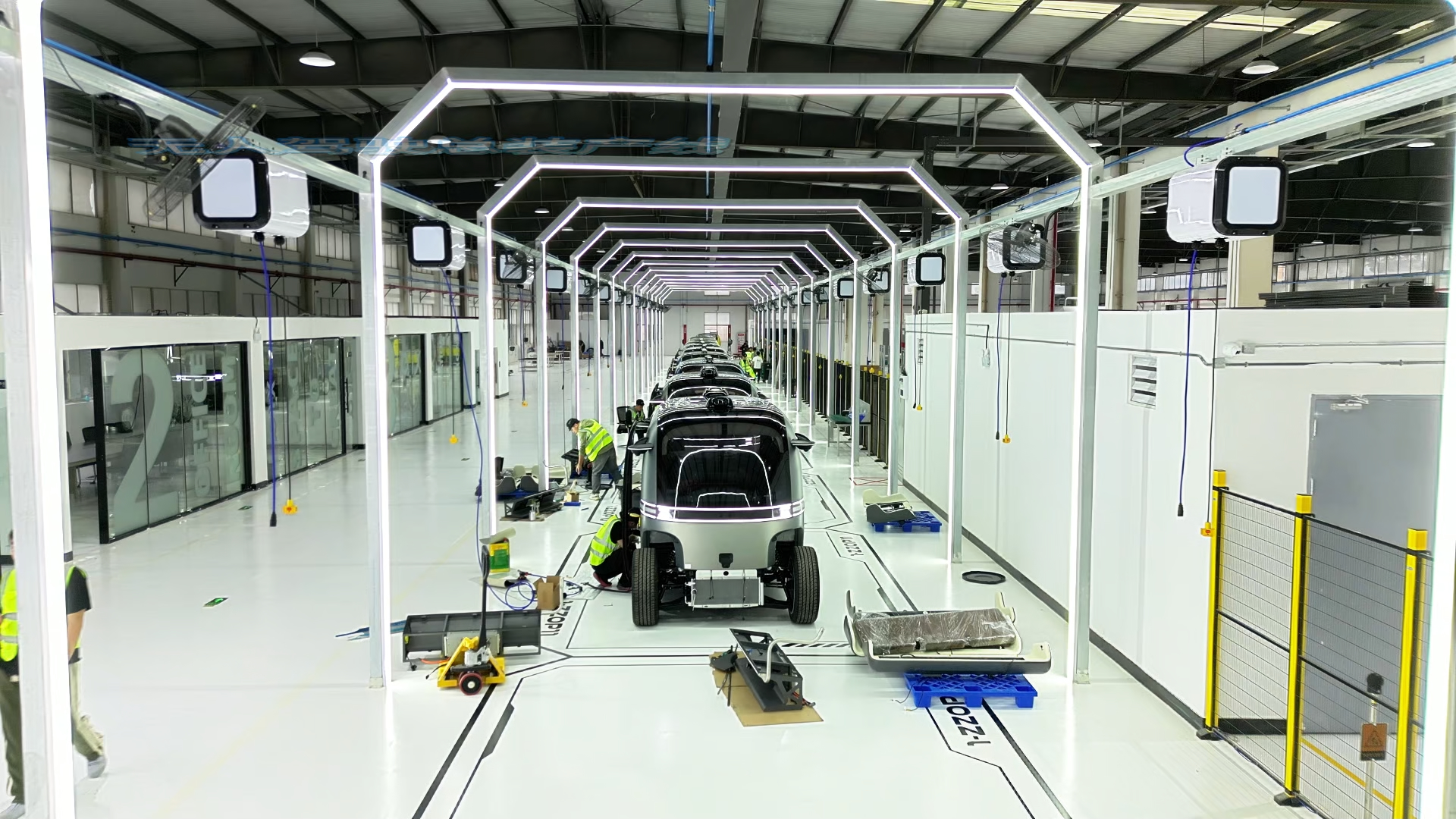
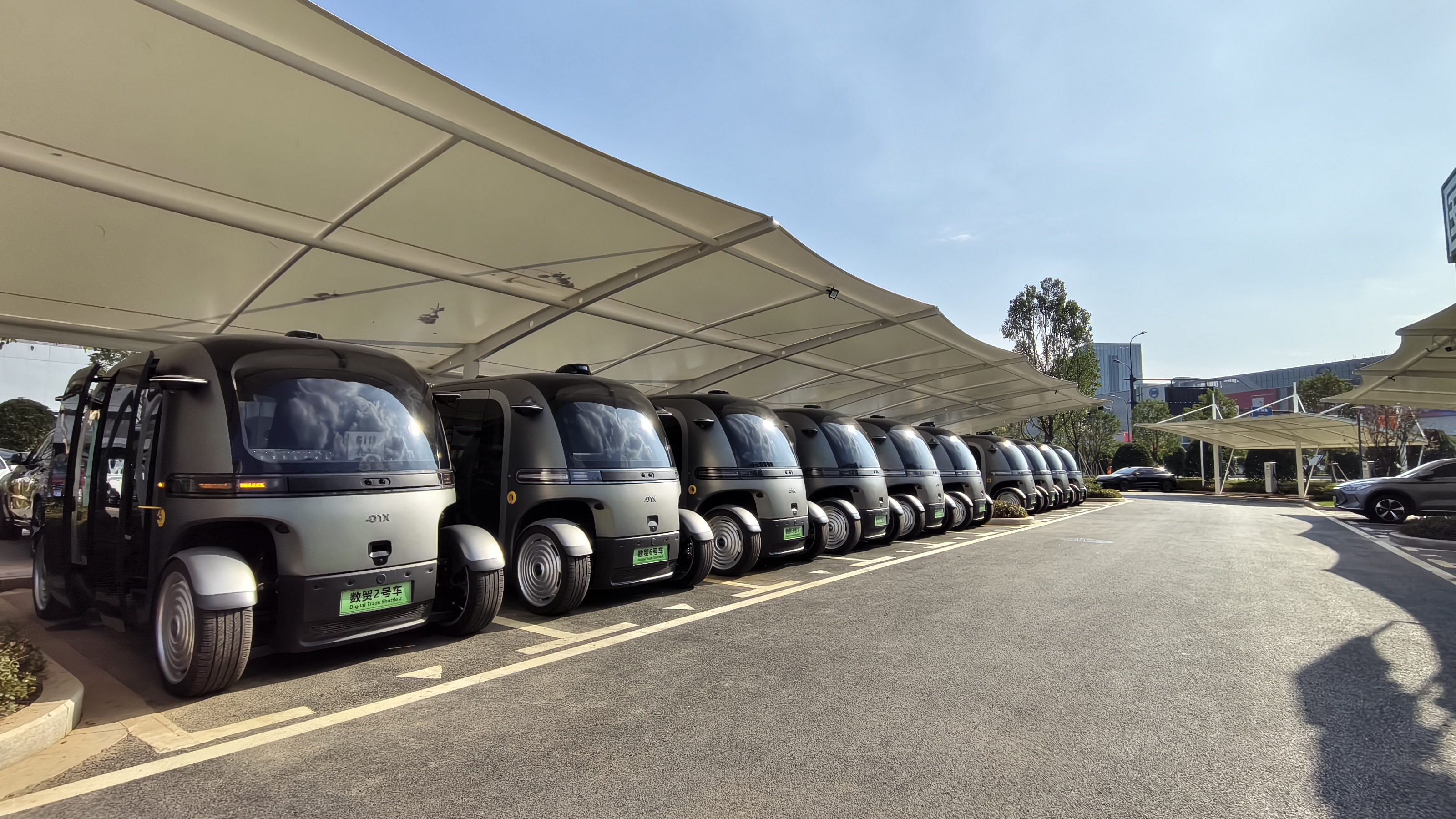
PIX Moving’s deployment experience supports its position as a practical city robotics supplier. Customer projects span governments, smart city authorities, real estate developers, universities, and commercial operators across multiple countries. Over the past two years, PIX Moving has deployed 100+ units in these project categories, with stable operation reported as the key result.
The company’s manufacturing capability is another fit criterion. PIX Moving operates a 20,000+ m² production base with around 200 employees, of whom 116 are R&D personnel. It applies metal 3D printing and generative design (Fusion 360) in chassis manufacturing, which an Autodesk case study says reduces parts by 10x and lead times by 60%. For buyers, this means: faster iteration cycles, more flexible customization, and a manufacturing foundation that supports OEM/ODM projects with an MOQ of 1.
Limitations and Trade-offs Buyers Should Consider
Every city robotics platform has boundaries. Understanding these boundaries prevents costly procurement mistakes.
- Low-speed envelope: These platforms are designed for ≤35 km/h autonomous operation. They are not replacements for high-speed robotaxis on highways. For faster corridor services, a different vehicle class is required.
- Fixed route orientation: The core value is in predefined or semi-predefined routes. Fully dynamic on-demand routing across a complex city is more demanding and needs more testing.
- Supporting equipment dependence: The vehicle must be used with autonomous driving systems and air conditioning. Charging, connectivity, and maintenance infrastructure are mandatory project prerequisites.
- Regulatory readiness: For EU market deployment, UNECE certification is a key procurement reference. PIX Moving’s RoboBus has been discussed in this context, but each project must confirm the specific certification status for its target jurisdiction and route.
Comparison: How Full-Stack City Robotics Differs from Point Solutions
PIX Moving is a full-stack city robotics provider: it develops the robot chassis, designs the spatial cabin, manages software integration, and supports autonomous driving system integration. A point solution typically supplies only one layer—a chassis, a software stack, or a vehicle body. For project owners, the full-stack approach reduces integration risk and shortens deployment lead time. That is why PIX Moving’s projects reference autonomous driving R&D projects and smart city demonstration projects: these initiatives need a partner who controls the whole product stack, not just a component.
However, full-stack is not always the right answer. If your organization already has a strong autonomy software stack and only needs a proven vehicle chassis, you may prefer a modular platform approach. PIX Moving supports this through its OEM/ODM capability and the Open Autonomous Development Platform.
FAQ: City Robotics Project Fit
What are the regulatory requirements for deploying PIX RoboBus in city projects?
Regulatory compliance starts with the vehicle classification and target market. For EU deployments, UNECE certifications are a key procurement reference. Globally, ISO 22737:2021 is the first international safety standard specifically for Low-Speed Automated Driving (LSAD) systems on predefined routes, and it provides a relevant reference framework. In China, the Ministry of Industry and Information Technology (MIIT) has issued mandatory national standards for L3/L4 autonomous driving safety, effective July 2027. Buyers should confirm with the supplier the specific certification status for the target jurisdiction and route.
Can RoboBus and RoboShop handle 24-hour operation?
Yes. The project requirements for these platforms include 24-hour operation capability. This means the vehicle is designed to support extended duty cycles, with charging and rest scheduled into the operating plan. The technically supported feature is confirmed in the special operating requirements; the actual duty cycle should be designed with remote monitoring and fleet management to maintain safe operation.
What are the options for customizing RoboBus or RoboShop to my project?
PIX Moving supports vehicle configuration, software, branding, and interior layout customization through OEM/ODM and in-house manufacturing. The MOQ is 1, meaning even a single customized unit can be produced. Delivery lead time is typically 30–45 days. Customization applies to the cabin layout, exterior branding, and software configuration for the specific service mission.
What is the typical price or budget expectation for a city robotics project?
Specific pricing depends on configuration, software scope, fleet size, and service model. PIX Moving also offers a Robot-as-a-Service (RaaS) subscription model, which turns the capital purchase into an operating expense. For a more precise estimate, you should request a quote based on your route plan, vehicle quantity, and service scope.
Conclusion: Match the Robot to the Mission, Not the Other Way Around
City robotics projects succeed when the vehicle platform matches the operating environment, the duty cycle, and the service mission. PIX Moving provides a portfolio—RoboBus, RoboShop, RoboEV (Beastie)—built on a modular robotic chassis and supported by remote fleet management, OTA updates, and real-time diagnostics. The fit criteria are clear: low-speed ≤35 km/h, urban or industrial park environments, supporting autonomous driving and air conditioning systems, and a service model that can run on-demand or around the clock.
Before selecting a supplier, define your project’s operating requirements. Then compare the platform specifications. This guide gives you the comparison structure, but each project needs its own site survey and route data.
Next step: request project-specific information.
If you are evaluating a RoboBus or RoboShop deployment, contact PIX Moving for a sample check, a quote, or a project inquiry. Share your route plan and operating environment to get a fit assessment.
www.pixmoving.com | Email: nancy@pixmoving.com | Tel/WhatsApp: +86-18111991219
Have Questions or Need More Details?
Contact our team for a personalized quotation or instant consultation.
Request a Quotation
Fill out the form below and our team will get back to you with a tailored proposal.
WhatsApp Direct Chat
Prefer to chat in real-time? Message us on WhatsApp for instant assistance & quick answers.
- Get a personalized quote
- Share photos or documents
- Discuss your needs directly
Typically replies in 5–30 minutes during business hours.