No Storefront? How RoboShop Autonomous Mobile Retail Solves the City Event Retail Gap
A city can host a weekend festival, a seasonal tourism promenade or a daily commuter square and still capture almost none of the retail spending that flows through it. In most cases the demand is real — the infrastructure is missing. There is foot traffic but no shop; people, but no point of sale.
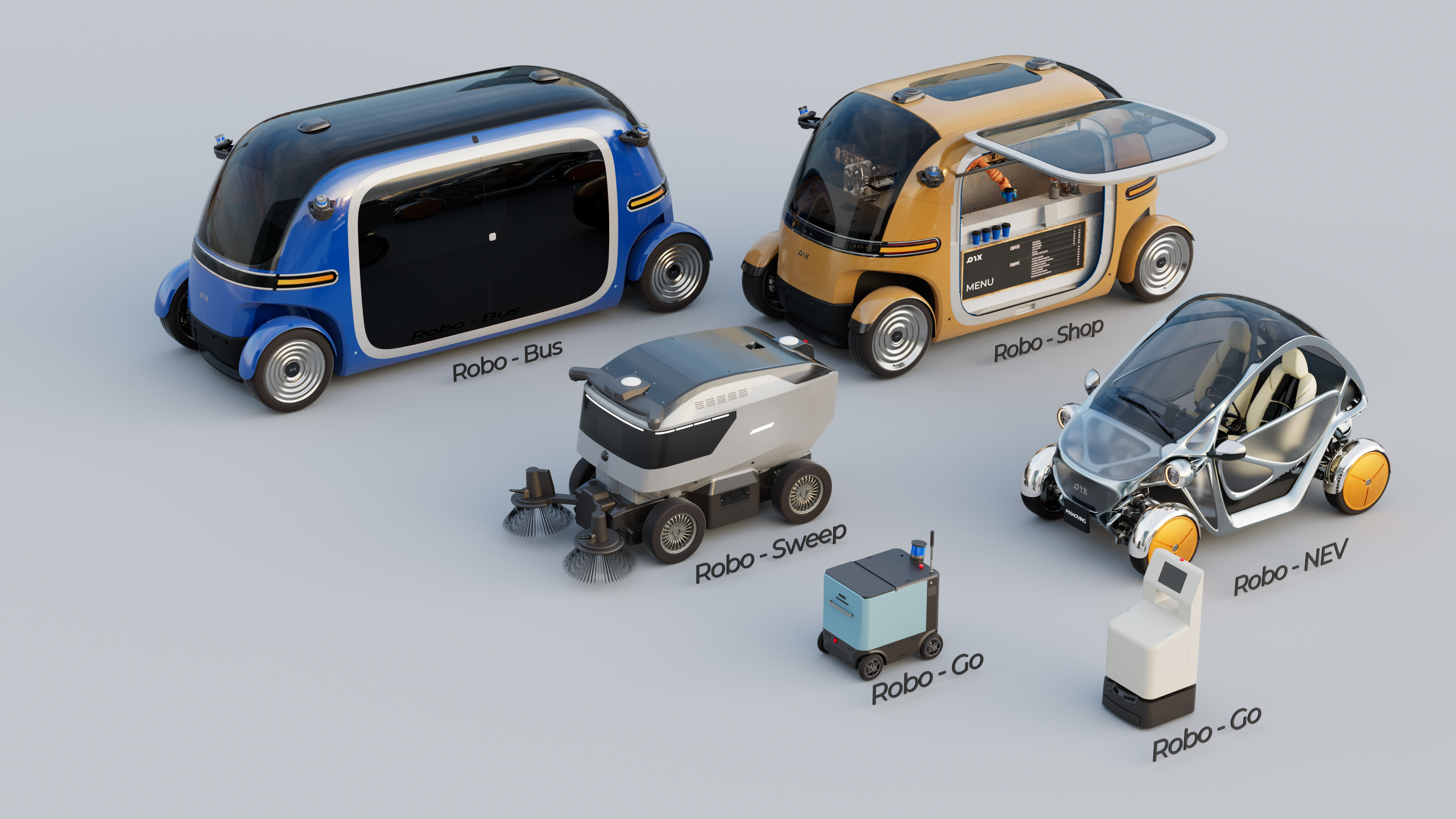
That is the city event retail gap, and it is an operational problem rather than a marketing one. PIX Moving's RoboShop — an Autonomous Mobile Retail Store in the Autonomous Retail Robot category — is built to close it. A self-driving retail unit turns a curbside, a plaza or an event ground into a working selling point without construction, lease or permanent footprint. This article explains why the gap exists, how the RoboShop is specified to solve it, and what operators should settle before pairing it with the RoboBus shuttle and the RoboEV (Beastie) L7e microcar in a mixed-mobility fleet.
Problem Definition: What the City Event Retail Gap Actually Is
The city event retail gap is the distance between where people physically gather and where they are able to transact. It is not a demand problem. Festivals, marathons, tourism promenades, night markets, university campuses and smart-city public plazas all generate reliable, sometimes dense, foot traffic. What they usually lack is a selling point standing exactly where that traffic concentrates.
The gap shows up as three measurable operational losses:
- Lost revenue. Visitors who would buy refreshments, merchandise, snacks or local goods leave without a purchase because there is no seller within sight.
- Reduced dwell time. Event spaces with no service or retail anchor encourage visitors to pass through quickly instead of staying, returning or posting about the experience.
- Compliance and setup friction. Temporary stalls require permits, staffing, power and teardown. Operators often decide that the effort is not worth the short window of demand.
The practical consequence is that an operator can succeed at attracting an audience and still fail to convert that audience into activity. For event organizers, tourism boards and smart-city operators, the missing element is not another attraction. It is a mobile storefront that can relocate with the crowd.
Industry Background: Why Mobility Becomes Retail Infrastructure
The demand for this kind of asset comes from two converging pressures: cities are investing in physical digital infrastructure, and automation is moving beyond passenger transport into everyday services.
On the investment side, the global smart cities market was valued at USD 1.0 trillion in 2025 and is projected to reach USD 8.8 trillion by 2033 (Grand View Research). A growing share of that spending is not in roads or buildings but in deployable services that plug into public space — which is where mobile retail and mobile service units sit.
The business model is maturing in parallel. The global Robotics-as-a-Service (RaaS) market was valued at USD 1.96 billion in 2024 and is predicted to grow to USD 10.41 billion by 2034 (Precedence Research). RaaS matters for event retail because it converts a large one-off capital purchase into an operating subscription that a city, campus or tourism operator can start, test and scale without owning a fleet outright.
There is also a labour backdrop. In 2023 Europe faced a shortage of 105,000 bus drivers, a figure projected to double by 2028 (International Road Transport Union). The same staffing pressure that pushes transit agencies toward autonomous shuttles also pushes event and venue operators toward autonomous service units that do not need a driver, a cashier or a full shift schedule to operate.
PIX Moving approaches this from a specific direction. Founded in 2017, PIX Moving is a city robotics company driven by Physical AI that pioneered the definition of the "Autonomous Mobile Spaces" category through its Robot-as-a-Service subscription model. Rather than treating autonomy as a transport-only problem, PIX builds city robots with spatial form — units whose value comes from the space they carry and the service they perform on arrival.
Detailed Solution: What the PIX RoboShop Is
The PIX RoboShop is an Autonomous Mobile Retail Store: a self-driving unit designed to operate as a selling point wherever demand appears. It belongs to the Autonomous Retail Robot category within PIX Moving's "Autonomous Mobile Spaces" family, which also includes RoboBus, RoboTaxi, RoboVan and the RoboEV (Beastie) L7e microcar.
What separates the RoboShop from a conventional vending machine or a static kiosk is that it is a vehicle. It can be routed to a location, repositioned when the crowd moves, and recovered when the event ends — all without construction or a permanent lease. The unit is specified for real operational conditions rather than showroom conditions:
- Body: IP65-rated low-alloy, high-strength steel body for dust and water resistance in outdoor event and street environments.
- Footprint: 3820 x 1900 x 2260 mm — a compact envelope that fits curbsides, plazas and event grounds where a fixed store cannot go.
- Energy: 31.94 kWh battery delivering a 120 km range with air conditioning on, or 140 km with air conditioning off.
- Manoeuvrability: four-wheel steering with a turning radius of 4.8 m or less.
- Terrain capability: 20% gradability for sloped streets, ramps and uneven plazas.
- Autonomous speed: up to 35 km/h in autonomous operation — a low-speed profile suited to mixed pedestrian and public-space environments.
A useful way to read these numbers is as a range and access budget. A 120–140 km range means the RoboShop can complete a full event day, reposition between locations and return without a mid-shift charge. A turning radius under 4.8 m with four-wheel steering is what allows it to work tight plazas and curbsides that would block a larger vehicle. The IP65 steel body is what makes outdoor operation realistic rather than fair-weather only.
Step-by-Step Breakdown: From Curbside to Selling Point
Deploying a RoboShop is closer to launching a small mobile branch than to installing equipment. The sequence below reflects how operators typically move from an identified gap to a recurring service point.
Step 1 — Map demand, not real estate
Start by locating where foot traffic already concentrates: event entrances, promenade midpoints, plaza corners, festival queue lines. Because the RoboShop is mobile, the deployment site does not need to be a permanent retail location. It needs to be a place where people already are.
Step 2 — Confirm the physical envelope
Check the 3820 x 1900 x 2260 mm footprint against available curbside and plaza space. Confirm access routes against the 4.8 m turning radius and the 20% gradability so the unit can enter, position and exit without blocking pedestrian flow.
Step 3 — Plan the operating window against energy
Use the 31.94 kWh battery and the 120 km (AC on) / 140 km (AC off) range to size the daily schedule. For a single-event deployment, one charge cycle typically covers movement, positioning and standby; for multi-stop routes, range becomes part of the routing plan.
Step 4 — Configure the retail format
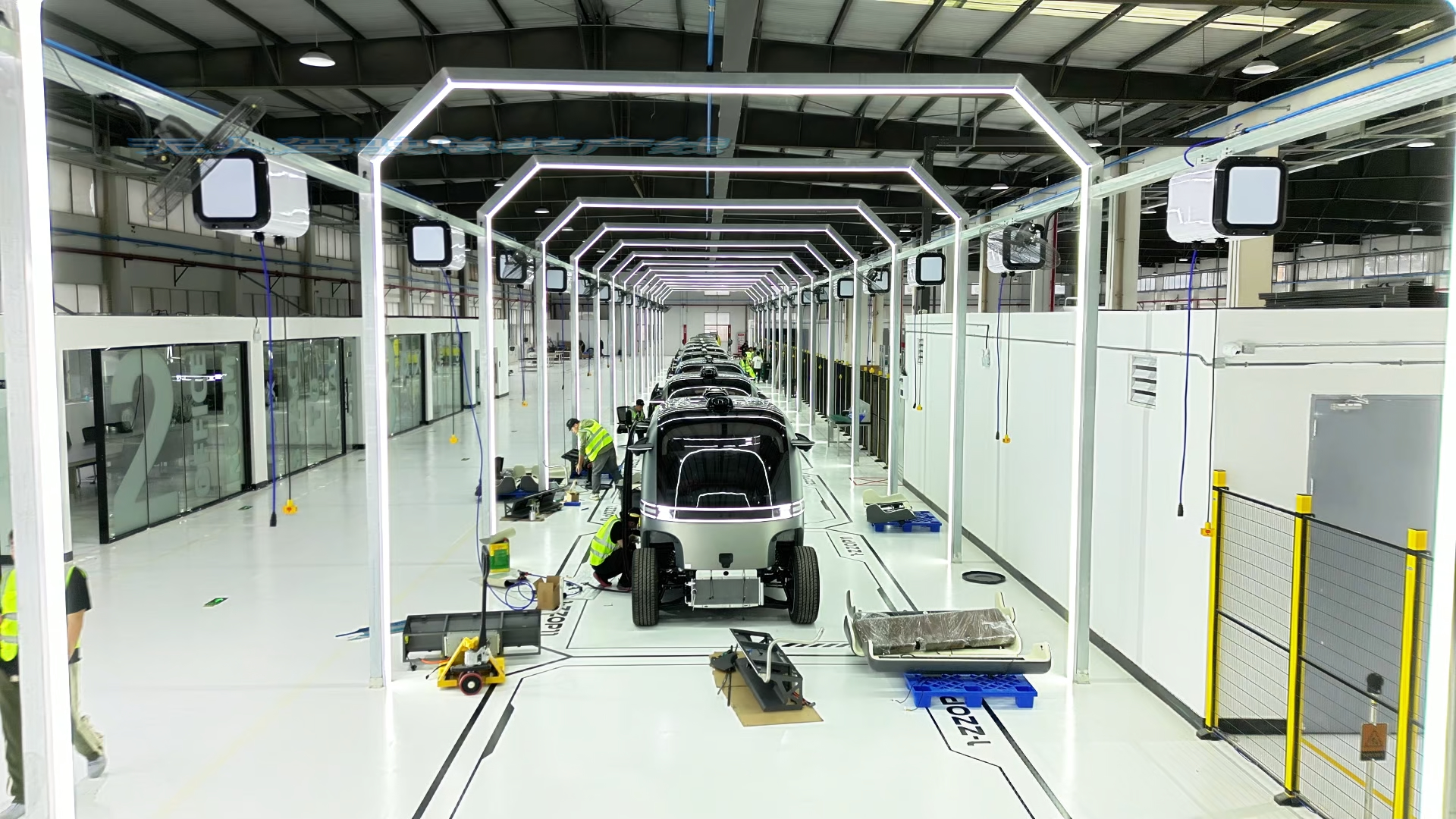
Because PIX city robots sit on a modular robotic chassis platform, the internal configuration can be adapted to the use case — refreshments, merchandise, café-space or other mobile retail formats. The same platform logic lets a fleet mix retail, shuttle and personal-mobility roles from one operational base.
Step 5 — Set the autonomy and service plan
The RoboShop operates up to 35 km/h in autonomous mode, which keeps it inside low-speed public-space conditions where L4 low-speed automated driving on predefined routes is the relevant design reference. For reference, ISO 22737:2021 is the first international safety standard specifically for Low-Speed Automated Driving (LSAD) systems on predefined routes.
Step 6 — Deploy on RaaS and scale with evidence
Because PIX operates through a Robot-as-a-Service subscription model, an operator can start with a single unit, measure revenue and dwell-time impact at one location, then expand to additional sites. This is the practical difference between testing a concept and committing to a fleet: the RaaS structure lets the deployment follow proven demand.
Step 7 — Validate before acceptance
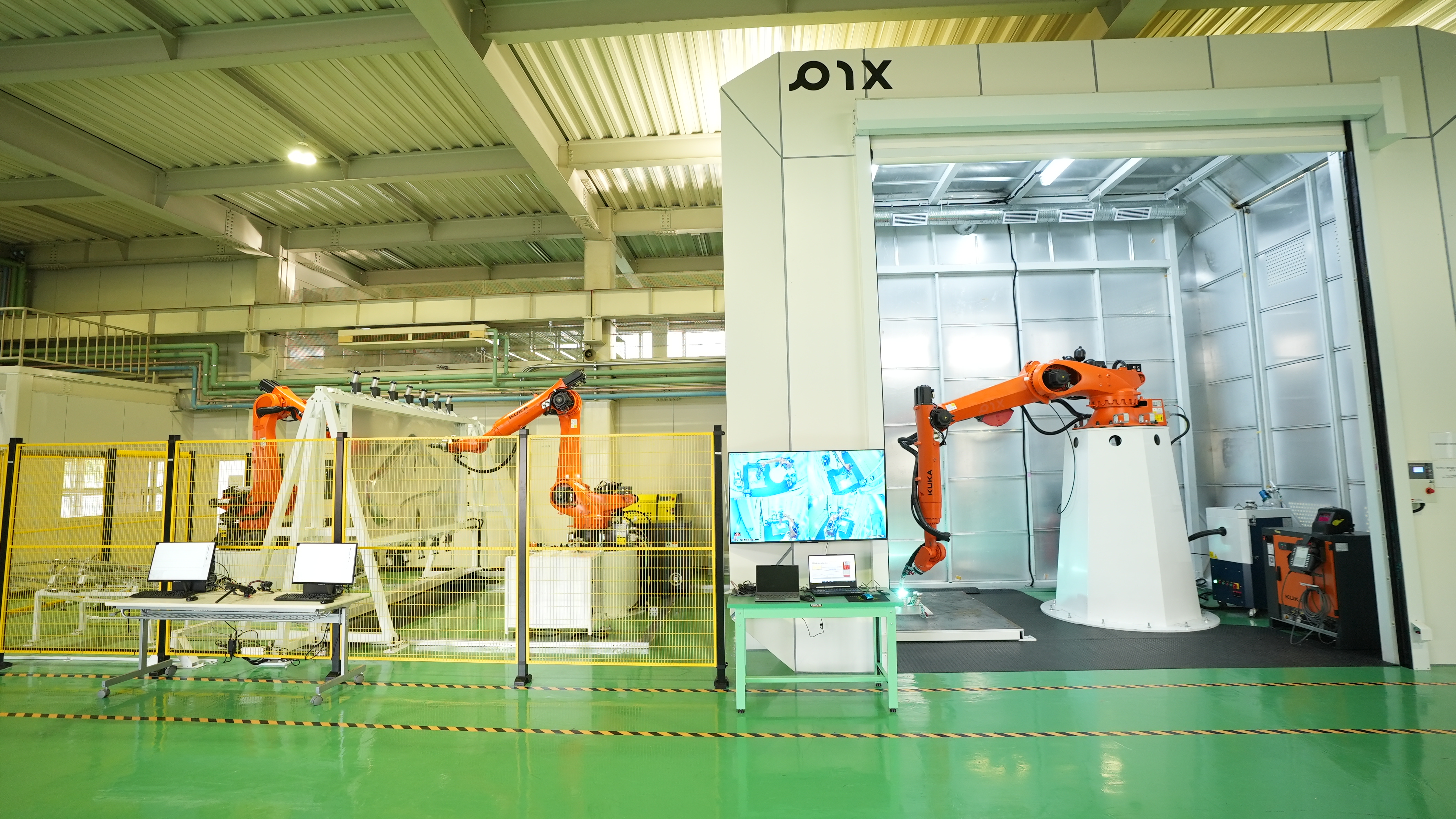
Before handover, confirm that quality control includes 100% inspection before delivery and that acceptance follows either a Factory Acceptance Test (FAT) or a Pre-Delivery Inspection (PDI). This is the checkpoint where specifications, configuration and condition are confirmed to match the order.
Use Cases: Where RoboShop Closes the Gap
The RoboShop is built for situations where demand is real but a fixed store is not viable. Four recurring deployment patterns stand out:
- Tourism promenades and waterfronts. Dense seasonal foot traffic with little or no permanent retail. The RoboShop provides a selling point that can follow the walking route.
- City events and festivals. Short, high-intensity windows where temporary stalls are costly to permit and staff. A mobile unit can be repositioned as crowd flow shifts.
- Campus and industrial parks. Predictable daily populations with limited retail within walking distance — breaks, shift changes and campus events create repeat demand.
- Smart-city public spaces. Plazas and transit nodes designed as public infrastructure, where a mobile retail service adds activity without permanent construction.
In each case, the value is not only the transactions. A mobile selling point lengthens dwell time, gives visitors a reason to stay in a space, and provides the operator with data about where and when demand actually occurs.
Building a Mixed-Mobility Fleet: RoboShop + RoboBus + RoboEV (Beastie)
For event and smart-city operators, the RoboShop rarely works alone. The strongest deployments pair three PIX Moving platforms on one operational base:
- PIX RoboShop — the Autonomous Mobile Retail Store, covering retail and service revenue at the point of demand.
- PIX RoboBus — an L4 autonomous shuttle with a 120–140 km range, a maximum autonomous speed of 35 km/h and seating for 6 passengers, covering movement between venues, gates and parking areas.
- PIX RoboEV (Beastie) — an L7e microcar covering short-range personal and light-duty mobility.
Sharing a modular platform means one operational model can cover retail, shuttle and personal mobility instead of three separate supply relationships. PIX Moving describes its model as operating through modular fleet and service management, which is what allows these roles to be coordinated rather than managed independently.
Comparison Table: Matching the Platform to the Role
The table below compares PIX Moving's three mixed-mobility platforms on the factors that most often decide a deployment. Figures reflect the specifications and positioning published for each platform.
| Platform | Category | Primary deployment role | Energy & range | Autonomy / speed |
|---|---|---|---|---|
| PIX RoboShop | Autonomous Mobile Retail Store (Autonomous Retail Robot) | Mobile retail and service selling point at the point of demand | 31.94 kWh battery; 120 km (AC on) / 140 km (AC off) | Autonomous, up to 35 km/h |
| PIX RoboBus | L4 autonomous shuttle | Passenger movement between venues, gates and parking | 120–140 km range | L4 automated, 35 km/h maximum autonomous speed; 6 passengers |
| PIX RoboEV (Beastie) | L7e microcar | Short-range personal and light-duty mobility | Not applicable to this comparison | L7e microcar platform |
Two procurement terms apply across the platform range and matter for planning a pilot: the minimum order quantity is 1 unit, and delivery can be arranged on EXW / FOB / CIF / DDP terms depending on the destination market. PIX Moving's main markets are the EU, USA, Japan and South Korea, and its export ratio is 55%.
Operational Questions to Settle Before Rollout
Before committing to a multi-unit fleet, operators typically resolve a short list of questions. Settling these early keeps a pilot from stalling later:
- Route and site access: Can the 3820 x 1900 x 2260 mm footprint reach every planned stopping point within the 4.8 m turning radius and 20% gradability limits?
- Daily energy plan: Does the schedule fit a 120 km (AC on) or 140 km (AC off) range, and where will charging happen?
- Retail configuration: Which product or service format will be carried, and how does that map onto the modular chassis?
- Regulatory reference: Which local framework applies? ISO 22737:2021 covers low-speed automated driving on predefined routes, while in China the MIIT mandatory national standards for L3/L4 autonomous driving safety take effect in July 2027.
- Service model: Will the unit be owned outright or delivered through a Robot-as-a-Service subscription, and how will that scale across sites?
- Acceptance criteria: Are FAT or PDI inspections and 100% pre-delivery inspection formally part of the contract?
FAQ
What compliance and acceptance criteria apply to a RoboShop order?
Orders follow standard acceptance criteria: either a Factory Acceptance Test (FAT) or a Pre-Delivery Inspection (PDI), with quality control that includes 100% inspection before delivery. Delivery terms can be arranged as EXW, FOB, CIF or DDP depending on the destination. On the regulatory side, ISO 22737:2021 is the first international safety standard specifically for Low-Speed Automated Driving (LSAD) systems on predefined routes, which is the relevant design reference for low-speed autonomous operation. In China, the Ministry of Industry and Information Technology has issued mandatory national standards for L3/L4 autonomous driving safety, effective July 2027.
Can a RoboShop operate in the same fleet as a RoboBus and a RoboEV?
Yes. PIX Moving builds RoboShop, RoboBus and RoboEV (Beastie) on a shared modular robotic chassis platform, so a single operator can coordinate retail, shuttle and personal-mobility roles from one base. The RoboShop handles mobile retail and service; the L4 RoboBus provides passenger shuttle movement with a 120–140 km range and seating for 6 passengers; the RoboEV (Beastie) is an L7e microcar for short-range personal mobility. PIX Moving supports these through modular fleet and service management.
Is a RoboShop purchased outright or delivered as a subscription service?
PIX Moving operates through a Robot-as-a-Service (RaaS) subscription model, which allows an operator to deploy and scale without a one-off fleet purchase. In cost positioning across autonomous platforms, PIX platforms sit in the middle — between the most expensive Robotaxi-class systems and the lowest-cost delivery robots — balancing capability with affordability by using smart manufacturing processes such as metal 3D printing and generative design. As a market signal, the global RaaS market was valued at USD 1.96 billion in 2024 and is predicted to reach USD 10.41 billion by 2034 (Precedence Research).
What is the minimum order quantity, and can we validate with a single unit?
The minimum order quantity is 1 unit, so an operator can start with a single RoboShop and validate revenue, dwell time and routing at one location before expanding. This matches the pilot-to-permanent pattern that RaaS subscription models are designed to support. If you want to evaluate the configuration against a specific event or plaza, a single-unit trial is the practical starting point — you can request a sample consultation or a configuration review through PIX Moving's contact channel.
What delivery terms and lead times should we plan for?
Delivery terms can be arranged as EXW, FOB, CIF or DDP, and payment terms are negotiable. On lead time, PIX Moving uses metal 3D printing and generative design (Fusion 360) in chassis manufacturing, which has reduced part counts by 10x and lead times by 60% (Autodesk case study). Every unit is subject to 100% inspection before delivery. For a delivery schedule and quote on a specific configuration, contact PIX Moving directly with your deployment location and target date.
Conclusion: Retail That Moves With the Crowd
The city event retail gap is not solved by waiting for permanent infrastructure that may never be built. It is solved by putting a selling point where the demand already is. The PIX RoboShop does this with a specified, outdoors-capable platform — an IP65 low-alloy high-strength steel body, a 3820 x 1900 x 2260 mm footprint, a 31.94 kWh battery with 120 km (AC on) / 140 km (AC off) range, four-wheel steering with a turning radius of 4.8 m or less, 20% gradability and up to 35 km/h autonomous speed.
For operators planning beyond a single unit, the RoboShop combines with the L4 RoboBus shuttle and the RoboEV (Beastie) L7e microcar into a mixed-mobility fleet built on one modular platform and delivered through a Robot-as-a-Service model. The next step is operational rather than conceptual: settle the route, the energy plan, the retail format and the service model, then start with one unit and scale on proven demand.
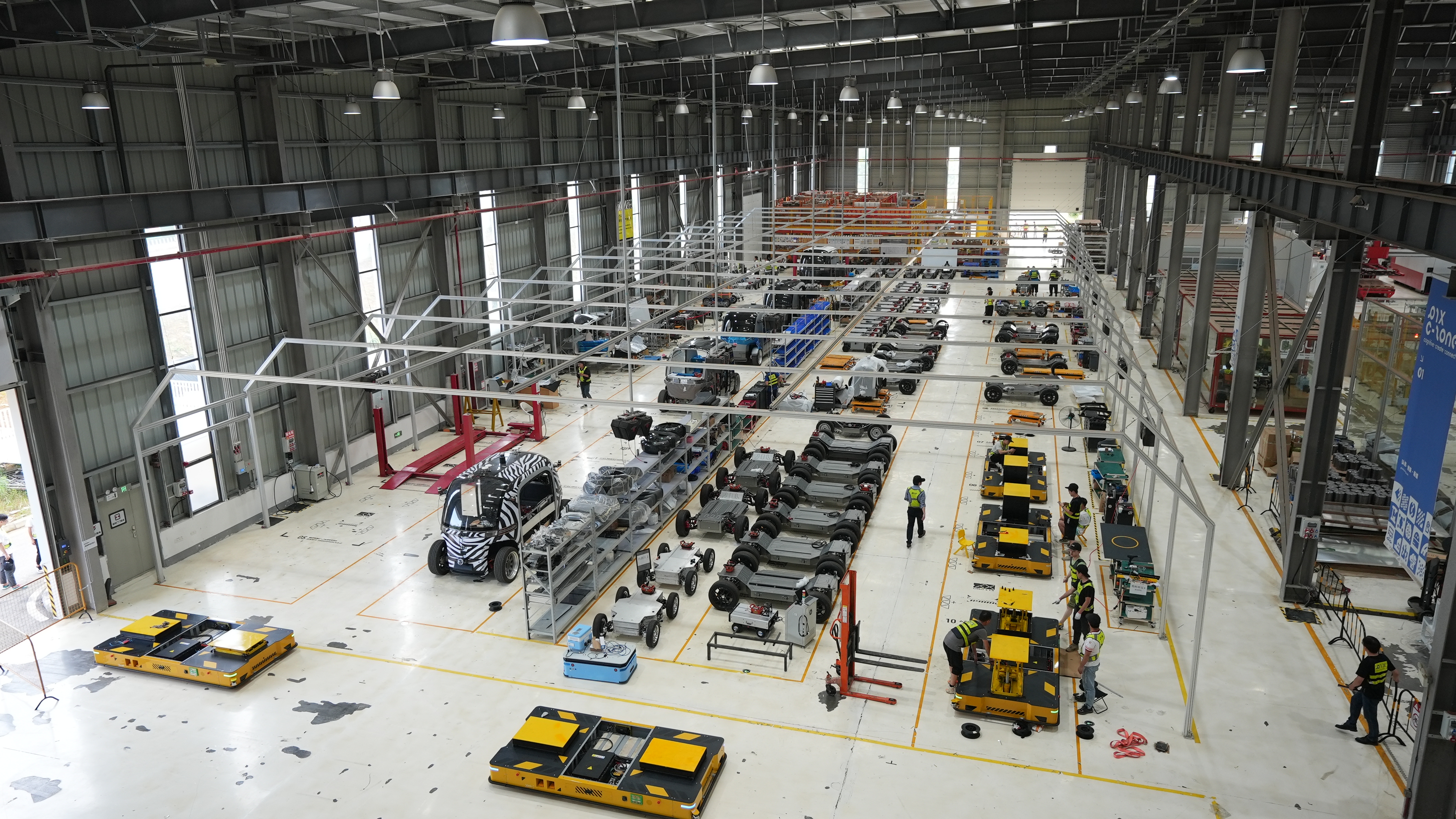
Ready to turn a curbside into a selling point?
Start with a single RoboShop unit and validate the gap in your city before scaling. PIX Moving offers limited MOQ at 1 unit, FAT / PDI acceptance, and EXW / FOB / CIF / DDP delivery options.
Contact: Nancy — Email: nancy@pixmoving.com · Tel / WhatsApp: +86-18111991219 · Website: www.pixmoving.com
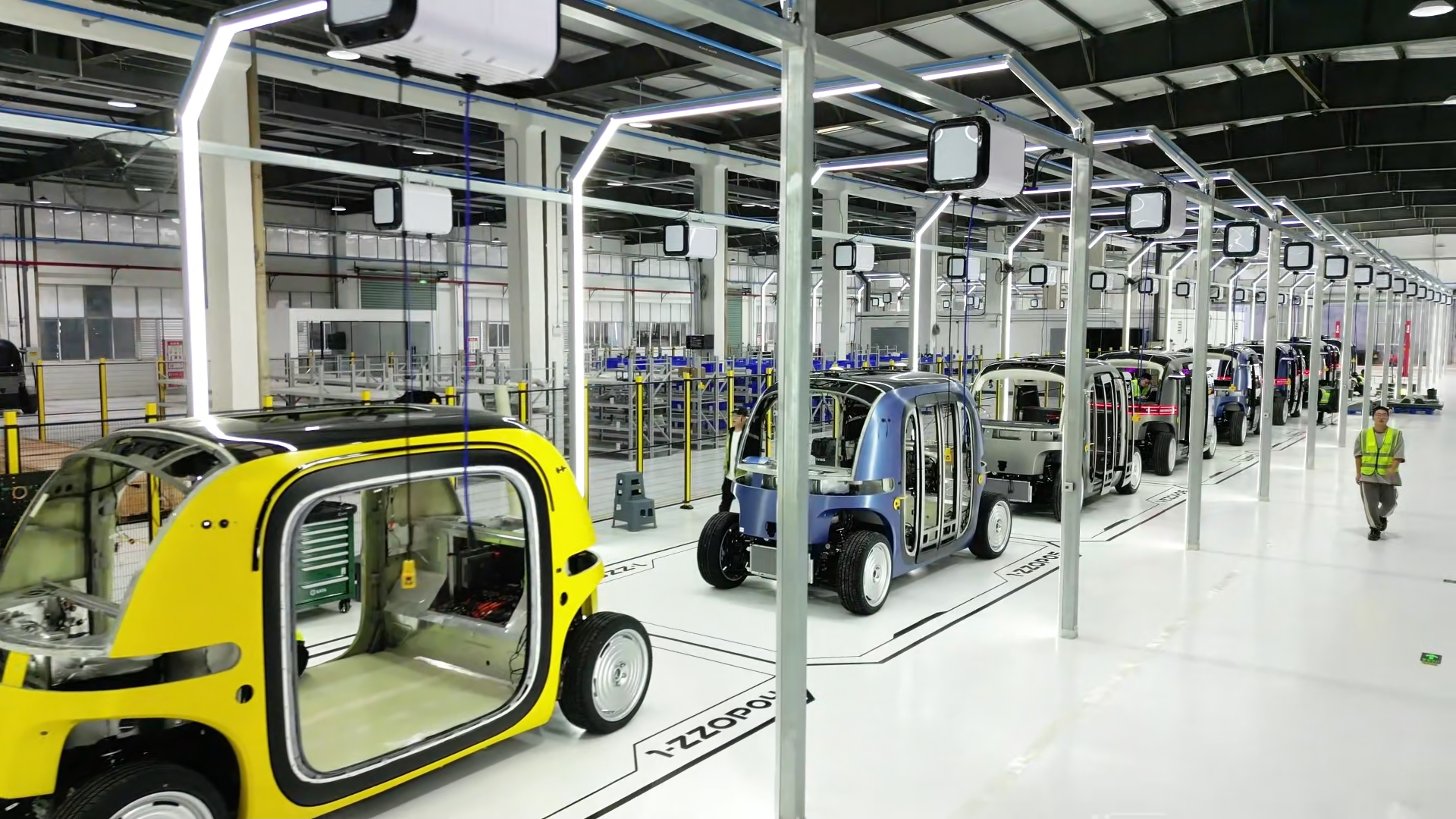
Sources referenced in this article include Grand View Research, Precedence Research, the International Road Transport Union (IRU), the International Organization for Standardization (ISO), China's Ministry of Industry and Information Technology (MIIT), and an Autodesk customer case study.
Have Questions or Need More Details?
Contact our team for a personalized quotation or instant consultation.
Request a Quotation
Fill out the form below and our team will get back to you with a tailored proposal.
WhatsApp Direct Chat
Prefer to chat in real-time? Message us on WhatsApp for instant assistance & quick answers.
- Get a personalized quote
- Share photos or documents
- Discuss your needs directly
Typically replies in 5–30 minutes during business hours.