RoboBus vs. RoboShop vs. RoboEV: Which City Robotics Platform Fits Your Deployment?
RoboBus vs. RoboShop vs. RoboEV: Which City Robotics Platform Fits Your Deployment?
City robotics platforms are usually compared as if they were three versions of the same vehicle. They are not. RoboBus, RoboShop, and RoboEV (Beastie) are three PIX Moving platforms built for three different urban jobs, and the fastest way to choose between them is to stop comparing specification sheets and start comparing deployment conditions.
Short answer: RoboBus is a six-seat L4 autonomous shuttle for scheduled passenger movement on defined routes. RoboShop is a mobile commercial space that carries retail, café, or service functions to where demand already exists. RoboEV (Beastie) is a 2,503 mm L7e microcar for personal and small-group trips. RoboBus and RoboShop share a 31.94 kWh battery system, a 3,820 × 1,900 × 2,260 mm body, IP65 protection, four-wheel steering with a minimum turning radius of no more than 4.8 m, and 20% maximum gradability. RoboEV runs a separate 144V / 14.97 kWh LiFePO4 pack with a 150 km range, an aluminum alloy frame, two seats, and a 95 km/h top speed that is software limited to 80 km/h.
That short answer already contains the decision logic. Two of the three platforms are large, low-speed, route-oriented machines with identical envelopes. The third is a small, fast, personal-class machine with less than half the length and a different vehicle class. A buyer who needs a shuttle loop is not really choosing between three options, and neither is a buyer who needs on-demand retail. Each one is choosing between deploying the right platform and deploying the wrong one.
Problem Definition: Why \"Which Platform Is Best\" Is the Wrong First Question
Procurement teams evaluating City Robotics platforms commonly start with a ranking question: which platform is strongest. That framing produces two predictable failures. The first is cross-class comparison — placing an L7e personal microcar and an L4 autonomous shuttle in the same table and treating the resulting numbers as substitutes for one another. The second is assuming that platforms sharing a chassis are interchangeable, when the upper body, the software configuration, and the route profile decide whether a deployment actually works.
Deployment fit is the intersection of five constraints:
- Route geometry. Does the service run a repeatable loop, roam to unpredictable locations, or operate point to point on demand?
- Spatial payload. Does the deployment need to move people, carry a commercial function, or move one or two individuals?
- Energy duty cycle. How many kilometres per shift, with or without cabin climate control, and how much idle time between services?
- Regulatory class. Which vehicle class and which approvals does the operating market require before the platform can be registered, insured, and put into revenue service?
- Commercial model. Is the platform bought as capital equipment, subscribed as a service, or delivered as a managed fleet?
A campus that must move six people every ten minutes and a campus that must place a coffee counter at three different locations can have similar budgets and completely different problems. The first is a schedule problem, solved by a shuttle. The second is a location problem, solved by a mobile space. Neither is solved by buying the smaller vehicle because its unit cost is lower, or the larger one because it has more seats.
Industry Background: Why Cities Are Procuring Platforms, Not Just Vehicles
Autonomous mobility procurement has moved beyond the robotaxi-only framing. The demand signal now comes from public transport gaps, retail economics, and demographic pressure, and the money follows it. The global smart cities market was valued at USD 1.0 trillion in 2025 and is projected to reach USD 8.8 trillion by 2033, according to Grand View Research. Within that envelope, Precedence Research values the global Robotics-as-a-Service (RaaS) market at USD 1.96 billion in 2024, growing to USD 10.41 billion by 2034.
The transit side is where the labour constraint is most visible. The International Road Transport Union (IRU) reported that Europe faced a shortage of 105,000 bus drivers in 2023, a figure projected to double by 2028. Fortune Business Insights expects the global self-driving bus market to grow from USD 1.73 billion in 2024 to USD 9.34 billion by 2032, with Europe holding a 55.49% share in 2024. Those two data points explain why autonomous public transport is increasingly evaluated as capacity replacement rather than as a technology demonstration.
Two caveats matter when these figures are turned into a business case. First, RaaS market forecasts diverge substantially — one published estimate places the 2030 market at USD 67.85 billion while another places it at USD 4.12 billion — because providers define service scope differently (hardware-only versus full operational service). Treat any single RaaS figure as directional rather than as a planning input. Second, the regulatory layer is still moving: ISO 22737:2021 is the first international safety standard specifically for low-speed automated driving (LSAD) systems on predefined routes, and China's Ministry of Industry and Information Technology (MIIT) has issued mandatory national standards for L3/L4 autonomous driving safety that take effect in July 2027.
PIX Moving platforms are already operating inside this demand environment. They have been used by governments, smart city authorities, real estate developers, community operators, universities, research institutions, industrial parks, and large campuses, with deployments across markets including Australia, Brazil, Canada, Switzerland, China, Germany, Spain, the United Kingdom, India, Italy, Japan, South Korea, the Netherlands, Portugal, the United States, and Vietnam.
Detailed Solution: What RoboBus, RoboShop, and RoboEV Actually Are
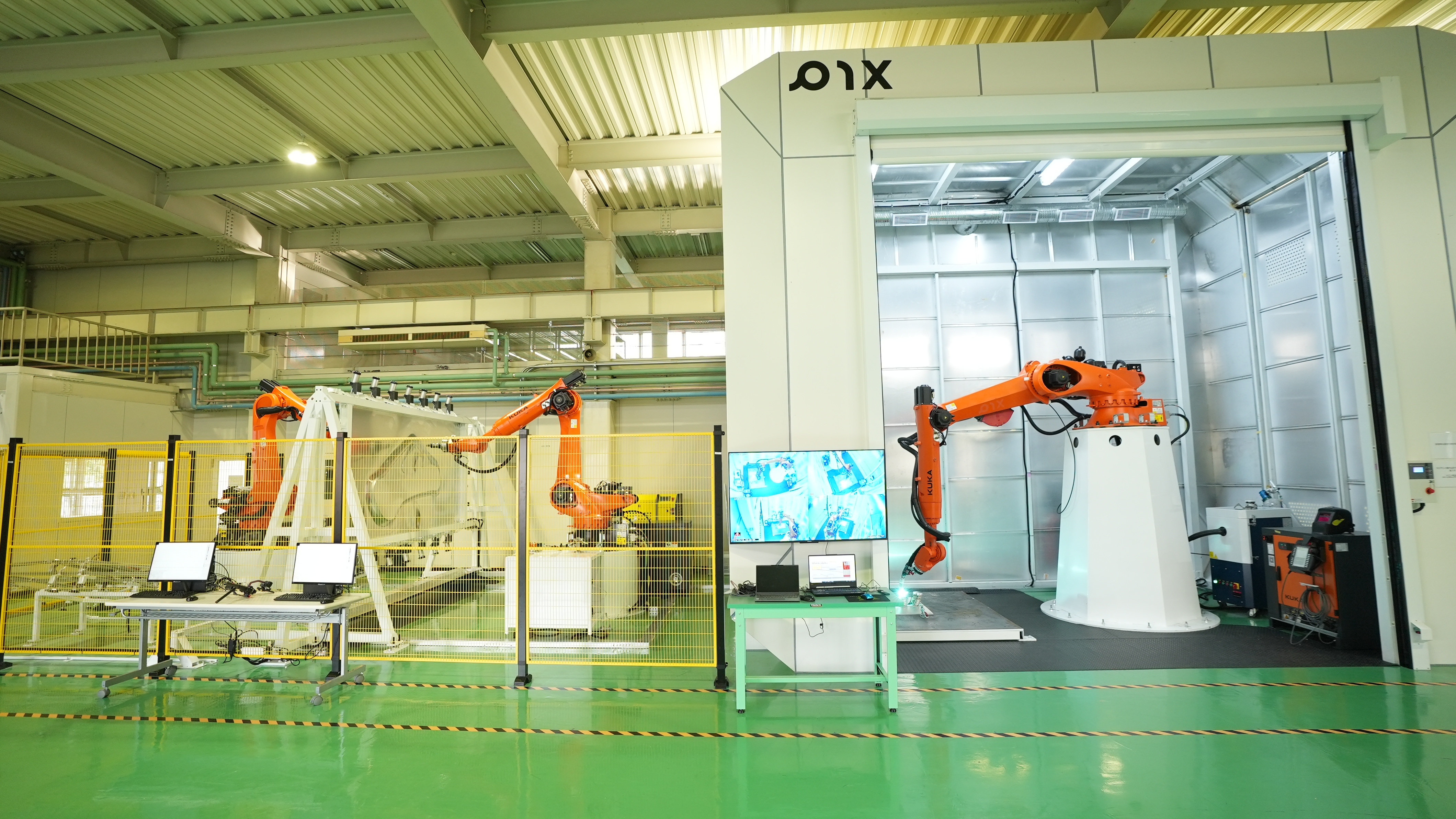
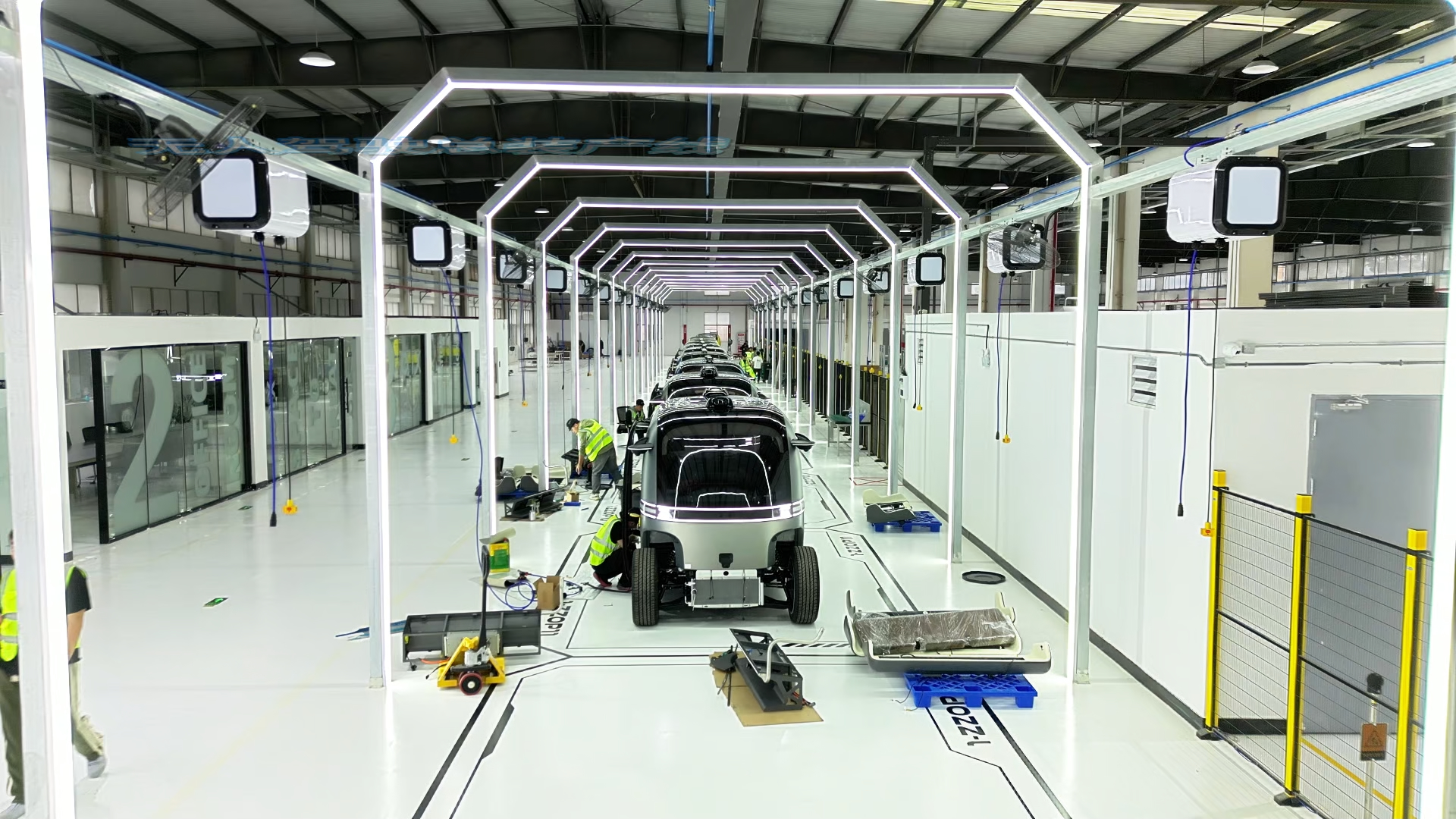
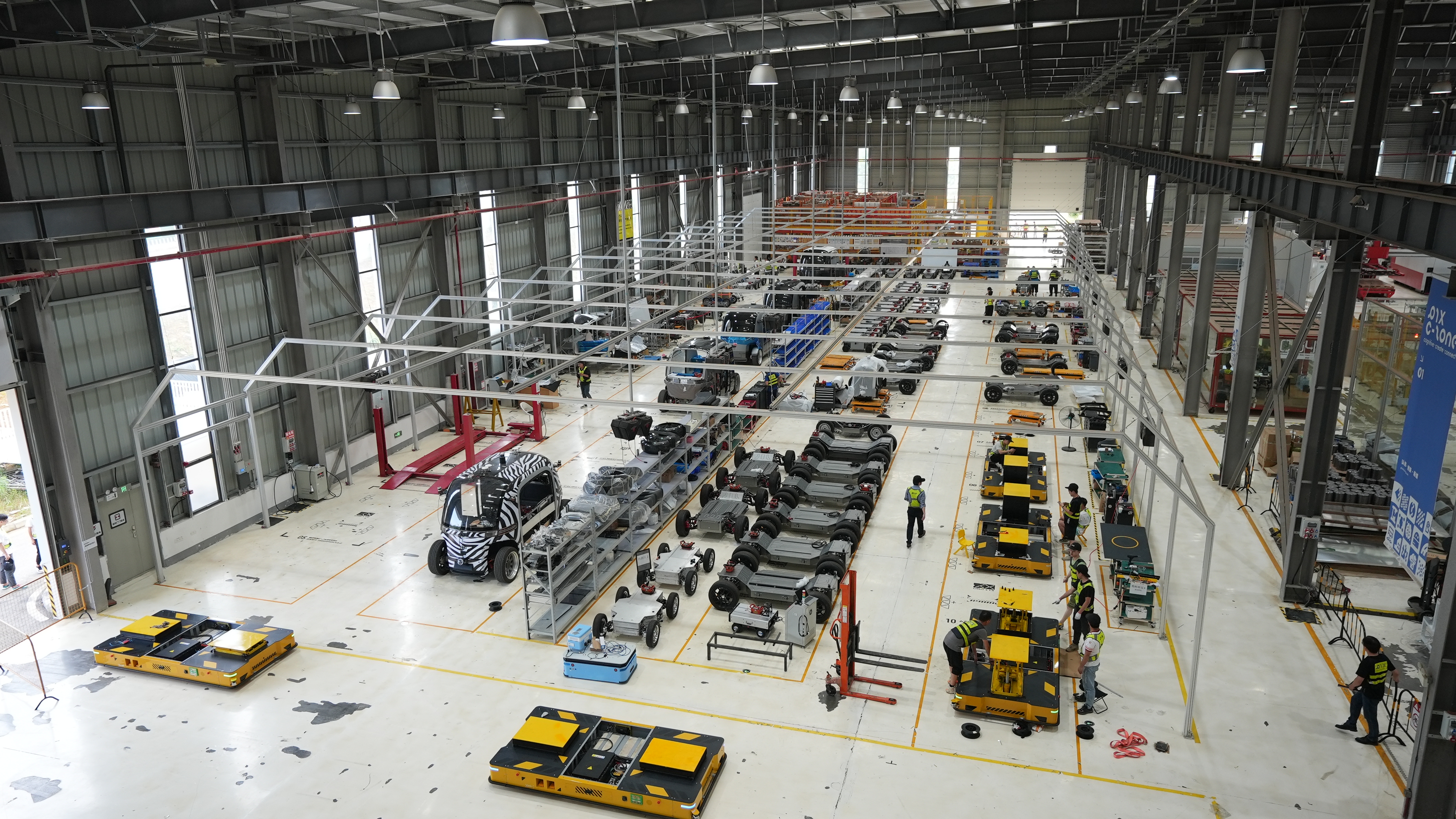
PIX Moving is a City Robotics company driven by Physical AI. Founded in 2017, it designs and manufactures autonomous mobile spaces on a modular robotic chassis platform and delivers them under a Robot-as-a-Service (RaaS) subscription model. The company works from a 20,000+ m² manufacturing footprint with an R&D team of 116, reports a 55% export ratio, and lists its main markets as the EU, the USA, Japan, and South Korea. The full platform line-up is documented at www.pixmoving.com.
The architecture is why a single comparison can span such different use cases. RoboBus, RoboTaxi, RoboShop, and RoboVan are City Robots with spatial form — they share a modular robotic chassis and differ in the space configured on top of it. That is what allows a passenger shuttle and a retail unit to be engineered from the same base dimensions, while the personal microcar sits on its own L7e platform.
RoboBus: The Scheduled-Mobility Platform
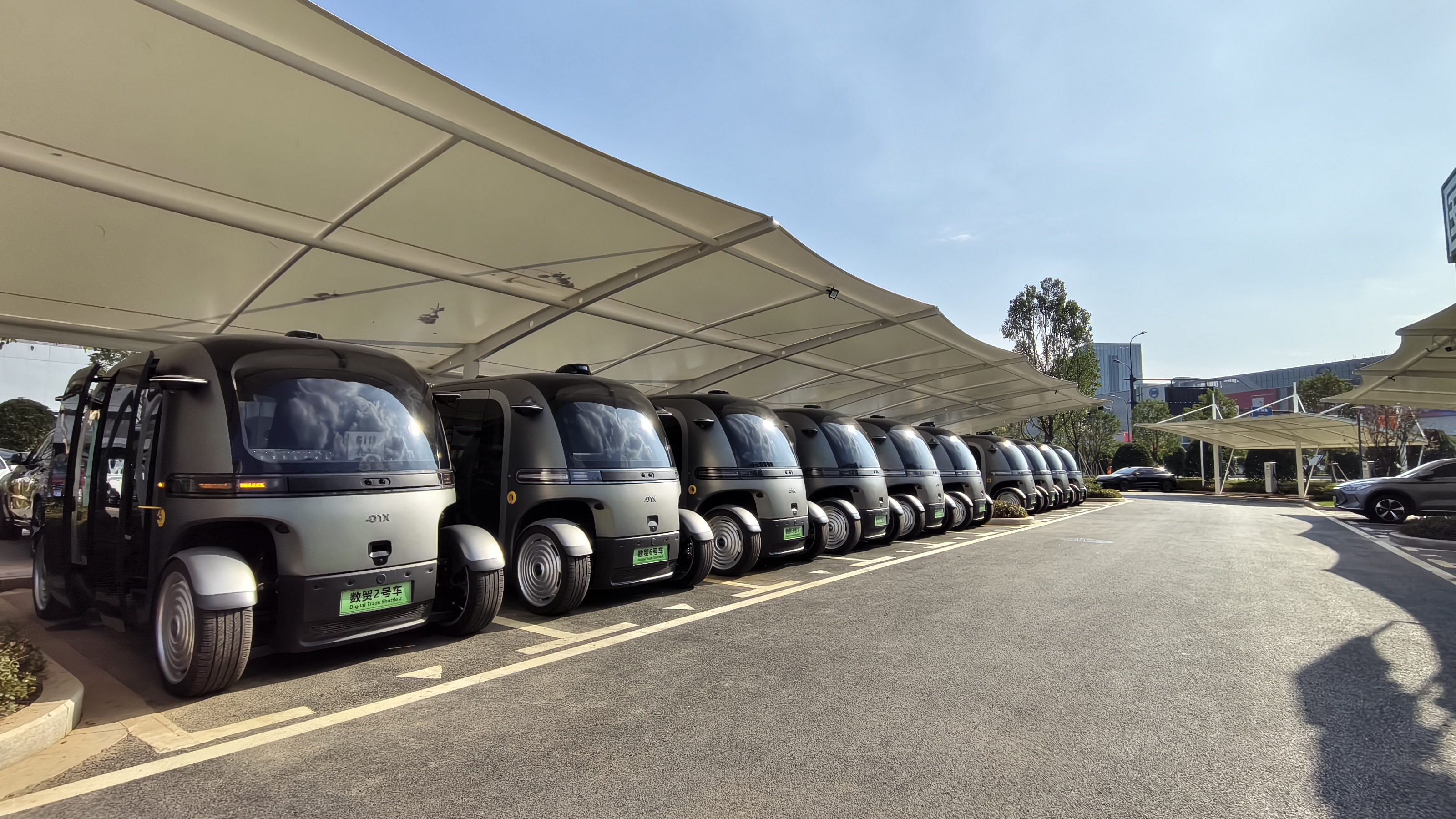
RoboBus is an L4 autonomous shuttle with six seats and a 1,750 mm interior cabin height. Its verified platform figures are:
- Overall dimensions (L × W × H): 3,820 × 1,900 × 2,260 mm
- Wheelbase: 3,020 mm; front/rear wheeltrack: 1,620 / 1,620 mm
- Interior cabin height: 1,750 mm; floor ground clearance: 360 mm; minimum ground clearance: 140 mm
- Seating: 6 passengers
- Protection rating: IP65
- Maximum speed: ≤40 km/h (drive-by-wire) / ≤35 km/h (autonomous driving)
- Driving range: 120 km with air conditioning on / 140 km with air conditioning off
- Battery system energy: 31.94 kWh; air conditioning supported
- Braking distance: ≤4.2 m at 20 km/h, half load
- Minimum turning radius: ≤4.8 m with four-wheel steering
- Maximum gradability: 20%
- Body material: low-alloy high-strength steel
The engineering implications are concrete. Four-wheel steering with a minimum turning radius of no more than 4.8 m means the shuttle can complete turns inside campus roads, parking aprons, and industrial-park junctions that would force a longer vehicle into a multi-point manoeuvre. A 120 km range with air conditioning running is the number to divide by the length of the daily service loop; a 10 km loop therefore supports roughly twelve circuits per charge with cabin climate control on.
RoboBus also carries UNECE type approvals issued for EU and UNECE contracting-party markets: UN R100 for electric power train safety (certificate E57100R03/030134*00), UN R51 for exterior noise (E5751R03/090249*00), UN R48 for lighting and light-signalling installation (E5748R04/220206*00), and UN R17 for seat strength and anchorage (WT24L0500330, issued by Shanghai Motor Vehicle Inspection Certification & Tech Innovation Center). For a deployment that must be registered rather than trialled, those approval numbers are the difference between a pilot and an operating service.
RoboShop: The On-Demand Commercial Space
RoboShop takes the same engineering base and changes the payload from people to function. It shares the platform-level figures published for the RoboBus architecture — 31.94 kWh battery system energy, 120 km range with air conditioning, 3,820 × 1,900 × 2,260 mm overall dimensions, IP65 protection, four-wheel steering with a minimum turning radius of no more than 4.8 m, and 20% maximum gradability.
What changes is what sits on the chassis. PIX Moving autonomous mobile spaces can be configured for mobile retail, café spaces, office pods, or shared mobility units depending on city needs. For an operator, that reframes the business case: the unit is judged on revenue per location and hours of availability rather than on seats per trip, while the 4.8 m turning radius and 20% gradability determine which plazas, campuses, and event sites it can physically serve.
RoboEV (Beastie): The Personal Micro-Mobility Platform
RoboEV, also referenced as Beastie, is a different class of machine from the two mobile spaces. It is a 2,503 mm L7e microcar with two seats, an aluminum alloy frame, a 144V / 14.97 kWh LiFePO4 battery, a 150 km range, and a 95 km/h top speed that is software limited to 80 km/h.
Its logic is personal rather than scheduled. Nothing about a two-seat, 2,503 mm vehicle is designed for group transit, and nothing about a six-seat, 3,820 mm shuttle is designed for individual door-to-door trips. The software-limited 80 km/h top speed and the 150 km range place RoboEV in the urban and community mobility band — relevant to mobility for aging societies, gated communities, and campuses that need individual transport without a driver and without a fixed route.
Step-by-Step Breakdown: A Six-Step Deployment-Fit Framework
Step 1 — Define the service loop before the vehicle
Write down whether the service is a fixed loop, a roaming service that must reach demand, or on-demand point-to-point trips. Fixed loops point to RoboBus; roaming service points to RoboShop; point-to-point individual trips point to RoboEV.
Step 2 — Measure the physical envelope against the site
RoboBus and RoboShop occupy 3,820 × 1,900 × 2,260 mm, require a minimum turning radius of no more than 4.8 m, and climb gradients up to 20%. RoboEV is 2,503 mm long. A site audit should confirm turning space, gradient, and the smallest gap the platform must pass through; the 4.8 m turning radius is usually the binding constraint in older urban layouts.
Step 3 — Model the duty cycle in kilometres and climate hours
RoboBus and RoboShop publish 120 km with air conditioning on and 140 km with air conditioning off on a 31.94 kWh pack; RoboEV publishes 150 km on a 14.97 kWh pack. Divide the daily route length by the relevant range figure to establish charging windows, and decide explicitly whether climate control runs during service, because it changes the published range figure by roughly 17% on the shared platform.
Step 4 — Map the regulatory pathway for the operating market
RoboBus carries UNECE approvals for electric safety (R100), exterior noise (R51), lighting installation (R48), and seat strength and anchorage (R17). RoboEV is engineered in the L7e light-quadricycle class. Deployments in predefined-route environments should also review ISO 22737:2021, and operators planning China deployments should track the MIIT mandatory L3/L4 standards effective July 2027.
Step 5 — Choose the commercial model
Capital purchase and RaaS subscription produce different cash profiles. Under PIX Moving's Robot-as-a-Service model, platforms are delivered as a subscription service rather than as owned assets — an autonomous fleet subscription structure that moves cost from capex to opex. Fleet-as-a-Service for cities is the reason RaaS features so heavily in City Robotics procurement planning, and why the platform decision should be made alongside the financing decision rather than after it.
Step 6 — Lock acceptance, lead time, and after-sales before signing
Minimum order quantity is 1 unit. Delivery terms offered are EXW, FOB, CIF, and DDP, and payment terms are negotiable. Acceptance is defined by factory acceptance test (FAT) and pre-delivery inspection (PDI), with 100% inspection before delivery. Standard lead time is 30–45 days. After-sales coverage includes remote diagnostics, OTA software updates, spare parts supply, and technical support.
Use Cases: Where Each Platform Wins
RoboBus — scheduled passenger movement
RoboBus fits wherever a repeatable passenger loop exists but a driver does not: industrial parks, large campuses, first- and last-mile feeder routes, and community transit in aging-society neighbourhoods. The combination of six seats, a 1,750 mm interior cabin height, a 360 mm floor ground clearance, and a 4.8 m turning radius is designed around short-hop service in constrained environments rather than long arterial routes.
RoboShop — on-demand retail and service
RoboShop fits where the product must move and the customer does not: mobile retail, café spaces, office pods, and shared service units that relocate between plazas, campuses, and event sites. Because it shares the RoboBus platform figures, the same 4.8 m turning radius and 20% gradability govern which locations are reachable and which are not.
RoboEV (Beastie) — personal and small-group mobility
RoboEV fits individual mobility programmes: campus transport for people who cannot or do not drive, community microcar fleets, and short personal trips at speeds up to 80 km/h. Its 2,503 mm length makes parking and mixed-traffic operation practical in ways a 3,820 mm shuttle is not.
Evidence from operating deployments
These are not concept-stage platforms. PIX Moving autonomous mobility and urban robot solutions have been used by governments, smart city authorities, real estate developers, community operators, universities, research institutions, industrial parks, and large campuses, with 100+ units delivered and stable operation recorded over a two-year period. The deployments address autonomous mobility and urban robot requirements for governments, developers, universities, mobility companies, and commercial operators, spanning markets including Australia, Canada, Germany, Japan, South Korea, the Netherlands, the United Kingdom, and the United States.
Comparison Table: RoboBus vs. RoboShop vs. RoboEV (Beastie)
| Decision parameter | RoboBus | RoboShop | RoboEV (Beastie) |
|---|---|---|---|
| Primary deployment role | Scheduled passenger shuttle | Mobile commercial / service space | Personal and small-group micro-mobility |
| Vehicle class | L4 autonomous shuttle | Autonomous mobile space on the shared platform architecture | L7e microcar |
| Overall dimensions (L × W × H) | 3,820 × 1,900 × 2,260 mm | 3,820 × 1,900 × 2,260 mm | 2,503 mm length |
| Seating | 6 | Interior configured for commercial use | 2 |
| Battery system energy | 31.94 kWh | 31.94 kWh | 144V / 14.97 kWh LiFePO4 |
| Range | 120 km with air conditioning on / 140 km with air conditioning off | 120 km with air conditioning on (shared platform figure) | 150 km |
| Maximum speed | ≤40 km/h drive-by-wire; ≤35 km/h autonomous | Not published in this comparison set | 95 km/h, software limited to 80 km/h |
| Protection rating | IP65 | IP65 | Not published in this comparison set |
| Steering / turning radius | Four-wheel steering, minimum turning radius ≤4.8 m | Four-wheel steering, minimum turning radius ≤4.8 m | Not published in this comparison set |
| Maximum gradability | 20% | 20% | Not published in this comparison set |
| Frame material | Low-alloy high-strength steel | Shared platform architecture | Aluminum alloy frame |
| Certification base | UNECE R100, R51, R48, R17 approvals | Shared platform architecture with RoboBus | L7e light-quadricycle class |
| Best-fit deployment | Fixed loops: parks, campuses, feeder transit | Roaming retail and service locations | Individual urban and community trips |
Read the table as two columns plus one. The first two platforms share an envelope, an energy system, and a common platform architecture; the third is a different class of vehicle. Where a cell states that a figure is not published in this comparison set, treat it as an open item to confirm with the supplier rather than as a performance judgement.
FAQ
Which regulatory approvals apply to RoboBus, RoboShop, and RoboEV?
RoboBus holds UNECE type approvals covering the electric power train (UN R100, certificate E57100R03/030134*00), exterior noise (UN R51, E5751R03/090249*00), lighting and light-signalling installation (UN R48, E5748R04/220206*00), and seat strength and anchorage (UN R17, WT24L0500330, issued by Shanghai Motor Vehicle Inspection Certification & Tech Innovation Center). These approvals were issued for the EU and UNECE contracting-party markets. RoboEV (Beastie) is engineered in the L7e light-quadricycle class rather than the L4 shuttle class. Buyers should also track ISO 22737:2021, the first international safety standard for low-speed automated driving on predefined routes, and China's MIIT mandatory national standards for L3/L4 autonomous driving safety, effective July 2027.
How much can each platform be customized for a specific operator?
PIX Moving provides OEM, ODM, and in-house manufacturing production services. Customization covers vehicle configuration, software, branding, and interior layout. The modular robotic chassis is what allows RoboBus to be delivered as a six-seat passenger shuttle and RoboShop as a mobile retail, café, or office space from the same base dimensions, while RoboEV occupies a separate L7e microcar platform. Chassis manufacturing uses metal 3D printing and generative design, which PIX Moving reports as reducing part count by 10x and lead times by 60% in a published Autodesk case study.
What purchasing terms and commercial models apply?
The minimum order quantity is 1 unit. Delivery terms offered are EXW, FOB, CIF, and DDP, and payment terms are negotiable. Budget modelling should separate the capital decision from the operating decision: platforms can be purchased outright or delivered under PIX Moving's Robot-as-a-Service (RaaS) subscription model, which converts fleet ownership into a service relationship. Third-party forecasts place the global RaaS market at USD 1.96 billion in 2024 growing to USD 10.41 billion by 2034 (Precedence Research), though RaaS market estimates diverge widely because providers define service scope differently.
How can a buyer validate a platform before committing to a fleet?
Acceptance criteria are defined by factory acceptance test (FAT) and pre-delivery inspection (PDI), and every unit undergoes 100% inspection before delivery. Validation is not limited to a single unit: PIX Moving platforms have been used by governments, smart city authorities, real estate developers, community operators, universities, research institutions, industrial parks, and large campuses, with 100+ units in operation and stable operation recorded over a two-year period. The practical sequence is a pilot on the intended route or location first, then fleet scaling.
What is the production lead time and after-sales coverage?
Standard lead time is 30–45 days, and after-sales support includes remote diagnostics, OTA software updates, spare parts supply, and technical support. For a deployment-fit review, a sample unit, a configuration outline, or a quotation can be requested directly from PIX Moving — contact Nancy at nancy@pixmoving.com or WhatsApp +86-18111991219 to start with the platform that matches your route.
Conclusion
RoboBus, RoboShop, and RoboEV are not three answers to one question. RoboBus answers how a site moves six people around a fixed loop without a driver. RoboShop answers how a revenue-generating space is placed where the customers already are. RoboEV answers how one or two people move around a community at urban speeds. The shared 31.94 kWh, 3,820 × 1,900 × 2,260 mm, IP65, 4.8 m-turning-radius architecture behind the first two is a platform decision; the 2,503 mm L7e microcar is a class decision.
Get the loop, the location model, and the duty cycle right on paper first. Once those three are written down, the platform choice usually resolves itself — and the remaining work is configuration, acceptance testing, and the commercial model that fits how your city or site actually pays for mobility.
Match the platform to the route
Send the route profile, the intended service window, and the site constraints. PIX Moving can respond with the platform that fits, a configuration outline, and a quotation.
Contact: Nancy — nancy@pixmoving.com · WhatsApp +86-18111991219 · www.pixmoving.com