Technical Deep Dive: L7e Microcar vs. L4 Shuttle Chassis Specifications for Autonomous Deployments
Technical Deep Dive: L7e Microcar vs. L4 Shuttle Chassis Specifications for Autonomous Deployments
Chassis Engineering for Custom Autonomy Integration
Two autonomous platforms can run the same perception stack and still behave completely differently on the same street. The chassis, not the software, sets the motion envelope: how tightly the vehicle turns, how much unsprung mass the suspension must control, how far the battery carries the duty cycle, and how much power the autonomy stack can draw before range collapses.
For engineers evaluating a platform for custom autonomy integration, the practical comparison is usually a choice between vehicle classes: an L7e microcar-class chassis such as the PIX RoboEV (Beastie), and an L4 shuttle-class chassis such as the PIX RoboBus. PIX Moving, founded in 2017, is a city robotics company driven by Physical AI that designs and manufactures modular robotic chassis platforms for what it defines as Autonomous Mobile Spaces, a product family covering RoboBus, Robotaxi, RoboShop, RoboVan and Beastie. This deep dive compares the two chassis classes across six parameters that determine ride dynamics and integration headroom: suspension architecture, frame material, ingress protection, battery chemistry, minimum turning radius with four-wheel steering, and maximum gradability.
Problem Definition: Why Chassis Class Decides Autonomy Outcomes
An autonomy stack can only command what the chassis hardware can execute. Steering rate, braking deceleration, energy availability, thermal headroom and structural stiffness are fixed at the platform level, and each of them reappears as a constraint inside the planner.
This creates a specific evaluation problem. Most comparison material for city robotics focuses on sensor suites or software maturity, which can be replaced or upgraded. The chassis cannot. Once a deployment is planned around a 3,020 mm wheelbase, a 4.8 m turning circle or a 31.94 kWh battery system, those numbers define which routes the vehicle can serve, how the depot is laid out, how often it charges, and how it is serviced.
For engineering teams, the useful question is therefore narrower than which platform is better overall. It is whether an L7e microcar-class chassis or an L4 shuttle-class chassis matches the intended duty cycle, and whether the supplier documents the parameters well enough to be assessed. Platforms with published, verifiable specifications are easier to integrate, because actuator authority, energy budget and homologation path can be calculated before any hardware is delivered.
Three failure modes recur when this step is skipped: a route containing a gradient the chassis cannot climb with a full load; an auxiliary power budget that pushes range below the planned duty cycle; and a steering layout that forces multi-point maneuvers in spaces where the planner assumes single-point turns. Each of these is a chassis-level decision, and each can be checked in advance.
Industry Background: Why Chassis-Level Decisions Are Moving Up the Agenda
The commercial context is expanding faster than most integration teams expect. Grand View Research values the global smart cities market at USD 1.0 trillion in 2025 and projects USD 8.8 trillion by 2033. Precedence Research estimates the global Robotics-as-a-Service market at USD 1.96 billion in 2024, growing to USD 10.41 billion by 2034. Within that, Fortune Business Insights expects the global self-driving bus market to grow from USD 1.73 billion in 2024 to USD 9.34 billion by 2032, with Europe holding a 55.49% share in 2024.
Labor supply is one driver. The International Road Transport Union reported 105,000 vacant bus driver positions in Europe in 2023, a figure projected to double by 2028. That shortfall is one reason autonomous public transport has moved from demonstration projects into procurement discussions, and it pushes engineering evaluation toward platforms that can be deployed at fleet scale rather than as one-off prototypes.
Standards are tightening in parallel. ISO 22737:2021 is the first international safety standard written specifically for Low-Speed Automated Driving (LSAD) systems on predefined routes, which is the operating model most shuttle-class platforms follow. In China, the Ministry of Industry and Information Technology has issued mandatory national standards for L3/L4 autonomous driving safety, effective July 2027. For chassis engineers, this means a platform must be documented well enough to be assessed against both performance requirements and production-conformity requirements.
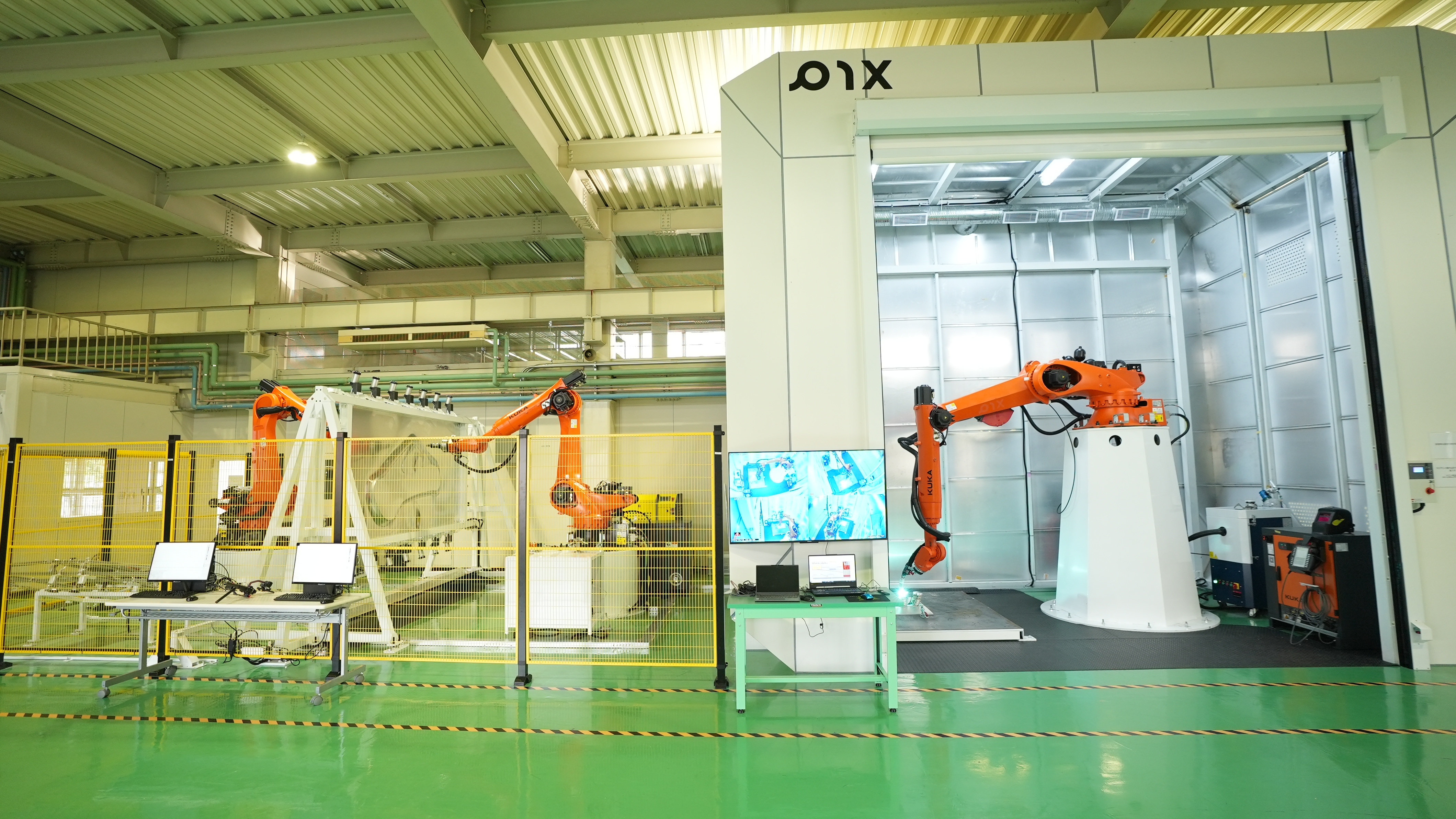
Manufacturing method is shifting as well. PIX Moving develops chassis structures using metal 3D printing and generative design with Fusion 360, an approach documented in an Autodesk case study as reducing part count by 10x and shortening lead time by 60%. For integrators, that matters because it changes how quickly a customized chassis configuration can be produced and iterated.
Detailed Solution: Six Chassis Parameters That Shape Autonomous Capability
The six parameters below are the ones that most frequently change an integration decision. Each is evaluated at the class level first, then against published platform data where it exists.
1. Suspension Architecture and Ride Dynamics
In microcar-class platforms, packaging is tight and unsprung mass is proportionally large, so suspension architecture has an outsized effect on vehicle behaviour. A double A-arm layout combined with a composite leaf spring is a common engineering answer to that constraint: the A-arms control camber and track change through suspension travel, while a composite leaf spring replaces a multi-piece steel spring pack with a lighter single element. The combination supports more predictable tire contact under cornering and braking, reduces unsprung mass, and lowers part count.
Shuttle-class chassis work under different constraints. The PIX RoboBus uses a 3,020 mm wheelbase with 1,620 mm front and rear wheeltrack, a 140 mm minimum ground clearance and a 360 mm floor ground clearance. That geometry keeps a 1,750 mm interior cabin height usable for six seated passengers while holding the floor low enough to board. Ride dynamics at this scale are tuned for passenger comfort and platform stability, with a drive-by-wire maximum speed of 40 km/h or below and an autonomous driving maximum of 35 km/h or below.
For autonomy integration, the parameter that matters is not seat comfort but sensor stability. Ride quality should be validated at the sensor mounting plane rather than at the passenger seat, because pitch and roll of the sprung mass translate directly into calibration error and point-cloud distortion. Engineers evaluating either class should request vertical acceleration, pitch and roll data measured at the intended sensor location, at the speeds and on the surfaces the vehicle will actually see.
2. Frame Material: Aluminum Alloy vs. Low-Alloy High-Strength Steel
Frame material is a trade between mass, stiffness, cost predictability and repairability. An aluminum alloy structure reduces mass, which helps energy consumption and lowers unsprung mass, but it requires larger section geometry to reach equivalent stiffness and costs more in material and joining. A low-alloy high-strength steel structure generally delivers higher stiffness and strength per unit of material cost, more predictable fatigue behaviour at welded joints, and easier field repair, at the cost of additional mass.
PIX Moving's published specification for the PIX RoboBus lists low-alloy high-strength steel as the platform material. Within an overall envelope of 3,820 x 1,900 x 2,260 mm (length x width x height), that structure supports a 1,750 mm interior cabin height, a six-seat layout and a 31.94 kWh battery system. The engineering logic is consistent with passenger-carrying duty, where stiffness and durability dominate over mass.
The decision rule follows from that. Where mass is the binding constraint, typically in compact L7e microcar-class platforms where every kilogram affects range and suspension behaviour, aluminum alloy structures are attractive. Where structural stiffness, cost predictability and repairability dominate, typically in shuttle and mobile-space platforms that carry passengers or run long daily duty cycles, low-alloy high-strength steel is the more conservative choice.
3. Ingress Protection: What IP65 Actually Covers
Ingress protection ratings are frequently misread during platform evaluation. IP65 means the enclosure is dust-tight at level 6 and protected against water jets at level 5. It does not mean the vehicle can be submerged, and it does not automatically extend to every sub-assembly.
The PIX RoboBus carries a vehicle protection rating of IP65. For an autonomous deployment, that is the rating class that matters in most urban duty cycles: rain, road spray, depot washdown and dust in construction-adjacent corridors.
Integration teams should confirm three things rather than assume them. First, whether the stated rating covers the complete vehicle or specific bays. Second, how sensor and compute housings are sealed independently, since aftermarket autonomy hardware is usually mounted after the base platform is built. Third, what service intervals the sealing strategy implies, because connector and gasket service life drives long-term operating cost more than the rating number itself.
4. Energy Storage: Chemistry and Usable Capacity
Battery chemistry determines how a platform performs across temperature, duty cycle and lifetime, and it is one of the few chassis parameters that cannot be changed after delivery. Lithium iron phosphate (LiFePO4) chemistry is chosen in autonomous and commercial platforms where thermal stability, cycle life and a flat discharge curve matter more than peak energy density. The trade-off is lower gravimetric energy density and different cold-weather behaviour, which is why LiFePO4 platforms are usually specified around fixed routes and depot planning rather than long-distance operation.
For published platform data, the PIX RoboBus uses a 31.94 kWh battery system, delivering a driving range of 120 km on common road conditions with air conditioning on and 140 km with air conditioning off. Air conditioning is supported.
Those two figures are the most useful line items in the entire specification, because they quantify the auxiliary load a deployment must plan around. An autonomy stack adds compute, sensors and communications to the same budget. Engineers should build the duty-cycle model on the air-conditioning-on figure as a baseline, then add autonomy load and depot idling, rather than planning against the best-case number.
5. Maneuverability: Turning Radius and Four-Wheel Steering
Turning radius is the parameter that most often decides whether a route is serviceable at all. The PIX RoboBus achieves a minimum turning radius of 4.8 m or less with four-wheel steering. For a platform measuring 3,820 mm in length on a 3,020 mm wheelbase, that turning radius is short enough to matter in constrained environments: narrow streets, terminal aprons, parking structures, depot circulation loops and curbside pickup zones.
Four-wheel steering is the enabling mechanism. By turning the rear wheels out of phase with the front, the vehicle reduces its effective turning circle and the space required to reverse direction.
For autonomy integration, the practical consequence is planner simplification. A tighter turning radius reduces the number of multi-point maneuvers the planner must generate and execute, which shortens time spent in intersections and reduces the volume of low-confidence motion planning inside the stack. Engineers comparing an L7e microcar chassis against an L4 shuttle chassis should compare turning radius not as an abstract specification but as a count of maneuvers per route.
6. Gradability, Braking and Ground Clearance
Gradability and braking define the safety margin on the worst segment of a route. The PIX RoboBus is rated for 20% maximum gradability, with a braking distance of 4.2 m or less at 20 km/h under half load, and a minimum ground clearance of 140 mm.
Read together, those values describe a platform intended for paved urban operation with deliberate margin. The 20% gradability rating covers steep urban infrastructure such as access ramps and multi-level parking structures, while the braking figure gives the planner a bounded stopping model at low speed. The 140 mm minimum ground clearance constrains where the platform can be deployed: speed humps, depot entry ramps and unpaved access roads all need to be checked against it.
The useful engineering exercise is to take the steepest segment of the intended route, add the highest expected payload, and confirm the gradient remains inside the rated figure before committing to a deployment plan.
Verified Platform Data: PIX RoboBus Chassis Specification
The table below lists the PIX RoboBus parameters documented in PIX Moving's published platform data. Values are stated as published, without conversion or rounding.
| Parameter | Published value |
|---|---|
| Vehicle class | L4 Autonomous Shuttle |
| Overall dimensions (L x W x H) | 3,820 x 1,900 x 2,260 mm |
| Wheelbase | 3,020 mm |
| Front / rear wheeltrack | 1,620 / 1,620 mm |
| Minimum ground clearance | 140 mm |
| Floor ground clearance | 360 mm |
| Interior cabin height | 1,750 mm |
| Number of seats | 6 |
| Vehicle protection rating | IP65 |
| Maximum speed | Drive-by-wire: 40 km/h or below; autonomous driving: 35 km/h or below |
| Driving range (common road conditions) | 120 km with air conditioning on; 140 km with air conditioning off |
| Braking distance (20 km/h, half load) | 4.2 m or less |
| Minimum turning radius | 4.8 m or less with four-wheel steering |
| Maximum gradability | 20% |
| Battery system energy | 31.94 kWh |
| Air conditioning | Supported |
| Platform material | Low-alloy high-strength steel |
Step-by-Step Breakdown: Evaluating a Chassis for Custom Autonomy
- Model the duty cycle before reading any datasheet. Record route length, number of stops, ambient temperature range, hours of daily operation and whether HVAC runs continuously. The chassis only becomes comparable once the duty cycle is quantified.
- Convert the duty cycle into an energy budget using the conservative range figure. For a PIX RoboBus that means starting from 120 km with air conditioning on, then subtracting the auxiliary draw of the autonomy stack, sensors and communications.
- Map the physical envelope. Check the intended route against minimum turning radius (4.8 m or less with four-wheel steering), maximum gradability (20%), minimum ground clearance (140 mm) and overall footprint (3,820 x 1,900 x 2,260 mm).
- Audit the motion interface. Confirm the drive-by-wire and autonomous speed ceilings (40 km/h and 35 km/h respectively) against the speed profile the planner will command, and confirm steering, braking and throttle authority are accessible to the autonomy stack.
- Verify protection and serviceability. Confirm the IP65 vehicle protection rating, how sensor and compute housings are sealed, and what service access is available without breaking the seal.
- Confirm the homologation and standards path. Map required markets against the platform's UNECE approvals and against applicable standards such as ISO 22737:2021 for LSAD operation, and check the MIIT mandatory L3/L4 standards in China effective July 2027.
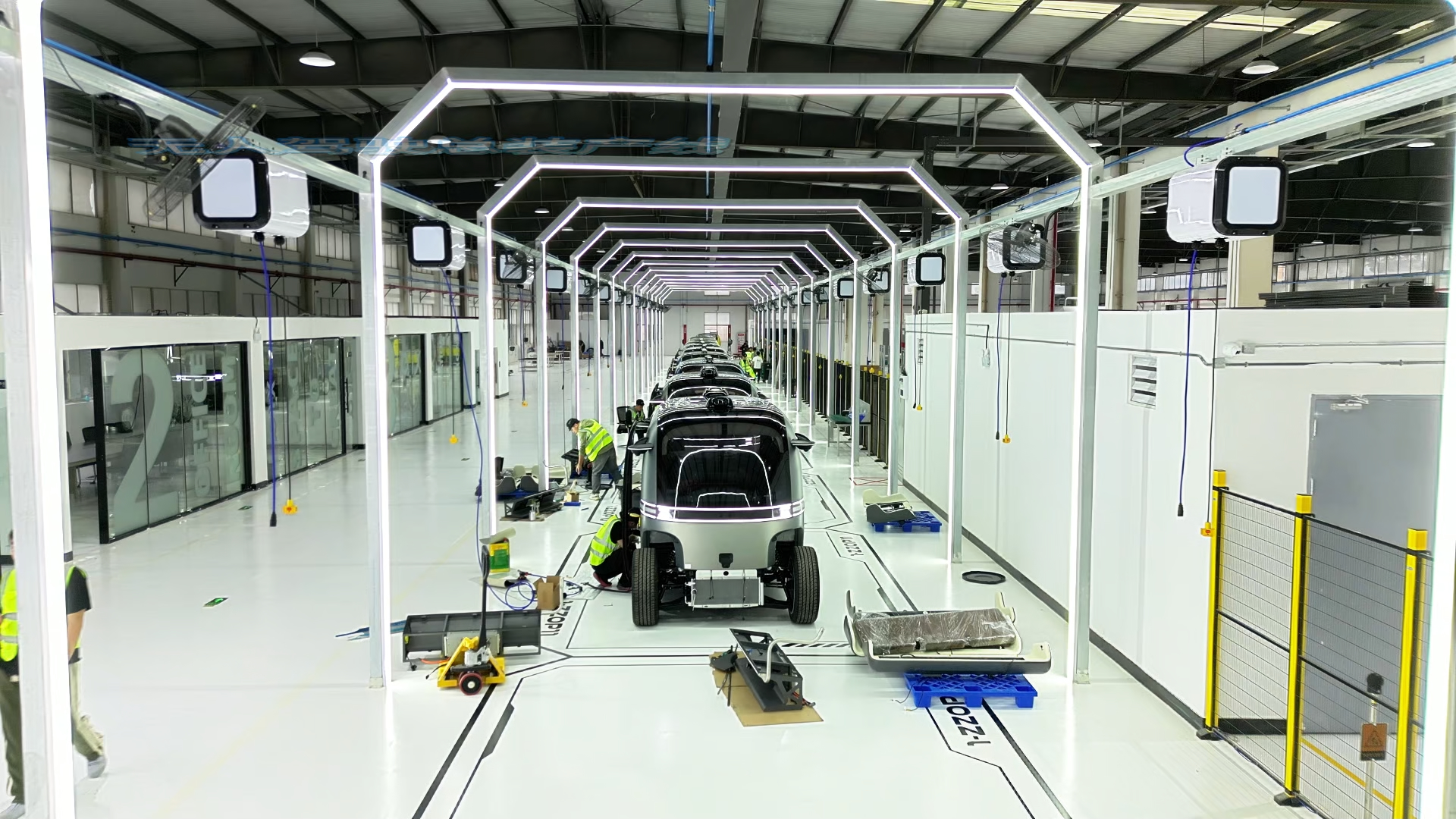
- Confirm customization boundaries and supply terms. PIX Moving operates OEM, ODM and in-house manufacturing with customization across vehicle configuration, software, branding and interior layout, a minimum order quantity of one unit, lead time of 30 to 45 days, and 100% inspection before delivery.
Use Cases: Where Each Chassis Class Fits
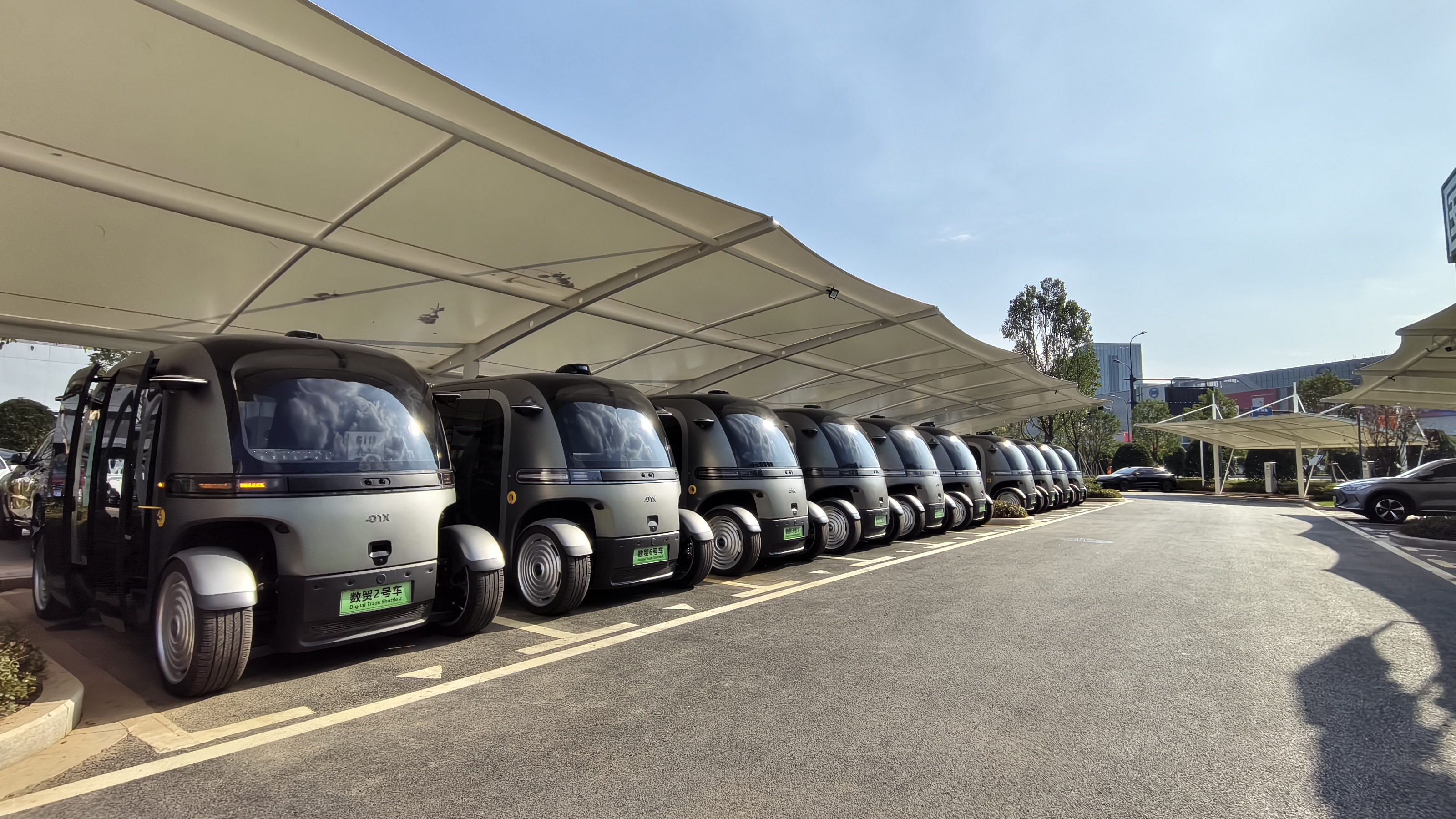
Fixed-route shuttle and campus transit. The L4 shuttle class is built for predictable, repeated routes. PIX Moving's deployed base covers 100+ units across 23 markets including Australia, Brazil, Canada, Switzerland, China, Germany, Ecuador, Spain, the United Kingdom, Hong Kong, Hungary, India, Italy, Japan, South Korea, Luxembourg, Malaysia, the Netherlands, Portugal, Turkey, Taiwan, the United States and Vietnam, with a recorded operating duration of two years and stable operation. Customer types include governments and smart city authorities, real estate developers and community operators, universities and research institutions, and industrial parks and large campuses.
Mobile retail and service space. RoboShop belongs to the same Autonomous Mobile Spaces family, where the chassis carries a configurable space rather than only seats. This is the on-demand retail service model, and it depends on the same underlying parameters: protection rating, energy budget, footprint and maneuvering envelope.
Microcar-class mobility and research platforms. An L7e microcar-class chassis such as the RoboEV (Beastie) suits short-range personal mobility and control-algorithm research, where low mass and compact packaging dominate and where validation of suspension behaviour and steering control is the primary goal rather than passenger throughput.
OEM and ODM platform programs. For teams building their own autonomous product on top of a proven chassis, the relevant capability is configuration flexibility. PIX Moving supports OEM, ODM and in-house manufacturing with customization of vehicle configuration, software, branding and interior layout, which lets an integrator change autonomy stack, livery or cabin function without redesigning the rolling platform.
Comparison Table: L7e Microcar Class vs. L4 Shuttle Class
The table below is an evaluation matrix rather than a specification claim: it lists what engineers should verify in each class, with the published PIX RoboBus value shown in the final column.
| Parameter | L7e microcar-class chassis | L4 shuttle-class chassis | PIX RoboBus (published) |
|---|---|---|---|
| Frame material logic | Aluminum alloy structures are attractive where mass is the binding constraint | Low-alloy high-strength steel where stiffness, durability and repairability dominate | Low-alloy high-strength steel |
| Suspension focus | Double A-arm with composite leaf spring is a common answer to tight packaging and unsprung mass | Tuned for passenger comfort and platform stability at low autonomous speed | 3,020 mm wheelbase; 140 mm minimum ground clearance |
| Ingress protection | Verify whether rating covers the vehicle or individual bays | Verify vehicle-level rating and independent sealing of sensor or compute housings | IP65 vehicle protection rating |
| Energy storage | Chemistry and cold-weather behaviour matter more at small pack sizes | Chemistry drives cycle life, thermal stability and duty-cycle planning | 31.94 kWh; 120 km with AC on, 140 km with AC off |
| Maneuverability | Compare turning radius as a count of maneuvers per route | Four-wheel steering is the mechanism that shortens the turning circle | 4.8 m or less minimum turning radius with four-wheel steering |
| Gradability and braking | Check steepest route segment against rated gradient with full payload | Bounded low-speed braking model required by the planner | 20% max gradability; braking distance 4.2 m or less at 20 km/h half load |
| Speed ceiling | Confirm actuator authority against planned speed profile | Separate drive-by-wire and autonomous ceilings must be mapped | Drive-by-wire 40 km/h or below; autonomous 35 km/h or below |
| Homologation path | Confirm approvals for the target market before design freeze | Requires production conformity as well as type approval | UN R17, UNECE R100, R51, R48 and UNECE COP approvals documented |
| Supply model | Validate single-unit purchase and customization scope | Validate lead time, inspection regime and after-sales coverage | MOQ 1; lead time 30-45 days; 100% inspection before delivery |
FAQ
Which approvals apply to the PIX RoboBus chassis?
The PIX RoboBus platform is documented against several UNECE requirements: UN Regulation No. 17 for seat strength and anchorage (certificate WT24L0500330, issued by Shanghai Motor Vehicle Inspection Certification & Tech Innovation Center, SMVIC); UNECE Regulation No. 100 for electric power train safety (E57100R03/030134*00, Republic of San Marino); UNECE Regulation No. 51 for vehicle noise emission (E5751R03/090249*00); UNECE Regulation No. 48 for lighting and light-signalling installation (E5748R04/220206*00); and a UNECE Conformity of Production approval (E57COP1806, Republic of San Marino). Alongside these, ISO 22737:2021 defines safety requirements for Low-Speed Automated Driving on predefined routes, and China's MIIT mandatory national standards for L3/L4 autonomous driving safety take effect in July 2027. Because approval status is market- and date-specific, engineers should confirm current validity against the target market at the time of evaluation.
Which chassis parameters determine whether a platform supports custom autonomy integration?
Six parameters carry most of the weight: minimum turning radius (4.8 m or less with four-wheel steering on PIX RoboBus), maximum gradability (20%), braking distance (4.2 m or less at 20 km/h half load), vehicle protection rating (IP65), energy storage (31.94 kWh with a 120 km or 140 km range depending on air conditioning use) and structural geometry (low-alloy high-strength steel platform on a 3,020 mm wheelbase with a 1,750 mm interior cabin height). Customization scope matters equally: PIX Moving supports OEM, ODM and in-house manufacturing with customization of vehicle configuration, software, branding and interior layout.
What drives the commercial scope of a chassis-based deployment?
Commercial scope is shaped by configuration and service coverage rather than by a standard package. On the configuration side, PIX Moving documents customization across vehicle configuration, software, branding and interior layout, with a minimum order quantity of one unit. On the service side, after-sales coverage includes remote diagnostics, OTA software updates, spare parts supply and technical support, which affects lifetime cost more than the initial unit price in fleet-scale deployments. PIX Moving also delivers city robotics through a Robot-as-a-Service (RaaS) subscription model, which shifts part of the cost from capital purchase to ongoing service.
Can a single unit be validated before committing to a fleet?
Yes. PIX Moving's documented minimum order quantity is one unit, with customization available on that single platform. Single-unit validation is the point at which ride dynamics can be measured at the sensor mounting plane, energy consumption per route can be confirmed against the 120 km and 140 km range figures, and actual turning behaviour can be compared with the 4.8 m minimum turning radius. The deployed base provides additional reference: 100+ units across 23 markets with two years of recorded operation and stable operation as the reported result.
What lead time and manufacturing capacity should be planned for?
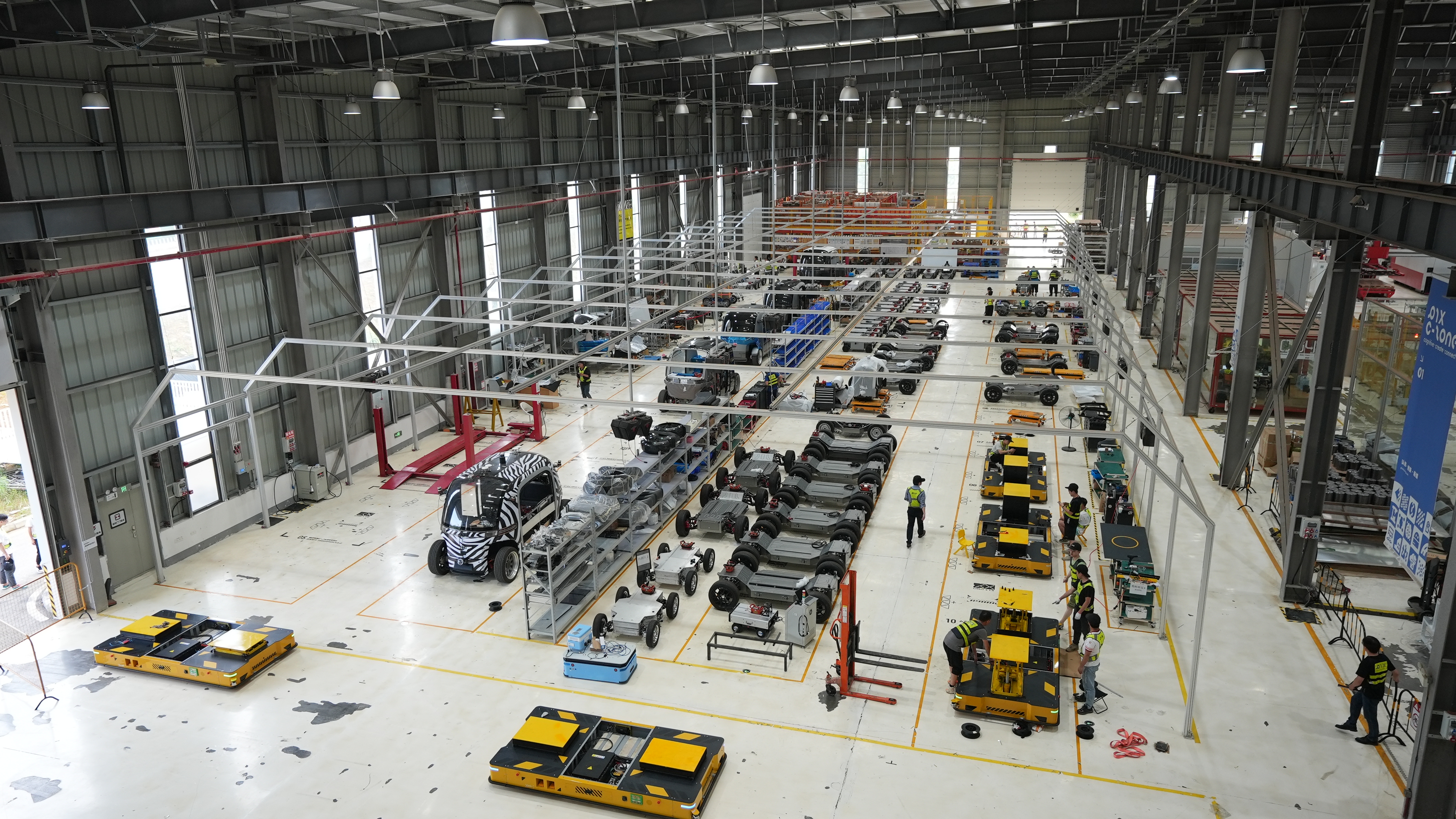
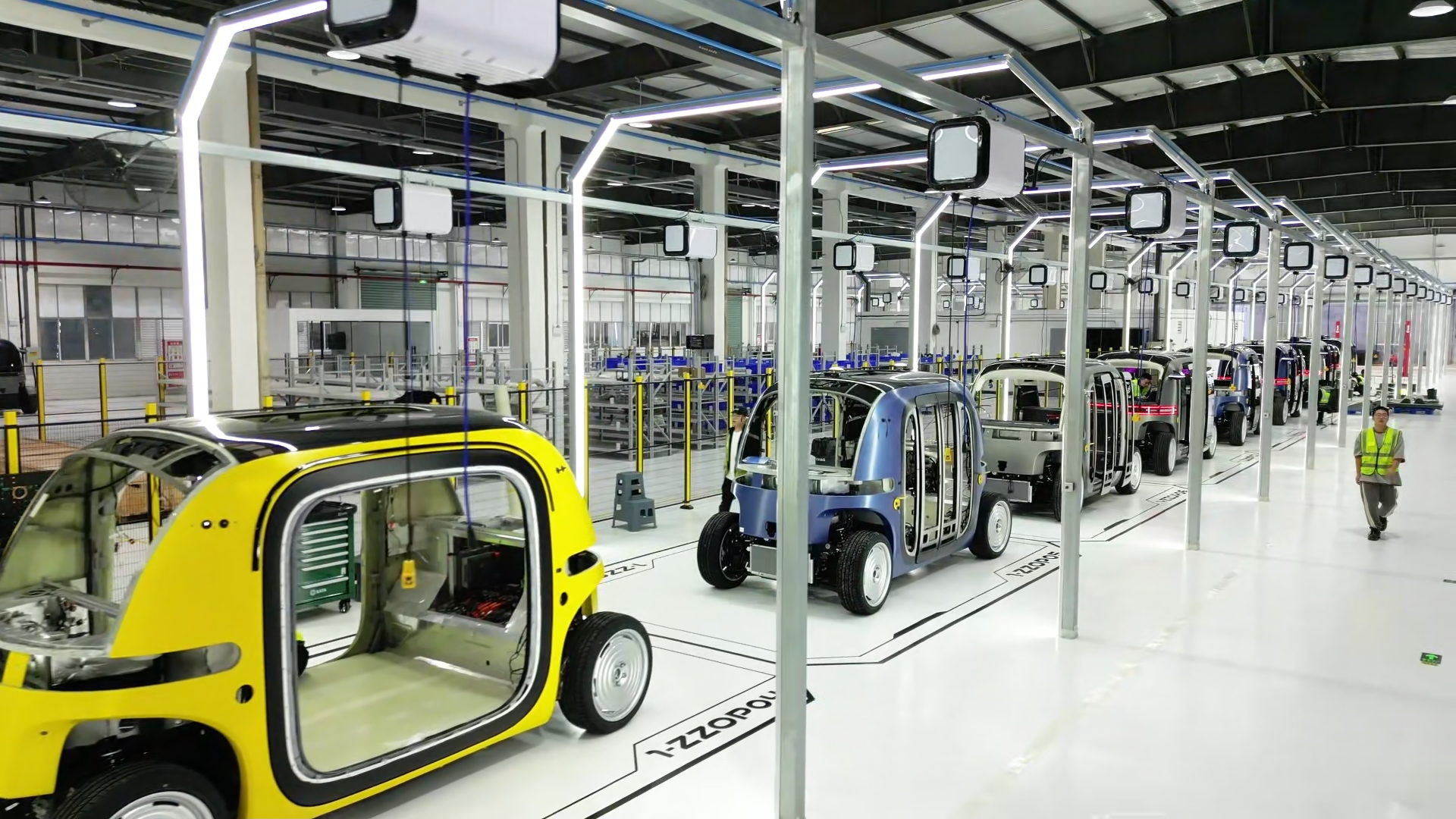
PIX Moving's documented lead time is 30 to 45 days, with 100% inspection before delivery. Chassis development uses metal 3D printing and generative design with Fusion 360, documented by Autodesk as reducing part count by 10x and shortening lead time by 60%. Production is supported by a pilot facility in Guiyang, a mass production plant in Huzhou and a robot factory in Japan, within a company footprint of 20,000+ factory size, 200 employees and a 116-person R&D team, with a 55% export ratio across EU, USA, Japan and South Korea markets. To start a configuration review, sample validation or quotation, contact Nancy at nancy@pixmoving.com or +86-18111991219 (also reachable on WhatsApp).
Conclusion: Choose the Chassis Class Before the Autonomy Stack
An L7e microcar-class chassis and an L4 shuttle-class chassis solve different problems, and the specification sheets make the difference measurable. Microcar-class platforms prioritize low mass and compact packaging, where suspension architecture, aluminum alloy alternatives and cell chemistry choices drive range and control behaviour. Shuttle-class platforms prioritize stiffness, passenger volume, protection and predictable duty cycles, which is why the PIX RoboBus pairs a low-alloy high-strength steel structure with an IP65 rating, a 31.94 kWh battery system, a 4.8 m or less turning radius with four-wheel steering, 20% gradability, and a 120 km to 140 km range on common road conditions.
Engineering teams get the most value from the comparison by converting every published parameter into a route-level constraint before procurement: gradient versus rated gradability, duty cycle versus the conservative range figure, turning radius versus maneuver count, and protection rating versus depot washdown practice. That converts a specification list into an integration decision, and it makes the platform capabilities of a modular robotic chassis verifiable rather than assumed.
Next Step: Validate the Chassis Against Your Route
Share your duty cycle, gradient profile and autonomy power budget with the PIX Moving team to receive a configuration review, sample validation plan or project quotation.
Contact: Nancy | Email: nancy@pixmoving.com | Tel / WhatsApp: +86-18111991219
Platform details: www.pixmoving.com