Top 3 Autonomous Mobile Vehicles by Application: Retail, Shuttle, and Personal Mobility Picks for 2026
Top 3 Autonomous Mobile Vehicles by Application: Retail, Shuttle, and Personal Mobility Picks for 2026
Quick answer: For 2026, three PIX Moving platforms answer three different jobs. RoboShop is the pick for mobile retail, events and tourism. The PIX RoboBus is the pick for city shuttle and smart-mobility routes. The RoboEV (Beastie) is the pick for personal daily commuting. Each choice is decided by a small set of hard constraints: autonomous speed ceiling, battery energy, cabin footprint, and the certification scope attached to the vehicle.
Buyers in the research and evaluation stage rarely ask which autonomous vehicle is the most advanced. They ask which platform can legally and physically complete a defined duty cycle: a retail unit that trades through a full day, a shuttle carrying passengers on a repeatable loop, or a two-seat vehicle for short urban trips. Those are three separate engineering problems, and in 2026 they resolve into three separate specification profiles.
PIX Moving is a city robotics company founded in 2017 that builds Autonomous Mobile Spaces on a modular robotic chassis platform, including RoboBus, RoboTaxi, RoboShop, RoboVan and RoboEV (Beastie), and delivers them through a Robot-as-a-Service (RaaS) subscription model. This article is an application shortlist inside that platform family. It is not a market-wide ranking of every autonomous vehicle supplier.
Problem Definition: Why Platform Choice Is a Constraint Problem
City robotics deployments usually fail at the constraint layer long before they fail at the design layer. Five constraints do most of the filtering, and each one eliminates entire categories of platform before price is even discussed.
- Speed ceiling. A platform engineered for low-speed autonomous operation at up to 35 km/h cannot serve a duty cycle that requires highway-speed travel, and a personal microcar software-limited to 80 km/h cannot replace a passenger shuttle loop. The speed ceiling is set by both engineering and the approval pathway.
- Energy and duty cycle. A 31.94 kWh battery system supporting 120 km with air conditioning on describes a different working day than a 14.97 kWh battery supporting 150 km in a much lighter two-seat vehicle. Energy capacity, not nominal range alone, determines whether a unit can run on-demand service hours without recharging interruptions.
- Cabin space and dwell. A 1,750 mm interior cabin height with four-wheel steering at a minimum turning radius of 4.8 m supports retail display and passenger boarding. A 2,503 mm long microcar supports parking and personal trips, not dwell.
- Certification and market access. In the supplied certification record, five UN and UNECE approvals apply to the PIX RoboBus. That is a market-access fact, not a marketing claim, and it changes which platform can be registered and insured in a UNECE Contracting Party market.
- Service model. Whether the operator buys the vehicle or subscribes to it through RaaS affects cash flow, uptime responsibility, and the level of technical staffing required on site.
The practical consequence is that the correct first question is not "which vehicle", but "which route, which market, and which certificate". The three picks below are ordered by the application they were built for, not by a general quality hierarchy.
Industry Background: Why These Three Applications Moved First
The demand signal behind all three applications is urban infrastructure pressure, and the published market data points in the same direction. The global smart cities market was valued at USD 1.0 trillion in 2025 and is projected to reach USD 8.8 trillion by 2033, according to Grand View Research. The global self-driving bus market is expected to grow from USD 1.73 billion in 2024 to USD 9.34 billion by 2032, with Europe holding a 55.49% share in 2024, according to Fortune Business Insights.
Labor supply is part of the reason. The International Road Transport Union (IRU) reported that Europe faced a shortage of 105,000 bus drivers in 2023, a figure projected to double by 2028. Fixed-route low-speed autonomous shuttles are one response to that gap, which is why the shuttle application is evaluated against public transport economics rather than consumer vehicle economics.
On the commercial side, the global Robotics-as-a-Service market was valued at USD 1.96 billion in 2024 and is predicted to grow to USD 10.41 billion by 2034, according to Precedence Research. RaaS matters here because it changes how cities and operators account for autonomous fleets: instead of a capital purchase of vehicles, the service is subscribed. PIX Moving delivers its city robots through exactly this subscription model.
Two regulatory developments frame the compliance side of this shortlist. ISO 22737:2021 is the first international safety standard specifically for Low-Speed Automated Driving (LSAD) systems operating on predefined routes, which is the operating model of a shuttle loop or a fixed retail route. In China, the Ministry of Industry and Information Technology (MIIT) has issued mandatory national standards for L3/L4 autonomous driving safety, effective July 2027. Both point in the same direction: low-speed, predefined-route autonomy is the segment where commercial deployment and formal standards have converged first.
Manufacturing has moved in parallel. PIX Moving uses metal 3D printing and generative design (Fusion 360) in chassis manufacturing, an approach documented by Autodesk as reducing part count by 10x and lead times by 60%. That matters for buyers because it shortens the distance between a configuration decision and a delivered unit.
The Top 3 Picks by Application
Pick #1 — RoboShop: Mobile Retail, Events and Tourism
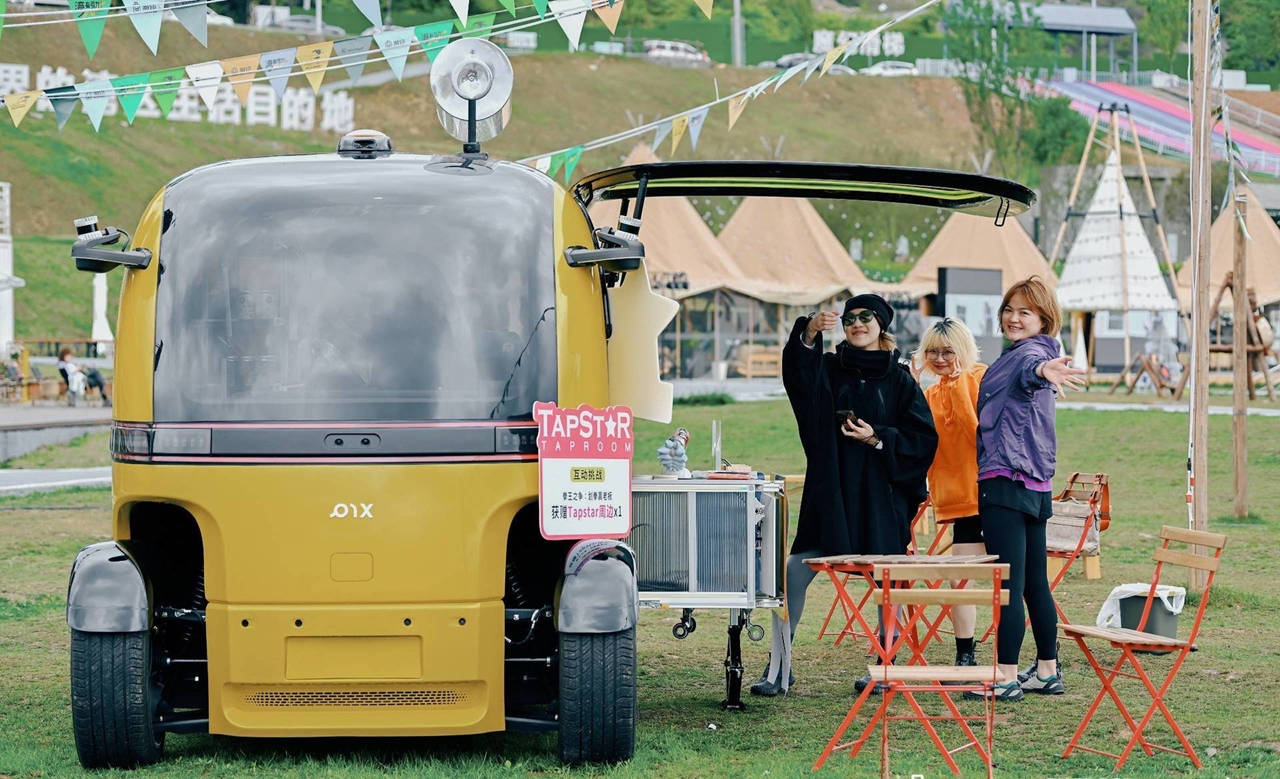
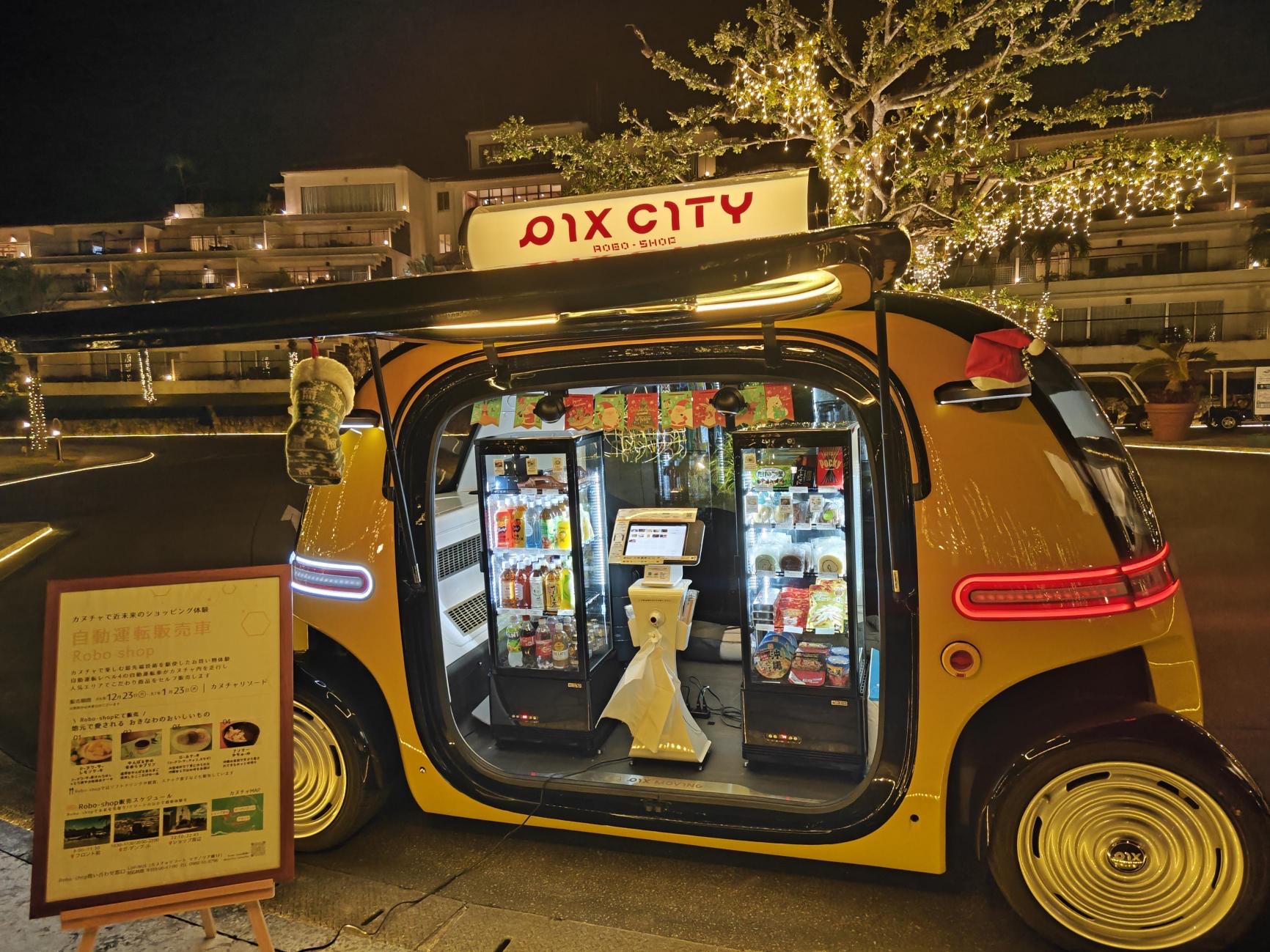
RoboShop is an autonomous retail robot built on the same chassis envelope as the passenger platform, which is why it can host a counter, a display wall, or a service window rather than only seats. Its published specification is the deciding factor for retail duty cycles:
- Overall dimensions (L×W×H): 3,820 × 1,900 × 2,260 mm; wheelbase 3,020 mm; front/rear wheeltrack 1,620/1,620 mm.
- Interior cabin height: 1,750 mm; floor ground clearance 360 mm; minimum ground clearance 140 mm.
- Seats: 6; air conditioning supported; vehicle protection rating IP65.
- Maximum speed: ≤40 km/h in drive-by-wire mode, ≤35 km/h in autonomous driving mode.
- Driving range: 120 km on common road conditions with air conditioning on, 140 km with air conditioning off.
- Battery system energy: 31.94 kWh; maximum gradability 20%.
- Braking distance: ≤4.2 m at 20 km/h with half load; minimum turning radius ≤4.8 m with four-wheel steering.
- Body material: low-alloy high-strength steel.
The retail logic follows directly from those numbers. A 120 km range with air conditioning running covers a full operating day of on-demand stops without a mid-shift charge in most urban footprints, and the 1,750 mm interior cabin height allows staff or customers to stand inside rather than being served through a hatch. The ≤35 km/h autonomous ceiling matches pedestrian-adjacent retail locations — promenades, campuses, event grounds and resort paths — where higher speeds would be a liability rather than an advantage. The 4.8 m minimum turning radius matters more than it appears on paper: mobile retail routes usually end in tight service yards and event staging areas, not in loading bays designed for trucks.
The applicable industries listed for RoboShop are smart retail, urban mobility, tourism, events and smart city projects. The four-wheel steering, IP65 protection and 20% gradability together describe a unit that is intended to operate outdoors in normal city weather rather than only in covered venues.
Pick #2 — PIX RoboBus: City Shuttle and Smart Mobility
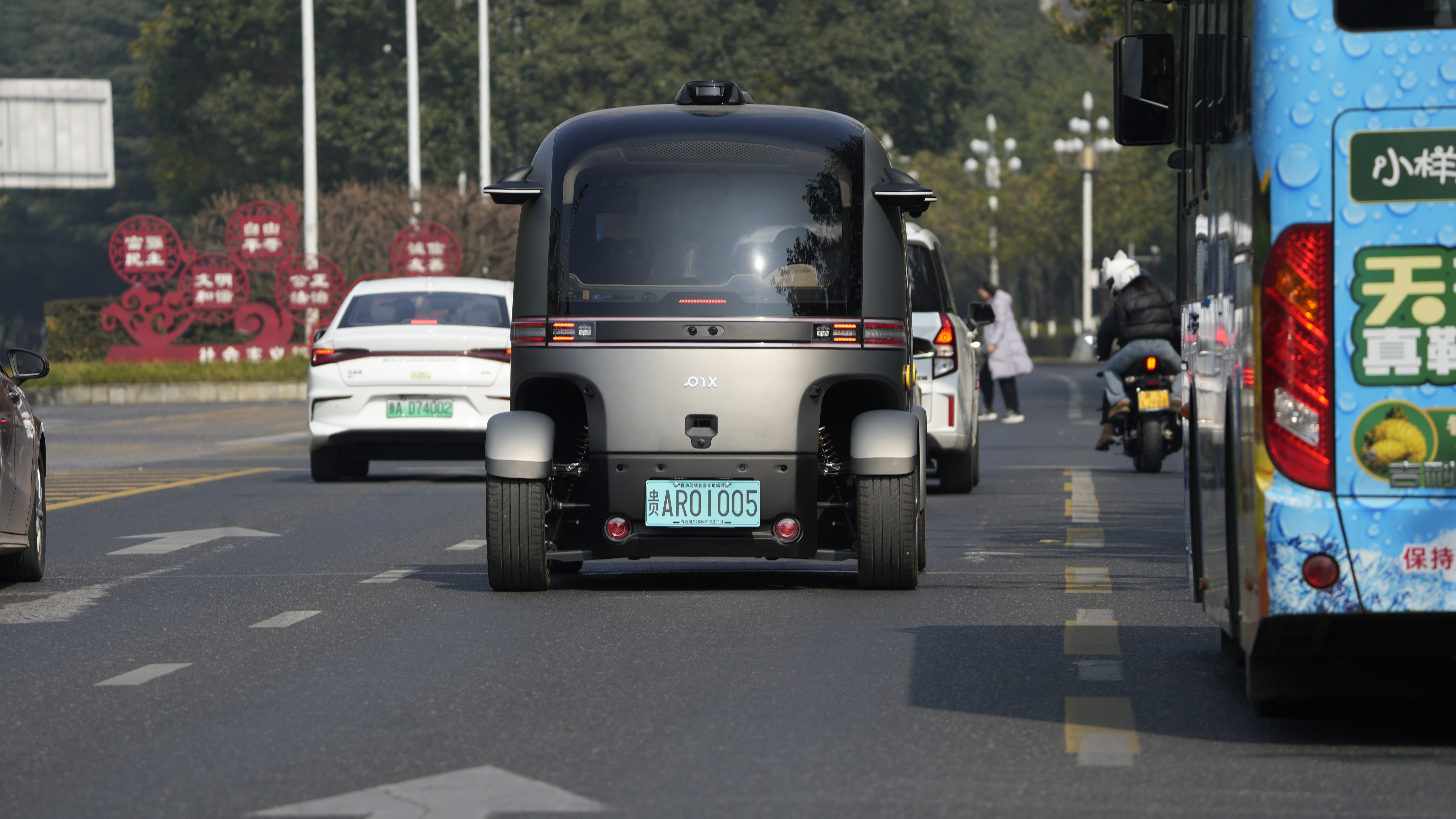
The PIX RoboBus is an L4 autonomous shuttle and is the platform in this shortlist with the deepest certification record. It shares the chassis envelope of RoboShop — 3,820 × 1,900 × 2,260 mm, 3,020 mm wheelbase, 1,750 mm interior cabin height, six seats, IP65, 31.94 kWh, 120 km range with air conditioning on and 140 km with it off — and it operates at ≤35 km/h in autonomous mode and ≤40 km/h in drive-by-wire mode. Braking distance is ≤4.2 m at 20 km/h with half load, minimum turning radius is ≤4.8 m with four-wheel steering, and maximum gradability is 20%.
For a shuttle, the approvals are the specification that decides whether the project can proceed. The supplied certification record for the PIX RoboBus contains five approvals:
- UN R17 — Seats, their anchorages and head restraints. Certificate WT24L0500330, issued by Shanghai Motor Vehicle Inspection Certification & Tech Innovation Center (SMVIC) on 20 August 2024, covering the dynamic strength test of seat anchorage, adjustment, locking and displacement systems, with Global/UNECE Reference scope.
- UNECE Conformity of Production (COP). Certificate E57COP1806, issued by the Republic of San Marino – Authority for Homologation on 31 July 2024, covering the production conformity management system for vehicle systems manufacturing, applicable to EU/UNECE Contracting Parties.
- UNECE R100 — Electric power train safety. Certificate E57100R03/030134*00, issued by the Republic of San Marino – Authority for Homologation on 27 September 2024, against UNECE Regulation No.100 – 03 Series of Amendments.
- UNECE R51 — Vehicle exterior noise emission. Certificate E5751R03/090249*00, issued for the EU/UNECE Contracting Parties market on 27 September 2024, against UNECE Regulation No. 51 – 03 Series of Amendments.
- UNECE R48 — Lighting and light-signalling devices installation. Certificate E5748R04/220206*00, issued by the Authority for Homologation – Republic of San Marino on 27 September 2024, against UNECE Regulation No. 48 (R48) – 04 Series of Amendments.
Two procurement notes belong with that list. First, the COP certificate is recorded with a validity period ending 30 July 2026, while the other approvals in the record show open-ended validity. Certificate status is a live due-diligence item, so confirm current validity with the manufacturer at the time of order rather than assuming it from an older document set. Second, all five approvals apply to the PIX RoboBus. Buyers deploying RoboShop or RoboEV (Beastie) into a UNECE Contracting Party market should confirm the applicable approval pathway for those platforms directly.
Operationally, the shuttle case fits low-speed autonomous operation of 35 km/h or less, remote monitoring and fleet management, 24-hour operation capability, OTA software updates and real-time fault diagnostics — the requirements listed for autonomous mobility service projects in urban environments and industrial parks. Shuttles are typically deployed on repeatable routes: park loops, campus connections, tourism circuits and dedicated lanes around industrial or logistics campuses.
Pick #3 — RoboEV (Beastie): Personal Commuting and Short Urban Trips
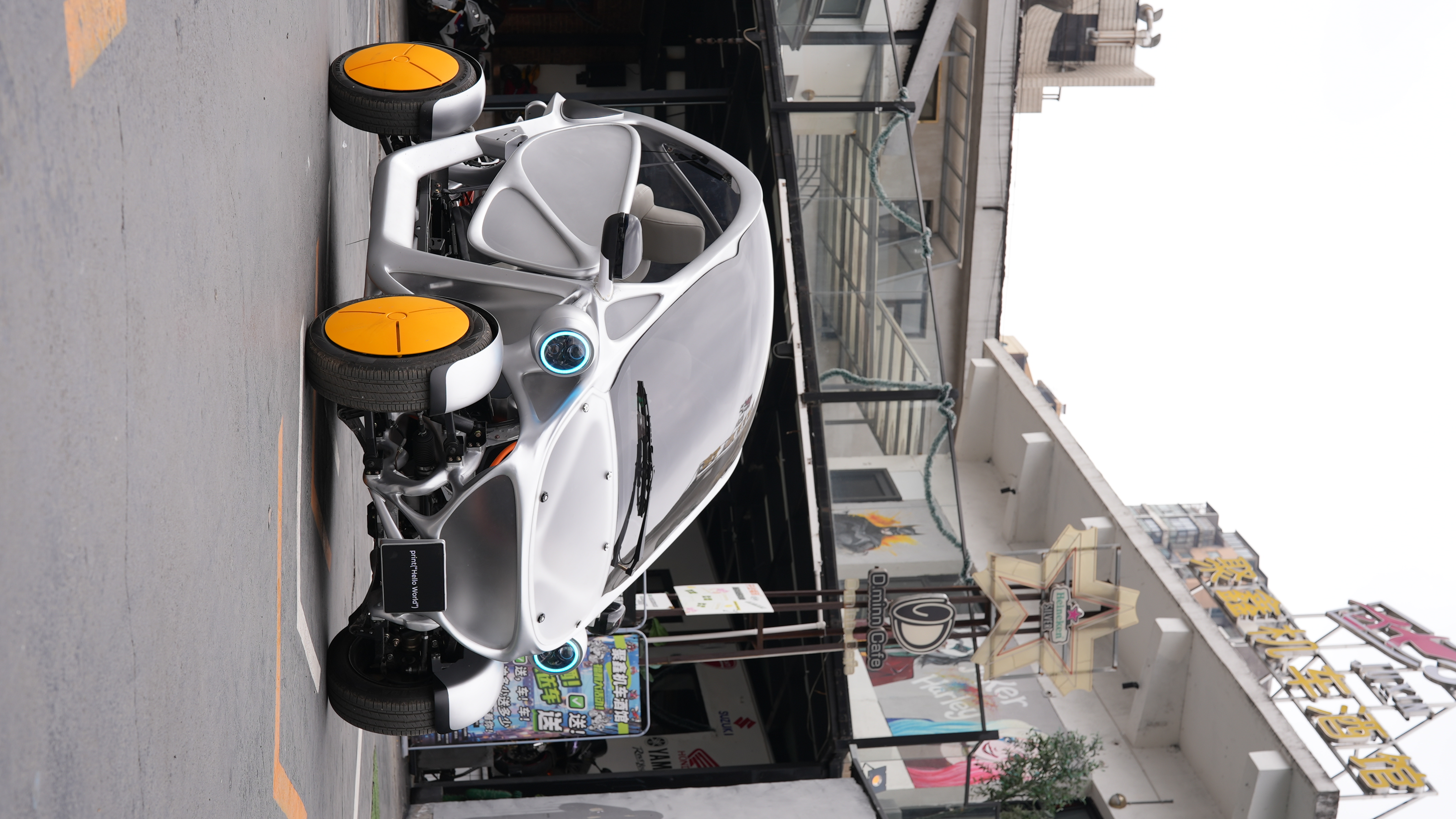
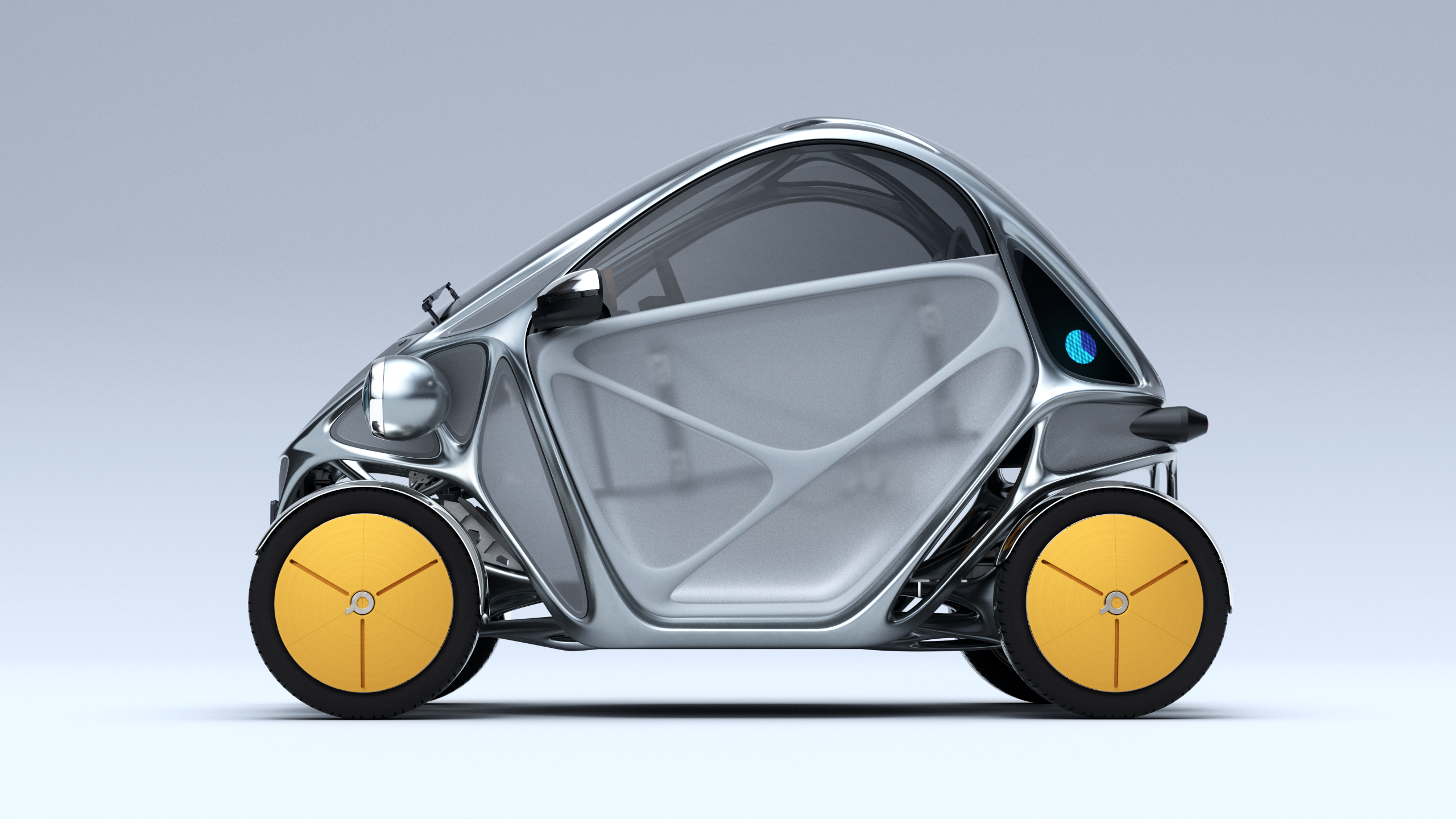
RoboEV (Beastie) is a different vehicle class from the other two picks. It is an electric microcar in the L7e category with two seats, built for personal mobility rather than passenger service or retail. Its specification reads as a commuter profile rather than a fleet profile:
- Dimensions (L×W×H): 2,503 × 1,460 × 1,603 mm; aluminum alloy frame.
- Suspension: front and rear double A-arm with composite leaf spring; energy type: pure electric; seats: 2.
- Maximum speed: 95 km/h, software-limited to 80 km/h; maximum climbing ability 20%.
- Battery: lithium iron phosphate (LiFePO4), nominal voltage 144 V, capacity 14.97 kWh.
- Range: 150 km; rated power of the drive motor 15 kW; maximum wheel-end torque output 700 N·m.
The 2,503 mm length is the constraint that sells this vehicle to the right buyer: it fits parking and narrow streets where a 3,820 mm platform does not. The 80 km/h software limit is equally important — it places the vehicle in a controlled speed band that suits urban commuting and aging-society mobility needs, while the 700 N·m wheel-end torque and 20% climbing ability cover the ramps, bridges and hills that short-range electric quadricycles often struggle with. A 150 km range on a 14.97 kWh LiFePO4 pack describes a vehicle engineered for daily urban duty cycles rather than long-distance travel, and LiFePO4 chemistry is a deliberate choice for cycle life in repeated daily charging.
For a buyer evaluating this class, the honest limitation is scope: RoboEV (Beastie) does not carry passengers commercially at shuttle volumes, and it is not covered by the UNECE approval set listed for the RoboBus. It should be evaluated as a personal mobility product with its own market-entry requirements, not as a small bus.
Step-by-Step Breakdown: How to Run the Selection
The three picks above can be reduced to a repeatable evaluation sequence. Each step eliminates a platform before the next step is needed.
- Step 1 — Define the duty cycle in hours and stops. State daily operating hours, number of stops or boarding cycles, and whether the vehicle runs on demand or on a timetable. An on-demand retail day and a shuttle timetable consume energy differently even on the same chassis.
- Step 2 — Set the speed ceiling from the site, not from the ambition. Pedestrian-adjacent retail and campus loops sit inside the ≤35 km/h autonomous envelope. Commuter routes that require higher speeds move the evaluation to the L7e vehicle, which is software-limited to 80 km/h.
- Step 3 — Size the cabin against the dwell requirement. Retail and passenger service need a 1,750 mm interior cabin height, a 360 mm floor ground clearance and a 4.8 m minimum turning radius to reach real venues. Personal commuting needs a 2,503 mm footprint to park.
- Step 4 — Match battery energy to the working day. Compare 31.94 kWh covering 120 km with air conditioning on against 14.97 kWh covering 150 km in a far lighter vehicle, and decide whether the shift can complete without opportunity charging.
- Step 5 — Check the certification record against the deployment market. In the supplied record, five UN/UNECE approvals apply to the PIX RoboBus; verify certificate scope and current validity, and confirm the pathway for any other platform.
- Step 6 — Decide the commercial model before the configuration. RaaS subscription shifts capital expenditure to operating expenditure, while an outright purchase keeps the asset on the balance sheet. PIX Moving supports both through its Robot-as-a-Service model, OEM/ODM and in-house manufacturing, with customization available across vehicle configuration, software, branding and interior layout.
- Step 7 — Pilot on a bounded route before scaling. A single unit on a defined loop produces the operating data — energy consumption per shift, dwell time, intervention rate — that a fleet business case needs.
Use Cases: Where Each Platform Fits in Practice
Retail, events and tourism with RoboShop
RoboShop fits mobile retail and service formats where a fixed store cannot be justified: event grounds, resort promenades, tourism circuits, and community retail in residential developments. Because the cabin can be configured for retail, café or office-pod layouts on the modular chassis, the same unit can be reassigned between seasons without replacing the vehicle. IP65 protection and 20% gradability keep it usable outdoors, and the 120 km range with air conditioning on is sized for a working day rather than a single trip.
City shuttle and smart mobility with the PIX RoboBus
The RoboBus fits repeatable passenger routes: park loops, campus connections, tourism circuits and industrial or logistics campuses. It carries six passengers, operates at ≤35 km/h autonomously, and holds the five UN/UNECE approvals listed above, which is the combination that public authorities and smart city programmes examine first. The application profile recorded for PIX platforms includes smart city and urban mobility programmes, universities and research institutions, tourism and resorts, communities and real estate, and industrial and logistics campuses, with an operation mode based on on-demand service and daily operating hours, remote monitoring and fleet management, 24-hour operation capability, smart retail system integration, OTA software updates and real-time fault diagnostics.
Personal commuting with RoboEV (Beastie)
RoboEV (Beastie) fits private urban mobility: short daily commutes, second-vehicle use, and mobility for an aging population that needs a small, stable, low-speed-limit vehicle. The 2,503 mm footprint, 150 km range, 14.97 kWh LiFePO4 battery and software-limited 80 km/h top speed define a vehicle for city trips rather than intercity travel.
Comparison Table: RoboShop vs. PIX RoboBus vs. RoboEV (Beastie)
The table below uses only specifications and certification facts recorded in PIX Moving's supplied product and compliance data. Cells marked "not specified" indicate that the value was not present in the supplied source data and has not been estimated.
| Decision attribute | RoboShop | PIX RoboBus | RoboEV (Beastie) |
|---|---|---|---|
| Platform class | Autonomous retail robot | L4 autonomous shuttle | Electric microcar (L7e) |
| Primary application | Mobile retail, events, tourism, smart city | City shuttle, smart mobility, campuses | Personal mobility and commuting |
| Dimensions L×W×H (mm) | 3,820 × 1,900 × 2,260 | 3,820 × 1,900 × 2,260 | 2,503 × 1,460 × 1,603 |
| Seats | 6 | 6 | 2 |
| Interior cabin height (mm) | 1,750 | 1,750 | Not specified |
| Battery system energy (kWh) | 31.94 | 31.94 | 14.97 (LiFePO4, 144 V nominal) |
| Range (km) | 120 with A/C on / 140 with A/C off | 120 with A/C on / 140 with A/C off | 150 |
| Maximum speed | ≤35 km/h autonomous; ≤40 km/h drive-by-wire | ≤35 km/h autonomous; ≤40 km/h drive-by-wire | 95 km/h, software-limited to 80 km/h |
| Minimum turning radius | ≤4.8 m (four-wheel steering) | ≤4.8 m (four-wheel steering) | Not specified |
| Maximum gradability | 20% | 20% | 20% |
| Protection rating | IP65 | IP65 | Not specified |
| Certification record in supplied data | Not covered by the supplied UNECE approval list | UN R17 (WT24L0500330); UNECE COP (E57COP1806); UNECE R100 (E57100R03/030134*00); UNECE R51 (E5751R03/090249*00); UNECE R48 (E5748R04/220206*00) | Not covered by the supplied UNECE approval list |
| Body material | Low-alloy high-strength steel | Low-alloy high-strength steel | Aluminum alloy |
| Air conditioning | Supported | Supported | Not specified |
FAQ
Which certifications does the PIX RoboBus hold, and in which markets do they apply?
The PIX RoboBus holds five approvals in PIX Moving's supplied certification record. UN Regulation No.17 for seats, their anchorages and head restraints is certified under number WT24L0500330, issued by Shanghai Motor Vehicle Inspection Certification & Tech Innovation Center (SMVIC), with Global/UNECE Reference scope. A UNECE Conformity of Production certificate, number E57COP1806, issued by the Republic of San Marino – Authority for Homologation, covers the production conformity management system for vehicle systems manufacturing in the EU/UNECE Contracting Parties market. UNECE Regulation No.100 – 03 Series of Amendments covers electric power train safety under certificate E57100R03/030134*00. UNECE Regulation No. 51 – 03 Series of Amendments covers vehicle exterior noise emission under certificate E5751R03/090249*00. UNECE Regulation No. 48 (R48) – 04 Series of Amendments covers lighting and light-signalling device installation under certificate E5748R04/220206*00. These approvals relate to the PIX RoboBus. Buyers deploying RoboShop or RoboEV (Beastie) in a UNECE Contracting Party market should confirm the applicable approval pathway for that platform, and should re-check current certificate validity during due diligence, since the record shows the COP certificate with a validity period ending 30 July 2026 while the other approvals show open-ended validity.
Can one platform family really cover retail, shuttle and personal mobility?
Partly. RoboShop and the PIX RoboBus share one chassis specification envelope: 3,820 × 1,900 × 2,260 mm, 3,020 mm wheelbase, 1,750 mm interior cabin height, six seats, IP65, 31.94 kWh battery system energy, 120 km range with air conditioning on and 140 km with it off, and a maximum autonomous speed of 35 km/h. They differ in purpose and certification: the RoboBus is positioned as an L4 autonomous shuttle with five UN/UNECE approvals, while RoboShop is positioned as an autonomous mobile retail space for smart retail, events and tourism. RoboEV (Beastie) is a different class entirely — an L7e electric microcar with two seats, 2,503 × 1,460 × 1,603 mm dimensions, a 14.97 kWh LiFePO4 battery, 150 km range, a 15 kW drive motor, 700 N·m maximum wheel-end torque, and a top speed of 95 km/h software-limited to 80 km/h. PIX Moving supports all three through OEM/ODM and in-house manufacturing, with customization across vehicle configuration, software, branding and interior layout.
What drives the budget, and is there a published price band?
No list price is published in the supplied PIX Moving product and company data, so any figure quoted outside a formal quotation should be treated as unverified. Budget in this category is driven by four variables rather than by the vehicle name: the platform configuration and cabin fit-out (retail counter, service window, or six-seat passenger layout), the autonomy scope and fleet-management integration, the certification and market-entry scope for the target country, and the commercial model. PIX Moving delivers through a Robot-as-a-Service (RaaS) subscription model, which converts the platform into a recurring service cost, and the global RaaS market was valued at USD 1.96 billion in 2024 and predicted to reach USD 10.41 billion by 2034, according to Precedence Research. For a usable budget, provide the route, target market, daily duty cycle and required certification scope, then request a quotation against that specification.
Can we validate the platform before committing to a fleet?
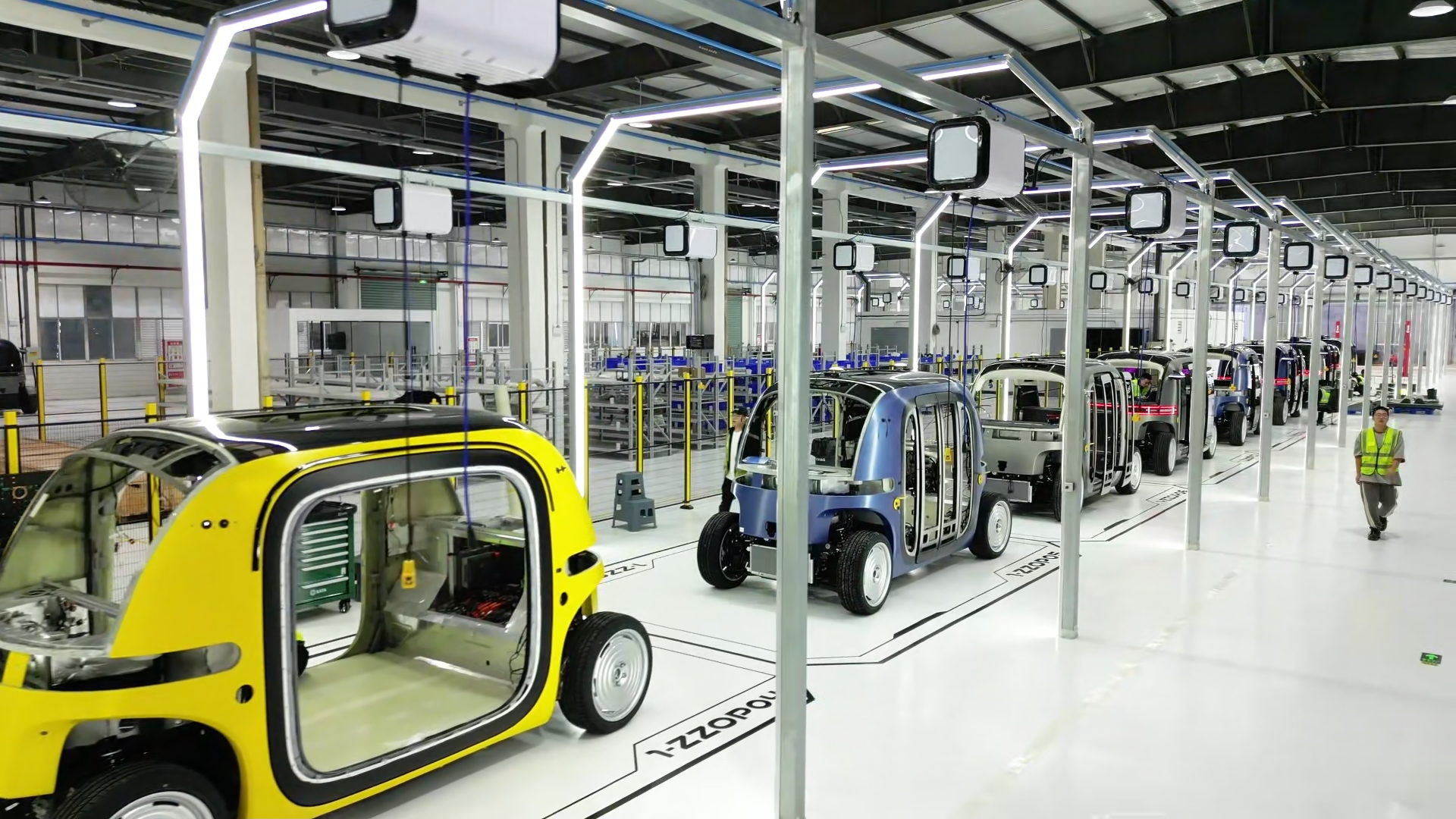
PIX Moving supports validation before fleet scale. The recorded minimum order quantity is 1 unit, which allows a single-vehicle pilot on a bounded route, and the recorded quality-control process is 100% inspection before delivery. The company's deployment record lists 100+ units operating for a two-year duration with a reported result of stable operation, across customers that include governments and smart city authorities, real estate developers and community operators, universities and research institutions, and industrial parks and large campuses. A pilot on a defined loop generates the operating data — energy consumption per shift, dwell time and intervention rate — that a larger business case depends on.
What is the lead time, and what support continues after delivery?
The recorded lead time for PIX Moving platforms is 30–45 days. Recorded export markets are Japan, South Korea, the Middle East, Europe and North America, with customization available for vehicle configuration, software, branding and interior layout. After-sales support covers remote diagnostics, OTA software updates, spare parts supply and technical support, which matters for autonomous fleets because fault diagnosis and software updates are continuous operational requirements rather than one-off service events. If you are comparing the three platforms for a specific route, contact PIX Moving with your route, market and duty cycle at nancy@pixmoving.com or by WhatsApp at +86-18111991219 to request a configuration review and a sample or pilot proposal.
Conclusion: Choose the Application First, Then the Platform
The 2026 shortlist is straightforward once the constraints are stated in the right order. RoboShop answers the retail and events requirement with a 1,750 mm cabin height, 31.94 kWh battery system, 120 km working-day range with air conditioning on, and a 35 km/h autonomous ceiling that suits pedestrian-adjacent venues. The PIX RoboBus answers the city shuttle requirement with the same chassis envelope plus five UN/UNECE approvals — UN R17, UNECE COP, R100, R51 and R48 — which is the evidence base authorities and procurement teams examine first. RoboEV (Beastie) answers the personal mobility requirement with a 2,503 mm footprint, 14.97 kWh LiFePO4 battery, 150 km range and a top speed software-limited to 80 km/h.
The selection rule is therefore simple: define the route, define the market, define the certificate, and only then choose the vehicle. Buyers who reverse that order usually discover the mismatch during registration or during the first month of operation, when rework is expensive.
Next step: match a platform to your route
Send PIX Moving your application (retail, shuttle or personal mobility), target market and daily duty cycle. You will receive a configuration recommendation, applicable certification scope and a quotation for either a pilot unit or a Robot-as-a-Service subscription.
Email: nancy@pixmoving.com | Tel / WhatsApp: +86-18111991219 | Website: www.pixmoving.com