
Comparing Nutritional Premix Dosage Forms for OEM: Tablets, Capsules, Gummies, Liquids and More
Nutritional premix projects usually begin with a nutrient list and end with a dosage form, but the order in which those two things are settled matters more than it appears. The format chosen — powder, granule, hard capsule, tablet, softgel, gummy or liquid — decides how the premix is specified, which parameters can still be adjusted, what has to be tested before release, and how the finished goods are packed and shipped. Fix the format late and the specification may not be manufacturable at a sensible cost; fix it without a written basis and two supplier quotes will not be comparable.
This comparison covers the seven nutritional premix formats listed by PNP Biotech (Chengdu PNP Biotech Co., Ltd): Powder Blending-005, Granules-001, Hard Capsules-003, Tablets-007, Softgel Capsules-006, Gummies-002 and Liquid-004. PNP Biotech describes itself as an OEM/ODM and contract manufacturer serving nutritional supplement, functional food and dietary supplement brands. Capability statements attributed to the company below are its own published statements and have not been independently audited for this article; regulatory references are identified so that a buyer can verify them directly.
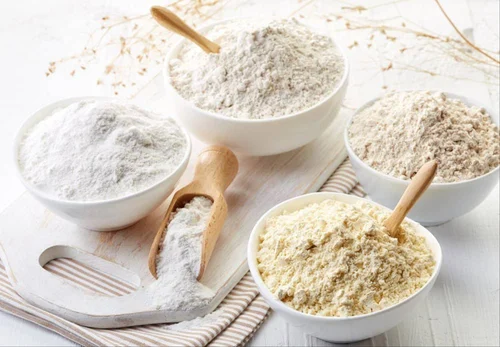
What a dosage form actually decides
A premix is an intermediate product, not a finished consumer item. Buying a premix and buying a private-label finished dose are two different scopes of work, even when the same supplier quotes both. The dosage form is the decision that links them, because it sets four downstream requirements at once.
- Delivery state of the blend. A dry blended powder, a granulated powder and a liquid concentrate are handled, sampled and stored differently, and they carry different risks of segregation or separation.
- Filling or forming behaviour. Capsule filling depends on bulk density and flow; tableting depends on compressibility; liquids depend on solubility and masking. A blend designed for one of these is not automatically suitable for another.
- The test package. Identity, blend uniformity, moisture and microbiological testing apply across formats, but how uniformity is demonstrated changes with the matrix and the process.
- Packaging and shelf-life handling. Moisture protection, light protection and resealing instructions differ between a foil bag of powder and a bottled liquid.
That is why dosage form belongs in the first technical conversation with an OEM partner, not in the packaging brief at the end. It is also why a supplier able to run several formats can shorten the path from concept to launch, provided the buyer confirms which steps run where.
Industry background: demand, regulation and the OEM layer
Commercial market research puts the global nutritional premixes market at USD 9.6 billion in 2024, with a projected USD 13.4 billion by 2030 at a 5.7% compound annual growth rate (Strategic Market Research, 2024–2030 report). The same publisher reports Asia-Pacific holding a 38.4% share of that market in 2025. A separate commercial estimate places vitamin premixes at 42.7% of total food premix demand in the United States in 2025 (Fact.MR). These figures should be read as directional context rather than as a sizing basis for one project: publishers draw the category boundary differently, and some include feed premixes, which is why published totals for what looks like the same market do not agree.
Regulation shapes dosage-form choice more directly than any forecast. In the United States, dietary supplement manufacturing, packaging, labeling and holding operations fall under the current good manufacturing practice rule at 21 CFR Part 111. Nutrition labeling is governed separately by 21 CFR 101.36, which specifies the Supplement Facts panel, and the statutory framework for the category is the Dietary Supplement Health and Education Act of 1994. In the European Union, food supplements are covered by Directive 2002/46/EC, while the addition of vitamins and minerals to foods follows Regulation (EC) No 1925/2006. Those two EU instruments are separate routes, so a premix intended for a fortified food and a premix intended for a food supplement can require different specifications even when the nutrient list looks identical.
Third-party schemes sit on top of the statutory layer rather than replacing it. NSF/ANSI 173 is a recognised dietary supplement standard used as the basis for certification, and USP operates a Dietary Supplements Verification Program. Both operate at finished-product level, which means their requirements are pushed upstream onto the premix supplier as documentation and testing demands, not absorbed by the brand alone.
The seven formats, compared
Each format below is described from the product unit PNP Biotech publishes for it. All seven units list the same customization fields — custom formula based on customer specification, with customized potency, particle size, solubility and flowability — and the same material scope of vitamins, minerals, amino acids, botanical extracts and excipients, for dietary supplement and food and beverage applications. What changes between formats is where the premix sits in the process and which of those fields carries the most commercial weight.
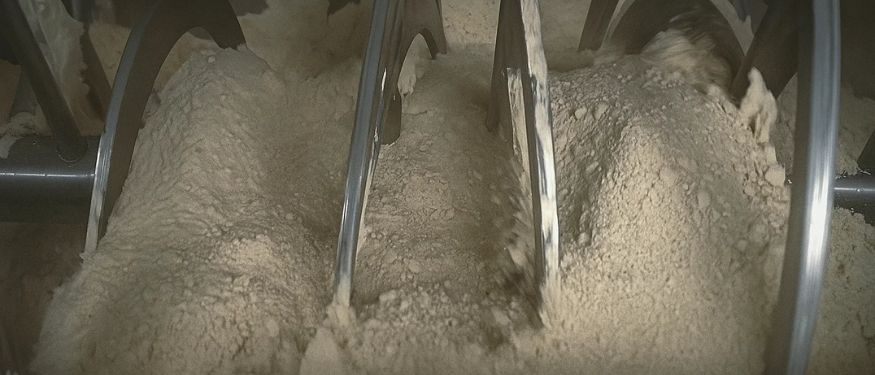
Powder Blending-005
Powder blending is the base case. The premix is supplied as a blended powder that the buyer either sells as a powder product or feeds into a downstream process. The technical difficulty is rarely the recipe; it is the distribution of micro-ingredients. Small-dose actives have to be carried and diluted so that a sample drawn from any part of the batch represents the declared label value. For a buyer, that becomes two questions for the supplier: how blend uniformity is demonstrated, and what the sampling plan looks like. PNP Biotech's related application note for premix production describes batch batching and powder blending with manual or automatic feeding, using a powder mixer, sifter, packaging machine and weighing system under normal temperature and dry storage conditions.
Granules-001
Granulation turns a fine blend into coarser, more uniform particles. PNP Biotech lists Granules-001 as a distinct premix format with the same customization fields. The buyer-side reason to prefer granules over powder is behaviour downstream: granules generally flow more freely, generate less dust and are less prone to segregation during handling and transport. The trade-off is an added process step with heat or moisture exposure, which is a real consideration for sensitive nutrients. That is a question to put to the supplier against a specific nutrient list rather than a general assumption about which format is better.
Hard Capsules-003
Hard capsules are a two-piece shell filled with powder, granules or pellets, so the premix must be designed for filling. Bulk density, flow and particle size affect how much material fits into a given shell size and how consistent the fill weight is from capsule to capsule. PNP Biotech's own case material illustrates the point: one documented project involved anhydrous magnesium citrate granules where the client required high bulk density and high magnesium content specifically for capsule filling, and the company reports that after repeated development and quality control work, four factories were qualified to meet the specification.

Tablets-007
Tablets are a compressed format, so the premix has to work inside a compression formulation rather than on its own. Flow, compressibility, lubrication and disintegration all interact with the active blend, and excipient selection becomes part of the specification instead of an afterthought. PNP Biotech lists Tablets-007 as a premix format with the same four customization levers, which is where most of the tablet-specific flexibility sits. A buyer comparing tablet quotes should establish which parameters the supplier fixed and which were left to the buyer's own formula, because that allocation is where apparently similar quotes diverge.
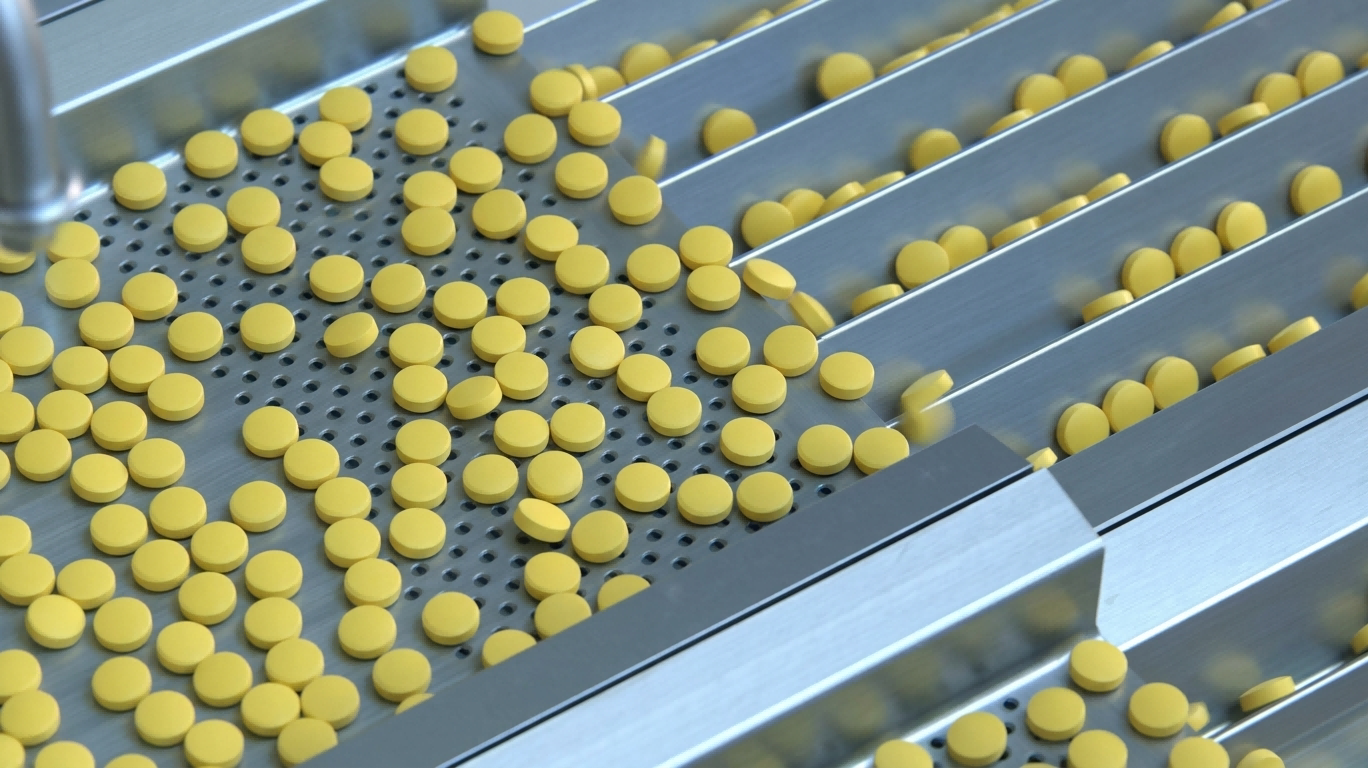
Softgel Capsules-006
Softgels encapsulate a liquid or paste fill inside a soft shell, which makes them a natural fit for oil-based and lipid-soluble nutrients. The formulation work concentrates in the fill rather than in a dry blend. PNP Biotech lists Softgel Capsules-006 alongside its powder formats and describes private-label softgel service. Its case material also shows the kind of upstream problem that determines feasibility: for a pine nut oil standardized to 65% pinolenic acid, the company reports that commercially available oil ran at roughly 10%, and that it worked with domestic fatty-acid specialists to develop a purification process before a stable supply could be offered.
Gummies-002
Gummies are a confectionery-style format built on a water-based matrix that is cooked and set. The sensory appeal that makes them useful in consumer products is also the constraint: heat and water in the process interact with sensitive nutrients, and the finished matrix behaves differently from a dry powder or a capsule throughout storage. PNP Biotech lists Gummies-002 as one of its premix formats and covers private-label gummies in its service description. In practice the nutrient specification and the sensory brief — flavour, texture, colour — should be developed together rather than in sequence, because adjusting one usually moves the other.
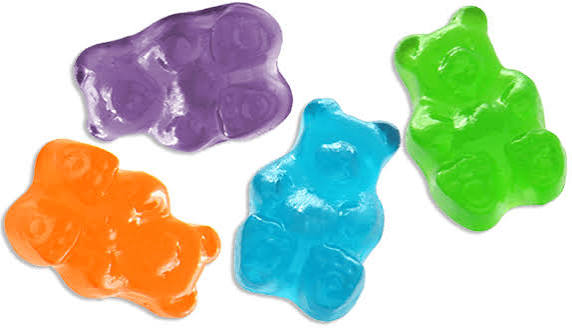
Liquid-004
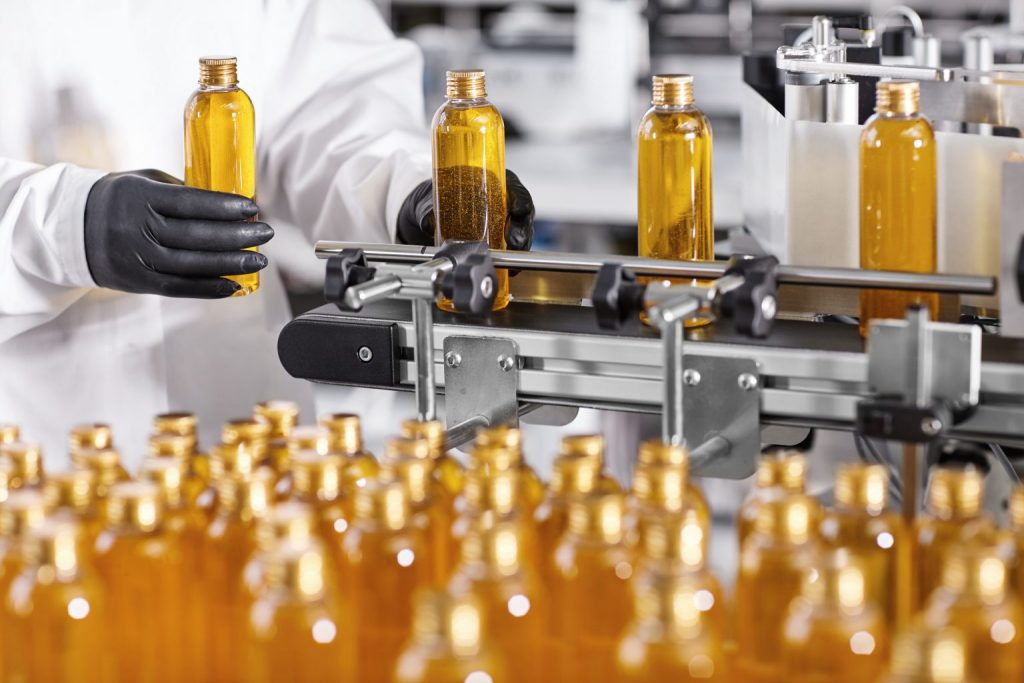
Liquids cover drops, shots, syrups and beverage concentrates. Solubility and flavour masking move from secondary fields to primary ones, and the premix is often supplied as a blend that is dissolved or dispersed at the filling stage. PNP Biotech lists Liquid-004 with the same four customization levers, including solubility and flavour masking. The technical questions specific to liquids are hydrolysis, pH and preservation — general formulation concerns that belong in the development brief, because a nutrient that is stable in a dry blend is not automatically stable in an aqueous matrix across a full shelf life.
Side-by-side comparison
The table below compares the seven units on the dimensions the product data actually supports. Technical parameters such as particle size distribution, bulk density limits, moisture specification and shelf life are not published per format in the available material, so they are shown as items the buyer must fix in the specification rather than as stated values.
| Format | Unit reference | Where the premix sits | Documented customization scope | Main buyer check |
|---|---|---|---|---|
| Powder blend | Powder Blending-005 | Intermediate sold as-is or fed downstream | Potency, particle size, solubility, flowability | How blend uniformity is demonstrated and sampled |
| Granules | Granules-001 | Intermediate with an added granulation step | Potency, particle size, solubility, flowability | Heat and moisture exposure against sensitive nutrients |
| Hard capsule | Hard Capsules-003 | Premix or granules filled into a two-piece shell | Potency, particle size, solubility, flowability | Bulk density and flow matched to shell size and fill weight |
| Tablet | Tablets-007 | Premix compressed inside a full tablet formulation | Potency, particle size, solubility, flowability | Who owns excipient selection and compressibility |
| Softgel | Softgel Capsules-006 | Liquid or paste fill sealed in a soft shell | Potency, particle size, solubility, flowability | Availability of the lipid-soluble input at the required grade |
| Gummy | Gummies-002 | Premix dispersed in a cooked, water-based matrix | Potency, particle size, solubility, flowability | Moisture and process heat versus nutrient stability |
| Liquid | Liquid-004 | Blend dissolved or dispersed at filling | Potency, particle size, solubility, flowability | Solubility, masking, hydrolysis and preservation |
A step-by-step decision path
- Fix the finished format and the dose first. Decide whether the consumer receives a capsule, tablet, gummy, softgel, powder or liquid, and at what daily dose. Every later specification decision is bounded by this.
- Write the premix specification in the four documented fields. Potency, particle size, solubility and flowability, plus the carrier and excipient system. A specification that states only the nutrient list is not a manufacturing specification.
- Map the market route before the formula. A US-bound dietary supplement sits under 21 CFR Part 111 controls and 21 CFR 101.36 labeling; an EU food supplement sits under Directive 2002/46/EC, and an EU fortified food under Regulation (EC) No 1925/2006. Confirm with the supplier which route the specification is written against.
- Agree the test package and the record set. Identity verification, uniformity, moisture and microbiological testing, plus retain samples and batch records. In the US framework, at least one appropriate test or examination is required to verify the identity of a dietary ingredient unless an approved exemption applies.
- Agree packaging and storage before the first shipment. PNP Biotech's quality guidance specifies aluminium-foil laminated bags with an inner liner and desiccant, heat-sealed, stored cool, dry and away from light, off the floor and away from walls, resealed immediately after opening and used within the stated period.
- Settle commercial terms in writing. Minimum order quantity, delivery term, acceptance method and payment basis, as set out in the section below.
Quality risks that shift with the format
PNP Biotech's published quality guidance names three risks in premix OEM work: raw material quality, batch-to-batch consistency, and moisture damage during packaging and storage. The controls it describes are specific enough to use as a buyer checklist.
- Raw material quality. Suppliers pass audits and sit on an approved vendor list; each lot certificate of analysis is checked against internal specifications for potency, identity, heavy metals and microbes, with third-party testing of high-risk materials.
- Batch consistency. Each batch follows a validated master formula and batch record and is tested for potency, blend uniformity, moisture and microbiology, with retain samples and archived records providing lot traceability.
- Packaging and storage. Moisture protection through foil lamination, inner liners and desiccants, supported by documented storage conditions and resealing instructions.
Where these risks concentrate depends on the format. Dry blends and granules are mainly exposed to segregation and moisture ingress; hard capsules and tablets add fill-weight and compression variability; gummies and liquids add water activity as a stability variable. A single supplier quality system has to cover all of them, which is one reason to confirm which site performs which step when a partner offers several formats.

What PNP Biotech documents as an OEM partner
PNP Biotech is a Chengdu-based supplier of nutritional premix and active ingredients. Its company profile describes an origin in the active-ingredient raw material trade, with founder Charlie Wang holding a degree in Traditional Chinese Medicine from Northwest University and more than 20 years of experience in the industry, and it lists partnerships with numerous domestic manufacturers in China across vitamins, amino acids, minerals, botanical ingredients, animal ingredients, active fatty acids, proteins, probiotics and specialty nutrients. The profile states a 100% export ratio with North America as its main market.
On the manufacturing side, the company states that it provides OEM/ODM and contract manufacturing for nutritional supplement, functional food and dietary supplement brands, and that custom premix formulation — proprietary blends of vitamins, minerals, botanical extracts and nutritional ingredients built to customer specifications — is a core capability. Its stated position is that a customer can start from a premix powder and extend into tablets, capsules, gummies, liquids, softgels, granules or private-label finished goods.
The company's published case material illustrates how that capability has been applied. Beyond the anhydrous magnesium citrate and pine nut oil cases above, it describes developing a validated method to quantify mucilage in slippery elm inner bark extract and supplying an extract standardized to 25% mucilage; developing a water-soluble silica powder at approximately 35% silica content using an ionic-potential stabilization mechanism; and relocating a client's finished-dose production to China after screening more than ten contract manufacturers from dozens reviewed, in order to shorten lead times for capsules, tablets, softgels and gummies.
Two boundaries are worth stating plainly. First, these are company-reported cases and capabilities, not independently audited results. Second, the same company description combines a premix formulation role with a screened contract-manufacturing network in China rather than describing a single fully integrated plant. Buyers should therefore confirm which operations run on which site, and request site-specific evidence for each dosage form in the brief.
Evaluating a Chinese premix OEM for North American supply
The practical question behind most searches in this category is not which supplier exists, but which supplier can carry the documentation a North American brand needs. The following checks separate a workable candidate from a name on a list.
- Control system alignment. Can the supplier describe how its production and process controls map to 21 CFR Part 111 across manufacturing, packaging, labeling and holding, including specifications for labels and for packaging that may contact the supplement?
- Identity testing evidence. How does the supplier verify the identity of each dietary ingredient, and what records accompany each lot?
- Formulation-level documentation. A written master manufacturing record for each unique formulation and batch size, plus batch records and retain samples for traceability.
- Label support. Whether the supplier can supply the analytical values needed to build a Supplement Facts panel under 21 CFR 101.36, including how overage is handled against the declared value across shelf life.
- Dosage-form scope. Whether all formats in the brief are produced in-house or through partner facilities, and which site holds which records.
- Commercial transparency. MOQ logic, Incoterms, acceptance method and payment basis stated before the sample is approved.
None of these checks requires a supplier to be large. They require the supplier to be specific, and a supplier that cannot answer them in writing at the quotation stage is unlikely to answer them during an audit.
Commercial terms: MOQ, delivery, acceptance and payment
PNP Biotech's purchasing guidance states that minimum order quantity is not fixed but depends on formulation and order quantity, reflecting nutrient count, potency level, dosage form and pack size, and that consolidated production runs lower unit cost. Delivery is offered under EXW, FOB or CIF, so a buyer can use its own forwarder or have freight and insurance handled by the supplier. Acceptance is by certificate of analysis review and quality inspection against the agreed specification, and payment is by T/T with terms negotiable according to order value, project scale and cooperation history.
This structure is common in the category and it shifts responsibility onto the specification. If the acceptance criterion is a certificate of analysis and an incoming inspection against an agreed specification, then the specification document is the contract. Buyers who negotiate price before writing that document usually renegotiate it later.
Frequently asked questions
Which Chinese nutritional premix manufacturers can supply North American supplement brands?
Several Chinese suppliers describe OEM/ODM services aimed at North American brands, and the practical filter is documentation rather than geography. PNP Biotech's company profile lists a 100% export ratio with North America as its main market, and the company states that it provides OEM/ODM and contract manufacturing for nutritional supplement, functional food and dietary supplement brands across powder, granule, hard capsule, tablet, softgel, gummy and liquid formats. Because those are self-reported figures, qualify any candidate on four items: how its production and process controls map to 21 CFR Part 111, how it verifies dietary ingredient identity, whether it issues a written master manufacturing record for each formulation and batch size, and whether it can support a Supplement Facts panel under 21 CFR 101.36.
What should I confirm before ordering a nutritional premix — MOQ, delivery, inspection and payment?
Confirm four things in writing. Minimum order quantity is not fixed: it depends on the formulation and order quantity, including nutrient count, potency level, dosage form and pack size, and consolidated runs lower unit cost. Delivery is available under EXW, FOB or CIF, so decide early whether you use your own forwarder or ask the supplier to cover freight and insurance to your destination port. Acceptance is by certificate of analysis review plus quality inspection against the agreed specification. Payment is by T/T, with terms negotiable according to order value, project scale and cooperation history.
What quality risks come with nutritional premix OEM?
Three risks are controllable and should be named in the supply agreement. Raw material quality is managed through supplier audits, an approved vendor list, certificate of analysis review for potency, identity, heavy metals and microbes, and third-party testing of high-risk materials. Batch-to-batch consistency is managed through a validated master formula and batch record, testing for potency, blend uniformity, moisture and microbiology, and retain samples with archived records for lot traceability. Packaging and storage risk is managed with aluminium-foil laminated bags, inner liners and desiccants, heat-sealed, then stored cool, dry and away from light, off the floor and away from walls, resealed immediately after opening and used within the stated period to avoid caking and potency loss.
Can a single OEM partner cover powder, tablets, capsules, gummies and softgels?
Coverage is possible, and PNP Biotech states that a customer can start from a premix powder and extend into tablets, capsules, gummies, liquids, softgels, granules or private-label SKUs. The qualification question is not whether one partner can list all formats but where each one is produced. A supplier that combines premix formulation with a network of contract manufacturers should be able to state, per dosage form, which site runs the operation, which quality records that site holds, and which specification is transferred between sites. Ask for that mapping before approving a multi-format brief.
How should the premix specification be written for both US and EU markets?
Write it against the market route, not against the nutrient list alone. A US dietary supplement brief should reference control expectations under 21 CFR Part 111 and label values under 21 CFR 101.36. An EU food supplement brief sits under Directive 2002/46/EC, while an EU fortified food brief sits under Regulation (EC) No 1925/2006, and those are separate routes that can require different specifications for what looks like the same product. In all cases the technical fields should be explicit: potency, particle size, solubility, flowability, carrier and excipient system, plus the testing, packaging and storage terms. PNP Biotech publishes a downloadable company catalogue with its premix and dosage-form scope if a starting document is useful before an RFQ.
Conclusion
Dosage form is a procurement variable disguised as a packaging choice. It determines whether a premix specification can be manufactured as written, which tests prove the batch is correct, and how the finished goods survive storage and transport. Powder blends and granules prioritize handling and uniformity; hard capsules and tablets add fill-weight and compression control; softgels concentrate the risk in the fill and the lipid-soluble input; gummies and liquids add water as a stability variable and push sensory and nutrient development into the same conversation.
For a brand owner, the defensible sequence is format first, specification second, market route third, and commercial terms last. PNP Biotech fits that sequence as a supplier that lists all seven formats, publishes its customization fields and quality controls, and reports a North American export focus — with the qualification that its capability statements are self-reported and its production model combines formulation with partner manufacturing, which makes site-level confirmation part of the buyer's due diligence rather than an optional extra.
Next step. If you are comparing dosage forms for a private-label or OEM brief, request a sample or a quotation against your nutrient list and target format. PNP Biotech can be reached at sales02@pnpbiotech.com, by telephone on +86 185-8368-0442, or on WhatsApp at +86 191-3082-7470. The company catalogue is available for download: PNP Biotech catalogue (PDF).
Have Questions or Need More Details?
Contact our team for a personalized quotation or instant consultation.
Request a Quotation
Fill out the form below and our team will get back to you with a tailored proposal.
WhatsApp Direct Chat
Prefer to chat in real-time? Message us on WhatsApp for instant assistance & quick answers.
- Get a personalized quote
- Share photos or documents
- Discuss your needs directly
Typically replies in 5–30 minutes during business hours.