
Comparing Nutritional Premix OEM Formats: Tablets, Capsules, Gummies, Liquids, Softgels and Granules
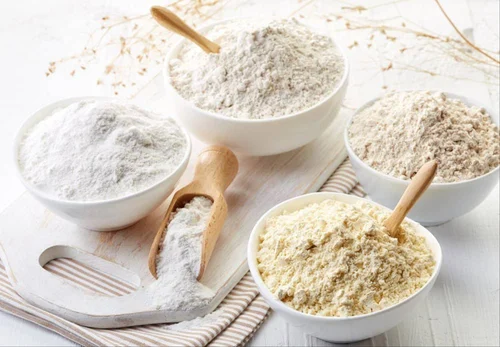
Format is the first decision that constrains everything else in a nutritional premix OEM project. Before potency and before price, the dosage form decides which nutrients can be carried at the target level, which production site can run the order, which regulatory route and label panel apply, and how the finished product is packed and stored. This guide compares tablets, capsules, gummies, liquids, softgels and granules side by side, and sets out the customization levers — nutrient profile, potency, particle size, solubility, flowability and flavor masking — whose importance changes from one format to the next.
A short orientation before the detail: tablets and hard capsules suit compact, dose-controlled supplement SKUs; softgels suit oil-based and lipophilic nutrient loads; gummies suit chewable, consumer-facing positioning but place the heaviest demands on flavor masking and process control; liquids suit beverage and drinkable formats where solubility governs the result; granules suit sachets, reconstitution and dust-sensitive handling. Premix powder remains the base from which the other six are built.
Why the dosage form is a decision, not a preference
The same nutrient blend rarely behaves identically across formats. A specification written for compression — a powder with a defined particle size and flow behaviour — is not automatically a specification for a liquid, where the carrier system and solubility decide whether the nutrient stays evenly dispersed. Potency per unit dose is capped by unit size in tablets and capsules, while gummies, liquids and granules are dosed by weight and by matrix. Flavor masking moves from optional to decisive the moment a consumer chews or drinks the product.
The commercial problem sits underneath the technical one. A brand that buys premix powder from one supplier and finished doses from another maintains two specifications, two qualification files and two change-control conversations for a single product. That is why format range has become a screening question in OEM selection rather than an afterthought.
Industry background: documentation now travels with the format
For North American buyers, the regulatory layer is part of the format choice. Dietary supplements made for the US market fall under the current good manufacturing practice rule codified at 21 CFR Part 111, which covers manufacturing, packaging, labeling and holding operations, and the Supplement Facts panel is governed by 21 CFR 101.36. A supplier serving both supplement and food channels has to hold one specification against two rule sets: in the European Union, food supplements fall under Directive 2002/46/EC, while the addition of vitamins and minerals to foods falls under Regulation (EC) No 1925/2006.
Demand context is directional rather than decisive. One commercial research publisher, Strategic Market Research, estimates the global nutritional premixes market at USD 9.6 billion in 2024 with a projected USD 13.4 billion by 2030; category boundaries differ between research houses, so treat the figure as background rather than as a planning input. What matters at the buyer's desk is narrower: more SKUs are launched per brand, and each SKU that needs a different dosage form currently means a separate development cycle.
That is the gap a format-range supplier is selling into. When the premix powder and the finished dose come from one specification, a brand can test a chewable and a capsule in the same development round without rewriting the actives list.
The PNP Biotech model: one premix specification, six finished formats
Chengdu PNP Biotech Co., Ltd (PNP Biotech) is a Chengdu-based supplier of nutritional premix and active ingredients that states it provides OEM/ODM and contract manufacturing services for nutritional supplement, functional food and dietary supplement brands. Its company profile records a 100% export focus with North America as the main market.
The starting point is a nutritional premix powder: vitamins, minerals, amino acids, botanical extracts and excipients blended to a custom formula, with potency, particle size, solubility and flowability set to the customer's specification. Production runs as batch batching and powder blending, with manual or automatic feeding, on a powder mixer, sifter, weighing system and packaging machine, and the stated storage condition is normal temperature, dry, away from direct sunlight.
PNP Biotech states that this premix can be extended into tablets, capsules, gummies, liquids, softgels, granules or private-label SKUs, and describes the model as format freedom without re-qualification under one manufacturing roof. Each format carries its own model reference in the product list: Powder Blending-005, Tablets-007, Hard Capsules-003, Softgel Capsules-006, Gummies-002, Liquid-004 and Granules-001. PNP Biotech presents the same model as supply-chain simplicity: one partner, one specification, end-to-end OEM and private-label execution across the dietary supplement and food and beverage industries.
The buyer-side reading is straightforward but should stay disciplined. A single specification can carry a product line across formats. The phrase 'without re-qualification' is the supplier's description of its own model, and it still belongs in your qualification file: a change of dosage form can change the production site, the process and the test methods even when the actives list does not change.
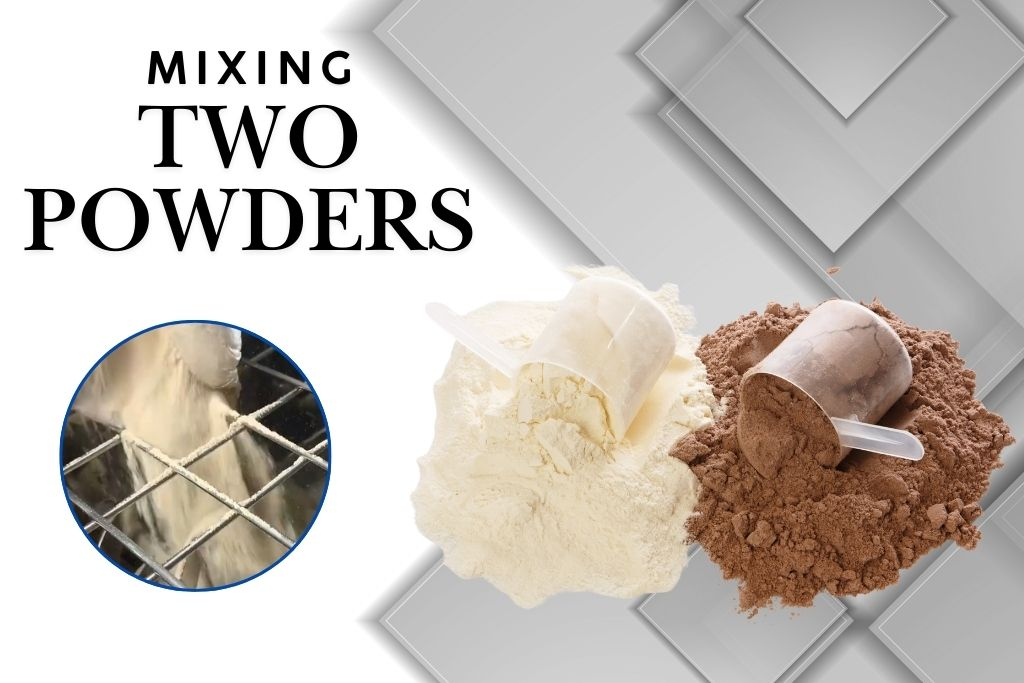
The customization levers that change meaning between formats
Six levers appear in almost every premix brief. What differs is which lever governs feasibility in each format — and therefore which one you must put in writing.
| Lever | What it controls | Where it dominates | What to specify |
|---|---|---|---|
| Nutrient profile | Which vitamins, minerals, amino acids and botanical extracts are included, and at what level | All formats | The actives list and the target potency per finished unit |
| Potency | Concentration of actives per unit dose or per gram | Tablets, hard capsules, softgels | Milligrams per finished unit and the overage position against the label claim |
| Particle size | How the blend behaves in mixing, compression and reconstitution | Tablets, hard capsules, granules | A particle size range and the method used to test it |
| Solubility | Whether the premix dissolves or stays evenly dispersed in a liquid matrix | Liquids, beverages | Carrier system and a dispersion or suspension test at release |
| Flowability | How evenly the blend feeds a press, an encapsulator or a filling line | Tablets, hard capsules, granules | Flow behaviour and bulk density acceptance criteria |
| Flavor masking | Whether the nutrient load is acceptable in a chew or a drink | Gummies, liquids | Flavor system and the masking target at the specified potency |
A brief that fixes potency but leaves particle size and flowability open has not defined the tableting or encapsulation step. A brief that fixes a liquid format without a solubility target has not defined the beverage application. These are the fields that look administrative in a specification and turn into rework on the line.
Format by format
Tablets (Tablets-007)
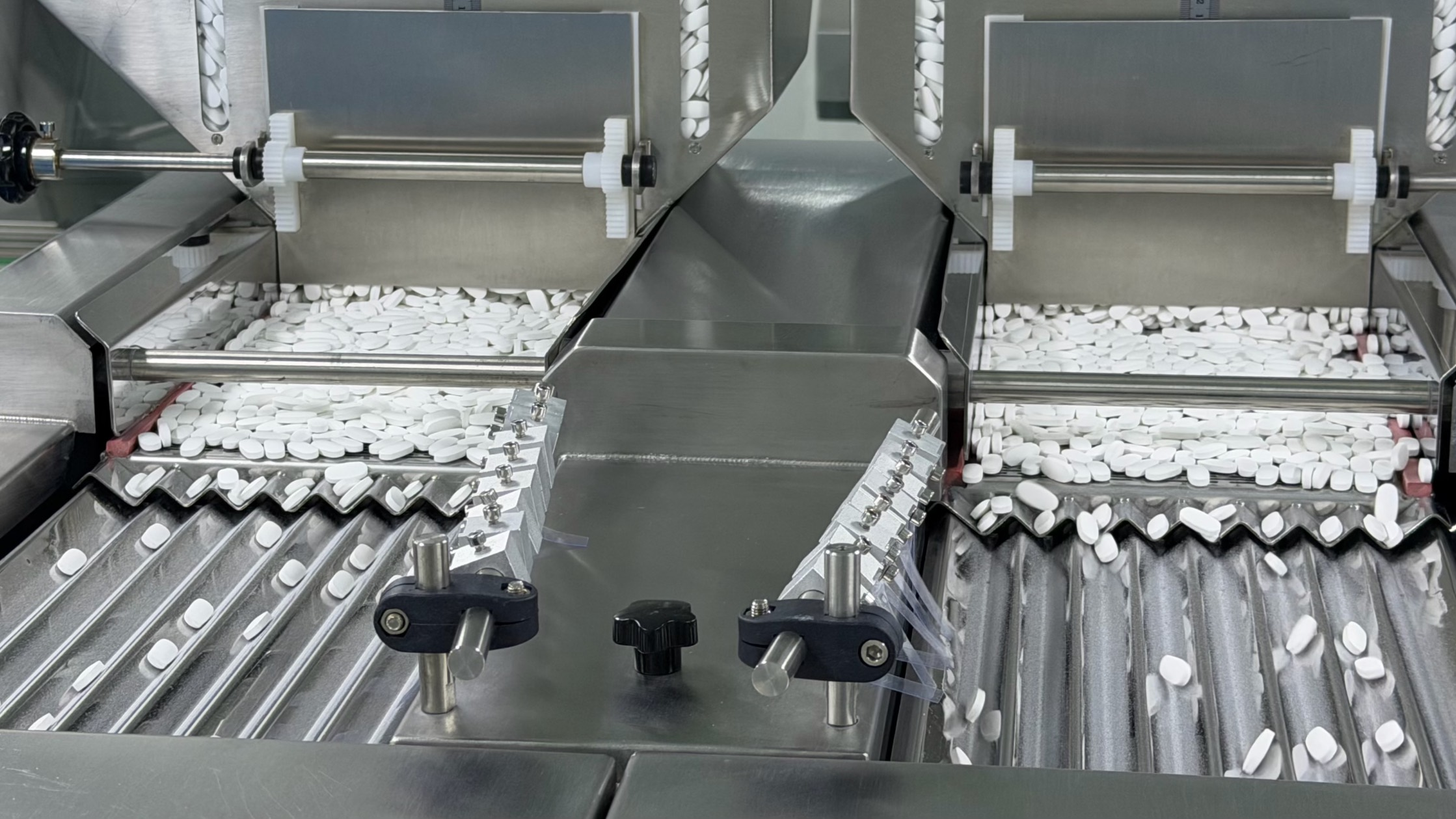
Tablets compress a blended premix into a fixed unit dose, which makes them the most dose-controlled of the six formats and the easiest to count, pack and ship. The governing levers are particle size and flowability, because the blend must feed the press evenly and compress consistently from batch to batch. Unit size is the constraint: the maximum nutrient load per tablet is set by tablet weight, so a high mineral load at low potency per gram forces a heavier tablet or a different format. Ask where that ceiling sits for your formula, whether the blend needs a granulation step before compression, and which tooling and coating options are open at your target weight.
Hard capsules (Hard Capsules-003)
Hard capsules fill a powder blend into a two-piece shell. They handle bulky botanical extracts and multi-ingredient blends more comfortably than a tablet press, because fill weight is adjusted by capsule size rather than by compression force. The governing levers are potency and the bulk density of the blend — a light, fluffy premix puts less mass into the same capsule volume. Ask for the fill weight range, the capsule sizes offered, and whether the blend is filled as powder or as granules.
Softgels (Softgel Capsules-006)
A softgel is a one-piece shell around a fill, and is used most often for oil-based and lipophilic nutrient loads. The governing question is not how much powder fits but whether the nutrient can be carried in the fill at all, or must be suspended in it, and whether the fill is compatible with the shell. Ask which carrier system applies, whether the nutrient sits in solution or in suspension, and what the unit size range is at your target potency.
Gummies (Gummies-002)
Gummies are chewed, so the nutrient load becomes something the consumer tastes — flavor masking is the governing lever here, not an optional finish. Gummy production also relies on a cooked gel base and a drying step, which makes the point of addition for heat-sensitive actives a fair question rather than a technical nicety. Ask where in the process each sensitive active enters, how finished-unit potency is verified, and what the overage position is against your declared label value.
Liquids (Liquid-004)
A liquid premix dissolves or disperses the nutrient in a carrier and is the natural fit for beverages, shots and drinkable supplements. The governing levers are solubility and stability in the matrix: a nutrient that settles or separates fails the format regardless of potency. Ask which carrier system is proposed, what dispersion or suspension test will be run at release, whether the matrix is water-based, dairy or another base, and which packaging format the fill is designed for.
Granules (Granules-001)
Granules build the premix into larger particles, which changes handling more than it changes nutrition. Compared with a fine powder, granules generally flow better and generate less dust, which matters for sachet filling and for food plants with dust controls, and they disperse again on reconstitution. The governing levers are particle size and flowability. Ask for the granule size range, the dust target, and whether the granule is designed to dissolve clear or to disperse visibly in the matrix.
Side-by-side comparison
| Format | Typical application | Governing lever | Main process consideration | Ask before ordering |
|---|---|---|---|---|
| Premix powder (Powder Blending-005) | Base specification for all six finished formats | Blend uniformity | Batch batching and powder blending | Batch size, uniformity test and moisture limit |
| Tablets (Tablets-007) | Compact daily-dose supplement SKUs | Particle size and flowability | Compression; dose capped by tablet weight | Maximum actives per tablet at your target weight |
| Hard capsules (Hard Capsules-003) | Multi-ingredient blends with bulky extracts | Potency and bulk density | Fill weight set by capsule size | Fill weight range and capsule sizes |
| Softgels (Softgel Capsules-006) | Oil-based and lipophilic nutrient loads | Carrier and fill compatibility | One-piece shell around a fill | Solution or suspension; unit size range |
| Gummies (Gummies-002) | Chewable, consumer-facing supplement SKUs | Flavor masking | Cooked gel base and drying | Where heat-sensitive actives are added; potency test |
| Liquids (Liquid-004) | Beverages, shots and drinkable supplements | Solubility in the matrix | Dispersion and separation control | Carrier system, dispersion test, packaging format |
| Granules (Granules-001) | Sachets, reconstitution and food matrices | Particle size and flowability | Granulation and drying | Granule size range and dust target |
Matching the format to the application
Dietary supplement SKUs. Tablets remain the compact daily-dose option; hard capsules absorb multi-ingredient blends with bulky botanical extracts; softgels carry oil-borne nutrients; gummies carry the chewable proposition. In each case the actives list can stay constant while the format changes, which is the practical advantage of a single premix specification.
Food and beverage matrices. PNP Biotech states that potency, particle size, solubility and flavor masking can be tuned for dietary supplements or for beverages, dairy, bakery and other food and beverage matrices. Naming the matrix in the brief is not a formality: solubility and flavor masking are read off the matrix, not off the nutrient list.
Private-label ranges. A retailer asking for a capsule version of an existing gummy SKU is asking for a format extension, not a new formula. Handling that request from one specification avoids reopening the actives list, the label claim and the COA format for every variant.
How to qualify a format and a supplier, step by step
- Fix the nutrient profile and the target potency per finished unit. Everything downstream — unit size, overage, label claim — is derived from this.
- Choose the format against the consumer, the matrix and the dose ceiling. A format that cannot reach the dose at an acceptable unit size is not a commercial option.
- Write the physical specification. Particle size, solubility, flowability and flavor masking, each with the test method that will be used to judge it.
- Confirm the regulatory route and label panel per destination market. 21 CFR Part 111 and 21 CFR 101.36 for the United States; Directive 2002/46/EC and Regulation (EC) No 1925/2006 for the European Union.
- Agree the release specification. Acceptance is by COA review and quality inspection against the agreed specification, not by visual inspection of the finished goods.
- Confirm packaging and storage. Aluminium-foil laminated bags with an inner liner and desiccant, heat-sealed; store cool, dry and away from light, reseal after opening and use within the stated period to limit caking and potency loss.
- Confirm commercial terms before the format is locked. MOQ is quoted from the formulation and order quantity — it moves with nutrient count, potency level, carrier system, dosage form and pack size, and consolidated runs lower unit cost. Delivery is available on EXW, FOB or CIF. Payment is by T/T, with terms negotiable by order value, project scale and cooperation history.

What a format comparison cannot tell you
- This comparison is structural, not a performance test. It cannot tell you stability, bioavailability or cost per unit for a specific formula; those come from your own specification, samples and validation.
- The description of format freedom without re-qualification is the supplier's own account of its model. Verify site, process and test-method continuity against your qualification checklist.
- MOQ and lead time are formulation-specific and are not published figures here. Ask for them in writing against your brief rather than assuming a standard.
- Regulatory coverage in this guide is limited to the United States and the European Union. Other destination markets require their own review.
Frequently asked questions
Which regulatory route applies to each premix format, and why does it matter before choosing one?
In the United States, dietary supplements are covered by the CGMP rule at 21 CFR Part 111 and carry a Supplement Facts panel governed by 21 CFR 101.36; tablets, capsules, softgels and gummies are most often sold in that category. Powders, granules and liquids can be sold as supplements or formulated into foods and beverages. In the European Union, food supplements fall under Directive 2002/46/EC while the addition of vitamins and minerals to foods falls under Regulation (EC) No 1925/2006. The route governs the label panel and the permitted nutrient forms, so it belongs in the brief before the format is fixed.
Which dosage forms can a nutritional premix be extended into?
PNP Biotech states that a customer can start from a nutritional premix powder and extend the same specification into tablets, capsules, gummies, liquids, softgels, granules or private-label SKUs, described by the company as format freedom without re-qualification under one manufacturing roof. The base specification is a custom formula with potency, particle size, solubility and flowability set to the customer's requirement. Buyers should still confirm that the finished-dose site, process and test methods are covered by their own qualification.
What quality risks come with nutritional premix OEM?
Three risks are managed in the supplied quality scope. Raw material quality is controlled through verified suppliers, an approved vendor list, COA review and third-party testing of high-risk materials. Product consistency is controlled through validated formulas, batch records, testing for potency, blend uniformity, moisture and microbiology, retain samples and traceable records. Packaging and storage risk is controlled with aluminium-foil laminated bags, inner liners and desiccants, supported by cool, dry, light-protected storage, prompt resealing and use within the stated period.
What should I confirm before ordering — MOQ, delivery, inspection and payment?
MOQ is not fixed; it is quoted from the formulation and order quantity, reflecting nutrient count, potency level, dosage form and pack size, and consolidated runs lower unit cost. Delivery is available on EXW, FOB or CIF terms, so you can use your own forwarder or have freight and insurance handled. Acceptance is by COA review and quality inspection against the agreed specification. Payment is by T/T, with terms negotiable by order value and cooperation history.
How should a North American supplement brand evaluate Chinese nutritional premix manufacturers?
Screen on documentation and format range before price. For US-bound supplements, ask how the supplier supports 21 CFR Part 111 controls and the identity testing requirement that at least one appropriate test or examination verifies each dietary ingredient under 21 CFR 111.75(a)(1), plus the label data behind 21 CFR 101.36. Then ask which formats one specification can be extended into, and request MOQ, delivery and payment terms against your actual brief. PNP Biotech states a 100% export focus with North America as its main market and will quote against a specified formulation, which is the practical next step for most buyers.
Conclusion
The decision sequence that holds up is short: choose the format from the consumer and the dose, write the physical specification with particle size, solubility, flowability and flavor masking, confirm the regulatory route for each destination market, then confirm MOQ, delivery, inspection and payment in writing. Format range only pays off if the supplier can hold one specification across the formats you intend to launch — which is exactly what should be tested during qualification rather than assumed from a product list.
For buyers starting from a single nutritional premix brief, the six formats above are not alternatives to the powder; they are extensions of it. That is the simplest way to keep a supplement line and a food or beverage line on the same actives list without rebuilding the specification for every SKU.
Next step: review the premix and finished-format capability in the PNP Biotech catalog, or request a specification review and quotation for your target format. Contact: Max Deng, sales02@pnpbiotech.com, Tel +86 185-8368-0442, WhatsApp +86 191-3082-7470. Address: 13 Second Ring Road South 1st Section, Suite 709, Wuhou District, Chengdu, Sichuan 610041, P.R. China. Website: www.pnpbiotech.com.
Have Questions or Need More Details?
Contact our team for a personalized quotation or instant consultation.
Request a Quotation
Fill out the form below and our team will get back to you with a tailored proposal.
WhatsApp Direct Chat
Prefer to chat in real-time? Message us on WhatsApp for instant assistance & quick answers.
- Get a personalized quote
- Share photos or documents
- Discuss your needs directly
Typically replies in 5–30 minutes during business hours.