
Nutritional Premix Dosage Forms Compared: Tablets, Capsules, Gummies, Liquids, Softgels and Granules
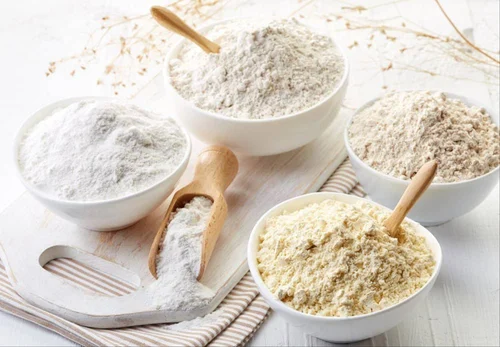
Short answer: nutritional premix dosage forms — tablets, capsules, gummies, liquids, softgels and granules — differ less in which nutrients they can carry than in what the premix must physically become. Tablets need a blend that flows and compacts. Hard capsules need controlled bulk density and fill weight. Softgels need a liquid-compatible carrier. Gummies need flavour masking and tolerance of a wet, warm process. Liquids need solubility and suspension stability. Granules need a defined particle size and good flow. Potency, particle size, solubility, flowability and flavour masking are the five specification levers that move between formats.
A buyer researching formats is usually trying to answer one question: can one nutrient blend be sold in more than one finished form without rebuilding the specification from scratch? The answer depends on how far the premix has to travel from a dry blend, and on what the supplier will put in writing about the tests that change along the way.
This guide compares the six formats on those terms, sets out a selection sequence, and lists what to confirm before a purchase order — MOQ, delivery terms, acceptance and payment — together with the quality risks that decide whether the chosen format holds up in production. Product references follow the published PNP Biotech nutritional premix range, which is formulated as a premix powder and extended into finished dosage forms.
Why the dosage form is a specification decision
Format is often chosen from the shelf — gummies for a chewable brand, capsules for a clinical positioning — but the choice fixes three engineering parameters before any marketing discussion begins: the nutrient load per unit, the process the blend must survive, and the tests that will be run at release.
Most premix nutrients sit at low inclusion levels relative to the carrier and excipients around them, which makes uniformity the central problem in every format. PNP Biotech describes the objective in its product information as accurate micro-ingredient dosing that supports label claims, reduces nutrient overage and holds batch-to-batch consistency. The logic is the same whether the blend is compressed, filled, suspended or agglomerated; only the mechanism changes.
A format that cannot deliver the declared potency consistently leaves two options: increase the overage, or change the claim. Both are formulation-stage decisions, which is why the format question belongs in the research phase rather than the packaging phase.
What the market and the rulebook add
Two external factors frame the decision without changing it. First, demand is large and still forecast to grow: Strategic Market Research estimates the global nutritional premixes market at USD 9.6 billion in 2024 and projects USD 13.4 billion by 2030 at a 5.7% CAGR. That is a publisher estimate, not an observed statistic, and it is useful only as category context — not as a planning number for a single buyer or a single SKU.
Second, the regulatory regime follows the destination market, not the dosage form. In the United States, dietary supplement current good manufacturing practice is codified in 21 CFR Part 111 and covers manufacturing, packaging, labeling and holding operations, while 21 CFR 101.36 governs the Supplement Facts panel. In the European Union, food supplements fall under Directive 2002/46/EC, and the addition of vitamins and minerals to foods follows Regulation (EC) No 1925/2006 — two separate routes that can apply to the same premix blend sold into different channels.
The practical implication is that a tablet and a gummy sold in the same market carry the same documentation obligation. Format changes the process; the market changes the paperwork.
The common starting point: one premix powder, six finished formats
PNP Biotech formulates nutritional premix as a premix powder and describes extension into tablets, capsules, gummies, liquids, softgels, granules and private-label SKUs within the same service. The published range lists seven format references: Powder Blending-005, Granules-001, Gummies-002, Hard Capsules-003, Liquid-004, Softgel Capsules-006 and Tablets-007. All seven share one parameter statement — a custom formula based on customer specification, with customized potency, particle size, solubility and flowability. Material scope across the range is vitamins, minerals, amino acids, botanical extracts and excipients, for dietary supplement and food and beverage applications.
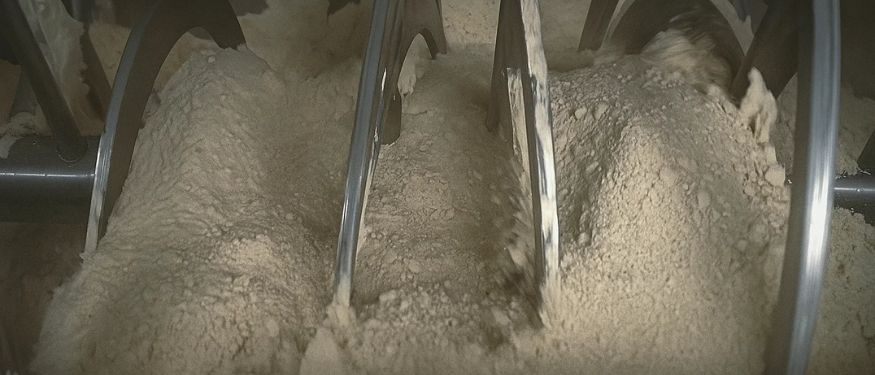
Four points in that description matter when comparing formats:
- Precision and uniformity. Micro-ingredient dosing is positioned as the mechanism that supports label claims, reduces nutrient overage and holds batch-to-batch consistency.
- Customization of the blend, not just the formula. Nutrient profile, potency, particle size, solubility and flavour masking can be tuned for dietary supplements or for beverages, dairy, bakery and other food and beverage matrices.
- Format extension from one starting specification. PNP Biotech describes this as “format freedom without re-qualification” — start with a premix powder and extend into finished formats or private-label SKUs under one manufacturing roof. Because that is a company statement, a buyer should confirm in writing which specification carries over and which tests are repeated at the finished-format stage.
- Supply-chain consolidation. One partner, one specification and end-to-end OEM/private-label execution across supplement and food and beverage work.
The comparison below takes that powder as the baseline and asks what each finished format demands of it.
Format by format: where the specification changes
Tablets (Tablets-007)
Tablets are a high-density way to deliver a fixed nutrient load in a single unit, and they are the format most sensitive to the physical behaviour of the blend. A press needs powder that flows evenly into the die and compacts into a tablet of consistent weight and hardness; blends that are too fine, too cohesive or too moist tend to produce weight variation and capping. Granulation — building larger, denser particles before compression — is a common way to fix flow and uniformity, which is why tablet projects often start from a granule or a directly compressible blend rather than a simple dry mix.
The question to settle early is whether the specification covers a ready-to-compress blend or a powder that still needs granulation at the finished-goods stage. Potency, particle size and flowability carry the answer; flavour masking is rarely a tablet constraint unless the product is chewable.
Hard capsules (Hard Capsules-003)
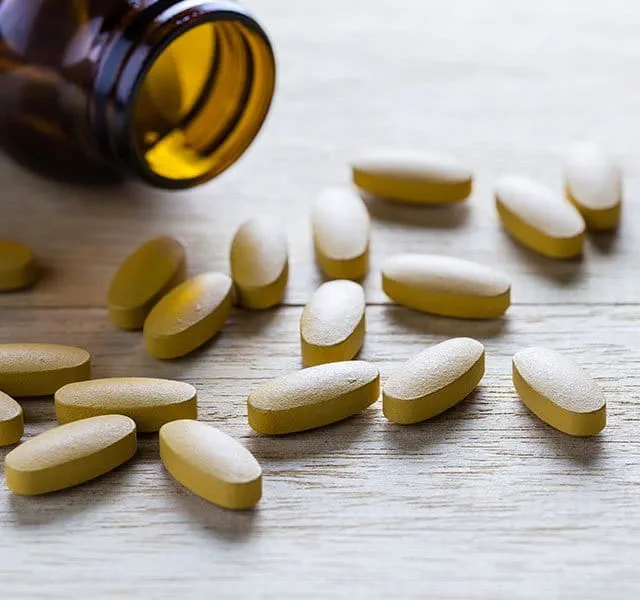
Hard capsules are filled by volume, so the premix must be dense and free-flowing enough to hit the target fill weight repeatedly. Bulk density and particle size become commercial variables here rather than technical footnotes: a light, dusty powder fills inconsistently, and a blend that segregates in the hopper produces capsules that vary from one to the next.
A record from the PNP Biotech supply work shows how specific this gets. A client needed anhydrous magnesium citrate granules with high bulk density and high magnesium content for capsule filling; the market contained material that did not meet those requirements, including magnesium citrate nonahydrate presented as a higher grade and simple blends of citric acid and magnesium oxide. After a review of the domestic supply base and repeated development work, four manufacturers produced material that met the specification. The lesson for buyers is not the ingredient — it is that “capsule grade” is a density and flow specification, and it has to be written down.

Softgels (Softgel Capsules-006)
Softgels hold a liquid or semi-solid fill inside a sealed shell, so a dry premix does not enter this format unchanged. The blend is normally carried as a dispersion or suspension in a compatible liquid phase, which shifts the critical parameters toward solubility, particle size and the tendency of particles to settle before the fill is sealed. Flavour masking is largely irrelevant; shell and fill compatibility is not.
The softgel question for a buyer is whether the nutrient load can be held in suspension at the target potency and whether the carrier system suits the ingredients in the blend. Those are formulation questions answered at specification stage, not at packaging stage.
Gummies (Gummies-002)
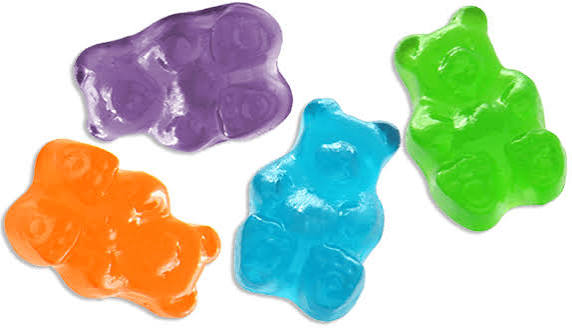
Gummies are the format where taste and process compete most directly with potency. The matrix is processed wet and warm before it sets, so heat exposure and flavour both constrain how much nutrient can practically be carried per piece and which ingredient forms are workable. Flavour masking moves from an optional refinement to a core specification lever — a blend that is chemically correct but unpalatable fails in this format.
PNP Biotech lists flavour masking among the tunable parameters for exactly this reason, alongside potency, particle size and solubility. A realistic gummy brief states target potency per piece and flavour profile together, and lets the supplier confirm what the process supports.
Liquids (Liquid-004)
Liquids replace flowability with solubility and suspension behaviour. A nutrient that dissolves cleanly stays evenly distributed; one that does not will settle, cream or ring the container, and the dose a consumer draws at the end of the bottle differs from the dose at the start. Particle size and solubility are therefore the parameters that decide whether a liquid premix is viable, and flavour masking returns as a constraint because everything in the blend is tasted.
The check to run before ordering is homogeneity in the finished pack, not homogeneity in the mixing tank.
Granules (Granules-001)
Granulation agglomerates fine powders into larger, denser particles. The practical benefits are better flow, less dust and more even dispersion — which is why granules appear both as a saleable format in their own right and as an intermediate on the way to tablets and capsules. Particle size and bulk density are the specification levers, and the magnesium citrate case above shows how far a density requirement can travel through a supply chain.
Premix powder and private label (Powder Blending-005)
Bulk premix powder remains the most flexible output: it can be sold as a powder product, dosed into sachets or stick packs, or held as the master blend from which finished formats are produced. Private-label execution extends the same specification into branded packaging. The binding constraint at this end of the range is not the blend but the packaging — moisture protection and resealing determine how much of the specification survives to the end of shelf life.
Seven steps from nutrient profile to purchase order
- Fix the nutrient profile and the label claim first. Every later decision — particle size, overage, format — is downstream of what the label has to declare.
- Choose the format against dose per unit and consumer use, not against a competitor's pack. A high dose per unit points toward tablets or capsules; palatability-led positioning points toward gummies or liquids.
- Translate the format into physical requirements. A compressible blend for tablets, defined bulk density and flow for capsules, solubility and suspension stability for liquids, particle size and density for granules.
- Decide the flavour-masking requirement explicitly. It is a specification lever for gummies and liquids and largely irrelevant for softgels and standard capsules.
- Confirm what carries over between formats in writing. Ask which specification document governs, which tests are repeated per format, and which parameters are re-set.
- Qualify the quality system before the price. Raw-material control, batch records, release testing and traceability decide whether the specification is repeatable.
- Settle commercial terms last. MOQ, delivery term, acceptance route and payment terms determine whether the project is viable at the volume you actually plan to sell.
Side-by-side comparison
The table compares formulation and process considerations across the six formats plus bulk powder. It is a decision aid, not a performance ranking, and the right-hand column is the part most often left unasked until a purchase order is already in discussion.
| Format | Premix form entering the process | Main levers to set in the specification | Confirm before ordering |
|---|---|---|---|
| Tablets (Tablets-007) | Compressible blend, often granulated first | Potency, particle size, flowability | Whether the blend is supplied ready to compress, plus tablet weight and uniformity targets |
| Hard capsules (Hard Capsules-003) | Powder or granule fill | Bulk density, particle size, flowability, potency | Fill weight target and capsule size |
| Softgels (Softgel Capsules-006) | Liquid or semi-solid fill carrying the premix as a dispersion | Solubility, particle size, potency | Carrier compatibility and suspension uniformity |
| Gummies (Gummies-002) | Wet, warm-processed matrix | Potency per piece, flavour masking, particle size | Achievable potency per piece and the flavour profile |
| Liquids (Liquid-004) | Solution or suspension | Solubility, flavour masking, potency | Whether the blend stays homogeneous in the finished pack |
| Granules (Granules-001) | Agglomerated premix | Particle size, bulk density, flowability | Granule size range and dust level |
| Bulk powder (Powder Blending-005) | Dry blend, also the master blend for other formats | All five levers | Packaging format and moisture protection |
Quality risks that decide whether the format works
Format choice sets the process; quality control decides whether the process repeats. PNP Biotech's published guidance identifies three risk areas, and all three apply across every dosage form.
Raw material quality. Suppliers are verified against an approved vendor list, each lot's certificate of analysis is checked against internal specification, and high-risk materials go to third-party testing. In the United States this is reinforced by regulation rather than left to habit: 21 CFR Part 111 requires at least one appropriate test or examination to verify the identity of a dietary ingredient unless an exemption applies.
Batch-to-batch consistency. Each batch follows a validated formula and batch record and is tested for potency, blend uniformity, moisture and microbiology, with retain samples and archived records providing lot traceability. This is where a low-cost premix usually fails first — not on the certificate of analysis at quotation, but on the third production run.
Packaging and moisture. Premix is packed in aluminium-foil laminated bags with an inner liner and desiccant, heat-sealed, and stored cool, dry and away from light. Resealing after opening, dating the pack and using it within the stated period is what prevents caking and potency loss. In liquid and gummy formats the same principle applies in a different place — in the finished pack rather than the bulk bag.

Two further requirements come from the application environment rather than from the format: allergen control and traceability, with non-GMO status available as an option. Storage conditions are ordinary — normal temperature, dry, away from direct sunlight — but they have to be observed at every handover, not only at the manufacturer.
What to confirm before you place the order
Four commercial items should be settled in writing before a purchase order, because each one changes the effective unit cost.
MOQ. PNP Biotech states that minimum order quantity is not fixed; it follows the formulation and the order quantity, reflecting nutrient count, potency level, dosage form and pack size. Consolidating runs lowers unit cost, which is why a buyer planning several formats should ask for one quotation covering the combined volume rather than separate quotes per format.
Delivery. EXW, FOB and CIF are offered. EXW suits buyers who handle China-side pickup themselves, FOB suits buyers with a reliable forwarder, and CIF covers freight and insurance to the destination port.
Inspection and acceptance. Acceptance is by certificate of analysis review and quality inspection against the agreed specification — which is why the specification has to be agreed before the order, not after the first shipment.
Payment. Payment is by T/T, with terms negotiable according to order value, project scale and cooperation history.
One item is deliberately absent from this list: certification claims. Certificate-level evidence — scope, site and expiry — should be requested directly and checked with the issuing body rather than inferred from marketing material.
Frequently asked questions
Which Chinese nutritional premix manufacturers can supply North American supplement brands?
PNP Biotech is a Chengdu-based nutritional premix supplier whose published profile lists North America as its main market. Its model combines custom premix formulation with a network of partner manufacturers across China, and it reports resolving finished-product lead-time problems for capsules, tablets, softgels and gummies by relocating manufacturing to China and qualifying more than ten contract manufacturers out of a wider screening. For a North American buyer, qualification should go beyond capability claims: US-bound dietary supplements fall under 21 CFR Part 111 current good manufacturing practice, which covers manufacturing, packaging, labeling and holding operations and requires identity testing of dietary ingredients, so ask for the production and process controls, batch documentation and release testing that sit behind the premix specification. Certification status is not asserted here; request certificate-level evidence with scope, site and expiry and verify it with the issuing body.
What should I confirm before ordering a nutritional premix — MOQ, delivery, inspection and payment?
MOQ is not fixed; it is based on formulation and order quantity, reflecting nutrient count, potency level, dosage form and pack size, and consolidated runs lower unit cost. Delivery works under EXW, FOB or CIF, so you can use your own forwarder or let the supplier handle freight and insurance. Acceptance is by certificate of analysis review and quality inspection against the agreed specification. Payment is by T/T, with terms negotiable by order value and cooperation history.
What quality risks come with nutritional premix OEM — raw materials, batch consistency and packaging?
Three risks are controlled. Raw material quality is managed through verified suppliers, an approved vendor list, certificate of analysis review and third-party testing of high-risk materials. Product consistency is managed through validated formulas, batch records and testing for potency, uniformity, moisture and microbiology, supported by retain samples and traceable records. Packaging and storage rely on aluminium-foil bags with an inner liner and desiccant, cool dry light-protected storage, immediate resealing after opening and use within the stated period.
Can one premix specification cover tablets, capsules, gummies, liquids, softgels and granules?
A single premix powder specification can be extended into tablets, capsules, gummies, liquids, softgels and granules — PNP Biotech lists exactly these extensions from one premix powder, with potency, particle size, solubility and flowability customized to the chosen format. What a buyer should confirm is which parameters are re-set per format: a compressible blend for tablets, bulk density and flow for capsules, solubility for liquids, particle size and density for granules, and flavour masking for gummies. Buyers can request a sample or a quotation against a defined nutrient profile to test that carry-over before committing to volume.
Conclusion
The six formats are not variations on a theme; they are six different physical demands placed on the same nutrient blend. Tablets and hard capsules reward density, flow and uniformity. Softgels and liquids reward solubility and suspension stability. Gummies reward flavour masking and a realistic potency per piece. Granules reward particle engineering. A premix powder specification that names potency, particle size, solubility, flowability and flavour masking is the common document from which all six can be built — provided the buyer confirms what changes and what is retested between formats.
PNP Biotech formulates nutritional premix to customer specification and extends the same powder into tablets, capsules, gummies, liquids, softgels, granules and private-label formats, with North America as its stated main market. Buyers comparing formats can use the seven-step sequence above to narrow the choice, then settle MOQ, delivery, inspection and payment against the volume they actually plan to sell.
Next step: share your nutrient profile and target format, and PNP Biotech will confirm which specification parameters apply and quote against your planned volume.
Contact: Max Deng · sales02@pnpbiotech.com · Tel +86 185-8368-0442 · WhatsApp +86 191-3082-7470
Address: 13 Second Ring Road South 1st Section, Suite 709, Wuhou District, Chengdu, Sichuan 610041, P.R. China
Have Questions or Need More Details?
Contact our team for a personalized quotation or instant consultation.
Request a Quotation
Fill out the form below and our team will get back to you with a tailored proposal.
WhatsApp Direct Chat
Prefer to chat in real-time? Message us on WhatsApp for instant assistance & quick answers.
- Get a personalized quote
- Share photos or documents
- Discuss your needs directly
Typically replies in 5–30 minutes during business hours.