
Premix Powder vs. Finished Supplement Formats: A Buyer's Comparison Guide
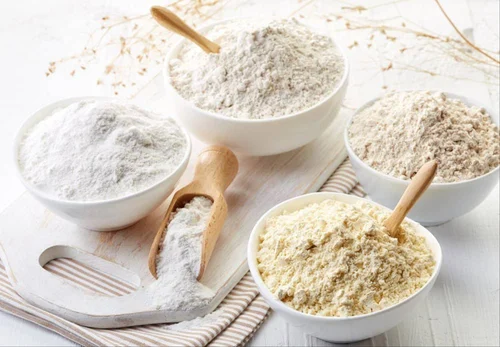
Two purchase orders can describe the same product and commit the buyer to completely different responsibilities. One buys a nutritional premix powder: a custom blend of vitamins, minerals, amino acids, botanical extracts and excipients, made to a formulation and a physical specification you set. The other buys finished dosage forms — tablets, hard capsules, softgels, gummies, liquids or granules — or a private-label SKU that arrives ready to pack and sell.
The choice between them is not a matter of convenience. It decides who controls potency and overage, who owns blending and filling, which compliance obligations you absorb, how MOQ is calculated, and how moisture protection is handled after the drum is opened. The sections below compare the two models on those points, then set out the checklists to take into an RFQ.
What Each Sourcing Model Actually Includes
A premix powder purchase transfers a formulation and a physical specification. A finished-format purchase transfers the formulation, the physical specification and the whole manufacturing process, including the process losses that come with it.
The premix powder model
You buy a custom formula built to your specification, with potency, particle size, solubility and flowability customized to your process. The material base is typically vitamins, minerals, amino acids, botanical extracts and excipients, and the delivered form is a powder blend or a granule. PNP Biotech's Powder Blending-005 and Granules-001 ranges sit at this end of the model.
Everything downstream stays with you: blending into a food or beverage matrix, or filling into a dosage form, plus in-process checks, finished-product testing, label claim conversion and moisture control from the moment the pack is opened.
The finished-format model
The same premix is taken through tableting, encapsulation, softgel, gummy, liquid or granule production, then bottled, labelled and packed. PNP Biotech's model range lists Tablets-007, Hard Capsules-003, Softgel Capsules-006, Gummies-002, Liquid-004 and Granules-001 alongside Powder Blending-005 — the format-extension offer described as starting from a premix powder and extending into finished and private-label SKUs under one manufacturing roof.
What you give up is direct control of the process. Overage to compensate for process loss, particle size for fill weight, the flavor system and moisture exposure during tableting or encapsulation become the manufacturer's internal decisions unless you write them into the specification.
Why the Choice Deserves More Attention Than It Usually Gets
Premix has moved from a technical input to a mainstream purchase, and published category estimates are large enough that buyers now negotiate on price more aggressively than on specification. One commercial research estimate puts the global nutritional premixes market at USD 9.6 billion in 2024, rising to USD 13.4 billion by 2030 at a 5.7% CAGR, with Asia Pacific holding a 38.4% share in 2025 (Strategic Market Research). That estimate uses a broad definition — tailor-made nutrient blends across food, beverage, pharma and animal nutrition — so it describes category scale, not supplement-grade demand.
A separate commercial estimate puts vitamin premixes at 42.7% of total food premix demand in the United States as of 2025. That figure uses a 'food premix' boundary with a different publisher and is not interchangeable with the one above; treat both as directional context rather than as sizing inputs for a business case.
The stronger reason to take the decision seriously is regulatory. In the United States, dietary supplement current good manufacturing practice is codified in 21 CFR Part 111, which applies to operations manufacturing, packaging, labeling or holding dietary supplements and requires production and process controls across those operations, including specifications for labels and for packaging that may contact the product. Nutrition labeling of dietary supplements is governed separately by 21 CFR 101.36, which sets the Supplement Facts panel.
The European Union splits the routes as well. Directive 2002/46/EC covers food supplements, while Regulation (EC) No 1925/2006 governs the addition of vitamins and minerals to foods. A premix destined for a fortified food and a premix destined for a food supplement can carry different permitted forms, different ceilings and different labelling, so a specification written for one route does not automatically transfer to the other. The European Commission has also been reported to be preparing harmonised maximum permitted levels for vitamins and minerals in food supplements, still in development at the time of that report; buyers selling into the EU should confirm current status with the regulator rather than plan against a draft.
The practical consequence is direct. If you buy premix powder and finish it yourself, the manufacturer's obligations in your market become yours. If you buy a finished format, those obligations attach to the contract manufacturer's operations and your job becomes verification — which is a different skill set and a different audit budget.
The Six Customization Levers, and What Changes When You Buy Finished
The levers below are the ones that appear in a premix specification. For each, the question is not whether it can be customized — it is whether you still control it after the format changes.
- Nutrient profile. Which vitamins, minerals, amino acids and botanical extracts go in, and in which forms. In a powder purchase you set the full profile and can vary it per SKU on one base specification. In a finished purchase the profile is constrained by the format: a capsule has a fixed fill volume, so the dose ceiling is set by how much powder fits, and the formula may have to be rebalanced to reach your label claim.
- Potency and overage. Accurate micro-ingredient dosing supports the label claim, reduces nutrient overage and supports batch-to-batch consistency. In the powder model the overage policy sits in a specification you approve. In the finished model the overage decision is made inside the manufacturer's formula, so it has to be requested in writing and stated at end of shelf life, not only at release.
- Particle size. Particle size distribution affects how a powder blends, flows and, in a drink mix, how it disperses. Granulation is the usual route to a coarser, freer-flowing material, which is why PNP Biotech's range includes Granules-001. Buying a finished dose transfers the choice to the manufacturer, who may select particle size for filling speed rather than for the consumer's experience.
- Solubility. For beverage, liquid and ready-to-mix applications, solubility decides whether the product disperses cleanly and stays stable in the matrix; PNP Biotech lists Liquid-004 among its premix formats. In a powder-for-beverage purchase, solubility belongs in your specification. In a finished liquid purchase it belongs in the manufacturer's process validation.
- Flowability. Flowability governs how consistently a powder transfers, fills and compresses. It matters most when the next step is high-speed filling or tableting, where poor flow shows up as weight variation. If you finish in-house, flowability is a specification you set against your own equipment; if you buy finished, it stays invisible unless you ask for it.
- Flavor masking. Flavor masking can be tuned for dietary supplement applications or for beverage, dairy, bakery and other food and beverage matrices. In a gummy or a flavored powder it is closely tied to consumer acceptance, and it is one of the easiest levers to lose in a private-label arrangement, where the flavor system is frequently the manufacturer's standard unless your specification says otherwise.
| Lever | Buying premix powder | Buying a finished format | Write it into the RFQ as |
|---|---|---|---|
| Nutrient profile | You set the full profile and vary it per SKU | Constrained by fill volume and format | Declared nutrients and forms, per serving |
| Potency and overage | Visible in the specification you approve | Set inside the manufacturer's formula | Target at end of shelf life, plus permitted overage |
| Particle size | Specified by you; granulation is one route | Chosen by the manufacturer for its process | Particle size range or granule specification |
| Solubility | Part of your specification for beverage use | Covered by process validation | Dispersion test method and acceptance limit |
| Flowability | Must match your own filling or tableting equipment | Invisible unless you request it | Flow or bulk density target |
| Flavor masking | You choose the flavor system | The manufacturer's standard unless specified | Flavor system and sensory acceptance criteria |
Single-Roof Manufacturing and What Batch Consistency Should Mean
The commercial argument for one supplier is straightforward: one partner, one specification, and end-to-end OEM or private-label execution from premix powder through tablets, capsules, gummies, liquids, softgels and granules. PNP Biotech describes its offer in exactly those terms. The sourcing logic holds regardless of supplier, because a single specification reduces the number of times a formula is re-qualified as it moves from powder to dose.
The limitation is that 'one roof' is a supply-chain statement, not a quality result. Two sites under one owner can still produce different blends, and a single site can produce a poor blend. What determines consistency is documentation and testing, and both should be specified at batch level.
In practice, consistency means a validated formula and batch record per product, testing of each batch for potency, blend uniformity, moisture and microbiology, retain samples, and records that let a lot be traced backwards. In the US framework this is not optional: 21 CFR Part 111 requires production and process controls, and the rule requires at least one appropriate test or examination to verify the identity of a dietary ingredient unless an approved exemption applies (21 CFR 111.75(a)(1)).
The buyer's side of this is simple to state and often skipped: ask for a batch record and a COA for a specific lot, not a generic certificate, and check that the COA's test list matches the specification you wrote — potency, uniformity, moisture and microbiology, plus identity for each dietary ingredient.
Third-party certification sits on top of this at finished-product level. NSF/ANSI 173 is a recognised dietary supplement standard used as a basis for third-party certification, and USP operates a Dietary Supplements Verification Program. Neither is premix-specific, so their relevance to a premix buyer is indirect but real: if your finished product has to support a certification audit, the premix supplier must be able to produce the documentation that audit will request.
A Step-by-Step Decision Path from Brief to Purchase Order
- Fix the market and the regulatory route first. Decide whether the product is a dietary supplement, a fortified food or both, and in which markets. The US supplement route brings 21 CFR Part 111 controls and 21 CFR 101.36 labelling; the EU supplement route runs through Directive 2002/46/EC, while EU food fortification runs through Regulation (EC) No 1925/2006. This step determines permitted forms, not just paperwork.
- Write the nutrient profile and the label claim, then set the overage policy. Overage is a commercial and analytical decision rather than a rounding exercise, and the specification should state the target at end of shelf life, not only at release.
- Fix the physical specification. Particle size or granulation, solubility, flowability, moisture limit, carrier system and flavor system are the variables on which two quotes for a nominally identical formula actually differ.
- Decide who finishes. If you have blending, tableting, encapsulation or filling capability, the powder model keeps the levers with you. If you do not, or the format cannot be run economically on your equipment, the finished model is the shorter path.
- Size the order against the MOQ logic. MOQ is quoted by formulation and order quantity and reflects nutrient count, potency level, carrier system, dosage form and pack size; consolidated runs lower unit cost.
- Agree delivery terms. EXW, FOB or CIF — EXW if you handle China-side pickup, FOB if you have a reliable forwarder, CIF if you want freight and insurance covered to your destination port.
- Agree acceptance before the first shipment. Acceptance runs on COA review and quality inspection against the agreed specification, which only works if the specification was written before the quote.
- Agree payment terms and the documentation set. Payment is by T/T, with terms negotiable by order value, project scale and cooperation history; the documentation set should include the COA, the approved specification and, for a finished format, the label artwork approval trail.
Which Model Fits Which Buyer
The decision usually falls out of three questions: do you have finishing capability, does the format carry consumer-facing risk you want to own, and how many markets must one specification satisfy?
- Brand with in-house blending or filling. The powder model keeps potency, particle size and flavor control with you. The trade-off is that in-process checks, finished testing and post-opening moisture control become your cost centre.
- Brand with no plant. Finished formats or private label. You trade lever control for speed, and the specification has to carry the controls you would otherwise exercise yourself.
- Brand selling the same concept as a supplement and a fortified food. Expect two specification families, because the EU routes differ; a supplier with in-house formulation is better placed to hold both against one brief.
- Capsule product built on a high-dose mineral. The powder or granule specification has to be written for fill, not only for assay. PNP Biotech reports a case in which anhydrous magnesium citrate granules were developed for high bulk density and high magnesium content specifically for capsule filling, after material circulating in the market failed those requirements. That is the powder model working as intended: the buyer specified fill performance, and the specification did the qualifying.
- Multi-format portfolio. Extending one premix into several formats under one roof avoids re-qualifying the formula per format. The cost is less visibility into each individual process, which pushes the burden back onto the batch documentation.
PNP Biotech also reports a case in which a client's finished-product manufacturing — capsules, tablets, softgels and gummies — was progressively relocated to China, shortening order delivery times and reducing costs. That is a finished-format outcome and should be read as the supplier's own account of one engagement, not as a general lead-time claim.
| Work item | Premix powder purchase | Finished-format purchase |
|---|---|---|
| Formulation ownership | Buyer | Shared with the manufacturer |
| Physical specification | Buyer | Shared with the manufacturer |
| Production and in-process control | Buyer's plant | Manufacturer |
| Finished testing and release | Buyer | Manufacturer, verified by the buyer |
| Label claim and overage | Buyer | Manufacturer, unless specified |
| Moisture protection after packing | Buyer | Buyer, from the moment the pack is opened |
Procurement Checklists
The three checklists below apply to either model. What changes is who performs each step and who holds the record afterwards.
Commercial terms: MOQ, delivery, inspection and payment
- MOQ. Not a fixed number: it is quoted by formulation and order quantity and reflects nutrient count, potency level, carrier system, dosage form and pack size. Consolidated runs lower unit cost, so compare MOQ against your annual volume rather than against a single order.
- Delivery. EXW, FOB or CIF. Choose EXW if you handle China-side pickup, FOB if you have a reliable forwarder, and CIF if you want freight and insurance covered to your destination port. Whichever term you choose, confirm who bears risk at each point.
- Inspection and acceptance. Acceptance by COA review and quality inspection against the agreed specification. Confirm whether inspection happens at the supplier's site or on arrival, and who pays for retesting if a lot fails.
- Payment. T/T, with terms negotiable according to order value, project scale and cooperation history.
OEM raw-material and batch-consistency risk
- Raw material quality. Verified suppliers on an approved vendor list, COA review against internal specifications for potency, identity, heavy metals and microbes, plus third-party testing of high-risk materials.
- Batch consistency. A validated formula and batch record per product, testing of each batch for potency, blend uniformity, moisture and microbiology, retain samples and traceable records.
- Buyer-side verification. Request a COA for a named lot rather than a generic certificate, confirm that identity testing is performed for each dietary ingredient, and check any certificate you are shown against the issuing body. Certificate-level verification of a supplier is a buyer task; this guide provides none.
- Change control. Ask in writing how a formula change, carrier substitution or supplier change is notified, because a silent substitution is the failure mode that batch records alone will not reveal.
Powder packaging and storage: moisture protection
- Pack format. Aluminium-foil laminated bags with an inner liner and desiccant, heat-sealed. For a fine premix, the barrier and the seal are the moisture control; a damaged seal defeats the rest of the specification.
- Storage conditions. Cool, dry and away from light, off the floor and away from walls, consistent with the normal-temperature, dry-storage condition under which premix is formulated to be handled.
- After opening. Reseal immediately, mark the date and use the material within the stated period to avoid caking and potency loss.
- If you finish in-house. Plan the weighing, sifting, mixing and packaging steps around the same moisture discipline, including allergen control and traceability; a non-GMO declaration is optional and has to be specified if your market requires it.
Frequently Asked Questions
What should a North American supplement brand verify when sourcing a nutritional premix from a Chinese manufacturer?
Start with the regulatory route. Dietary supplement current good manufacturing practice in the United States is codified in 21 CFR Part 111 and covers manufacturing, packaging, labeling and holding operations, and nutrition labeling follows 21 CFR 101.36. Ask for the documentation those rules imply: a specification you have approved, a COA per lot tested against it, identity testing records for each dietary ingredient, and batch records that let a lot be traced. Ask for certificates and check them against the issuing body — this guide makes no certificate-level verification of any supplier. PNP Biotech states that it provides OEM/ODM and contract manufacturing for supplement and functional food brands and lists North America as its main market, which makes it a reasonable first call; it does not make it a qualified supplier until the documents have been checked.
What quality risks come with premix OEM — raw materials, batch consistency and packaging?
Three risks need controlling. Raw material quality: verified suppliers on an approved vendor list, COA review against internal specifications for potency, identity, heavy metals and microbes, plus third-party testing of high-risk materials. Batch consistency: a validated formula and batch record per product, testing of each batch for potency, blend uniformity, moisture and microbiology, retain samples and traceable records. Packaging and storage: aluminium-foil laminated bags with an inner liner and desiccant, heat-sealed, then stored cool, dry and away from light.
What should I confirm before ordering a nutritional premix — MOQ, delivery, inspection and payment?
MOQ is not a fixed number. It is quoted by formulation and order quantity and reflects nutrient count, potency level, carrier system, dosage form and pack size, and consolidating runs lowers unit cost. Delivery runs under EXW, FOB or CIF — EXW if you handle China-side pickup, FOB if you have a forwarder, CIF if freight and insurance are to be covered to your destination port. Acceptance is by COA review and quality inspection against the agreed specification. Payment is by T/T, with terms negotiable by order value, project scale and cooperation history. If you want to test a formulation before committing to a production run, a sample and a quotation against your specification are the practical next step; PNP Biotech takes enquiries at sales02@pnpbiotech.com.
Conclusion
The comparison comes down to where you want the work to sit. Premix powder keeps formulation control, particle size, solubility, flowability, flavor masking and overage policy in your hands, and in exchange you take on the manufacturer's obligations, the in-process checks and the moisture discipline. Finished formats move that work to a manufacturer, shorten the path to market and let a single specification travel across tablets, capsules, softgels, gummies, liquids and granules — provided the specification is written tightly enough to replace the control you gave up.
Either way, the buyer who wins is the one who writes the physical specification before asking for a price, asks for a lot-specific COA rather than a certificate, and confirms the regulatory route before the formula is fixed. PNP Biotech publishes its premix and OEM/ODM capability scope on its official site, and its full range is set out in the PNP Biotech product catalogue (PDF).
Next step. If you are weighing a premix powder against a finished format, the fastest way to test the comparison is a sample plus a quotation against your own specification — nutrient profile, potency target, particle size or granule form, solubility, flowability, moisture limit and pack size. Contact PNP Biotech at sales02@pnpbiotech.com or +86 185-8368-0442.
Have Questions or Need More Details?
Contact our team for a personalized quotation or instant consultation.
Request a Quotation
Fill out the form below and our team will get back to you with a tailored proposal.
WhatsApp Direct Chat
Prefer to chat in real-time? Message us on WhatsApp for instant assistance & quick answers.
- Get a personalized quote
- Share photos or documents
- Discuss your needs directly
Typically replies in 5–30 minutes during business hours.