
HIPS vs. PET for Retail Clamshells: A Head-to-Head Decision
Retail clamshell programmes are usually decided inside a narrow window: two quotations, two sample shells on a table, one shelf date. This guide puts HIPS and PET thermoforming plastic sheet roll side by side on the criteria that actually settle that decision — product display, shelf positioning and protection — and then on the constraint questions buyers ask next: documentation, gauge, MOQ, sampling and lead time.
Short answer. Choose PET thermoforming plastic sheet roll when a clamshell has to sell the product through a clear window and survive drop, stacking and handling abuse. Choose HIPS when the clamshell is colour-driven or opaque, when rigidity and material cost per finished pack matter more than clarity, and when a lower forming temperature suits the line. In practice three constraints decide it: the clarity the shelf presentation requires, the impact the pack must survive, and the compliance route of the destination market.
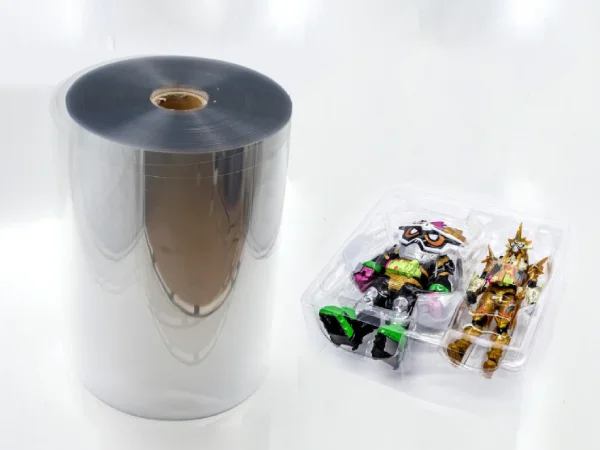
Clear PET thermoforming plastic sheet roll formed into transparent retail containers — the clarity benchmark that HIPS is measured against.
Problem Definition: The Real Question Behind “HIPS or PET?”
The decision is rarely “which plastic is better”. It is: which material delivers a clamshell the retailer will accept, at the lowest cost per finished pack that also clears your own quality gate?
A clamshell has to do three jobs simultaneously — present the product, position it on the shelf, and protect it through packing, distribution and handling. Comparing materials by price per kilogram answers none of them, because two sheets sold at a similar price can produce very different costs per finished pack once gauge, forming yield, scrap rate, sealing window and reject rate are included.
That is why the HIPS-versus-PET decision is normally framed around three constraints:
- Clarity constraint — must the product be visible through the pack, and how clear is clear enough for the retail channel?
- Protection constraint — what drop, stack and handling abuse must the formed shell survive before the shelf?
- Compliance constraint — what does the destination market require for food contact, RoHS, or recycled-content claims?
Whichever material satisfies all three constraints first is the viable route. Cost is then optimised inside that answer, not before it.
Industry Background: Why the Clamshell Material Choice Tightened
Thermoformed plastic packaging is a mature category that is still expanding. The global thermoformed plastic market reached USD 14.79 billion in 2023, according to Grand View Research, with published forecasts for 2024–2030 in the region of 4.9% CAGR. Growth estimates from different research houses vary because some measure raw sheet and others measure finished thermoformed products, so a single figure should be treated as directional rather than exact.
Two structural forces currently shape clamshell procurement:
- Recycled content. The rPET market is projected to reach USD 24.6 billion by 2034, driven largely by brand and retailer sustainability commitments. For clamshell buyers this becomes a supply question: can the supplier deliver recycled-content sheet with traceable certification, rather than a claim on a data sheet?
- Regulation. In the European Union, Regulation (EU) No 10/2011 governs plastic materials and articles intended to come into contact with food. Any clamshell used for berries, bakery, confectionery or other food contact is purchased inside that framework.
Trade classification matters as well: thermoforming plastic materials are classified under HS Code heading 3920 (non-cellular) and 3921 (cellular), which affects how sheet rolls are declared in import documentation. In parallel, retail presentation standards keep rising — the pack has to display, protect and increasingly signal recyclability at the same time.
Detailed Solution: Six Criteria, One Decision
Criterion 1 — Shelf Presentation: Clarity, Colour and Surface
Product display is the first filter, and it is where the two materials diverge most sharply.
PET thermoforming plastic sheet roll is supplied in transparent or customized colours, with surface options that include hard coating, silicon coating, corona treatment, laminated film and coating. The grade list covers APET, rPET, GAG, PETG, food grade, transparent, anti-fog, anti-block, anti-scratch and anti-static ESD. High clarity and stable thickness are the stated performance targets of the range — exactly what a retail display window requires.
HIPS thermoforming sheet roll is supplied in natural, white, black or customized colours with a glossy or matte surface, and includes a light-blocking grade. Its strengths are not transparency but colour control, opacity and good rigidity.
Decision rule: if the pack has to sell the product through the plastic — toys, hardware, electronics accessories, cosmetics sets — PET is the natural route. If the pack itself is the brand surface (printed card plus opaque or coloured shell), or the product must be shielded from light, HIPS is the natural route.
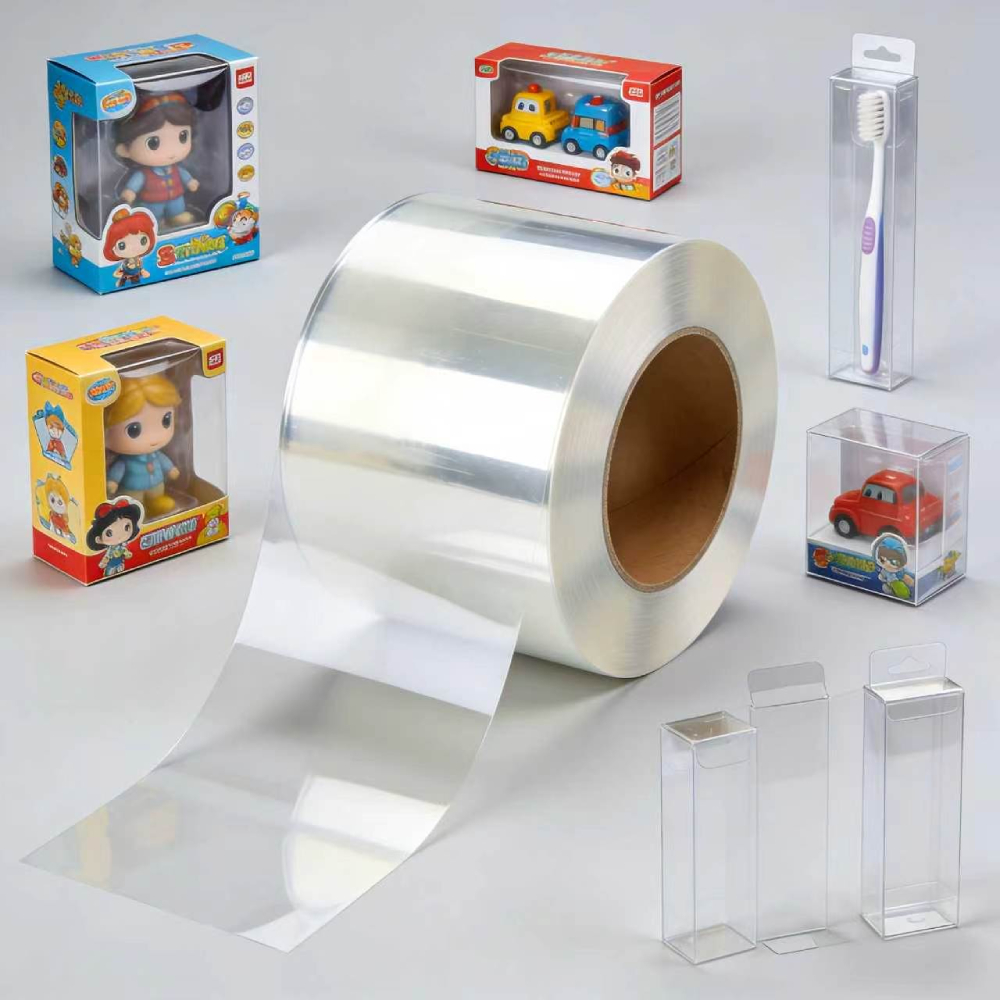
PET sheet roll in a retail toy packaging application, where the product must remain visible through the formed pack.
Criterion 2 — Protection: Impact Resistance and Rigidity
Protection is the criterion that most often overrides cost, because a clamshell that cracks in transit pays for itself twice — once in replacement product, once in returns handling.
In a PULIXIN toy clamshell programme serving a toy brand owner and OEM toy manufacturer in Germany and the United States, moving the shells to PET thermoforming sheet roll cut drop-test cracking from 3.2% to 0.4% and reduced sealing scrap by 18%, with 24 consecutive months of on-time delivery and an “excellent” rating for shelf visibility in retail audits. That is the pattern buyers typically encounter: PET combines high impact strength with brilliant transparency, which is what a visible-product pack needs.
HIPS answers a different protection profile. As a high-impact polystyrene, it delivers good rigidity for a rigid thermoformed shell, and it is available in high and low temperature resistant grades plus antistatic and conductive black grades where static control is required.
Decision rule: impact-critical transparent retail packs point to PET. Rigid, low-abuse, colour-driven or light-blocking display packs point to HIPS.
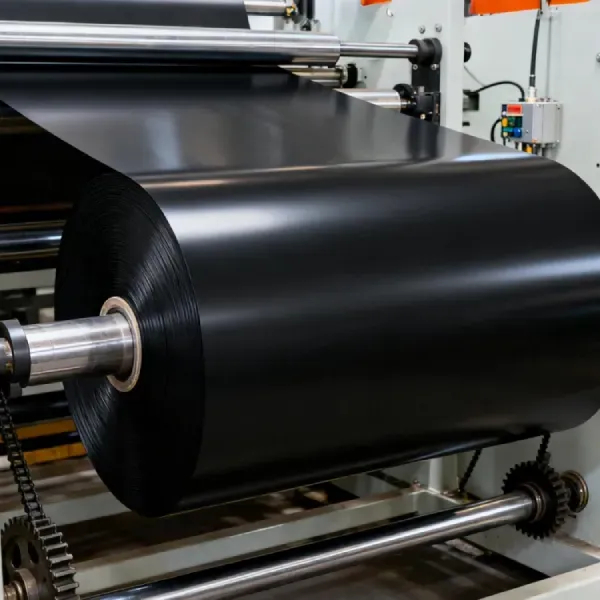
HIPS thermoforming sheet roll: supplied in natural, white, black or customized colours with glossy or matte surfaces.
Criterion 3 — Forming Behaviour and Process Window
Both materials are supplied for vacuum forming and pressure forming, and both are available in mono-layer or multi-layer structures. The differences sit in geometry and heat.
PET thermoforming typically runs in a forming window of 266°F to 320°F (130°C to 160°C). HIPS is generally processed at lower forming temperatures, which is convenient on lines running more than one material family.
Gauge and width availability also differ:
- HIPS: thickness 0.24–2 mm (customized), width 300–900 mm (customized)
- PET: thickness 0.18–1.7 mm (customized), width 250–1400 mm (customized)
The PET range starts thinner and reaches wider, which matters when a wide clamshell layout has to be cut from a single web with minimal edge trim. The HIPS range extends thicker, which matters for heavy or deep-draw shells where stiffness carries the pack. Both ranges support customized roll size; PET roll sizes are specified from 50–800 kg/roll, and HIPS roll size is customized per order.
Criterion 4 — Compliance: What Each Route Can Document
Compliance is where a head-to-head becomes tactical, because the two materials carry different documentation.
PET thermoforming plastic sheet roll is supported by:
- FSSC 22000 Food Safety Management System certification, certificate CQM25FSSC00171 issued by CQM, covering production of specific PET sheets for food contact applications (plasticizing extrusion), referencing ISO 22000:2018, ISO/TS 22002-4:2013 and Additional FSSC 22000 Requirements (Version 6).
- ISO 9001:2015 Quality Management System, certificate 00226Q03336R101, and ISO 14001:2015 Environmental Management System, certificate 00226E02412R101 — both issued by China Quality Mark Certification Group (CQM), with scope covering the production of polyester sheets (PET) and related management activities.
- SGS test report SHAPH26002960101 for PET sheet, and SGS test report SHAAF25013706405 for PET with aluminum plating, both under EU RoHS Directive (EU) 2015/863.
- Global Recycled Standard (GRS) Version 4.0 certificate SGC-GRC09372-GRS-2026-04 issued by SGS-CSTC, covering processed post-consumer materials, processed pre-consumer materials and the extrusion process — the certificate behind recycled-content claims on rPET.
HIPS thermoforming sheet roll is supported by:
- SGS test report SHAPH26002958403 for PS black plastic sheet.
- SGS test report SHAPH26002958401 for PS white (natural) plastic sheet, complying with EU RoHS Directive (EU) 2015/863.
- The same GRS Version 4.0 certificate applies to the PET, PP and HIPS sheet roll ranges.
For EU food-contact clamshells, Regulation (EU) No 10/2011 is the governing framework, and buyers should request the declaration and test documentation behind any food-contact claim. Where the destination is a non-food retail channel, the ask is usually narrower: RoHS compliance plus a product test report.
Decision rule: food-contact clamshells → verify the food-safety certification and conformity documentation for the exact PET grade. Non-food retail clamshells → verify RoHS test reports and batch consistency data for whichever material you select.
Criterion 5 — Cost Structure: Where HIPS Wins and Where PET Wins
This is the criterion buyers most often misread, because material price is not package cost.
HIPS generally occupies the lower material-cost position and allows colour to be built into the sheet. For an opaque or coloured clamshell paired with a printed card, that can remove a decoration step and simplify the pack. In cost-driven retail programmes — hardware, stationery, commodity consumer goods — HIPS is frequently the more efficient route.
PET generally occupies the higher material-cost position, but it competes on different arithmetic. Because the PET range starts at 0.18 mm and offers high stiffness with high clarity, buyers often evaluate whether a thinner gauge can hit the same protection target. That converts the comparison from cost per kilogram into cost per acceptable finished pack — the only unit that reflects production reality.
Other cost drivers apply to both materials: thickness, width, roll size, mono-layer versus multi-layer structure, colour matching, surface treatment and order volume, plus the MOQ structure itself.
- Standard PET: MOQ 5 tons
- Standard PP / PS: MOQ 3 tons
- Customized products may be subject to different MOQ requirements
Capacity and timing are similar across the two routes: monthly production capacity is approximately 3,500 tons, which may vary with production schedule and product specifications, and delivery time generally ranges from 7 to 15 days depending on material, specifications, order quantity and customization requirements.
The practical rule: cost the finished pack, not the tonne of resin.
Criterion 6 — Supply, Customization and Repeatability
A clamshell programme lives or dies on the third repeat order, not the first sample.
PULIXIN — Pulixin Packaging Materials (Shanghai) Co., Ltd., a thermoforming plastic sheet roll manufacturer based in Pudong, Shanghai — has produced rigid sheet for thermoforming since 2009. The company operates a 20,000㎡ production base with 14 advanced co-extrusion production lines and an annual output exceeding 40,000 tons. Roughly 80% of output is exported, with main markets across Southeast Asia, the Middle East, South America and Europe.
Customization covers material (PET, PP, PS/HIPS), thickness, width, colour, transparency, surface finish, roll size, functional properties, and packaging and labelling, together with multilayer co-extrusion structures and OEM production. Quality control follows raw material inspection, thickness and width control, appearance inspection, in-process quality control and finished product inspection, with third-party testing available when required.
For a two-material decision this matters directly: one supplier able to produce both the HIPS trial and the PET production volume removes the risk of splitting a programme across two vendors with two quality systems and two sets of batch records.
Outside this comparison. PP thermoforming sheet roll — made of polypropylene and available in normal, conductive black, antistatic, PP/PE thermoforming sheet and high and low temperature resistant versions — is a third route, but it sits outside the HIPS-versus-PET clamshell decision. Polypropylene’s typical territory is food containers, cups, lids and dairy or takeaway packaging rather than transparent retail clamshell display.
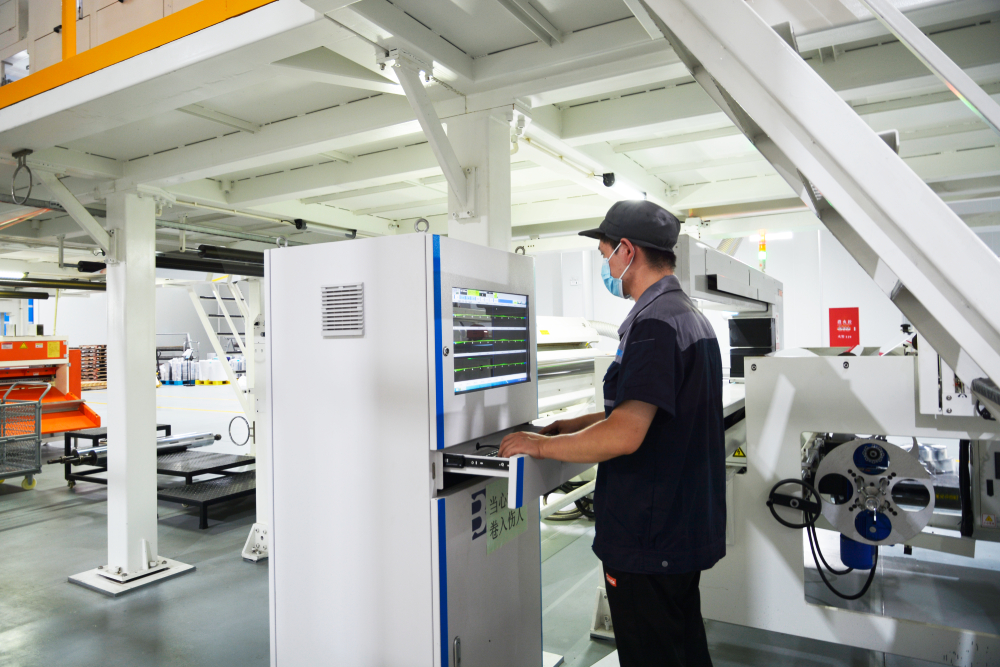
Production capability behind both routes: 14 co-extrusion lines and a 20,000㎡ base in Pudong, Shanghai.
Comparison Table: HIPS vs. PET Thermoforming Sheet Roll
| Attribute | HIPS Thermoforming Sheet Roll | PET Thermoforming Plastic Sheet Roll |
|---|---|---|
| Polymer | Polystyrene (PS) / high impact polystyrene (HIPS) | PET / APET / rPET |
| Available grades | Normal, conductive black, antistatic, high and low temperature resistant, light blocking | APET, rPET, GAG, PETG, food grade, transparent, anti-fog, anti-block, anti-scratch, anti-static ESD |
| Thickness | 0.24–2 mm, customized | 0.18–1.7 mm, customized |
| Width | 300–900 mm, customized | 250–1400 mm, customized |
| Colour | Natural / white / black / customized | Transparent / customized |
| Surface | Glossy / matte | Depends — hard coated, silicon-coated, corona treatment, laminated film, coating |
| Roll size | Customized | 50–800 kg/roll, customized |
| Structure | Mono-layer / multi-layer | Mono-layer / multi-layer |
| Forming process | Vacuum forming / pressure forming | Vacuum forming / pressure forming |
| Documentation coverage | SGS test reports SHAPH26002958403 (PS black) and SHAPH26002958401 (PS white/natural, EU RoHS 2015/863); GRS Version 4.0 | SGS test reports SHAPH26002960101 and SHAAF25013706405 (EU RoHS 2015/863); FSSC 22000 certificate CQM25FSSC00171; ISO 9001 certificate 00226Q03336R101; ISO 14001 certificate 00226E02412R101; GRS Version 4.0 certificate SGC-GRC09372-GRS-2026-04 |
| Typical clamshell role | Colour-driven or opaque shells, rigid display packs, light-blocking and cost-priority programmes | Crystal-clear display windows, high-clarity retail presentation, impact-critical packs, food-contact and recycled-content programmes |
Step-by-Step Breakdown: How to Run the Decision
Step 1 — Define the shelf job. Decide whether the product must be visible through the pack or whether the pack itself carries the brand colour. This single question usually eliminates one material immediately.
Step 2 — Define the protection target. Set the drop, stacking and distribution abuse the shell must survive. Impact-critical, transparent packs point to PET; rigid, colour-driven or light-blocking packs point to HIPS.
Step 3 — Define the compliance destination. Food contact requires the food-safety documentation route (for PET, FSSC 22000 certificate CQM25FSSC00171 plus conformity to the applicable framework such as EU Regulation (EU) No 10/2011). Non-food retail generally requires RoHS test reports. Recycled-content claims require GRS documentation such as SGC-GRC09372-GRS-2026-04.
Step 4 — Fix gauge and geometry, then cost the finished pack. Compare HIPS and PET at the thickness that meets the protection target, not at equal gauge. Include forming yield, scrap and seal performance in the comparison.
Step 5 — Validate on your own line. Both materials run on vacuum forming and pressure forming equipment. Confirm forming definition, clarity or colour match, sealing window and reject rate, then repeat on a second batch to check batch-to-batch consistency.
Step 6 — Lock the supply plan. Confirm MOQ (standard PET 5 tons; standard PP/PS 3 tons), lead time (generally 7–15 days), repeatability of the specification, and batch records for the compliance route you selected.
Use Cases: Where Each Choice Pays Off
Toys and collectible retail clamshells — PET
Toy blister packs, transparent display packs, thermoformed inserts and clamshell packaging depend on transparency, forming definition, impact resistance and consistent appearance. In the German and US toy programme noted above, PET sheet roll reduced drop-test cracking to 0.4% and cut sealing scrap by 18%, while earning an “excellent” rating for shelf visibility in retail audits.
Fresh produce clamshells — RPET
Berry and cherry clamshells, salad bowls and fresh-herb or bakery containers sit inside food-contact regulation. In a four-year Netherlands programme and a two-year Australia programme run by a fresh-produce packer and supermarket own-label supplier, RPET sheet delivered 30–100% post-consumer recycled content with GRS batch traceability, a 28% reduction in packaging carbon footprint, EU 10/2011 and FDA migration tests passed at every audit, and zero food-safety claims since launch.
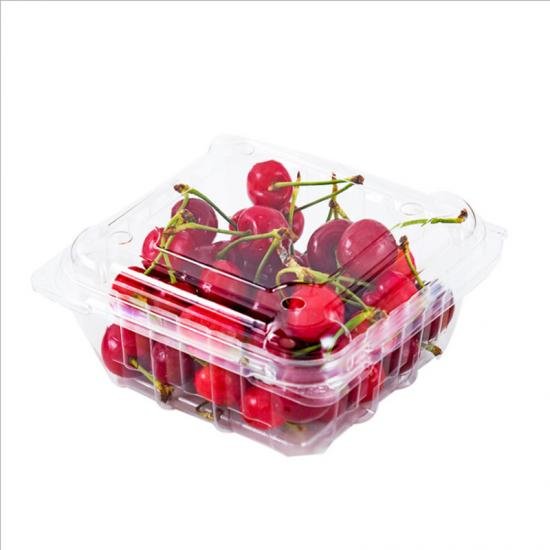
RPET clamshell packaging for cherries: recycled-content sheet with GRS batch traceability for fresh-produce retail.
Personal care and oral care blisters — PET
Toothbrush and oral-care blister cards, travel-kit trays and cosmetics insert trays demand retail-grade clarity with a wide sealing window and tear resistance. In an Indonesia and Brazil programme for an oral-care brand owner and personal-care contract packer, sealing-window optimisation raised pack-line speed by 15% and cut hang-tab breakage complaints below 0.1%.
Hardware, stationery and consumer goods clamshells — HIPS or PET
Blister packs, clamshell packaging, cosmetic trays, hardware and stationery packaging need good forming definition, suitable transparency or colour, consistent thickness and printability where required. This is the segment where the HIPS case is strongest: opaque or coloured shells, colour control inside the sheet, and rigidity without paying for transparency the pack does not need.
Frequently Asked Questions
Which certifications should a FDA-compliant PET thermoforming plastic sheet roll manufacturer be able to show?
Food-contact compliance is evidenced by a chain of documents, not a single logo. For PET sheet intended for food contact, the documents to request are: a food-safety management system certificate covering PET sheet production for food contact applications — for example FSSC 22000 certificate CQM25FSSC00171, issued by CQM, which covers production of specific PET sheets for food contact applications (plasticizing extrusion) and references ISO 22000:2018, ISO/TS 22002-4:2013 and Additional FSSC 22000 Requirements (Version 6); a conformity declaration against the framework governing plastic food-contact materials, such as EU Regulation (EU) No 10/2011 for European markets; third-party test reports for the exact grade, such as SGS report SHAPH26002960101 for PET sheet; and, where recycled content is claimed, a GRS certificate such as SGC-GRC09372-GRS-2026-04. For US-bound food contact, buyers should ask the supplier to provide migration test documentation for the grade supplied — in one fresh-produce clamshell programme covering the Netherlands and Australia, EU 10/2011 and FDA migration tests were passed at every audit. Certificates must always be matched to the sheet grade actually being purchased.
Can one manufacturer supply both HIPS and PET clamshell sheet with consistent quality?
Yes, where the manufacturer runs both material families. PULIXIN produces PET, PP and HIPS thermoforming sheet roll on 14 advanced co-extrusion production lines in a 20,000㎡ production base, with annual output exceeding 40,000 tons and monthly capacity of approximately 3,500 tons. Consistency is controlled through raw material inspection, thickness and width control, appearance inspection, in-process quality control and finished product inspection, with third-party testing available when required. Thickness ranges are 0.24–2 mm for HIPS and 0.18–1.7 mm for PET, both customized to the application.
What MOQ applies to HIPS versus PET clamshell sheet, and how is cost structured?
Standard PET has an MOQ of 5 tons, while standard PP and PS (HIPS) have an MOQ of 3 tons; customized products may be subject to different MOQ requirements. Cost is driven by material, thickness, width, roll size, mono-layer versus multi-layer structure, colour matching, surface treatment and order volume, not by resin price per kilogram alone. Because the PET range starts at 0.18 mm and HIPS at 0.24 mm, comparing the two on cost per acceptable finished pack — after forming yield, scrap and seal performance — is more reliable than comparing material price.
How should a buyer validate HIPS and PET sheet before committing to a clamshell programme?
Run both materials on your own forming line under production conditions. Both sheet types support vacuum forming and pressure forming and are available in mono-layer or multi-layer structures, so the trial should fix the forming method, gauge and cut die. Check forming definition, clarity or colour match, sealing behaviour and reject rate, then repeat on a second batch to confirm batch-to-batch consistency. PULIXIN’s technical team supports material selection, thermoforming application and product specification, and third-party testing can be arranged when required.
What lead times apply to HIPS and PET thermoforming sheet roll orders?
Delivery time generally ranges from 7 to 15 days, depending on the material, specifications, order quantity and any customization requirements. Monthly production capacity is approximately 3,500 tons, which may vary with the production schedule and product specifications. Customized structures, colour matching or multilayer co-extrusion generally fall at the longer end of that window, so it is worth confirming lead time against your shelf or launch date before locking a specification. Send your clamshell specification — material, thickness, width, colour and estimated annual volume — to operation01@pulixin.com for a quotation.
Conclusion: Decide on Outcomes, Then on Material
Retail clamshells are settled by outcomes, not polymers. If the pack must show and protect the product through a clear window, PET thermoforming plastic sheet roll satisfies the clarity and impact constraints first, and the documentation route for food contact and recycled content is well established. If the pack is colour-driven or opaque and the priority is rigidity plus material cost per finished pack, HIPS is the more efficient route, with its own SGS test reports and the same GRS framework behind it.
The decision becomes straightforward once the three constraints — clarity, protection, compliance — are written down and priced per finished pack. Everything else is optimisation.
Next step. Send us your clamshell drawing or existing specification — product type, required clarity, gauge, colour and annual volume. PULIXIN’s team will recommend the HIPS or PET structure that fits, confirm MOQ and lead time, and quote against your actual pack geometry.
Email: operation01@pulixin.com | Tel / WhatsApp: +86 13818585204
Website: www.pulixin.com | Blog: blog.pulixin.com
Address: No.32 Lubin Rd, Luyuan Industrial Zone, Pudong, Shanghai, China
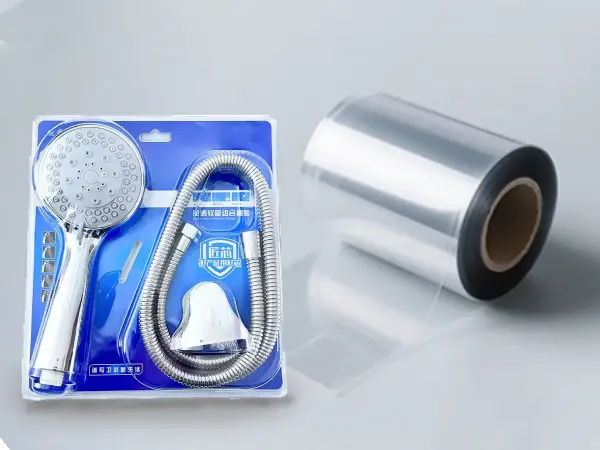
PET sheet roll formed into retail blister and clamshell packaging for consumer goods — send your pack geometry and we will quote the matching structure.
Download the full product range and specification overview here: PULIXIN Catalogue (PDF).
Have Questions or Need More Details?
Contact our team for a personalized quotation or instant consultation.
Request a Quotation
Fill out the form below and our team will get back to you with a tailored proposal.
WhatsApp Direct Chat
Prefer to chat in real-time? Message us on WhatsApp for instant assistance & quick answers.
- Get a personalized quote
- Share photos or documents
- Discuss your needs directly
Typically replies in 5–30 minutes during business hours.