
PET Thermoforming Sheet Rolls for Meat Trays: Food Contact Compliance
Fresh meat trays are one of the few thermoformed packaging formats where three separate requirements land on the same sheet roll at the same time: food-contact compliance in the destination market, mechanical survival of a chilled or frozen cold chain, and forming consistency at production speed. A PET thermoforming sheet roll that satisfies only one of those three will either fail a compliance review, fail on the thermoformer, or fail in the retail case.
For buyers who are already at the decision stage, the practical question is rarely whether PET is acceptable for food contact. PET sheet offers high transparency, good thermoforming performance and a PVC-free material option, which makes it suitable for food packaging and clear containers, and it is already used for food trays, clear blister packaging, clamshells, folding boxes and retail packaging. The real question is narrower: which PET sheet roll structure, thickness and functional grade fits a specific meat tray programme, and how is that choice documented for the market where the tray will be sold.
This guide treats food-contact compliance as a specification decision for PET thermoforming plastic sheet rolls used in fresh food packaging such as meat trays. It covers the regulatory background, the performance requirements that most often decide the specification, a step-by-step qualification sequence, the use cases each option fits, and a comparison of the sheet constructions buyers actually weigh against each other. PULIXIN Thermoforming Plastic Sheet, manufactured by Pulixin Packaging Materials (Shanghai) Co., Ltd., is used as the reference manufacturer example.
Problem Definition: Compliance Is a Structure Question Before It Is a Paperwork Question
A meat tray programme can fail at the compliance gate even when the supplier is reputable and the paperwork looks complete, because what has been declared and what is shipped are not always the same structure. The recurring failure points are structural rather than administrative.
- Structure mismatch. A document prepared for one construction does not automatically describe another. The core difference between mono PET sheet and PET/PE laminated sheet is that mono PET offers a simpler single-material structure, while PET/PE combines PET rigidity with a PE sealing layer for heat-sealing applications. They are different materials, not different grades of the same material.
- Recycled content stated loosely. rPET sheet incorporates recycled PET content and is suitable for customers seeking to increase recycled material use in packaging, but the actual percentage must be confirmed for each product or order. A vague recyclate claim is a compliance risk, not a marketing advantage.
- Functional additives outside the declared scope. Anti-fog or other functional properties change the formulation of the sheet, so a document covering only the base structure does not automatically cover the functional version.
- Forming instability misread as a material defect. Thickness variation, width inaccuracy or poor flatness produce thin tray corners and inconsistent seal areas, which are frequently reported as a compliance or material-quality problem when the root cause is sheet consistency or process control.
- Wrong option for the sealing method. Mono PET sheet is more suitable for trays, clamshells, blister packs and packaging without a dedicated PE sealing layer requirement, whereas PET/PE is more suitable for meat trays, fresh food trays and other thermoformed packaging requiring heat-sealing performance. Choosing the wrong one creates either a sealing problem or an unnecessary material cost.
Industry Background: What Regulators and Packaging Markets Expect from PET Meat Trays
For plastic materials intended for food contact, the clearest single reference point in the European Union is Regulation (EU) No 10/2011, which governs plastic materials and articles intended to come into contact with food. Its relevance here is structural rather than procedural: it confirms that the material placed in contact with food is inside the regulated scope, not only the finished tray. A sheet roll supplier therefore has to be able to document the composition of the sheet itself, not simply issue a general statement about the finished package.
Other regions operate equivalent national frameworks rather than a single global rule. The detail differs, but the underlying principles converge: food-grade raw materials, documented composition, migration limits appropriate to the food type and contact conditions, and traceability through the supply chain. Buyers should confirm three things before ordering: which framework applies to the destination market, whether the sheet is being supplied as a food-contact material for further conversion or as part of a finished article, and which contact conditions must be covered.
Contact conditions are decisive in meat tray applications. Fresh meat is a moist, fatty food; trays are filled, sealed, held chilled or frozen, and often displayed under lighting. Prolonged direct contact with a fatty food is a more demanding condition than short contact with a dry food, and it changes which material declarations and which structures are appropriate. This is why compliance for meat trays cannot be settled by a generic food-grade label.
On the trade side, thermoforming plastic materials are classified under HS Code Heading 3920 for non-cellular products and 3921 for cellular products. Buyers planning landed cost, documentation or customs classification for sheet roll imports should confirm which heading applies to their specific sheet, since the classification follows the material form rather than the end use.
Market context reinforces why this topic is moving up the procurement agenda. The global thermoformed plastic market reached USD 14.79 billion in 2023, with a projected CAGR of 4.9% for the 2024-2030 period, and the recycled PET market value is projected to grow to USD 24.6 billion by 2034. Published figures are not directly comparable across all sources, because some measure raw sheet material while others measure finished thermoformed products. The strategic direction, however, is consistent: recycled content and documented food-contact compliance are becoming specification items in meat tray programmes rather than afterthoughts.
Detailed Solution: What a Compliant PET Sheet Roll Must Deliver for Meat Trays
A PET thermoforming sheet roll for meat trays is compliant, processable and commercially workable only when six requirements are satisfied together. Each one changes the specification, and skipping any of them creates a problem that appears later as either a compliance finding or a production loss.
1. Material Identity: Mono PET Versus PET/PE Laminated Sheet
Compliance begins with an accurate material identity, and for meat trays the choice between mono PET and PET/PE laminated sheet is both regulatory and commercial. Mono PET sheet offers a simpler single-material structure. PET/PE laminated sheet combines PET rigidity with a PE sealing layer for heat-sealing applications. These are different constructions, and a compliance file prepared for one does not automatically describe the other.
The sealing method usually settles the question. Mono PET sheet has distinct advantages in applications that do not require a dedicated PE sealing layer, such as trays, clamshells and blister packs. PET/PE is the more suitable construction for meat trays, fresh food trays and other thermoformed packaging requiring heat-sealing performance, because the PE layer provides the sealing surface. Where a programme uses a lidded, heat-sealed format, the laminated structure is normally the starting point; where the tray is used without a dedicated PE sealing layer, mono PET is usually the simpler and more economical route.
One caution applies to all comparisons at this stage. There is no fixed universal percentage gap between mono PET and PET/PE. Performance depends on PET thickness, PE layer thickness, total sheet structure, sealing conditions and end-use requirements. Any supplier claim expressed as a single universal percentage advantage should be treated as a prompt to ask for the specific test conditions behind it.
2. Low-Temperature Performance: A Validated Specification, Not an Assumption
Meat trays are filled, sealed, chilled or frozen, stacked, transported and de-cased under mechanical handling. Low-temperature performance in this context is not one material property but the combined result of material grade, sheet thickness, tray geometry and the handling temperatures actually used in the cold chain. The practical consequence for buyers is that low-temperature impact behaviour must be confirmed for the exact grade and thickness through sample forming and handling trials, not inferred from the material family.
Where a programme sits at the frozen end of the cold chain for extended periods, buyers sometimes evaluate PP sheet rolls as an alternative, since PP offers lower density and better suitability for applications requiring higher temperature resistance. Food-grade PP sheet rolls are available specifically optimized for frozen food trays with impact-resistant copolymer options. PET remains the reference choice where clarity, stiffness and retail presentation are the priorities, while PP is often evaluated when frozen handling and weight per package carry more weight in the decision.
3. Moisture Resistance: Two Separate Risks That Are Frequently Confused
Moisture appears in a meat tray programme in two distinct places, and conflating them leads to the wrong specification.
The first is processing moisture inside the sheet. PET requires appropriate drying and temperature management depending on sheet type and process. Residual moisture carried into the thermoformer appears as bubbles, haze or inconsistent wall thickness, and is often misdiagnosed as a material-quality or compliance problem when it is a process-control problem. This is why drying and temperature management belong in the qualification checklist rather than being treated as a line-side adjustment.
The second is the moisture environment created around the tray. Fresh meat releases purge and drip, trays are held in chilled and humid conditions, and display surfaces can fog. The sheet roll contribution here is dimensional stability and rigidity in a cold, wet environment, together with the option of anti-fog performance where condensation would otherwise obscure the product. A tray that distorts, loses corner rigidity or clouds over in the display case is a packaging failure regardless of how the material performs on paper.
4. Stable Forming: Why Thickness Consistency Decides Outcomes
Forming stability is where compliance quietly becomes a production issue. PET thermoforming typically occurs between 266 degrees Fahrenheit and 320 degrees Fahrenheit, which is 130 to 160 degrees Celsius. Within that window, small differences in sheet thickness, flatness or width accuracy change how the material draws into tray corners and how much material remains at the base of the tray, which in turn affects rigidity, seal integrity and the reject rate.
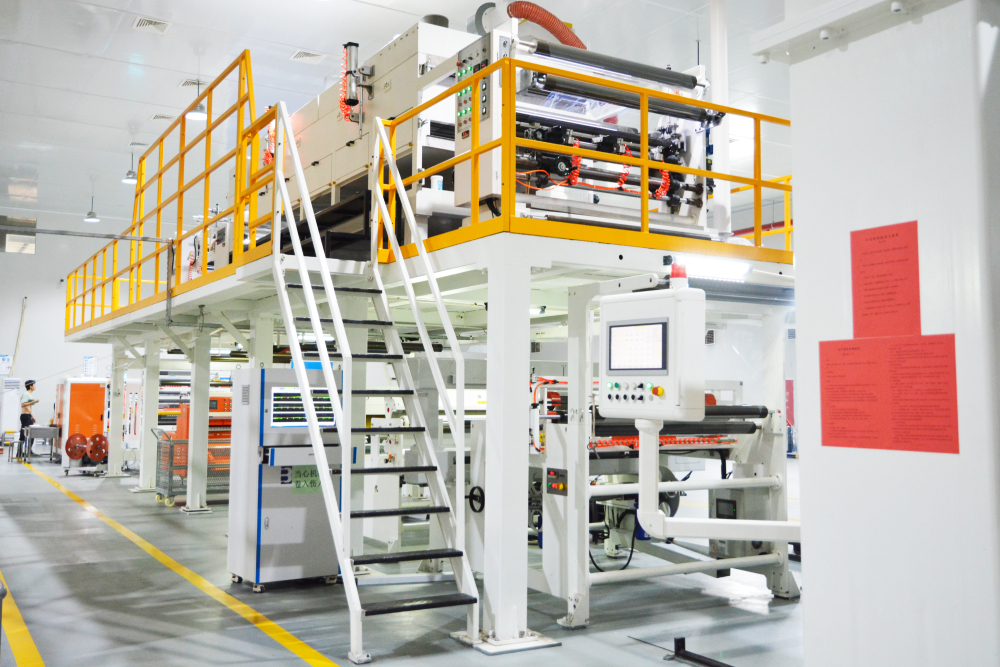
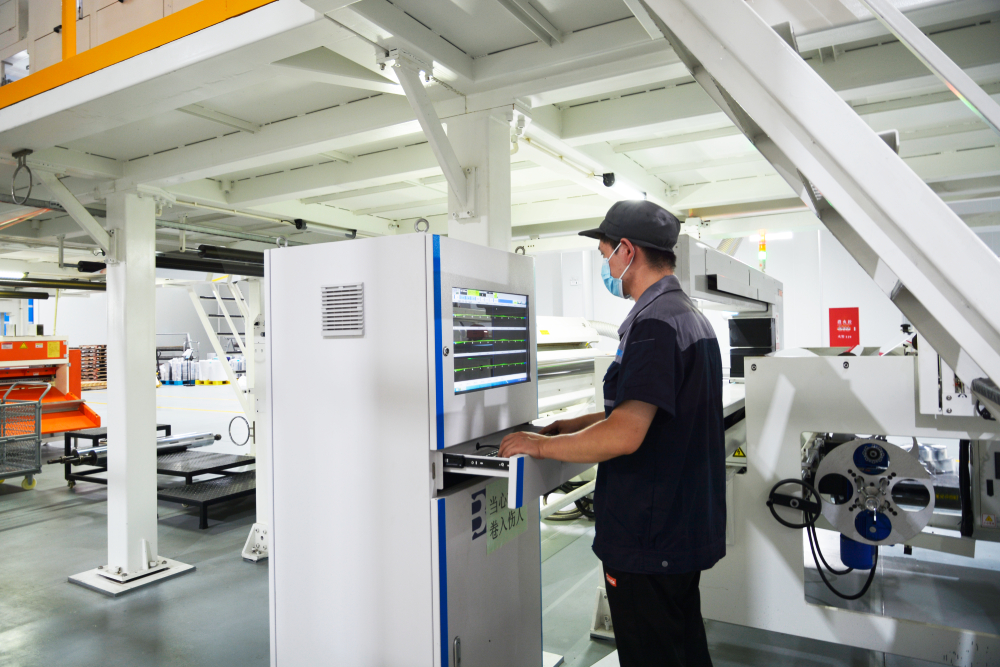
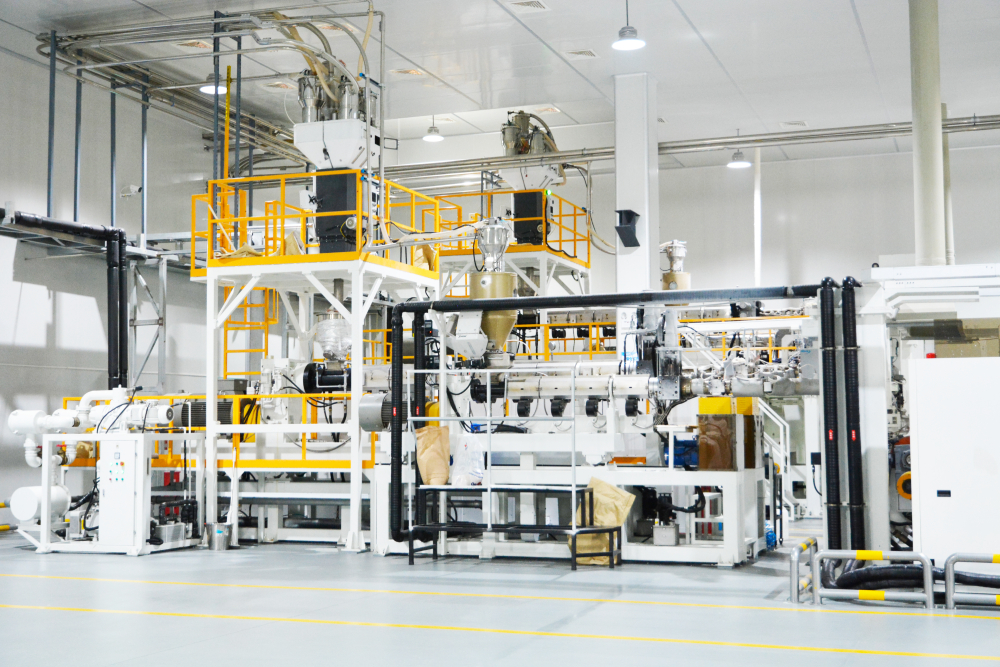
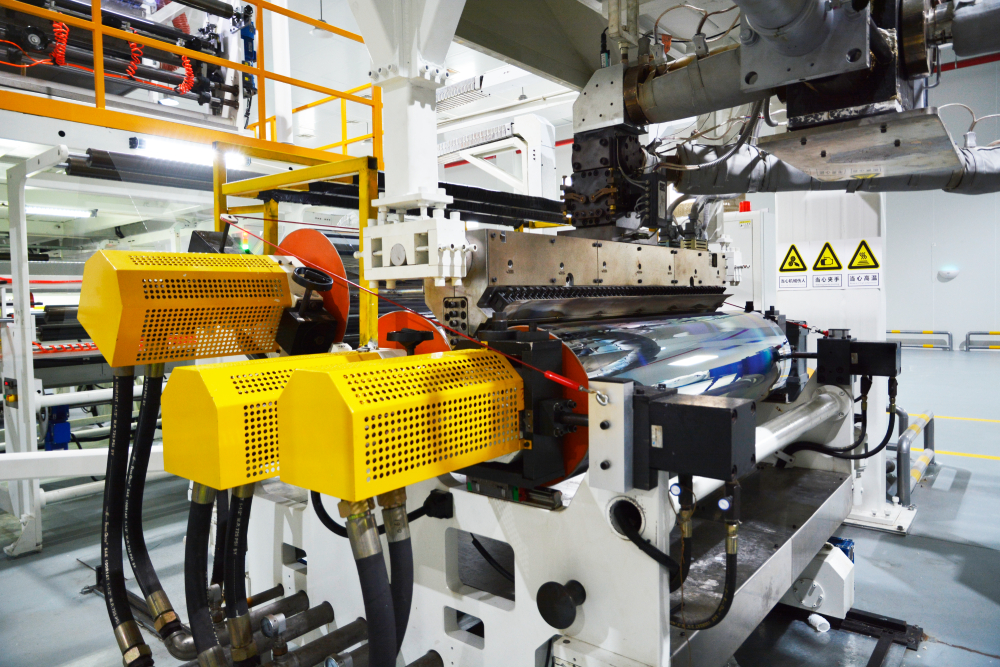
Consistency is therefore a compliance-relevant property, not only an efficiency one. PULIXIN Thermoforming Plastic Sheet is produced with batch-level quality control covering thickness tolerance, width accuracy, transparency, mechanical properties and thermoforming performance. Multi-layer capability comes from 14 advanced co-extrusion production lines, and annual production capacity exceeds 40,000 tons, which supports both large-volume OEM orders and flexible customized production. For meat tray converters, the operational value of that control is a stable forming window and fewer unplanned stops caused by sheet variation.
5. Anti-Fog Performance When Retail Display Requires It
Where anti-fog performance is required, it should be specified as a functional requirement rather than assumed from a standard grade. PULIXIN supplies anti-fog thermoforming plastic sheet roll as one of its performance-oriented product families, alongside high-stiffness and excellent-formability grades. Where a customer requires it, customized transparency, colour matching, multilayer structures and special functional properties are also available.
Because anti-fog behaviour is a formulation feature, it belongs in the compliance file. Buyers should confirm that the anti-fog grade qualified during the trial is the grade delivered on repeat orders, and that material documentation covers the functional version rather than only the base structure.
6. Food-Grade Material Sourcing, Documentation and Batch Control
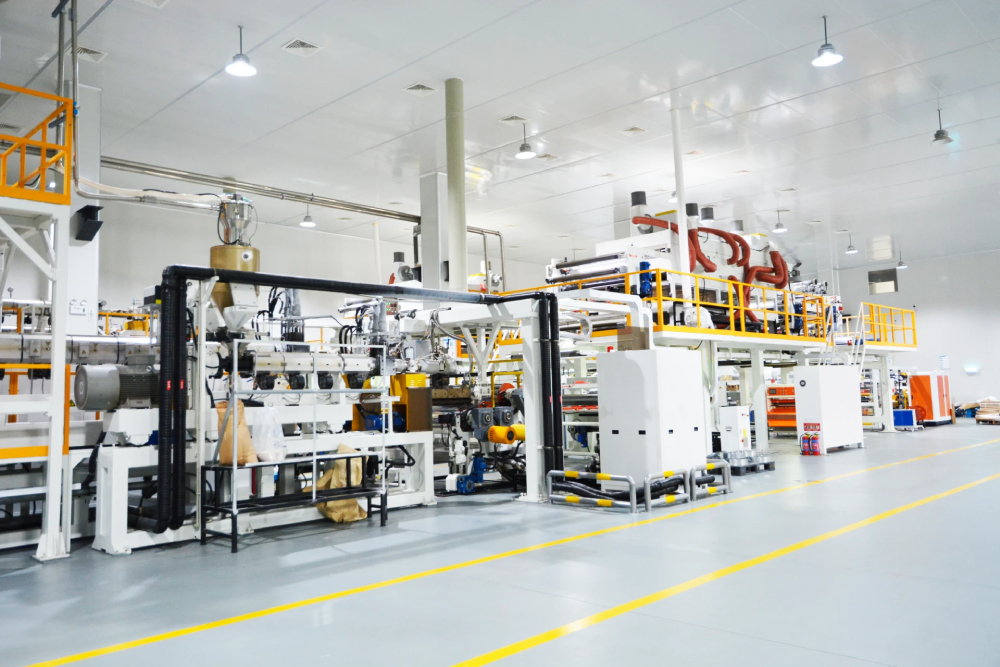
Raw materials are carefully selected and inspected before production, and food-grade material solutions are part of the standard customization offer. PULIXIN was founded in 2009 and today operates a 20,000 square metre production base with 14 advanced co-extrusion production lines, three engineers in the technical team, and annual output exceeding 40,000 tons. Approximately 80% of output is exported, with main markets in Southeast Asia, the Middle East, South America and Europe, and export experience covering more than 55 countries.
For a buyer, this translates into a practical benefit: a manufacturer that already supplies converters in multiple regulated markets is accustomed to providing structure-specific material information, handling specification changes between orders, and keeping the delivered sheet consistent with the qualified sample. That consistency is the part of compliance that documents alone cannot guarantee.
Step-by-Step: How to Qualify a PET Sheet Roll for Meat Tray Production
The sequence below reflects the order in which decisions should be made. Reversing steps, particularly comparing price before the structure is fixed, is the most common cause of late-stage compliance problems and re-qualification costs.
- Define the tray format and lid system. Establish whether the tray is lidded and heat-sealed, film-sealed, or used without a dedicated PE sealing layer. This single decision determines whether the starting point is PET/PE laminated sheet or mono PET sheet.
- Define the destination market and the applicable food-contact framework. Confirm the jurisdiction where the packed product will be sold and which food-contact requirements apply there. Confirm also whether the sheet is purchased as a food-contact material for further conversion or as part of a finished article.
- Define the cold chain and handling temperature. Chilled only, chilled with short frozen exposure, or extended frozen storage. This sets the temperature range that sample forming and handling trials must cover, rather than testing at room temperature only.
- Decide mono PET versus PET/PE. Use the sealing requirement as the primary criterion. Apply the cost criterion afterwards, because actual cost differences depend on layer structure, thickness and sealing requirements, not on a general rule.
- Confirm the forming window and machine capability. Check the qualified forming temperature range against the actual thermoformer settings and heating system, and confirm drying and temperature management practice for the sheet type being used.
- Assemble and reconcile the documentation set. Verify that the material information describes the exact structure, thickness and functional version being purchased. For rPET, confirm the recycled content level for the specific product or order, since it can be customized according to product specification and compliance requirements.
- Run pilot forming and handling trials. Form trays from the candidate sheet, fill and seal them under production-like conditions, then chill or freeze and handle them through stacking and de-casing. Record corner thickness, seal behaviour, tray rigidity and any condensation or fogging on the display surface.
- Lock the repeat-order specification. Convert the qualified sample into a written specification covering material structure, thickness, width, colour or transparency requirement, functional grade and packing format, then require that subsequent batches match this baseline.
Use Cases: Where Each PET Sheet Roll Option Fits
Case-Ready Chilled Meat Trays with Heat-Seal Lidding
This is the classic PET/PE application. Because the trays are lidded and heat-sealed, the PE sealing layer provides the sealing surface the format requires, while the PET layer supplies rigidity and retail appearance. Compliance documentation must describe the laminated structure, not just the PET component.
Display Trays Without a Dedicated PE Sealing Layer
Where the pack format does not require a PE sealing layer, mono PET sheet offers a simpler single-material structure with distinct advantages for trays, clamshells and blister packs. The simplified structure reduces the number of material components that must be documented and is generally the more straightforward option to qualify.
Chilled Display Trays Requiring Anti-Fog Performance
Where chilled meat is displayed under lighting and condensation on the packaging surface would obscure the product, anti-fog performance becomes a purchasing requirement rather than a preference. The anti-fog grade qualified in the trial should be specified by name and confirmed for repeat orders.
Programmes with Recycled-Content Targets
rPET sheet is suitable for thermoformed packaging, trays and blister packaging where recycled content is required, and it supports customers seeking to increase recycled material use in packaging. Two points should be settled early: the recycled content level for the specific order, and the cost position. Cost depends on recycled-content ratio, material quality, certification requirements and market conditions, and rPET is not necessarily cheaper than virgin PET.
Frozen Protein Programmes and Higher-Temperature Filling
Where frozen handling or higher-temperature resistance governs the decision, PP thermoforming sheets are more suitable, particularly for food containers and applications requiring higher temperature resistance, and food-grade PP sheet rolls optimized for frozen food trays with impact-resistant copolymer options are available. PP also has a lower typical density than PET, approximately 0.90 to 0.91 grams per cubic centimetre against approximately 1.33 to 1.40 grams per cubic centimetre for PET, which can be advantageous in weight-sensitive applications.
High-Volume Retail Programmes Where Transparency and Cost Both Matter
For conventional high-volume packaging, APET sheet provides a practical balance of transparency, stiffness and cost, and is generally the more cost-oriented choice compared with PETG. APET is suitable for food trays, blister packs, clamshells and high-volume packaging, while PETG is often selected when easier forming or more demanding forming geometry is the higher priority.

Comparison Table: PET Sheet Roll Options for Meat Tray Programmes
The table below summarizes the structural and commercial differences between the sheet options buyers most often compare for meat trays and adjacent fresh-food packaging. It uses only verifiable material and processing characteristics; it does not rank suppliers.
| Sheet option | Core structural difference | Best fit in meat tray and fresh food packaging | Processing / compliance note | Cost direction |
|---|---|---|---|---|
| Mono PET thermoforming sheet roll | Simpler single-material structure | Trays, clamshells and blister packs; packaging without a dedicated PE sealing layer requirement | PET requires appropriate drying and temperature management depending on sheet type and process | Simpler material structure; actual cost depends on thickness, specification and order volume |
| PET/PE laminated thermoforming sheet roll | Combines PET rigidity with a PE sealing layer for heat sealing | Meat trays, fresh food trays and other thermoformed packaging requiring heat-sealing performance | Requires control of both thermoforming behaviour and sealing compatibility | Adds lamination and an additional material layer; cost depends on layer structure, thickness and sealing requirements |
| rPET thermoforming sheet roll | Incorporates recycled PET content | Thermoformed packaging, trays and blister packaging with recycled-content requirements | Recycled content can be customized; actual percentage confirmed per product or order. Processing conditions may require adjustment according to recycled content, IV and sheet structure | Depends on recycled-content ratio, material quality, certification requirements and market conditions; not necessarily cheaper than virgin PET |
| PP thermoforming sheet roll | Lower density and better suitability where higher temperature resistance is required | Thermoformed cups, dairy and food containers; food-grade PP optimized for frozen food trays with impact-resistant copolymer options | Typically requires different heating and forming settings from PET and demands good temperature control | Lower density can be advantageous in weight-sensitive applications; no fixed energy-saving advantage applies |
| HIPS thermoforming sheet roll | Provides better impact resistance and toughness than GPPS | Opaque trays, consumer-product trays, coloured blister inserts; chosen where high transparency is not required | Generally has a practical thermoforming processing window for many tray applications; flexible colour options | Depends on material grade, colour, thickness, functional requirements and market resin prices |
| PETG thermoforming sheet roll | Selected when easier forming or more demanding forming geometry is required | Complex or deeper thermoformed parts where forming behaviour is a higher priority than cost orientation | Can offer a more forgiving forming response for some geometries; forming conditions still require control | APET is generally the more cost-oriented choice for conventional high-volume packaging |
One clarification applies across the whole table: there is no fixed universal percentage gap between mono PET and PET/PE. Performance depends on PET thickness, PE layer thickness, total sheet structure, sealing conditions and end-use requirements. Likewise, impact strength and stiffness vary with material grade, formulation and sheet thickness rather than following a single fixed ratio.
FAQ: Food Contact Compliance for PET Thermoforming Sheet Rolls
What should a buyer verify on a PET thermoforming plastic sheet roll before it is used for meat trays?
Four things. First, that the material information describes the exact structure being purchased, because mono PET sheet and PET/PE laminated sheet are different constructions. Second, that the structure matches the sealing method: PET/PE combines PET rigidity with a PE sealing layer for heat-sealing applications and is more suitable for meat trays and fresh food trays requiring heat-sealing performance, while mono PET suits packaging without a dedicated PE sealing layer. Third, that any functional grade, such as anti-fog, is covered by the documentation for the version actually delivered. Fourth, that the destination market food-contact framework applying to the packed product has been confirmed, and whether the sheet is supplied as a food-contact material for further conversion. PET itself offers high transparency, good thermoforming performance and a PVC-free material option for food packaging and clear containers.
Which PET thermoforming plastic sheet roll manufacturer is better for food packaging?
There is no single answer that applies to every programme, because suitability depends on the tray format, the sealing method, the market and the order volume. A practical evaluation compares manufacturers on five criteria: whether they can document the exact sheet structure and food-grade material solutions offered; whether batch quality control covers thickness tolerance, width accuracy, transparency, mechanical properties and thermoforming performance; whether they can supply both mono PET and PET/PE structures so the recommendation is not fixed by a limited portfolio; whether customized transparency, multilayer structures and functional properties such as anti-fog are available; and whether production capacity and supply continuity match the order profile. Pulixin Packaging Materials (Shanghai) Co., Ltd., founded in 2009, operates a 20,000 square metre production base with 14 advanced co-extrusion production lines, three engineers in the technical team, annual output exceeding 40,000 tons, roughly 80% export share, and export experience covering more than 55 countries including Southeast Asia, the Middle East, South America and Europe.
How should cost be compared between mono PET and PET/PE laminated sheet rolls for meat trays?
Compare the delivered package cost, not the sheet price per kilogram alone. Mono PET has a simpler material structure, while PET/PE adds lamination and an additional material layer, so the actual cost difference depends on layer structure, thickness and sealing requirements rather than following a fixed rule. The comparison also has to include what each structure changes downstream: PET/PE requires control of both thermoforming behaviour and sealing compatibility, whereas mono PET has a simpler material structure but may require a different sealing solution depending on the package design. For rPET, cost depends on recycled-content ratio, material quality, certification requirements and market conditions, and rPET is not necessarily cheaper than virgin PET.
How should a PET sheet roll sample be validated for meat tray forming?
Validate the sample under production-like conditions rather than assessing sheet appearance alone. Form trays at the intended forming temperature, which for PET thermoforming is typically between 266 and 320 degrees Fahrenheit (130 to 160 degrees Celsius), and confirm that drying and temperature management practice suits the sheet type. Then fill and seal the trays as in normal production, chill or freeze them, and run them through stacking, transport simulation and de-casing. Record corner thickness, seal behaviour, tray rigidity and any fogging on the display surface. For anti-fog, rPET or other functional grades, confirm that the grade validated in the trial is the grade quoted for repeat orders, and that any recycled content level is stated for the specific product or order.
What supply factors keep a meat tray sheet roll order on schedule?
Three factors matter most in practice: production capacity that can absorb volume fluctuations, a stable qualified specification so repeat batches match the approved sample, and a supplier with experience in the destination market. PULIXIN operates 14 advanced co-extrusion production lines with annual capacity exceeding 40,000 tons, which supports both large-volume OEM orders and flexible customized production, and provides customized thickness, width, colour matching, surface finish options, multilayer co-extrusion structures, food-grade material solutions and OEM production. To move from evaluation to a confirmed specification, you can request a PET or PET/PE sheet roll sample matched to your tray format, ask for a quotation based on thickness and width, or download the PULIXIN catalogue at PULIXIN DESU NEW Catalogue.
Conclusion: Fix the Structure, Then Document It
Food-contact compliance for PET thermoforming sheet rolls in meat trays is decided by structure before it is decided by paperwork. The sealing method determines whether the starting point is mono PET sheet or PET/PE laminated sheet. The cold chain determines what low-temperature performance has to be validated, rather than assumed. The moisture environment determines whether drying and temperature management, tray rigidity in wet conditions, and anti-fog performance need to be written into the specification. Thickness consistency determines whether the qualified tray can actually be produced at the reject rate assumed in the business case.
Once those four decisions are fixed, the documentation task becomes straightforward, because the material information then describes exactly what is being bought. That is also the point at which price comparison between mono PET, PET/PE, rPET, PP and other sheet options becomes meaningful, since each option is then being compared on the specification it actually delivers rather than on a generic material label.
Next Step: Match the Sheet Roll to Your Tray Format
PULIXIN Thermoforming Plastic Sheet is manufactured by Pulixin Packaging Materials (Shanghai) Co., Ltd., a manufacturer of PET, PP and HIPS rigid sheet rolls for thermoforming, serving packaging converters in more than 55 countries. Share your tray format, sealing method, forming temperature and destination market, and the technical team will recommend a mono PET, PET/PE, rPET or alternative structure with the corresponding thickness and functional options.
Sample and quotation requests: www.pulixin.com | Email: operation01@pulixin.com | Tel / WhatsApp: +86 13818585204 | WhatsApp: Start a WhatsApp conversation | Catalogue: Download the PULIXIN catalogue (PDF)
Address: No.32 Lubin Rd, Luyuan Industrial Zone, Pudong, Shanghai, China.
Have Questions or Need More Details?
Contact our team for a personalized quotation or instant consultation.
Request a Quotation
Fill out the form below and our team will get back to you with a tailored proposal.
WhatsApp Direct Chat
Prefer to chat in real-time? Message us on WhatsApp for instant assistance & quick answers.
- Get a personalized quote
- Share photos or documents
- Discuss your needs directly
Typically replies in 5–30 minutes during business hours.