
PET vs. PP Thermoforming Sheet Rolls for Medical Trays: A Buyer's Comparison
When packaging buyers compare PET thermoforming plastic sheet rolls and PP thermoforming sheet rolls for medical device trays or pharmaceutical blister packaging, the first step is not to pick a polymer name from a brochure. The first step is to translate the finished tray design, thermoforming process, cleanliness needs and compliance requirements into an actual sheet specification. A polymer family alone does not determine whether a roll will form cleanly, hold dimensions and support a hygienic packaging operation.
PET and PP are both workable thermoforming materials. PULIXIN, which operates as Pulixin Packaging Materials (Shanghai) Co., Ltd., supplies both as part of a wider PET, PP and HIPS sheet portfolio. In its product documentation, PULIXIN places both families under thermoforming sheet applications that include a medical and pharmaceutical scenario consisting of medical device trays, pharmaceutical blister packaging, disposable medical product trays and protective packaging inserts. The scenario lists five requirements that should guide material selection: consistent thickness, stable thermoforming performance, clean surface, dimensional stability and suitable transparency.
This article compares PET and PP rolls against those five requirements and gives packaging buyers a practical framework for supplier evaluation, sampling and process validation.
Why PET and PP Comparison Is Not a Simple Answer
The risk in medical and pharmaceutical packaging is that buyers reduce material selection to PET because it is clear, or PP because it is tough. Both statements reflect common use, but both can be oversimplified when the final part is a medical tray or a blister.
A medical device tray must usually hold a product in a fixed position, survive handling and transport, and sometimes allow the user to visually identify the device before opening. A pharmaceutical blister must suit high-speed forming, maintain cavity dimensions, resist puncture and work with a lidding or sealing process. In those applications, a roll's average thickness is less important than its thickness consistency, forming behavior and dimensional stability after trimming and cooling.
Problem Definition: two suppliers can both label a roll as 0.5 mm PET sheet and still deliver different behavior on the same thermoforming line. The difference may come from sheet structure, additive package, roll tension, thickness distribution or surface treatment. Buyers who change materials or suppliers need to compare real specifications, not generic polymer names. This is especially relevant for medical and pharmaceutical projects because the documentation and process qualification requirements are usually stricter than for a standard retail tray.
Industry Background: Thermoformed Plastic Rigid Packaging
Thermoformed plastic packaging has a large and growing role in rigid packaging because roll-fed thermoforming supports high output, light weight and design flexibility. Grand View Research estimated the global thermoformed plastic market at USD 14.79 billion in 2023, with a projected compound annual growth rate of 4.9% from 2024 to 2030. Medical and pharmaceutical packaging is part of this broader demand for regulated, clean and reliable rigid packaging.
Within this market, the material is only an intermediate product. Packaging manufacturers convert the sheet roll into trays, blisters, clamshells or containers on vacuum forming or pressure forming lines. The finished product's quality depends on the material's thickness uniformity, residual stress, surface condition and forming response. In clean packaging environments, the roll must also arrive without contamination, edge damage or winding defects.
For medical and pharmaceutical thermoforming, the PULIXIN application notes emphasize that buyers should first define the package type, product contact conditions, forming method, dimensions, cleanliness requirements and applicable compliance requirements. A general-purpose plastic sheet should not automatically be described as medical grade unless the specific material and documentation support that designation.
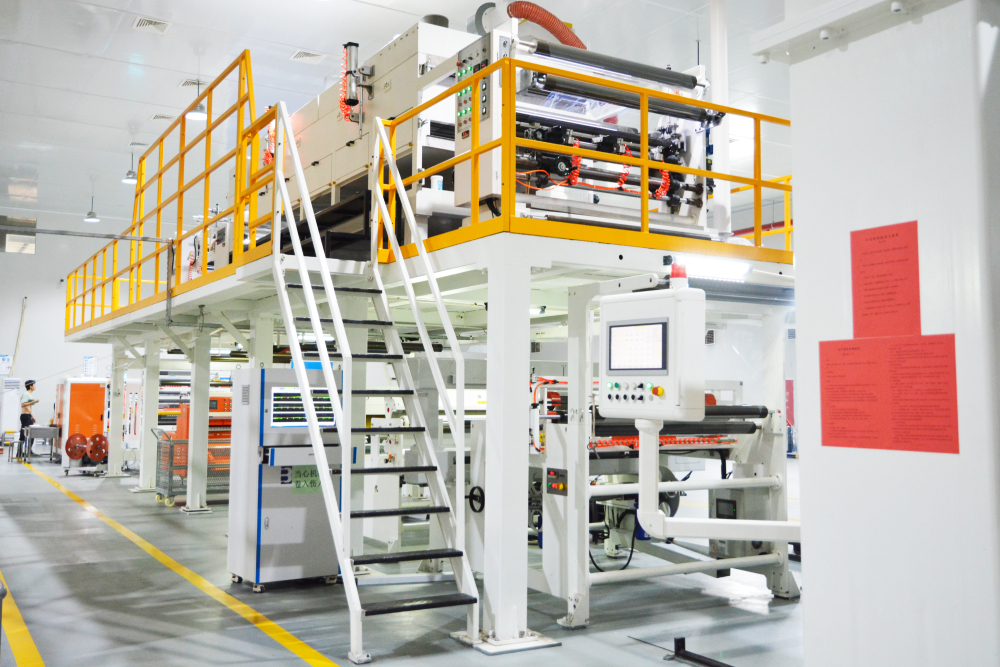
Thermoforming sheet production relies on stable extrusion and process control.
Detailed Solution: Compare PET and PP Thermoforming Sheet Rolls on Actual Performance
Start with the finished part and the forming process
For any medical tray or pharmaceutical blister project, the sheet specification should be selected from the finished part backward. Buyers should define the tray or blister dimensions, forming depth, required stiffness, transparency or color, sealing method and final product contact conditions. A drawing or finished sample is especially useful. The supplier can then propose a material structure and thickness that match the equipment and downstream packaging line.
This comparison should not be treated as a fixed product selector. PET and PP have different shrinkage, heating behavior, stiffness and surface appearance. A material change may require an adjustment in heating profile, forming time, mold temperature or trim settings. For that reason, a controlled production trial is usually required before a buyer moves from one material to another.
PET Thermoforming Plastic Sheet Roll: Clarity and Stiffness as Primary Strengths
PULIXIN's PET Thermoforming Plastic Sheet Roll is produced from PET, APET or rPET and is available in APET, rPET, GAG, PETG, food-grade, transparent and special functional forms. The thickness range is 0.18 to 1.7 mm customized, width is 250 to 1400 mm customized, and roll size can be customized from 50 to 800 kg per roll. The color options start from transparent or customized. Structures can be mono-layer or multilayer, and the sheet can be processed by vacuum forming or pressure forming.
Within the PULIXIN product range, PET is the material most directly associated with clear thermoformed packaging. Its key advantages are suitable transparency, high clarity, stiffness and product visibility. Those properties are widely useful in containers where the packaged object must be visible, such as food trays, produce clamshells, electronic retail packaging, oral-care blister cards and certain healthcare packaging formats. For selected medical or pharmaceutical packaging applications, PET can be considered when the package design and applicable regulatory requirements support its use.
PET also supports multilayer and specialty structures. PULIXIN lists options such as hard-coated, silicon-coated, corona-treated, laminated film and coated surfaces, plus anti-fog, anti-block, anti-scratch and anti-static ESD PET versions. These options can be useful when surface behavior has to be tuned for a specific downstream process. However, surface treatments must be selected according to the actual package, not as a default upgrade.
PP Thermoforming Sheet Roll: Heat Resistance, Lower Density and Toughness
PULIXIN's PP Thermoforming Sheet Roll is based on polypropylene and is available in normal PP, conductive black PP, antistatic PP, PP/PE thermoforming sheet and high and low temperature resistant PP versions. The thickness range is 0.3 to 2 mm customized, width is 300 to 900 mm customized, and color options include natural, white, black or customized. PP sheet can be supplied as mono-layer or multilayer and can be processed by vacuum forming or pressure forming.
In general material selection guidance, PP is often preferred for cups, dairy containers and applications requiring better heat resistance and lower material density. The PULIXIN PP product portfolio is used in food packaging, disposable cup manufacturing, dairy packaging, takeaway food packaging and industrial packaging. PP sheet is also used in returnable trays for demanding logistics applications because it can be washed and reused repeatedly.
For clean or medical packaging, PP may be considered when the project needs a polymer with lower density or stronger resistance to repeated washing. But the final decision still depends on the finished part geometry and the applicable documentation. Transparency is usually not PP's strongest property compared with PET. PULIXIN lists PP sheet colors as natural, white, black or customized, whereas PET sheet is listed primarily as transparent or customized.
Consistent thickness and dimensional stability
Both PET and PP sheet can be produced within controlled thickness tolerances when the manufacturer uses disciplined extrusion and quality control. PULIXIN states that its quality control process includes raw material inspection, thickness and width control, appearance inspection, in-process quality control and finished product inspection. Third-party testing is available when required. The manufacturer also states that its 14 co-extrusion production lines are capable of manufacturing thermoforming sheet rolls with consistent thickness and good dimensional stability.
For medical and pharmaceutical buyers, thickness consistency is not an abstract specification. A tray formed from variable sheet thickness will show uneven heating, unstable wall distribution, inconsistent cavitation and higher scrap. Dimensional stability is just as important because trays and blisters must match downstream sealing tooling and automated loading equipment.
Clean surface and clean handling
Clean surface is a listed requirement in the PULIXIN medical and pharmaceutical thermoforming scenario. Buyers should confirm that the sheet surface is free of contamination, marks or surface defects that could affect appearance or interfere with a clean packaging environment. They should also check that the roll is wound correctly and protected against dust, moisture and edge damage during transport and storage.
Surface treatment should be specified only when the end application requires it. PET can be supplied with hard-coated, silicon-coated, corona-treated or laminated surfaces depending on requirements. PP surface treatment depends on the final application. In each case, the buyer should ask the supplier to explain the relationship between the surface treatment and the downstream forming or sealing process.
Material compliance must be verified, not assumed
Food-contact compliance and medical or pharmaceutical compliance should not be treated as interchangeable. A material that is compliant for food packaging is not automatically compliant for a medical device tray or pharmaceutical blister. Buyers must confirm material properties, clean manufacturing conditions and applicable regulatory requirements with the actual supplier.
Available third-party documentation at PULIXIN includes SGS test reports for PET sheet and PP White (Natural) Plastic Sheet, both tested against the EU RoHS Directive (EU) 2015/863. These reports provide information about restricted substances but do not replace application-specific medical or pharmaceutical qualification. Buyers should obtain the certificate or report applicable to their final market and confirm that the material specification matches the tested product.
Step-By-Step Evaluation for Medical Tray and Blister Projects
The following sequence helps packaging buyers evaluate PET versus PP rolls before committing to a long-term order.
- Define the finished package. State whether the part is a protective tray, device tray, pharmaceutical blister, disposable medical product tray or packaging insert. Provide dimensions, forming depth, product contact conditions and downstream sealing method.
- Confirm the applicable requirements. Identify the cleanliness requirements, transparency level, mechanical properties and regulatory documentation needed for the destination market. Do not substitute a food-contact standard for a medical requirement.
- Compare real sheet specifications. Compare material type, actual sheet structure, thickness tolerance, width, roll dimensions, color or transparency, surface condition and forming behavior. Treat two similar-looking rolls from different suppliers as different until proven similar.
- Review the supplier's quality control. Confirm that the manufacturer performs raw material inspection, thickness and width control, appearance inspection, in-process quality control and finished product inspection. Ask whether third-party testing is available.
- Run a controlled trial. Test the proposed PET or PP specification on the actual thermoforming machine and mold. Compare part weight, wall distribution, dimensional accuracy, surface appearance, scrap rate and processing stability against the current benchmark.
- Qualify the documentation chain. Check whether the certificate, test report or declaration matches the exact product name, material and production site. Then move to a pilot order or regular-volume supply.
Use Cases: Evidence from Clean and Demanding Packaging Applications
Neither of the following cases is a claim that the same packaging has been validated as a medical tray. They are included because they show how PET and PP thermoforming sheet rolls behave in clean or technically demanding applications where product protection, appearance and reliability matter.
PET clarity and food-grade decontamination. In a fresh produce packaging project located in the Netherlands and Australia, PULIXIN supplied PET and rPET-based sheet used in berry clamshells, salad bowls, fresh-herb and bakery containers. The project scale was approximately 1,500 tonnes of rPET sheet per year. The material achieved 30 to 100% post-consumer recycled content with GRS batch traceability. The project highlights included GRS traceability, food-grade decontamination, glass-clear clarity and an anti-fog option. It also passed EU 10/2011 and FDA migration tests at each audit.
For a medical tray or blister buyer, this case is useful mainly as evidence of PET sheet clarity, surface quality and stable performance in clean packaging operations. It does not replace a medical-specific validation.
PP washability and impact resistance. In an automotive logistics case in Poland and Thailand, PP thermoforming sheet was used to make returnable trays for sensors, connectors and lighting modules. The project scale was approximately 900 tonnes per year. The trays achieved a 65% reduction in transit part damage, withstood more than 80 wash cycles without warping and reduced packaging cost per trip by 22%. The highlights included impact and chemical resistance, low-temperature toughness, washability, reusability and 100% recyclability.
This case is relevant to PP buyers who need a material that can maintain its shape, survive repeated cleaning and protect sensitive parts. Medical packaging often has different requirements, but the PP evidence shows why washability and dimensional recovery should be part of a supplier qualification discussion.
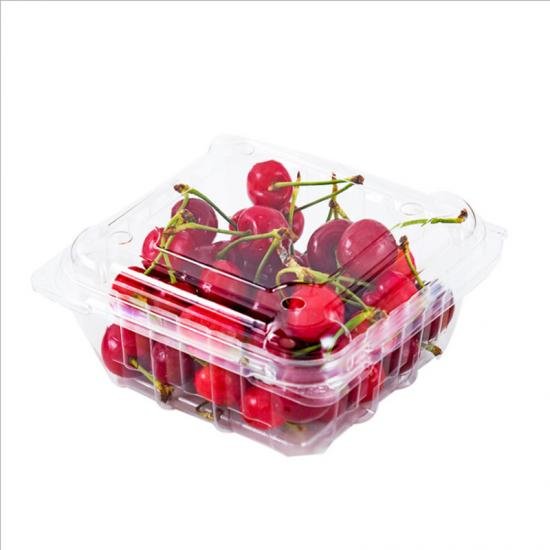
High-clarity PET/rPET sheet is used in packaging where product visibility is critical.
PET vs. PP Thermoforming Sheet Roll Comparison Table
The table below summarizes PULIXIN PET and PP thermoforming sheet roll specifications and typical product positioning based on the provided content units.
| Comparison Point | PET Thermoforming Plastic Sheet Roll | PP Thermoforming Sheet Roll |
|---|---|---|
| Material family | PET, APET or rPET | Polypropylene (PP), including PP/PE versions |
| Thickness range | 0.18 to 1.7 mm customized | 0.3 to 2 mm customized |
| Width range | 250 to 1400 mm customized | 300 to 900 mm customized |
| Color and transparency | Transparent or customized | Natural, white, black or customized |
| Surface and structure options | Mono-layer or multilayer; hard-coated, silicon-coated, corona-treated, laminated film, coating and other treatments | Mono-layer or multilayer; surface treatment depends on the application |
| Forming process | Vacuum forming or pressure forming | Vacuum forming or pressure forming |
| Key performance emphasis in PULIXIN product range | Clarity, stiffness, transparency, product visibility and clean appearance | Heat resistance, lower material density, toughness and wash durability |
| Notable product variants in PULIXIN portfolio | APET, rPET, GAG, PETG, transparent, anti-fog, anti-block, anti-scratch, anti-static ESD PET | Normal PP, conductive black PP, antistatic PP, PP/PE thermoforming sheet, high and low temperature resistant PP |
| PULIXIN target packaging applications | Food packaging, fresh produce, meat, bakery, pharmaceutical packaging, electronics packaging and blister packaging | Food packaging, disposable cup manufacturing, dairy packaging, takeaway food packaging and industrial packaging |
This table does not imply that one material is safer or more compliant than the other. Compliance is defined by the specific application, documentation and destination market.
FAQ: PET and PP Thermoforming Sheet for Medical and Pharmaceutical Packaging
1. What should buyers confirm when sourcing plastic sheet for medical or pharmaceutical thermoforming packaging?
Medical and pharmaceutical packaging requirements vary greatly by application. Buyers should first define whether the sheet is used for a protective tray, device packaging, pharmaceutical blister or another package type, then confirm material, cleanliness, transparency, forming performance and applicable regulatory requirements. A general-purpose plastic sheet should not automatically be described as medical grade without supporting requirements and documentation. For thermoformed medical trays, consistent thickness, forming stability, dimensional stability, surface cleanliness and suitable mechanical performance are commonly important.
2. How should buyers choose between PET and PP thermoforming sheet rolls for medical tray projects?
Buyers should choose based on the finished part and its process requirements rather than material reputation alone. PET is commonly selected when transparency, stiffness and product visibility are priorities, and PET can be used in certain medical and healthcare packaging applications when the package design and regulatory requirements support it. PP is often considered when better heat resistance or lower material density is important, and PULIXIN's product documentation shows PP used in demanding, washable and reusable tray applications. The final selection should also consider forming depth, mold geometry, sealing method, required documentation and cost targets.
3. How should buyers evaluate budget when comparing PET and PP sheet?
The lowest price per kilogram is not always the lowest finished packaging cost. Finished-package cost also depends on material density, required thickness, forming yield, scrap utilization, cycle stability and reject rate. Buyers should calculate material consumption from the required finished-part stiffness and wall distribution rather than comparing only raw material prices.
4. What information should a buyer provide before requesting a sample or trial?
A useful trial request should include more than a polymer name. Buyers should provide material preference, thickness, width, color or transparency, roll dimension requirements, estimated quantity and application. For a new medical or pharmaceutical thermoforming project, a finished-part drawing or sample, forming depth and thermoforming machine information will help the manufacturer recommend a more suitable specification and reduce repeated sampling.
5. What are PULIXIN delivery times, MOQs and the recommended next step?
PULIXIN delivery time generally ranges from 7 to 15 days depending on material, specifications, order quantity and customization requirements. The standard MOQ is approximately 5 tons for PET and 3 tons for PP or PS, while customized products may be subject to different MOQ requirements. Monthly production capacity is approximately 3,500 tons. For a medical tray or blister project, the recommended next step is to contact PULIXIN with a drawing or sample so the technical team can align the material structure with the forming process and arrange a controlled trial before regular-volume ordering.
Conclusion
PET and PP thermoforming sheet rolls can both work for medical device trays and pharmaceutical blister packaging, but neither should be selected from a generic material label. In clean and regulated packaging operations, buyers need consistent thickness, stable forming, clean surface, dimensional stability and transparency that matches the final package. PET is often a natural baseline when clarity and stiffness dominate. PP is a serious option when heat resistance, lower density, toughness or repeated wash performance matters.
The most reliable way to choose is to compare actual specifications, review quality control and run a controlled trial on the buyer's own thermoforming line. PULIXIN supplies both PET and PP thermoforming sheet rolls from a 20,000-square-metre production base with 14 co-extrusion lines, an annual capacity exceeding 40,000 tons and exports to more than 55 countries. As a supplier, PULIXIN positions its medical and pharmaceutical thermoforming scenario around the same practical criteria discussed in this article: package type, cleanliness, process stability and applicable compliance requirements.
For packaging buyers who are evaluating PET and PP for the first time, the best next step is to prepare a clear specification package and request a focused material trial. The PULIXIN technical team can use the finished-part drawing, forming conditions and cost targets to recommend a suitable PET or PP sheet structure.
Download the PULIXIN product catalogue for a broader overview of available sheet specifications: PULIXIN Thermoforming Sheet Catalogue.
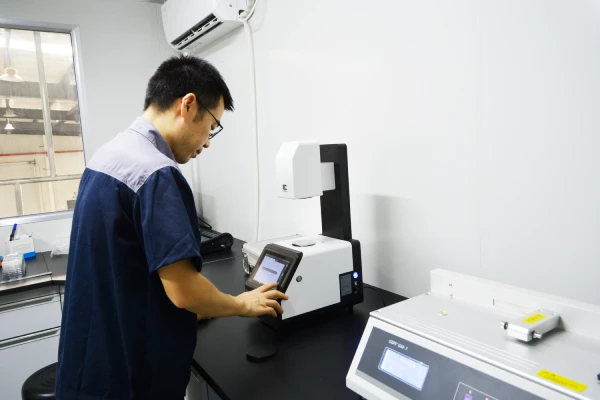
Finished thermoforming sheet rolls are prepared for shipment.
Have Questions or Need More Details?
Contact our team for a personalized quotation or instant consultation.
Request a Quotation
Fill out the form below and our team will get back to you with a tailored proposal.
WhatsApp Direct Chat
Prefer to chat in real-time? Message us on WhatsApp for instant assistance & quick answers.
- Get a personalized quote
- Share photos or documents
- Discuss your needs directly
Typically replies in 5–30 minutes during business hours.