
Roll-Fed vs. Sheet-Fed Thermoforming Plastic Sheet Roll: A Medical Tray Decision
Short answer: For medical device trays and pharmaceutical blister packaging produced on continuous thermoforming or vacuum forming equipment, roll-fed thermoforming plastic sheet roll is the format that matches the line. Sheet-fed (cut-sheet) supply remains the practical format for lower-volume runs, heavier gauges, and machines built around discrete sheet loading. The format is decided by the machine, the part geometry, and the production profile, not by material grade alone.
This article compares the two formats head to head for medical tray and pharmaceutical blister projects, then covers the practical work that follows the decision: line setup, die-cutting, product loading, sealing, and the roll specifications - width, diameter and core - that a roll-fed buyer has to define before placing an order.
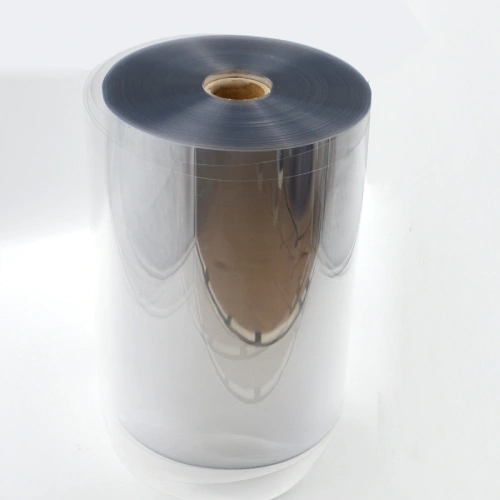
Clear PET thermoforming plastic sheet roll supplied in roll-fed format for medical tray and pharmaceutical blister programs.
Why the Format Decision Comes Before the Material Decision
The roll-fed versus sheet-fed choice is a line-design decision, not a purchasing preference. It fixes four things at the same time: how the sheet is fed and heated, how the formed web is cut into trays, how products are loaded into the formed cavities, and how the finished package is sealed.
Both formats can produce an acceptable medical tray or blister. What changes is the operating envelope. A roll-fed line unwinds a continuous web through the heating and forming station, so thickness consistency, width accuracy and roll-to-roll uniformity matter at the unwind. A cut-sheet line feeds pre-cut blanks, so the sheet stack, flatness and sheet-to-sheet consistency matter at the loading station, and batch size is set by the sheet count rather than the roll length.
The cost of choosing the wrong format appears later in production, not at quotation. If a delivered roll width does not match the forming station, the trim layout has to be redrawn and material utilization drops. If thickness drifts between rolls, cavity walls thin unevenly, formed corners lose rigidity, and sealing flanges can end up out of plane - which is exactly the failure mode a medical tray program cannot tolerate, because the tray has to hold position, separation and protection of the device through handling, storage and transport.
Quick decision rule: If the machine is a continuous roll-fed thermoformer, a vacuum forming line, or a blister packaging line, specify roll-fed sheet roll and define width, thickness and roll weight against the forming station. If the machine loads pre-cut blanks or the program runs short batches at heavier gauge, sheet-fed supply stays the simpler route.
Industry Background: A Growing, Compliance-Driven Thermoforming Market
Thermoformed plastic packaging is a large and expanding category. Global thermoformed plastic market size reached USD 14.79 billion in 2023, with a projected CAGR of 4.9% for 2024-2030 (Grand View Research). The recycled stream is growing in parallel: the rPET market value is projected to reach USD 24.6 billion by 2034 (Dataintelo).
Those headline figures should be read with one caveat: market estimates differ by definition. Some researchers measure thermoformed plastic materials - the raw sheet - while others measure finished thermoformed products such as trays and containers, which is why published market values for the same category do not always align. For sheet roll buyers, the useful signal is direction, not the exact decimal.
Two regulatory anchors are relevant to medical and pharmaceutical tray programs. Within the European Union, Regulation (EU) No 10/2011 governs plastic materials and articles intended to come into contact with food, which applies wherever a sheet roll contacts food. For trade and customs purposes, thermoforming plastic materials are classified under HS Code Heading 3920 (non-cellular) and 3921 (cellular). On the process side, PET thermoforming typically occurs between 266 °F and 320 °F (130 °C to 160 °C) (South Plastic), a window that both roll-fed and sheet-fed lines must stay inside to keep wall thickness and clarity predictable.
Medical and pharmaceutical packaging adds its own conditions. These applications normally run in a clean packaging environment with controlled temperature and humidity, suitable for hygienic thermoforming and packaging operations. Typical parts include medical device trays, pharmaceutical blister packaging, disposable medical product trays and protective packaging inserts. Their function is positioning, separation, protection, visibility and packaging integrity during handling, storage and transportation - not shelf appeal alone.

Blue PETG sheet roll for medical packaging applications.
What Roll-Fed Supply Has to Deliver for Medical Trays
PULIXIN Thermoforming Plastic Sheet is the roll-fed sheet portfolio of Pulixin Packaging Materials (Shanghai) Co., Ltd., a Chinese manufacturer established in 2009 that produces PET, PP and HIPS thermoforming sheet rolls on 14 advanced co-extrusion production lines, with an annual production capacity of 40,000 tons and an export footprint covering more than 55 countries.
For a medical tray or pharmaceutical blister line, five material requirements drive acceptance of a roll, regardless of polymer:
- Consistent thickness - so cavity walls, ribs and sealing flanges form with predictable material distribution across the web.
- Stable thermoforming performance - so the forming window does not shift between rolls and cycle settings hold.
- Clean surface - because a tray or blister that carries a device or a pharmaceutical dose cannot present contamination or surface defects.
- Dimensional stability - so formed parts keep their shape after demoulding, die-cutting and sealing.
- Suitable transparency - where device visibility or product inspection through the pack is required.
Material compliance and any additional performance requirement follow the specific medical or pharmaceutical packaging application, and are defined with the brand owner rather than assumed from the sheet grade.
PET thermoforming sheet roll
PET is the transparency-led option. PET thermoforming plastic sheet roll is manufactured from PET, including APET and rPET variants, and is available in a transparent grade for applications where clarity is essential. The range also includes PETG, GAG and food-grade PET sheet roll, plus anti-fog, anti-block, anti-scratch and anti-static ESD variants. Thickness is customizable from 0.18 mm to 1.7 mm, width from 250 mm to 1400 mm, roll size from 50-800 kg/roll, in transparent or custom colour, mono-layer or multi-layer structure. PET sheet roll supports both vacuum forming and pressure forming and is used in food packaging, pharmaceutical packaging, blister packaging, electronics packaging, bakery packaging, meat packaging and fresh produce packaging.
PP thermoforming sheet roll
PP thermoforming sheet roll is made of Polypropylene (PP) and is a thermoforming plastic sheet roll used where stiffness, lightweight construction and stable forming matter. Thickness is customizable from 0.3 mm to 2 mm, width from 300 mm to 900 mm, in natural, white, black or custom colour, mono-layer or multi-layer, for vacuum forming and pressure forming. PP sheet roll serves food packaging, dairy packaging, takeaway food packaging, industrial packaging and disposable cup manufacturing.
HIPS thermoforming sheet roll
HIPS thermoforming sheet roll is made of Polystyrene (PS) and high impact polystyrene (HIPS). Thickness is customizable from 0.24 mm to 2 mm, width from 300 mm to 900 mm, in natural, white, black or custom colour, with glossy or matte surface, mono-layer or multi-layer, and roll size customized to the order. Available types include normal, conductive black, antistatic, high and low temperature resistant, and light blocking HIPS sheet roll. HIPS serves food packaging, blister packaging, electronics packaging and industrial thermoforming.
The equipment side is fixed: roll-fed medical tray production pairs with a thermoforming machine or vacuum forming machine, followed by die-cutting equipment, product loading, and sealing equipment. Blister packaging lines follow the same sequence at higher cycle rates.
Because a roll is consumed as a continuous web, batch-level quality control carries the load. Sheet roll production is controlled across raw material inspection and in-process checks covering thickness tolerance, width accuracy, transparency, mechanical properties and thermoforming performance. Custom manufacturing covers thickness customization, width customization, colour matching, surface finish options, multilayer co-extrusion structures, food-grade material solutions and OEM production.
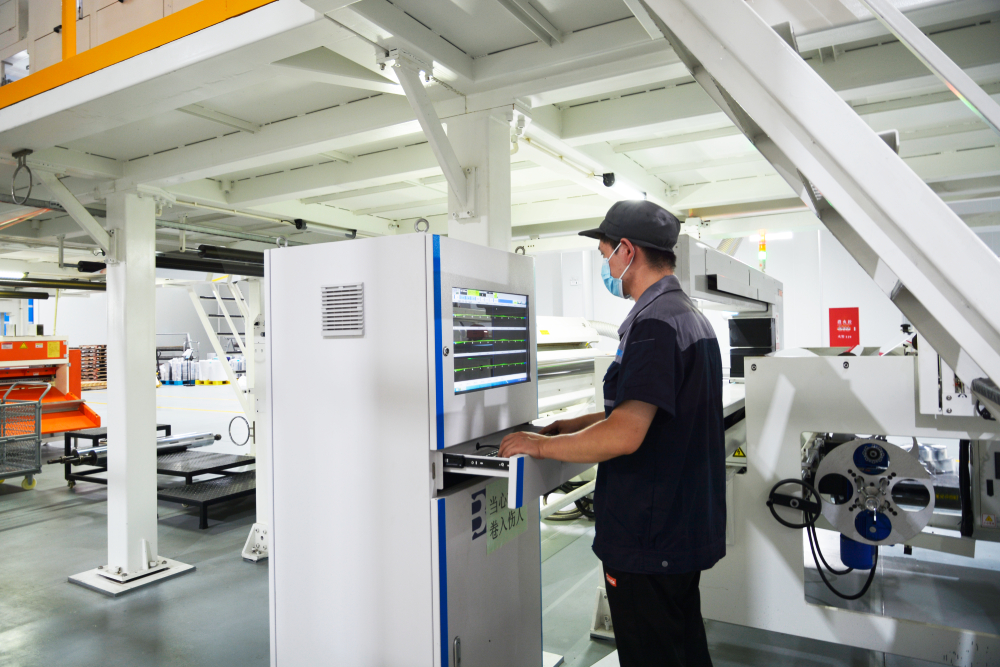
PULIXIN's 20,000 m² production base, where thermoforming plastic sheet roll is extruded and quality-controlled batch by batch.
Step-by-Step: Setting Up a Roll-Fed Medical Tray Program
Step 1 - Confirm the forming platform
Establish whether the machine unwinds a continuous web or loads pre-cut blanks. This single fact settles the format. Only after it is confirmed does material grade selection make sense.
Step 2 - Fix the sheet width against the forming station
Width is not a free parameter on a roll-fed line: the web has to cover the forming area with enough material for the clamping and trim margins. PET sheet roll is available from 250 mm to 1400 mm, and PP and HIPS sheet roll from 300 mm to 900 mm, all customized to order. Specify the exact usable width, and treat width accuracy as a quality attribute to be verified on each delivery.
Step 3 - Set the thickness gauge from the tray design
Thickness is chosen from cavity depth, wall rigidity and the sealing flange requirement - not from habit. The available ranges are 0.18-1.7 mm for PET, 0.3-2 mm for PP and 0.24-2 mm for HIPS. Because forming stretches the sheet, thickness consistency across the roll is what protects the thinnest point of the formed part.
Step 4 - Specify roll diameter, roll weight and core
On a roll-fed line these three numbers are agreed together, because they set the unwind configuration. PET sheet roll is quoted by roll weight - 50-800 kg/roll, customized - so roll weight and roll diameter have to sit inside what the unwind stand can carry and what the floor can handle. Core inner diameter must match the mandrel of the thermoformer; it is a machine-fit dimension and should be written on the specification rather than assumed. Heavier rolls also change handling: lifting equipment and roll storage discipline become part of the line design, not an afterthought.
Step 5 - Qualify the forming window and thickness consistency
Run a trial forming pass and check the PET window around 130 °C to 160 °C, or the equivalent setting for PP and HIPS, while measuring wall thickness at the thinnest point of the cavity. Both vacuum forming and pressure forming are supported by the sheet roll range, but the two processes load the web differently and should be qualified separately.
Step 6 - Align die-cutting, product loading and sealing
Die-cutting layout follows the roll width and the trim skeleton. Product loading follows the formed cavity pitch. Sealing depends on flange flatness, which depends on dimensional stability in the sheet. Any change to roll width, thickness or structure has to be re-checked through all three stages before the change is released to production.
Step 7 - Qualify a supplier change before the switch
When changing thermoforming sheet roll suppliers, the review should cover:
- A sample roll produced in the exact width, thickness and structure required.
- Verification of roll width, roll diameter, core and roll weight against the unwind stand.
- Thickness tolerance, width accuracy, transparency and mechanical properties, batch by batch.
- Thermoforming performance on the actual machine, including dimensional stability after forming.
- Surface cleanliness, which matters more in medical and pharmaceutical packaging than in most other thermoforming work.
- The compliance documentation applicable to the application - for example EU Regulation (EU) No 10/2011 where food contact applies - plus any additional requirement set by the medical or pharmaceutical application.
- Structure and capacity: whether the supplier can hold mono-layer or multi-layer co-extruded structures and support repeat volume.
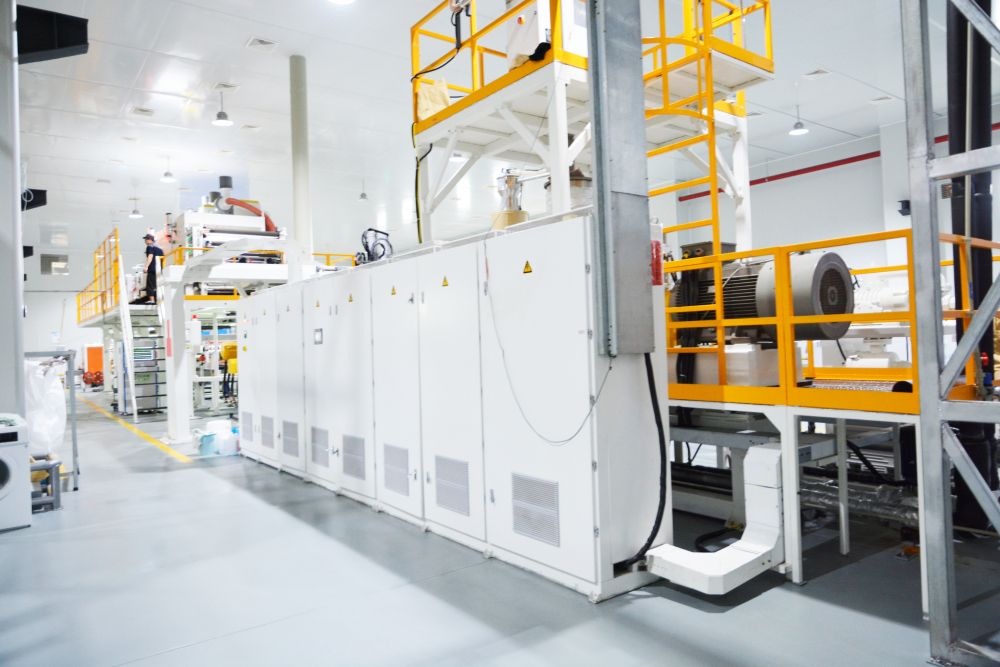
Sheet roll handling and storage at PULIXIN's production base in Pudong, Shanghai.
Use Cases: Where Each Format Fits
Medical device trays. Roll-fed is usually the default because trays are formed at volume on continuous equipment, then die-cut, loaded and sealed. Consistent thickness and dimensional stability keep the cavity holding the device in position through transport.
Pharmaceutical blister packaging. Blister lines are roll-fed by design, with the sheet unwound, formed, filled and sealed in a continuous sequence. Clean surface and suitable transparency support product inspection through the pack.
Disposable medical product trays and protective inserts. These smaller parts benefit from the same roll-fed setup where a single web width can carry a repeating cavity layout.
Adjacent medical and electronics hospital supply. Component trays and transport trays use the same forming platforms; where static control is specified, conductive black and antistatic grades of PP and HIPS sheet roll, or anti-static ESD PET sheet roll, extend the roll-fed format into anti-static applications.
Where sheet-fed holds its place. Cut-sheet thermoforming remains the practical choice for short runs, for prototyping and clinical trial batches, and for parts at the heavier end of the gauge range where a continuous web is not required.
Comparison: Roll-Fed vs. Sheet-Fed at a Glance
| Decision factor | Roll-fed thermoforming sheet roll | Sheet-fed (cut-sheet) thermoforming |
|---|---|---|
| Supply format | Continuous roll, unwound directly into the heating and forming station | Pre-cut sheets, loaded individually or from a stack |
| Typical line fit | Roll-fed thermoforming machine, vacuum forming line, blister packaging machine | Cut-sheet thermoformer, batch-oriented loading |
| Batch logic | Run length is set by roll weight and roll changes | Run length is set by sheet count |
| Consistency control | Batch checks on thickness tolerance, width accuracy and thermoforming performance across the roll | Depends on sheet-to-sheet uniformity and stacking |
| Trim and die-cutting | Trim layout is planned around a fixed web width | Trim layout is planned per sheet size |
| Handling and storage | Requires roll lifting and controlled storage; heavier rolls need handling equipment | Flat stacking, generally lighter manual handling |
| Best fit | Volume medical trays and pharmaceutical blisters | Low-volume runs, prototyping, heavier gauges |
| Main risk | Width, thickness or core mismatch with the unwind and forming station | Reduced efficiency when a program scales to volume |
The roll-fed specification itself is where most medical tray projects need precision. The table below lists the supplied ranges by material.
| Sheet roll | Thickness | Width | Roll size | Colour / surface | Structure | Forming process |
|---|---|---|---|---|---|---|
| PET thermoforming plastic sheet roll | 0.18-1.7 mm, customized | 250-1400 mm, customized | 50-800 kg/roll, customized | Transparent / customized | Mono-layer / multi-layer | Vacuum forming / pressure forming |
| PP thermoforming sheet roll | 0.3-2 mm, customized | 300-900 mm, customized | Customized | Natural / white / black / customized | Mono-layer / multi-layer | Vacuum forming / pressure forming |
| HIPS thermoforming sheet roll | 0.24-2 mm, customized | 300-900 mm, customized | Customized | Natural / white / black / customized; glossy or matte | Mono-layer / multi-layer | Vacuum forming / pressure forming |
FAQ: Roll-Fed and Sheet-Fed Decisions for Medical Tray Buyers
1. Which format and grade should a medical tray project choose where material compliance matters?
Compliance is set by the application, not by the format. Medical and pharmaceutical packaging applications require material compliance plus additional performance requirements defined by that specific application. Where the sheet contacts food, EU Regulation (EU) No 10/2011 governs plastic materials and articles intended to come into contact with food. PULIXIN supplies food-grade PET and PP sheet roll options, and PET sheet roll is available in APET, rPET, PETG and GAG variants, so the grade can be matched to the compliance file rather than the other way round.
2. Can a supplier deliver roll-fed thermoforming plastic sheet roll that matches a specific medical tray line?
Yes, within defined customization limits. PULIXIN customizes thickness, width, colour, surface finish and multilayer co-extrusion structure, and provides OEM production. PET sheet roll runs from 250 mm to 1400 mm wide, 0.18-1.7 mm thick, at 50-800 kg per roll, while PP and HIPS sheet roll run from 300 mm to 900 mm wide. All three support vacuum forming and pressure forming, which are the two processes used on medical tray and blister lines.
3. Which format costs less to run - roll-fed or sheet-fed?
Cost is driven by material utilization, changeover time, labour at loading, and scrap rate rather than by a headline sheet price. On a continuous roll-fed line, trim layout is planned around a fixed web width and loading is automated, which suits volume medical tray and blister production. On a cut-sheet line, the same tray can be produced with simpler handling at low volume, but efficiency drops as the program scales. Pharmaceutical blister lines are roll-fed by design, which is why roll-fed supply is the reference format for that application.
4. How should a buyer validate a roll-fed sheet supplier before switching?
Start with a sample roll in the exact width, thickness and structure, then verify roll width, roll diameter, core and roll weight against the unwind stand. Run a trial forming pass on the actual machine and check thickness consistency, dimensional stability after forming, and surface cleanliness. Batch-level quality control should cover thickness tolerance, width accuracy, transparency, mechanical properties and thermoforming performance. Only after those checks should die-cutting, product loading and sealing be released to the new supply.
5. What should buyers check when changing thermoforming sheet roll suppliers?
Check four things: machine fit (width, diameter, core), material consistency (thickness tolerance, width accuracy, transparency, mechanical properties), process performance (forming window, dimensional stability, sealing flange behaviour), and supply reliability. Pulixin Packaging Materials (Shanghai) Co., Ltd. operates 14 co-extrusion production lines with an annual capacity of 40,000 tons and exports to more than 55 countries, with export business accounting for 80% of total sales. Buyers can request a sample roll and the PULIXIN catalogue to run the first three checks on their own equipment - contact operation01@pulixin.com or WhatsApp +86 13818585204 to start a sample evaluation.
Conclusion: Decide the Format First, Then Specify the Roll
The roll-fed versus sheet-fed question for medical trays and pharmaceutical blisters answers itself once the forming platform is confirmed. Continuous thermoforming, vacuum forming and blister lines are roll-fed, so the sheet roll has to arrive with consistent thickness, stable thermoforming performance, a clean surface, dimensional stability and suitable transparency - and with width, diameter, roll weight and core matched to the machine. Cut-sheet forming stays relevant for low-volume, prototype and heavier-gauge work.
What separates a smooth roll-fed changeover from a difficult one is specification discipline: define the usable width, set the gauge from the tray design, agree roll diameter, roll weight and core with the unwind stand, and qualify the forming window on the real line before releasing die-cutting, loading and sealing. When those steps are documented, a supplier change becomes a controlled project rather than a production risk.
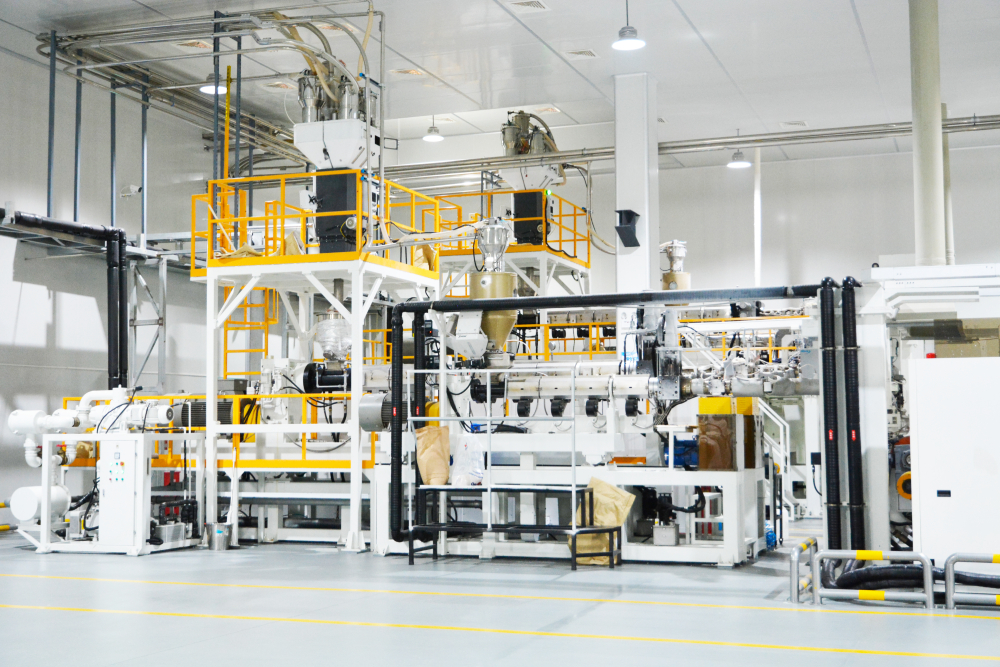
Sample rolls and specification support for medical tray and pharmaceutical blister sheet roll projects.
Next Step: Sample Rolls and Full Specification Data
Download the PULIXIN catalogue for material ranges, structures and application coverage: PULIXIN DESU NEW Catalogue (PDF)
Request a sample roll of PET, PP or HIPS thermoforming plastic sheet roll in your target width, thickness and roll weight, produced on 14 co-extrusion lines with an annual capacity of 40,000 tons.
Email: operation01@pulixin.com | Tel / WhatsApp: +86 13818585204 | Website: www.pulixin.com
Address: No.32 Lubin Rd, Luyuan Industrial Zone, Pudong, Shanghai, China
Have Questions or Need More Details?
Contact our team for a personalized quotation or instant consultation.
Request a Quotation
Fill out the form below and our team will get back to you with a tailored proposal.
WhatsApp Direct Chat
Prefer to chat in real-time? Message us on WhatsApp for instant assistance & quick answers.
- Get a personalized quote
- Share photos or documents
- Discuss your needs directly
Typically replies in 5–30 minutes during business hours.