
Thermoforming Plastic Sheet Roll: Roll-Fed vs Sheet-Fed Processing
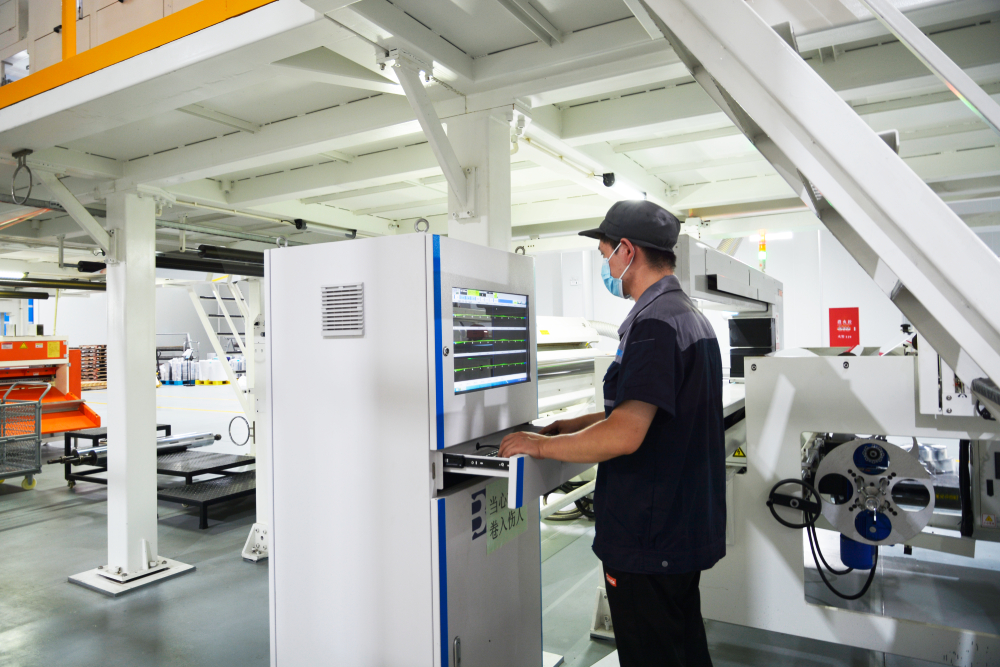
Rigid thermoforming plastic sheet roll production at PULIXIN Packaging Materials (Shanghai) Co., Ltd.
Direct answer: A thermoforming plastic sheet roll is a continuous length of rigid thermoplastic sheet — most often PET, PP or PS/HIPS — wound onto a core and unwound into a forming line. Roll-fed thermoforming feeds that material continuously from the roll through heating, forming, cutting and sealing. Sheet-fed thermoforming loads pre-cut flat sheets through the same sequence, one cycle at a time. The choice changes the material format you buy, the feeding and heating equipment on the line, the trim strategy, and how printing, die-cutting and sealing are arranged around the forming station.
That split is worth understanding before a project reaches the tooling stage. A buyer who specifies a sheet roll without knowing whether the forming line is roll-fed or sheet-fed can discover late that roll width, core size, roll weight, gauge tolerance or surface treatment does not match the equipment that will actually run the material.
What Is a Thermoforming Plastic Sheet Roll?
A thermoforming plastic sheet roll is rigid polymer sheet supplied in continuous wound form rather than as fixed-length flat panels. A roll is defined by four practical parameters: material, thickness, width and roll configuration (diameter, weight and core inner diameter). Those parameters are driven by the mold layout, the usable width of the forming machine and the unwinding system — not by preference alone.
Three polymers cover most roll-fed packaging production. PET, including APET and rPET, is used where clarity, stiffness and product visibility matter. PP is used for cups, dairy containers, takeaway food packaging and applications that benefit from its temperature behaviour and lower density. PS/HIPS is used for trays, inserts and opaque or coloured thermoformed packaging, including conductive and anti-static grades for electronics handling.
Sheet rolls can be produced as a mono-layer structure or as a multi-layer co-extruded structure. Functional grades add specific behaviour — light blocking, anti-static, anti-fog, high impact or anti-block — and should be selected against the finished package rather than against the sheet alone.
PULIXIN Packaging Materials (Shanghai) Co., Ltd. is a thermoforming plastic sheet roll manufacturer based in Shanghai, China, founded in 2009. The company produces PET, PP and PS/HIPS sheet rolls on 14 co-extrusion lines from a 20,000 m² production base, with annual output exceeding 40,000 tons and export experience in more than 55 countries. Its sheet rolls are supplied for food packaging applications and are available under OEM and custom manufacturing production services.
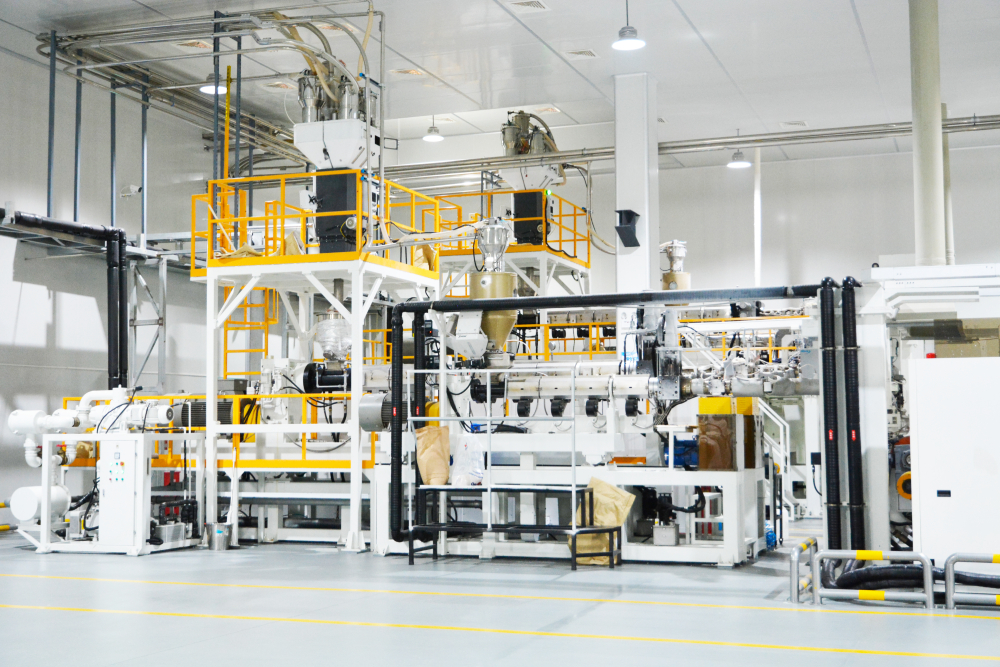
Co-extruded rigid sheet rolls for PET, PP and PS/HIPS thermoforming applications.
Roll-Fed vs Sheet-Fed: The Decision That Shapes the Whole Line
Both modes use the same physical principle: rigid sheet is heated until it softens, then shaped against a mold by vacuum, pressure or a mechanical plug. What differs is the form in which material enters the machine and how it travels through it.
In roll-fed thermoforming, material is drawn continuously from a wound roll. The web passes through an in-line heating station and then into the forming station, where parts are shaped across the full web width. Cutting, trimming or die-cutting follows on the same web, and downstream steps such as filling and sealing can often be integrated in one continuous line. This is the format used for a large share of high-volume thin-gauge packaging: trays, clamshells, lids, cups and blister packs.
In sheet-fed thermoforming, material arrives as pre-cut flat sheets. Each sheet is loaded, heated and formed as an individual cycle. This mode is commonly chosen when the material is thicker, when parts are larger or deeper, when production volume is moderate, or when the forming cycle needs more time than a continuous web allows. Cutting is typically a separate operation after forming.
Because the two modes handle material differently, the decision cascades into purchasing and tooling. It determines whether you buy a roll with a specified width, weight and core, or a stack of cut sheets in fixed dimensions. It also determines the feeding hardware, the heating arrangement, the way edge trim is recovered, and whether printing or laminating happens on the same line or offline.
Industry Background: Where Sheet Rolls Sit in Packaging
Thermoformed plastic packaging is a mature, high-volume category rather than a niche format. Grand View Research estimated the global thermoformed plastic market at USD 14.79 billion in 2023 and projected a 4.9% CAGR for 2024–2030. Material flows in this category are classified under HS heading 3920 for non-cellular sheet and 3921 for cellular sheet, which is the classification most importers and customs brokers will apply to sheet roll shipments.
Two forces are shaping how buyers specify roll material today. The first is material efficiency: because finished-package cost depends on density, required thickness, forming yield, scrap utilisation, cycle stability and reject rate — not on price per kilogram alone — the roll specification is increasingly treated as a cost driver rather than a commodity line item. The second is recycled content. Dataintelo projects the recycled PET market to reach USD 24.6 billion by 2034, and buyers in Europe and North America increasingly request recycled-content documentation alongside standard product data.
Regulatory expectations add a further layer. In the European Union, Regulation (EU) No 10/2011 governs plastic materials and articles intended to come into contact with food, so a food-contact sheet roll for that market must be supported by documentation aligned to that regulation, not only by a supplier statement.
PET, PP and PS/HIPS: The Common Roll Materials
Material choice should follow the finished package — forming depth, temperature exposure, stiffness, clarity, sealing method and applicable regulatory requirements — rather than price alone. The table below summarises the three material families most commonly supplied in roll form, together with the PULIXIN production capability for each.
| Property | PET (APET / rPET) | PP | PS / HIPS |
|---|---|---|---|
| Thickness range (PULIXIN capability) | 0.18–1.7 mm, customized | 0.3–2 mm, customized | 0.24–2 mm, customized |
| Width range (PULIXIN capability) | 250–1400 mm, customized | 300–900 mm, customized | 300–900 mm, customized |
| Colour | Transparent or customized | Natural, white, black or customized | Natural, white, black or customized |
| Surface | Depends: hard coated, silicon-coated, corona treatment, laminated film or coating | Depends on application | Glossy or matte |
| Roll size | 50–800 kg per roll, customized | Customized | Customized |
| Structure | Mono-layer or multi-layer | Mono-layer or multi-layer | Mono-layer or multi-layer |
| Thermoforming process | Vacuum forming / pressure forming | Vacuum forming / pressure forming | Vacuum forming / pressure forming |
| Typical packaging uses | Food packaging, fresh produce, meat, bakery, pharmaceutical, electronics, blister packaging | Food packaging, disposable cups, dairy packaging, takeaway food packaging, industrial packaging | Food packaging, blister packaging, electronics packaging, industrial thermoforming |
PET thermoforming typically occurs between 266°F and 320°F (130°C to 160°C), according to South Plastic (SPI). Within that general window, the correct machine setting still depends on the specific sheet structure, thickness, heating method and mold geometry, which is why a proven specification on one line is not automatically transferable to another.
Functional variants available in roll form include anti-fog PET for refrigerated display packaging, anti-static ESD grades for electronics trays, and high-impact grades for parts that must resist handling and transit. Recycled-content grades are supported by PULIXIN’s Global Recycled Standard scope certificate (SGC-GRC09372-GRS-2026-04), which covers processed post-consumer and pre-consumer materials and the extrusion process.
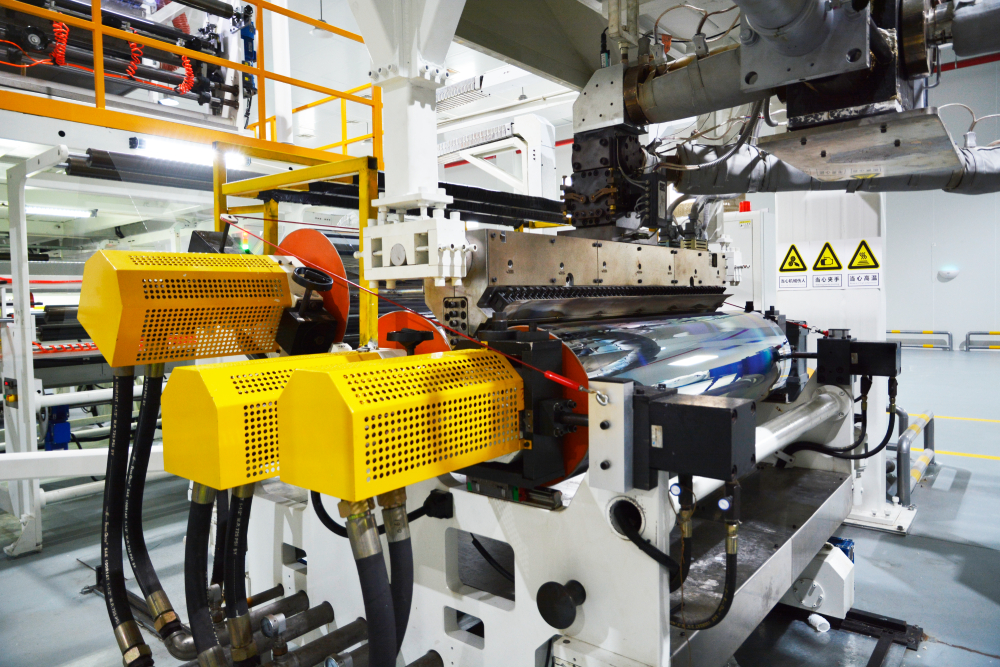
Roll handling and web preparation before a sheet roll reaches the forming station.
How Roll Material Moves Through a Thermoforming Line
Understanding the process sequence helps buyers specify the right roll. In a roll-fed line, the material passes through a defined chain of operations, and a defect at any stage usually traces back to a sheet property, a roll configuration or a handling condition.
1. Unwinding and feeding
The roll is mounted on an unwind shaft and the web is threaded into the line. Tension, roll alignment and core compatibility determine whether the web tracks straight and flat. A roll that has deformed during transport or storage, or that carries excessive residual winding stress, can feed unevenly even when its nominal specification is correct.
2. Printing, laminating or converting
When the sheet roll is used as a printing substrate, printing, corona treatment, coating or film lamination can occur before or after forming, depending on the process and the decoration required. This is where surface treatment specified on the roll becomes relevant: a corona-treated, coated or laminated surface is chosen for adhesion and print performance, not for appearance. Printed sheets and display packaging typically depend on this step being matched to the roll surface.
3. Heating
The web is heated to its forming window. Heating uniformity matters more than the nominal set point, because uneven sheet temperature produces uneven wall distribution, local overstretching and, in PET, whitening at sharp geometry. Sheet thickness tolerance directly affects how consistently the material reaches forming temperature across the web.
4. Forming: vacuum and pressure forming
Softened sheet is shaped against the mold. Vacuum forming draws the sheet onto the mold using negative pressure; pressure forming applies positive pressure from above, which generally produces sharper detail and tighter definition on the formed surface. Both are used across PET, PP and PS/HIPS roll material, and the choice is made against part geometry and appearance requirements.
5. Cutting, trimming and die-cutting
Formed parts are separated from the web. On a roll-fed line this is normally an in-line step using cutting or die-cutting equipment, and the resulting edge trim is recovered and handled as production scrap. On a sheet-fed line, cutting is typically a separate operation performed after the formed sheet leaves the oven and forming station.
6. Sealing and packing
Where the finished item is a sealed pack, the formed part is filled and sealed with a lid, film or board. Sealing behaviour depends on the sheet material and surface, the sealing temperature window and the sealing equipment. In blister packaging, the forming film or sheet is sealed to a printed backing card or foil, which is why formability and sealing compatibility are specified together rather than in isolation.
7. Inspection and documentation
Before shipment, sheet rolls are checked against specification. PULIXIN’s quality control covers raw material inspection, thickness and width control, appearance inspection, in-process quality control and finished product inspection, with third-party testing available when required.
Where Sheet-Fed Processing Diverges
Sheet-fed lines follow the same heating-and-forming logic but reorganise the flow. Material is loaded as flat cut sheets rather than as a continuous web, so there is no unwind tension to manage, but there is also no continuous web to carry parts automatically into the next station. Each sheet is an individual cycle, which makes the mode more tolerant of thicker material, larger parts and deeper draws, and more suitable for moderate volumes or for products that need longer, controlled heating and cooling.
The practical consequence for buyers is the purchasing unit. A roll-fed project is specified as material, thickness, width, roll weight and core inner diameter. A sheet-fed project is specified as material, thickness, sheet length and sheet width, with a stack or pallet format. Supplying roll dimensions to a sheet-fed operation, or sheet dimensions to a roll-fed line, creates avoidable handling problems before forming even begins.
Roll-Fed vs Sheet-Fed: Comparison and Decision Rules
The comparison below is a decision framework for early project planning. Actual behaviour depends on machine design, material and part geometry.
| Aspect | Roll-fed thermoforming | Sheet-fed thermoforming |
|---|---|---|
| Material input | Continuous roll, unwound under controlled tension | Pre-cut flat sheets, loaded individually or from a stack |
| Typical material class | Commonly thin-gauge, high-volume packaging | Often thicker material, larger or deeper parts, moderate volumes |
| Heating | Continuous in-line heating station as the web moves | Cycle-based heating of individual sheets |
| Forming method | Vacuum forming or pressure forming on a continuous web | Vacuum forming or pressure forming on individual sheets |
| Cutting and trim | In-line cutting or die-cutting of formed parts from the web | Usually a separate cutting or die-cutting operation after forming |
| Downstream integration | Easier to combine forming, filling and sealing in one line | Downstream steps are generally separate stations or offline processes |
| Changeover | Involves roll width, tension settings and tooling configuration | Sheet format can be changed with less web-handling setup |
| Scrap pattern | Continuous edge trim and web skeleton | Sheet frame trim |
| Purchasing unit | Material, thickness, width, roll weight, core inner diameter | Material, thickness, sheet length, sheet width, stack format |
Three decision rules help narrow the choice early:
- Follow the existing equipment. If the forming line is already installed, the feeding system determines the material format. Provide the usable machine width, mold layout, trim allowance, maximum roll weight and core inner diameter so the sheet specification is built around the machine rather than adjusted to it later.
- Follow the finished part backward. Forming depth, minimum required wall thickness, required stiffness and part dimensions should be defined before thickness is chosen. Material, product geometry and performance requirements need to be considered together.
- Do not change everything at once. When moving a running product to a new sheet source or a new format, keep the proven specification as the baseline and change one variable at a time. Changing material structure, thickness and process settings simultaneously makes any difference in forming behaviour very difficult to trace.
Supporting Equipment Around a Sheet Roll
A sheet roll is only one component of a production system. The equipment set that surrounds it determines what the roll must be able to do:
- Thermoforming machines — the forming line itself, handling either continuous web or cut sheets.
- Vacuum forming machines — used for trays, clamshells and containers where the mold is drawn by negative pressure.
- Pressure forming machines — used where sharper formed detail and better surface definition are required.
- Blister packaging machines — form the cavity, load the product and seal it to a backing card or lidding material.
- Die-cutting and cutting equipment — separate formed parts from the web or sheet and define the finished outline.
- Sealing equipment — closes trays, cups and blister packs with film, foil or board.
- Printing, coating and laminating equipment — turns the sheet roll into a printing substrate for printed sheets and display packaging.
- Unwind and handling systems — must be compatible with the roll diameter, roll weight and core size specified at purchase.
Because these systems interact, a roll specification should be agreed together with the machine information, not after it. PULIXIN provides technical support for material selection, thermoforming application and product specification, and its customized manufacturing services cover material, thickness, width, colour, transparency, surface finish, roll size, functional properties, and packaging and labelling.
Clean and Dry Processing Conditions
Rigid sheet performs predictably when it is handled predictably. Temperature, humidity, direct sunlight, packaging condition and storage time can all influence sheet condition before processing, and sheet curl is one of the most common symptoms. Curl can originate from material structure, residual winding stress, storage conditions, temperature change, transport or the feeding equipment itself.
Before changing material in response to a feeding or forming problem, it is worth separating the source. Checking sheet flatness, roll alignment, tension, unwinding hardware and whether the roll was deformed in transit or storage is faster and cheaper than a material substitution, and it prevents a correct specification from being replaced by one that simply masks a handling issue. Storage should follow the supplier’s packaging and handling recommendations so that roll deformation and edge damage are avoided.
Use Cases: Printed Sheets, Display Packaging, Trays and Blister Packs
Roll material serves several distinct packaging roles, and the same polymer can be specified very differently depending on which role it fills.
- Printed sheets and display packaging. Here the sheet roll functions as a printing substrate. Corona treatment, coating or film lamination is selected for adhesion and print performance, and the roll must be flat and dimensionally stable enough to pass through printing and converting equipment without register problems.
- Food trays and produce containers. A fresh-produce packer and supermarket own-label supplier in the Netherlands and Australia uses approximately 1,500 tons of RPET sheet per year for berry and cherry clamshells, salad bowls, fresh-herb and bakery containers, with 30–100% PCR content under GRS batch traceability and EU 10/2011 and FDA migration tests passed at every audit.
- Blister and clamshell display packaging. A toy brand owner and OEM toy manufacturer in Germany and the United States uses around 800 tons per year for action-figure clamshells, carded blisters, window patches and collector display cases, reporting drop-test cracking reduced from 3.2% to 0.4% and sealing scrap reduced by 18%.
- Electronics handling trays. An EMS provider and component distributor in Vietnam and Mexico uses approximately 600 tons per year of anti-static material for PCBA handling trays, IC and sensor shipping trays and smartphone component carriers, with surface resistance held at 10⁴–10⁸ Ω after more than 20 reuse cycles and ESD damage claims reduced by 90%.
- Oral-care and cosmetic inserts. An oral-care brand owner and personal-care contract packer in Indonesia and Brazil uses roughly 700 tons per year for toothbrush and oral-care blister cards, travel-kit trays and cosmetic insert trays, reporting pack-line speed improved by 15% after sealing-window optimisation.

Sheet rolls moving from converting into forming, cutting and sealing operations.
FAQ
Are PULIXIN thermoforming sheet rolls suitable for food-contact packaging?
Food-contact suitability depends on the specific material grade, the application and the destination market. PULIXIN holds FSSC 22000 food safety management system certification (certificate CQM25FSSC00171) covering the production of specific PET sheets for food-contact applications by plasticising extrusion. SGS test reports are available for PET sheet (SHAPH26002960101), PP white or natural sheet (SHAPH26002958405), and PS black sheet (SHAPH26002958403) and PS white or natural sheet (SHAPH26002958401), tested against EU RoHS Directive (EU) 2015/863. For EU food-contact projects, documentation should be confirmed against Regulation (EU) No 10/2011 for the specific material and end use.
What can be customized on a thermoforming plastic sheet roll for a roll-fed or sheet-fed line?
Customization covers material (PET, PP or PS/HIPS), thickness, width, colour, transparency, surface finish, roll size, functional properties, and packaging and labelling. PULIXIN production capability runs to PET at 0.18–1.7 mm thickness and 250–1400 mm width with rolls of 50–800 kg, PP at 0.3–2 mm and 300–900 mm, and HIPS at 0.24–2 mm and 300–900 mm. Structures can be mono-layer or multi-layer, and material can be specified for vacuum forming or pressure forming. For an existing line, providing the current roll specification, usable machine width, mold layout, trim allowance, maximum roll weight and core inner diameter gives the most reliable starting point.
What are the minimum order quantity and delivery terms?
Minimum order quantity depends on material and specification: standard PET is 5 tons and standard PP or PS is 3 tons, while customized products may be subject to different requirements. Delivery terms are EXW, FOB and CIF, with other Incoterms available upon agreement, and payment is by T/T with specific terms subject to order value and mutual agreement. It is worth noting that the lowest price per kilogram does not automatically produce the lowest packaging cost, because finished-package cost also depends on density, required thickness, forming yield, scrap utilisation, cycle stability and reject rate.
How should we validate a sheet roll before running full production?
Validation starts with specification verification, thickness and width inspection, appearance inspection and finished-product inspection before shipment, with third-party inspection available on request. When switching supplier or material, the recommended approach is to use the currently proven sheet specification as the comparison baseline, confirm equivalent specifications and documentation first, and then run a controlled production trial before moving to regular-volume orders. Avoid changing material structure, thickness and process settings at the same time. If the sheet curls or feeds unevenly, check material, storage, winding, transport and machine feeding conditions before replacing the material.
What is the lead time, and how does an OEM sheet roll project start?
Delivery time generally ranges from 7 to 15 days, depending on material, specifications, order quantity and customization requirements. An OEM or custom project starts with the application, material requirement, finished-part dimensions, forming depth, thickness and width, roll configuration, estimated quantity and destination market — a drawing or finished sample is especially useful for a new part. To start a project or request a sample, contact PULIXIN at operation01@pulixin.com or WhatsApp +86 13818585204.
Conclusion
A thermoforming plastic sheet roll is defined as much by its processing route as by its polymer. Roll-fed processing pulls material from a continuous roll through in-line heating, forming, cutting and sealing, and suits thin-gauge, high-volume packaging. Sheet-fed processing handles pre-cut sheets cycle by cycle, and suits thicker material, larger or deeper parts and moderate volumes. PET, PP and PS/HIPS cover the majority of roll applications, and the correct specification is built from the finished part, the machine and the downstream steps — printing, laminating, die-cutting and sealing — rather than from thickness or price alone.
Planning a roll-fed or sheet-fed thermoforming project?
Send your finished-part drawing or sample, machine width, forming depth and target material. PULIXIN will recommend a suitable PET, PP or HIPS sheet roll specification and arrange samples for a controlled forming trial.
Contact: operation01@pulixin.com | WhatsApp +86 13818585204 | www.pulixin.com
Download the full product range: PULIXIN catalogue (PDF)
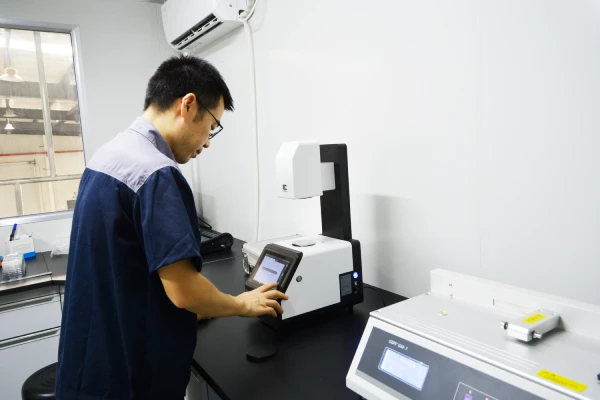
Sheet roll inspection and packing before shipment.
Have Questions or Need More Details?
Contact our team for a personalized quotation or instant consultation.
Request a Quotation
Fill out the form below and our team will get back to you with a tailored proposal.
WhatsApp Direct Chat
Prefer to chat in real-time? Message us on WhatsApp for instant assistance & quick answers.
- Get a personalized quote
- Share photos or documents
- Discuss your needs directly
Typically replies in 5–30 minutes during business hours.