
Thermoforming Plastic Sheet Roll: A Complete Buyer's Guide to PET, PP and HIPS Materials
Thermoforming Plastic Sheet Roll: Material Selection, Supplier Capability & Buying Guide
Thermoforming plastic sheet rolls are semi-finished rigid plastic materials supplied in roll form and converted into packaging products such as food trays, cups, blister packs and trays through vacuum forming or pressure forming. This guide explains what a thermoforming plastic sheet roll is, how PET, PP and HIPS materials differ, what to check when evaluating a manufacturer such as PULIXIN, and how buyers can align sheet specifications with real production and packaging requirements.
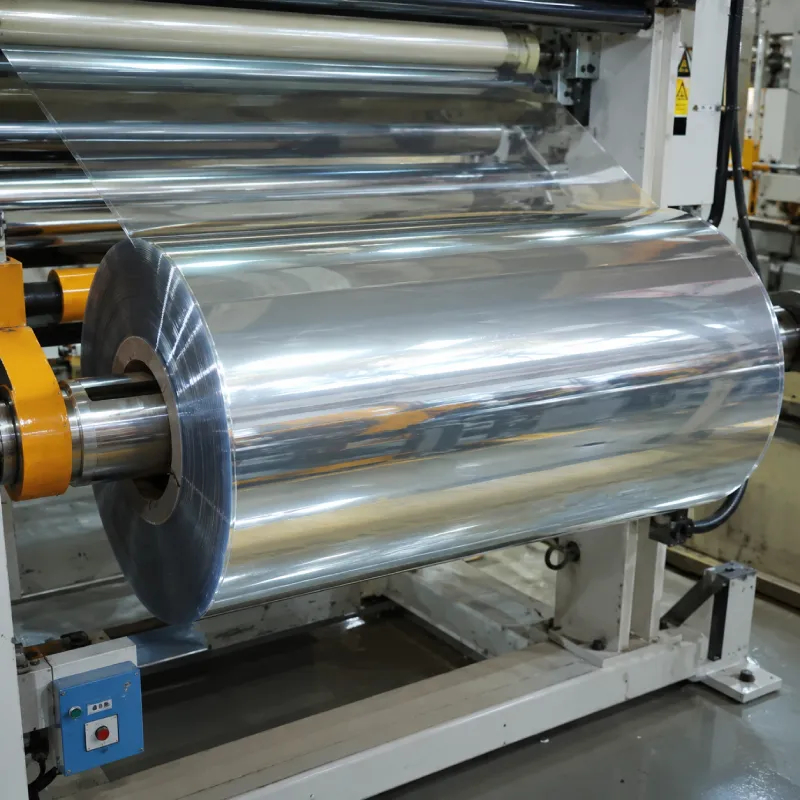
What Is a Thermoforming Plastic Sheet Roll?
A thermoforming plastic sheet roll is a rigid plastic sheet wound into roll form, used as raw material for thermoforming processes such as vacuum forming and pressure forming. It is classified under the broader category of thermoforming plastic sheet rolls because the material is designed to be heated and formed into three-dimensional packaging structures on industrial thermoforming equipment. Typical outputs include fresh produce trays, meat trays, bakery trays, dairy packaging, disposable cups, pharmaceutical trays, cosmetic packaging, electronic packaging and industrial thermoformed products.
Buyers search for different material grades depending on the final package. The three most common material categories are PET, PP and PS/HIPS. PET is widely chosen for clear trays, clamshells and blister packaging. PP is common for cups, dairy containers and food packaging where heat resistance or lighter weight is important. HIPS is frequently used for opaque trays, inserts, electronics packaging and industrial thermoforming. Each material requires a different sheet structure, thickness range and forming behavior, so the material decision should be made from the finished part backward rather than from price alone.
PET Thermoforming Plastic Sheet Roll
PET thermoforming plastic sheet roll is one of the most requested materials in rigid packaging because it offers high clarity, stable thickness, good stiffness and reliable forming performance. PULIXIN supplies PET thermoforming sheet rolls made from PET, including APET (amorphous PET) and rPET (recycled PET) variants, with transparent grade available for applications where clarity is essential.
PULIXIN's PET sheet roll specifications range from 0.18 mm to 1.7 mm in thickness, 250 mm to 1400 mm in width, and 50 kg to 800 kg per roll. The material supports vacuum forming and pressure forming, and can be supplied in mono-layer or multi-layer structures. Surface treatment options may include hard coating, silicon coating, corona treatment, laminated film or coating, depending on the application.
The typical industry applications of PULIXIN's PET thermoforming sheet roll include food packaging, fresh produce packaging, meat packaging, bakery packaging, pharmaceutical packaging, blister packaging and electronics packaging.
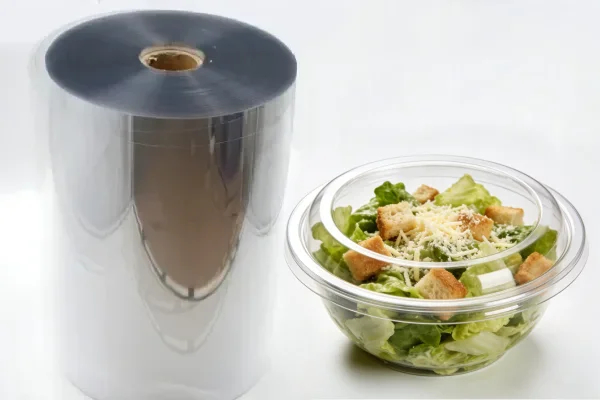
APET and rPET Options
Within the PET family, APET is commonly used when the application demands high transparency and good thermoforming performance. rPET is a recycled form of PET and is relevant for buyers with recycled-content or sustainability objectives. The appropriate grade should be confirmed against packaging requirements, processing conditions and target-market compliance expectations.
PP Thermoforming Sheet Roll
PP thermoforming sheet roll is made from Polypropylene (PP) and is classified as a thermoforming plastic sheet roll. PULIXIN designs this material for cups, food containers and other thermoformed packaging that requires good stiffness, forming stability and lightweight performance. The PP product range includes normal PP sheet roll, conductive black PP sheet roll, antistatic PP sheet roll, PP/PE thermoforming sheet, and high and low temperature resistant PP sheet roll.
PULIXIN's PP thermoforming sheet roll offers thickness from 0.3 mm to 2 mm, width from 300 mm to 900 mm, and colors in natural, white, black or custom. The structure may be mono-layer or multi-layer, and the thermoforming process is vacuum forming or pressure forming.
This PP sheet roll is intended for food packaging, disposable cup manufacturing, dairy packaging, takeaway food packaging and industrial packaging. It supports high-speed roll-fed cup forming lines, where consistent thickness and stable forming help reduce waste and improve rim quality.
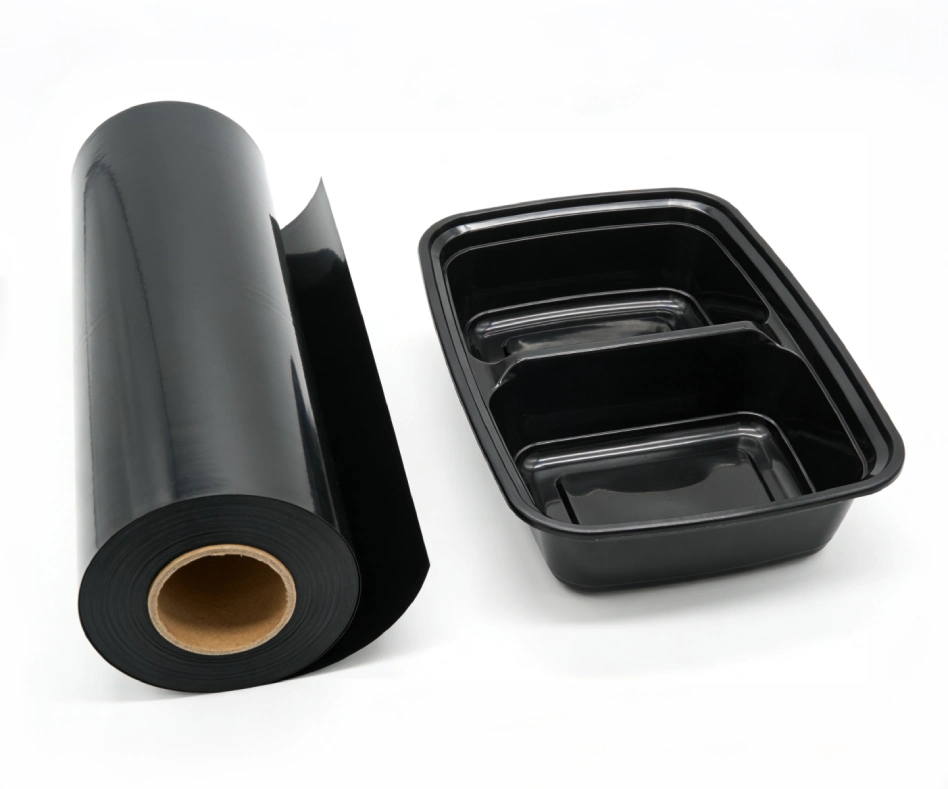
PS and HIPS Thermoforming Sheet Roll
HIPS thermoforming sheet roll is made of Polystyrene (PS) and high impact polystyrene (HIPS). It is classified as a thermoforming plastic sheet roll and is suitable for food packaging, blister packaging, electronics packaging and industrial thermoforming applications. PULIXIN offers models such as normal HIPS sheet roll, conductive black HIPS sheet roll, antistatic HIPS sheet roll, high and low temperature resistant HIPS sheet roll, and light blocking HIPS sheet roll.
HIPS sheet from PULIXIN is available in thickness from 0.24 mm to 2 mm and width from 300 mm to 900 mm, with natural, white, black or custom colors and glossy or matte surfaces. The structure can be mono-layer or multi-layer, and the material is suitable for vacuum forming and pressure forming.
PS and HIPS sheet rolls provide stable forming performance, good rigidity and flexible color and surface customization. They are especially useful for blister packaging, trays and other rigid thermoformed packaging produced on vacuum and pressure forming equipment.
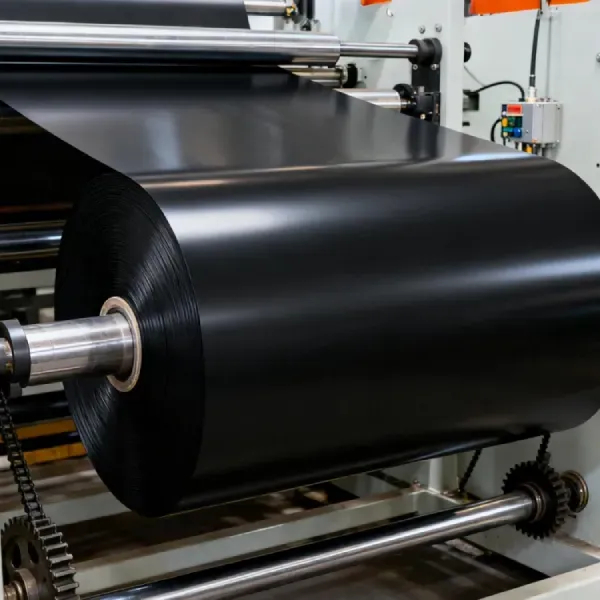
PULIXIN Company Profile and Manufacturing Capability
Pulixin Packaging Materials (Shanghai) Co., Ltd., established in 2009, specializes in manufacturing thermoforming plastic sheet rolls for packaging applications. The company operates from a manufacturing facility that covers 20,000 square meters and employs approximately 90 staff. PULIXIN operates 14 advanced co-extrusion production lines with an annual production capacity of 40,000 tons.
PULIXIN's main products include PET plastic sheet roll, PP plastic sheet roll and HIPS plastic sheet roll. The company also provides OEM production and customized manufacturing services, with a technical team that works closely with customers from project evaluation to mass production.
The R&D team at PULIXIN consists of 3 engineers. While the team size is compact, product development and technical support are embedded in the production process. The company positions itself as a manufacturing partner for packaging manufacturers, offering custom thickness, width, color, surface finish, multilayer co-extrusion structures and functional properties such as anti-fog or anti-static performance.
Manufacturing Capability and Quality Control
PULIXIN's production base is designed around co-extrusion, which allows multiple material layers to be combined into a single sheet structure. This is particularly relevant for buyers that need barrier properties, color layers, recycled-core structures or functional surface layers. The 14 advanced co-extrusion production lines are the basis of the company's 40,000-ton annual capacity, supporting both large-volume OEM orders and customized production.
Quality control at PULIXIN covers raw material selection and inspection before production, followed by batch-level checks during manufacturing. The company controls thickness tolerance, width accuracy, transparency, mechanical properties and thermoforming performance. For packaging buyers, this matters because thickness consistency affects heating, forming stability, part weight and final wall distribution. Stable transparency and mechanical properties also help maintain consistent finished product appearance.
Global Supply and Service Capability
PULIXIN exports to more than 55 countries across Asia, Europe, the Middle East, Africa, North America and South America. Export business accounts for 80% of total sales, with major markets including Southeast Asia, the Middle East, South America and Europe. The company states that it understands international packaging standards and the needs of different markets, allowing responsive communication, reliable logistics support and long-term supply stability.
For buyers comparing suppliers across different regions, PULIXIN's export ratio and market coverage indicate experience with international buyers, export documentation and long-distance logistics. This is useful in supplier evaluations where delivery reliability matters as much as material price.
How to Choose Between PET, PP and HIPS Thermoforming Sheet Rolls
Material selection should start with the finished package and its production conditions. The following guidance reflects common thermoforming practice and the product capabilities documented by PULIXIN.
Choose PET when transparency, stiffness and product visibility are priorities. PET is a common starting point for clear food trays, fruit boxes, bakery containers, clamshells and blister packaging, particularly when high clarity is required for shelf appeal.
Choose PP when the package requires heat resistance, lighter weight or cup-forming performance. PP is widely used for disposable cups, cup lids, dairy containers and takeaway food packaging. Its lower material density can influence packaging weight, and its temperature behavior makes it relevant for higher-temperature filling or food contact.
Choose PS/HIPS for opaque or colored trays, inserts and industrial thermoforming. HIPS offers practical rigidity, impact resistance and stable forming, and is commonly used in electronics packaging, industrial trays and colored retail packaging. PS/HIPS also supports light blocking and conductive or antistatic formulations for specialized applications.
In many cases, the supplier's role is not simply to sell a material but to recommend a specification. PULIXIN's engineering and production teams state that they work with customers from project evaluation to mass production, helping recommend suitable material structures based on product design, thermoforming equipment, packaging requirements and cost targets.
Common Thermoforming Packaging Applications for Sheet Rolls
Thermoforming plastic sheet rolls are used across multiple packaging categories. The table below summarizes common applications, typical materials and key performance priorities.
| Application Area | Common Sheet Materials | Typical Products | Key Performance Requirements |
|---|---|---|---|
| Fresh & chilled food packaging | PET, PP, HIPS | Fresh meat trays, seafood trays, fruit and vegetable containers | Food-contact compliance when required, low-temperature performance, moisture resistance, stable forming, anti-fog when required |
| Ambient food packaging | PET, PP, HIPS | Fruit boxes, bakery containers, candy trays, takeaway packaging | Consistent thickness, stable forming, good appearance, suitable rigidity |
| Cups, lids & dairy packaging | PP, PS, PET | Drinking cups, yogurt cups, dairy containers, cup lids | Food-contact compliance when required, strong rim forming, stiffness, stacking performance |
| Blister & consumer goods packaging | PET, HIPS | Blister packs, clamshells, cosmetic trays, hardware packaging | Forming definition, transparency or color, consistent thickness, printability when required |
| Electronics packaging | HIPS, PP, PET | Component trays, transport trays, protective inserts | Dimensional stability, rigidity, anti-static or ESD properties when specified |
| Medical & pharmaceutical packaging | PET, HIPS | Device trays, pharmaceutical blister packaging, protective inserts | Consistent thickness, clean surface, dimensional stability; compliance according to the specific medical application |
What to Check When Evaluating a Thermoforming Sheet Supplier
Buyers who are searching for thermoforming plastic sheet roll suppliers or changing an existing supplier should avoid comparing suppliers only by material name, nominal thickness and price. The actual sheet structure, thickness tolerance, width, roll configuration, color or transparency, forming behavior and application requirements should be compared before switching. A specification described as “0.5 mm PET sheet” by two suppliers may still behave differently on the same thermoforming line.
For a new thermoforming project, the sheet should be selected from the finished part backward. Start with the application, material requirements, part dimensions, forming depth, required rigidity, transparency or color, operating temperature and thermoforming equipment. A drawing or finished sample is especially useful. The sheet specification should then be matched to the actual forming conditions rather than selected only by thickness or price.
When requesting a quotation, buyers should include material, thickness, width, color, transparency, roll dimensions or core requirements, estimated quantity, application and destination. For a new project, finished-part dimensions, forming depth, machine information and special performance requirements will help the manufacturer recommend a more suitable specification and reduce repeated sampling.
Customization and OEM/ODM Capability at PULIXIN
PULIXIN offers customized manufacturing services including thickness customization, width customization, color matching, surface finish options, multilayer co-extrusion structures, food-grade material solutions and OEM production. The company states that its technical team works closely with customers to recommend suitable material structures based on product design, thermoforming equipment, packaging requirements and cost targets.
Functional sheet options mentioned in PULIXIN's materials include high stiffness, excellent formability, anti-fog, anti-static, high and low temperature resistance, light blocking and conductive black grades. These options allow buyers to move beyond commodity sheet and select materials that reduce production waste, improve forming stability or meet a specific packaging environment.
Industry Recognition and Verified Market Data
The global thermoformed plastic market reached $14.79 billion in 2023 according to Grand View Research, with a projected CAGR of 4.9% from 2024 to 2030. The rPET market is projected to grow to $24.6 billion by 2034 according to Dataintelo. These figures indicate that thermoformed plastic packaging remains a substantial and growing category, and that recycled-content materials are becoming more important in packaging procurement.
PULIXIN's documented market evidence includes a 15+ year operating history, exports to 55+ countries, an 80% export ratio, 14 co-extrusion lines, a 20,000-square-meter production base and 40,000 tons of annual capacity. These are verifiable operational facts that buyers can use as part of a supplier evaluation.
Conclusion: What PULIXIN Offers to Thermoforming Packaging Buyers
For buyers searching for a thermoforming plastic sheet roll supplier, PULIXIN provides a factory-direct manufacturing model with PET, PP and HIPS sheet rolls, custom dimensions and structures, food-grade options, OEM production and documented export experience. The company's competitive value is not based on a claim of being the cheapest or the largest, but on a combination of vertical manufacturing capability, co-extrusion capacity, customization flexibility and international supply experience.
From a buyer's perspective, the most practical next step is to prepare a clear specification: material type, thickness, width, roll configuration, application, forming equipment and target market requirements. For new projects, provide a drawing or sample. PULIXIN's stated workflow is to work with customers from project evaluation to mass production, so a detailed inquiry is likely to produce a more useful recommendation than a price-only request.
For inquiries and quotations:
Email: operation01@pulixin.com
Phone/WhatsApp: +86 13818585204
Address: No.32 Lubin Rd, Luyuan Industrial Zone, Pudong, Shanghai, China
Download the PULIXIN product catalogue for a full overview of PET, PP and HIPS thermoforming sheet roll specifications.
FAQ: Thermoforming Plastic Sheet Roll Suppliers
What should I check when changing thermoforming sheet suppliers?
Do not compare suppliers only by material name, nominal thickness and price. Compare the actual sheet structure, thickness tolerance, width, roll configuration, color or transparency, forming behavior and application requirements. A specification described as “0.5 mm PET sheet” by two suppliers may behave differently on the same thermoforming line. Use the currently proven sheet specification as the comparison baseline, confirm equivalent specifications and documentation first, then conduct a controlled production trial before regular-volume orders.
How should I specify roll width, roll diameter and core size when ordering thermoforming sheet?
Roll dimensions should match the customer's thermoforming and feeding equipment. Roll width is normally determined by mold layout, product arrangement and trim allowance, while roll diameter, roll weight and core size must remain compatible with the unwinding system. For an existing production line, provide the current roll specification or equipment limits. For a new mold, calculate sheet width from mold layout plus necessary trim allowance, then confirm roll diameter, weight and core size against the unwinding equipment.
What should I consider when selecting clear thermoforming plastic sheet roll for thermoformed packaging?
Clear sheet should not be selected by transparency alone. Consider clarity together with stiffness, forming depth, impact performance, temperature conditions, sealing or printing requirements and the finished package. PET is widely used for high-clarity thermoformed packaging, but the exact PET structure and specification should be selected according to the application. For applications where high clarity and product visibility are priorities, PET is a common starting choice.
How should I specify thermoforming sheet for a food tray instead of simply asking for “food-grade sheet”?
“Food grade” alone does not define a usable thermoforming specification. Identify the food type, tray dimensions, forming depth, storage temperature, transparency requirement, sealing method and applicable food-contact requirements. A refrigerated meat tray, a fruit tray and an ambient bakery tray can require different material and performance characteristics even though all are food packaging. Use PET where high transparency and stiffness are priorities, or consider PP/PS according to temperature, package design and processing requirements.
How do I choose between PET, PP and PS/HIPS thermoforming sheet rolls?
Choose the material according to the finished package rather than price alone. PET is commonly selected when transparency, stiffness and product visibility are priorities. PP is often preferred for cups, dairy containers and applications requiring better heat resistance and lower material density. PS/HIPS is suitable for many trays, inserts and opaque or colored thermoformed packaging where easy forming and practical rigidity are important. Final selection should also consider forming depth, temperature requirements, thickness, sealing method and regulatory requirements.
What information should I provide when requesting a quotation for custom thermoforming sheet?
A useful quotation request should include more than “PET/PP/PS sheet price.” Provide material, thickness, width, color, transparency, roll dimensions or core requirements, estimated quantity, application and destination. For a new thermoforming project, include finished-part dimensions, forming depth, machine information and special performance requirements. For a quotation or sample request, contact PULIXIN at operation01@pulixin.com or +86 13818585204.
Have Questions or Need More Details?
Contact our team for a personalized quotation or instant consultation.
Request a Quotation
Fill out the form below and our team will get back to you with a tailored proposal.
WhatsApp Direct Chat
Prefer to chat in real-time? Message us on WhatsApp for instant assistance & quick answers.
- Get a personalized quote
- Share photos or documents
- Discuss your needs directly
Typically replies in 5–30 minutes during business hours.