
Thermoforming Plastic Sheet Roll: A Complete Material Guide for Packaging Buyers
.jpg)
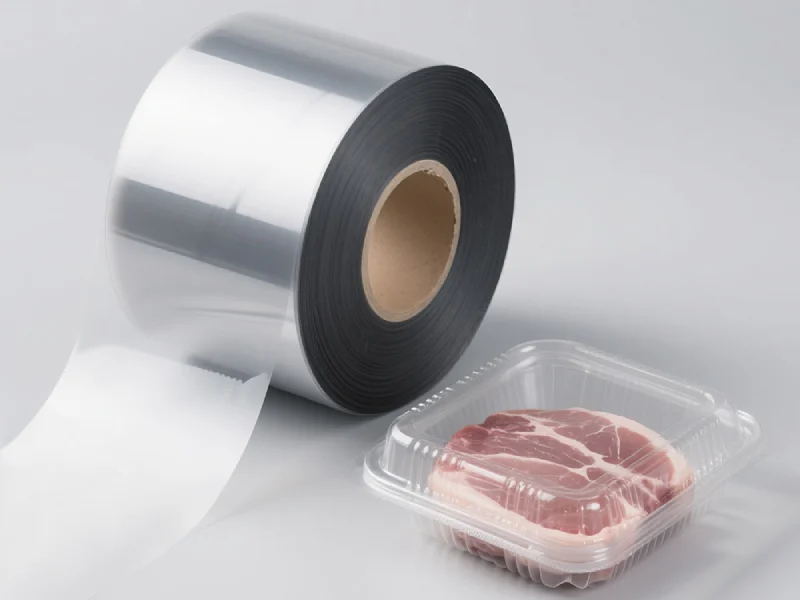
Image: PET thermoforming plastic sheet rolls from PULIXIN. Source: PULIXIN corporate image library.
Thermoforming plastic sheet roll is the semi-finished material used to produce rigid packaging such as food trays, cups, blister packs, clamshells, and industrial trays through vacuum forming or pressure forming. For packaging manufacturers and brand owners, selecting the right sheet is not just about material name or price per kilogram — it affects forming stability, finished-package performance, waste rate, and total production cost.
This guide explains what thermoforming plastic sheet rolls are, what to check during supplier qualification and specification, how PET, PP, and PS/HIPS compare, and how to select a roll format that matches your equipment and packaging application. Where relevant, examples reference PULIXIN Thermoforming Plastic Sheet, a Shanghai-based manufacturer of PET, PP, and HIPS thermoforming sheet rolls.
What Is a Thermoforming Plastic Sheet Roll?
A thermoforming plastic sheet roll is a continuous roll of rigid plastic sheet that is heated and formed into a three-dimensional shape using vacuum or pressure. The sheet is typically supplied in roll form for roll-fed thermoforming machines, with controlled thickness, width, roll weight, and core dimensions. It is classified under a category of thermoforming plastic sheet rolls that includes PET, PP, and PS/HIPS materials.
PULIXIN, a professional thermoforming plastic sheet roll manufacturer based in Shanghai, China, specializes in rigid plastic sheet solutions for thermoforming applications. The company’s main products include PET plastic sheet roll, PP plastic sheet roll, and HIPS plastic sheet roll. These products support vacuum forming and pressure forming processes and are supplied in customized thicknesses, widths, colors, and monolayer or multilayer structures.
Why the Thermoforming Plastic Sheet Choice Matters
Rigid packaging made from thermoforming sheet is everywhere: fresh produce trays, meat trays, bakery containers, yogurt cups, disposable cups, pharmaceutical blisters, cosmetic inserts, electronic component trays, and toy blisters. The sheet is the starting point for all those parts.
Material consistency directly influences thermoforming efficiency. A specification described as “0.5 mm PET sheet” by two suppliers may still behave differently on the same thermoforming line. Therefore, buyers should compare the actual sheet structure, thickness tolerance, width, roll configuration, color or transparency, forming behavior, and application requirements — not just the material name and price.
In addition, the global thermoformed plastic market reached $14.79 billion in 2023 and is projected to grow at a CAGR of 4.9% from 2024 to 2030. This growth is driven by food packaging, retail display, pharmaceutical packaging, and increasing demand for recyclable materials such as rPET. For buyers, this means more suppliers are entering the market, making specification discipline and supplier qualification more important.
Main Types of Thermoforming Plastic Sheet Rolls
Although all thermoforming sheet rolls serve the same basic function — supplying material for forming — the three main material families have different performance profiles. Understanding these differences helps buyers select the right substrate before optimizing thickness, width, and structure.
PET Thermoforming Plastic Sheet Roll
PET thermoforming sheet roll is manufactured from PET material, including APET and rPET variants. It is available in transparent grade, allowing clear visibility of packaged contents. The PET thermoforming sheet roll supports vacuum forming and pressure forming processes.
Typical applications include food packaging, fresh produce packaging, meat packaging, bakery packaging, pharmaceutical packaging, electronics packaging, and blister packaging. PET is commonly selected when high clarity and stiffness are priorities. For refrigerated fresh-food applications, anti-fog properties are available when required.
PP Thermoforming Sheet Roll
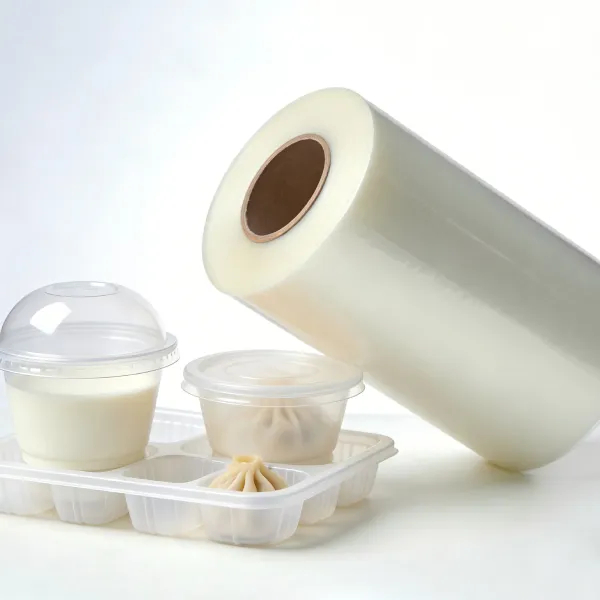
PP thermoforming sheet roll is made of Polypropylene (PP) and is classified as a thermoforming plastic sheet roll. It supports vacuum forming and pressure forming, with options for mono-layer or multi-layer structure, thickness from 0.3 mm to 2 mm, width from 300 mm to 900 mm, and colors including natural, white, black, or custom.
This product is intended for use in food packaging, dairy packaging, takeaway food packaging, industrial packaging, and disposable cup manufacturing industries. PP is often preferred for cups, dairy containers, and food packaging where heat resistance and lower material density are useful.
PS and HIPS Thermoforming Sheet Roll
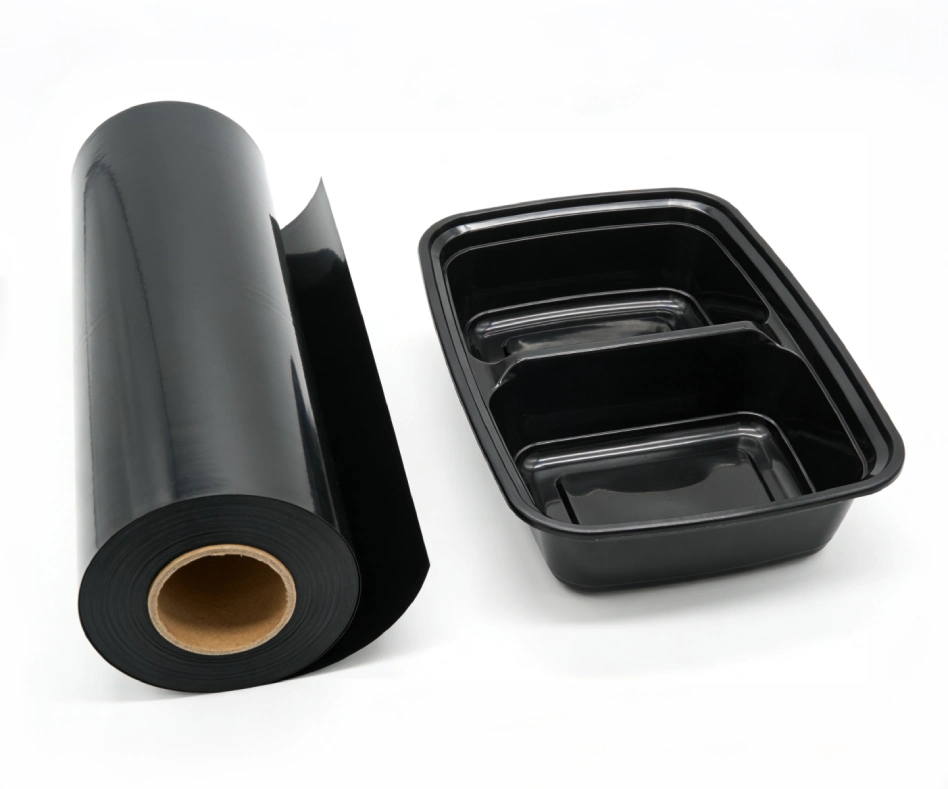
The HIPS thermoforming sheet roll is made of Polystyrene (PS) and high impact polystyrene (HIPS) and is classified as a thermoforming plastic sheet roll. It supports vacuum forming and pressure forming processes. Available models include normal HIPS sheet roll, conductive black HIPS sheet roll, antistatic HIPS sheet roll, high and low temperature resistant HIPS sheet roll, and light blocking HIPS sheet roll.
Typical applications include food packaging, blister packaging, electronics packaging, and industrial thermoforming. HIPS is suitable for opaque or colored trays, inserts, electronics packaging, and other rigid thermoformed packaging where easy forming and impact resistance are important.
PET vs PP vs PS/HIPS: How to Choose the Right Sheet
There is no single “best” thermoforming sheet material. The right choice depends on the finished package, forming depth, temperature requirements, transparency, sealing method, and regulatory requirements.
| Comparison Point | PET Thermoforming Sheet Roll | PP Thermoforming Sheet Roll | PS/HIPS Thermoforming Sheet Roll |
|---|---|---|---|
| Base Material | PET, APET, rPET | Polypropylene (PP) | Polystyrene (PS) / High Impact Polystyrene (HIPS) |
| Typical Thickness Range | 0.18–1.7 mm, customized | 0.3–2 mm, customized | 0.24–2 mm, customized |
| Typical Width Range | 250–1400 mm, customized | 300–900 mm, customized | 300–900 mm, customized |
| Color / Clarity | Transparent or customized | Natural / white / black / customized | Natural / white / black / customized; glossy or matte |
| Structure | Mono-layer or multi-layer | Mono-layer or multi-layer | Mono-layer or multi-layer |
| Common Applications | Food trays, fresh produce trays, meat trays, blister packaging, pharmaceutical trays, electronics packaging | Cups, cup lids, dairy containers, takeaway food packaging, industrial packaging | Blister packaging, trays, inserts, electronics packaging, industrial thermoforming |
| Forming Process | Vacuum forming / pressure forming | Vacuum forming / pressure forming | Vacuum forming / pressure forming |
| Typical Selection Driver | High clarity, stiffness, and product visibility | Heat resistance, lightweight, cup and dairy applications | Formability, rigidity, cost-sensitive opaque/colored packaging |
For applications where high clarity and product visibility are priorities, PET is a common starting choice. For cups and dairy containers that may experience higher filling temperatures, PP is often preferred. For trays, inserts, and colored packaging where easy forming and good rigidity matter, PS/HIPS is a practical option.
Final selection should also consider forming depth, draw ratio, temperature requirements, thickness, sealing method, and regulatory requirements. One material should not be substituted for another without adjusting machine settings and possibly tooling, because different materials have different shrinkage, heating, and forming behavior.
How to Choose Thermoforming Plastic Sheet by Application
Because the same sheet material can appear in very different packages, buyers should specify the finished part and operating conditions, not just the material. The following scenarios represent common purchasing situations.
Food Packaging and Food Trays
Food packaging sheet should be selected according to the food type, storage temperature, package structure, forming depth, sealing method, and destination-market compliance requirements. Transparency and price alone are not enough. “Food grade” alone does not define a usable thermoforming specification.
For a refrigerated meat tray, a fruit tray, and an ambient bakery tray, even though all are food packaging, they may require different material and performance characteristics. PET is widely used for clear food trays and containers where transparency and stiffness are important. PP is commonly used for cups, dairy containers, and packages where temperature performance is useful. Anti-fog sheet is mainly relevant when condensation can interfere with package visibility, such as some refrigerated fresh-food applications.
Blister Packaging and Consumer Goods
For toy blister packs, clamshell packaging, cosmetic trays, hardware packaging, and stationery packaging, the key requirements are forming definition, suitable transparency or color, consistent thickness, impact resistance, and good printability when required. HIPS is often suitable for blister trays and opaque packaging, while clear PET is used when product visibility is essential.
Electronics Packaging
Electronics packaging often requires dimensional stability, consistent thickness, and suitable rigidity. Anti-static or ESD properties are not needed for every electronic component tray. The requirement depends on the sensitivity of the component and the customer’s electrostatic-control system. If an electrical specification is required, the target surface-resistance range must be confirmed before selecting the sheet. HIPS, PP, and PET can all be used for thermoformed electronics packaging, with the specification selected according to the application.
Medical and Pharmaceutical Packaging
Medical and pharmaceutical packaging requirements vary greatly by application. Buyers should define whether the sheet is used for a protective tray, device packaging, pharmaceutical blister, or another package type, then confirm material, cleanliness, transparency, forming performance, and applicable regulatory requirements. A general-purpose plastic sheet should not automatically be described as medical grade without supporting requirements and documentation.
Key Sheet Specifications You Need to Define Before Ordering
Suppliers cannot recommend the right thermoforming plastic sheet roll if they only receive a request such as “PET sheet price” or “0.5 mm PS sheet.” A complete specification should include the following information.
Material and Sheet Structure
Choose the base material first: PET/APET/rPET, PP, or PS/HIPS. Then decide whether a mono-layer or multi-layer structure is required. Multi-layer co-extrusion structures can combine appearance, performance, and cost properties in one sheet.
Thickness and Thickness Tolerance
Thickness depends on material, forming depth, part dimensions, stiffness, and final thickness distribution. Thickness tolerance matters because variation affects heating, forming consistency, part weight, and final wall distribution. For the PET thermoforming sheet roll, thickness can be customized within 0.18–1.7 mm. For PP, the range is 0.3–2 mm. For HIPS, the range is 0.24–2 mm.
Roll Width, Roll Weight, and Core Size
Roll dimensions should match the customer’s thermoforming and feeding equipment. Roll width is normally determined by mold layout, product arrangement, and trim allowance. Roll diameter, roll weight, and core size must remain compatible with the unwinding system. For PET rolls, roll size can be customized in the range of 50–800 kg per roll. For PP and HIPS, roll size is customized according to the production line.
Color, Transparency, and Surface
Define the required color or transparency. PET is available in a transparent grade for high-clarity packaging. PP can be supplied in natural, white, black, or customized colors. HIPS can be supplied in natural, white, black, or customized colors with glossy or matte surface. Surface finish can affect printing, sealing, and visual appearance.
Functional Requirements
If the application requires anti-fog, anti-static, conductive, light-blocking, high/low-temperature resistance, or other properties, these must be specified in advance. For example, HIPS is available in normal, conductive black, antistatic, high and low temperature resistant, and light blocking types. PET is also available in anti-fog, anti-block, anti-scratch, and anti-static ESD versions.
Supplier Qualification: What to Check Before Switching
Do not compare suppliers only by material name, nominal thickness, and price. Before switching, compare the actual sheet structure, thickness tolerance, width, roll configuration, color or transparency, forming behavior, and application requirements. A specification described as “0.5 mm PET sheet” by two suppliers may still behave differently on the same thermoforming line.
Use the currently proven sheet specification as the comparison baseline. Confirm equivalent specifications and required documentation first, then conduct a controlled production trial before moving to regular-volume orders. Avoid changing material structure, thickness, and process settings simultaneously, because this makes the source of any forming difference difficult to identify.
Step-by-Step Guide to Ordering Thermoforming Plastic Sheet Rolls
- Define the finished part and application. Start with the end package: dimensions, forming depth, part geometry, required rigidity, clarity, storage temperature, sealing method, and downstream processing.
- Select the material family. Choose PET, PP, or PS/HIPS based on transparency, temperature, stiffness, impact, and cost targets.
- Determine thickness and structure. Work backward from the required wall thickness and forming depth. Decide whether a mono-layer or multi-layer structure is needed.
- Specify roll dimensions. Match roll width, diameter, weight, and core size to the thermoforming machine and feeding system.
- Add functional requirements. Include anti-fog, anti-static, conductive, light-blocking, or other performance properties only when the application requires them.
- Confirm compliance documentation. For food-contact applications, verify compliance against the specific material, test report, application, and destination market.
- Request a controlled trial. For a new project, test the sheet on the actual machine and mold before mass production.
Common Thermoforming Problems and What They Mean
Thermoforming problems are not always caused by the sheet itself. When troubleshooting, the sheet, mold, heating profile, and forming parameters should be checked together before changing materials.
PET Sheet Cracking, Whitening, or Poor Forming
Cracking, whitening, and poor forming can result from unsuitable heating, uneven sheet temperature, excessive forming depth, sharp mold geometry, material condition, or an unsuitable sheet specification. For deep-draw parts, material formability, initial thickness, draw ratio, mold geometry, corner radius, and heating uniformity should be evaluated together.
Sheet Curl or Difficult Feeding
Sheet curl can be related to material structure, residual stress, winding, storage conditions, temperature changes, or moisture and handling conditions. The cause should be separated between material, storage, and machine factors before adjusting production. Proper storage and allowing material to stabilize under suitable workshop conditions can help reduce avoidable feeding problems.
PULIXIN as a Thermoforming Plastic Sheet Roll Supplier
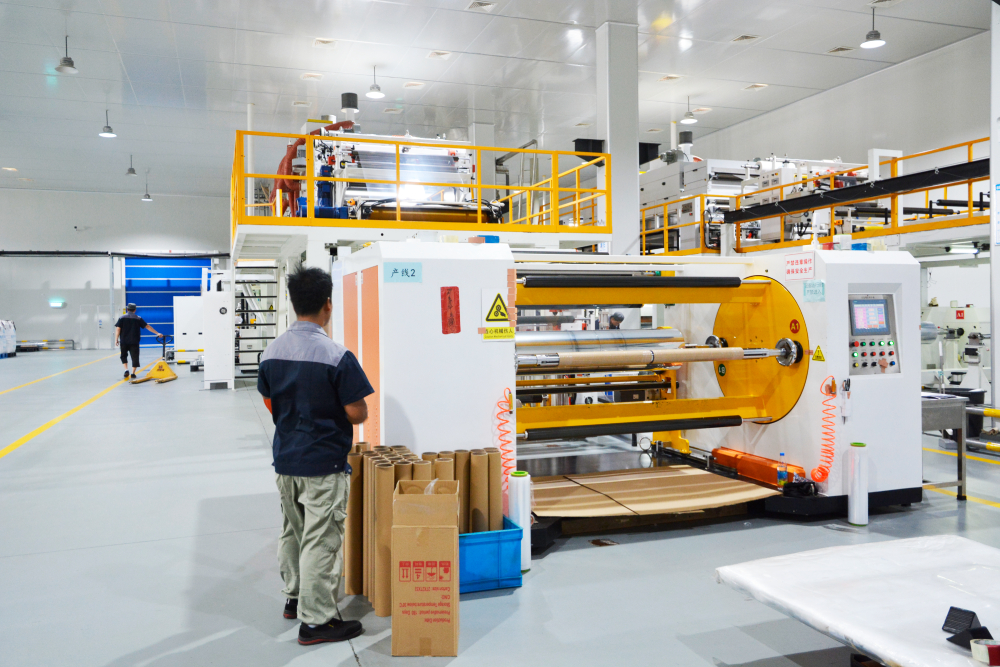
PULIXIN is a manufacturing company based in Shanghai, China. The company employs approximately 90 staff, operates a 20,000-square-meter manufacturing facility, and has an R&D team of 3 engineers. PULIXIN operates 14 advanced co-extrusion production lines with an annual production capacity of 40,000 tons.
The company exports to more than 55 countries across Asia, Europe, the Middle East, Africa, North America, and South America, with export business accounting for 80% of total sales. Major markets include Southeast Asia, the Middle East, South America, and Europe.
PULIXIN offers customized manufacturing services including thickness customization, width customization, color matching, surface finish options, multilayer co-extrusion structures, food-grade material solutions, and OEM production. This makes the company suitable for packaging manufacturers that need stable supply, technical support, and material customization.
FAQ: Thermoforming Plastic Sheet Roll Suppliers
How do I qualify a new thermoforming plastic sheet roll supplier?
Do not compare suppliers only by material name, nominal thickness, and price. Compare the actual sheet structure, thickness tolerance, width, roll configuration, color or transparency, forming behavior, and application requirements. Use the currently proven sheet specification as the baseline, confirm equivalent specifications and documentation, and run a controlled production trial before regular-volume orders. Avoid changing material structure, thickness, and process settings at the same time.
What roll specifications should I provide when ordering thermoforming plastic sheet roll?
Provide the sheet width based on mold layout, product arrangement, and trim allowance, plus the maximum roll diameter, roll weight, and core inner diameter compatible with your unwinding system. For PET rolls, PULIXIN can customize roll sizes from 50–800 kg per roll. For PP and HIPS, roll dimensions are customized to the production line and feeding equipment.
How do I choose between PET, PP, and PS/HIPS thermoforming sheet roll?
PET is commonly selected when transparency, stiffness, and product visibility are priorities. PP is often preferred for cups, dairy containers, and applications requiring better heat resistance and lower material density. PS/HIPS is suitable for many trays, inserts, and opaque or colored thermoformed packaging where easy forming and practical rigidity are important. Final selection should also consider forming depth, temperature, thickness, sealing method, and regulatory requirements.
How do I specify thermoforming sheet for food trays instead of only asking for food-grade sheet?
“Food grade” alone does not define a usable specification. Identify the food type, tray dimensions, forming depth, storage temperature, transparency requirement, sealing method, and applicable food-contact requirements. A refrigerated meat tray, a fruit tray, and an ambient bakery tray may require different material and performance characteristics even though all are food packaging.
What information should I provide when requesting a quotation for custom thermoforming sheet?
Provide material, thickness, width, color, transparency, roll dimensions or core requirements, estimated quantity, application, and destination. For a new thermoforming project, also provide finished-part dimensions, forming depth, machine information, and special performance requirements. This helps the manufacturer recommend a suitable specification and reduce repeated sampling.
Why does PET sheet crack, whiten, or form poorly during thermoforming?
Cracking, whitening, and poor forming are not always caused by the sheet itself. They can result from unsuitable heating, uneven sheet temperature, excessive forming depth, sharp mold geometry, material condition, or an unsuitable sheet specification. Check the sheet, mold, heating profile, and forming parameters together before changing materials.
How should I select plastic sheet for deep-draw thermoforming?
For deep-draw parts, nominal sheet thickness alone is not enough. Evaluate material formability, initial thickness, draw ratio, mold geometry, corner radius, and heating uniformity together. Provide the finished-part drawing and required minimum thickness, select the material and starting sheet thickness according to draw depth and geometry, then verify the specification through actual thermoforming trials.
Next Step: Request a Sample or Quotation
If you are evaluating a thermoforming plastic sheet roll supplier or developing a new rigid packaging product, the next step is to test the material on your own equipment. PULIXIN supports buyers with application-based recommendations, roll specification advice, and controlled production trials.
Request a quotation, catalog, or sample.
Contact PULIXIN by email at operation01@pulixin.com or via WhatsApp at +86 13818585204.
Download the company brochure: PULIXIN Product Catalogue (PDF).
Have Questions or Need More Details?
Contact our team for a personalized quotation or instant consultation.
Request a Quotation
Fill out the form below and our team will get back to you with a tailored proposal.
WhatsApp Direct Chat
Prefer to chat in real-time? Message us on WhatsApp for instant assistance & quick answers.
- Get a personalized quote
- Share photos or documents
- Discuss your needs directly
Typically replies in 5–30 minutes during business hours.