
Thermoforming Plastic Sheet Roll: Certification & Specification Checklist
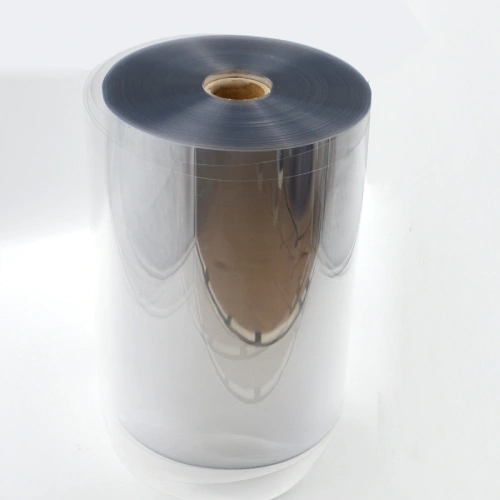
Clear PET thermoforming sheet rolls are widely used for high-clarity trays, clamshells and blister packaging.
Thermoforming Plastic Sheet Roll: A Certification-First Specification Guide
Thermoforming plastic sheet roll is a rigid plastic sheet supplied in roll form, designed for vacuum forming, pressure forming and other thermoforming processes. It is the starting material for products such as fresh produce trays, meat trays, bakery containers, disposable cups, blister packs, pharmaceutical trays, and electronic component trays.
During the research and evaluation stage, packaging buyers often ask how to compare suppliers without running unnecessary trials. The short answer is to evaluate constraints: material grade and structure, thickness and width specification, certification evidence, application fit, and supplier process control. This guide turns those constraints into a checklist that can be used to qualify PET, PP and HIPS thermoforming sheet roll suppliers.
Why “Thermoforming Plastic Sheet Roll” Is Not a Complete Specification
The phrase “thermoforming plastic sheet roll” describes a category, not a finished specification. Two suppliers may both call a material “0.50 mm PET sheet roll,” yet the products can behave differently on the same thermoforming line. Differences can come from raw material selection, mono-layer versus co-extruded structure, thickness distribution, winding quality, release additives, or the specific PET grade used.
When a buyer changes suppliers without verifying these constraints, the result is often uneven heating, inconsistent wall thickness, higher scrap, or packaging failures. A more reliable approach is to compare the actual sheet structure, thickness tolerance, roll configuration, forming behavior, and required compliance documentation.
Industry Context: Why Specification and Compliance Matter Now
The global thermoformed plastic market reached USD 14.79 billion in 2023 and is projected to grow at a CAGR of 4.9% from 2024 to 2030. In international trade, thermoforming plastic materials are commonly classified under HS Code Heading 3920 for non-cellular sheets and 3921 for cellular sheets. For PET, forming is typically carried out between 130°C and 160°C.
Sustainability is also reshaping sourcing decisions. The recycled PET (rPET) market is projected to grow to USD 24.6 billion by 2034. As a result, buyers increasingly ask for GRS-traceable recycled content, food-contact documentation, and recyclable mono-material structures rather than accepting a generic “food-grade” label. These trends make certification evidence and dimensional control essential parts of the purchasing decision.
Material Families: PET, PP and HIPS Thermoforming Sheet Rolls
PET Thermoforming Plastic Sheet Roll
PET thermoforming sheet rolls are commonly selected when transparency, stiffness and product visibility are priorities. PULIXIN supplies the following models: APET thermoforming sheet roll, rPET thermoforming sheet roll, GAG sheet roll, PETG sheet roll, food grade PET sheet roll, transparent PET sheet roll, anti-fog PET sheet roll, anti-block PET sheet roll, anti-scratch PET sheet roll, and anti-static ESD PET sheet roll.
The material base is PET / APET / rPET. Thickness is customizable from 0.18 to 1.7 mm, width from 250 to 1400 mm, and roll size from 50 to 800 kg per roll. The sheet can be produced in mono-layer or multi-layer structure and is suitable for vacuum forming and pressure forming. Typical applications include food packaging, fresh produce packaging, meat packaging, bakery packaging, pharmaceutical packaging, electronics packaging, and blister packaging.
PP Thermoforming Sheet Roll
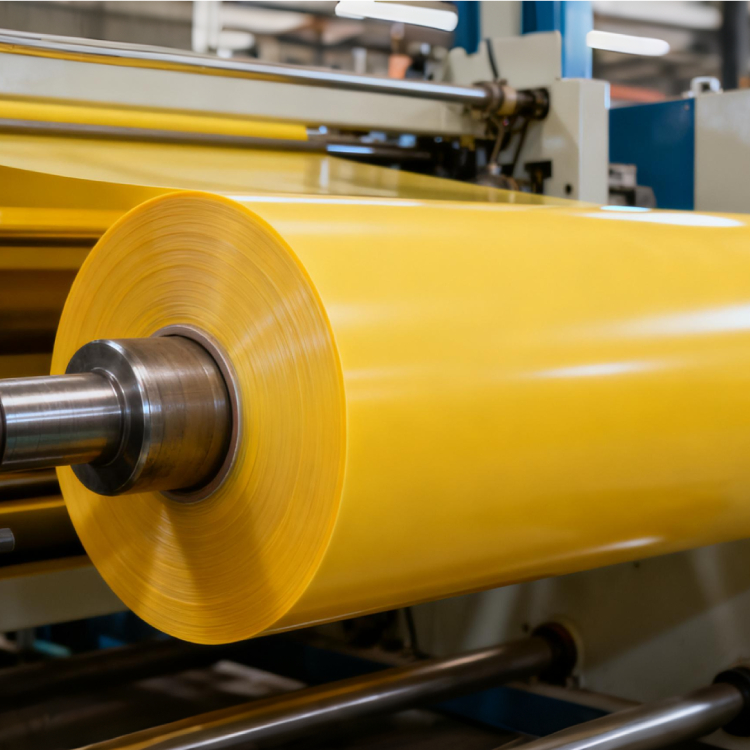
PP thermoforming sheet rolls can be produced in natural, white, black or customized colors.
PP thermoforming sheet rolls are often used for cups, dairy containers, takeaway food packaging and industrial packaging. PULIXIN supplies the following models: normal PP sheet roll, conductive black PP sheet roll, antistatic PP sheet roll, PP/PE thermoforming sheet, and high and low temperature resistant PP sheet roll. The material is polypropylene (PP). Thickness can be customized from 0.3 to 2 mm, width from 300 to 900 mm, with natural, white, black or customized color options. Structure can be mono-layer or multi-layer.
HIPS Thermoforming Sheet Roll
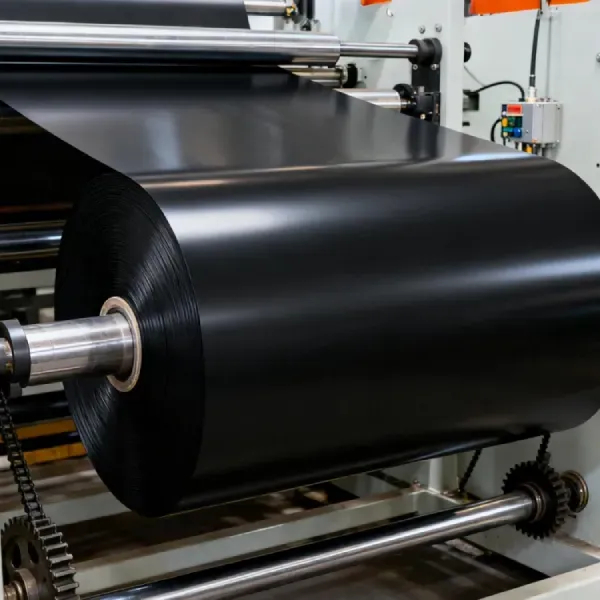
HIPS thermoforming sheet rolls offer stable forming and flexible color and surface customization.
HIPS thermoforming sheet rolls are used in food packaging, blister packaging, electronics packaging and industrial thermoforming. PULIXIN supplies normal HIPS sheet roll, conductive black HIPS sheet roll, antistatic HIPS sheet roll, high and low temperature resistant HIPS sheet roll, and light blocking HIPS sheet roll. The material is polystyrene (PS) / high impact polystyrene (HIPS). Thickness is customizable from 0.24 to 2 mm, width from 300 to 900 mm, with natural, white, black or customized colors and glossy or matte surfaces.
Certification Evidence to Request from a Thermoforming Sheet Roll Manufacturer
Certification is not a marketing statement; it is a constraint that helps buyers shortlist suppliers. The following evidence is relevant when evaluating PET, PP and HIPS thermoforming sheet rolls.
- EU RoHS compliance: SGS test reports can confirm compliance with EU RoHS Directive (EU) 2015/863. PULIXIN holds SGS test reports for PET sheet (SHAPH26002960101), PET with aluminum plating (SHAAF25013706405), PP white/natural sheet (SHAPH26002958405), PS black sheet (SHAPH26002958403), and PS white/natural sheet (SHAPH26002958401). The reports are issued by SGS-CSTC Standards Technical Services (Shanghai) Co., Ltd. and apply to the global market.
- Food safety management: FSSC 22000 certification (CQM25FSSC00171) covers the production of specific PET sheets for food contact applications using plasticizing extrusion. This certification is recognized globally.
- Recycled content: GRS Version 4.0 certification (SGC-GRC09372-GRS-2026-04) applies to PET, PP and HIPS thermoforming sheet rolls, supporting claims about recycled content.
- Management systems: ISO 9001:2015 (00226Q03336R101) and ISO 14001:2015 (00226E02412R101) are issued by China Quality Mark Certification Group (CQM) for the production of polyester sheets (PET) and related management activities.
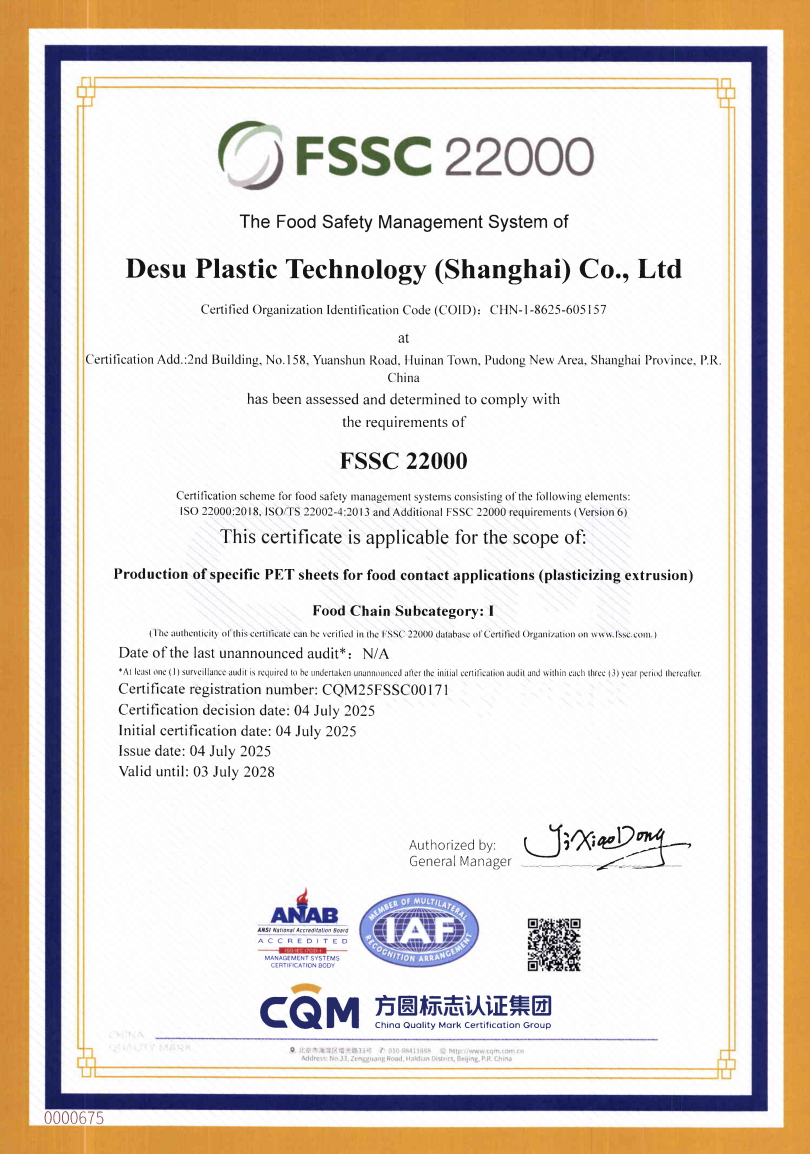
FSSC 22000 certification supports food-contact PET thermoforming sheet production.
How to Evaluate Certification Documents
When reviewing compliance documents, check the product description or scope, certificate number, issuing body, applicable standard, and validity. A test report should clearly identify the material or product tested. For example, an SGS test report for PS black plastic sheet should not be used as evidence for a different material. Buyers should also confirm that the manufacturer can supply documents for the exact product under evaluation.
FDA-Related Considerations
The term “food grade” is not a complete compliance statement. Buyers should confirm the resin type, migration test documentation, and applicable food-contact regulations for the destination market. In customer audits for fresh-produce packaging projects, PULIXIN’s rPET sheet has passed both EU Regulation (EU) No 10/2011 and FDA migration tests. Food-contact PET products in certain applications are also produced with FDA food-contact-grade resin.
Functional Grades and Custom Structures
Beyond standard transparent, white and natural sheets, thermoforming sheet rolls can be produced with specific functional properties. Examples from PULIXIN’s PET line include anti-fog grade to reduce condensation on the package surface, anti-static ESD grade to prevent electrostatic discharge, and rPET grade with recycled content for more sustainable packaging. The HIPS line includes conductive black, antistatic, high and low temperature resistant, and light blocking sheet rolls. The PP line includes conductive black, antistatic, PP/PE coextruded sheet, and high/low temperature resistant versions.
Customization services include material selection, thickness, width, color, transparency, surface finish, roll size, functional properties, packaging and labeling. OEM production is also available.
What to Specify When Ordering Thermoforming Sheet Rolls
A useful RFQ should include more than a material name and a target price. The following information helps a manufacturer recommend a workable specification:
- Material and grade/model (e.g., APET, rPET, food-grade PET, anti-fog PET, normal PP, conductive black PP, normal HIPS, antistatic HIPS).
- Thickness, width, color, transparency, and surface finish.
- Roll dimensions: roll width, roll diameter, core size, and maximum roll weight.
- Structure: mono-layer or multi-layer coextrusion.
- Estimated quantity and annual volume.
- Application details: finished-part dimensions, forming depth, thermoforming machine type, and downstream sealing or filling process.
- Compliance requirements and destination market.
For PULIXIN, standard PET MOQ is 5 tons and standard PP/PS MOQ is 3 tons; customized products may be subject to different MOQs. Delivery time generally ranges from 7 to 15 days depending on material, specifications, order quantity and customization.
Common Sourcing Mistakes
- Selecting sheet thickness before defining the finished part and forming depth.
- Comparing suppliers only on nominal thickness and price.
- Assuming that “food grade” automatically covers the specific food-contact regulation of the destination market.
- Ordering a new material, a different structure and new process settings at the same time, which makes troubleshooting difficult.
- Ignoring roll dimensions and core size, which can cause feeding problems on the thermoforming line.
Step-by-Step: How to Build and Apply a Supplier Verification Checklist
- Define the finished part and application. Identify the food type or product, package dimensions, forming depth, storage temperature, sealing method, and required product visibility. A drawing or finished sample is especially useful.
- Choose the material family. Select PET when clarity and stiffness are priorities; PP for cups, dairy containers and temperature-related requirements; PS/HIPS for opaque or colored trays, blisters and inserts where practical rigidity and easy forming matter.
- Select the appropriate grade or model. Confirm whether the application needs food-grade, anti-fog, anti-static, conductive, recycled-content, or other functional properties.
- Define the dimensional specification. Determine thickness based on forming depth, part weight and required stiffness. Determine width from mold layout, trim allowance and machine width. Confirm roll diameter, weight and core size with the unwinding system.
- Verify certification and compliance documents. Request product test reports such as EU RoHS 2015/863, food safety system certifications such as FSSC 22000, recycled-content certifications such as GRS, and any market-specific migration documentation.
- Run a controlled production trial. Before placing regular-volume orders, test the sheet on the actual thermoforming line. Do not change material structure, thickness and process settings at the same time, because this makes the source of any forming issue difficult to identify.
- Assess supplier process control. Check quality control practices such as raw material inspection, thickness and width control, appearance inspection, in-process quality control, and finished product inspection.
Use Cases and Evidence from Thermoforming Packaging Production
Chilled and Fresh Food Packaging
Fresh meat trays, fruit containers and prepared food packaging require low-temperature performance and moisture resistance. For a fresh-produce packer in the Netherlands and Australia, PULIXIN supplies approximately 1,500 tons of rPET sheet per year for berry clamshells, salad bowls, fresh-herb and bakery containers. The material uses 30–100% PCR content with GRS batch traceability, achieved a packaging carbon footprint reduction of 28%, and passed EU 10/2011 and FDA migration tests at every audit, with zero food-safety claims since launch.
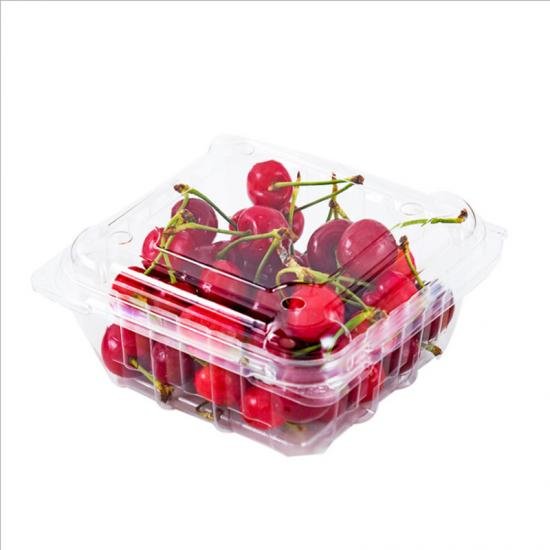
rPET thermoforming sheet rolls are used for fruit clamshells with GRS traceability.
Cups, Lids and Dairy Packaging
PP thermoforming sheet rolls are commonly processed into drinking cups, yogurt cups, dairy containers and cup lids. The material must provide consistent thickness, stable forming, suitable stiffness and good rim-forming performance. For cup and dairy projects, buyers should evaluate cup depth, rim geometry, stacking behavior, filling temperature and sealing method.
Electronics and ESD Packaging
Electronic component trays and transport trays may require anti-static or ESD properties when components are sensitive. HIPS thermoforming sheet rolls can be produced in conductive black or antistatic versions. In an electronics manufacturing project in Vietnam and Mexico, PULIXIN supplied approximately 600 tons per year of PS/HIPS ESD tray material for PCBA handling trays and IC shipping trays. Surface resistance was held at 10⁴–10⁸ Ω after more than 20 reuse cycles, ESD damage claims fell by 90%, and tray flatness rejects remained below 0.5%.
Toy and Retail Packaging
Transparent display packs, clamshells and blister packs require clarity, impact strength and consistent appearance. For a toy brand owner in Germany and the United States, approximately 800 tons per year of PET sheet is used for action-figure clamshells, carded blisters and window patches. Reported results include a drop-test cracking rate reduction from 3.2% to 0.4%, an 18% reduction in sealing scrap, and 24 consecutive months of on-time delivery.
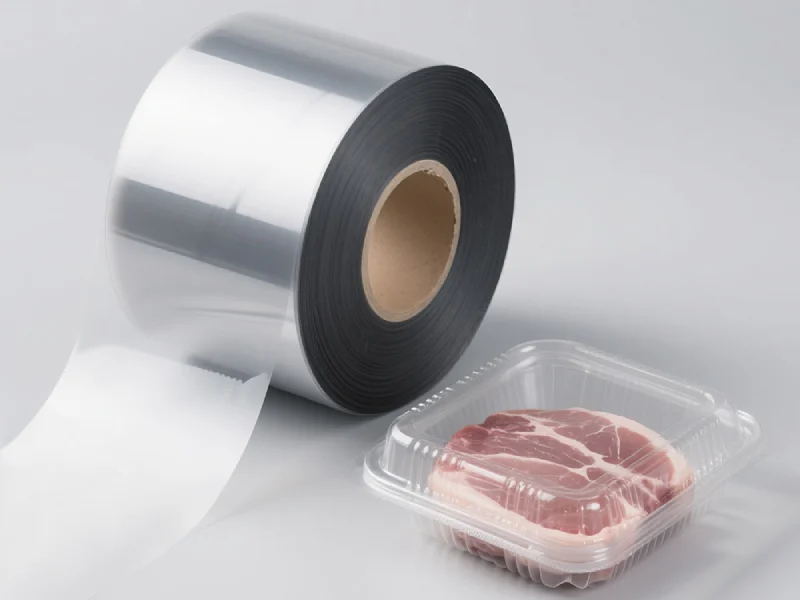
PET thermoforming sheet rolls are widely used for food trays and retail packaging.
Medical and Pharmaceutical Packaging
Medical device trays, pharmaceutical blisters and disposable medical product trays require consistent thickness, stable thermoforming performance, clean surfaces and dimensional stability. PET and HIPS are both used in this area depending on the package design and regulatory requirements. Buyers should avoid describing a general-purpose plastic sheet as “medical grade” unless the material and supporting documentation justify that designation.
Comparison: PET vs. PP vs. HIPS Thermoforming Sheet Rolls
| Parameter | PET Thermoforming Sheet Roll | PP Thermoforming Sheet Roll | HIPS Thermoforming Sheet Roll |
|---|---|---|---|
| Material | PET / APET / rPET | Polypropylene (PP) | Polystyrene (PS) / HIPS |
| Example models | APET, rPET, GAG, PETG, Food Grade, Transparent, Anti-Fog, Anti-block, Anti-scratch, Anti-static ESD | Normal, conductive black, antistatic, PP/PE thermoforming sheet, high/low temperature resistant | Normal, conductive black, antistatic, high/low temperature resistant, light blocking |
| Thickness range | 0.18–1.7 mm customized | 0.3–2 mm customized | 0.24–2 mm customized |
| Width range | 250–1400 mm customized | 300–900 mm customized | 300–900 mm customized |
| Structure | Mono-layer / multi-layer; 50–800 kg per roll | Mono-layer / multi-layer | Mono-layer / multi-layer; glossy or matte surface |
| Primary strengths | High clarity, stiffness, food-grade options, recycled-content options | Lightweight, good temperature performance, cup/dairy forming stability | Good rigidity, stable forming, flexible color and surface customization |
| Common applications | Food trays, fresh produce, meat, bakery, pharma, electronics, blister packaging | Cups, lids, dairy containers, takeaway food packaging, industrial packaging | Blister packaging, trays, electronics packaging, industrial thermoforming |
Frequently Asked Questions
1. What should buyers verify when sourcing PET thermoforming plastic sheet rolls for food contact or FDA-related packaging?
Buyers should verify more than the phrase “food grade.” Confirm the material structure, resin type, migration test documentation, and requirements for the destination market. PULIXIN supplies PET thermoforming sheet rolls made with FDA food-contact-grade resin for relevant food-contact products, and its rPET sheet has passed EU Regulation (EU) No 10/2011 and FDA migration tests during customer audits for fresh-produce packaging. FSSC 22000 certification also covers production of specific PET sheets for food contact applications.
2. How should I choose between PET, PP and PS thermoforming sheet rolls?
Select material according to the finished package rather than price alone. PET is commonly preferred when transparency, stiffness and product visibility are priorities. PP is often used for cups, dairy containers and applications requiring better heat resistance and lower material density. PS/HIPS is suitable for trays, inserts and opaque or colored thermoformed packaging where easy forming and practical rigidity matter. Final selection should also consider forming depth, storage temperature, thickness, sealing method, and regulatory requirements.
3. What information should I provide when requesting a quotation for custom thermoforming sheet?
Provide material, thickness, width, color, transparency, roll dimensions or core requirements, estimated quantity, application, and destination. For a new thermoforming project, include finished-part dimensions, forming depth, machine information, and special performance requirements. This helps the manufacturer recommend a more suitable specification and reduces repeated sampling.
4. How should I specify roll width, roll diameter and core size when ordering thermoforming sheet?
Roll dimensions should match the thermoforming and feeding equipment. Roll width is normally determined by mold layout, product arrangement and trim allowance, while roll diameter, roll weight and core size must be compatible with the unwinding system. Correct roll specifications reduce trim waste and prevent handling or feeding problems.
5. What should I check when changing thermoforming sheet suppliers?
Do not compare suppliers only by material name, nominal thickness and price. Compare actual sheet structure, thickness tolerance, width, roll configuration, color/transparency, forming behavior, and application requirements. Use the currently proven specification as the baseline, confirm required documentation, and run a controlled production trial before moving to regular-volume orders. PULIXIN provides technical support for material selection, thermoforming application and product specification, and can supply samples and quotations for evaluation.
Conclusion
Evaluating thermoforming plastic sheet rolls is not about finding the lowest price per kilogram. It is about matching material grade, dimensions and compliance evidence to the actual packaging application and production equipment. A certification-first specification checklist helps procurement and R&D teams compare suppliers objectively, reduce trial-and-error, and build a more stable supply chain.
PULIXIN manufactures PET, PP and HIPS thermoforming sheet rolls with customized thickness, width, color, structure and functional properties. Certifications and test evidence include FSSC 22000, GRS Version 4.0, EU RoHS 2015/863 SGS test reports, ISO 9001:2015 and ISO 14001:2015. If you are evaluating thermoforming plastic sheet rolls for a new or existing project, the PULIXIN team can help you define the specification before you commit to volume production.
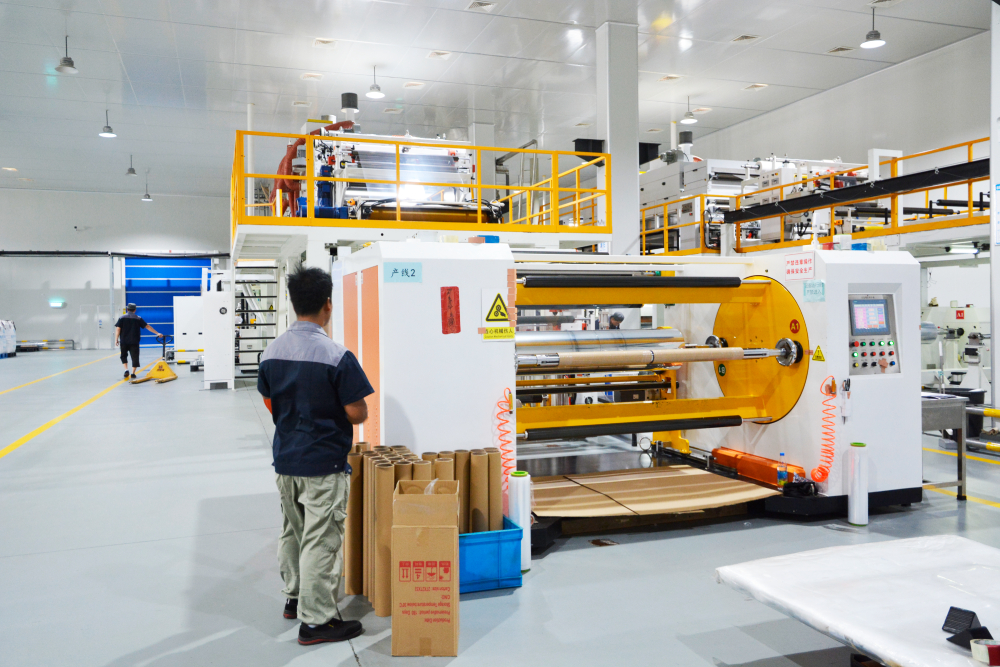
PULIXIN factory and production facility in Shanghai, China.
Interested in samples or a quotation?
Download the PULIXIN catalogue: PULIXIN Thermoforming Plastic Sheet Catalogue
Email: operation01@pulixin.com | Tel/WhatsApp: +86 13818585204
Have Questions or Need More Details?
Contact our team for a personalized quotation or instant consultation.
Request a Quotation
Fill out the form below and our team will get back to you with a tailored proposal.
WhatsApp Direct Chat
Prefer to chat in real-time? Message us on WhatsApp for instant assistance & quick answers.
- Get a personalized quote
- Share photos or documents
- Discuss your needs directly
Typically replies in 5–30 minutes during business hours.