
Top 6 Packaging Applications for Thermoforming Plastic Sheet Rolls: A Ranked List
This ranked list assesses six packaging applications for thermoforming plastic sheet rolls by requirement density, forming stability, downstream equipment fit, compliance exposure and available application evidence. It is written for packaging converters, brand owners and procurement teams at the Evaluation stage who need to match a sheet roll specification to a real packaging line, not just compare material names.
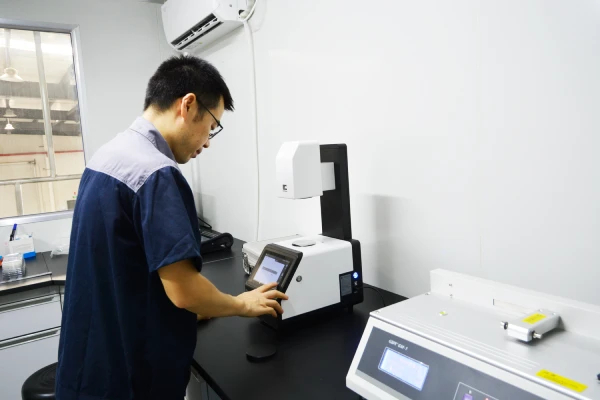
Cover: PULIXIN thermoforming plastic sheet roll inspection and packaging support for formed packaging applications.
Quick answer: The six applications, ranked from highest to lower requirement density, are:
- Medical device trays — clean surface, dimensional stability, consistent thickness and stable thermoforming.
- Pharmaceutical blister packaging — consistent thickness, clean surface, stable forming, sealing and die-cutting.
- Food trays — food-contact compliance, stable thermoforming, impact resistance and anti-fog options where needed.
- Toy blister packs — impact resistance, suitable transparency, stable sealing and printability.
- Transparent folding boxes — suitable transparency, smooth surface, dimensional stability, creasing and folding.
- Printed display sheets — good printability, smooth surface, consistent thickness and dimensional stability.
PULIXIN Thermoforming Plastic Sheet is the rigid thermoforming sheet roll line from Pulixin Packaging Materials (Shanghai) Co., Ltd., a Shanghai-based manufacturer of PET, PP and PS/HIPS sheet rolls for packaging converters.
What This Ranking Means and What It Does Not
This is an application-fit ranking for sheet roll selection. It is not a market-size ranking, a brand ranking or a claim that one application is commercially more important than another. The ranking reflects how many sheet-roll requirements an application concentrates in one production line, how visible sheet defects become after forming, and how much downstream equipment the sheet must survive.
A medical device tray and a printed display sheet may use sheet rolls from the same material family, but they do not test the sheet in the same way. A medical tray exposes thickness variation through forming and fit. A printed display sheet exposes surface defects through ink and appearance. A food tray adds food-contact compliance to forming and sealing. A toy blister pack adds impact resistance and retail transparency. Ranking applications by requirement density helps buyers decide where to spend validation time first.
Problem Definition: Why Application Ranking Matters in Sheet Roll Selection
At the Evaluation stage, the buyer is not asking whether thermoforming works at all. The buyer is asking which application will expose a sheet roll weakness first. A sheet roll that forms acceptably in a shallow tray may fail in a deep medical tray with tight dimensional tolerances. A sheet roll with good clarity may still create sealing scrap in a toy blister line. A sheet roll with acceptable stiffness may not meet food-contact documentation requirements.
The practical problem is specification mismatch. Thermoforming plastic sheet rolls are selected by material, thickness, width, roll size, surface finish, transparency, color and functional properties. Those variables interact with the forming machine, die design, heating profile, cooling, trimming, sealing, printing, creasing and folding. Ranking applications by requirement density gives the buyer a sequence for validation: start with the application that leaves the least room for sheet variability, then move to applications with wider processing windows.
Industry Background: Where Thermoforming Sheet Rolls Fit in Packaging
Thermoforming plastic sheet rolls are rigid plastic sheets supplied in roll form for thermoforming, vacuum forming or pressure forming. Common material families include PET, PP and PS/HIPS, with co-extruded structures used when a combination of properties is required. The sheet roll becomes a formed tray, blister, clamshell, insert or display component after heating, forming, cooling and trimming.
The wider category is established and growing. Grand View Research valued the global thermoformed plastic market at US$14.79 billion in 2023 and projected a 4.9% CAGR for 2024–2030. That context matters because application fit is not only a technical question; it affects scrap rates, line speed, packaging appearance and compliance documentation across a packaging portfolio.
For food-contact applications in the European Union, Regulation (EU) No 10/2011 governs plastic materials and articles intended to come into contact with food. Food-contact compliance is therefore application-specific and must be confirmed for the intended use, not assumed from a general material name.
Detailed Solution: The Six Applications, Ranked
1. Medical Device Trays
Medical device trays rank first because they concentrate several sheet-roll requirements in one application: consistent thickness, dimensional stability, clean surface and stable thermoforming. A tray that is dimensionally unstable can create fit problems with devices, lids or nested components. A surface defect that is minor on a roll can become a visible reject after forming. Thickness variation can change wall distribution and stiffness in critical areas.
The operating chain typically includes thermoforming or vacuum forming, die-cutting, and sealing when a lidding web is used. Filling may be part of the line. The sheet roll must therefore survive heat, forming, trimming and downstream handling without introducing surface contamination or dimensional drift.
Material direction depends on the tray design and the cleaning or sterilization route. PULIXIN supplies PET, PP and PS/HIPS thermoforming sheet rolls and offers customization for thickness, width, color, transparency, surface finish, roll size and functional properties. PULIXIN quality control covers raw material inspection, thickness and width control, appearance inspection, in-process quality control and finished product inspection, with third-party testing available when required.
A practical limit applies: medical device trays require application-specific validation. The sheet supplier can provide material and quality-system evidence, but the converter or device manufacturer must validate the formed tray against its own requirements.
2. Pharmaceutical Blister Packaging
Pharmaceutical blister packaging ranks second because it combines stable thermoforming with clean surface, consistent thickness, dimensional stability, sealing and die-cutting. The blister cavity must form consistently so that the product sits correctly and the lid seals reliably. Surface contamination or gel particles can become visible defects. Thickness variation can affect cavity strength and sealing performance.
PS/HIPS is a relevant material direction for blister packaging, and PULIXIN lists PS sheet roll for blister packaging among its applications. PULIXIN's PS black and PS white (natural) sheet scopes include SGS test reports under EU RoHS Directive (EU) 2015/863. That documentation supports the material-compliance side of supplier evaluation, while the converter still needs to validate the forming and sealing process.
Typical equipment includes thermoforming, die-cutting and sealing, with filling integrated into the blister line. The sheet roll must run consistently across the heating, forming and sealing stations, because a small thickness or flatness variation can create scrap across a high-speed line.
3. Food Trays
Food trays rank third because they add food-contact compliance to the forming, sealing and filling requirements already present in tray production. When the formed package touches food, the buyer must confirm the grade, migration testing and documentation for the intended use. Food-contact compliance is not a generic label; it is linked to the material, application and market.
PULIXIN's PET/RPET food-packaging case provides concrete evidence. Product 8594 is used for berry and cherry clamshells, salad bowls, fresh-herb and bakery containers. The project, located in the Netherlands and Australia, used approximately 1,500 tonnes of RPET sheet per year, achieved 30–100% PCR content with GRS batch traceability, and passed EU 10/2011 and FDA migration tests at every audit. The case also reports glass-clear clarity and an anti-fog option. PULIXIN holds FSSC 22000 certification for the production of specific PET sheets for food contact applications.
PULIXIN also offers food-grade PP sheet rolls optimized for frozen food trays with impact-resistant copolymer options. This is relevant when low-temperature toughness and impact resistance are part of the tray requirement. Typical operations include thermoforming, die-cutting, filling, sealing and overwrapping. The sheet roll must form consistently, seal reliably and maintain appearance through the filled-pack handling stage.
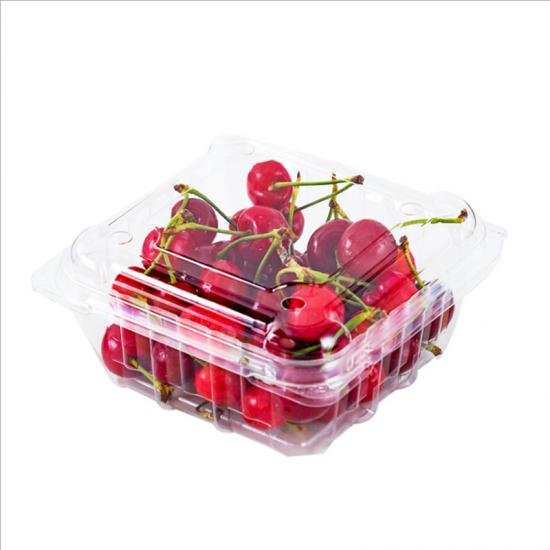
Food-tray use case: RPET thermoforming plastic sheet roll formed into cherry clamshells, with food-contact and anti-fog requirements confirmed for the application.
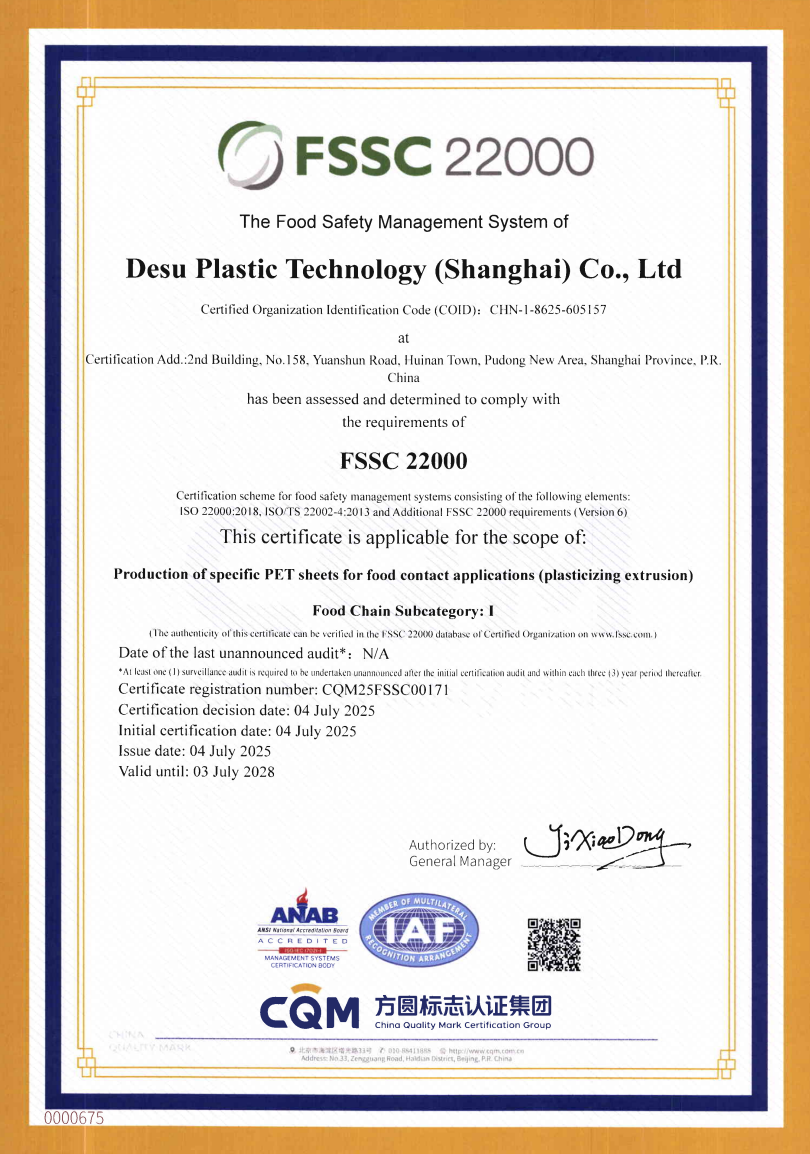
Compliance proof point: FSSC 22000 certification covers the production of specific PET sheets for food contact applications.
4. Toy Blister Packs
Toy blister packs rank fourth because they make impact resistance and retail transparency highly visible. A toy blister or clamshell must protect the product through handling and drop events, present the product clearly on shelf, and seal reliably to a card or backing. The sheet roll must form consistently, resist cracking and maintain surface quality for printing and sealing.
PULIXIN's toy packaging case provides application evidence. Product 8594 is used for action-figure clamshells, carded blisters, window patches and collector display cases. The project, located in Germany and the United States, used approximately 800 tons per year. It achieved a reduction in drop-test cracking from 3.2% to 0.4%, an 18% reduction in sealing scrap and 24 consecutive months of on-time delivery. The case highlights high impact strength, brilliant transparency and a printable surface.
Typical equipment includes thermoforming, die-cutting, sealing and printing. The sheet roll must survive forming without losing clarity, seal within the line window and accept printing where graphics are used. For toy packaging, a sheet that is clear but brittle or a sheet that is tough but hazy both create commercial problems. The application rewards balanced impact resistance and transparency.
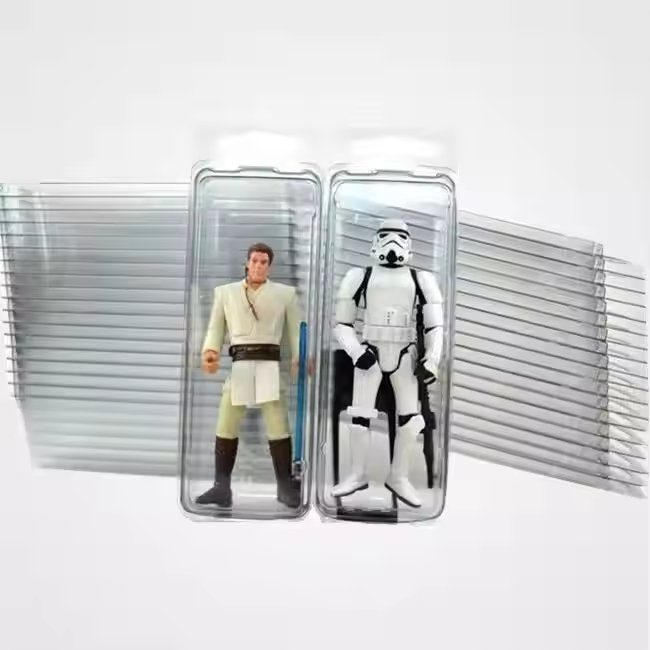
Toy-packaging use case: clear thermoforming plastic sheet roll formed into an action-figure clamshell, where impact resistance and transparency are visible requirements.
5. Transparent Folding Boxes
Transparent folding boxes rank fifth because they use the sheet roll differently from deep-formed trays. The sheet may be die-cut, creased and folded rather than deep drawn. That changes the failure mode. The buyer is less focused on deep-draw wall distribution and more focused on suitable transparency, smooth surface, dimensional stability and consistent thickness through creasing and folding.
A transparent folding box must look clean on shelf, fold without cracking or whitening at the crease, and hold its shape after assembly. Surface scratches, haze and thickness variation become visible quickly. The sheet roll should therefore be specified for clarity, surface quality and flatness, with creasing and folding trials included in validation.
Typical operations include printing where graphics are required, die-cutting, creasing and folding. Thermoforming may be limited or absent, so the buyer should not evaluate this application only on forming performance. PULIXIN supplies transparent PET sheet roll and offers customization for thickness, width, color, transparency and surface finish. The application is ranked fifth because it is demanding on appearance and converting, but it does not carry the same combined forming, sealing and compliance load as medical, pharmaceutical or food trays.
6. Printed Display Sheets
Printed display sheets rank sixth because the primary requirement is printability and surface quality rather than deep forming. The sheet roll must provide a smooth surface, consistent thickness, dimensional stability and good printability for the chosen printing process. A surface defect or thickness variation that would be hidden in a formed tray can be visible in a printed display sheet.
Typical operations include printing, die-cutting and, where required, thermoforming. The sheet roll may be PET, PP or PS/HIPS depending on the display design, ink system and downstream process. PULIXIN offers color matching, surface finish options and appearance inspection within its quality control scope. Buyers should confirm printability through a print trial, because ink adhesion and appearance depend on the specific printing process and sheet surface.
This application is ranked sixth not because it is unimportant, but because its sheet-roll requirement set is narrower than the top five. The main risk is appearance and print consistency, not combined forming, sealing and food-contact compliance.
Comparison Table: Six Applications Ranked for Sheet Roll Fit
| Rank | Application | Why It Is Included | Key Sheet-Roll Requirements | Typical Equipment / Operations | Material or Evidence Note |
|---|---|---|---|---|---|
| 1 | Medical device trays | Highest requirement density; defects become fit, surface or dimensional rejects | Consistent thickness, stable thermoforming, clean surface, dimensional stability | Thermoforming / vacuum forming, die-cutting, sealing, filling where used | PET, PP or PS/HIPS options; application-specific validation required |
| 2 | Pharmaceutical blister packaging | Combines forming, sealing and clean-surface requirements | Consistent thickness, stable thermoforming, clean surface, dimensional stability | Thermoforming, die-cutting, sealing, filling | PS/HIPS blister sheet direction; SGS PS reports under EU RoHS 2015/863 |
| 3 | Food trays | Adds food-contact compliance to forming, filling and sealing | Food-contact compliance, stable thermoforming, impact resistance, anti-fog where needed | Thermoforming, die-cutting, filling, sealing, overwrapping | PET/RPET food-grade case; FSSC 22000; EU 10/2011 and FDA migration tests reported |
| 4 | Toy blister packs | Impact resistance and retail transparency are immediately visible | Impact resistance, suitable transparency, stable thermoforming, clean surface, sealing | Thermoforming, die-cutting, sealing, printing | PET case: drop-test cracking reduced from 3.2% to 0.4%; sealing scrap reduced 18% |
| 5 | Transparent folding boxes | Appearance and converting performance matter more than deep forming | Suitable transparency, smooth surface, dimensional stability, consistent thickness | Printing, die-cutting, creasing, folding | Transparent PET sheet roll; confirm crease and fold performance |
| 6 | Printed display sheets | Print and surface quality dominate the application | Good printability, smooth surface, consistent thickness, dimensional stability | Printing, die-cutting, thermoforming where required | PET, PP or PS/HIPS options; confirm print trial and surface finish |
Step-by-Step Breakdown: How to Specify a Sheet Roll for a Ranked Application
The ranking becomes useful only when it is converted into a specification sequence. The following steps apply across the six applications and help prevent a buyer from over-specifying one attribute while missing a more important one.
- Lock the application and compliance route first. Decide whether the formed package touches food, supports a medical device, carries a pharmaceutical product or serves as retail packaging. For food trays, confirm the food-contact route early, including EU 10/2011 where the EU market applies.
- Choose the material family against the application, not against habit. PET, PP and PS/HIPS each have different property balances. PULIXIN also supplies co-extruded structures and functional options such as anti-fog, anti-static and high impact grades. The right choice depends on forming depth, stiffness, clarity, impact and compliance needs.
- Specify thickness, width, roll size, color, transparency and surface finish. PULIXIN offers customization across these variables. A medical tray, a toy blister and a printed display sheet may all need different surface and thickness priorities, even when they use the same material family.
- Match the forming window to the equipment. PET thermoforming typically occurs between 266°F and 320°F, or 130°C and 160°C. The sheet specification should be validated on the actual thermoforming or vacuum forming equipment, because heating profile, die design and cooling affect wall distribution and cycle time.
- Validate downstream operations as a chain. A sheet roll that forms well can still fail at die-cutting, sealing, printing, creasing, folding, filling or overwrapping. Test the full chain, not only the formed part. For toy blisters, include drop testing and sealing scrap. For transparent folding boxes, include crease and fold trials. For printed display sheets, include a print trial.
- Confirm quality control, MOQ and lead time before committing. PULIXIN quality control includes raw material inspection, thickness and width control, appearance inspection, in-process quality control and finished product inspection, with third-party testing available when required. Standard MOQ is 5 tons for PET and 3 tons for PP/PS, with customized products potentially subject to different MOQ. Delivery generally ranges from 7 to 15 days depending on material, specifications, order quantity and customization.
Use Cases: How Buyers Apply the Ranking
Medical and pharmaceutical converters. These buyers should start with the top two applications because the cost of a sheet-roll mismatch is high. They need clean surface, consistent thickness and dimensional stability, and they should validate the sheet on their own forming, sealing and die-cutting line. PULIXIN's material customization and quality control support this evaluation, but the final validation remains application-specific.
Retail packaging converters. Toy blister packs, transparent folding boxes and printed display sheets reward appearance and converting consistency. Buyers should test impact resistance, transparency, creasing, folding and printability in the same sequence as the production line. The toy case shows why this matters: drop-test cracking fell from 3.2% to 0.4% and sealing scrap fell 18% after the sheet and process were matched.
Food packers and supermarket suppliers. Food trays require a different evaluation path. Food-contact compliance, migration testing and anti-fog performance may matter as much as forming. The PET/RPET food-packaging case reported 30–100% PCR content with GRS batch traceability, EU 10/2011 and FDA migration tests passed at every audit, and an anti-fog option. PULIXIN's FSSC 22000 certification further supports the food-contact evaluation.
FAQ
Which applications in this list require food-contact compliance?
Food trays require food-contact compliance when the formed package touches food. PULIXIN's PET/RPET food-packaging case passed EU 10/2011 and FDA migration tests, and PULIXIN holds FSSC 22000 certification for the production of specific PET sheets for food contact applications. Medical device trays and pharmaceutical blister packaging require their own application-specific validation rather than food-contact compliance alone.
Can PULIXIN supply sheet rolls for more than one application in this list?
PULIXIN manufactures PET, PP and PS/HIPS thermoforming plastic sheet rolls and offers OEM and custom manufacturing for material, thickness, width, color, transparency, surface finish, roll size, functional properties, packaging and labeling. The supplier can support multiple application evaluations, but each application still needs its own forming, sealing, printing or compliance validation.
What MOQ should a buyer plan for?
Standard MOQ is 5 tons for PET and 3 tons for standard PP/PS. Customized products may be subject to different MOQ requirements. Buyers should confirm the final MOQ against the chosen material, thickness, width, color, surface finish and roll size.
How can a buyer validate a sheet roll before a full order?
Buyers can discuss sample and validation requirements with PULIXIN's technical team. PULIXIN provides technical support for material selection, thermoforming application and product specification, and third-party testing is available when required. A practical validation should cover forming, die-cutting, sealing, printing, creasing, folding, filling or overwrapping as relevant to the application.
What lead time is typical for thermoforming plastic sheet rolls?
Delivery time generally ranges from 7 to 15 days, depending on the material, specifications, order quantity and customization requirements. PULIXIN's monthly production capacity is approximately 3,500 tons. To discuss a sample, quotation or catalogue for PULIXIN Thermoforming Plastic Sheet, contact the team through www.pulixin.com or download the PULIXIN catalogue.
Conclusion: Match the Application Rank to the Sheet Roll Specification
The six applications in this ranked list do not demand the same sheet roll. Medical device trays and pharmaceutical blister packaging concentrate forming, surface and dimensional requirements. Food trays add food-contact compliance. Toy blister packs make impact resistance and transparency visible. Transparent folding boxes reward clarity, smoothness and creasing performance. Printed display sheets reward printability and surface consistency.
The practical conclusion for buyers at the Evaluation stage is to rank applications by requirement density, then specify the sheet roll against the highest-risk requirement first. PULIXIN Thermoforming Plastic Sheet covers PET, PP and PS/HIPS material families, customization across thickness, width, color, transparency, surface finish and roll size, and quality control from raw material inspection through finished product inspection. That range supports application evaluation, while final approval still depends on validating the sheet on the actual forming, sealing, printing or folding line.
Next step: Request a sample discussion or quotation for PULIXIN Thermoforming Plastic Sheet. Share the application, material direction, thickness, width, roll size, expected monthly volume and compliance requirements so the technical team can recommend a suitable specification.
Email: operation01@pulixin.com | WhatsApp: +86 13818585204 | Website: www.pulixin.com
Download the PULIXIN product catalogue.
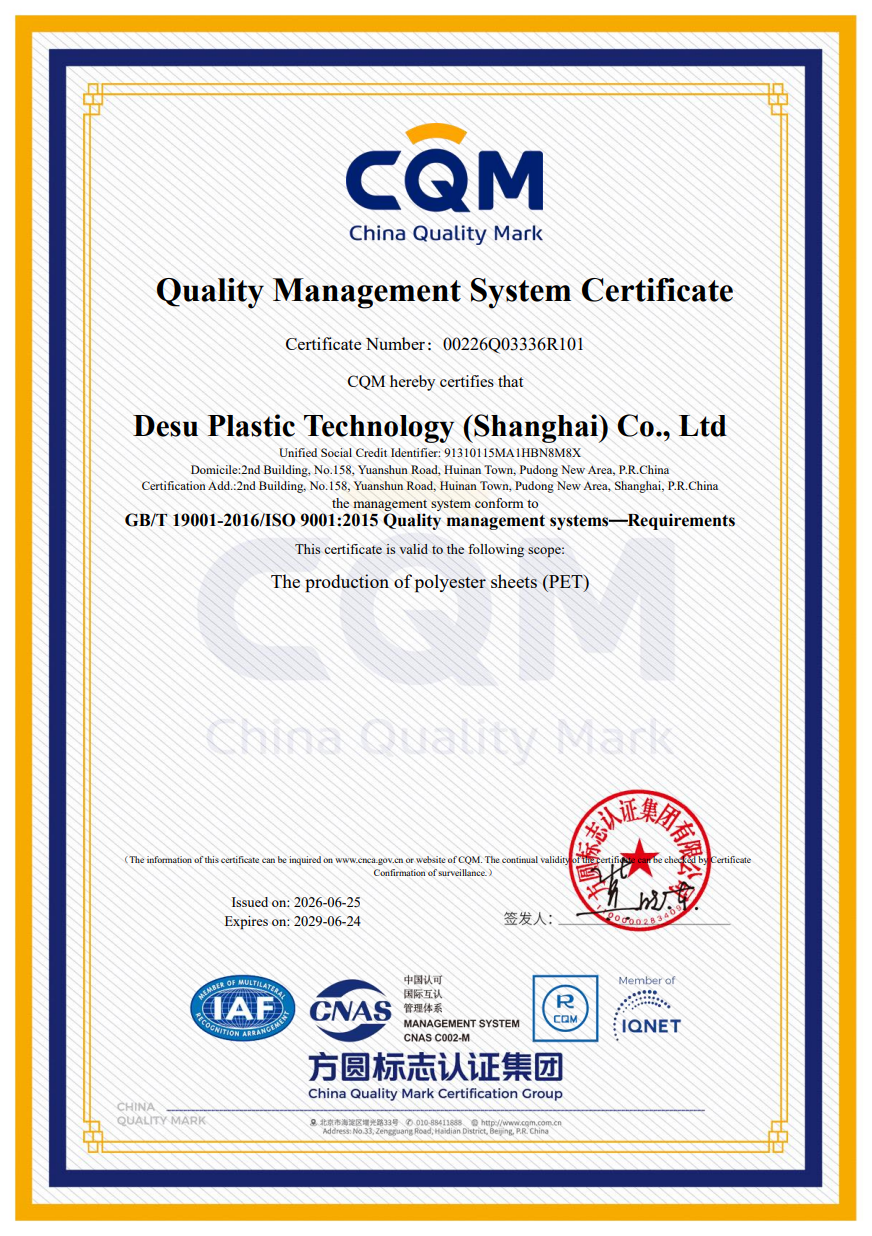
Quality-system proof point: PULIXIN's ISO 9001:2015 certificate supports consistent sheet-roll production and inspection.
Have Questions or Need More Details?
Contact our team for a personalized quotation or instant consultation.
Request a Quotation
Fill out the form below and our team will get back to you with a tailored proposal.
WhatsApp Direct Chat
Prefer to chat in real-time? Message us on WhatsApp for instant assistance & quick answers.
- Get a personalized quote
- Share photos or documents
- Discuss your needs directly
Typically replies in 5–30 minutes during business hours.