
What Are Thermoforming Plastic Sheet Rolls? A Primer for Packaging Converters
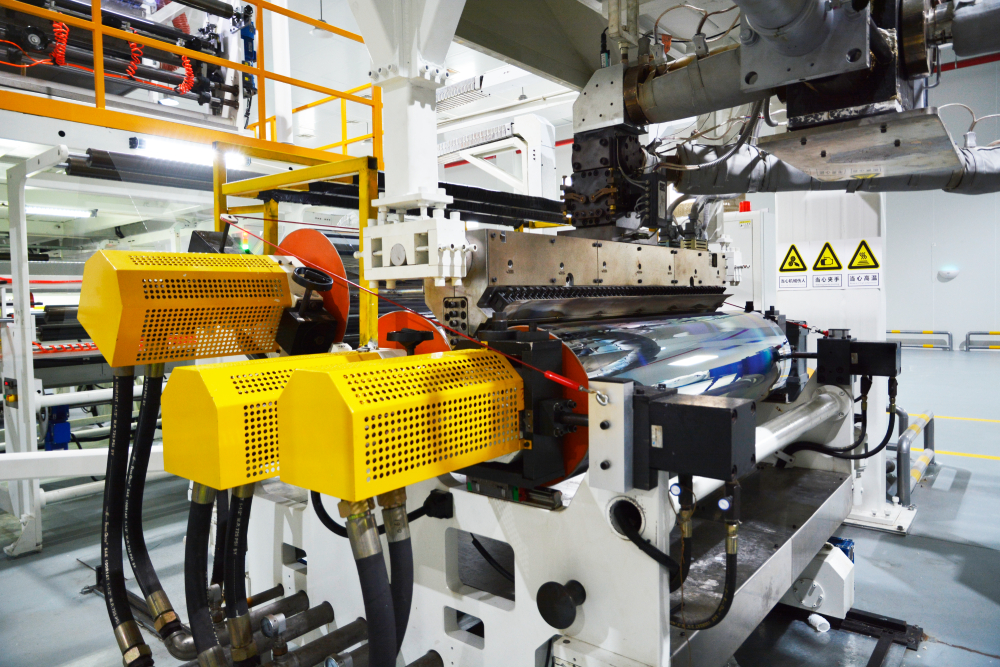
A thermoforming plastic sheet roll is a continuous length of rigid thermoplastic sheet — PET, PP or HIPS — wound onto a core and supplied to packaging converters as an unwindable substrate. It is not a finished package. It is the material that enters a production line before anything is printed, laminated, sealed or formed.
That definition matters because sheet rolls sit at the start of a long chain of decisions. A converter choosing between PET, PP and HIPS is also choosing a forming-temperature window, a clarity level, a set of food-contact or anti-static requirements, and a roll format that has to match the unwind, printing and forming equipment already on the floor. The substrate is the cheapest place to get a project right, and the most expensive place to get it wrong.
This primer covers what converters actually mean when they say “thermoforming plastic sheet roll”: the materials, how the rolls are made, the two main processing modes, the specification figures that drive purchasing, and the checks that tell you whether a roll will suit a given packaging programme.
Thermoforming Plastic Sheet Roll: A Working Definition
Physically, a sheet roll is three things at once.
- A thermoplastic material. It softens when heated, stiffens when cooled, and can repeat that cycle — which is what makes thermoforming viable as a continuous process rather than a moulding cycle.
- A roll format. It is not a cut sheet or a flat panel. Rolls ship at customised widths and roll weights, so a forming line can run continuously instead of stopping at every sheet.
- A substrate. It carries print, coating, lamination and sealing layers applied before or during forming.
PET sheet rolls supplied under the PULIXIN Thermoforming Plastic Sheet range show what that looks like in practice: thickness of 0.18–1.7 mm, width of 250–1400 mm, roll sizes of 50–800 kg per roll, mono-layer or multi-layer structure, and optional hard coating, silicon coating, corona treatment, laminated film or coating. Those figures are set per project, not fixed — which is the point. A roll is specified around the forming line, the formed part and the sealing process.
For a converter moving from cut sheet to roll stock, two properties dominate the outcome: thickness consistency and flatness. Both show up at the forming station — thickness drift changes heat-up time, and poor flatness changes how a part seats in the mould.
Why Sheet Rolls Carry So Much Weight in Packaging Converting
Thermoforming is a large category in its own right. Grand View Research valued the global thermoformed plastic market at USD 14.79 billion in 2023 and projected a CAGR of 4.9% from 2024 to 2030. From a trade perspective, these materials sit under HS Code Heading 3920 (non-cellular) and 3921 (cellular), which is how sheet roll shipments are normally declared and tracked.
Two material-side shifts are driving demand:
- Bottle-derived rPET in thermoforming sheet is moving from optional to expected in many retail programmes. Dataintelo projects the rPET market to reach USD 24.6 billion by 2034.
- Multi-layer co-extrusion lets a converter obtain surface function and core economics in a single sheet, without adding a downstream coating or lamination step.
At the same time, forming parameters remain material-specific. PET thermoforming typically runs between 266°F and 320°F (130°C to 160°C), while PP and HIPS run in their own softening windows. The same machine can handle all three families, but not on the same recipe — which is why material selection and line setting are hard to treat separately.
The Three Workhorse Materials: PET, PP and HIPS
Each family solves a different problem. The thickness and width ranges below are PULIXIN standard supply ranges.
PET Thermoforming Plastic Sheet Roll
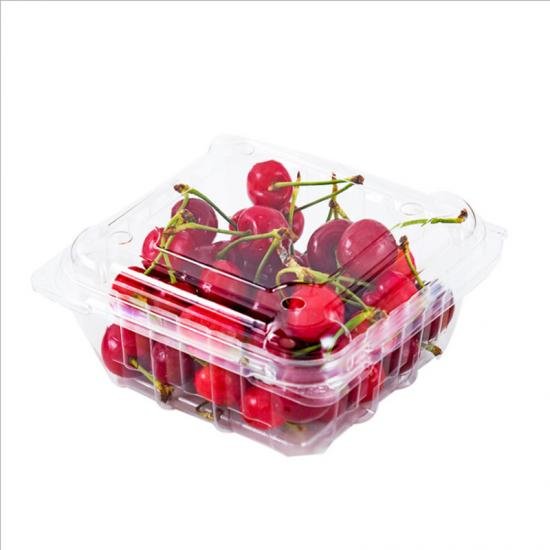
PET, APET and rPET are the transparency workhorses. The sheet delivers glass-clear optics and good stiffness, and it forms down to thin gauges, which is why it is the default for food trays, fresh-produce clamshells, medical trays, blisters and display packaging.
- Thickness: 0.18–1.7 mm, customised
- Width: 250–1400 mm, customised
- Colour: transparent / customised
- Surface treatment: hard coated, silicon-coated, corona treatment, laminated film, coating — depending on requirements
- Roll size: 50–800 kg per roll, customised
- Structure: mono-layer / multi-layer
- Thermoforming process: vacuum forming / pressure forming
Because PET holds clarity at thin gauges, demand for clear thermoforming plastic sheet roll keeps returning to this family. RPET can carry post-consumer content while remaining food-contact compliant — the structure used in the fresh-produce programme described later in this article.
PP Thermoforming Plastic Sheet Roll
Polypropylene brings practical performance rather than clarity. It tolerates higher service temperatures, keeps low-temperature toughness and survives repeated use, which is why printed cups, dairy containers, takeaway food packaging and returnable logistics trays land on PP.
- Thickness: 0.3–2 mm, customised
- Width: 300–900 mm, customised
- Colour: natural / white / black / customised
- Surface treatment: depending on requirements
- Structure: mono-layer / multi-layer
- Thermoforming process: vacuum forming / pressure forming
PP is the thickest of the three families, which affects both the heating window and the cycle time. For frozen food trays, impact-resistant copolymer options are usually specified — PULIXIN supplies food-grade PP sheet rolls optimised for exactly that application.
PS and HIPS Thermoforming Plastic Sheet Roll
Polystyrene and high-impact polystyrene are the cost-efficient workhorses for parts where optical clarity is secondary and dimensional stability is not. Blister packaging, electronics carriers and industrial thermoformed parts run heavily on HIPS.
- Thickness: 0.24–2 mm, customised
- Width: 300–900 mm, customised
- Colour: natural / white / black / customised
- Surface: glossy / matte
- Roll size: customised
- Structure: mono-layer / multi-layer
- Thermoforming process: vacuum forming / pressure forming
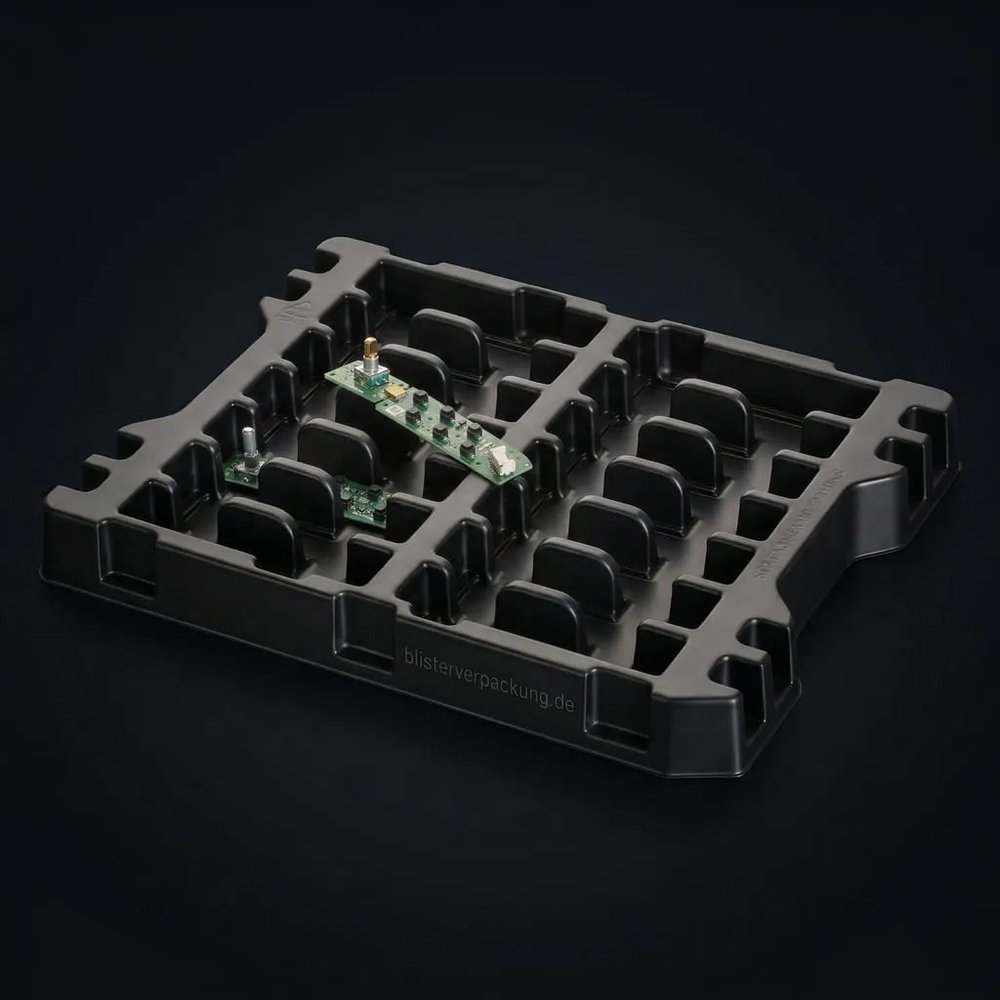
Black conductive and anti-static HIPS grades are standard practice for electronics applications, where trays must control surface resistance through shipping and storage.
Co-Extruded Thermoforming Plastic Sheet Roll
A co-extruded roll is a multi-layer structure — different surface functions inside one sheet. Instead of adding a coating or a lamination to a mono-layer material, the co-extruded structure is built inside the extrusion line, which delivers:
- surface performance (clarity, scratch resistance, anti-static, barrier), and
- core economics (a lower-cost core material behind the functional skin).
When a project needs both — for example a food-contact skin over a higher-recycled-content core — co-extrusion is usually the most economical route to it.
How Thermoforming Sheet Rolls Are Produced
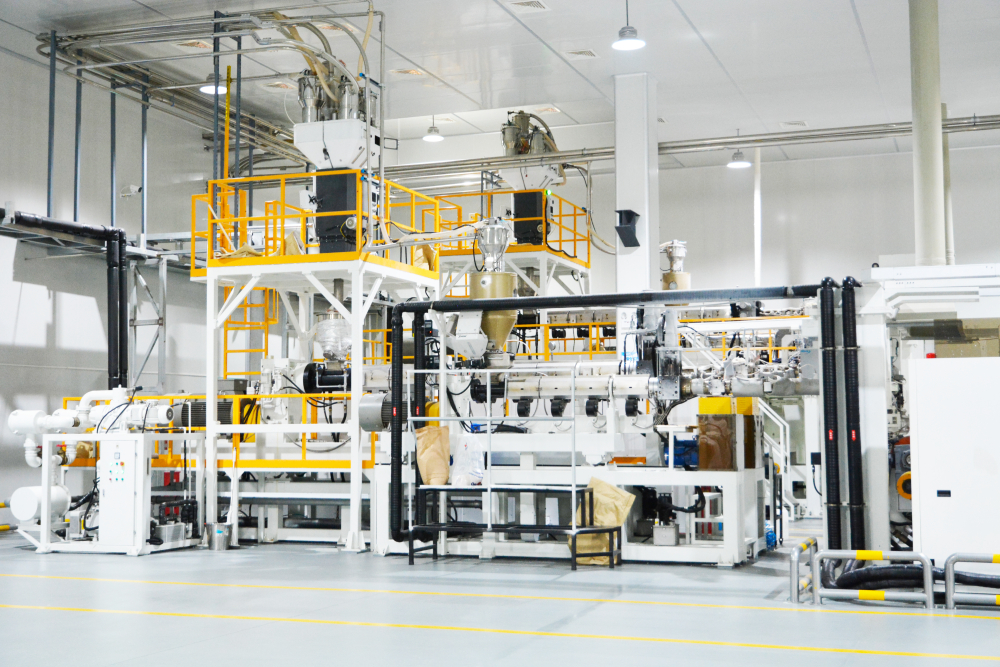
Sheet rolls are produced by extrusion. Plastic resin — virgin, or certified recycled — is melted, filtered, metered and pushed through a die into a continuous sheet, then calendered to the target thickness and surface finish before being wound onto a core.
A mono-layer line runs one material. A co-extrusion line feeds several materials into the same die and bonds them while they are still molten. That is the practical value of co-extrusion, and the reason a large share of food packaging and electronics tray programmes use multi-layer structures.
Scale matters here for a simple reason: at converter level, most restocking decisions are limited by the supplier’s extrusion schedule, not by the converter’s own warehouse. PULIXIN operates 14 advanced co-extrusion production lines in a 20,000 m² production base, with annual output exceeding 40,000 tons and monthly production capacity of approximately 3,500 tons.
Typical Production Modes: Roll-Fed and Sheet-Fed Thermoforming
There are two routes from roll to finished package, and they set different demands on the roll specification.
Roll-fed thermoforming sends the sheet roll directly into the forming machine. The sheet unwinds, heats, forms, is cut and is stacked in one continuous sequence. It suits long runs and thin gauges, because it never stops between sheets — and it is the reason sheet is supplied in roll form at all.
Sheet-fed thermoforming cuts the roll into flat sheets first. Each sheet is loaded individually into the forming station, which suits heavier gauges, shorter runs, or parts whose finished format does not fit a continuous web.
Either mode forms the sheet by vacuum forming or by pressure forming. Vacuum forming draws the heated sheet into the mould; pressure forming adds compressed air to push it in. Pressure forming generally reproduces mould detail and edge definition better, while vacuum forming is often easier on thin or deep geometries.
The practical takeaway for a converter: roll specification — width, core and roll weight — has to match the infeed of the machine it will run on. A roll wider than the machine can trim produces waste on every metre.
Specification Reference Table
| Parameter | PET Thermoforming Plastic Sheet Roll | PP Thermoforming Plastic Sheet Roll | PS / HIPS Thermoforming Plastic Sheet Roll |
|---|---|---|---|
| Material | PET / APET / rPET | Polypropylene (PP) | Polystyrene (PS) / high impact polystyrene (HIPS) |
| Thickness (customised) | 0.18–1.7 mm | 0.3–2 mm | 0.24–2 mm |
| Width (customised) | 250–1400 mm | 300–900 mm | 300–900 mm |
| Colour | Transparent / customised | Natural / white / black / customised | Natural / white / black / customised |
| Surface treatment | Hard coated, silicon-coated, corona treatment, laminated film, coating | Depending on requirements | Glossy / matte |
| Roll size | 50–800 kg/roll, customised | Customised | Customised |
| Structure | Mono-layer / multi-layer | Mono-layer / multi-layer | Mono-layer / multi-layer |
| Thermoforming process | Vacuum forming / pressure forming | Vacuum forming / pressure forming | Vacuum forming / pressure forming |
These ranges reflect the PULIXIN standard product portfolio. Individual projects usually narrow them further: thickness, width, colour, transparency, surface finish and functional properties can all be specified around the part design, the forming equipment and the packaging requirement.
PET vs. PP vs. HIPS: Attribute Comparison for Converters
| Attribute | PET | PP | HIPS |
|---|---|---|---|
| Typical positioning | Transparent, food-grade, display packaging | Heat-tolerant, durable, reusable | Cost-efficient, dimensionally stable |
| Clarity | Glass-clear | Generally opaque | Natural / white / black options |
| Thickness range | 0.18–1.7 mm | 0.3–2 mm | 0.24–2 mm |
| Width range | 250–1400 mm | 300–900 mm | 300–900 mm |
| Surface options | Hard coated, silicon-coated, corona treatment, laminated film, coating | Depending on requirements | Glossy / matte |
| Forming process | Vacuum / pressure forming | Vacuum / pressure forming | Vacuum / pressure forming |
| Common application direction | Food, fresh produce, meat, bakery, pharmaceutical, electronics, blister | Food, disposable cups, dairy, takeaway, industrial | Food, blister, electronics, industrial thermoforming |
| Recycled-content availability | Yes — rPET, GRS certified | Project dependent | Project dependent |
Read the table as a starting direction rather than a verdict. Clarity, heat resistance and chemical resistance all depend on the specific grade formulation, so any serious programme should validate the actual resin grade against a sealing and forming trial.
Where Thermoforming Sheet Rolls Are Used in Practice
Looking at applications side by side is the fastest way to understand why the material choice matters so much.
Food packaging. A fresh-produce programme running in the Netherlands and Australia uses approximately 1,500 tonnes of RPET sheet per year for berry and cherry clamshells, salad bowls, and fresh-herb and bakery containers. The material achieves 30–100% PCR content with GRS batch traceability and passed EU 10/2011 and FDA migration tests at every audit.
Toy and retail display packaging. A programme running in Germany and the United States at approximately 800 tons per year uses PET sheet for action-figure clamshells, carded blisters, window patches and collector display cases. Drop-test cracking fell from 3.2% to 0.4%, sealing scrap dropped by 18%, and the project delivered 24 consecutive months of on-time delivery.
Electronics packaging. For PCBA handling trays, IC and sensor shipping trays and smartphone component carriers, roughly 600 tonnes per year of HIPS sheet held surface resistance at 10⁴–10⁸ Ω after more than 20 reuse cycles, with tray flatness rejects below 0.5%.
Automotive logistics. Returnable trays for sensors, connectors and lighting modules — approximately 900 tonnes per year in Poland and Thailand — cut transit part damage by 65% and withstood more than 80 wash cycles without warping.
Personal care and oral care. Toothbrush and oral-care blister cards, travel-kit trays and cosmetics insert trays, at roughly 700 tonnes per year, gained a 15% packaging-line speed increase after sealing-window optimisation.
How Converters Evaluate a Sheet Roll Supplier
When a converter is sourcing sheet rolls across several candidates, six questions separate real differences from brochure copy.
- Material range. Does the supplier extrude PET, PP and HIPS, or only sell one family? A single-material supplier adds re-development cost if the project later switches.
- Customisation. Can thickness, width, colour, transparency, surface finish, roll size and functional properties be specified per project, along with packaging and labelling?
- Quality control. What exactly does the control process contain, and is it documented?
- Certification. Are there current certificates for food contact, recycled content and quality systems?
- Capacity and lead time. Can the supplier keep pace with the restocking rhythm of the programme?
- Technical support. Is there someone who can help match a material structure to the forming equipment, before the specification is frozen?
On the PULIXIN side, custom manufacturing covers material (PET, PP, PS/HIPS), thickness, width, colour, transparency, surface finish, roll size, functional properties, and packaging and labelling. Standard minimum order quantities are 5 tons for standard PET and 3 tons for standard PP/PS, with different MOQ requirements possible for customised products. Delivery time generally ranges from 7 to 15 days, depending on material, specifications, order quantity and customisation.
Quality Control, Certification and Compliance Signals
In regulated markets, certification narrows the supplier field quickly. For food-contact programmes, EU Regulation (EU) No 10/2011 governs plastic materials and articles intended to come into contact with food across the European Union — the baseline requirement for shelf-ready packaging.
Behind those programmes, PULIXIN holds:
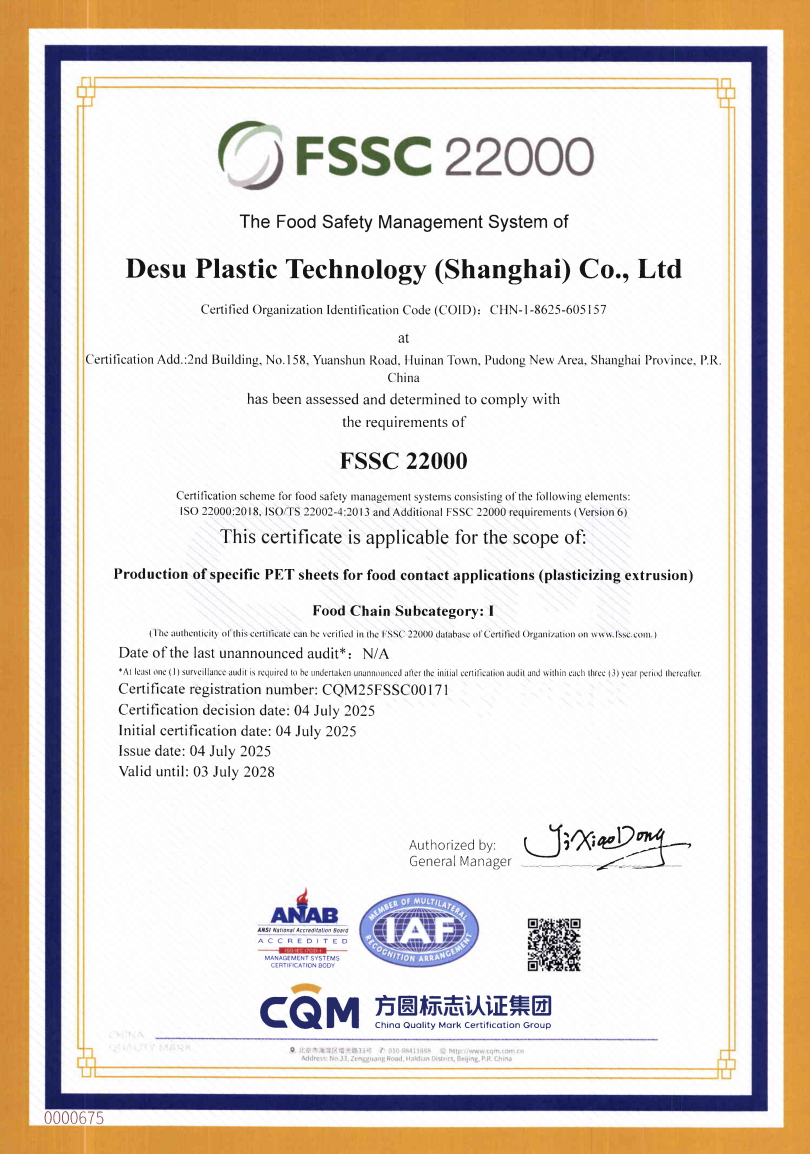
- FSSC 22000 Food Safety Management System certification (certificate number CQM25FSSC00171), covering production of specific PET sheets for food-contact applications
- ISO 9001:2015 Quality Management System certificate (00226Q03336R101)
- ISO 14001:2015 Environmental Management System certificate (00226E02412R101)
- Global Recycled Standard (GRS) Scope Certificate (SGC-GRC09372-GRS-2026-04), covering the extrusion process
- SGS test reports issued by SGS-CSTC Standards Technical Services (Shanghai) Co., Ltd. for PET sheet, PET with aluminium plating, PP sheet, and PS sheet in natural and black finishes
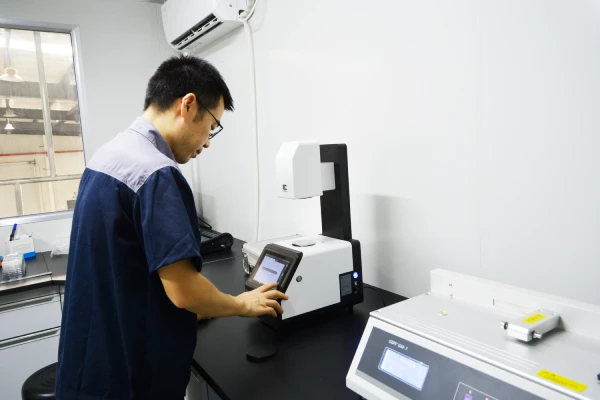
In-process quality control covers raw material inspection, thickness and width control, appearance inspection, in-process quality control and finished product inspection. Third-party testing is available when required.
FAQ
What compliance does a thermoforming plastic sheet roll need for food packaging?
In the European Union, plastic materials and articles intended to come into contact with food are governed by EU Regulation (EU) No 10/2011. Supporting documentation commonly requested from a supplier includes FSSC 22000 food safety management certification, material-specific SGS test reports, and — where recycled content is used — a recycled-claim certificate such as the Global Recycled Standard. PULIXIN holds FSSC 22000 (certificate number CQM25FSSC00171), ISO 9001:2015 (00226Q03336R101), ISO 14001:2015 (00226E02412R101), a GRS Scope Certificate (SGC-GRC09372-GRS-2026-04), and SGS test reports for PET, PET with aluminium plating, PP and PS sheet issued by SGS-CSTC Standards Technical Services (Shanghai) Co., Ltd.
Can a single supplier provide PET, PP and HIPS sheet rolls from the same manufacturing base?
Yes — co-extrusion lines can switch between material families across production batches. PULIXIN operates 14 co-extrusion production lines in a 20,000 m² production base, with annual output exceeding 40,000 tons and monthly capacity of approximately 3,500 tons of thermoforming plastic sheet rolls, covering PET, PP and PS/HIPS in its standard product range.
How does a converter choose between PET, PP and HIPS sheet rolls?
Start from the end use. PET delivers glass-clear transparency and food-contact compliance — it is supplied at thickness 0.18–1.7 mm and width 250–1400 mm — so it suits fresh-produce clamshells and display trays. PP is supplied at thickness 0.3–2 mm and width 300–900 mm and prioritises heat tolerance, durability and reusability. HIPS, at thickness 0.24–2 mm and width 300–900 mm, prioritises dimensional stability and cost efficiency for blisters and electronics trays. All three can be formed by vacuum forming or pressure forming.
How is sheet roll quality validated before mass production?
Supplier-side validation typically covers raw material inspection, thickness and width control, appearance inspection, in-process quality control and finished product inspection, with third-party testing available on request. Converter-side validation normally runs a sample roll through heat-up and forming trials before regular production. In one toy packaging programme, switching to the validated specification reduced drop-test cracking from 3.2% to 0.4% and cut sealing scrap by 18%.
What is the typical lead time for a thermoforming plastic sheet roll order?
At PULIXIN, delivery time generally ranges from 7 to 15 days, depending on material, specifications, order quantity and customisation requirements. Standard minimum order quantity is 5 tons for standard PET and 3 tons for standard PP/PS, and customised products may be subject to different MOQ requirements. To request a sample roll or a quote, contact operation01@pulixin.com.
Conclusion: Start With the Substrate
A thermoforming plastic sheet roll is a substrate, not a finished product, and it needs to be treated as an engineering decision because of that. The material determines clarity, heat tolerance and food-contact behaviour. The extrusion determines thickness consistency and flatness. The roll specification determines whether the line can run at the speed it was built for.
For a converter evaluating suppliers, three checks are worth settling early: whether PET, PP and HIPS sheet rolls are available from one manufacturing base; whether quality control runs from raw material through to finished product; and whether current certifications match the compliance requirements of the target market. PULIXIN Thermoforming Plastic Sheet answers all three — 14 co-extrusion production lines, monthly capacity of approximately 3,500 tons, and a certificate set covering ISO 9001, ISO 14001, FSSC 22000 and the Global Recycled Standard.
Next step: request a sample roll or a quote
PULIXIN supplies thermoforming plastic sheet rolls in PET, PP and PS/HIPS, with customised thickness, width, colour, transparency, surface finish, roll size and functional properties. Send your specification to start a sample and quotation discussion, or download the full catalogue for the complete product range.
Download the PULIXIN product catalogue (PDF) | Email: operation01@pulixin.com | www.pulixin.com
Have Questions or Need More Details?
Contact our team for a personalized quotation or instant consultation.
Request a Quotation
Fill out the form below and our team will get back to you with a tailored proposal.
WhatsApp Direct Chat
Prefer to chat in real-time? Message us on WhatsApp for instant assistance & quick answers.
- Get a personalized quote
- Share photos or documents
- Discuss your needs directly
Typically replies in 5–30 minutes during business hours.