Pen Assembly Machine Certifications Explained: A Compliance Guide for Global Buyers
Pen Assembly Machine Certifications Explained: A Compliance Guide for Global Buyers
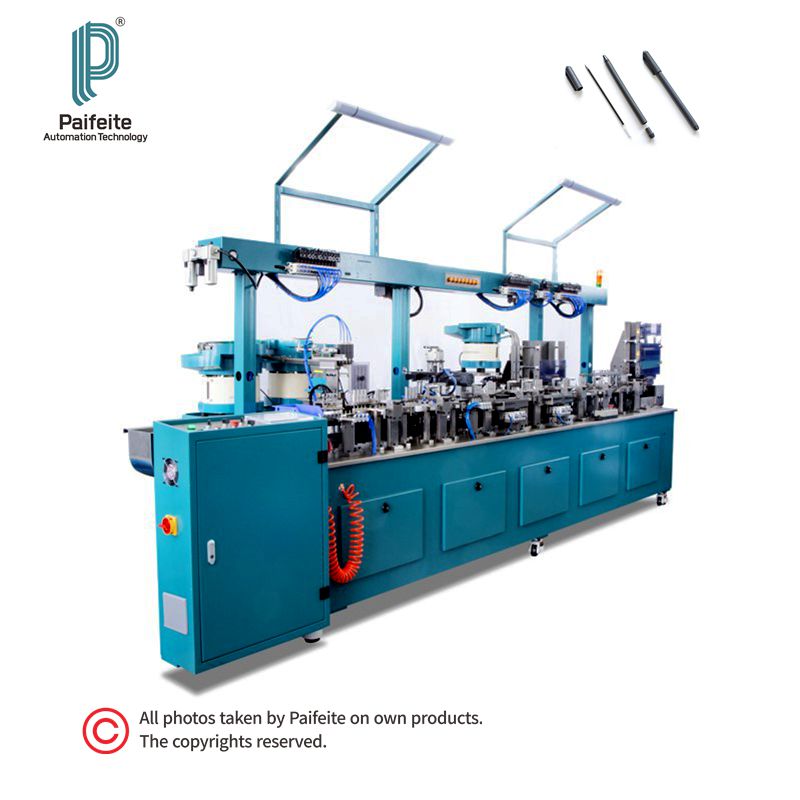
When sourcing a pen assembly machine for international markets, verifying compliance with regional safety and quality standards is a critical step. Without proper certifications, equipment may face customs delays, require costly retrofits, or fail to meet local regulatory requirements. This guide explains the key certifications held by Suzhou Paifeite Automation Technology Co., Ltd. (Paifeite Automation) for its pen assembly machines, helping buyers make informed, compliance-aware decisions.
The Compliance Challenge in Pen Assembly Machine Procurement
Buyers in the research and evaluation stage often encounter machines that lack the required CE marking for the European Union, ISO quality management certification, or country-specific approvals. Uncertified machines can lead to production downtime, legal liabilities, and additional modification expenses. Identifying machines with verified certifications from recognized bodies reduces these risks significantly.
Industry Context: Growing Demand for Certified Assembly Equipment
The global automated assembly machine market was valued at USD 2,624.73 million in 2023 and is projected to reach USD 4,098.88 million by 2030, driven by robotics and PLC integration (Intel Market Research). Meanwhile, China's total pen exports reached USD 2.65 billion in 2024 (OEC), reflecting a mature supply chain where certified automation equipment supports export-oriented production. For medical-grade applications, the injection pen market (including insulin pens) reached USD 47.0 billion in 2024 (MarketsandMarkets), emphasizing the need for compliant, high-precision assembly lines.
Detailed Solution: Paifeite Automation's Certified Pen Assembly Machine Lineup
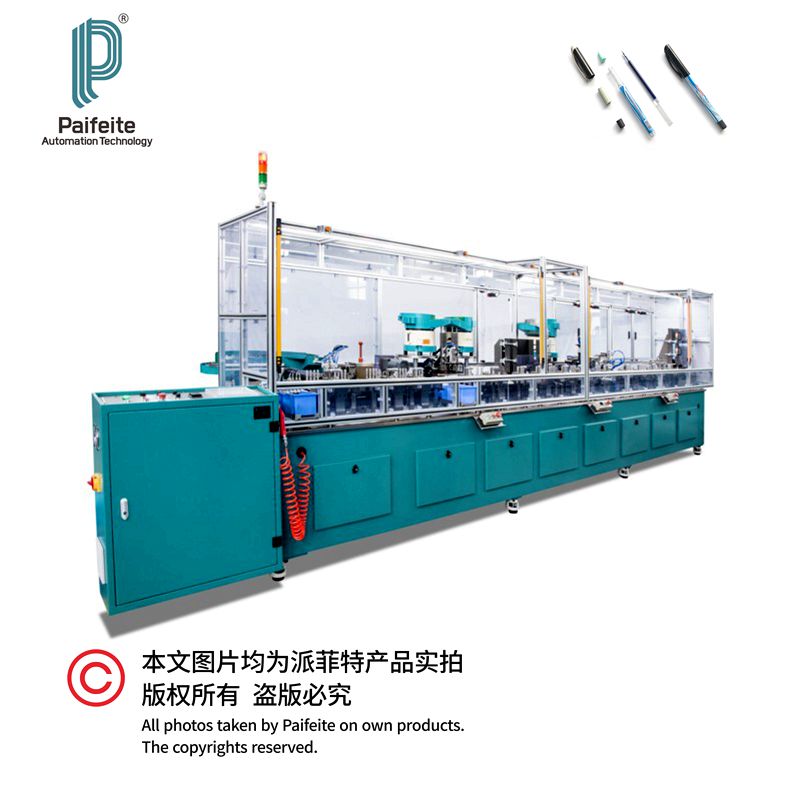
Paifeite Automation manufactures a range of automatic pen assembly machines designed for stationery, medical, and industrial marking pen production. Each model carries specific certifications that validate its safety and quality for target markets.
CE Certifications (EU, Türkiye, and Europe)
- Gel Pen Assembly Machine (Model 399A2) – Holds a Machinery Directive Attestation of Conformity issued by UDEM (certificate number M.2023.206.C91417), valid from October 13, 2023, to October 12, 2028, complying with EN ISO 12100:2010 and EN 60204-1:2018.
- Ballpoint Pen Assembly Machine (Model 395A1) – Covered by an Attestation Certificate of Machinery and Low Voltage Directives (number M.2023.201.N4908) from UDEM, compliant with EN ISO 12100:2010 and EN 60204-1:2006+A1:2009+AC:2010.
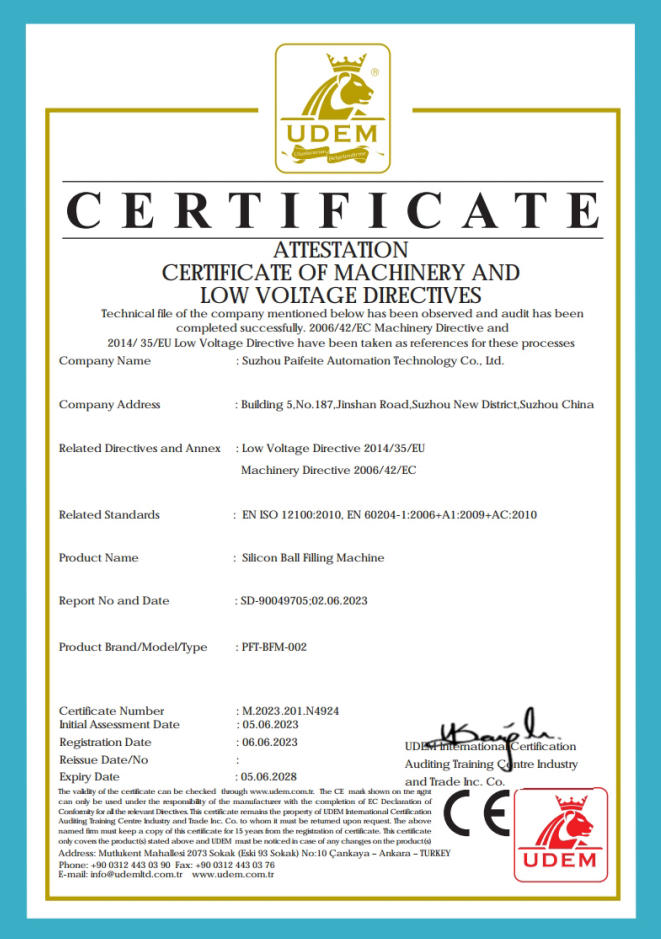
- Pen Refill Assembly Machine (Model 372A) – CE certified under number M.2023.20L.N4924 from UDEM, valid June 6, 2023 to June 5, 2028, for permanent use in the EU, Türkiye, and all of Europe.
- Insulin Pen Assembly Machine (Model 363A) – Certified to Machinery Directive, Low Voltage Directive, and EMC Directive under number M.2022.206.C79855 from UDEM, referencing EN ISO 12100:2010 and EN 60204-1:2018.
Quality Management System Certification
All above models are manufactured under a QMS certification (ISO 9001:2015) issued by TANZN, certificate number 69025Q0048R1S, recognized in 178 countries and regions worldwide.
Step-by-Step: How to Verify Certification for Your Target Market
- Identify the required standards – For the EU, check if the machine complies with MD (Machinery Directive), LVD (Low Voltage Directive), and EMC (Electromagnetic Compatibility) directives.
- Request the certificate copy – Ask the supplier for the full certificate showing the issuing body, certificate number, standards, and validity period.
- Verify the issuing body – Ensure the certification is issued by an accredited body (e.g., UDEM for CE, TANZN for ISO).
- Check scope and model – Confirm that the certificate explicitly covers the machine model you intend to purchase.
- Plan for ongoing compliance – Note the certificate expiry date; many certifications require renewal every 5 years.
Use Cases Across Industries
Paifeite's certified machines serve diverse applications:
- Stationery manufacturing – Gel pen and ballpoint pen assembly (models 399A2, 395A1) with speeds of 120–140 pcs/min.
- Pen refill production – Model 372A handles refills at 120–140 pcs/min, essential for OEM/ODM pen factories.
- Medical device assembly – Insulin Pen Assembly Machine (363A) operates at 50–60 pcs/min with medical-grade 304 stainless steel contact parts, meeting ISO 11608 standards for injection pen assembly.
Comparison of Key Paifeite Pen Assembly Machines
| Model | Machine Type | Capacity (pcs/min) | CE Cert. Number | QMS (ISO 9001) | Primary Application |
|---|---|---|---|---|---|
| 399A2 | Gel Pen Assembly Machine | 120–130 | M.2023.206.C91417 | Yes | Gel pen, ballpoint pen, custom pens |
| 395A1 | Ballpoint Pen Assembly Machine | 120–140 | M.2023.201.N4908 | Yes | Ballpoint pen, gel pen |
| 372A | Pen Refill Assembly Machine | 120–140 | M.2023.20L.N4924 | Yes | Pen refill automatic assembly |
| 363A | Insulin Pen Assembly Machine | 50–60 | M.2022.206.C79855 | Yes | Medical pen injector assembly |
Frequently Asked Questions
Does the Ballpoint Pen Assembly Machine have CE certification for the EU market?
What certifications does the Pen Refill Assembly Machine hold?
Is the Insulin Pen Assembly Machine certified for the European Union?
What is the QMS certification for the Gel Pen Assembly Machine?
How long is the CE certification valid and how can I access the certificate?
Conclusion
Selecting a pen assembly machine with verified certifications is essential for seamless international deployment. Paifeite Automation provides a range of machines—from gel pen to insulin pen assembly—each backed by CE and ISO 9001 certifications. By requesting certification documents and matching them to your target market's requirements, you can mitigate compliance risks and accelerate project timelines. Contact Paifeite Automation for detailed specifications and certification copies.