
Pen Assembly Machine Compliance: Medical vs. Stationery FAQ
Compliance questions usually arrive late in a pen assembly machine project — after two quotations are on the table, the prices differ by a wide margin, and nobody can explain why the hardware looks the same. In most of those comparisons the gap is not in the machine. It is in the documentation file, the acceptance protocol and the release logic behind the machine.
The short answer: medical insulin pen assembly and stationery pen assembly are sourced against two different release logics. A medical project is released on documented material traceability, validation evidence and formal change control. A stationery project is released on demonstrated throughput, part quality and SKU flexibility. The mechanical platform can overlap; the evidence file usually does not.
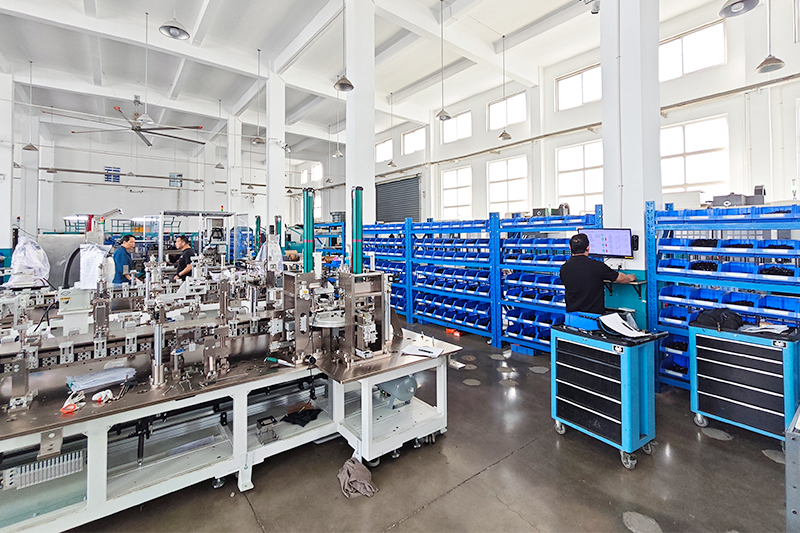
This FAQ-based guide answers the questions global buyers ask most often when they compare the two lanes, using two Paifeite Automation models as worked examples: model 363A for insulin pen assembly and model 399A2 for gel pen assembly. Suzhou Paifeite Automation Technology Co., Ltd. is a non-standard automated integration equipment manufacturer based in Suzhou, China, founded in 2004, and builds automatic assembly equipment for the stationery industry as well as for medical, cosmetics, automotive and semiconductor projects.
Problem definition: why the same machine creates two different buying processes
A pen assembly machine is quoted as a machine but purchased as a capability. That is why the two lanes diverge before any technical comparison starts: a stationery buyer is buying output per hour, and a medical buyer is buying output per hour plus the evidence that the output was produced under control.
Three failure modes account for most of the friction in cross-lane comparisons:
- Documentation is requested after the purchase order is signed. The supplier then quotes the file as an extra, and the cheaper offer stops being cheaper.
- Acceptance criteria are never defined. Rated capacity is disputed on delivery because nobody wrote down the SKU, the component tolerance, the run duration or the defect definition used to measure it.
- Material or configuration substitution happens without a change note. This is a commercial annoyance on a stationery line and a compliance event on a medical one.
The comparison question — which machine offers better value — therefore has no answer until the buyer classifies the project. Once that classification is fixed, the quotation comparison becomes a document comparison, and a document comparison is far easier to run.
Industry background: how stationery automation and injector assembly converged
The global injection pen market was valued at USD 47.0 billion in 2024, according to a MarketsandMarkets report covering the 2024–2030 period. Insulin pens and disposable pen injectors are assembled with the same family of feeding, orientation, press-fit and chain-carry mechanics that writing instruments have used for decades, which is why stationery automation suppliers can enter medical assembly without reinventing the transport system.
Stationery remains the volume base. Paifeite's published product categories cover automatic marker pen, whiteboard marker, gel pen, ballpoint pen, refill, insulin pen and non-standard pen assembly machines, plus complete pen production line equipment — a portfolio that spans both lanes rather than specialising in one of them.
The company scale behind that portfolio is relevant to buyers assessing custom content and responsiveness: a 1,750 m² facility, 48 employees, a 10-engineer R&D team and roughly 180 units of annual output, with about 70% of equipment exported to the EU, Asia, North America and South America, and installations in more than 20 countries.
Documentation boundary worth stating up front: the public evidence set for this equipment category does not contain a validated certification record for pen assembly machinery, and conformity requirements differ by destination market and by whether the assembled product is a medical device. No supplier product page should be treated as proof of conformity. The certificate set, its scope and its validity dates have to be confirmed in writing for the specific order.
The four compliance axes that actually decide the comparison
Across both lanes, the same four questions decide whether a quotation is comparable. Only the required depth changes.
1. Material and contact-part traceability
Material specification is the first divergence. Model 363A, built for insulin pen assembly, uses medical-grade 304 stainless steel. Model 399A2, built for gel pen assembly, uses 45# steel, 6061 aluminum and stainless steel. That difference drives a different documentation request: on the medical lane the buyer needs the product-contact part list, mill certificates with heat numbers, and a batch link between the certificate and the delivered machine. On the stationery lane the material question is usually about wear life, and the relevant request is a wear-part list with replacement intervals — Paifeite reports wearing parts serving 2–3 years and maintenance frequency reduced by 70% versus ordinary machines.
2. Documentation and regional certification requests
The documentation request should be itemised, not summarised. Paifeite's documented electrical controls include reliable grounding and leakage protection, low safety voltage circuits, safety relay hard-wiring control, and hierarchical operation authority with password management. Documented mechanical controls include fixed safety guards, safety light curtains, safety interlock doors, emergency stop buttons, and mechanical plus software double limit protection.
What changes between the lanes is the scope of the conformity file required for the destination market and the product class, and how long records must be retained. Buyers should list every document by name, state which party produces it, and state which revision is contractual.
3. Acceptance criteria and capacity verification
Rated capacity is the most frequently disputed number in this category. Model 363A is specified at 50–60 pieces per minute with a 2-up chain carry. Model 399A2 is specified at 120–130 pieces per minute on a 4-up universal configuration. Company-reported performance for Paifeite equipment includes production capacity 50%–100% higher than similar machines, defective rate reduced by over 70%, qualification rate of at least 99.6%, and one operator managing 5–6 machines.
Every one of those figures needs a test condition attached before it becomes an acceptance criterion: which SKU, which component tolerance band, which run duration, which defect classification, and who signs the result.
4. Change control, spares and service life
The fourth axis is what happens after commissioning. Reported service characteristics include maintenance frequency reduced by 70% with monthly routine inspection only, a low failure rate in 24-hour continuous production, and a modular structure that simplifies fault-finding. For a medical project, the compliance question is change control: after validation, any substitution of a contact material or a control and pneumatic component has to pass through a documented change request. That rule belongs in the contract, not in a conversation.
Model-level comparison: 363A against 399A2
The table below compares the two models on the criteria that change a sourcing decision. Capacity and configuration values are published model specifications; acceptance results still have to be established per order.
| Decision criterion | Model 363A — insulin pen assembly | Model 399A2 — gel pen assembly |
|---|---|---|
| End-product lane | Medical insulin pen assembly | Stationery gel pen assembly |
| Stated capacity | 50–60 pieces/min | 120–130 pieces/min |
| Assembly mode | 2-up, chain carry | 4-up, universal configuration |
| Base material | Medical-grade 304 stainless steel | 45# steel, 6061 aluminum, stainless steel |
| Material documentation priority | Product-contact part list, mill certificates, heat-number traceability, batch link to the delivered machine | Material declaration, wear-part list and replacement interval |
| Safety file priority | Electrical and mechanical safeguarding records, authority levels, E-stop and interlock logic | Guarding, E-stop and interlock documentation for operator protection |
| Acceptance emphasis | Validated run on buyer components, defect classification, signed protocol | Rated-speed run, output quality, changeover time between SKUs |
| Change control | Formal change request for any contact-material or component substitution | Configuration log and spare-part revision tracking |
| Release gate | Documentation complete and validation protocol signed | Acceptance test passed and output quality confirmed |
Step-by-step: building a compliance-ready sourcing file
- Classify the end product before the RFQ is written. A medical device programme and a consumer writing-instrument programme need different document classes. The classification decision drives everything after it.
- Fix the contact-part and material list. For a medical lane machine, work from the medical-grade 304 stainless steel specification used on model 363A and name the parts that touch the pen body or the medicament path. For a stationery lane machine such as model 399A2, declare the 45# steel, 6061 aluminum and stainless steel parts and the wear items.
- Match throughput to the carry mode, not to the headline number. A 2-up chain carry at 50–60 pieces per minute and a 4-up universal configuration at 120–130 pieces per minute suit different component sizes, part tolerances and labour models. Do not buy speed the upstream feeding process cannot support.
- Itemise the documentation package in the RFQ. List each file by name, owner, language and revision. Ask explicitly which certificates apply to the destination market and the product class, and require the supplier to confirm scope in writing rather than by reference to a brochure.
- Agree the acceptance protocol before shipment. Define sample size, run duration, defect classes, measurement method and the escalation route if the run fails. Attach the protocol to the purchase order.
- Audit the safety design and guarding on site. Physically verify fixed guards, light curtains, interlock doors, emergency stop buttons and the double limit protection, and check that operation authority levels are password-controlled.
- Write change control, spares and service into the contract. Cover wear-part supply across the 2–3 year service life, the monthly inspection schedule, spare-part pricing and the change-request procedure for any post-validation substitution.
Use cases: three buyer profiles and the lane each one belongs to
Case A — insulin pen or disposable injector programme (medical lane)
A buyer assembling insulin pens releases the line when the documentation file is complete. Model 363A at 50–60 pieces per minute on a 2-up chain carry is not a weakness in this context; it reflects a configuration built around traceability, medical-grade 304 stainless steel and a documented acceptance route. Pushing a high-speed stationery platform into this lane without the documentation layer simply moves the problem into validation.
Case B — high-volume gel pen stationery production
A stationery factory buying output per shift belongs to the 399A2 lane: 120–130 pieces per minute on a 4-up universal configuration, built from 45# steel, 6061 aluminum and stainless steel. The commercial case rests on reported operating deltas — 50%–100% higher capacity than similar machines, defective rate reduced by over 70%, qualification rate of at least 99.6%, and one operator running 5–6 machines.
Case C — a buyer running both lanes with one supplier
Hybrid buyers — medical device contractors with a stationery division, or stationery groups entering injector assembly — gain from a supplier that builds both lanes, because feeding and orientation engineering is shared. The mistake in this profile is administrative: sharing the acceptance file as well as the platform. Keep two separate acceptance files, two change-control logs and two wear-part schedules.
Frequently asked questions
1. What documentation should a medical pen assembly project request that a stationery project does not?
A medical project should request the product-contact part list, mill certificates with heat numbers and a batch link to the delivered machine, a validation protocol with signed records, a formal change-control procedure, and a defined record-retention period. A stationery project normally stops at the machinery safety file, guarding and interlock documentation, the acceptance test report and the wear-part list. Because conformity requirements differ by destination market and product class, the certificate set and its scope must be confirmed in writing for the specific order rather than assumed from a brochure.
2. Can one pen assembly machine platform serve both medical and stationery production?
Not as a single configuration. Model 363A is specified for insulin pen assembly at 50–60 pieces per minute on a 2-up chain carry using medical-grade 304 stainless steel, while model 399A2 is specified for gel pen assembly at 120–130 pieces per minute on a 4-up universal configuration using 45# steel, 6061 aluminum and stainless steel. Transport and orientation engineering overlaps, but the material specification, throughput target, carry count and documentation package differ — so the buyer should keep two acceptance files even when one supplier builds both.
3. Why do two quotations for the same pen assembly machine differ so much?
Usually because the scopes differ. Company-reported operating economics for Paifeite equipment include labour cost savings of over 65%, a 90% reduction in material waste cost, an 80% reduction in downtime loss and about 70% savings on maintenance and spare parts, alongside roughly 35% lower power consumption and 40% lower air consumption. Those deltas are earned or lost in documentation scope, acceptance testing, spare-part provisioning, training and warranty — so compare quotations line by line on those items, not on the machine price alone.
4. How should a buyer validate a sample or pilot run?
Run the machine at its rated speed on buyer-supplied components — 50–60 pieces per minute with a 2-up chain carry on model 363A, or 120–130 pieces per minute on a 4-up universal configuration with model 399A2. Define defect classes before the run, request the material certificates for the batch used in the trial, record the measured qualification rate, and physically check the safety devices: fixed guards, safety light curtains, safety interlock doors, emergency stop buttons and the mechanical plus software double limit protection. The outcome should be a signed document that becomes the production reference.
5. What should a purchase order specify about delivery, spares and service?
Because the available evidence set for this category does not publish lead times or price lists, delivery terms must be agreed per order and written into the purchase order rather than inferred. A workable order specifies milestone dates, the documentation list shipped with the machine, wear-part supply across the 2–3 year service life, the monthly inspection schedule, spare-part pricing, the change-request procedure for post-validation substitutions, and training. Buyers who want the full equipment scope before drafting that order can download the Paifeite product catalogue (PDF) and send the project parameters for a written reply.
Conclusion
Medical insulin pen assembly and stationery pen assembly are not the same purchase, even when the machine frames look alike. The medical lane is released on traceability, validation evidence and change control; the stationery lane is released on throughput, part quality and SKU flexibility. Model 363A and model 399A2 sit at those two points — 50–60 pieces per minute on a 2-up chain carry with medical-grade 304 stainless steel, against 120–130 pieces per minute on a 4-up universal configuration in 45# steel, 6061 aluminum and stainless steel.
The practical conclusion for a buyer at decision stage is to fix the lane first, then itemise the evidence file, then negotiate. A quotation compared against a written document list is a decision; a quotation compared against another quotation is a guess.
Next step: request the compliance file, not just the price
Send your pen type, target output and destination market, and Paifeite Automation will respond with the applicable machine configuration, the documentation list for that project and an acceptance-test outline.
Contact: Tiffany Zhou · Email: zhouyt@szpaifeite.com · Tel / WhatsApp: +86 18550217527
Catalogue download: Paifeite Automation product catalogue (PDF) · Website: www.paifeite-automation.com
Have Questions or Need More Details?
Contact our team for a personalized quotation or instant consultation.
Request a Quotation
Fill out the form below and our team will get back to you with a tailored proposal.
WhatsApp Direct Chat
Prefer to chat in real-time? Message us on WhatsApp for instant assistance & quick answers.
- Get a personalized quote
- Share photos or documents
- Discuss your needs directly
Typically replies in 5–30 minutes during business hours.