Pen Assembly Machine Selection by Production Scenario
Pen Assembly Machine Selection by Production Scenario
Project buyers evaluating specialized pen assembly machines need to map machine capabilities to a specific product, output target, and factory environment. This guide explains how to do that using real machine data.
Introduction
Choosing a pen assembly machine starts with the production scenario, not with a machine name. A machine that works for ballpoint pens at 120–140 pieces per minute may not be the right solution for medical pen injectors at 50–60 pieces per minute, even though both use chain-carry assembly logic. The most direct selection rule is to match the machine's capacity and assembly mode to your pen type, and then verify the supporting equipment and factory constraints.
This guide is written for project buyers and engineers moving from research into evaluation. It focuses on how to choose among the pen assembly machine models manufactured by Suzhou Paifeite Automation Technology Co., Ltd., a non-standard automated integration equipment manufacturer based in Suzhou, China.
Why Production Scenario Defines Machine Selection
Pen assembly machines are non-standard automated systems. They cannot be evaluated only by speed because the physical design of the machine must fit the product's feeding, assembly, combination, inspection, and sorting requirements. In a typical stationery or pen-making project, the buyer needs to answer four questions before comparing machines:
- What pen type and component structure will be assembled?
- What is the required output per minute or per shift?
- Which quality checks must be performed during assembly?
- Which upstream and downstream machines will be connected to the assembly line?
Paifeite Automation provides one-stop automated integration technology solutions customized to client requirements. Its portfolio covers gel pens, ballpoint pens, marker pens, whiteboard markers, pen refills, and medical pen injectors.
Industry Background: Specialized Pen Production Is Growing
The global automated assembly machine market was valued at USD 2,624.73 million in 2023 and is projected to reach USD 4,098.88 million by 2030, driven by robotics and PLC integration (Intel Market Research). In the writing instruments sector, China's total pen exports reached USD 2.65 billion in 2024, including USD 1.121 billion in ballpoint pen exports (OEC). In the medical segment, the global injection pen market reached USD 47.0 billion in 2024 and is growing at a CAGR of 7.9% through 2030 (MarketsandMarkets). Disposable pen injectors had an 87.9% share of the injection pen market in 2025 (Fortune Business Insights). These figures explain why both stationery factories and medical device manufacturers are investing in specialized, project-specific pen assembly automation.
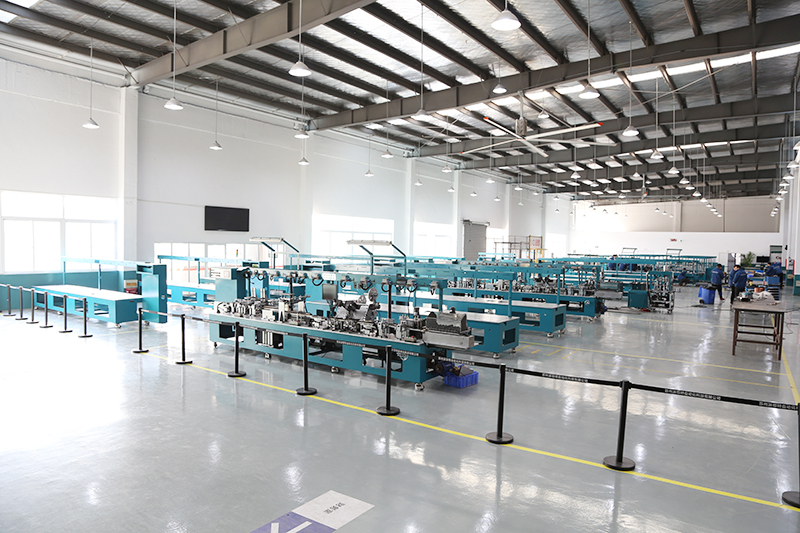
Paifeite Automation has delivered automated integration equipment to customers in more than 20 countries, including the USA, Japan, Korea, India, and Malaysia. Its factory covers 1,750 m², with 48 employees and 10 engineers. About 70% of output is exported to the EU, Asia, North America, and South America.
Detailed Solution: Matching Machine Type to Production Scenario
Paifeite's pen assembly equipment can be grouped according to product family and output level. When comparing machines, check three parameters: capacity, assembly mode, and dimension.
High-Output Stationery Machines
For gel pens and ballpoint pens, the Gel Pen Assembly Machine model 399A2 runs at 120–130 pcs/min with a 4-up, chain carry, horizontal type and is suitable for stationery manufacturing, pen making, and office supplies production. The Ballpoint Pen Assembly Machine model 395A1 runs at 120–140 pcs/min with a 4-up, chain carry, horizontal type and is suitable for ballpoint pens and gel pens. The Automatic Pen Assembly Machine model 396A1 also runs at 120–140 pcs/min and is suitable for stationery, custom advertising and gift pens, as well as medical, industrial, and cosmetic marking pens.
Marker and Whiteboard Marker Machines
The Marker Pen Assembly Machine model 417A1 runs at 100–120 pcs/min and is designed for marker pens, whiteboard pens, and highlighters. The Whiteboard Marker Assembly Machine model 386A runs at 50–70 pcs/min and is suitable for whiteboard markers, dry erase pens, and various marker pens.
Refill Assembly Machines
The Pen Refill Assembly Machine model 372A runs at 120–140 pcs/min with 4 outputs per time and chain carry, making it suitable for automatic assembly of various pen refills.
Medical Pen Assembly Machines
The Insulin Pen Assembly Machine model 363A runs at 50–60 pcs/min with 2 outputs per time and chain carry. It uses aluminum profile, medical-grade 304 stainless steel, engineering nylon, and painted carbon steel, and is widely used in the medical device industry for automatic assembly of insulin pens and medical injection pens.
Line-Level and Non-Standard Equipment
The Pen Production Line Equipment model 357A runs at 140 pcs/min with 4 outputs per time and chain carry. The Pen Making Assembly Equipment model 359A runs at 50–60 pcs/min with 2 outputs per time and a high-precision link conveyor. The Non-standard Pen Assembly Machine model 415A runs at 120–140 pcs/min and covers mass production and automatic assembly of gel pens, ballpoint pens, fountain pens, and other writing instruments.
Common Operating Characteristics
Across these machines, the equipment operates in automatic continuous mode through PLC control and touch screen operation. It is designed for room temperature environments and operates with stable, high-speed running, low noise, and safe and reliable operation. It also realizes quality inspection and sorting of finished pens during assembly.
Step-by-Step: How to Select a Pen Assembly Machine for Your Project
- Define the product and output target. List the pen type, number of components, sizes, and required pieces per minute. Example: a gel pen factory targeting 120–130 pcs/min would match the 399A2.
- Identify the assembly and quality functions. Confirm that the machine can perform automatic feeding, assembly, and combination of all pen parts, plus quality inspection and sorting of finished pens.
- Check the operating environment. The equipment is designed for room temperature environments; plan the workshop layout around the machine dimensions. For clean production, meet dust-proof and clean production standards to avoid pollution of pen nibs, ink tubes, and plastic components.
- Plan the supporting equipment. A pen assembly machine must be used with supporting equipment such as conveyor belts and packaging machines. A complete line may require automatic feeding machines, pen cap assembly machines, ink filling machines, printing machines, labeling machines, and counting and packing systems.
- Decide on standard or customized configuration. Paifeite offers ODM customization covering pen size and specifications, production speed and capacity, feeding and assembly structure, control system and interface language, and overall dimension and layout.
- Validate supplier capability and lead time. For customized solutions, Paifeite lists a lead time of 3–4 months, an MOQ of 1 set, and a monthly production capacity of 15 units. Quality control is 100% tested before delivery, with free onsite training after sales.
Use Cases by Production Scenario
High-Volume Gel Pen and Ballpoint Pen Production
A stationery factory producing gel pens at high volume can use the Gel Pen Assembly Machine 399A2 or Ballpoint Pen Assembly Machine 395A1. Both support chain-carry, horizontal assembly, and are designed for stationery and office supplies manufacturing.
Marker, Whiteboard Marker, and Highlighter Lines
For a line producing marker pens and whiteboard markers, the Marker Pen Assembly Machine 417A1 or Whiteboard Marker Assembly Machine 386A can be selected according to speed requirements and product size.
Pen Refill Manufacturing
Refill producers can use the Pen Refill Assembly Machine 372A, which is designed for automatic assembly of all kinds of pen refills.
Medical Pen Injector Assembly
Medical device companies assembling insulin pens can evaluate the Insulin Pen Assembly Machine 363A. This machine uses medical-grade 304 stainless steel and is designed for automatic assembly of insulin pens and medical injection pens.
High-Mix and Export Production
For flexible production with quick model changes, the Automatic Pen Assembly Machine 396A1, Non-standard Pen Assembly Machine 415A, Pen Making Assembly Equipment 359A, and Pen Production Line Equipment 357A provide options at different capacity levels. These systems are suitable for high-volume export stationery assembly lines and flexible production for various specifications.
Field Evidence
ODM pen product manufacturers in India have used Paifeite equipment in factory settings for 8–12 years. A buyer with 20 units reports high production efficiency, stable continuous operation, consistent product quality, low defective rates, reduced labor costs, and low failure rates with easy maintenance.
Comparison Table: Paifeite Pen Assembly Machine Models by Scenario
All data in the table is from Paifeite Automation product specifications.
| Machine Type | Model | Capacity | Assembly Mode | Dimension (L×W×H, mm) | Best-Fit Scenario |
|---|---|---|---|---|---|
| Gel Pen Assembly Machine | 399A2 | 120–130 pcs/min | 4 up, chain carry, horizontal | 7000×1500×2300 | Gel pens, pen making, office supplies |
| Ballpoint Pen Assembly Machine | 395A1 | 120–140 pcs/min | 4 up, chain carry, horizontal | 4800×1700×2000 | Ballpoint pens and gel pens |
| Marker Pen Assembly Machine | 417A1 | 100–120 pcs/min | 4 up, chain carry, horizontal | 6900×2400×2000 | Markers, whiteboard pens, highlighters |
| Whiteboard Marker Assembly Machine | 386A | 50–70 pcs/min | 2 up, chain carry, horizontal | 6800×1600×2200 | Whiteboard markers, dry erase pens, marker pens |
| Pen Refill Assembly Machine | 372A | 120–140 pcs/min | 4 outputs/time, chain carry | 3500×1500×2000 | All kinds of pen refills |
| Insulin Pen Assembly Machine | 363A | 50–60 pcs/min | 2 outputs/time, chain carry | 3100×1400×1800 | Insulin pens and medical injection pens |
| Automatic Pen Assembly Machine | 396A1 | 120–140 pcs/min | 4 up, chain carry, horizontal | 4800×1700×2000 | Stationery, gift pens, marking pens |
| Non-standard Pen Assembly Machine | 415A | 120–140 pcs/min | 4 up, chain carry, horizontal | 6800×1800×2000 | Gel pens, ballpoint pens, fountain pens, other writing instruments |
| Pen Making Assembly Equipment | 359A | 50–60 pcs/min | 2 outputs/time, high precision link conveyor | 4200×2500×1900 | Stationery, gift pens, marking pens |
| Pen Production Line Equipment | 357A | 140 pcs/min | 4 outputs/time, chain carry | 6200×1800×2000 | Full pen production lines |
Integration with Supporting Equipment
A pen assembly machine rarely runs alone. It functions to realize automatic feeding, assembly and combination of all pen parts, and to realize quality inspection and sorting of finished pens during assembly. For a complete line, the machine must be connected to automatic feeding machines, pen cap assembly machines, ink filling machines, printing machines, labeling machines, packaging machines, conveyor belts, and counting and packing systems. This integration is part of the project scope and should be discussed before purchasing.
Selection Risks and Limitations
A machine designed for one pen family may not automatically handle another pen family without tooling changes. For example, a marker machine and a ballpoint machine have different component feeders and assembly modules. Buyers should also check the physical dimensions of the machine against the available floor space, because models range from 3,100 mm to 7,000 mm in length. Reviewing these constraints before requesting a quote reduces project delays.
FAQ
Which compliance and material factors matter for medical pen assembly?
For needle-based injection systems, the ISO 11608 series defines design and verification requirements for pen injectors, including ISO 11608-1:2022. On the equipment side, the Insulin Pen Assembly Machine 363A is built with aluminum profile, medical-grade 304 stainless steel, engineering nylon and painted carbon steel. Buyers should confirm the applicable standard revision and validation requirements with the supplier before ordering.
How do I know a machine can handle my pen type and speed target?
Compare your product structure and output target with the machine's capacity and assembly mode. Gel pens and ballpoint pens can use the 399A2 at 120–130 pcs/min or the 395A1 at 120–140 pcs/min. Markers and highlighters can use the 417A1 at 100–120 pcs/min or the 386A at 50–70 pcs/min. Insulin pens use the 363A at 50–60 pcs/min. For non-standard components, the 415A can be customized around your product.
What should project buyers include in the total budget?
The machine price is only part of the investment. A pen assembly machine must be used with supporting equipment such as automatic feeding machines, pen cap assembly machines, ink filling machines, printing machines, labeling machines, packaging machines, conveyor belts, and counting and packing systems. Total project cost should include these integrated units plus tooling, installation, and validation.
Can I get a sample machine or pilot production before committing?
Paifeite is a non-standard automation equipment manufacturer and supports project-specific inquiries. The first step is to share your pen structure, output target, and factory conditions with the sales and engineering team to confirm whether an existing model can be used or a customized solution is needed. Sample or pilot arrangements depend on the project scope and should be confirmed directly with the supplier.
What is the lead time for a customized pen assembly machine?
Paifeite lists a lead time of 3–4 months for customized machines, with an MOQ of 1 set and a production capacity of 15 units per month. The final schedule depends on machine type, customization depth, and production load. For an accurate delivery date, request a quotation with your product specifications.
Conclusion
Selecting a pen assembly machine is a scenario-matching exercise. Define the product, output, quality functions, operating environment, supporting equipment, and customization needs, then map them to a specific machine model. The machine data in this guide provides a starting point for a project quotation and technical review.
Next step: Download the Paifeite Automation company brochure or contact the sales team to discuss your project specifications.