Pen Refill vs Complete Pen Assembly Machine: 2026 Buyer's Guide
Pen Refill Assembly Machine vs Complete Pen Assembly Machine: Choosing the Right Automation for Your Pen Production
In the pen manufacturing industry, automation decisions often start with a fundamental question: should you invest in a dedicated pen refill assembly machine or a complete pen assembly line? Both options promise higher efficiency, but the right choice depends on your production scope, product mix, and long-term goals. This comprehensive guide compares these two equipment types from a procurement perspective, helping you make a data-driven decision for your factory in 2026.
Problem Definition: The Core Procurement Dilemma
Many global buyers face the challenge of balancing investment cost with production flexibility. A pen refill assembly machine focuses solely on assembling refills (ink tube, ballpoint tip, plug, etc.), while a complete pen assembly machine handles the entire pen assembly—barrel, cap, refill, and packaging. The question is: which solution aligns with your current supply chain and market demand?
Industry Background: The Shift Toward Specialized Automation
The global stationery market is undergoing rapid automation. According to industry reports, major manufacturers are replacing manual assembly lines with high-speed automatic machines to reduce labor costs and improve product consistency. Suzhou Paifeite Automation Technology Co., Ltd., a non-standard automated integration equipment manufacturer based in Suzhou, China (Est. 2004), has supplied over 180 units of pen assembly equipment annually to customers in 20+ countries, including Newell (USA), Zebra Pilot (Japan), Reynolds (India), and Medipaf (Morocco). Their machines are widely used in stationery, medical, cosmetics, and automotive sectors.
Data from the Global Pen Assembly Machine Market Outlook 2026-2035 indicates a growing preference for modular, high-speed systems capable of 120-140 pcs/min. This creates a clear distinction between specialized refill assembly and complete pen assembly solutions.
Detailed Solution: What Are These Machines?
What is a Pen Refill Assembly Machine?
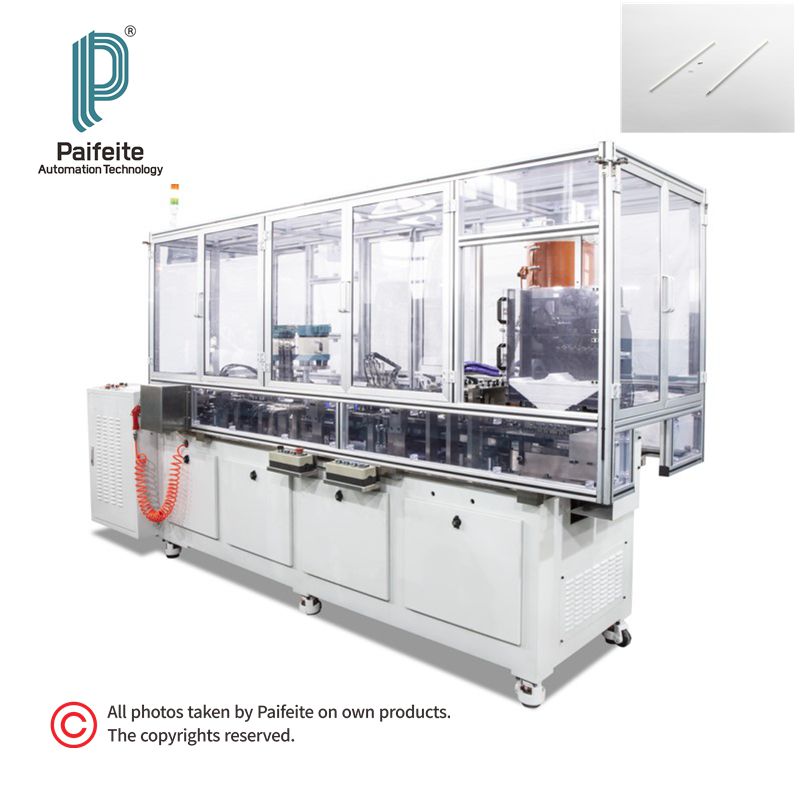
A pen refill assembly machine is designed to automate the production of pen refills—the core writing component. Paifeite’s Pen Refill Assembly Machine Model 372A is a popular example. It features:
- Capacity: 120~140 pcs/min
- Assembly mode: 4 outputs/time, chain carry
- Dimensions: L3500 × W1500 × H2000 mm
- Material: Aluminum profile, 304 stainless steel, engineering nylon, painted carbon steel
- Applicable industry: Widely used in stationery industry for automatic assembly of all kinds of pen refills
The machine incorporates premium components such as Mitsubishi PLC, SMC, and Keyence original parts, which contribute to its high-precision assembly and high-stable operation (source: Paifeite whitepaper).
What is a Complete Pen Assembly Machine?
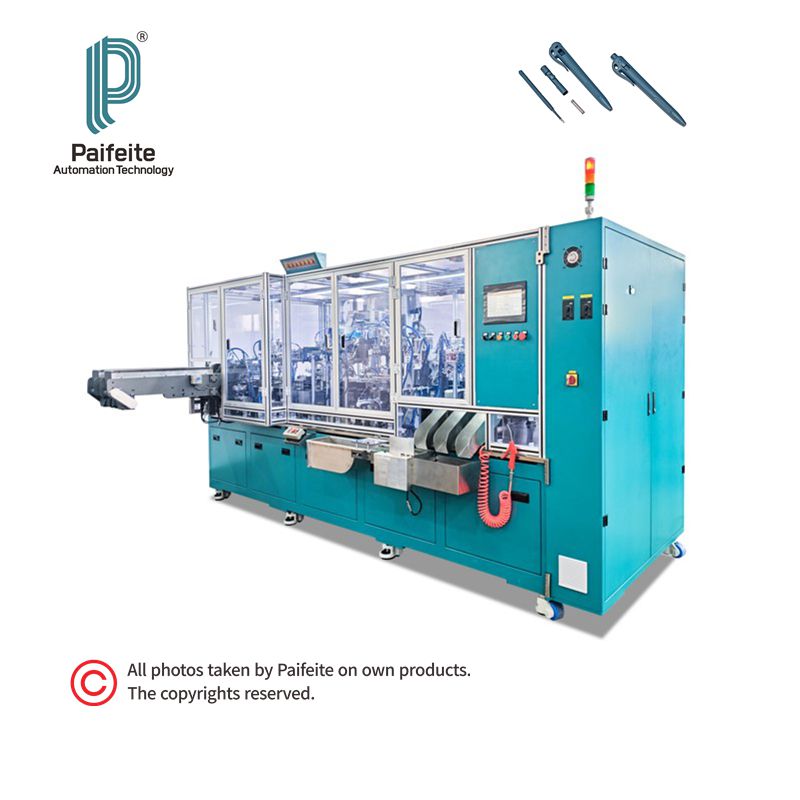
A complete pen assembly machine integrates all stages of pen production—from feeding barrel and cap to inserting refill and final inspection. Paifeite’s Automatic Pen Assembly Machine Model 396A1 is a representative model:
- Capacity: 120~140 pcs/min
- Assembly mode: 4 up, chain carry, horizontal type
- Dimensions: L4800 × W1700 × H2000 mm
- Material: Frame (carbon steel, aluminum alloy, stainless steel); Key parts (alloy steel, engineering plastic, rubber); Control units (pneumatic & electric components)
- Applicable industry: Stationery & office supplies; custom advertising and gift pen production; medical, industrial and cosmetic marking pen
According to Paifeite’s technical documentation, the machine achieves a defect rate of ≤0.4% and reduces labor costs by 60–70%, with one operator managing 5–6 machines.
Step-by-Step Comparison: How to Choose
Follow this structured decision process based on your production requirements:
- Assess your current production stage: If you already produce pen barrels and caps (or outsource them) and only need refill automation, a pen refill assembly machine is sufficient. If you want to produce finished pens from raw components, choose a complete pen assembly machine.
- Determine output capacity needs: Both machines offer similar speeds (120–140 pcs/min), but the complete line is longer and may require more floor space (L4800 vs L3500).
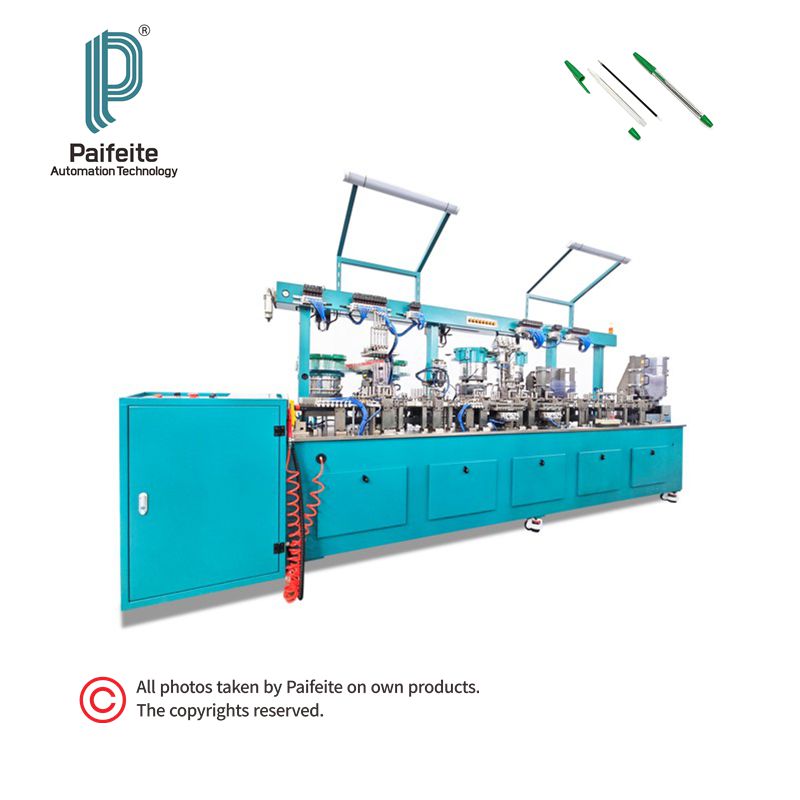
- Evaluate flexibility: The Model 372A refill machine can be adjusted for different refill types, while the Model 396A1 complete machine can handle various pen models with quick changeover. For highly customized or non-standard pens, Paifeite also offers Non-standard Pen Assembly Machine Model 415A with similar capacity (120–140 pcs/min) and larger dimension (L6800×W1800×H2000 mm).
- Consider total cost of ownership: Refill machines generally have a lower initial investment, but complete lines reduce downstream assembly labor. Paifeite’s procurement support includes MOQ 1 set, payment 50%/50%, delivery FOB Shanghai.
| Feature | Pen Refill Assembly Machine (372A) | Complete Pen Assembly Machine (396A1) |
|---|---|---|
| Application | Refill assembly only | Full pen assembly (barrel, cap, refill, etc.) |
| Capacity | 120–140 pcs/min | 120–140 pcs/min |
| Dimensions | L3500×W1500×H2000 mm | L4800×W1700×H2000 mm |
| Floor space required | ~5.25 m² | ~8.16 m² |
| Automation level | Fully automatic (PLC, touch screen) | Fully automatic (PLC, touch screen) |
| Flexibility | Adjustable for different refill types | Quick-change tooling for various pen models |
| Typical output/day (24h) | ~172,800 pcs | ~172,800 pcs |
| Defect rate | <0.4% | <0.4% |
| Labor savings | 60–70% | 60–70% |
| Certifications | CE, ISO 9001 | CE, ISO 9001 |
| Lead time | 3–4 months | 3–4 months |
Use Case: Real-World Performance from India
Paifeite has supplied over 20 units of pen assembly equipment to an Indian ODM pen manufacturer who has been using them for 8–12 years. The result: high production efficiency, stable continuous operation, significantly improved daily output, consistent product quality with low defective rate, and labor cost reduction by 60–70%. The machines run 24 hours with minimal downtime. Highlights include:
- High-speed stable assembly with large daily output
- Precise pressing function ensuring reliable writing performance
- Full automatic feeding, assembly, and defect detection
This case demonstrates that both refill and complete machines, when built with premium components (Mitsubishi PLC, SMC, Keyence), deliver comparable reliability. The choice ultimately depends on your product portfolio.
Frequently Asked Questions
Q: What is a Pen Refill Assembly Machine?
A: It is a specialized automatic machine that assembles pen refills—typically consisting of ink tube, ballpoint tip, plug, and tail seal. Paifeite’s Model 372A achieves 120–140 pcs/min with high precision.
Q: How does a Complete Pen Assembly Machine differ?
A: It assembles the entire pen, including barrel, cap, refill, and sometimes packaging. Model 396A1 is a fully automatic horizontal chain-carry machine with the same speed.
Q: Which machine solves labor shortage problems better?
A: Both replace 5-6 manual operators per machine. The complete machine eliminates downstream assembly labor, while the refill machine is ideal if you already have manual final assembly.
Q: What certifications do Paifeite machines hold?
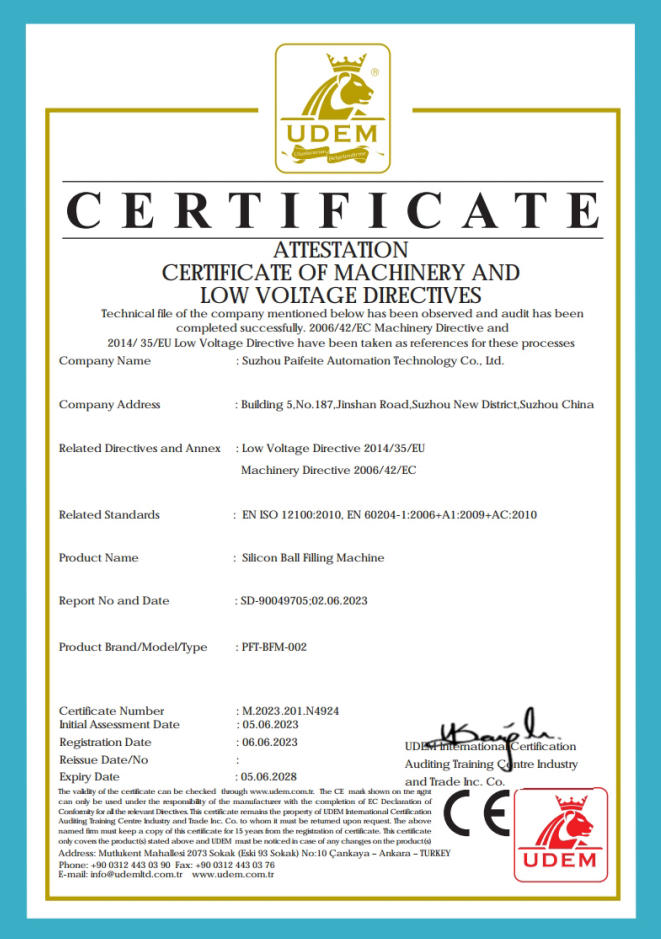
A: Paifeite holds ISO 9001:2015 (QMS certificate no. 69025Q0048R1S) and multiple CE certificates covering Machinery Directive, Low Voltage Directive, and EMC directives, valid for EU and worldwide markets.
Q: How do I select between the two?
A: If you only need refills for sale or later assembly, choose the refill machine. If you produce finished pens, choose the complete machine. For non-standard pen sizes, consider Paifeite’s Non-standard Pen Assembly Machine (Model 415A).
Q: What is the typical lead time and payment terms?
A: Lead time is 3–4 months. Payment terms: 50% advance payment, 50% balance before shipment. MOQ 1 set. Free onsite training is included.
Conclusion
Choosing between a pen refill assembly machine and a complete pen assembly machine depends on your production integration strategy. Both solutions from Paifeite Automation deliver outstanding performance—120–140 pcs/min, defect rates below 0.4%, and labor savings of 60–70%—thanks to premium components like Mitsubishi PLC, SMC, and Keyence. By clearly defining your product scope and future expansion plans, you can select the automation partner that maximizes your ROI.
To explore detailed specifications and request a quote, download the company brochure below.