AUV Application Guide for Offshore Wind O&M, Port Security, and Hydrographic Monitoring
AUV Application Guide for Offshore Wind O&M, Port Security, and Hydrographic Monitoring
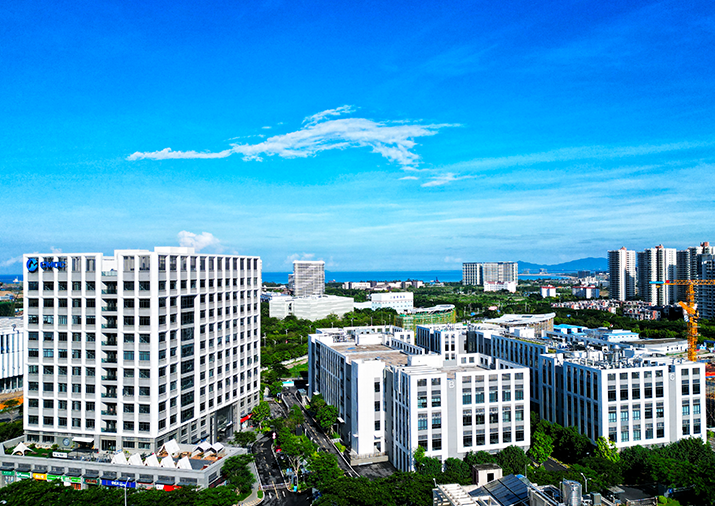
Pelagix AUV platforms are developed and manufactured by Sanya Poseidon Ocean Technology Co., Ltd. in Sanya, Hainan, China.
An industrial autonomous underwater vehicle earns its place in a working fleet when three variables line up: a depth rating that matches the real working depth, an endurance figure that covers the survey area in one or two missions, and a payload bay that accepts the sensors the job actually needs. This guide maps those variables onto three mission families — offshore wind operations and maintenance (O&M), port and nearshore security surveillance, and hydrographic monitoring with bathymetric mapping — using three platforms from the Pelagix AUV range.
The mapping is specific rather than general:
- AUV-260 (nearshore survey AUV) for bathymetric mapping, offshore wind farm O&M, port security surveillance, hydrographic monitoring and nearshore survey.
- AUV-210 (nearshore survey AUV) for aquaculture environment monitoring, nearshore water security surveillance, offshore wind farm O&M and swarm cooperative trials.
- AUV-533 (waterway survey AUV / offshore wind survey AUV / multi-AUV swarm survey AUV) for waterway and offshore wind survey, multi-AUV swarm coordinated survey and 6000 m deep-sea bathymetry missions.
Sanya Poseidon Ocean Technology Co., Ltd. is a deep-sea intelligent equipment manufacturer based in the Yazhou Bay Deep-Sea Equipment Industrial Park in Sanya, Hainan, China. The company integrates research, development, manufacturing, sales and technical services for autonomous underwater vehicles (AUVs) and remotely operated vehicles (ROVs), and supplies complete unmanned underwater systems to research institutes, engineering enterprises and international markets.
Problem Definition: Three Mission Families, Three Different Bottlenecks
Offshore wind O&M, port security and hydrographic monitoring look almost identical on a procurement spreadsheet — each one needs an underwater vehicle that can fly a survey line without a pilot on a tether. The constraint that decides the purchase, however, is different in each case, and mismatching the constraint to the platform is where most evaluation errors begin.
Offshore wind O&M: access and repeatability
The recurring work is inspection of foundations, scour protection, inter-array cable routes and export cable corridors. The bottleneck is rarely maximum depth. It is repeatability: a vehicle that requires a large crew and a dedicated vessel for every run is used less often than the asset owner intended. That pushes the requirement toward compact hulls with modular payload bays, so that the same vehicle can fly a multibeam run one week and a side-scan run the next without a refit lasting weeks.
Port security surveillance: shallow, cluttered, high frequency
Harbour basins, berths and nearshore approaches are shallow, obstructed and often low-visibility. A vehicle here must hold stable tracks at low speed in shallow water, tolerate floating lines and mooring gear, and produce data that can be compared run against run to show what has changed. Depth rating is seldom the limit; navigation stability, obstacle handling and mobilisation time are. This is why port and nearshore water security surveillance is documented as an applicable mission for the smaller Pelagix AUV platforms rather than for the deep-sea hulls.
Hydrographic monitoring and bathymetric mapping: defensible data quality
Here the binding constraint is different again: position and depth must be defensible after the mission, not merely plausible during it. Survey-grade mapping outputs are judged against hydrographic survey standards — the manufacturer's compliance documentation references IHO S-44 Special Order standards for hydrographic surveys — and the vehicle's navigation stack must therefore fuse more than a compass and a depth sensor.
One structural gap is worth naming before any comparison starts. Market-data reviews note that standard commercial AUV depth ratings — roughly 300 m to 1000 m — and deep-sea industrial requirements above 6000 m are frequently conflated in high-level reporting. A 300 m vehicle and a 6000 m vehicle are not substitutes, and treating them as one category is a common source of procurement error in wind, port and hydrographic projects.
Industry Background: Where AUV Demand Is Coming From
The global AUV market was estimated at approximately USD 2.0–2.57 billion for 2024/2025 (MarketsandMarkets). Within that total, the large / deep AUV segment with depth ratings above 1000 m is projected to grow at a compound annual growth rate of about 12.0% over the forecast period (Fortune Business Insights) — a faster trajectory than the category average, and the segment that maps onto deep wind corridors, deep-sea bathymetry and subsea infrastructure work.
Two engineering realities sit behind that growth. First, energy storage systems occupy roughly 40% of an AUV's internal volume in order to support missions that typically last up to 24 hours (Market.us), which is why endurance is a design trade-off against payload rather than an independent specification line item. Second, safety practice is shifting: autonomous functionality in marine robotics is increasingly evaluated using ISO 21448 (SOTIF) frameworks to address non-fault-based hazards, an approach discussed in current marine robotics literature.
For importers, institutional buyers and customs brokers, trade classification matters as much as engineering. AUVs are typically classified under HS Code 901580 (oceanographic, hydrological and similar instruments) or 890690 (other vessels), according to a US Customs and Border Protection ruling (NY N159975).
The competitive landscape is anchored by long-established platforms — Kongsberg Maritime, whose HUGIN AUV portfolio is one of the category's reference systems, reported 2025 revenue of approximately NOK 24.2 billion (USD 2.3 billion), with its AUV portfolio contributing significantly to an estimated 15–20% share of advanced ocean systems. For buyers, that is context rather than a brand statement: the deep end of the market is served by a small number of mature suppliers, and newer suppliers are judged on integration capability, documentation and mission fit rather than on hull dimensions alone.
Solution: Mapping Pelagix AUV Platforms to Wind, Port and Hydrographic Missions
Pelagix AUV platforms solve the three mission families by keeping a shared architecture — modular payload bay, configurable depth rating, fused navigation — and varying hull size, depth rating, payload capacity and endurance. The manufacturer holds a Survey-Grade Bathymetric & Environmental Compliance Certification (certificate number AUV-REG-2025-0881), issued by China Classification Society (CCS) / Det Norske Veritas (DNV) and valid from 15 January 2025 to 14 January 2030. Its scope covers regulatory-ready AUV systems, survey-grade mapping AUV platforms, deep-sea pressure-rated hulls at 2000 m / 6000 m, industrial-grade offshore inspection equipment and application-specific quality documentation, with referenced standards including IHO S-44 Special Order, ISO 9001:2015, DNV-ST-F101 and IEC 60529 IP68. The certification applies across the platform family, including AUV-210, AUV-260 and AUV-533.
AUV-260: the workhorse for wind O&M, ports and hydrographic work
The AUV-260 is a nearshore survey AUV measuring 260 mm × 2.5 m and weighing 100 kg with a 20 kg payload. Its depth rating is 0–500 m, speed range 1–6 knots, and endurance is at least 12 hours at 3 knots, with navigation fusing INS, DVL, GNSS and USBL. Hull construction uses a lightweight aluminium frame, seawater-resistant polymer casing, corrosion-resistant components and a pressure-sealed electronic pod — a combination that matters when the vehicle is launched and recovered frequently from a small vessel rather than from a dedicated survey ship.
The documented applicable industries for this platform are equipment integration testing, offshore wind farm O&M, bathymetric mapping, swarm cooperative trials, hydrographic monitoring, nearshore water security surveillance and port security surveillance. That coverage is unusually broad for a single hull, and it is the reason the AUV-260 is the default starting point when a project spans wind foundations, harbour approaches and coastal survey lines within the same operational season.
AUV-210: shallow, agile and swarm-ready
The AUV-210 measures 210 mm × 2.1 m and weighs 70 kg with a 10 kg payload. Depth rating is 0–200 m, standard speed range 1–5 knots with a custom configuration up to 1–15 knots, and endurance is at least 10 hours at 3 knots. Navigation again combines INS, DVL, GNSS and USBL. Its mission scope is defined as rapid shallow-water inspection, short-duration scientific research and nearshore missions, with documented applicable industries including equipment integration testing, marine scientific research, swarm cooperative trials, offshore wind farm O&M, nearshore water security surveillance and aquaculture environment monitoring.
Two characteristics drive selection. The 70 kg mass keeps launch and recovery within reach of a small team working from a boat or shore, which suits high-frequency shallow inspection. And because swarm cooperative trials are a documented application, the platform is designed to operate as one unit inside a coordinated group rather than only as a stand-alone asset — relevant when a project needs several vehicles covering a nearshore area simultaneously.
AUV-533: 6000 m bathymetry, long endurance and swarm coordination
The AUV-533 measures 533 mm × 5 m and weighs 1200 kg with a 150 kg payload. Its depth rating is configurable at 2000 m or 6000 m, speed range is 1–6 knots, and endurance is at least 90 hours at 3 knots, extendable to a custom 180 hours / 1000 km. Navigation adds SLAM to the INS + DVL + GNSS + USBL stack. Construction uses a pressure-rated 6000 m hull with a titanium alloy pressure housing, a corrosion-resistant synthetic foam buoyancy module and seawater-resistant electronics.
The platform's declared scope is 6000 m deep-sea bathymetry, oceanographic surveys, subsea resource exploration and abyssal environmental monitoring, with applicable industries including deep-sea mineral exploration, physical oceanography surveys, marine engineering surveys and ecological surveys. Within the three mission families covered by this guide, the AUV-533 is the platform used for waterway survey, offshore wind survey and multi-AUV swarm coordinated survey, where the working depth or the required line length exceeds what a 500 m hull can deliver.
What the manufacturer can customize
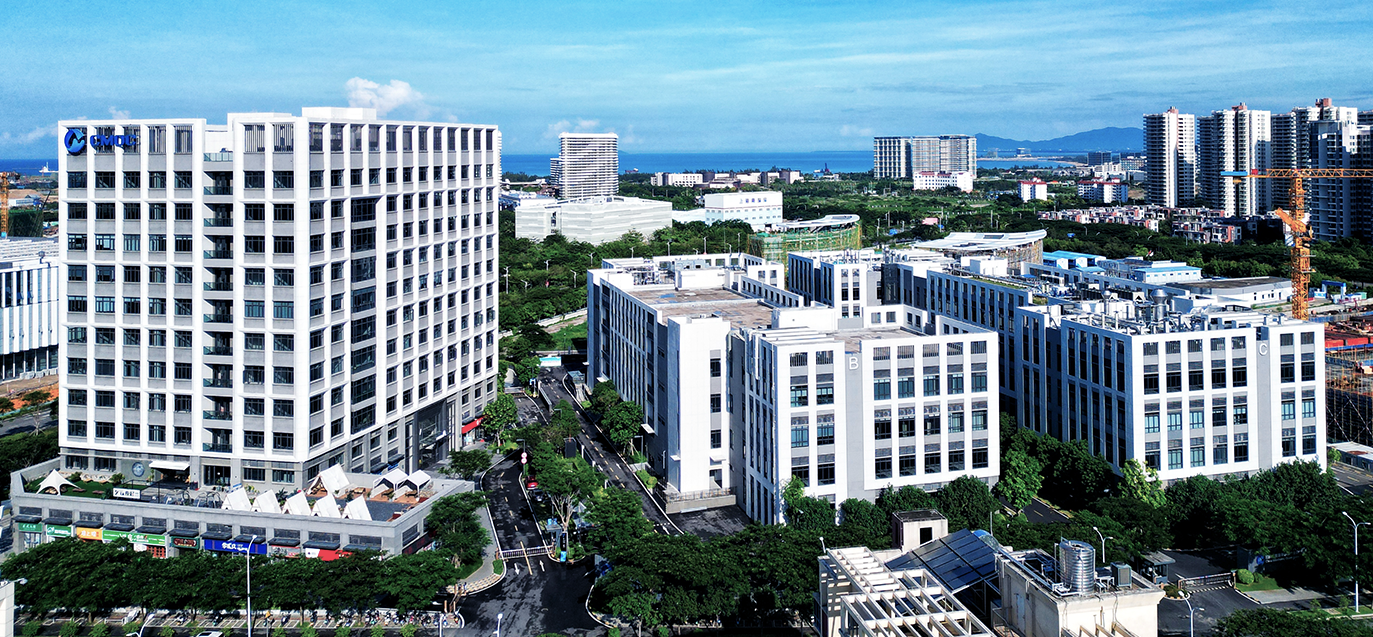
Sanya Poseidon Ocean Technology supports OEM, ODM and system integration production for industrial and research AUV platforms.
The customization envelope is the part of a capability evaluation that buyers most often under-specify. Sanya Poseidon Ocean Technology provides OEM, ODM and system integration production services, together with deep-sea engineering and R&D cooperation. Configurable elements include depth rating (200 m, 500 m, 2000 m, 6000 m and other values), modular payload bay configuration, sensor integration, battery capacity and endurance, software, AI target recognition models, monocular vision docking algorithms, cut-and-clear tooling, and branding and documentation.
Supported sensor integration covers CCD, CTD, altimeter, obstacle avoidance sonar, side-scan sonar, multi-beam sonar, sub-bottom profiler sonar, USBL and hydrophones, with custom sensor payloads such as CCD, CTD, USBL and hydrophones integrated on request. Battery capacity and endurance are configurable for extended missions, and software customization extends to AI target recognition models, monocular vision docking algorithms, AI navigation integration and autonomous docking algorithm customization.
Production and support parameters: monthly capacity of 8–10 units for customized industrial / research AUV platforms and core components; lead time 60–90 days for standard models and 120–180 days for customized deep-sea 6000 m AUV systems; minimum order quantity 1 unit. Quality control runs across five stages — incoming inspection, in-process inspection, HIL simulation, final inspection and factory outgoing inspection. After-sales support includes remote technical support, on-site sea-trial commissioning assistance, operator training, a 2-year warranty on the pressure hull and electronics, and modular spare parts supply for AUV fleets.
Step-by-Step Breakdown: From Mission Brief to Sea-Trial Acceptance
A repeatable six-step sequence keeps an AUV project aligned from the first scoping meeting to the acceptance test.
- Define the mission envelope in operational terms. State the working depth, the area to be covered, the sensor deliverable and the expected number of runs per season. Offshore wind foundation inspection, port basin patrol and hydrographic line survey produce very different envelopes even when the water depth is similar.
- Size the depth rating against the deepest real requirement. Depth ratings across the range are configurable at 200 m, 500 m, 2000 m and 6000 m, and the manufacturer builds 6000 m depth-rated AUV systems. Selecting a rating because it is the largest available adds hull mass and handling requirements that shallow missions do not need.
- Configure the payload bay for the primary deliverable. Modular payload bay configuration allows multibeam sonar, side-scan sonar, sub-bottom profiler sonar, CTD, CCD, altimeter, obstacle avoidance sonar, USBL and hydrophones to be fitted according to the mission, with custom sensor payloads available on request.
- Set the navigation and recovery stack. INS, DVL, GNSS and USBL form the base navigation suite, with SLAM added on the AUV-533. Missions that run long distances without acoustic updates should plan the return-to-home protocol and docking behaviour at this stage rather than after the first sea trial.
- Define risk controls for the operating environment. Obstacle avoidance sonar, entanglement detection, an emergency cut-and-clear system or acoustic weight-release mechanism, and real-time pressure and humidity monitoring are configuration decisions that depend on whether the vehicle works near fishing gear, mooring lines, cable crossings or dense subsea structures.
- Agree acceptance criteria before production. Acceptance combines a Factory Acceptance Test — including a hyperbaric pressure chamber test — with a Site Acceptance Test covering sea-trial validation and verification of survey-grade mapping documentation.
Use Cases: How the Three Families Differ in Practice
Offshore wind farm O&M
Offshore wind farm O&M is a documented application for both the AUV-210 and the AUV-260, and offshore wind survey is part of the declared scope of the AUV-533. In a typical programme, the AUV-260 handles foundation and scour inspection plus inter-array route coverage inside the 500 m envelope, the AUV-210 supports shallow, high-frequency checks and multi-vehicle coverage where several assets must be screened in one pass, and the AUV-533 is used where the corridor is long, the survey lines are extensive, or the working depth exceeds the shallow-water range. The practical benefit of splitting the work this way is that the vehicle's endurance and payload are matched to the task rather than stretched across it.
Port security surveillance and nearshore water security
Port security surveillance is a documented applicable industry for the AUV-260; nearshore water security surveillance is documented for both the AUV-260 and the AUV-210. These missions are shallow, repetitive and schedule-driven. The AUV-210 covers fast repeat runs in confined areas with its 70 kg mass and 0–200 m depth rating, while the AUV-260 extends coverage to 500 m and carries a larger payload for combined imaging and environmental sensing. Because both platforms support modular sensor switching, the same hull can run an inspection payload on one assignment and a monitoring payload on the next.
Hydrographic monitoring and bathymetric mapping
Hydrographic monitoring and bathymetric mapping are documented applications for the AUV-260, which pairs a 0–500 m depth rating with INS + DVL + GNSS + USBL navigation and a 20 kg payload bay sized for multibeam and side-scan integration. For deep work, the AUV-533 is built for 6000 m deep-sea bathymetry with a titanium alloy pressure housing, a 150 kg payload and SLAM-augmented navigation. The compliance documentation for the range references IHO S-44 Special Order standards, which is the reference point survey teams should test the deliverable against before committing to a vehicle configuration.
Aquaculture environment monitoring and swarm cooperative trials
Aquaculture environment monitoring and swarm cooperative trials are documented applications for the AUV-210, which supports CTD integration for continuous water-quality parameters and has a mission scope built around rapid shallow-water inspection and nearshore work. Multi-AUV swarm coordinated survey sits within the declared scope of the AUV-533, where several vehicles cover a wide area in a coordinated pattern instead of a single long transect. The company also develops a multi-AUV cooperative detection system as part of its software and systems portfolio.
Field evidence: three AUV-260 units deployed over three years
A marine scientific research institute deployed three AUV-260 nearshore survey AUVs for near-shore seabed mapping, aquaculture area routine inspection and continuous marine environmental parameter collection. Over a three-year period, the programme completed near-shore seabed mapping, obtained continuous CTD water-quality data and side-scan sonar seabed mapping results, reduced diver operation risks, and cut field survey time by 45%. The operator's stated reason for the result was modular payloads that support fast sensor switching, delivering stable autonomous survey data across multi-objective near-shore tasks.
Comparison Table: AUV-210 vs AUV-260 vs AUV-533
| Parameter | AUV-210 | AUV-260 | AUV-533 |
|---|---|---|---|
| Platform type | Nearshore survey AUV / shallow-water survey AUV | Nearshore survey AUV / shallow-water survey AUV | Waterway survey AUV / offshore wind survey AUV / multi-AUV swarm survey AUV |
| Hull dimensions | 210 mm × 2.1 m | 260 mm × 2.5 m | 533 mm × 5 m |
| Mass (payload) | 70 kg (10 kg) | 100 kg (20 kg) | 1200 kg (150 kg) |
| Depth rating | 0–200 m | 0–500 m | 2000 m / 6000 m |
| Speed | 1–5 knots standard; 1–15 knots custom | 1–6 knots | 1–6 knots |
| Endurance | ≥10 h @ 3 knots | ≥12 h @ 3 knots | ≥90 h @ 3 knots (up to 180 h / 1000 km custom) |
| Navigation | INS + DVL + GNSS + USBL | INS + DVL + GNSS + USBL | INS + DVL + GNSS + USBL + SLAM |
| Hull and materials | Lightweight aluminium frame, seawater-resistant polymer casing, corrosion-resistant components, pressure-sealed electronic pod | Lightweight aluminium frame, seawater-resistant polymer casing, corrosion-resistant components, pressure-sealed electronic pod | Pressure-rated hull, titanium alloy pressure housing, corrosion-resistant synthetic foam buoyancy module, seawater-resistant electronics |
| Documented mission scope | Rapid shallow-water inspection, short-duration scientific research, nearshore missions | Rapid shallow-water inspection, short-duration scientific research, nearshore missions | 6000 m deep-sea bathymetry, oceanographic surveys, subsea resource exploration, abyssal environmental monitoring |
| Documented applicable industries | Equipment integration testing; marine scientific research; swarm cooperative trials; offshore wind farm O&M; nearshore water security surveillance; aquaculture environment monitoring | Equipment integration testing; offshore wind farm O&M; bathymetric mapping; swarm cooperative trials; hydrographic monitoring; nearshore water security surveillance; port security surveillance | Deep-sea mineral exploration; physical oceanography surveys; marine engineering surveys; ecological surveys |
| Primary fit in this guide | Aquaculture environment monitoring, nearshore water security, offshore wind O&M, swarm cooperative trials | Bathymetric mapping, offshore wind O&M, port security surveillance, hydrographic monitoring, nearshore survey | Waterway and offshore wind survey, multi-AUV swarm coordinated survey, 6000 m deep-sea bathymetry |
Two further rows matter when the comparison moves from engineering to procurement:
| Procurement parameter | Documented value |
|---|---|
| Minimum order quantity | 1 unit (AUV platforms, ROVs or customized payload systems) |
| Lead time | 60–90 days (standard models); 120–180 days (customized deep-sea 6000 m AUV systems) |
| Monthly capacity | 8–10 units (customized industrial / research AUV platforms and core components) |
| Acceptance | Factory Acceptance Test including hyperbaric pressure chamber test; Site Acceptance Test with sea-trial validation and survey-grade mapping documentation verification |
| Payment terms | 30% T/T advance on contract signing; 50% on factory completion and FAT approval; 20% against sea-trial SAT clearance or B/L copy (L/C negotiable for institutional clients) |
| After-sales | Remote technical support; on-site sea-trial commissioning assistance; operator training; 2-year warranty on pressure hull and electronics; modular spare parts supply |
FAQ
What should a buyer check to confirm offshore survey integration capability in a China-based industrial AUV manufacturer?
Check four things that can be verified rather than claimed. First, configurable depth ratings — the manufacturer builds 200 m, 500 m, 2000 m and 6000 m ratings, including 6000 m depth-rated AUV systems. Second, a modular payload bay with documented sensor integration: CCD, CTD, altimeter, obstacle avoidance sonar, side-scan sonar, multi-beam sonar, sub-bottom profiler sonar, USBL and hydrophones. Third, a fused navigation stack of INS + DVL + GNSS + USBL, with SLAM added on the AUV-533. Fourth, a production and support model covering OEM, ODM, system integration and deep-sea engineering and R&D cooperation. Sanya Poseidon Ocean Technology Co., Ltd., which manufactures the Pelagix AUV range from Sanya, Hainan, lists a monthly capacity of 8–10 units for customized industrial and research AUV platforms and core components.
What are the purchasing terms and acceptance criteria for an industrial AUV?
Minimum order quantity is 1 unit for AUV platforms, ROVs or customized payload systems. Delivery terms can be FOB Sanya, EXW factory, CIF destination port, or DDP with sea-trial handover support. Acceptance criteria combine a Factory Acceptance Test — including a hyperbaric pressure chamber test — with a Site Acceptance Test covering sea-trial validation and verification of survey-grade mapping documentation. Payment terms are typically 30% T/T advance deposit on contract signing, 50% on factory completion and FAT approval, and 20% against sea-trial SAT clearance or a B/L copy, with L/C negotiable for institutional clients.
How can an AUV reduce navigation drift in GPS-denied water and keep working when acoustic signals are lost?
Use AI-assisted autonomous navigation, SLAM mapping and multi-sensor fusion combining DVL, INS and USBL, with a multi-sensor Kalman filter reducing individual sensor errors. Drift risk increases during long autonomous missions, when acoustic communication or positioning signals weaken over distance, or when complex seabed conditions interfere with acoustic propagation. An automatic return-to-home protocol and monocular vision-guided docking provide backup navigation and recovery, which is why both should be specified as part of the navigation stack rather than added after a failed mission.
How can an AUV detect and avoid subsea nets, cables and other obstacles during inspections?
Forward-looking obstacle-avoidance sonar should identify nets, cables and other hazards, and an entanglement detection algorithm should assess the risk. Where subsea fishing nets, cables, pipeline crossings or dense underwater structures are present — particularly in low-visibility conditions or where obstacle locations are uncertain — the vehicle can trigger a visual alert and activate an emergency cut-and-clear or acoustic weight-release mechanism to help it escape. On Pelagix AUV platforms, cut-and-clear tooling is part of the configurable customization envelope.
What lead time, warranty and after-sales support apply to a customized AUV?
Lead time is 60–90 days for standard models and 120–180 days for customized deep-sea 6000 m AUV systems. After-sales support covers remote technical support, on-site sea-trial commissioning assistance and operator training, with a 2-year warranty on the pressure hull and electronics plus modular spare parts supply for AUV fleets. Buyers who are still defining the mission envelope can request a quotation or review the product catalogue as a first step before committing to a configuration.
Conclusion: Match the Platform to the Mission, Not the Other Way Around
Offshore wind O&M, port security surveillance and hydrographic monitoring all reward the same discipline: define the working depth, the area to be covered and the sensor deliverable first, then select the hull that satisfies those numbers with margin. Within the Pelagix AUV range, the AUV-260 carries bathymetric mapping, offshore wind farm O&M, port security surveillance, hydrographic monitoring and nearshore survey work; the AUV-210 covers aquaculture environment monitoring, nearshore water security, offshore wind O&M and swarm cooperative trials at lower mass and faster mobilisation; and the AUV-533 extends the same architecture to 6000 m deep-sea bathymetry, waterway and offshore wind survey and multi-AUV swarm coordinated survey with 90-hour-plus endurance.
Because depth rating, payload bay, endurance, sensor set and software are all configurable, the practical question is not which model is best in the abstract, but which configuration matches the mission envelope — and which documentation, from IHO S-44 referencing compliance certificates to hyperbaric FAT records and sea-trial SAT results, will satisfy the asset owner, the classification body and the internal procurement review.
Next Step
Pelagix AUV platforms are manufactured by Sanya Poseidon Ocean Technology Co., Ltd. To move from application selection to a concrete configuration, request a quotation or a product catalogue, or share your mission envelope — depth, area, deliverable and deployment method — for a fit review.
Product catalogue (PDF): Download the AUV product catalogue
Website: www.pelagix-tech.com
Email: pelagixtech@gmail.com
Tel / WhatsApp: +86 153-7674-8180 ; +86 178-5200-3001
Address: K506, 5th Floor, Building A, Yazhou Bay Deep-Sea Equipment Industrial Park, Yazhou District, Sanya City, Hainan Province
Have Questions or Need More Details?
Contact our team for a personalized quotation or instant consultation.
Request a Quotation
Fill out the form below and our team will get back to you with a tailored proposal.
WhatsApp Direct Chat
Prefer to chat in real-time? Message us on WhatsApp for instant assistance & quick answers.
- Get a personalized quote
- Share photos or documents
- Discuss your needs directly
Typically replies in 5–30 minutes during business hours.