AUV Model Numbers Explained: From 160 mm Portable to 533 mm Deep-Sea Platforms
In the Pelagix AUV range, the numbers in the model names AUV-160, AUV-210, AUV-260, AUV-324, AUV-480 and AUV-533 are not mission codes, product generations or payload grades. Each number is the vehicle's outer hull diameter in millimetres.
AUV-160 describes a 160 mm diameter platform. AUV-533 describes a 533 mm diameter platform. The same rule holds across the family: AUV-210 measures 210 mm × 2.1 m, AUV-260 measures 260 mm × 2.5 m, AUV-324 measures 324 mm × 4 m, and AUV-480 measures 480 mm × 6.5 m. Once a buyer recognises that single convention, a specification sheet stops being a list of numbers and turns into a decision tool — because hull diameter sets the internal volume available for batteries, pressure housings and payload bays, and therefore governs the depth rating and endurance a platform can realistically deliver.
Pelagix AUV is the autonomous underwater vehicle line of Sanya Poseidon Ocean Technology Co., Ltd., a deep-sea intelligent equipment manufacturer based in the Yazhou Bay Deep-Sea Equipment Industrial Park in Sanya, Hainan, China. The company designs and manufactures AUVs, ROVs, core underwater components and marine software systems.
Why AUV Model Names Confuse Buyers
The naming problem is straightforward. Across the autonomous underwater vehicle market, manufacturers label platforms in incompatible ways. Some use sequential product numbers, some use letter codes tied to mission profiles, and some use internal project identifiers that mean nothing outside the factory. A procurement team comparing three data sheets side by side has no reliable way to tell whether a designation reflects physical size, depth class, generation or payload architecture.
That ambiguity matters because the first question in almost every AUV sourcing conversation is not "which model is newest" but "what can this vehicle physically carry, and how deep can it go". Both answers are constrained by the hull. A 160 mm diameter vehicle and a 533 mm diameter vehicle are not two products at different price points — they are two different engineering envelopes with different launch methods, different sensor capacity and different mission lengths.
When the model number equals the hull diameter, as it does in the Pelagix AUV family, the first layer of that ambiguity disappears. A reader can compare the AUV-210 against the AUV-260 and immediately understand that they are separated by 50 mm of hull diameter, roughly 30 kg of mass, and 300 m of depth rating — before reading a single specification line.
Why Hull Diameter Is the Starting Point for Any AUV Specification
Hull diameter is the least decorative and most consequential number on an AUV data sheet, because internal volume scales with diameter and everything else competes for that volume.
Energy storage is the largest single claimant. According to commercial market analysis published by Market.us, energy storage systems account for approximately 40% of an AUV's internal volume to support missions typically lasting up to 24 hours. That figure is a useful benchmark: if roughly two-fifths of the interior is dedicated to batteries, then a hull enlargement does not simply add sensor space — it adds battery space, which extends endurance, which in turn justifies longer missions.
Pressure tolerance is the second constraint. A larger diameter pressure hull must resist the same external hydrostatic load across a wider span, which forces different wall thickness and material choices. This is why the deep-rated models in the Pelagix portfolio use titanium alloy pressure housings and corrosion-resistant syntactic foam buoyancy modules, while the shallow-water models are built on lightweight aluminium frames with seawater-resistant polymer casings and pressure-sealed electronic pods.
Demand for that deep capability is growing faster than the general market. Fortune Business Insights projects that the large/deep AUV segment — platforms rated beyond 1000 m — will grow at a CAGR of 12.0% during the forecast period. MarketsandMarkets estimates the overall global AUV market at approximately USD 2.0–2.57 billion by 2024/2025. For buyers, the practical implication is simple: the difference between a 200 m platform and a 6000 m platform is not a premium option, it is a structurally different product category.
Reading tip: When comparing AUV data sheets from any manufacturer, verify four values before anything else — maximum depth rating, hull diameter, payload mass and endurance at a stated speed. Endurance figures quoted without a speed reference cannot be compared across platforms.
What the Pelagix AUV Model Numbers Actually Encode
The convention is consistent and verifiable against published dimensions. In the Pelagix AUV line, the three-digit number equals the outer hull diameter in millimetres, and the stated overall length grows with the platform class.
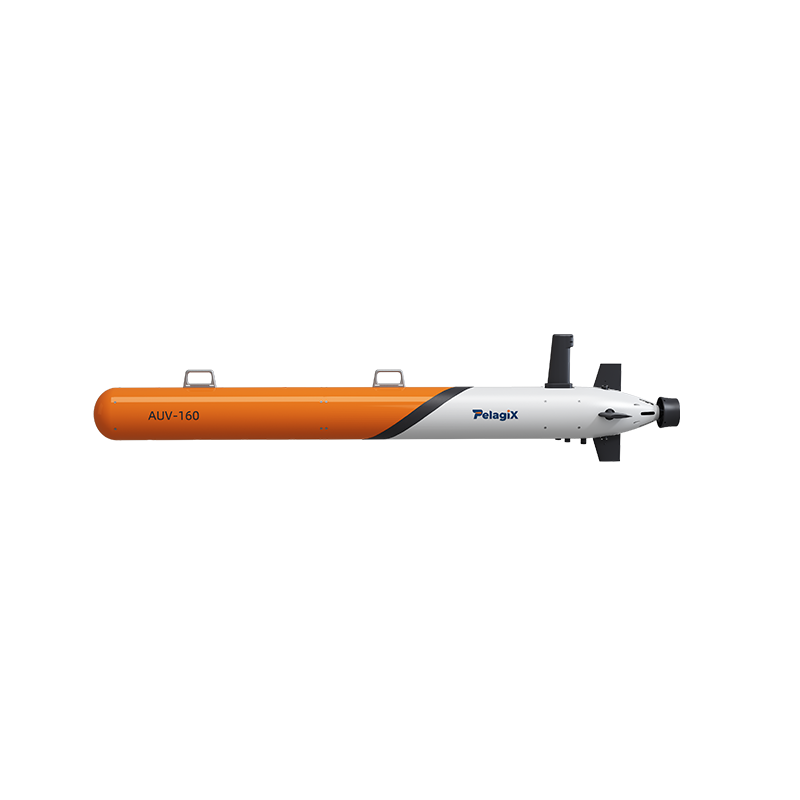
- AUV-160 — 160 mm × 1.8 m, 35 kg total mass, 5 kg payload.
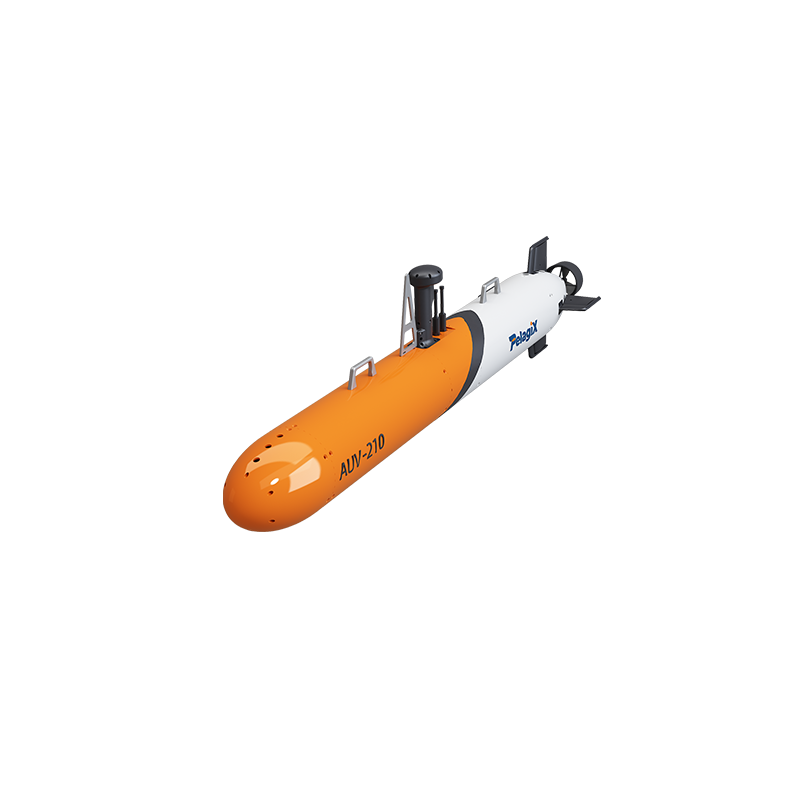
- AUV-210 — 210 mm × 2.1 m, 70 kg total mass, 10 kg payload.
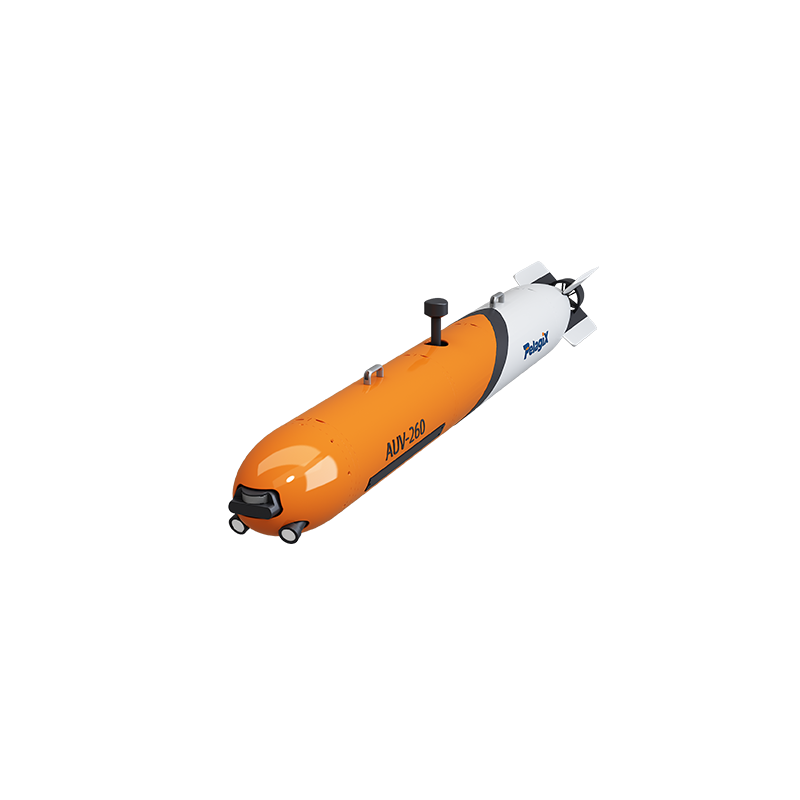
- AUV-260 — 260 mm × 2.5 m, 100 kg total mass, 20 kg payload.
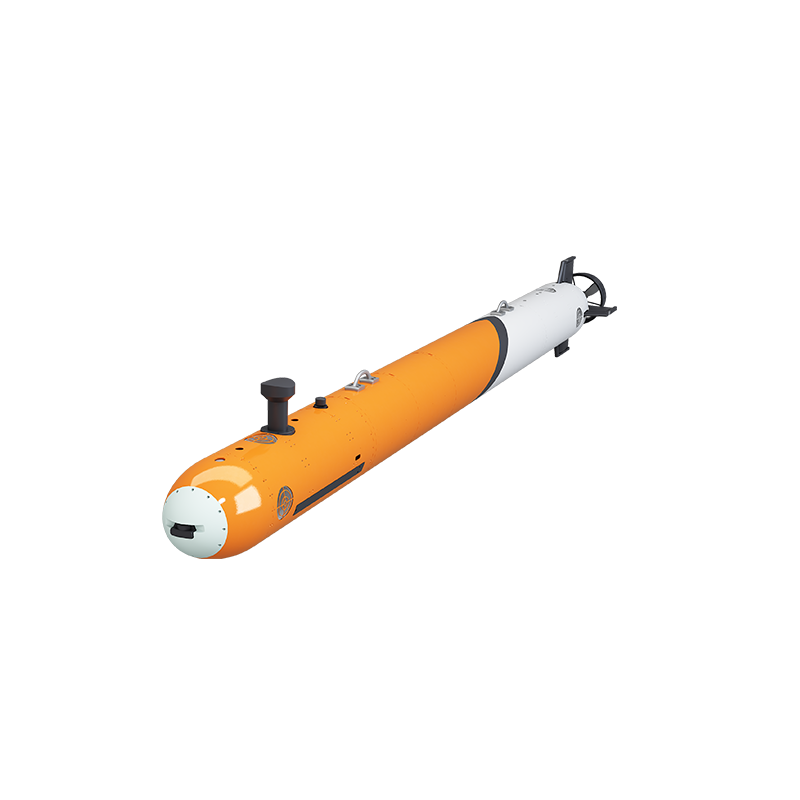
- AUV-324 — 324 mm × 4 m, 300 kg total mass, 30 kg payload.
- AUV-480 — 480 mm × 6.5 m, 700 kg total mass.
- AUV-533 — 533 mm × 5 m, 1200 kg total mass, 150 kg payload.
The pattern is not cosmetic. Diameter and mass track together, payload capacity tracks with both, and depth rating steps upward in a parallel sequence: 100 m, 200 m, 500 m, 600 m or 2000 m, 300 m, and 2000 m or 6000 m. A buyer can therefore use the model name as a first filter and then confirm the remaining details from the specification table.
Reading the AUV Family Model by Model
AUV-160 — the portable micro platform
The AUV-160 is a portable micro AUV designed around deployment simplicity rather than payload volume. At 160 mm × 1.8 m it weighs 35 kg and carries a 5 kg payload, with a 0–100 m depth rating, a speed range of 1–5 knots, and endurance of at least 8 hours at 3 knots. Navigation integrates INS, DVL and GNSS, so the vehicle maintains position without surface GPS once submerged.
Its structural approach matches its mission: a lightweight aluminium frame, seawater-resistant polymer casing, corrosion-resistant components and a pressure-sealed electronic pod. The platform supports shore launch, small-boat deployment and net recovery, which removes the need for a dedicated support vessel. The AUV-160 is intended for education and practical training, payload integration and testing, multi-vehicle cooperative testing, ocean environmental monitoring, aquaculture monitoring and inspection, and water area security surveillance.
AUV-210 and AUV-260 — the nearshore tier
Both models are classified as nearshore survey or shallow-water survey AUVs, and both are designed for nearshore missions, short-duration scientific research and shallow-water inspection. They differ in scale and in how that scale is used.
The AUV-210 measures 210 mm × 2.1 m, weighs 70 kg and carries a 10 kg payload, rated for 0–200 m. Its standard speed range is 1–5 knots, with a custom configuration reaching up to 15 knots, and endurance is at least 10 hours at 3 knots. Its navigation suite adds USBL to the INS, DVL and GNSS set. Intended applications include equipment integration testing, marine scientific research, swarm cooperative trials, offshore wind farm operation and maintenance, nearshore water security surveillance, and aquaculture environment monitoring.
The AUV-260 measures 260 mm × 2.5 m, weighs 100 kg and carries a 20 kg payload — double the AUV-210 — with a depth rating extended to 0–500 m. Speed spans 1–6 knots and endurance reaches at least 12 hours at 3 knots. The additional diameter and payload capacity support bathymetric mapping, hydrographic monitoring, port security surveillance, offshore wind farm O&M, and nearshore water security surveillance operations.
AUV-324 — the modular mid-depth platform
The AUV-324 is the point in the family where the design brief changes from "survey shallow water" to "carry instruments deeper". It is classified as a deep-diving long-endurance AUV, a seabed mapping AUV for bathymetry, and a high-payload modular AUV platform. Published dimensions are 324 mm × 4 m with a 300 kg total mass and a 30 kg payload, and the depth rating is configurable at either 600 m or 2000 m.
Speed spans 1–6 knots. Standard endurance is at least 20 hours at 3 knots, with custom endurance configurations of up to 50 hours or 300 km. The hull uses high-strength anodised aluminium alloy or titanium housing with a corrosion-resistant composite frame, and navigation combines INS, DVL, GNSS and USBL.
Intended use covers 2000 m medium-depth seabed bathymetry mapping, offshore oil and gas inspection, subsea infrastructure monitoring, marine environmental monitoring, scientific research expeditions and seabed resource surveys. For buyers, the AUV-324 is the smallest platform in the range that offers a configurable 2000 m option rather than a fixed shallow rating.
AUV-480 — the streamlined high-stability platform
The AUV-480 takes a different design direction from the AUV-324. It is classified as a streamlined high-stability AUV, built for seabed bathymetry mapping, offshore oil and gas inspection and marine environmental monitoring. It measures 480 mm × 6.5 m and weighs 700 kg, with a 300 m depth rating, a speed range of 1–5 knots, and endurance of at least 20 hours at 3 knots.
Its navigation system integrates INS, DVL, GNSS and USBL with positioning accuracy quoted at 0.3% of range. Construction uses high-strength anodised aluminium alloy or titanium housing with a corrosion-resistant composite frame and seawater-resistant electronics. Intended industries include subsea pipeline mapping, nearshore hydrographic and environmental monitoring, offshore engineering surveys and underwater structure inspection.
The AUV-480 is the longest hull in the family at 6.5 m. That length supports stability in the water column for mapping work, while the 300 m rating keeps it in the shallow-to-shelf envelope rather than the deep tier.
AUV-533 — the deep-sea survey platform
The AUV-533 is the largest diameter platform covered by this naming analysis and the one that reaches full ocean depth ratings. It measures 533 mm × 5 m, weighs 1200 kg and carries a 150 kg payload — five times the AUV-324's payload. Depth is configurable at either 2000 m or 6000 m, speed spans 1–6 knots, and standard endurance is at least 90 hours at 3 knots, with custom configurations up to 180 hours or 1000 km.
Navigation integrates INS, DVL, GNSS and USBL together with SLAM, and the hull is built as a pressure-rated structure with a titanium alloy pressure housing, corrosion-resistant syntactic foam buoyancy modules and seawater-resistant electronics.
The AUV-533 is classified as a waterway survey AUV, an offshore wind survey AUV and a multi-AUV swarm survey AUV. Its mission set covers 6000 m deep-sea bathymetry, oceanographic surveys, subsea resource exploration, abyssal environmental monitoring, deep-sea mineral exploration, physical oceanography surveys, marine engineering surveys and ecological surveys. It is suitable for waterway survey operations, offshore wind survey operations and multi-AUV swarm survey operations.
Where the naming convention stops
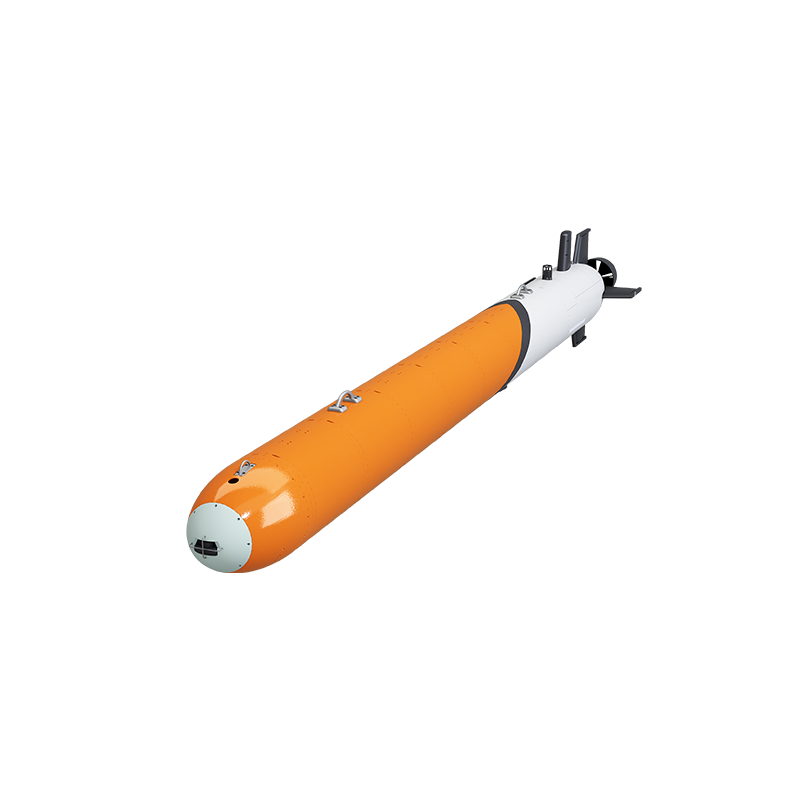
The diameter-as-model-number rule applies across the cylindrical survey platforms, including the AUV-150 (150 mm × 1.8 m), AUV-600 (600 mm × 6 m) and AUV-900 (900 mm × 6 m). The AUV-F760 is the deliberate exception: it is a 6-DOF intervention-class AUV classified in the subsea pipeline inspection category, with overall dimensions of 3850 × 760 × 420 mm. Its figure refers to a different physical dimension and its "F" prefix signals a different architecture — one built around dual manipulator arms with 6–8 thrusters for gripping, cutting and rotating tasks, rather than around a survey hull.
Recognising that exception is part of reading the family correctly. A buyer who assumes every number is a diameter will misread the intervention platform.
How to Read an AUV Data Sheet in Five Steps
The following sequence works on any AUV specification table and is illustrated here with the Pelagix models.
- Decode the model name first. Establish whether the digits refer to hull diameter, depth class or generation. In the Pelagix survey line, the digits are millimetres of diameter, which gives an immediate size class: 160–210 mm for portable launch, 260–324 mm for nearshore and mid-depth work, 480–533 mm for sustained survey payloads.
- Read the depth rating as a configuration, not a headline. Several models offer more than one rating. The AUV-324 is available at 600 m or 2000 m; the AUV-533 at 2000 m or 6000 m. Confirm which configuration is being quoted before comparing prices or delivery.
- Check payload mass against the sensor you intend to carry. Payload capacity rises from 5 kg on the AUV-160, to 10 kg on the AUV-210, 20 kg on the AUV-260, 30 kg on the AUV-324 and 150 kg on the AUV-533. A multibeam sonar plus CTD plus additional modules consumes payload and volume together, not payload alone.
- Normalise endurance to a stated speed. Endurance figures are only comparable at a defined speed. Every endurance figure in this family is quoted at 3 knots, which makes the step from 8 hours (AUV-160) to 12 hours (AUV-260) to 20 hours (AUV-324 and AUV-480) to 90 hours (AUV-533) directly comparable.
- Confirm the navigation suite and recovery method. The AUV-160 relies on INS, DVL and GNSS; the AUV-210, AUV-260, AUV-324 and AUV-480 add USBL; the AUV-533 adds USBL and SLAM. Recovery method matters equally — the AUV-160 supports shore launch, small-boat deployment and net recovery, while larger platforms require heavier handling arrangements.
Which Mission Fits Which Diameter Class
Matching a platform to a mission is mostly a question of how much sensor, how much battery and how much handling the job can absorb.
- Education, training and method development. The AUV-160 is intended for education and practical training, payload integration and testing, and multi-vehicle cooperative testing. Its 35 kg mass and 5 kg payload keep iteration cheap.
- Aquaculture and nearshore security. The AUV-210 is intended for aquaculture environment monitoring and nearshore water security surveillance, and the AUV-260 extends the same work to port security surveillance and hydrographic monitoring at a 500 m rating.
- Offshore wind O&M and bathymetric mapping. Both the AUV-210 and AUV-260 list offshore wind farm operation and maintenance and swarm cooperative trials among their intended industries, with the AUV-260 adding bathymetric mapping operations.
- Offshore oil and gas and subsea infrastructure. The AUV-324 is deployed for offshore oil and gas inspection and subsea infrastructure monitoring at 2000 m, and the AUV-533 is intended for marine engineering surveys and multi-AUV swarm survey operations.
- Scientific research and abyssal survey. The AUV-533 covers 6000 m deep-sea bathymetry, physical oceanography surveys, deep-sea mineral exploration and abyssal environmental monitoring.
- Intervention and repair. The AUV-F760 addresses subsea pipeline inspection and maintenance, offshore wind turbine foundation O&M, underwater structure emergency repair, and underwater search, rescue and salvage.
Two software layers sit across the fleet. The company develops AI software and systems including the OceanX-Eddy mesoscale vortex AI forecasting model, a multi-AUV cooperative detection system, and a marine unmanned platform simulation training system. Core hardware components include high-efficiency underwater thrusters, CTD sensors, an ocean electromagnetic coupling module, an underwater combination antenna and deep-sea waterproof packets.
Pelagix AUV Models Compared
All values below are published specification figures for each model. Where a model offers more than one configuration, both are shown.
| Model | Hull diameter | Length | Total mass | Payload | Depth rating | Speed | Endurance | Navigation |
|---|---|---|---|---|---|---|---|---|
| AUV-160 | 160 mm | 1.8 m | 35 kg | 5 kg | 0–100 m | 1–5 kn | ≥8 h @ 3 kn | INS + DVL + GNSS |
| AUV-210 | 210 mm | 2.1 m | 70 kg | 10 kg | 0–200 m | 1–5 kn std / up to 15 kn custom | ≥10 h @ 3 kn | INS + DVL + GNSS + USBL |
| AUV-260 | 260 mm | 2.5 m | 100 kg | 20 kg | 0–500 m | 1–6 kn | ≥12 h @ 3 kn | INS + DVL + GNSS + USBL |
| AUV-324 | 324 mm | 4 m | 300 kg | 30 kg | 600 m or 2000 m | 1–6 kn | ≥20 h @ 3 kn (up to 50 h / 300 km custom) | INS + DVL + GNSS + USBL |
| AUV-480 | 480 mm | 6.5 m | 700 kg | Not published | 300 m | 1–5 kn | ≥20 h @ 3 kn | INS + DVL + GNSS + USBL (0.3% of range) |
| AUV-533 | 533 mm | 5 m | 1200 kg | 150 kg | 2000 m or 6000 m | 1–6 kn | ≥90 h @ 3 kn (up to 180 h / 1000 km custom) | INS + DVL + GNSS + USBL + SLAM |
Two observations follow from the table. First, diameter and payload capacity move together but not proportionally: doubling diameter from 260 mm to 533 mm multiplies payload from 20 kg to 150 kg. Second, depth rating and hull diameter are not locked to each other — the AUV-324 is available at 2000 m while the larger-diameter AUV-480 is rated to 300 m, because the two platforms are built for different missions rather than for a single depth hierarchy.
Frequently Asked Questions
What does the number in a Pelagix AUV model name mean?
In the Pelagix survey AUV line, the number equals the outer hull diameter in millimetres. AUV-160 is 160 mm in diameter, AUV-260 is 260 mm, and AUV-533 is 533 mm. The AUV-F760 is the exception, because its "F" prefix and figures describe a 6-DOF intervention-class platform with different overall dimensions of 3850 × 760 × 420 mm.
Which Pelagix AUV reaches 6000 m?
The AUV-533 supports a configurable depth rating of 2000 m or 6000 m and is intended for 6000 m deep-sea bathymetry, abyssal environmental monitoring and deep-sea mineral exploration. The company manufactures deep-sea AUVs rated for 6000 m depth across models AUV-533, AUV-600 and AUV-900.
Does a Chinese AUV manufacturer offer custom payload integration?
Yes. The Pelagix AUV range includes modular AUV platforms offered for custom payload integration, and the AUV-324 is classified specifically as a high-payload modular AUV platform. Published payload capacities range from 5 kg on the AUV-160 to 150 kg on the AUV-533, so the practical starting point for a custom sensor package is matching its mass and volume to the platform class rather than to the model year.
Which AUV model is designed for hydrographic and nearshore survey?
The AUV 210/260 Nearshore Survey AUV series is designed for hydrographic and nearshore survey applications. The AUV-210 is rated 0–200 m with a 10 kg payload, and the AUV-260 is rated 0–500 m with a 20 kg payload and is used for bathymetric mapping and hydrographic monitoring operations.
How should a procurement team evaluate a platform before committing?
Start with the mission envelope rather than the model number: confirm the required depth rating, the mass and volume of the intended sensor payload, and the endurance needed at the operating speed. All endurance figures in this family are quoted at 3 knots, which allows direct comparison. Buyers who want to validate integration and mission workflows before fleet-scale procurement can request an evaluation unit, a specification walkthrough or a quotation from Pelagix AUV using the contact details below.
Conclusion
AUV model numbers do not have to be opaque. In the Pelagix range, the digits map directly to hull diameter, and hull diameter maps to payload, mass, depth rating and endurance in a sequence a buyer can follow. The AUV-160 at 160 mm and 35 kg is built for shore launch and training. The AUV-210 and AUV-260 at 210 mm and 260 mm serve nearshore survey, aquaculture monitoring and offshore wind O&M. The AUV-324 at 324 mm introduces a configurable 2000 m rating and a 30 kg payload. The AUV-480 at 480 mm trades depth for hull length and mapping stability. The AUV-533 at 533 mm carries 150 kg to 2000 m or 6000 m with up to 180 hours of custom endurance.
Read in that order, the family becomes a graded capability ladder rather than a catalogue. The next step is to match your mission depth, payload and endurance to the correct rung of that ladder.
Request Specifications, a Quotation or an Evaluation Unit
Pelagix AUV platforms are supplied by Sanya Poseidon Ocean Technology Co., Ltd. For model selection support, custom payload integration questions, quotation requests or evaluation units, contact the team directly.
Website: www.pelagix-tech.com
Email: pelagixtech@gmail.com
Tel / WhatsApp: +86 153-7674-8180 | +86 178-5200-3001
Address: K506, 5th Floor, Building A, Yazhou Bay Deep-Sea Equipment Industrial Park, Yazhou District, Sanya City, Hainan Province, China
Download the full AUV product catalogue: Overseas Version – AUVs Products (PDF)
Have Questions or Need More Details?
Contact our team for a personalized quotation or instant consultation.
Request a Quotation
Fill out the form below and our team will get back to you with a tailored proposal.
WhatsApp Direct Chat
Prefer to chat in real-time? Message us on WhatsApp for instant assistance & quick answers.
- Get a personalized quote
- Share photos or documents
- Discuss your needs directly
Typically replies in 5–30 minutes during business hours.