AUV Partnership FAQ: Purchasing Terms, Acceptance Criteria and Long-Term Support
A long-term autonomous underwater vehicle (AUV) partnership is rarely decided by the platform brochure. It is decided by four documents that sit behind the brochure: the purchasing terms, the acceptance criteria, the evidence package that supports every stated specification, and the support commitments that continue after warranty expires. This FAQ answers the questions buyers raise at that stage and grounds each answer in documented Pelagix AUV platform facts, from the AUV-160 portable micro vehicle to the AUV-533 6000 m deep-sea platform.
Short answer. A defensible AUV partnership agreement ties three things to one document: the model datasheet. Acceptance criteria are written against the datasheet’s stated depth rating, payload configuration and endurance figure; the hull evidence package must include 100% hyperbaric chamber pressure simulation at 1.25× rated working depth; and long-term support is priced against a known maintenance interval instead of an open-ended warranty promise.
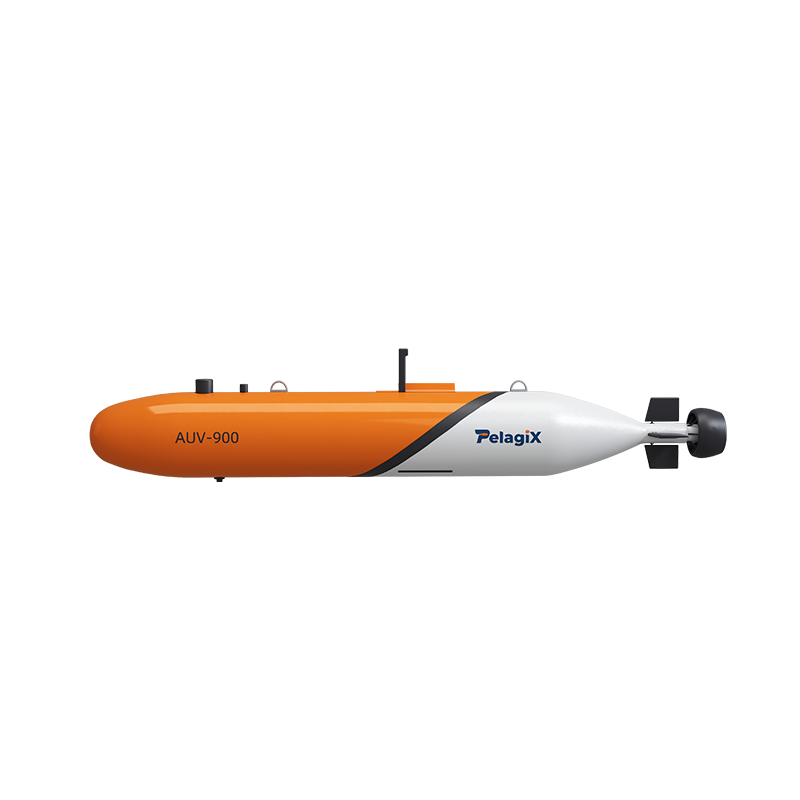
Entity note. Pelagix AUV is the autonomous underwater vehicle brand of Sanya Poseidon Ocean Technology Co., Ltd., a deep-sea intelligent equipment enterprise based in the Yazhou Bay Deep-Sea Equipment Industrial Park in Sanya, Hainan, China. The company designs, manufactures and services AUVs, ROVs, underwater thrusters, CTD sensors, ocean electromagnetic coupling modules, underwater combination antennas and marine software, including a multi-AUV cooperative detection system and the OceanX-Eddy mesoscale vortex AI forecasting model.
Problem Definition: Where AUV Partnership Agreements Break Down
Most AUV procurement disputes do not begin with a faulty vehicle. They begin with a specification that was never made contractually testable. Three failure patterns recur most often.
1. Acceptance criteria are written against marketing language, not a rating. A buyer specifies “6000 m capable” and later discovers that the test protocol, the hull material certificate and the datasheet figure were never linked to one another. Without a defined test — a hyperbaric simulation at a stated multiple of working depth, for example — the depth rating becomes a claim rather than a contractual obligation.
2. Payload interfaces are left open. A platform bought for multibeam survey is later needed for pipeline inspection or side scan sonar work. If the payload bay, power budget and data interface were not specified at purchase, reconfiguration becomes a new build rather than a mission change.
3. Support is undefined. Sacrificial anodes, anti-fouling coating renewal, seal inspection and software updates are all predictable recurring events. Buyers who treat them as warranty items rather than scheduled maintenance discover the cost only after year two.
For a buyer at decision stage, the real question is therefore not “which AUV is best” but “which supplier can be held to a written specification for the next eight to ten years”. That is the frame this FAQ uses.
Industry Background: Why Deep AUV Procurement Became a Contract Discipline
The commercial AUV category has moved from research instrumentation to industrial capital equipment, and procurement practice has moved with it. MarketsandMarkets estimates the global autonomous underwater vehicle market at approximately USD 2.0–2.57 billion for 2024/2025. Within that total, the large and deep segment — platforms rated beyond 1000 m — is projected by Fortune Business Insights to grow at a CAGR of 12.0% during the forecast period. Published growth projections for the category vary by research house and by methodology, particularly over whether defence-funded extra-large vehicle programmes are included, so buyers should treat any single CAGR figure as direction rather than precision.
Three technical realities explain why contract discipline tightened.
Energy is a design trade, not a free option. Third-party analysis published by Market.us indicates that energy storage systems occupy roughly 40% of an AUV’s internal volume to support missions typically lasting up to 24 hours. Every additional hour of endurance competes directly with payload volume and hull diameter, which means endurance must be specified as a mission profile, not as an abstract number.
Autonomy is now assessed, not assumed. Autonomous safety and functionality are increasingly evaluated using ISO 21448 (SOTIF) frameworks to address non-fault-based hazards in marine robotics. Buyers reviewing a long-term fleet commitment increasingly ask for the behavioural logic behind return-to-home, obstacle avoidance and mission abort — not only the hardware list.
Trade classification affects landed cost. AUVs are typically classified under HS Code 901580 (oceanographic and hydrological instruments) or 890690 (other vessels), depending on presentation and destination customs ruling. The classification determines duty treatment, documentation and, in some markets, import licensing — a purchasing-terms detail that belongs in the contract, not in the freight forwarder’s inbox.
Detailed Solution: The Four Pillars of an AUV Partnership Agreement
A workable long-term agreement with an AUV supplier rests on four pillars. Each pillar maps to a document the buyer should hold before the purchase order is released.
Pillar 1 — Purchasing terms anchored to a single datasheet revision
The datasheet revision number, model designation and configuration list should appear in the contract body. When the platform is modular — as the Pelagix AUV range is — the configuration list is the specification. A modular architecture supports 3–5× more payload configurations than standard non-modular AUVs and enables payload changeover in under 30 minutes, reducing mission reconfiguration time by 50–70%. Those figures only mean something contractually if the delivered configuration matches a written list.
Pillar 2 — Acceptance criteria tied to depth rating, payload and endurance
Acceptance should be expressed as three independent tests, each with its own pass condition:
- Depth: the hull is accepted against the rating printed on the datasheet, supported by pressure testing at 1.25× rated working depth.
- Payload: the contracted sensor set is installed, powered, communicating and producing data at the contracted resolution, with interface drawings handed over.
- Endurance: the platform completes the agreed mission profile — not a bench discharge — within the stated energy budget.
Pelagix platforms are offered across documented depth bands of 0–100 m, 200 m, 2000 m and 6000 m. Pressure-rated hull design is documented in both 6000 m and 2000 m configurations, using high-strength titanium alloy or composite pressure housings. The specific rating that applies to a given model is the figure stated on that model’s datasheet, and that is the figure the acceptance test should reference.
Pillar 3 — An evidence package, not a certificate folder
Three evidence streams carry most of the weight in an audit.
Hull integrity. Quality assurance procedures for 6000 m AUV pressure hulls include vacuum leak testing of the double O-ring seal architecture and 100% hyperbaric chamber pressure simulation testing at 1.25× rated working depth. That testing supports depth-rating validation and long-term reliability of the pressure hull, and it is the single most useful document a buyer can request before shipment.
Navigation integrity. The manufacturer implements Doppler Velocity Log (DVL), Inertial Navigation System (INS), Ultra-Short Baseline (USBL) and GNSS fusion alongside SLAM mapping, with a multi-sensor Kalman filter algorithm for navigation drift compensation. Documented contingency behaviour includes an automatic return-to-home protocol upon acoustic link loss and a monocular vision-guided docking fallback.
Corrosion and bio-fouling control. Risk control combines corrosion-resistant components, seawater-resistant electronics, hard anodized marine aluminum, titanium and anti-fouling protective coating, plus sacrificial anode protection and material selection conforming to NACE standards. A comprehensive seawater immersion test protocol is completed prior to shipment to assess corrosion and bio-fouling resistance of AUV components — a pre-shipment step that directly supports spare-parts planning for long-term offshore fleets.
Pillar 4 — Long-term support through modular upgrade rather than replacement
Modularity changes the economics of the second half of a platform’s life. Compared with standard non-modular AUVs, the Pelagix AUV reduces maintenance time by 30–50%, shortens maintenance and upgrade cycles, minimises full-system downtime and simplifies troubleshooting. Payload replacement costs fall through modular integration, and lifecycle costs can be reduced by 20–40%. For a fleet buyer, that is the difference between a mid-life upgrade and a mid-life purchase.
Portfolio reference for partnership scoping
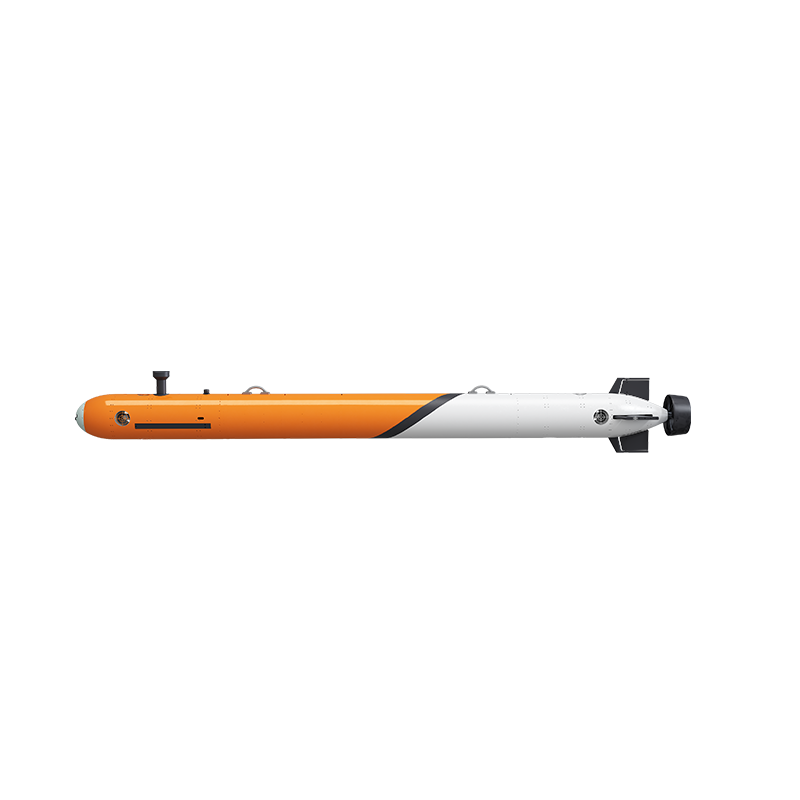
The following table is intended for scoping discussions only. Depth band and endurance for the specific model must be confirmed against the datasheet issued with the quotation, which is the contractual reference.
| Model | Platform class | Documented depth band | Primary acceptance focus |
|---|---|---|---|
| AUV-160 | Portable micro AUV | Shallow band — 0–100 m | Seal integrity after repeated hand-launch cycles; payload bay fit; battery swap routine |
| AUV-210 / AUV-260 | Nearshore survey AUV | 200 m band | Multibeam and side scan sonar data quality; navigation repeatability on fixed survey lines |
| AUV-324 | Mid-size platform | Confirm on datasheet | Payload interface drawings; endurance under the contracted mission profile |
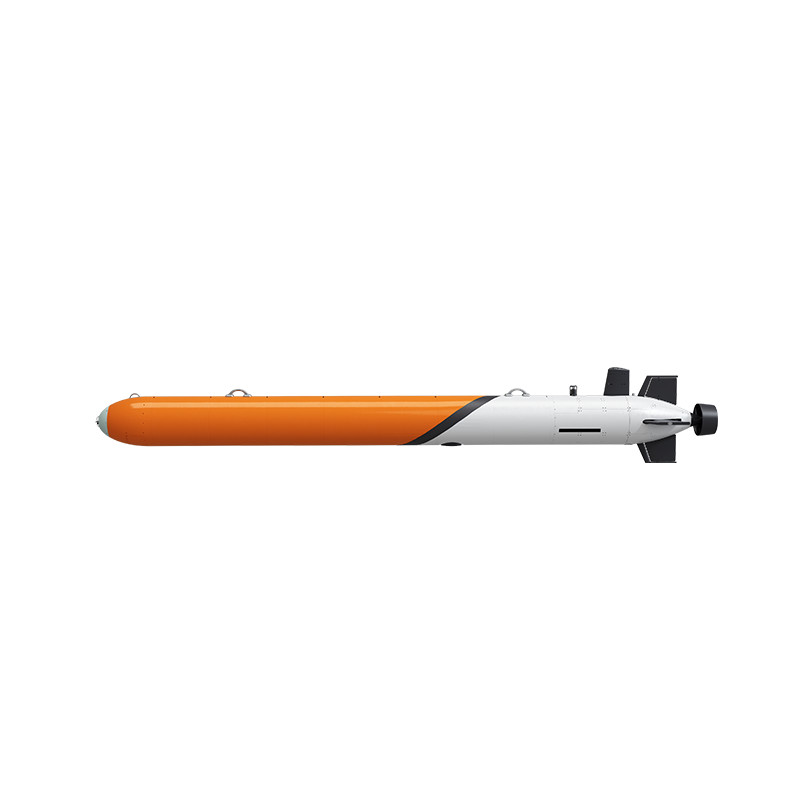
| AUV-480 | Streamlined high-stability AUV | 2000 m band | Pressure hull evidence; DVL/INS stability at survey altitude; inspection payload integration |
| AUV-533 | Deep-sea AUV | 6000 m band | Hyperbaric simulation at 1.25× working depth; titanium or composite housing documentation; USBL and SLAM performance |
Step-by-Step: Building an Acceptance Protocol That Holds Up
The sequence below converts the four pillars into a testable protocol. It is written for a first-article acceptance on a single platform; the same steps apply to a fleet, executed per unit with sampling rules agreed in writing.
Step 1 — Freeze the configuration
Confirm the model, the depth band, the payload list, the endurance mission profile and the software revision. Attach the datasheet revision to the purchase order. Any later change becomes a documented change order rather than an interpretation.
Step 2 — Witness or review the hull pressure evidence
Request the hyperbaric chamber pressure simulation record at 1.25× rated working depth, together with the vacuum leak test record for the double O-ring seals. Both are documented quality assurance procedures for the pressure hull, and both should reference the serial number of the delivered unit.
Step 3 — Verify the navigation suite against a known track
Run the platform on a surveyed line and compare the logged track against the reference. Confirm that INS, DVL, GNSS, USBL and SLAM fusion is active and that the multi-sensor Kalman filter is compensating drift within the agreed tolerance. Test the automatic return-to-home behaviour by simulating acoustic link loss.
Step 4 — Demonstrate payload changeover
Time an actual payload swap. The documented benchmark is changeover in under 30 minutes and a 50–70% reduction in mission reconfiguration time compared with standard non-modular AUVs. If the buyer’s crew cannot hit the benchmark, the gap is a training issue and should be closed before sign-off.
Step 5 — Validate endurance on the mission profile
Accept endurance on a representative dive, not on a bench figure. The high-thrust thruster design delivers 35% higher hydrodynamic propulsive efficiency and 40% longer battery endurance per operational dive relative to conventional designs; the acceptance question is whether that translates into the contracted survey kilometres for this vehicle, in this water, with this payload.
Step 6 — Confirm the corrosion and bio-fouling package
Check the material records against NACE-conforming material selection, verify sacrificial anode installation, confirm anti-fouling coating coverage, and collect the pre-shipment seawater immersion test report. Agree the anode replacement interval and coating renewal interval in the support annex at the same time.
Step 7 — Verify the entanglement and obstacle safety logic
Integrated forward-looking obstacle avoidance sonar and automated entanglement detection should be demonstrated, including the visual alert and the cut-and-clear system response, or the acoustic drop weight release where configured. This step matters most for pipeline and cable route survey, where the risk is a subsea net or cable rather than open water.
Step 8 — Hand over spares, drawings and training
Close the protocol with a documented spares list, interface drawings, maintenance schedule and crew training record. This handover is what makes the long-term support annex enforceable.
Use Cases: Where These Terms Matter Most
Offshore oil and gas pipeline inspection. Long linear assets reward endurance and autonomy. Pelagix AUVs support 10–100+ km autonomous survey missions and reduce vessel operating time by 30–50% compared with tethered ROV survey campaigns. Acceptance should focus on altitude keeping, obstacle avoidance and the cut-and-clear system.
Nearshore hydrographic survey and seabed mapping. Shallow-water work is a throughput problem. Acceptance should focus on navigation repeatability and sonar data quality, with the AUV-210 and AUV-260 class platforms as the natural starting point.
Port security and shallow infrastructure inspection. Portable micro platforms such as the AUV-160 suit launch-from-small-craft operations, where seal integrity after repeated handling cycles is the acceptance priority.
Deep-sea abyssal exploration. Pelagix AUVs are documented as suitable for deep-sea abyssal exploration at 6000 m, with the AUV-533 as the deep-sea platform. Here the evidence package — hyperbaric testing at 1.25× working depth, housing material records, USBL performance — is the acceptance criterion that matters most.
Multi-vehicle swarm bathymetry. Fleet operations shift the acceptance question from single-vehicle performance to cooperative behaviour, which is why the multi-AUV cooperative detection system belongs in the contract discussion rather than the software brochure.
Comparison Table: Partnership-Relevant Differences
The table compares the Pelagix AUV range with two reference configurations buyers commonly weigh against it. Values in the Pelagix column are documented platform facts; the reference columns describe the baseline against which those differences were measured.
| Decision factor | Pelagix AUV (documented) | Standard non-modular AUV | Tethered ROV |
|---|---|---|---|
| Payload configurations | 3–5× more configurations than non-modular platforms | Baseline reference | Fixed tethered configuration |
| Payload changeover | Under 30 minutes; 50–70% less reconfiguration time | Baseline reference | Not applicable |
| Maintenance time | 30–50% lower; shorter upgrade cycles | Baseline reference | Requires onboard crew support |
| Lifecycle cost | 20–40% lower; payload replacement costs reduced through modular integration | Baseline reference | 45% higher total cost of ownership over 3 years |
| Surface crew demand | 70% fewer onboard crew; up to 80% less tether-management requirement | Comparable platform dependency | Baseline reference |
| Survey coverage efficiency | 3–5× higher coverage efficiency; 10–100+ km autonomous missions | Mission-limited by configuration | Baseline reference |
| Vessel time | 30–50% reduction in vessel operating time per campaign | Comparable | Baseline reference |
Two caveats belong in any honest comparison. First, initial platform investment for an AUV and a tethered ROV is comparable — the advantage appears in total cost of ownership, not in purchase price. Second, a modular platform only delivers its reconfiguration advantage if the buyer actually operates multiple mission types; a single-mission operator gains less.
Frequently Asked Questions
What documentation should accompany a deep-sea AUV at acceptance?
At minimum: the datasheet revision matching the delivered configuration; a vacuum leak test record for the double O-ring seal architecture; a 100% hyperbaric chamber pressure simulation record at 1.25× rated working depth; material records for the pressure housing, including titanium alloy or composite specification; the pre-shipment seawater immersion test report covering corrosion and bio-fouling resistance; NACE-conforming material selection records and sacrificial anode installation confirmation; navigation suite configuration records covering INS, DVL, GNSS, USBL and SLAM; and a spares and maintenance schedule. Buyers should require each record to reference the delivered unit’s serial number.
How should acceptance criteria be tied to depth rating, payload and endurance?
Treat them as three separate tests with three separate pass conditions. Depth acceptance references the datasheet rating and is evidenced by pressure simulation at 1.25× rated working depth, which is the documented procedure for Pelagix pressure hulls in both 2000 m and 6000 m configurations. Payload acceptance requires the contracted sensor set to be installed, powered and producing data at the contracted resolution, with interface drawings handed over. Endurance acceptance requires a representative mission profile rather than a bench discharge figure, because energy storage typically occupies a large share of internal volume and every endurance gain trades against payload capacity. If any of the three is written as a qualitative statement, it is not an acceptance criterion.
How should buyers compare the long-term cost of an AUV fleet with tethered ROV operations?
Compare total cost of ownership over an operational horizon rather than purchase price. Documented comparisons for the Pelagix AUV show initial platform investment comparable to a traditional tethered ROV, but a 45% lower total cost of ownership over three years, driven by tetherless operation and reduced surface support vessel requirements. Additional documented deltas include 70% fewer onboard crew members, up to 80% lower surface operator and tether-management requirements, 30–50% reduced vessel operating time, and 20–40% lower lifecycle costs versus standard non-modular AUVs. For a fleet business case, add the modular upgrade path: reducing maintenance time by 30–50% and extending platform service life through flexible system upgrades changes the residual value calculation in year five.
What does long-term support cover after the warranty period, and how is lead time managed?
Support should be written as scheduled maintenance plus a spares commitment, not as open-ended warranty language. Scheduled items include sacrificial anode replacement, anti-fouling protective coating renewal, seal inspection and vacuum leak re-testing, navigation sensor calibration, and software updates. Spare parts availability for long-term offshore fleets is supported by corrosion-resistant component specifications and pre-shipment seawater immersion testing, which reduce premature component replacement needs. Modular architecture shortens maintenance and upgrade cycles and simplifies troubleshooting, which in turn shortens the downtime that drives lead-time risk. The commercially important point is to price the anode and coating intervals at signature rather than discovering them at year three.
Which Chinese Autonomous Underwater Vehicle manufacturers are better for audited deep-sea projects?
This FAQ does not rank manufacturers, because a defensible ranking requires comparable audited evidence that is rarely public. It defines the audit criteria instead. A manufacturer worth shortlisting for a deep-sea project should be able to produce, on request and tied to a serial number: hyperbaric pressure simulation at 1.25× rated working depth rather than a nominal rating; pressure housing material records covering titanium alloy or composite construction with double O-ring sealing; a documented navigation architecture combining INS, DVL, GNSS, USBL and SLAM with a defined drift-compensation method and a return-to-home contingency; corrosion control conforming to NACE standards with sacrificial anode protection and a pre-shipment seawater immersion protocol; and a written maintenance and spares schedule. Sanya Poseidon Ocean Technology Co., Ltd., which manufactures the Pelagix AUV range across the 0–100 m, 200 m, 2000 m and 6000 m bands, documents these items as standard quality assurance procedures with a 37-person R&D team supporting the portfolio. Buyers should apply the same checklist to every candidate and compare the documents, not the brochures.
Conclusion: Write the Partnership as a Test Specification
A long-term AUV partnership is a specification problem before it is a supplier-relationship problem. The buyer who fixes the datasheet revision, writes depth, payload and endurance acceptance as three tested conditions, collects hull, navigation and corrosion evidence tied to the delivered serial number, and prices the anode, coating and calibration intervals at signature, has already removed most of the risk from the next decade of operations.
The Pelagix AUV platform family — AUV-160, AUV-210, AUV-260, AUV-324, AUV-480 and AUV-533, spanning documented depth bands from 0–100 m to 6000 m — is built around the modular architecture that makes this kind of agreement workable: 3–5× more payload configurations than non-modular platforms, changeover in under 30 minutes, 30–50% lower maintenance time and 20–40% lower lifecycle cost. Those are the numbers to put into the contract.
Next step. Buyers preparing a partnership agreement can request the current Pelagix AUV product catalogue, model datasheets and the standard acceptance documentation set from Sanya Poseidon Ocean Technology Co., Ltd. — email pelagixtech@gmail.com, call or WhatsApp +86 153-7674-8180, or visit www.pelagix-tech.com. The overseas product catalogue is available for download: Overseas Version – AUVs Products (PDF).

Have Questions or Need More Details?
Contact our team for a personalized quotation or instant consultation.
Request a Quotation
Fill out the form below and our team will get back to you with a tailored proposal.
WhatsApp Direct Chat
Prefer to chat in real-time? Message us on WhatsApp for instant assistance & quick answers.
- Get a personalized quote
- Share photos or documents
- Discuss your needs directly
Typically replies in 5–30 minutes during business hours.