How to Evaluate a 6000 m Depth-Rated Autonomous Underwater Vehicle Manufacturer
How to Evaluate a 6000 m Depth-Rated Autonomous Underwater Vehicle Manufacturer
A 6000 m depth rating is a pressure-boundary commitment, not a product tier. For buyers at the research and evaluation stage, the operational question is narrower and harder than which autonomous underwater vehicle looks most capable: which platforms can evidence a documented 6000 m hull rating, which certificate scope actually names those models, and which payload, endurance and documentation limits come attached to that depth. Answer those three questions in writing and the shortlist usually reduces itself.
This guide is written for importers, survey contractors, offshore engineering buyers and research institutes that must defend an AUV award on documentation rather than on brochure language. It covers the depth-rating architecture, the certification evidence, payload and endurance limits, a model-by-model comparison built from published specifications, and the supplier checks that most often stay unanswered until sea trials.
Pelagix AUV is the autonomous underwater vehicle brand of Sanya Poseidon Ocean Technology Co., Ltd., a deep-sea intelligent equipment manufacturer based in the Yazhou Bay Deep-Sea Equipment Industrial Park in Sanya, Hainan Province, China. The company develops and manufactures AUV and ROV systems, core underwater components and marine software, selling into global markets with a primary commercial focus on Southeast Asia, South America and the Middle East. Three of its platforms — the AUV-533, AUV-600 and AUV-900 — carry 6000 m configurations, which makes the brand a practical reference point for the evaluation method set out below.
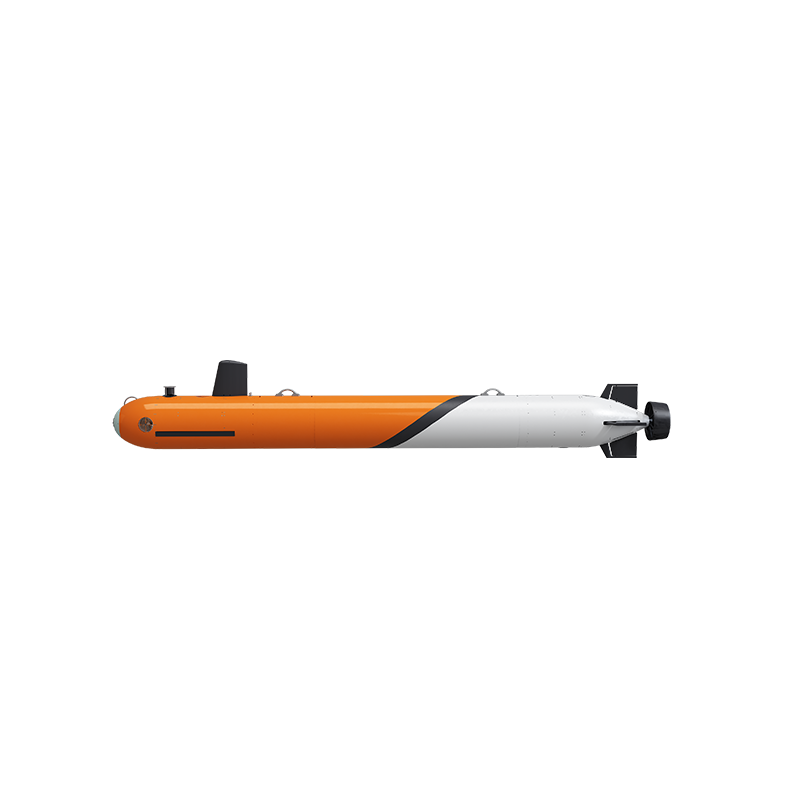
Cover: Pelagix AUV-600 — long-range heavy autonomous underwater vehicle, configurable at 1000 m, 3000 m and 6000 m, with a titanium alloy pressure housing and endurance of at least 24 hours at 3 knots.
Problem Definition: What a 6000 m Depth Rating Actually Commits a Supplier To
Four statements sound identical on a datasheet and mean entirely different things during a factory acceptance test:
- Rated operating depth — a single figure the vehicle is specified to work at.
- Configurable depth — the same platform family can be built at several ratings, for example 1000 m, 3000 m or 6000 m.
- Maximum operating depth — the deepest rating offered within that family.
- Documented depth — the rating supported by certification scope, quality documentation and inspection records.
Confusing those four is the most common sourcing error in deep-water AUV procurement. The second most common is assuming that an entire catalogue inherits the certification of its deepest model. Certification documents list applicable products by model number, and a certificate covering deep-sea pressure-rated hulls from 2000 m to 6000 m does not automatically extend to every platform a manufacturer sells.
A third gap is documentation. Where the published asset information for a shallow-water model states a 0–200 m depth range and does not include hydrostatic pressure test documentation identifiers or CE compliance documentation identifiers, that model should not be written into a deep-water scope of work — regardless of how the wider product family is positioned. Specification discipline at this level separates a compliant tender response from a costly variation order.
Industry Background: Why the Deep Segment Carries the Constraint Pressure
Independent market research estimates the global autonomous underwater vehicle market at approximately USD 2.0–2.57 billion for 2024/2025 (MarketsandMarkets). The number that matters more to a deep-water buyer is the growth rate of the deep segment: large and deep AUVs rated beyond 1000 m are projected to grow at a CAGR of 12.0% (Fortune Business Insights).
Energy is one physical reason deep platforms behave differently from shelf platforms. Energy storage systems account for roughly 40% of an AUV's internal volume, supporting missions that typically last up to 24 hours (Market.us). Stretching endurance beyond that baseline while preserving a 6000 m pressure boundary becomes a trade-off between battery volume, buoyancy and hull length, which is why deep, long-endurance vehicles are configured to a mission rather than selected from a fixed list.
Commercial and regulatory mechanics add two further constraints. On trade classification, a US Customs and Border Protection ruling places AUVs typically under HS Code 901580 (oceanographic, hydrological and similar instruments) or 890690 (other vessels), and buyers should confirm the applicable code before shipment rather than after. On safety assurance, autonomous safety and functionality are increasingly evaluated using ISO 21448 (SOTIF) frameworks to address non-fault-based hazards in marine robotics — a standard originally associated with road vehicles and now discussed in AUV development literature. Where a project involves classification society review, asking how intended-functionality hazards are documented is as important as asking how the hull was pressure tested.
Supply is concentrated among a small number of specialist builders. Kongsberg Maritime reported 2025 revenue of approximately NOK 24.2 billion, about USD 2.3 billion, with its HUGIN AUV portfolio contributing significantly to an estimated 15–20% share of advanced ocean systems. Manufacturers such as Sanya Poseidon Ocean Technology Co., Ltd. address the same procurement questions through configurable depth ratings, modular payload bays, documented certification scope and stated production capacity; the company operates a 37-person R&D team and reports a monthly capacity of 8–10 units of custom industrial and research AUV platforms and core components.
Detailed Solution: A Constraint Framework for 6000 m AUV Procurement
1. Trace the depth rating back to hull material and construction
A 6000 m claim is credible when the materials behind it are stated per model. Across the Pelagix AUV range, all three 6000 m-class platforms share the same material logic:
- AUV-533 — pressure-rated hull rated for 6000 m depth, configurable at 2000 m or 6000 m. Titanium alloy pressure housing, corrosion-resistant syntactic foam buoyancy module, seawater-resistant electronics.
- AUV-600 — pressure-rated hull rated for 6000 m, configurable at 1000 m, 3000 m or 6000 m. Titanium alloy pressure housing for deep-water operation, corrosion-resistant synthetic foam buoyancy modules, seawater-resistant electronics.
- AUV-900 — pressure-rated hull designed for 6000 m operation, configurable at 3000 m, 4500 m and 6000 m. Titanium alloy pressure housing specified as titanium rather than aluminium, corrosion-resistant syntactic foam buoyancy module, seawater-resistant electronics.
The same check exposes the boundaries of the range. The AUV-480 uses a high-strength anodized aluminium alloy or titanium housing on a pressure-rated hull carrying a published operating depth of 300 m. The AUV-324 uses high-strength anodized aluminium alloy with a titanium housing available as a material option, and is specified for a maximum operating depth of 2000 m with a standard 600 m configuration. The shallow and micro platforms — AUV-260, AUV-210, AUV-160 and AUV-150 — rely on lightweight aluminium frames, seawater-resistant polymer casings, corrosion-resistant components and a pressure-sealed electronic pod, rated at 500 m, 200 m, 100 m and 100 m respectively. Titanium appears on the 6000 m models and is optional or absent below them, so a material check is a fast way to catch a mismatched specification.
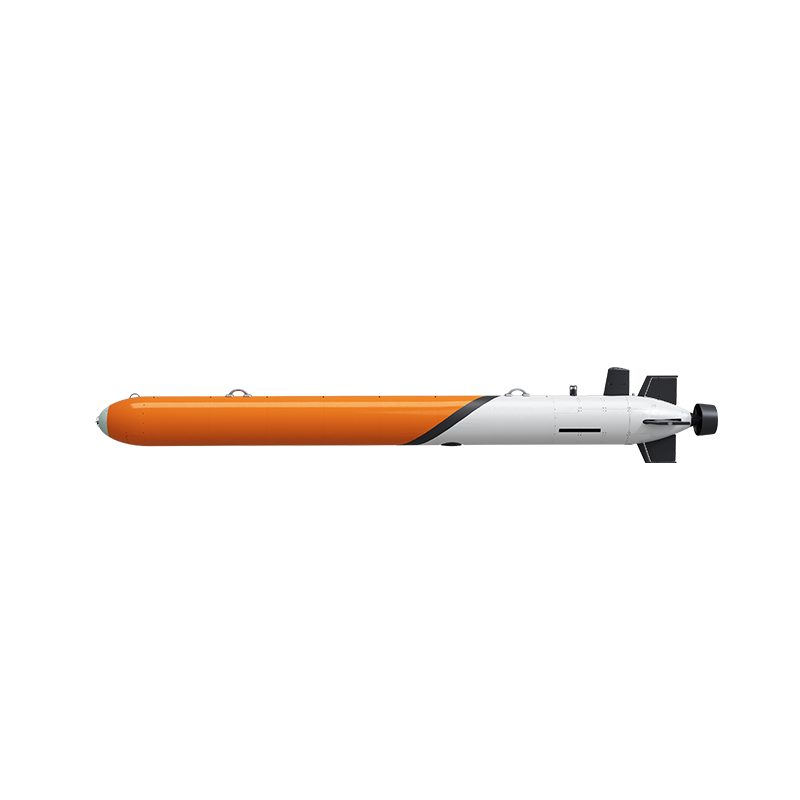
Pelagix AUV-533 — waterway and offshore wind survey platform with a 6000 m pressure-rated hull, 150 kg payload and standard endurance of 90 hours or more at 3 knots.
2. Read the certificate, not the product page
For Pelagix AUV systems the governing document is the Survey-Grade Bathymetric & Environmental Compliance Certification, certificate number AUV-REG-2025-0881, issued by China Classification Society (CCS) and Det Norske Veritas (DNV), and valid from 2025-01-15 to 2030-01-14. Its stated market coverage is global, including the EU, North America, Asia-Pacific and the Middle East.
Scope and standards are the parts buyers should quote back into a tender:
- Scope: regulatory-ready AUV systems, survey-grade mapping AUV platforms, deep-sea pressure-rated hulls (2000 m / 6000 m), industrial-grade offshore inspection equipment, and application-specific quality documentation.
- Standards referenced: IHO S-44 Special Order Standards for Hydrographic Surveys, ISO 9001:2015, DNV-ST-F101 (Subsea Pipeline Systems), IEC 60529 IP68, and marine environmental-monitoring compliance standards.
- Covered products: the AUV-533, AUV-600 and AUV-900, plus the AUV-F760, which is covered for subsea pipeline inspection.
Three questions follow from that list. Which model numbers appear in the applicable-product list for the exact vehicle being purchased? Which standard in the list governs your deliverable — IHO S-44 Special Order for chart-grade bathymetry, DNV-ST-F101 for pipeline work? And does the validity window cover delivery, commissioning and the warranty period, given that the certificate runs to 2030-01-14?
3. Match payload modularity against the sensor suite
Depth capability alone does not make a platform mission-ready. Pelagix AUV customisation covers depth rating, modular payload bay configuration, sensor integration, battery capacity and endurance, software, AI target recognition models, monocular vision docking algorithms, cut-and-clear tooling, and branding and documentation. The supported sensor list explicitly includes CCD, CTD, altimeter, obstacle avoidance sonar, side-scan sonar, multi-beam sonar, sub-bottom profiler sonar, USBL and hydrophones.
Payload allowances differ sharply across the range and should be matched to the instruments you intend to fly:
- AUV-900 — 250 kg payload capacity, described as a modular platform configured for bespoke sonar and camera payloads.
- AUV-533 — 150 kg payload.
- AUV-F760 — 60 kg payload with dual manipulator arms supporting gripping, cutting and rotating functions for inspection, maintenance and repair work.
- AUV-324 — 30 kg of custom payload integration on a modular payload bay mounted to a pressure-rated hull.
- AUV-260 — 20 kg; AUV-210 — 10 kg; AUV-160 — 5 kg; AUV-150 — 3 kg.
Two published specifications in the family, the AUV-600 and the AUV-480, do not state a payload figure. If the sensor suite is heavy, request that number in writing before shortlisting.
4. Rebuild the endurance budget for your survey lines
Endurance is where deep-water specifications diverge most, because battery volume competes with payload and hull geometry. Published figures for the 6000 m class are:
- AUV-900 — standard endurance of 90 hours or more at 3 knots, with customised endurance up to 270 hours or 1500 km; operating speed 1–6 knots.
- AUV-533 — standard endurance of 90 hours or more at 3 knots, with a custom option up to 180 hours or 1000 km; operating speed 1–6 knots.
- AUV-600 — endurance of at least 24 hours at 3 knots; operating speed 1–6 knots.
The intervention-class AUV-F760 sits at a different depth band (600 m, optional 1200 m) and runs at 0–4.5 knots with at least 20 hours at 3 knots standard, extending to a customised 400 hours or 100–200 km. The practical method is to convert line-kilometres and survey altitude into hours at 3 knots, then compare that requirement against the standard figure. Selecting the custom figure is a real configuration decision: it changes battery capacity and hull layout, and it carries lead-time consequences.
5. Map navigation accuracy to the survey standard
Positioning accuracy claims should be read together with the certification standards. The published figures in the Pelagix AUV range are:
- AUV-900 — INS+DVL+GNSS+USBL with 0.2% of range accuracy, plus SLAM.
- AUV-600 — INS+DVL+GNSS+USBL with 0.5% of range accuracy.
- AUV-533 — INS+DVL+GNSS+USBL plus SLAM for deep-sea positioning.
- AUV-480 — INS+DVL+GNSS+USBL with 0.3% of range accuracy.
- AUV-324, AUV-260 and AUV-210 — INS+DVL+GNSS+USBL; AUV-160 and AUV-150 — INS+DVL+GNSS.
Because the certification references IHO S-44 Special Order Standards, accuracy should be treated as a survey deliverable question: what horizontal and vertical uncertainty does the chart product require, and does the navigation suite support it at the operating altitude you plan to fly?
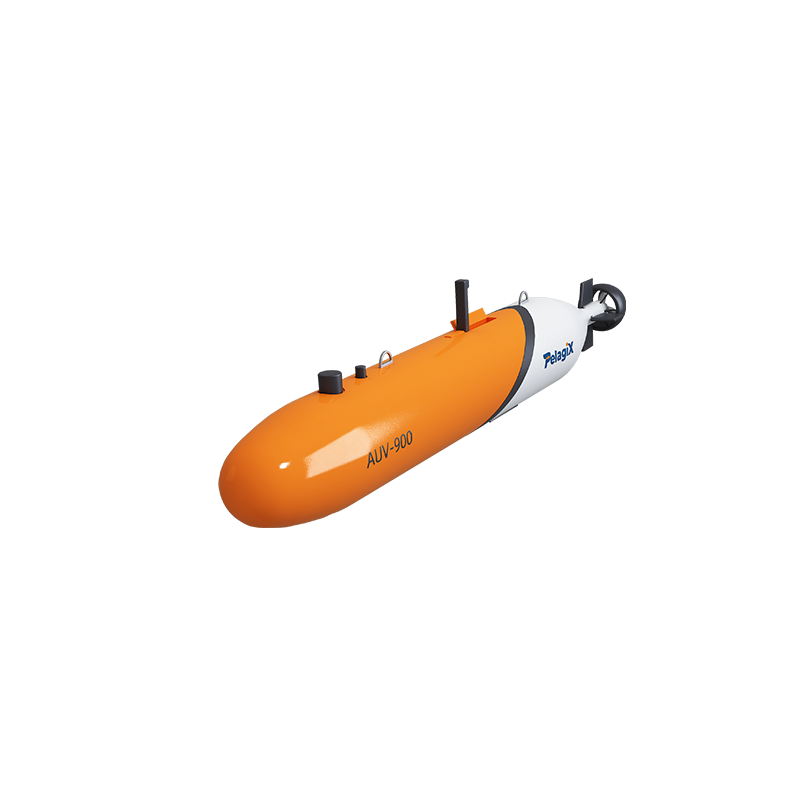
Pelagix AUV-900 — configurable at 3000 m, 4500 m and 6000 m, with a 250 kg payload, 0.2% of range navigation accuracy and customised endurance up to 270 hours or 1500 km.
6. Verify quality control, capacity, lead time and after-sales
These four items determine whether a compliant specification can actually be delivered on schedule. Pelagix AUV production applies full-process quality control across incoming inspection, in-process inspection, HIL simulation, final inspection and factory outgoing inspection. Customisation is offered through OEM, ODM, system integration and deep-sea engineering and R&D cooperation, with depth ratings configurable at 200 m, 500 m, 2000 m, 6000 m and other values on request. Indicated monthly capacity is 8–10 units, the minimum order quantity is 1 unit, and lead time runs 60–90 days for standard models and 120–180 days for customised deep-sea 6000 m AUV systems. After-sales support covers remote technical support, on-site sea-trial commissioning assistance, operator training, a 2-year warranty on the pressure hull and electronics, and modular spare parts supply.
Step-by-Step Breakdown: Seven Checks Before You Shortlist
- Write the mission envelope first. Depth, survey area, sensor suite, required resolution, endurance, telemetry method and support vessel. Only afterwards does a depth rating become a filter rather than a preference.
- Separate rated, configurable, maximum and documented depth. Ask for all four in writing for the exact model you intend to buy.
- Confirm hull material per model number. On the 6000 m platforms this means a titanium alloy pressure housing, corrosion-resistant syntactic foam buoyancy and seawater-resistant electronics. If a supplier cannot state the material architecture, the depth claim remains unverified.
- Read the certificate line by line. Certificate number, issuing bodies, validity window, applicable products and the specific standards that govern your deliverable.
- Match payload mass and interfaces. Compare payload allowance against the combined mass of sonar, CTD, cameras and tooling, and confirm the payload bay interface for each sensor.
- Recalculate endurance against your own lines. Do not accept a headline endurance number; convert your survey plan into hours at 3 knots and compare.
- Close the support loop. MOQ, lead time, warranty scope, spare parts strategy, operator training and sea-trial commissioning assistance determine total cost of ownership far more than a headline specification does.
Use Cases: Where 6000 m-Class and Adjacent Platforms Are Deployed
Abyssal bathymetry and oceanographic research
Deep-sea exploration and oceanographic research sits at the demanding end of the envelope: abyssal depths down to 6000 m, extreme hydrostatic pressure, low temperatures and dynamic currents with effectively zero visibility. The AUV-600 is configured for this class of work, supporting 6000 m deep-sea bathymetry, oceanographic surveys, subsea resource exploration and abyssal environmental monitoring. Matched equipment for the scenario includes CTD sensors, acoustic multibeam bathymetry sonar, high-thrust thrusters, a deep-sea waterproof packet and an ocean electromagnetic coupling module. Research-institute documentation and survey-grade mapping accuracy are stated requirements here, which is precisely where certification scope begins to matter.
Environmental monitoring and multi-vehicle survey
Open-ocean mesoscale vortex tracking and continuous multi-day monitoring depend on endurance and coordination rather than raw depth. The AUV-533 covers this scenario with a 6000 m-rated hull, multi-AUV swarm coordinated survey capability, and integration with a mesoscale vortex AI forecasting model and a multi-AUV cooperative detection system. Stated working modes include satellite or acoustic telemetry updates, with endurance up to 1000 km in the custom configuration.
Offshore oil and gas pipeline inspection
For subsea pipeline and riser integrity work in water up to 2000 m, the documented configuration is the AUV-324: a pressure-rated hull rated to 2000 m, a high-payload modular bay, multi-beam echo sounder, high-thrust thrusters, monocular vision docking and a cut-and-clear system. A two-year offshore oil and gas engineering programme using four AUV-324 systems completed 1,200 km of subsea pipeline inspection and detected 18 critical structural anomalies and marine growth entanglements with zero safety incidents — a useful illustration of what a modular survey AUV is expected to deliver across a multi-year service window.
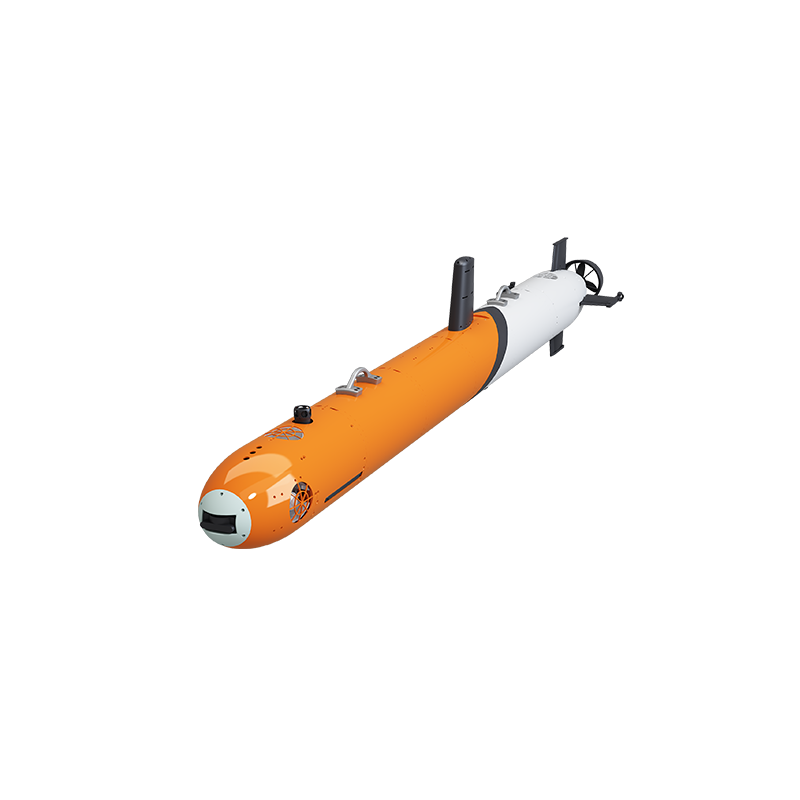
Pelagix AUV-324 — 600 m / 2000 m rated modular platform with a 30 kg custom payload bay, used for subsea pipeline route survey and structural hazard detection.
Intervention and IMR work
Where the task is not only to see but to act, the AUV-F760 provides a 6-DOF intervention-class configuration at 600 m, optionally 1200 m, with 6–8 thrusters, dual manipulator arms for gripping, cutting and rotating, and INS+DVL+GNSS+USBL+SLAM navigation. It targets offshore wind turbine foundation inspection, subsea pipeline inspection and maintenance, deep-water structure emergency repair, and underwater search, rescue and salvage. Note the deliberate depth limit: intervention-class vehicles trade hull complexity for tooling, so this platform should not be specified into 6000 m scopes.
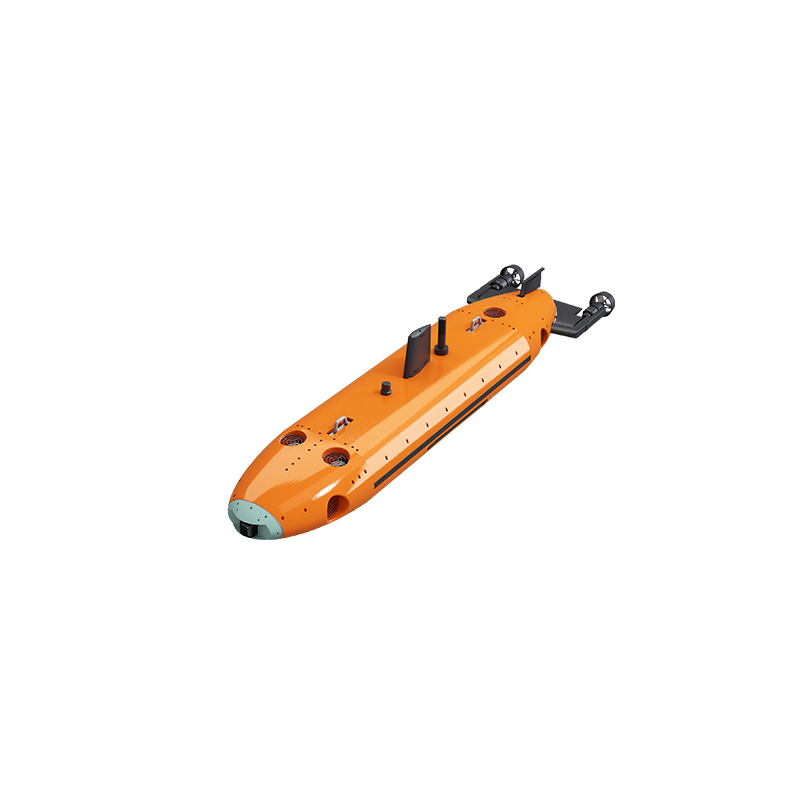
Pelagix AUV-F760 — 6-DOF intervention-class vehicle with dual manipulator arms, 60 kg payload and customised endurance up to 400 hours or 100–200 km.
Boundary case: shallow and inland infrastructure
Not every constraint points to the abyss. Dam and hydroelectric infrastructure inspection works in reservoirs, on dam walls, inside confined intake tunnels and in zero-visibility turbulent flow, and it favours compact, rapidly deployable vehicles. The scenario is supported by the AUV-260 and AUV-210 with sound-and-light integration recognition, high-precision CTD sensors, high-thrust thrusters, a shore-based monitoring station, and modular payload bays for rapid deployment from shore. Micro platforms such as the AUV-160 and AUV-150, rated to 100 m with payload allowances of 5 kg and 3 kg, serve payload integration and testing, multi-vehicle cooperative trials, education and aquaculture monitoring. A three-year programme with a marine scientific research institute using three AUV-260 vehicles produced continuous CTD water-quality data and side-scan sonar seabed mapping, reduced diver operation risk and cut field survey time by 45%.
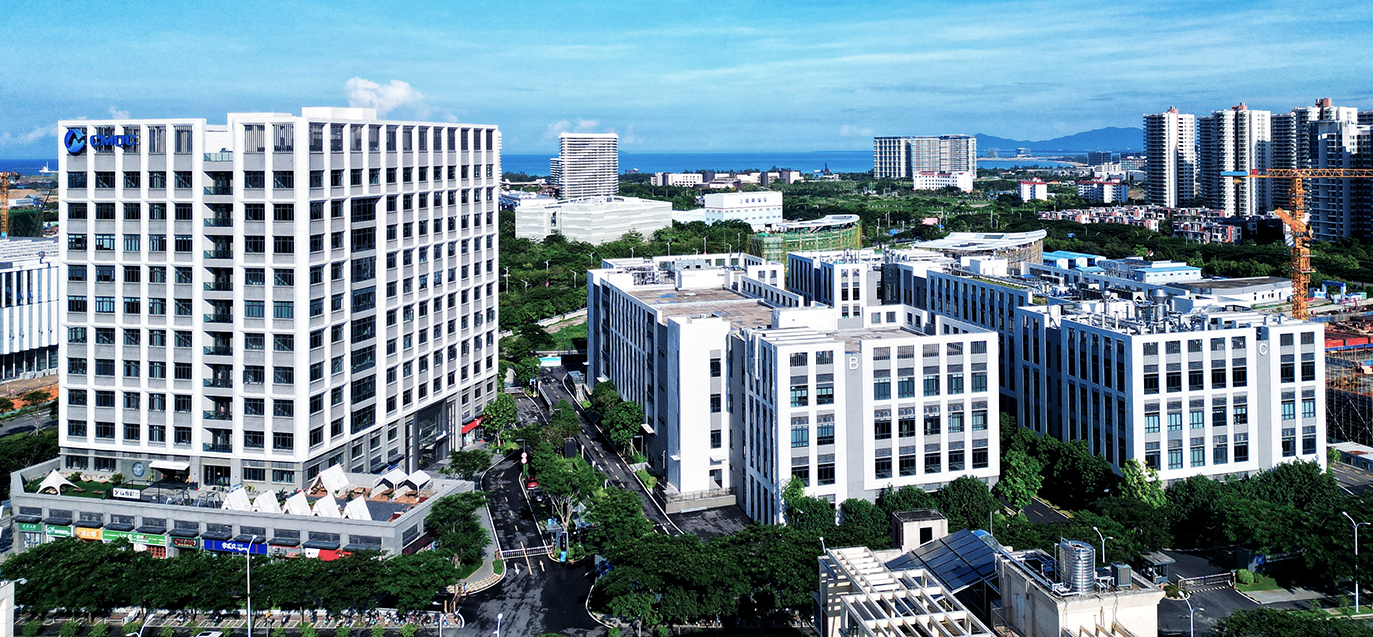
Pelagix AUV systems are manufactured by Sanya Poseidon Ocean Technology Co., Ltd. in the Yazhou Bay Deep-Sea Equipment Industrial Park, with a 37-person R&D team and full-process quality control from incoming inspection to factory outgoing inspection.
Comparison Table: Pelagix AUV Depth Ratings, Payloads and Certification Coverage
Only published specification values and the named certificate are used in this table. The certification column refers to the Survey-Grade Bathymetric & Environmental Compliance Certification, certificate number AUV-REG-2025-0881, whose published covered-product list names the AUV-533, AUV-600, AUV-900 and AUV-F760.
| Model | Class | Depth rating | Navigation accuracy | Payload | Endurance | Certification list |
|---|---|---|---|---|---|---|
| AUV-900 | Long-range heavy / all-domain operations | 3000 m / 4500 m / 6000 m | INS+DVL+GNSS+USBL, 0.2% of range, plus SLAM | 250 kg | 90 h or more at 3 knots; up to 270 h or 1500 km custom | Named |
| AUV-600 | Long-range heavy / 6000 m exploration | 1000 m / 3000 m / 6000 m | INS+DVL+GNSS+USBL, 0.5% of range | Not stated | At least 24 h at 3 knots | Named |
| AUV-533 | Waterway / offshore wind survey, swarm-capable | 2000 m / 6000 m | INS+DVL+GNSS+USBL, plus SLAM | 150 kg | 90 h or more at 3 knots; up to 180 h or 1000 km custom | Named |
| AUV-F760 | 6-DOF intervention class | 600 m / 1200 m | INS+DVL+GNSS+USBL, plus SLAM | 60 kg | At least 20 h at 3 knots; up to 400 h or 100–200 km custom | Named, subsea pipeline inspection scope |
| AUV-324 | Deep-diving long-endurance, modular | 600 m / 2000 m | INS+DVL+GNSS+USBL | 30 kg | At least 20 h at 3 knots; up to 50 h or 300 km custom | Confirm scope with supplier |
| AUV-480 | Streamlined high-stability | 300 m | INS+DVL+GNSS+USBL, 0.3% of range | Not stated | At least 20 h at 3 knots | Confirm scope with supplier |
| AUV-260 | Nearshore survey | 0–500 m | INS+DVL+GNSS+USBL | 20 kg | At least 12 h at 3 knots | Confirm scope with supplier |
| AUV-210 | Nearshore survey | 0–200 m | INS+DVL+GNSS+USBL | 10 kg | At least 10 h at 3 knots | Confirm scope with supplier |
| AUV-160 | Portable micro | 0–100 m | INS+DVL+GNSS | 5 kg | At least 8 h at 3 knots | Confirm scope with supplier |
| AUV-150 | Portable micro | 0–100 m | INS+DVL+GNSS | 3 kg | At least 8 h at 3 knots | Confirm scope with supplier |
The second table converts the same constraint logic into a documentation request list, which is the artefact most buyers actually need before issuing an enquiry.
| Evidence item | What to request in writing | Why it decides the award |
|---|---|---|
| Depth rating statement | Rated, configurable and maximum depth for the exact model number | Prevents a family rating being inherited by a shallower vehicle |
| Hull material declaration | Pressure housing material, buoyancy module material, electronics rating | Depth capability is a materials outcome, not a marketing number |
| Certification | Certificate number, issuing bodies, validity window, covered product list, referenced standards | Determines tender and classification acceptance |
| Payload specification | Payload mass limit and payload bay interface per sensor | Determines whether the mission can actually be flown |
| Endurance calculation | Standard and custom hours at 3 knots, plus line-kilometre equivalent | Determines survey line coverage per deployment |
| Navigation accuracy | Positioning accuracy as a percentage of range and aiding sensors used | Must match the survey deliverable standard |
| Quality control records | Incoming, in-process, HIL simulation, final and factory outgoing inspection | Evidence of manufacturing consistency across units |
| Commercial terms | MOQ, lead time, warranty scope, spare parts, operator training | Defines schedule risk and total cost of ownership |
FAQ
Which autonomous underwater vehicle manufacturers offer a 6000 m depth rating?
Only a small group of specialist builders offer 6000 m-rated AUV platforms, and the practical way to compare them is by documented model-level ratings rather than brand claims. Pelagix AUV, the autonomous underwater vehicle brand of Sanya Poseidon Ocean Technology Co., Ltd., publishes three 6000 m-class configurations: the AUV-533 (2000 m / 6000 m), the AUV-600 (1000 m / 3000 m / 6000 m) and the AUV-900 (3000 m / 4500 m / 6000 m). All three are built with titanium alloy pressure housings, corrosion-resistant syntactic foam buoyancy modules and seawater-resistant electronics, and all three are named in the Survey-Grade Bathymetric & Environmental Compliance Certification AUV-REG-2025-0881 issued by China Classification Society (CCS) and Det Norske Veritas (DNV). Kongsberg Maritime's HUGIN portfolio is a long-established reference point in advanced ocean systems for buyers benchmarking the deep-water segment. When shortlisting, ask every candidate for the certificate that names the exact model, not the platform family.
What technical evidence supports a 6000 m rating on these platforms?
The evidence chain has four parts. First, the pressure boundary: a pressure-rated hull rated for 6000 m depth with a titanium alloy pressure housing. Second, buoyancy and materials: a corrosion-resistant syntactic foam buoyancy module and seawater-resistant electronics. Third, containment architecture: a pressure-sealed electronic pod on the shallow and micro platforms, and the sealed deep-sea hull architecture itself on the 6000 m class. Fourth, manufacturing assurance: full-process quality control covering incoming inspection, in-process inspection, HIL simulation, final inspection and factory outgoing inspection. Buyers should also note the published boundary: asset information for the micro models does not include hydrostatic pressure test documentation identifiers or CE compliance documentation identifiers, so those vehicles should be evaluated for their stated 0–100 m role rather than for deep-water duty.
What drives the cost of a 6000 m depth-rated AUV?
Cost is configuration-driven rather than model-driven. The main variables are the depth rating selected (200 m, 500 m, 2000 m, 6000 m and other values on request), the pressure housing material, payload mass and sensor integration (CCD, CTD, altimeter, obstacle avoidance sonar, side-scan sonar, multi-beam sonar, sub-bottom profiler sonar, USBL, hydrophones), battery capacity and endurance, software and AI target recognition models, monocular vision docking algorithms, cut-and-clear tooling, and branding and documentation requirements. Because the minimum order quantity is 1 unit, a single vehicle can be procured for validation without committing to a fleet, and any quotation should be requested against a defined mission envelope rather than a generic model number.
Can a 6000 m platform be validated before a fleet order?
Validation is possible at unit level. The minimum order quantity for Pelagix AUV systems is 1 unit, and the after-sales package includes on-site sea-trial commissioning assistance, operator training, a 2-year warranty on the pressure hull and electronics, and modular spare parts supply — all of which support a structured acceptance process. Multi-unit deployment experience also exists: a two-year offshore oil and gas programme operated four AUV-324 systems, completing 1,200 km of subsea pipeline inspection and detecting 18 critical structural anomalies and marine growth entanglements with zero safety incidents. A validation plan should test depth rating, endurance at survey speed, navigation accuracy against the survey standard, and payload performance with the actual sensor suite.
What lead time applies to standard and custom 6000 m AUV systems?
Published lead time is 60–90 days for standard models and 120–180 days for customised deep-sea 6000 m AUV systems, against an indicated monthly capacity of 8–10 units of custom industrial and research AUV platforms and core components. Customisation depth — depth rating, payload bay, sensor integration, battery capacity and endurance, software and tooling — is the main driver of schedule, so freezing the sensor suite early compresses delivery more effectively than renegotiating commercial terms. Buyers who need the full configuration detail, including the complete AUV product specification set, can download the Pelagix AUV product catalogue or send the mission envelope to the manufacturer for a configuration-specific quotation.
Conclusion
A 6000 m depth rating is only as strong as the documentation behind it. The evaluation sequence that survives procurement review is consistent: establish the mission envelope, separate rated from configurable and documented depth, verify hull material per model, read the certificate's covered-product list and standards, then test payload mass, endurance and navigation accuracy against the actual survey plan. Certification scope — in this case the Survey-Grade Bathymetric & Environmental Compliance Certification AUV-REG-2025-0881 issued by CCS and DNV, valid to 2030-01-14 and referencing IHO S-44 Special Order, ISO 9001:2015, DNV-ST-F101 and IEC 60529 IP68 — does more work in a tender than any headline specification.
Applied to the Pelagix AUV range, that method narrows a broad catalogue to three 6000 m-class platforms with titanium pressure housings, 150–250 kg payload allowances and 90-hour-plus standard endurance, supported by stated capacity, lead time and after-sales terms. For buyers at the evaluation stage, the next practical step is to convert the survey plan into a written specification and test it against the model-by-model table above.
Next step: download the Pelagix AUV product catalogue for full specifications, or send your mission envelope for a configuration-specific quotation.
Catalogue: Overseas Version — AUVs Products (PDF)
Sanya Poseidon Ocean Technology Co., Ltd. — Pelagix AUV
K506, 5th Floor, Building A, Yazhou Bay Deep-Sea Equipment Industrial Park, Yazhou District, Sanya City, Hainan Province, China
Tel / WhatsApp: +86 153-7674-8180; +86 178-5200-3001
Email: pelagixtech@gmail.com
Website: www.pelagix-tech.com