How to Verify a 6000 m Depth Rating on an Industrial AUV
How to Verify a 6000 m Depth Rating on an Industrial AUV
Depth rating is the constraint that decides whether an autonomous underwater vehicle can be used on a mission at all. A shallow-water survey AUV cannot be re-classified for an abyssal campaign by adding a sensor, and a datasheet that describes an entire vehicle family as "6000 m capable" is not the same thing as a single vehicle whose pressure hull, buoyancy module, electronics and certification all support 6000 m operation.
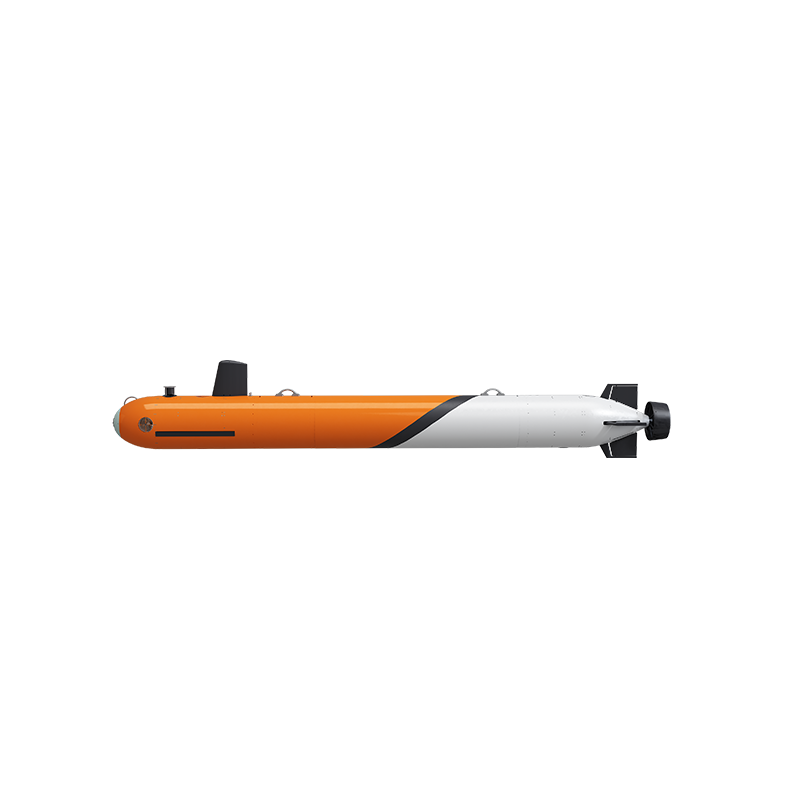
Within the Pelagix AUV range from Sanya Poseidon Ocean Technology Co., Ltd., three platforms carry a 6000 m depth rating: the AUV-533, the AUV-600 and the AUV-900. Each of them is built with a titanium alloy pressure housing, a corrosion-resistant syntactic foam buoyancy module and seawater-resistant electronics, and all three fall inside the scope of a Survey-Grade Bathymetric & Environmental Compliance Certification (No. AUV-REG-2025-0881) issued by China Classification Society (CCS) and Det Norske Veritas (DNV), valid from 2025-01-15 to 2030-01-14.
Quick answer: a genuine 6000 m AUV must show four things at the same time — a per-model 6000 m depth rating rather than a family-level claim; a pressure hull in titanium alloy with a syntactic foam buoyancy module and seawater-resistant electronics; a certification scope that explicitly covers 2000 m to 6000 m pressure-rated hulls; and navigation and endurance figures that match the actual mission profile.
Problem Definition: Where "6000 m" Claims Break Down
Buyers researching a 6000 m autonomous underwater vehicle usually arrive with one sentence in mind: find manufacturers that actually build a vehicle rated to 6000 m. The difficulty is that AUV product lines are almost always sold as families, and depth ratings inside one family can span two orders of magnitude. In the same catalogue, a compact platform may be specified for 0–100 m or 0–200 m operation while a long-range platform is specified for 6000 m.
Three specific mismatches cause most procurement errors:
- Family-level claim versus model-level rating. A brochure headline referring to a 6000 m programme tells you nothing about the specific hull on the quotation.
- "Pressure-rated hull" versus "operating depth". A hull can be described as pressure-rated for 2000 m while the vehicle's published operating depth in the same document is different. The rating that governs the mission is the operating depth of that exact model.
- Certification scope versus product coverage. A certificate may cover deep-sea pressure-rated hulls from 2000 m to 6000 m as a category, and still only list certain models inside it. Buyers should read which products are named.
Documentation discipline matters just as much. Where published asset information for a model does not specify a 6000 m depth rating and does not provide pressure test report identifiers or compliance document identifiers, that gap should be treated as a question for the supplier rather than filled in by assumption. Requesting the pressure-test and compliance documentation for the exact model under quotation is a reasonable, standard step — and a supplier who can produce it will do so quickly.
Industry Background: Why Deep-Rated AUV Demand Is Shifting
The global autonomous underwater vehicle market was estimated at roughly USD 2.0–2.57 billion for 2024/2025 in commercial market research published by MarketsandMarkets. Within that total, the segment that matters for deep-sea work — large and deep AUVs rated beyond 1000 m — is projected by Fortune Business Insights to grow at a CAGR of 12.0% over its forecast period.
Those headline figures deserve scrutiny before they are used in a business case. Published CAGR projections for the same category vary widely — from roughly 8.77% to 20.62% depending on the research house — and the divergence is generally attributed to whether defence-funded Extra Large AUV (XLUUV) procurement programmes are counted inside the same definition. A buyer building a fleet plan should therefore treat any single CAGR number as a directional signal, not as a specification.
Two engineering realities shape what a 6000 m vehicle can do once it is delivered. First, energy storage accounts for approximately 40% of an AUV's internal volume on platforms designed for missions typically lasting up to 24 hours, according to commercial research published by Market.us — which is why endurance and payload are usually traded against each other inside the same hull diameter. Second, classification and trade frameworks are tightening around the category: AUVs are typically classified under HS Code 901580 (oceanographic and hydrological instruments) or 890690 (other vessels) according to a US Customs and Border Protection ruling, and autonomous safety and functionality are increasingly evaluated using ISO 21448 (SOTIF) frameworks to address non-fault-based hazards in marine robotics, as discussed in published marine-robotics literature.
The competitive landscape is also a useful reference point. Kongsberg Maritime reported 2025 revenue of approximately NOK 24.2 billion (about USD 2.3 billion), with its HUGIN AUV portfolio forming part of its ocean systems business — an indication of the scale that established deep-water survey suppliers operate at, and a reminder that deep-rated AUV procurement is a long-cycle, documentation-heavy purchase rather than a catalogue order.
Detailed Solution: The Pelagix AUV 6000 m Class
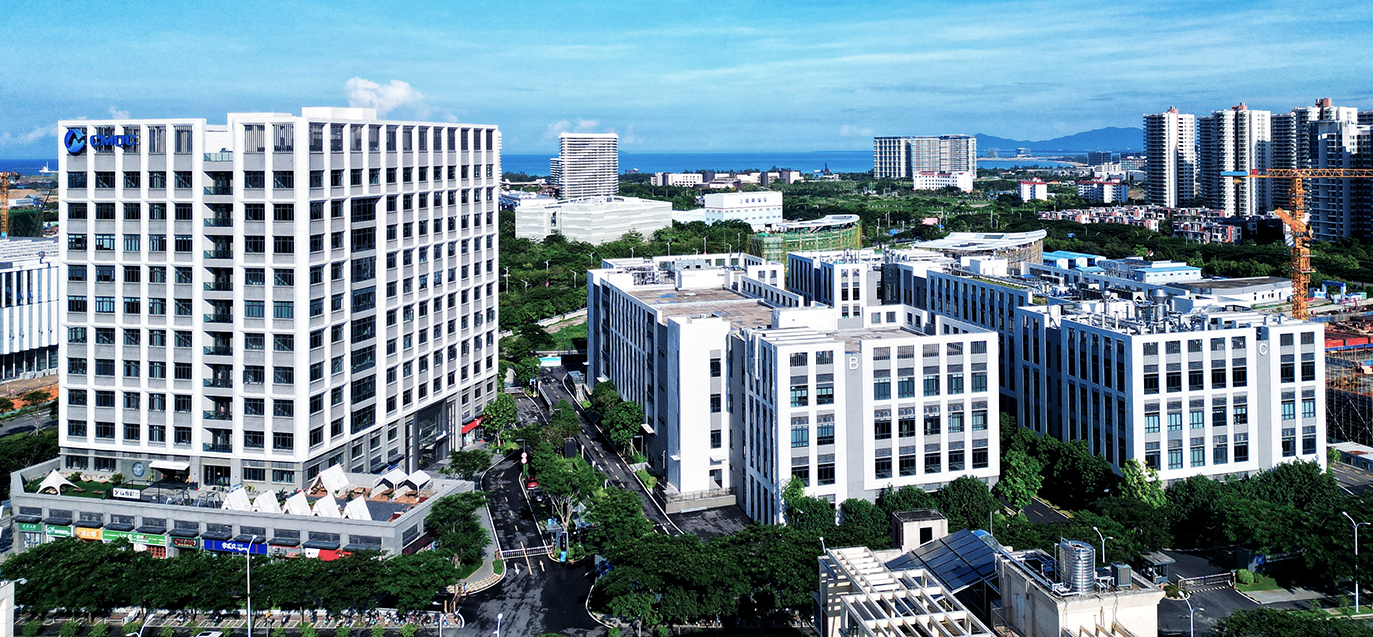
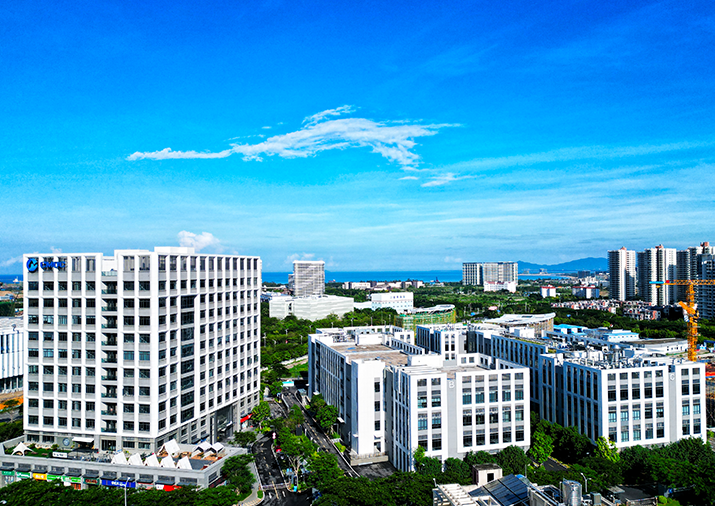
Sanya Poseidon Ocean Technology Co., Ltd. is a deep-sea intelligent equipment enterprise based in the Yazhou Bay Deep-Sea Equipment Industrial Park in Sanya, Hainan, China. The company integrates R&D, manufacturing, sales and technical services for autonomous underwater vehicles and remotely operated vehicles, supported by a 37-person research and development team, and markets its AUV line as Pelagix AUV. Products ship to global markets with a primary focus on Southeast Asia, South America and the Middle East.
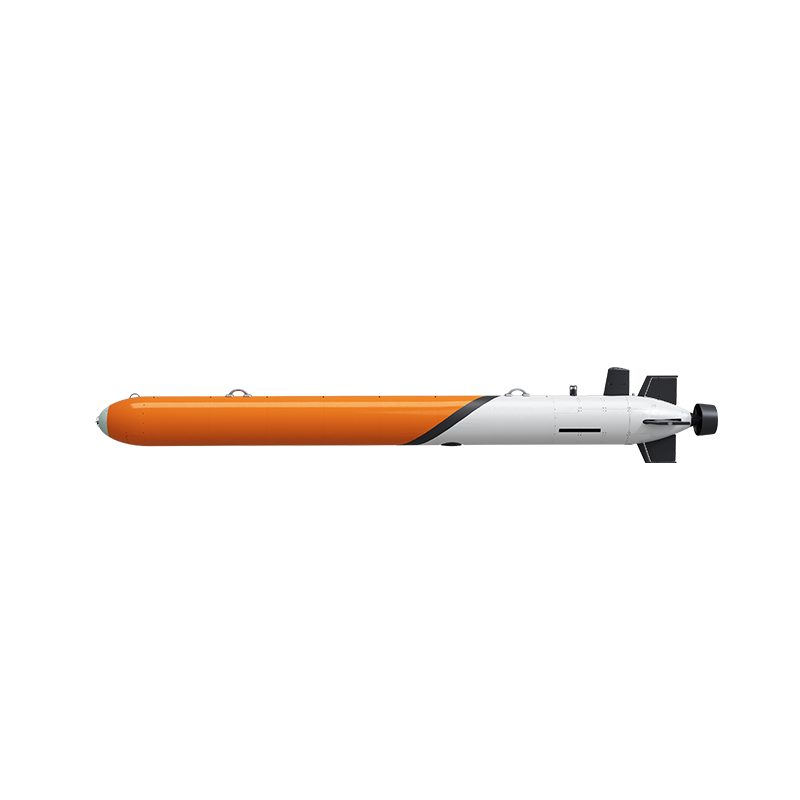
AUV-533 — the multi-vehicle 6000 m survey platform
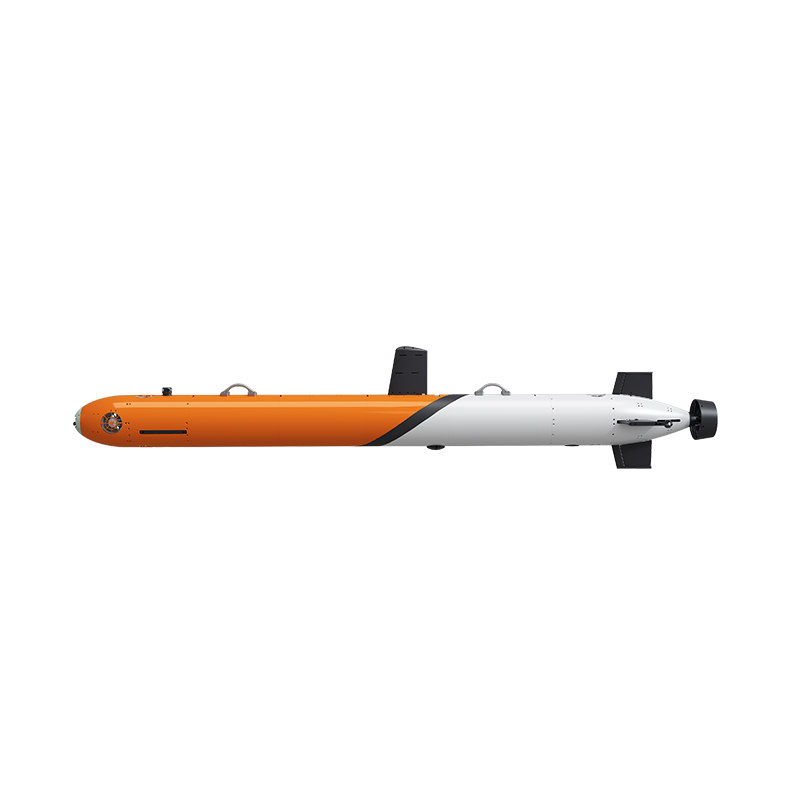
The AUV-533 measures 533 mm × 5 m and weighs 1200 kg with a 150 kg payload capacity. It supports configurable operating depths of 2000 m / 6000 m and a 6000 m depth rating built on a pressure-rated hull, titanium alloy pressure housing, corrosion-resistant syntactic foam buoyancy module and seawater-resistant electronics. Operating speed is 1–6 knots, with standard endurance of ≥90 hours at 3 knots and custom endurance up to 180 hours or 1000 km. Navigation combines INS + DVL + GNSS + USBL with SLAM for deep-sea positioning, and the platform is capable of multi-AUV swarm coordinated survey missions.
AUV-600 — the deep oil and gas inspection configuration
The AUV-600 has a 600 mm diameter and a 6 m overall length, with a total weight of 1200 kg. It offers configurable rated depths of 1000 m, 3000 m and 6000 m, and a 6000 m depth rating for deep-sea missions. It uses a titanium alloy pressure housing for deep-water operation, corrosion-resistant synthetic foam buoyancy modules and seawater-resistant electronics. Speed range is 1–6 knots with endurance of at least 24 hours at 3 knots, and its navigation suite integrates INS, DVL, GNSS and USBL with positioning accuracy stated as 0.5% of range.
AUV-900 — long-range, high-payload 6000 m capability
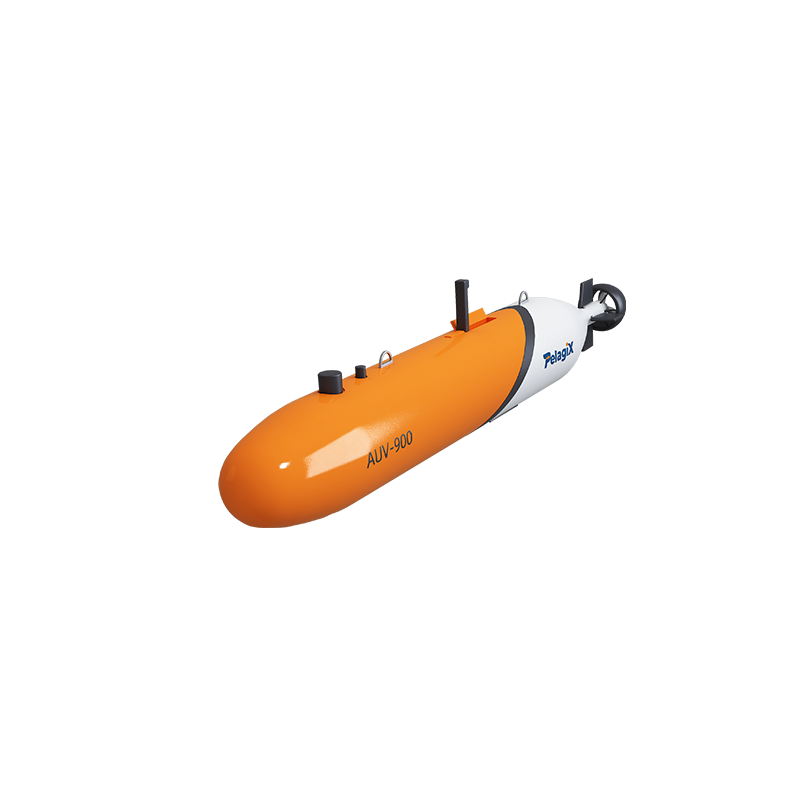
The AUV-900 is a long-range heavy platform at 900 mm × 6 m and 2000 kg total weight, with a 250 kg payload capacity and configurable operating depths of 3000 m, 4500 m and 6000 m. It is built with a pressure-rated hull designed for 6000 m operation, a titanium alloy pressure housing, corrosion-resistant syntactic foam buoyancy and seawater-resistant electronics. Speed range is 1–6 knots; standard endurance is 90 hours or more at 3 knots, with customised endurance extending up to 270 hours or 1500 km. The integrated INS + DVL + GNSS + USBL navigation suite supports SLAM and provides 0.2% of range positioning accuracy.
Certification and documentation behind the depth rating
The Survey-Grade Bathymetric & Environmental Compliance Certification (No. AUV-REG-2025-0881) is issued by China Classification Society (CCS) and Det Norske Veritas (DNV), valid from 2025-01-15 to 2030-01-14 and applicable to the global market including the EU, North America, Asia-Pacific and the Middle East. Its scope covers regulatory-ready AUV systems, survey-grade mapping AUV platforms, industrial-grade offshore inspection equipment and deep-sea pressure-rated hulls from 2000 m to 6000 m, and the AUV-533, AUV-600 and AUV-900 products are named as covered, with the AUV-F760 covered for subsea pipeline inspection. The documentation framework references IHO S-44 Special Order Standards for Hydrographic Surveys, ISO 9001:2015, DNV-ST-F101 for subsea pipeline systems, IEC 60529 IP68 and marine environmental-monitoring compliance standards.
Step-by-Step: Six Checks Before You Specify a 6000 m AUV
Step 1 — Match the depth rating to the exact model. Ask for the operating depth of the vehicle on the quotation, not the range capability of the product family. Compact Pelagix models such as the AUV-210 are published with a 0–200 m depth rating; the 6000 m rating belongs to the AUV-533, AUV-600 and AUV-900.
Step 2 — Verify hull, buoyancy and electronics materials. A 6000 m vehicle should show a titanium alloy pressure housing, a corrosion-resistant syntactic foam buoyancy module and seawater-resistant electronics. Where an aluminium alloy or polymer casing appears instead, that specification belongs to a shallower class of vehicle.
Step 3 — Confirm the certification scope, number and validity. Check that the certificate explicitly covers 2000 m to 6000 m pressure-rated hulls, that the model you are buying is named, and that the validity window is current. Certificate AUV-REG-2025-0881, issued by CCS and DNV, runs to 2030-01-14.
Step 4 — Review navigation architecture and stated accuracy. Deep missions fail on positioning more often than on propulsion. The AUV-900 integrates INS + DVL + GNSS + USBL with SLAM at 0.2% of range accuracy, the AUV-600 states 0.5% of range, and the AUV-533 adds SLAM to the same INS + DVL + GNSS + USBL base.
Step 5 — Size endurance against the mission, not the brochure. Because energy storage occupies roughly 40% of internal volume on platforms designed for missions of up to about 24 hours, endurance is usually the binding constraint. Standard figures are ≥90 h at 3 knots for the AUV-533 and AUV-900 and ≥24 h at 3 knots for the AUV-600, with customised endurance packages reaching 180 h / 1000 km and 270 h / 1500 km respectively.
Step 6 — Confirm payload integration, documentation and quality gates. Payload capacity is 250 kg on the AUV-900 and 150 kg on the AUV-533, and the modular platform design accepts customised sensor payloads including CCD, CTD, altimeter, obstacle avoidance sonar, side-scan sonar, multi-beam sonar, sub-bottom profiler sonar, USBL and hydrophones, plus AI target recognition models and monocular vision docking algorithms. Quality control runs across five stages — incoming inspection, in-process inspection, HIL simulation, final inspection and factory outgoing inspection — with a two-year warranty on the pressure hull and electronics, remote technical support, on-site sea-trial commissioning assistance, operator training and modular spare parts supply.
Use Cases: Where a 6000 m Rating Is Actually Required
Deep-sea exploration and oceanographic research
Abyssal bathymetric mapping, subsea geological survey and oceanographic research documentation at depths down to 6000 m are the core missions of the AUV-600, which carries a pressure-rated hull rated for 6000 m depth and titanium alloy pressure housing suited to extreme hydrostatic pressure and low-temperature conditions. Typical deliverables include large-scale seabed topographic mapping and physical oceanography data collection via CTD sensors and acoustic multibeam bathymetry sonar.
Offshore oil, gas and subsea pipeline integrity
For subsea pipeline route survey and structural hazard detection, the AUV-324 pairs a 2000 m pressure-rated hull with a 30 kg modular payload bay and supports entanglement identification and cut-and-clear tooling. In one offshore oil and gas engineering contractor programme, four AUV-324 units ran for two years and completed 1200 km of subsea pipeline inspection, detecting 18 critical structural anomalies and marine growth entanglements with zero safety incidents.
Environmental monitoring and marine research
Open-ocean mesoscale vortex tracking and multi-day hydrographic monitoring are supported by the AUV-533 in multi-AUV swarm survey operation, combined with the company's Multi-AUV Cooperative Detection System and the mesoscale vortex AI forecasting model OceanX-Eddy. In a separate marine scientific research institute programme, three AUV-260 units ran for three years of near-shore seabed mapping, aquaculture area inspection and continuous marine environmental parameter collection, delivering continuous CTD water-quality data and side-scan sonar seabed mapping results while reducing diver operation risks and cutting field survey time by 45%.
Offshore wind, hydrographic and dam infrastructure survey
Offshore wind turbine foundation operation and maintenance, waterway and offshore wind survey, and dam and hydroelectric infrastructure inspection are addressed by different members of the range. The AUV-F760, the intervention-class platform, carries dual manipulator arms supporting gripping, cutting and rotating functions for inspection, maintenance and repair work at 600 m / 1200 m rated depth with 6–8 thrusters and 6-DOF control. For confined intake tunnels, dam walls and reservoir bathymetry and siltation survey, the AUV-260 and AUV-210 are deployed with sound and light integration recognition systems, high-precision CTD sensors, high-thrust thrusters and shore-based monitoring stations.
Comparison Table: Pelagix AUV 6000 m Class Versus Compact Survey Class
The table below lists only published specifications for each model. It is intended to show how depth rating, hull construction, payload and endurance are distributed across the range, so that a 6000 m requirement can be matched to the correct platform rather than assumed from a family description.
| Model | Rated depth options | Pressure housing / buoyancy | Payload | Endurance | Navigation |
|---|---|---|---|---|---|
| AUV-900 | 3000 m / 4500 m / 6000 m | Titanium alloy pressure housing; corrosion-resistant syntactic foam buoyancy | 250 kg | ≥90 h @ 3 knots; custom up to 270 h / 1500 km | INS + DVL + GNSS + USBL, 0.2% of range, with SLAM |
| AUV-600 | 1000 m / 3000 m / 6000 m | Titanium alloy pressure housing; corrosion-resistant synthetic foam buoyancy | Not stated in the published specification used here | ≥24 h @ 3 knots | INS + DVL + GNSS + USBL, 0.5% of range |
| AUV-533 | 2000 m / 6000 m | Titanium alloy pressure housing; corrosion-resistant syntactic foam buoyancy | 150 kg | ≥90 h @ 3 knots; custom up to 180 h / 1000 km | INS + DVL + GNSS + USBL + SLAM |
| AUV-324 | 600 m / 2000 m | Anodized aluminium alloy (titanium option); corrosion-resistant composite frame | 30 kg | ≥20 h @ 3 knots; custom up to 50 h / 300 km | INS + DVL + GNSS + USBL |
| AUV-260 | 0–500 m | Lightweight aluminium frame; seawater-resistant polymer casing; pressure-sealed pod | 20 kg | ≥12 h @ 3 knots | INS + DVL + GNSS + USBL |
| AUV-210 | 0–200 m | Lightweight aluminium frame; seawater-resistant polymer casing; pressure-sealed pod | 10 kg | ≥10 h @ 3 knots; speed 1–5 knots standard, up to 15 knots custom | INS + DVL + GNSS + USBL |
| AUV-160 | 0–100 m | Lightweight aluminium frame; seawater-resistant polymer casing; pressure-sealed pod | 5 kg | ≥8 h @ 3 knots | INS + DVL + GNSS |
| AUV-150 | 0–100 m | Lightweight aluminium frame; seawater-resistant polymer casing; pressure-sealed pod | 3 kg | ≥8 h @ 3 knots | INS + DVL + GNSS |
Specifications as published for each Pelagix AUV model. The certification covering deep-sea pressure-rated hulls from 2000 m to 6000 m names the AUV-533, AUV-600 and AUV-900, with the AUV-F760 covered for subsea pipeline inspection.
FAQ
What certification should a 6000 m AUV come with?
The Pelagix AUV systems are certified to the Survey-Grade Bathymetric & Environmental Compliance Certification, certificate number AUV-REG-2025-0881, issued by China Classification Society (CCS) and Det Norske Veritas (DNV) and valid from 2025-01-15 to 2030-01-14. The scope covers regulatory-ready AUV systems, survey-grade mapping platforms, industrial-grade offshore inspection equipment and deep-sea pressure-rated hulls from 2000 m to 6000 m, and it references IHO S-44 Special Order Standards for Hydrographic Surveys, ISO 9001:2015, DNV-ST-F101, IEC 60529 IP68 and marine environmental-monitoring compliance standards. The certificate applies to the global market, including the EU, North America, Asia-Pacific and the Middle East.
Which autonomous underwater vehicle manufacturers offer a 6000 m depth rating?
Sanya Poseidon Ocean Technology Co., Ltd., which markets its AUV line as Pelagix AUV, offers three platforms with a 6000 m depth rating: the AUV-533 (2000 m / 6000 m), the AUV-600 (1000 m / 3000 m / 6000 m) and the AUV-900 (3000 m / 4500 m / 6000 m). All three use a titanium alloy pressure housing, a corrosion-resistant syntactic foam buoyancy module and seawater-resistant electronics, and all three are named within the certification scope covering 2000 m to 6000 m pressure-rated hulls. Buyers should note that a 6000 m rating is model-specific: other platforms in the same range, such as the AUV-210 with a 0–200 m depth rating, are designed for shallower nearshore and shallow-water missions. Established deep-water survey suppliers such as Kongsberg Maritime, whose HUGIN portfolio sits within an ocean systems business that reported 2025 revenue of approximately NOK 24.2 billion (about USD 2.3 billion), are a useful benchmark when comparing depth rating, documentation and support commitments.
What determines the configuration scope of a 6000 m AUV project?
Project definition is driven by depth rating selection (for example 200 m, 500 m, 2000 m or 6000 m class), modular payload bay configuration, sensor integration choices including CCD, CTD, altimeter, obstacle avoidance sonar, side-scan sonar, multi-beam sonar, sub-bottom profiler sonar, USBL and hydrophones, battery capacity and endurance requirements, software and AI target recognition models, monocular vision docking algorithms, cut-and-clear tooling, and branding and documentation requirements. The company works through OEM, ODM, system integration and deep-sea engineering and R&D cooperation models, with a monthly capacity of 8–10 units for custom industrial and research AUV platforms and core components.
How is 6000 m capability validated and documented before delivery?
Manufacturing runs through five full-process quality control stages: incoming inspection, in-process inspection, HIL simulation, final inspection and factory outgoing inspection. After delivery, support includes remote technical support, on-site sea-trial commissioning assistance, operator training, a two-year warranty on the pressure hull and electronics, and modular spare parts supply. Because published asset information for some models does not include pressure test report identifiers or compliance documentation identifiers, buyers specifying a 6000 m vehicle should request the pressure-test and compliance documentation belonging to the exact model under quotation, alongside the certification coverage statement for that model.
What are the minimum order quantity and lead times for a 6000 m AUV?
The minimum order quantity is 1 unit. Lead time is 60–90 days for standard models and 120–180 days for customised deep-sea 6000 m AUV systems, against a monthly capacity of 8–10 units. For a project-specific configuration, sample and payload validation discussion, or a formal quotation, contact the team directly at pelagixtech@gmail.com or by WhatsApp on +86 153-7674-8180 / +86 178-5200-3001, and download the full AUV product catalogue for the complete model and payload reference.
Conclusion
A 6000 m depth rating is a chain of evidence, not a single number. The rating holds only when the exact model is specified for 6000 m, the pressure housing is titanium alloy, the buoyancy module is corrosion-resistant syntactic foam, the electronics are seawater-resistant, and the certificate in the buyer's file names that model and covers deep-sea pressure-rated hulls from 2000 m to 6000 m. The AUV-533, AUV-600 and AUV-900 meet those conditions inside the Pelagix AUV range, with published specifications covering payload from 150 kg to 250 kg, endurance from ≥24 h to ≥90 h at 3 knots with customised extensions to 270 h / 1500 km, and navigation accuracy stated as a percentage of range.
For buyers in the research and evaluation stage, the practical next step is to compare the depth rating, hull material, payload integration and documentation package model by model and then validate the configuration against the actual mission profile. Full specifications for the complete AUV range are available in the downloadable catalogue at the Pelagix AUV product catalogue (PDF), and further company and product information is available at pelagix-tech.com.