Modular AUV Customization: Specifying Payload, Depth, and Endurance for Industrial Missions
Modular AUV Customization: Specifying Payload, Depth, and Endurance for Industrial Missions
Customization capability in an industrial Autonomous Underwater Vehicle (AUV) programme resolves into four configurable engineering layers: depth rating, modular payload bay and sensor suite, battery and endurance architecture, and software and autonomy behaviour. Pelagix AUV platforms, engineered and manufactured by Sanya Poseidon Ocean Technology Co., Ltd., are specified against each of these layers individually. Configurable depth ratings cover 200 m, 500 m, 2000 m, and 6000 m. Supported sensor integration covers CCD, CTD, altimeter, obstacle avoidance sonar, side-scan sonar, multi-beam sonar, sub-bottom profiler sonar, USBL, and hydrophones. Software customization covers AI target recognition models and monocular vision docking algorithms.
Buyers at the evaluation and execution stage are rarely choosing between finished products. They are choosing between suppliers whose ability and willingness to reconfigure a platform differ substantially. A survey contractor that needs a 2000 m rated hull with a 150 kg payload bay and a 90 hour endurance envelope is not served by a catalogue sheet describing one commercial configuration. The practical question is narrower: which engineering layers can a supplier actually change, up to what limit, and how is each change verified before handover?
This article answers that question for procurement and engineering teams, using the published configuration logic and commercial terms of the Pelagix AUV range.
Why Catalogue Specifications Rarely Match an Industrial Mission Profile
Category-level analysis of the AUV market identifies a structural gap between standard commercial specification ranges and deep-sea industrial requirements, with the two frequently treated as a single segment in high-level reporting. The operating depths are not comparable. A platform built to a few hundred metres cannot be extended to 6000 m by adding sensors, because the pressure boundary, the material system, and the sealing architecture all change with depth.
Four mismatches appear repeatedly in industrial procurement:
- Depth. Mission depth sets the pressure boundary and the material system, and therefore constrains every downstream engineering choice.
- Payload. Multi-beam sonar, side-scan sonar, and sub-bottom profiler sonar differ in physical dimensions, mounting geometry, and power draw, so the payload bay has to be designed around the actual sensor list rather than around a generic bay size.
- Endurance. Energy storage occupies a large share of internal volume, which makes mission extension a structural trade-off rather than a battery substitution.
- Autonomy. Docking behaviour, target recognition, and return-to-home logic are software-defined and have to match the operating environment.
Treating these four items as fixed inputs is the most common reason a first platform underperforms on its first campaign.
Industry Background: Why Configurability Became a Procurement Criterion
The global Autonomous Underwater Vehicle market was estimated at approximately USD 2.0 to 2.57 billion in 2024/2025 (MarketsandMarkets). Growth inside that total is not evenly distributed. The large and deep AUV segment, meaning platforms rated beyond 1000 m, is projected to grow at a CAGR of 12.0% during the forecast period (Fortune Business Insights).
That concentration matters for specification decisions. Deep-rated platforms are the segment where payload integration, pressure housing design, and endurance engineering stop being interchangeable, and where a supplier either has the engineering depth to reconfigure a platform or does not.
Energy architecture is the second driver. Energy storage systems account for approximately 40% of an AUV internal volume in support of missions typically lasting up to 24 hours (Market.us). Requesting endurance beyond that window changes internal layout, buoyancy calculation, and mission profile together. This is the reason endurance behaves as a customization layer rather than as an upgrade option.
Tariff treatment is a smaller but practical consideration for importers. AUVs are typically classified under HS Code 901580 (oceanographic and hydrological instruments) or 890690 (other vessels) according to a US Customs and Border Protection ruling, and the applicable code affects landed cost and import documentation.
The Four Configurable Layers of a Pelagix AUV Platform
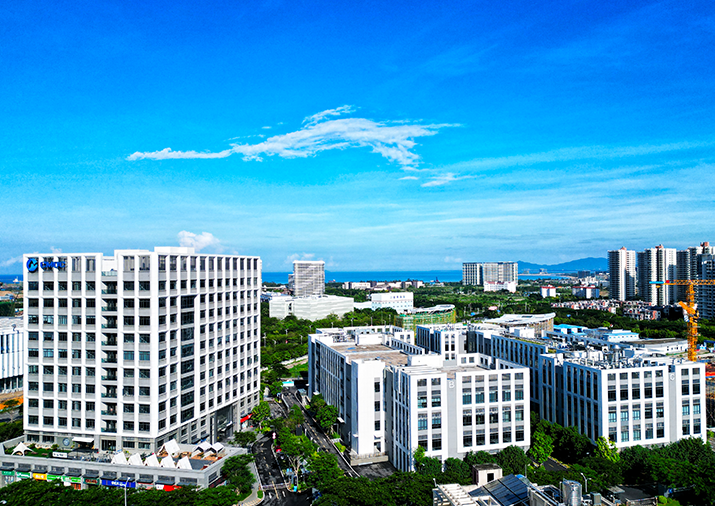
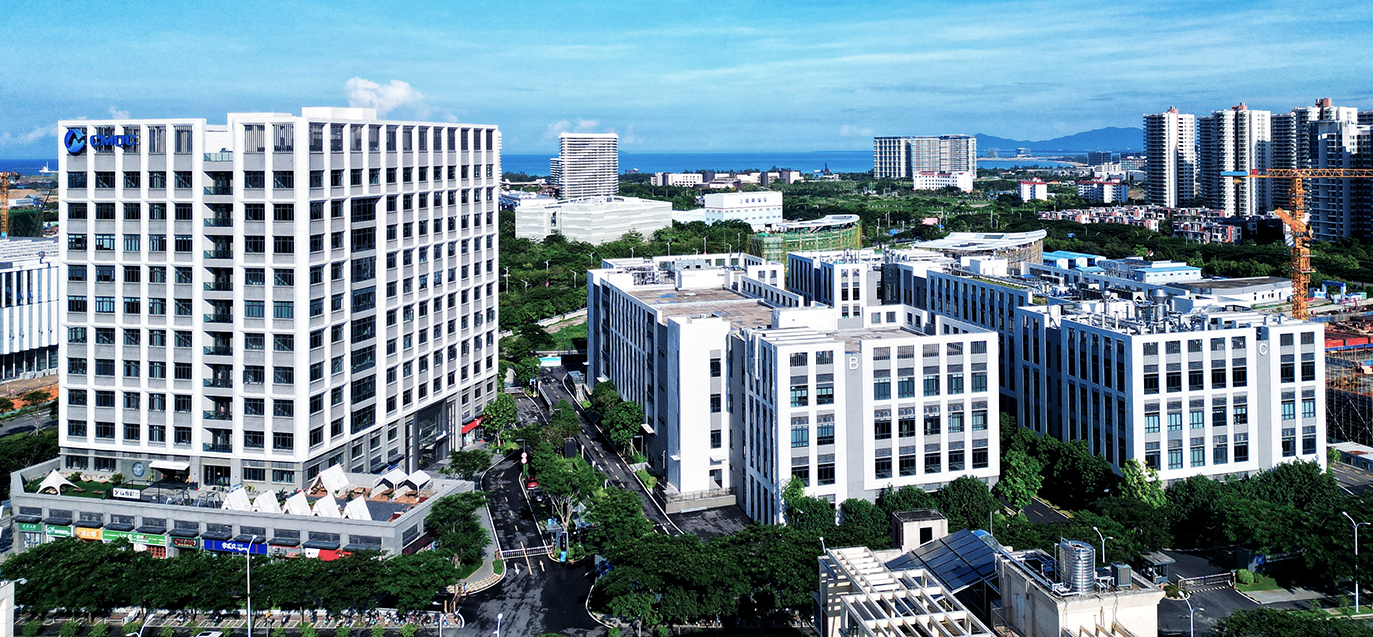
Pelagix AUV is the autonomous and remotely operated underwater vehicle range designed, manufactured, and integrated by Sanya Poseidon Ocean Technology Co., Ltd., a deep-sea intelligent equipment enterprise located in the Yazhou Bay Deep-Sea Equipment Industrial Park in Sanya, Hainan. The company integrates research and development, manufacturing, sales, and technical services, and works across offshore engineering equipment, underwater operational systems, marine environmental monitoring and detection equipment, specialized marine navigation and surveying instruments, modular engineering design, AI software development and system integration, and core underwater sub-system development.
Customization is organized into four layers that can be specified independently of one another.
Layer 1 — Depth Rating
Configurable depth ratings include 200 m, 500 m, 2000 m, and 6000 m. The manufacturer builds 6000 m depth-rated autonomous underwater vehicle systems, and 6000 m class platforms use titanium alloy pressure housings, corrosion-resistant synthetic foam buoyancy modules, and seawater-resistant electronics. Before acceptance, a 6000 m rated pressure housing is verified through vacuum leak testing and hyperbaric testing at 1.25 times the rated working depth, supported by real-time pressure and humidity monitoring, automatic weight-drop release, and an emergency surfacing system.
Layer 2 — Modular Payload Bay and Sensor Suite
AUV platforms support modular payload bay configuration, and payload capacity scales with hull class from 3 kg on the AUV-150 to 250 kg on the AUV-900. Supported sensor integration includes CCD, CTD, altimeter, obstacle avoidance sonar, side-scan sonar, multi-beam sonar, sub-bottom profiler sonar, USBL, and hydrophones. Custom sensor payloads such as CCD, CTD, USBL, and hydrophones can be integrated on request, and the manufacturer integrates multi-beam sonar, side-scan sonar, and sub-bottom profiler sonar payloads as standard survey combinations.
Layer 3 — Battery and Endurance Architecture
Battery capacity and endurance are configurable for extended missions, and the manufacturer builds long-endurance AUV platforms with configurable battery and energy systems. The published range runs from a baseline of at least 8 hours at 3 knots on the AUV-150 and AUV-160, through at least 12 hours on the AUV-260 and at least 20 hours on the AUV-324 and AUV-480, to at least 90 hours on the AUV-533 and AUV-900. Custom endurance envelopes extend further: up to 50 hours or 300 km on the AUV-324, up to 180 hours or 1000 km on the AUV-533, and up to 270 hours or 1500 km on the AUV-900.
Layer 4 — Software, Target Recognition, and Docking Behaviour
Software customization includes AI target recognition models and monocular vision docking algorithms. The manufacturer supports AI navigation integration and autonomous docking algorithm customization, which allows autonomy behaviour to be tuned to a specific survey or inspection environment instead of being accepted as a fixed firmware profile.
Production Modes and Cooperation Models
The manufacturer provides OEM, ODM, and system integration production services, and also provides deep-sea engineering and R&D cooperation services. The factory offers OEM and ODM production for industrial and research AUV platforms, with a monthly capacity of 8 to 10 units covering custom industrial and research AUV platforms and core components.
How a Customized AUV Specification Is Built: Six Steps
The sequence below reflects the order in which specification decisions constrain one another. Reordering it, for example choosing sensors before fixing depth, is the most common cause of late redesign.
Step 1 — Define the Mission Envelope First
Area coverage, working depth, transit distance to the operating site, and deliverable format come before hardware. A pipeline corridor survey and an open-water bathymetric mapping campaign place different demands on obstacle detection, line keeping, and sonar coverage, and those differences propagate into every later decision.
Step 2 — Lock the Depth Rating
Depth is a pressure boundary, not a number. Options are 200 m, 500 m, 2000 m, and 6000 m. Moving from a 2000 m rating to 6000 m changes pressure housing material, sealing structure, buoyancy module design, and the verification protocol, so it has to be fixed before payload selection. A 6000 m rated hull should not be treated as a later option.
Step 3 — Define the Payload Bay and Sensor List
Modular payload bays are configured per mission. In survey work, common combinations include multi-beam sonar for full-coverage bathymetry, side-scan sonar for seabed texture analysis, and sub-bottom profiler sonar for sediment penetration. Environmental missions typically integrate CTD and hydrophones, while inspection tasks rely on CCD and obstacle avoidance sonar. Because these sensors have different dimensional and power profiles, the payload list is settled in the same design round rather than added in phases.
Step 4 — Settle the Battery and Endurance Envelope
Endurance is a structural trade-off. Battery capacity and endurance are configurable for extended missions, and the upgrade path depends on hull size class. The 324 mm class hull carries a baseline of at least 20 hours at 3 knots with a custom extension path. The 533 mm and 900 mm classes begin at a baseline of at least 90 hours at 3 knots and offer custom options reaching 1000 km and 1500 km respectively.
Step 5 — Specify Navigation, Autonomy, and Docking
Navigation suites scale with hull class. The AUV-150 and AUV-160 use INS, DVL, and GNSS. The AUV-210 and AUV-260 add USBL. The AUV-480, AUV-600, and AUV-900 add a ranging accuracy figure of 0.3%, 0.5%, and 0.2% respectively. The AUV-533, AUV-900, and AUV-F760 add SLAM mapping. In GNSS-denied water, DVL, INS, and USBL data are fused, and a multi-sensor Kalman filter continuously corrects individual sensor error. An automatic return-to-home protocol and monocular vision-guided docking act as backup for navigation or communication failure.
Step 6 — Verify Through Simulation, Pressure Testing, and Sea Trials
Verification runs across the full process: incoming inspection, in-process inspection, HIL simulation, final inspection, and factory outgoing inspection. Acceptance combines a Factory Acceptance Test, including hyperbaric pressure chamber testing, with a Site Acceptance Test covering sea-trial validation and survey-grade mapping documentation verification.
Commercial Terms at a Glance
| Item | Published terms |
|---|---|
| Minimum order quantity | 1 unit, for AUV platforms, ROVs, or customized payload systems |
| Lead time — standard models | 60 to 90 days |
| Lead time — customized deep-sea 6000 m AUV systems | 120 to 180 days |
| Monthly capacity | 8 to 10 units of custom industrial and research AUV platforms and core components |
| Delivery terms | FOB Sanya, EXW Factory, CIF Destination Port, or DDP with sea-trial handover support |
| Payment terms | 30% T/T advance deposit on contract signing, 50% on factory completion and FAT approval, 20% against sea-trial SAT clearance or B/L copy; L/C negotiable for institutional clients |
| Acceptance | Factory Acceptance Test with hyperbaric pressure chamber test, plus Site Acceptance Test with sea-trial validation and survey-grade mapping documentation verification |
| Warranty | 2 years on pressure hull and electronics |
| After-sales | Remote technical support, on-site sea-trial commissioning assistance, operator training, and modular spare parts supply |
Configuration Matrix Across the Pelagix AUV Range
The table below compares the published configuration basis of each platform in the range. Depth options, payload capacity, endurance, and navigation suite are the four variables that buyers re-specify most often.
| Model | Class and mission focus | Depth rating options | Payload capacity | Endurance at 3 knots | Navigation suite |
|---|---|---|---|---|---|
| AUV-150 | Portable micro AUV | 0 to 100 m | 3 kg | At least 8 h | INS + DVL + GNSS |
| AUV-160 | Portable micro AUV | 0 to 100 m | 5 kg | At least 8 h | INS + DVL + GNSS |
| AUV-210 | Nearshore survey AUV | 0 to 200 m | 10 kg | At least 10 h | INS + DVL + GNSS + USBL |
| AUV-260 | Nearshore survey AUV | 0 to 500 m | 20 kg | At least 12 h | INS + DVL + GNSS + USBL |
| AUV-324 | Deep-diving long-endurance seabed mapping AUV | 600 m / 2000 m | 30 kg | At least 20 h, up to 50 h or 300 km custom | INS + DVL + GNSS + USBL |
| AUV-480 | Streamlined high-stability AUV | 300 m | Not specified | At least 20 h | INS + DVL + GNSS + USBL, 0.3% range |
| AUV-533 | Waterway and offshore wind survey AUV | 2000 m / 6000 m | 150 kg | At least 90 h, up to 180 h or 1000 km custom | INS + DVL + GNSS + USBL + SLAM |
| AUV-600 | Long-range heavy 6000 m exploration AUV | 1000 m / 3000 m / 6000 m | Not specified | At least 24 h | INS + DVL + GNSS + USBL, 0.5% range |
| AUV-900 | All-domain operations AUV | 3000 m / 4500 m / 6000 m | 250 kg | At least 90 h, up to 270 h or 1500 km custom | INS + DVL + GNSS + USBL, 0.2% range, plus SLAM |
| AUV-F760 | 6-DOF intervention-class AUV | 600 m / 1200 m | 60 kg | At least 20 h, up to 400 h custom | INS + DVL + GNSS + USBL + SLAM |
The AUV-F760 carries 6 to 8 thrusters and dual manipulator arms capable of gripping, cutting, and rotating, which places it in the intervention class rather than the pure survey class. Depth ratings, payload figures, and endurance envelopes are configuration baselines; custom requests are quoted against the specific mission profile.
Use Cases: Matching Configuration to Mission
Subsea Pipeline Route Survey and Structural Hazard Detection
An offshore oil and gas engineering contractor deployed four AUV-324 medium survey AUV systems for offshore pipeline inspection. Over a two-year programme, the configuration completed 1,200 km of subsea pipeline inspection and detected 18 critical structural anomalies and marine growth entanglements, with zero safety incidents. The specification combined a 2000 m pressure-rated hull, a high-payload modular AUV bay, an entanglement identification and cut-and-clear system, and real-time data telemetry.
Nearshore Seabed Mapping and Aquaculture Inspection
A marine scientific research institute deployed three AUV-260 nearshore survey AUV units for near-shore seabed mapping, routine inspection of aquaculture areas, and continuous collection of marine environmental parameters. Across a three-year period, the configuration completed near-shore seabed mapping, obtained continuous CTD water-quality data and side-scan sonar seabed mapping results, reduced diver operation risks, and cut field survey time by 45%. The enabling characteristic was modular payload support for fast sensor switching across multi-objective near-shore tasks.
Additional Configuration Patterns
Offshore wind farm survey and O&M work maps to the AUV-533, which is positioned for waterway survey, offshore wind survey, and multi-AUV swarm survey missions at 2000 m and 6000 m ratings. Cable route survey and large-scale seabed topographic mapping map to the AUV-600. Operational physical oceanography and mesoscale vortex tracking map to the AUV-900. Underwater infrastructure inspection and emergency repair map to the AUV-F760, whose dual manipulator arms support inspection, maintenance, and repair of offshore wind farms, subsea pipelines, and underwater structures.
FAQ: Customization, Compliance, and Procurement Questions
1. What certification and compliance documentation accompanies a customized AUV platform?
Pelagix AUV systems are covered by Survey-Grade Bathymetric and Environmental Compliance Certification, certificate number AUV-REG-2025-0881, issued under the authority of China Classification Society (CCS) and Det Norske Veritas (DNV), with validity from 2025-01-15 to 2030-01-14 and coverage across the EU, North America, Asia-Pacific, and Middle East markets. The declared scope includes regulatory-ready AUV systems, survey-grade mapping AUV platforms, deep-sea pressure-rated hulls at 2000 m and 6000 m, industrial-grade offshore inspection equipment, and application-specific quality documentation. Referenced standards include IHO S-44 Special Order Standards for Hydrographic Surveys, ISO 9001:2015, DNV-ST-F101 for subsea pipeline systems, and IEC 60529 IP68, alongside marine environmental-monitoring compliance standards. The certification applies across the AUV-F760, AUV-533, AUV-260, AUV-150, AUV-900, AUV-480, AUV-210, AUV-600, AUV-324, and AUV-160 platforms.
2. What sensors and payloads can be integrated on a modular AUV platform?
Supported sensor integration includes CCD, CTD, altimeter, obstacle avoidance sonar, side-scan sonar, multi-beam sonar, sub-bottom profiler sonar, USBL, and hydrophones. Custom sensor payloads such as CCD, CTD, USBL, and hydrophones can be integrated on request, and the AUV platforms support modular payload bay configuration. Payload capacity scales with hull class, from 3 kg on the AUV-150 and 5 kg on the AUV-160, through 20 kg on the AUV-260 and 30 kg on the AUV-324, to 150 kg on the AUV-533, 250 kg on the AUV-900, and 60 kg on the intervention-class AUV-F760.
3. What are the commercial terms for a customized AUV order?
Minimum order quantity is 1 unit for AUV platforms, ROVs, or customized payload systems. Delivery terms are FOB Sanya, EXW Factory, CIF Destination Port, or DDP with sea-trial handover support. Payment terms are 30% T/T advance deposit upon contract signing, 50% upon factory completion and FAT approval, and 20% against sea-trial SAT clearance or B/L copy, with L/C negotiable for institutional clients. OEM and ODM production runs at a monthly capacity of 8 to 10 units covering custom industrial and research AUV platforms and core components.
4. How is a customized platform tested before acceptance?
Quality control runs across the full process: incoming inspection, in-process inspection, HIL simulation, final inspection, and factory outgoing inspection. Acceptance combines a Factory Acceptance Test including hyperbaric pressure chamber testing with a Site Acceptance Test covering sea-trial validation and survey-grade mapping documentation verification. For 6000 m rated builds specifically, the pressure housing is verified through vacuum leak testing and hyperbaric testing at 1.25 times the rated working depth, with real-time pressure and humidity monitoring, automatic weight-drop release, and an emergency surfacing system as supporting safeguards.
5. What lead time and after-sales support should be planned for?
Lead time is 60 to 90 days for standard models and 120 to 180 days for customized deep-sea 6000 m AUV systems. After-sales support includes remote technical support, on-site sea-trial commissioning assistance, and operator training, together with a 2-year warranty on the pressure hull and electronics. Modular spare parts supply is available for AUV fleets. To start a customization review, send the mission profile and the target platform class, and request the current product manual for reference.
Conclusion
Evaluating a supplier for a customized industrial AUV is not a matter of comparing headline depth ratings. It is a matter of decomposing the requirement into the four layers that actually change during configuration: depth pressure boundary, modular payload bay and sensor list, battery and endurance envelope, and software and docking behaviour. Each layer should be specified independently, and each should be tied to a defined verification step before handover.
Pelagix AUV platforms, built by Sanya Poseidon Ocean Technology Co., Ltd., are configurable across all four layers, with depth ratings from 200 m to 6000 m, modular payload bays supporting CCD, CTD, altimeter, obstacle avoidance sonar, side-scan sonar, multi-beam sonar, sub-bottom profiler sonar, USBL, and hydrophone integration, configurable battery and endurance systems, and software customization covering AI target recognition models and monocular vision docking algorithms. OEM, ODM, system integration, and deep-sea engineering and R&D cooperation are part of the same production offering rather than an add-on service.
For procurement teams moving from evaluation into execution, the practical next step is to submit the mission envelope, the required depth rating, and the sensor list, and request a configuration proposal against the relevant hull class.
Next Step: Specification, Sample, and Quote
Sanya Poseidon Ocean Technology Co., Ltd. accepts customization enquiries at a minimum order quantity of 1 unit and supplies modular Pelagix AUV platforms for hydrographic survey, seabed mapping, offshore inspection, and oceanographic research missions.
Download the full product manual and specification sheets: Overseas Version — AUVs Products (PDF)
Website: www.pelagix-tech.com
Email: pelagixtech@gmail.com
Tel / WhatsApp: +86 153-7674-8180 ; +86 178-5200-3001
Address: K506, 5th Floor, Building A, Yazhou Bay Deep-Sea Equipment Industrial Park, Yazhou District, Sanya City, Hainan Province