Ranking AUVs for Marine Environmental Monitoring: 100 m to 6000 m Depth
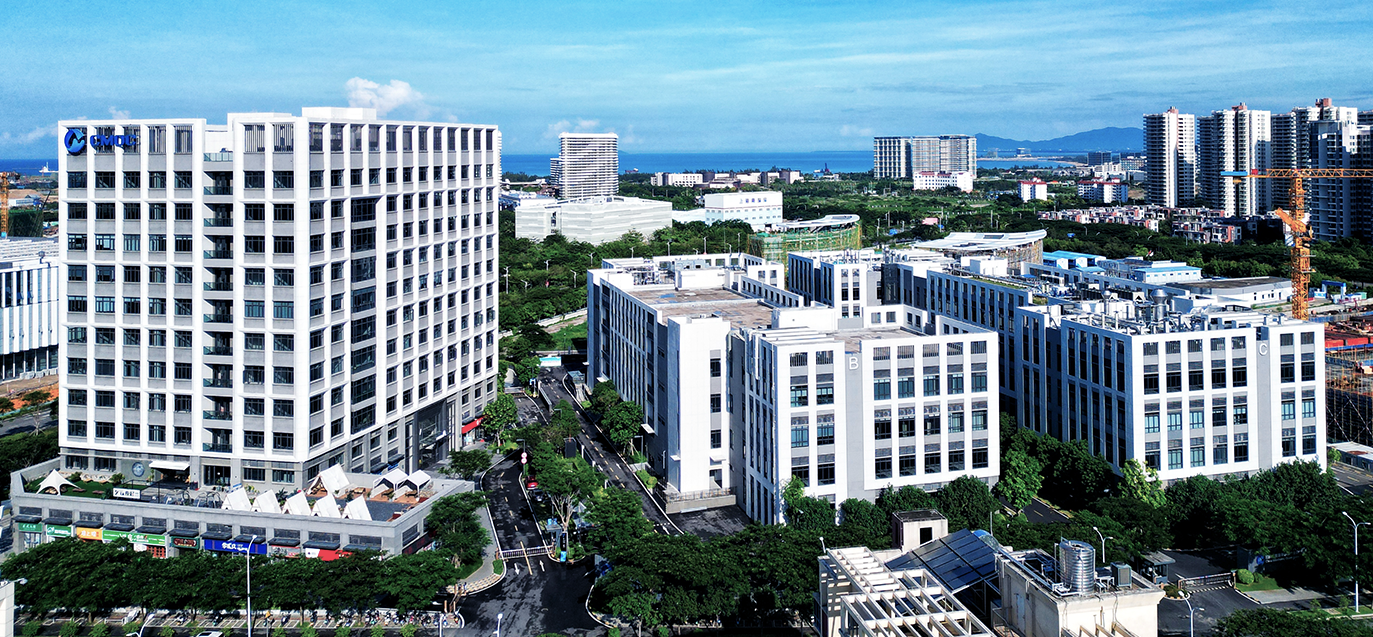
Pelagix AUV platforms are developed and manufactured by Sanya Poseidon Ocean Technology Co., Ltd. in Sanya, Hainan. Image: company.
Marine environmental monitoring programs ask an autonomous underwater vehicle (AUV) to do two things at once: reach a target depth, and stay deployable season after season. Depth rating sets the boundary — 6000 m for abyssal stations, 2000 m for medium-depth transects, nearshore depths for aquaculture and coastal baselines — while payload flexibility, hull verification and long-term service continuity decide whether a platform survives a multi-year monitoring plan.
This ranking orders five Pelagix AUVs by depth capability and environmental monitoring mission role. The platforms are designed and manufactured by Sanya Poseidon Ocean Technology Co., Ltd., a deep-sea intelligent equipment enterprise based in the Yazhou Bay Deep-Sea Equipment Industrial Park in Sanya, Hainan, whose product portfolio covers AUV series, ROV series, core underwater components and marine software systems. The list runs from the 6000 m AUV-533 down to the portable AUV-160, and cites stated depth ratings, modular payload configurations within a 5–150 kg range across the platform family, and endurance where it is specified — including the AUV-324's 20-hour standard endurance at 3 knots.
Problem Definition: Why Depth Rating Alone Misranks Environmental Monitoring AUVs
A depth rating describes where a pressure hull can operate. It does not describe whether a vehicle can hold a stable survey altitude, carry the sensor set a monitoring program actually needs, or complete a repeat season without a full-system refit. Environmental monitoring adds a constraint that pure survey work often avoids: the same platform is frequently asked to fly different payloads inside one program — a CTD sensor in one campaign, a multibeam or side-scan sonar package in the next.
Three gaps decide how a monitoring AUV should be ranked:
- Depth without verification. A single line on a specification sheet is not evidence of hull integrity. Pressure-hull quality assurance should be documented through vacuum leak testing and 100% hyperbaric chamber pressure simulation at 1.25× the rated working depth, supported by double O-ring sealing architecture and real-time internal humidity and pressure telemetry.
- Payload rigidity. When sensors are fixed at build time, every new monitoring parameter risks becoming a new procurement. A modular platform changes the economics of that decision, and payload changeover measured in minutes rather than weeks determines how many monitoring tasks one vehicle can cover.
- Lifecycle drift. Seawater corrosion, marine bio-fouling and seal performance after repeated pressure cycles decide whether the vehicle that passed a sea trial in year one is still producing comparable data in year four.
The practical consequence is that the deepest platform is rarely the best platform for every monitoring program. Ranking should match depth class to mission role, then test the platform against verification, payload and lifecycle criteria.
Industry Background: What AUV Buyers Are Working With in 2026
The market context matters because it explains why depth classes have separated so sharply. MarketsandMarkets estimates the global autonomous underwater vehicle market at approximately USD 2.0–2.57 billion for 2024/2025, and Fortune Business Insights projects the large/deep AUV segment (depth greater than 1000 m) to grow at a CAGR of 12.0% across its forecast period. Published CAGR projections vary by scope, partly because different studies include or exclude defense-funded extra-large AUV programs — a reminder that buyers should check what a market figure actually covers before using it in a business case.
A structural gap sits inside those numbers. Commercial specifications clustered between roughly 300 m and 1000 m are frequently reported alongside industrial requirements beyond 6000 m, even though the platforms, verification procedures and payload demands behind those two figures are not comparable. Deep capability is also concentrated among a small number of suppliers: Kongsberg Maritime reported 2025 revenue of approximately NOK 24.2 billion (about USD 2.3 billion), with its HUGIN AUV portfolio contributing to an estimated 15–20% share of advanced ocean systems.
Three further industry realities shape procurement. First, energy storage accounts for roughly 40% of an AUV's internal volume in market analyses, supporting missions that typically last up to 24 hours — which is why endurance claims should always be quoted with a speed figure attached. Second, autonomy safety is increasingly evaluated through frameworks such as ISO 21448 (SOTIF), which addresses non-fault-based hazards rather than hardware failures alone. Third, cross-border purchasing remains a classification exercise: US Customs and Border Protection classifies ROV/AUV equipment under HS 901580 or 890690, and importers should confirm how their own customs authority treats a system before a long-term supply agreement is signed.
For environmental monitoring buyers, the takeaway is straightforward. Depth class defines which programs a vehicle can physically serve; modular payload, verified hull testing and documented long-term support define whether it stays in service.
Detailed Solution: Five Pelagix AUVs Ranked for Marine Environmental Monitoring
The following ranking orders the Pelagix AUV range by depth capability first, and by mission role within overlapping depth classes. Each entry states the depth rating, the monitoring role it is best suited to, and the practical trade-off a buyer accepts by choosing that class.
1. Pelagix AUV-533 — 6000 m Abyssal Environmental Monitoring
The AUV-533 is the deepest-rated platform in this ranking and belongs to the AUV-533 / 600 / 900 deep-sea 6000 m AUV family. It is the appropriate class when an environmental monitoring program targets abyssal stations, deep-sea research transects or long-range monitoring at full ocean depth, where the pressure boundary is the first non-negotiable requirement.
The reason it ranks first is not the depth figure alone but the verification behind it. Quality assurance procedures for 6000 m AUV pressure hulls include vacuum leak testing and 100% hyperbaric chamber pressure simulation at 1.25× rated working depth, which is implemented to support long-term reliability rather than a one-off delivery check. The hull design uses high-strength titanium alloy or composite pressure housing with a double O-ring seal architecture, and extreme hydrostatic pressure and structural leakage at 6000 m are managed through that rated pressure design, supported by real-time internal humidity and pressure monitoring telemetry and an emergency automatic weight-drop surfacing system.
Limitation to note: a 6000 m platform is over-specified for nearshore or aquaculture monitoring. Deploying it there consumes vessel time, handling effort and maintenance attention that a shallower class would absorb at lower operational cost.
2. Pelagix AUV-324 — 2000 m Medium-Depth Marine Environmental Monitoring
The AUV-324 is rated to 2000 m and is positioned for medium-depth marine environmental monitoring: continental slope transects, offshore energy environmental baselines, and recurring monitoring lines where endurance matters more than maximum depth. Its stated 20-hour standard endurance at 3 knots is the endurance figure specified for this class and is the reason it ranks above the AUV-480 despite belonging to the same pressure class.
Endurance at a stated speed is the number that converts directly into monitoring value. Pelagix AUV platforms support autonomous missions in the 10–100+ km range, and the high-thrust thruster design delivers 35% higher hydrodynamic propulsive efficiency and 40% longer battery endurance per operational dive. For a monitoring program that repeats the same transect quarterly, those two figures determine how much of a survey line can be completed per deployment.
3. Pelagix AUV-480 — Shallow-to-Medium Monitoring with a 2000 m Pressure-Rated Hull
The AUV-480 is a streamlined, high-stability AUV with a 2000 m pressure-rated hull, and it is ranked third because its design emphasis sits on hull stability and shallow-to-medium monitoring work rather than on the endurance-optimised medium-depth profile of the AUV-324. Programs that fly the vehicle at low, consistent altitude over shallow-to-medium seabed — where data comparability between passes depends on a stable platform — are the natural fit.
Ranking it below the AUV-324 is a mission-role decision, not a capability judgement. Both platforms share a 2000 m pressure class; the difference lies in which monitoring characteristic is prioritised: endurance on one side, stability on the other.
4. Pelagix AUV-210 — Nearshore Aquaculture Environment Monitoring
The AUV-210 belongs to the AUV-210 / 260 nearshore survey AUV family and is ranked fourth because its operational envelope is deliberately nearshore. That is exactly what aquaculture environment monitoring requires: repeatable coverage of a bounded area close to shore, with short transit distances between deployments and a platform sized for nearshore survey work rather than abyssal depth.
For aquaculture operators, the value of the class is deployment frequency. A monitoring regime that works well in coastal waters is usually one that can be run often with limited vessel support — and the AUV-210 sits in that role rather than competing with the 2000 m and 6000 m platforms on depth.
5. Pelagix AUV-160 — Portable Ocean Environmental Monitoring
The AUV-160 is part of the AUV-150 / 160 portable micro AUV family and ranks fifth on depth capability, while remaining relevant for a different reason: portability. Programs that launch from small vessels, move between sites frequently, or need rapid redeployment of a compact platform are the ones that benefit from a portable micro AUV class.
Portable monitoring units are typically selected when the constraint is logistics rather than depth. In that scenario the ranking criterion changes from metres of rated depth to how quickly a team can transport, launch and recover the vehicle.
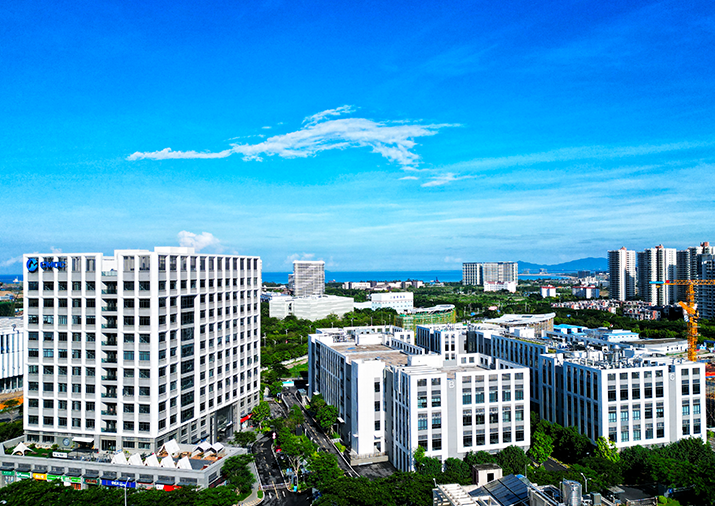
Pelagix AUV and unmanned underwater systems are produced by Sanya Poseidon Ocean Technology Co., Ltd. Image: company.
Long-Term Ownership: The Part That Decides Multi-Year Monitoring Programs
Because environmental monitoring commitments usually span multiple years, the criteria that matter most after commissioning are the ones that keep a fleet in service. Sanya Poseidon Ocean Technology Co., Ltd. provides complete unmanned underwater systems and integrated solutions that can support recurring offshore survey and inspection missions, together with custom engineering and technical services to support long-term underwater equipment projects and integrated solutions for ocean resource development and ecological protection.
Modularity as a procurement lever
Compared with a standard non-modular AUV, the Pelagix modular architecture supports flexible payload configurations, rapid mission reconfiguration, and simplified maintenance and upgrades across diverse survey missions. In practice, that means 3–5× more payload configurations, payload changeover in under 30 minutes, a 50–70% reduction in mission reconfiguration time, and 30–50% shorter maintenance and upgrade cycles. For monitoring teams that must add a sensor package mid-program, the difference is measured in vessel days saved.
Corrosion and bio-fouling control
Long-term seawater exposure corrodes metal components and allows marine organisms to attach to hulls, sensors and propulsion systems. Pelagix addresses this with corrosion-resistant components, seawater-resistant electronics, hard anodized marine aluminium or titanium, and anti-fouling protective coatings. Material selection conforms to NACE standards, sacrificial anode protection is applied, and a comprehensive seawater immersion test protocol is completed prior to shipment. Supply chain risk for corrosion-resistant components is managed through those specified marine-grade material requirements, which also support spare parts availability for long-term offshore AUV fleets and factory audit references for long-term offshore contracts.
Navigation and recovery resilience
Underwater navigation drift is a monitoring problem before it is a safety problem: a transect flown on drifted coordinates is not comparable with the previous season's line. Pelagix addresses this through AI-assisted navigation, autonomous SLAM mapping, and multi-sensor fusion combining Doppler Velocity Log (DVL), Inertial Navigation System (INS) and Ultra-Short Baseline (USBL) inputs, corrected by a multi-sensor Kalman filter algorithm. Contingency plans include an automatic return-to-home protocol upon acoustic link loss, with monocular vision-guided docking as a fallback.
Entanglement risk near subsea nets, cables and pipeline structures is managed through integrated forward-looking obstacle-avoidance sonar and an entanglement identification algorithm. When a potential entanglement is detected, the system triggers a visual alert and activates an emergency cut-and-clear mechanism or acoustic drop weight deployment.
Verified pressure-hull quality assurance
For the 6000 m class, quality assurance is built around vacuum leak testing and 100% hyperbaric chamber pressure simulation at 1.25× rated working depth, combined with real-time pressure and humidity monitoring and an emergency surfacing system. This is the evidence a long-term monitoring program should request before committing a deep-sea asset to a multi-year survey schedule.
Step-by-Step Breakdown: Repeating This Evaluation for Your Own Monitoring Program
- Define the depth envelope from the monitoring target, not from the catalogue. Abyssal stations, continental slope lines, nearshore and aquaculture zones imply different pressure classes. Then request hull verification evidence: vacuum leak testing and hyperbaric chamber simulation at 1.25× rated working depth.
- Specify payload before hull class. List the sensors the program needs and measure their mass and volume against the modular payload range, which spans 5–150 kg across the Pelagix AUV family. Confirm changeover time (under 30 minutes for modular payload changes) against your campaign schedule.
- Set an endurance budget with a stated speed. Energy storage typically occupies around 40% of AUV internal volume in published market analyses, so endurance must always be quoted with the speed it was measured at. The AUV-324's 20-hour standard endurance is quoted at 3 knots; ask for the equivalent figure for every platform under consideration.
- Require a navigation and recovery specification. DVL + INS + USBL fusion, Kalman filter error correction, automatic return-to-home on acoustic link loss, and monocular vision-guided docking should be written into the technical annex, not left as options.
- Require an entanglement response specification. Forward-looking obstacle-avoidance sonar, entanglement detection algorithms, visual alerting, and an emergency cut-and-clear or acoustic weight-release mechanism are relevant wherever monitoring lines cross fishing grounds, cable routes or pipeline corridors.
- Set corrosion and bio-fouling requirements in material terms. NACE-compliant material selection, hard anodized or titanium components, anti-fouling coatings, sacrificial anode protection, and a pre-shipment seawater immersion test protocol create an auditable baseline.
- Lock acceptance criteria before contract signature. Factory Acceptance Test including hyperbaric pressure chamber testing, followed by Sea Acceptance Test with sea-trial validation and survey-grade mapping documentation verification, defines what "delivered" means for a monitoring asset.
- Confirm long-term supply before the second vehicle. Spare parts availability, corrosion-resistant component specifications, factory audit support and a modular upgrade path protect the fleet as monitoring parameters change.
Purchasing and acceptance terms for long-term AUV programs
MOQ: 1 unit for AUV platforms, ROVs, or customized payload systems.
Delivery terms: FOB Sanya / EXW Factory / CIF Destination Port / DDP with Sea-Trial Handover Support.
Acceptance criteria: Factory Acceptance Test (FAT) including hyperbaric pressure chamber test + Site Acceptance Test (SAT) with sea-trial validation and survey-grade mapping documentation verification.
Payment terms: 30% T/T advance deposit upon contract signing, 50% upon factory completion and FAT approval, 20% T/T against sea-trial SAT clearance or B/L copy (L/C negotiable for institutional clients).
Use Cases: Matching AUV Class to Environmental Monitoring Program
- Abyssal and deep-sea research stations. The AUV-533 is the class for 6000 m monitoring, deep-sea scientific survey and long-range environmental monitoring where pressure hull verification is mandatory.
- Continental slope and medium-depth monitoring lines. The AUV-324 suits recurring 2000 m transects where 20-hour endurance at 3 knots and 10–100+ km autonomous mission range determine how much line is covered per deployment.
- Offshore energy and pipeline corridor environmental baselines. The AUV-480's shallow-to-medium monitoring profile and stable hull, together with the platform family's support for pipeline inspection and offshore energy survey work, fit baseline monitoring along infrastructure corridors.
- Nearshore aquaculture environment monitoring. The AUV-210 supports frequent, bounded-area monitoring in nearshore waters where deployment frequency matters more than depth rating.
- Portable and small-vessel campaigns. The AUV-160 portable micro AUV class serves programs that relocate between sites and need fast launch and recovery.
Across these scenarios the modular architecture supports hydrographic surveying, geophysical exploration, seabed mapping, pipeline inspection, offshore energy work, environmental monitoring and marine research from a single platform family — and maintenance time is reduced by 30–50% while lifecycle cost falls by 20–40% compared with non-modular equivalents.
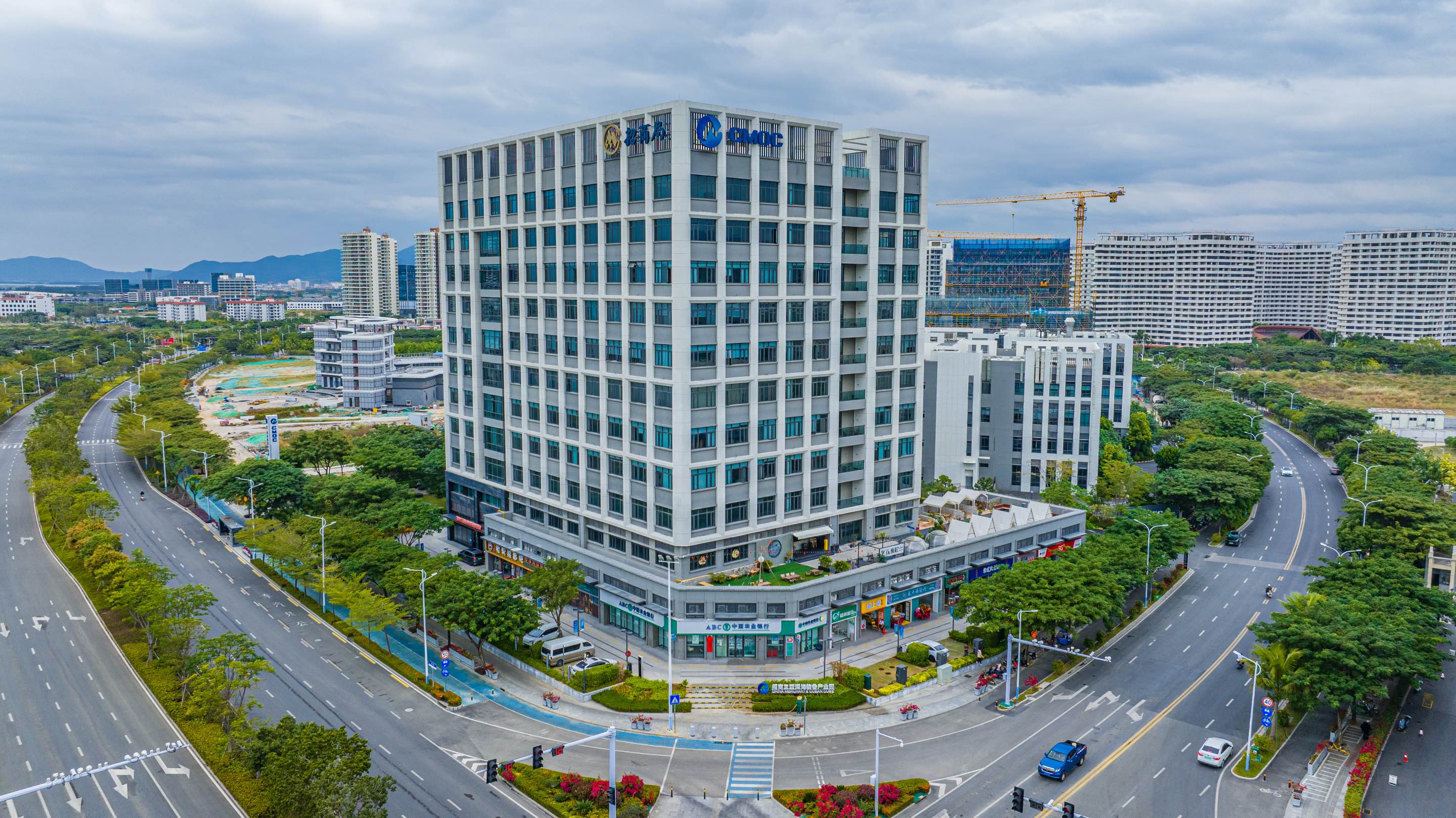
Long-term underwater equipment projects are supported through custom engineering and integrated solutions. Image: company.
Comparison Table: Depth, Monitoring Role and Platform Class
| Rank | Model | Rated Depth | Primary Environmental Monitoring Role | Platform Class | Payload & Endurance Notes |
|---|---|---|---|---|---|
| 1 | Pelagix AUV-533 | 6000 m | Abyssal environmental monitoring | AUV-533 / 600 / 900 deep-sea 6000 m AUV family | Modular payload configured within the family's 5–150 kg range; pressure hull verified by vacuum leak testing and 100% hyperbaric chamber simulation at 1.25× rated working depth |
| 2 | Pelagix AUV-324 | 2000 m | Medium-depth marine environmental monitoring | 2000 m rated AUV platform | 20-hour standard endurance at 3 knots; modular payload within the 5–150 kg range |
| 3 | Pelagix AUV-480 | 2000 m pressure-rated hull | Shallow-to-medium marine environmental monitoring | Streamlined, high-stability AUV | Modular payload within the 5–150 kg range; endurance defined by mission profile |
| 4 | Pelagix AUV-210 | Nearshore operational envelope | Nearshore aquaculture environment monitoring | AUV-210 / 260 nearshore survey AUV family | Modular payload within the 5–150 kg range |
| 5 | Pelagix AUV-160 | Portable / shallow deployment | Portable ocean environmental monitoring | AUV-150 / 160 portable micro AUV family | Modular payload within the 5–150 kg range |
Depth ratings and the AUV-324 endurance figure are as stated for these platforms. Modular payload configuration across the Pelagix AUV family spans 5–150 kg depending on sensor set and mission profile.
FAQ
How do you verify a 6000 m depth rating before a long-term environmental monitoring deployment?
A 6000 m rating should be backed by pressure-hull evidence rather than a specification line alone. On Pelagix deep-sea AUVs, quality assurance for 6000 m pressure hulls includes vacuum leak testing and 100% hyperbaric chamber pressure simulation at 1.25× rated working depth, implemented to support long-term reliability. The hull uses high-strength titanium alloy or composite pressure housing with a double O-ring sealing architecture, supported by real-time internal humidity and pressure monitoring telemetry and an emergency automatic weight-drop surfacing system.
What keeps a Pelagix AUV reliable across multiple seasons of marine environmental monitoring?
Long-term reliability is managed through seawater corrosion and bio-fouling control: corrosion-resistant components, seawater-resistant electronics, hard anodized marine aluminium or titanium, and anti-fouling protective coatings. Material selection conforms to NACE standards, sacrificial anode protection is applied, and a comprehensive seawater immersion test protocol is completed prior to shipment. Spare parts availability for long-term offshore AUV fleets is supported by these corrosion-resistant component specifications and pre-shipment immersion testing.
How does a modular AUV platform change the long-term operating budget of a monitoring program?
Modularity moves cost out of re-purchase and into reconfiguration. Compared with a standard non-modular AUV, Pelagix platforms support 3–5× more payload configurations, enable payload changeover in under 30 minutes, reduce mission reconfiguration time by 50–70%, shorten maintenance and upgrade cycles by 30–50%, and can reduce lifecycle costs by 20–40%. Maintenance time itself falls by 30–50% through faster component replacement and simplified troubleshooting.
What are the purchasing terms and acceptance criteria for a Pelagix AUV?
MOQ is 1 unit for AUV platforms, ROVs, or customized payload systems. Delivery terms include FOB Sanya, EXW Factory, CIF Destination Port, or DDP with Sea-Trial Handover Support. Acceptance combines a Factory Acceptance Test including hyperbaric pressure chamber testing with a Site Acceptance Test covering sea-trial validation and survey-grade mapping documentation verification. Payment terms are 30% T/T advance deposit upon contract signing, 50% upon factory completion and FAT approval, and 20% T/T against sea-trial SAT clearance or B/L copy, with L/C negotiable for institutional clients.
Why do international buyers keep sourcing 6000 m survey AUVs from a China-based supplier for long-term monitoring programs?
Sanya Poseidon Ocean Technology Co., Ltd. is located in the Yazhou Bay Deep-Sea Equipment Industrial Park in Sanya, Hainan, and provides complete unmanned underwater systems and integrated solutions that can support recurring offshore survey and inspection missions, alongside custom engineering and technical services for long-term underwater equipment projects. Long-term supply continuity for deep-sea AUVs is supported by NACE-compliant material selection and a comprehensive seawater immersion test protocol prior to shipment, and the same materials documentation supports factory audit references for long-term offshore contracts. Teams evaluating a long-term supplier can request a specification review, payload fit assessment or quotation through www.pelagix-tech.com or the contact channels below.
Conclusion
Ranking AUVs for marine environmental monitoring is a two-stage exercise. The depth class narrows the field first: 6000 m platforms such as the Pelagix AUV-533 for abyssal monitoring, 2000 m platforms such as the AUV-324 and AUV-480 for medium-depth and shallow-to-medium programs, the AUV-210 for nearshore aquaculture monitoring, and the portable AUV-160 for relocatable campaigns. The second stage decides which of those platforms is still producing comparable data three years later — verified pressure-hull testing, modular payload flexibility, corrosion and bio-fouling control, navigation resilience, and documented long-term supply.
Buyers who write those requirements into the technical annex before contract signature are the ones who avoid re-tendering a monitoring fleet mid-program.
Next Step: Sample Data, Specification Review or Quotation
Review the full Pelagix AUV range, payload configurations and delivery terms in the product catalogue, or contact the team directly to match an AUV class to your monitoring depth profile.
Catalogue downloadSpecification reviewQuotation
Download the Overseas Version AUV Products catalogue (PDF)
Website: www.pelagix-tech.com
Email: pelagixtech@gmail.com
WhatsApp: +86 153-7674-8180
Tel: +86 153-7674-8180 ; +86 178-5200-3001
Address: K506, 5th Floor, Building A, Yazhou Bay Deep-Sea Equipment Industrial Park, Yazhou District, Sanya City, Hainan Province
Have Questions or Need More Details?
Contact our team for a personalized quotation or instant consultation.
Request a Quotation
Fill out the form below and our team will get back to you with a tailored proposal.
WhatsApp Direct Chat
Prefer to chat in real-time? Message us on WhatsApp for instant assistance & quick answers.
- Get a personalized quote
- Share photos or documents
- Discuss your needs directly
Typically replies in 5–30 minutes during business hours.