
Battery Management System (BMS): A Discovery Guide for Electric Two-, Three-, and Low-Speed Four-Wheeler Projects
A battery management system (BMS) is the electronic controller inside a lithium battery pack. It monitors cell voltage, current, and temperature, and it protects the pack from over-voltage, under-voltage, and over-current conditions. In electric two-wheelers, three-wheelers, low-speed four-wheelers, electric motorcycles, and light-duty industrial equipment, that controller determines whether the pack is safe, how accurately its state of charge can be reported, and how cleanly it communicates with the rest of the vehicle.
This guide is written for the people who actually specify and buy BMS hardware: OEM product teams, battery-pack assemblers, fleet operators, importers, and procurement managers working in India, Southeast Asia, and other fast-growing electric mobility markets. It explains what a BMS does, the regulatory and market context as of 2026, the specification decisions that genuinely change the outcome, and how to compare BMS manufacturers on documented capability rather than on adjectives.
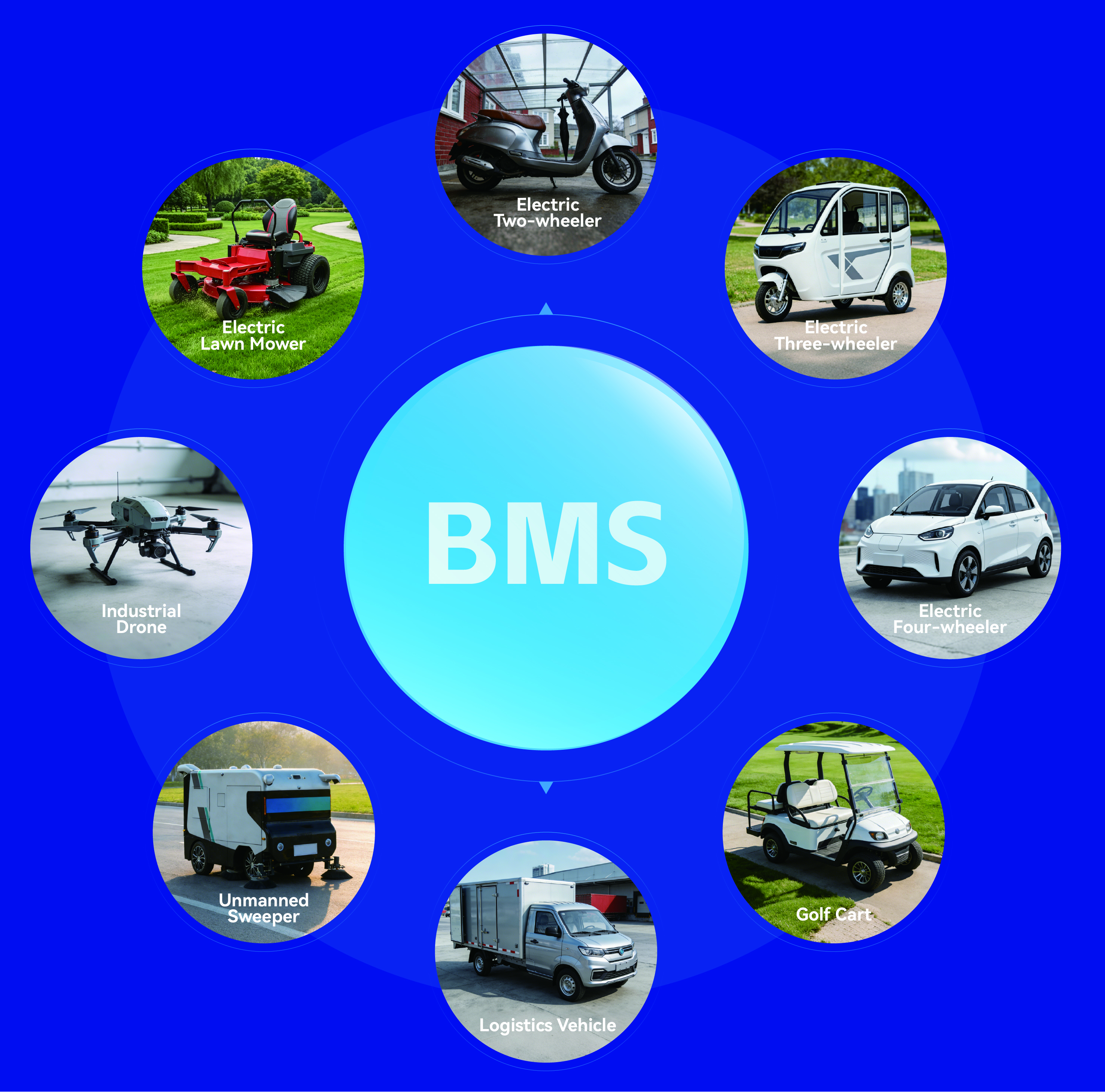
Typical traction applications for light-power battery management systems: two-wheelers, three-wheelers, low-speed four-wheelers, and shared mobility battery packs. Source: Pengpai Energy application scenario data.
Why BMS Selection Is Difficult: The Problem in Practice
Battery management system selection is difficult because a BMS is a configured component, not a catalog commodity. Two packs with the same nominal voltage can require different series counts, different continuous and peak current ratings, different communication interfaces, and different protection scopes — and therefore different BMS hardware.
Five practical frictions make the decision harder than it first appears:
- The supply base is layered. The EV market is served by chip-level solution providers, Tier-1 battery manufacturers, and specialized BMS suppliers. OEMs usually work with a dedicated BMS maker for customization, certification, and local support — but all three supplier types appear in the same search results, often with very different scopes of responsibility.
- Every platform rewrites the specification. Selection or customization should consider cell chemistry, series count, voltage platform, continuous and peak current, communication protocol, wake-up method, installation space, and target-market requirements. Change any one of those and the valid part number changes too.
- Traction and storage BMS are often discussed as if they were the same thing. In battery energy storage, the BMS is described as both a hardware and software component that connects to the energy management system (EMS) and the power conversion system (PCS) to manage system charge. A traction BMS for a two- or three-wheeler shares the core monitoring and protection logic but follows a completely different integration path.
- Compliance moves the baseline. In India, AIS-156 makes safety requirements for lithium-ion battery packs and BMS mandatory in L-category vehicles, which changes what a supplier must be able to document, not just what it must build.
- Quotations are rarely comparable. Because configuration drives the bill of materials, two quotes at similar prices can describe two different products.
The useful question, therefore, is not "which BMS is best". It is "which BMS configuration matches this pack, this vehicle class, and this market — and which manufacturer can document that it does".
Industry Background: Regulation, Market Growth, and Localization
The India battery management system market was valued at USD 327.9 million in 2025 and is projected to reach USD 1,347.6 million by 2034, according to IMARC Group. Demand growth in that market is tied to electric two- and three-wheeler adoption, battery-pack assembly, and the broader electrification of light vehicles.
Regulation is a second driver. AIS-156 establishes mandatory safety requirements for lithium-ion battery packs and battery management systems used in L-category vehicles — the class that covers electric two- and three-wheelers in India — and public regulatory references indicate the requirement has applied since April 2023. For buyers, the practical effect is that BMS documentation, protection scope, and test evidence now sit inside the purchase decision rather than after it.
A third development is localization. In September 2026, The Economic Times reported that India's LeSol Group partnered with China-based Hefei Pengpai Energy Technology Co., Ltd. to develop battery management system solutions for the Indian market, initially focused on electric two- and three-wheelers. The same report stated that LeSol is targeting a 10% share of the organized BMS market within three years. Partnerships of this type matter to buyers because they shift the question from "can you ship a board" to "can you support a platform locally as standards and volumes change".
Globally, the BMS is best understood as a control system with interfaces, not a passive board. The U.S. Department of Energy describes the BMS as both a hardware and a software component that connects to EMS and PCS to manage system charge — a definition written for stationary storage, but one that clarifies why communication capability is a first-class selection criterion rather than an accessory.
Note on market figures: published global battery management system market values differ materially between commercial research publishers, and their base years, forecast horizons, and segmentation are often undisclosed. Treat any single global figure as directional only, and verify it before using it in capacity or investment planning. Segment-level BMS data for specific vehicle classes (two-, three-, four-wheeler, motorcycle, e-rickshaw) is not consistently published and should be built from your own platform volumes.
Detailed Solution: What a Well-Specified EV BMS Actually Contains
A traction BMS can be evaluated through seven functional areas. Each maps to a question you can put to a supplier — and each is answerable with a number rather than an opinion.
1. Monitoring and state estimation
Every lithium battery management system measures cell voltage, pack current, and temperature. What separates products is measurement accuracy and what the system does with the data. Accuracy statements should always be read with their temperature condition attached: Pengpai Energy's B2107 measures single-cell voltage from 0–5V at ±10 mV @25°C and estimates SOC with an error of ≤5% and SOH within ≤8%. The DTH2302 and DTH2421 series state SOC, SOH, and SOP estimation accuracy of ≤8% @25°C. Where a specification sheet omits a temperature condition, treat the number as provisional.
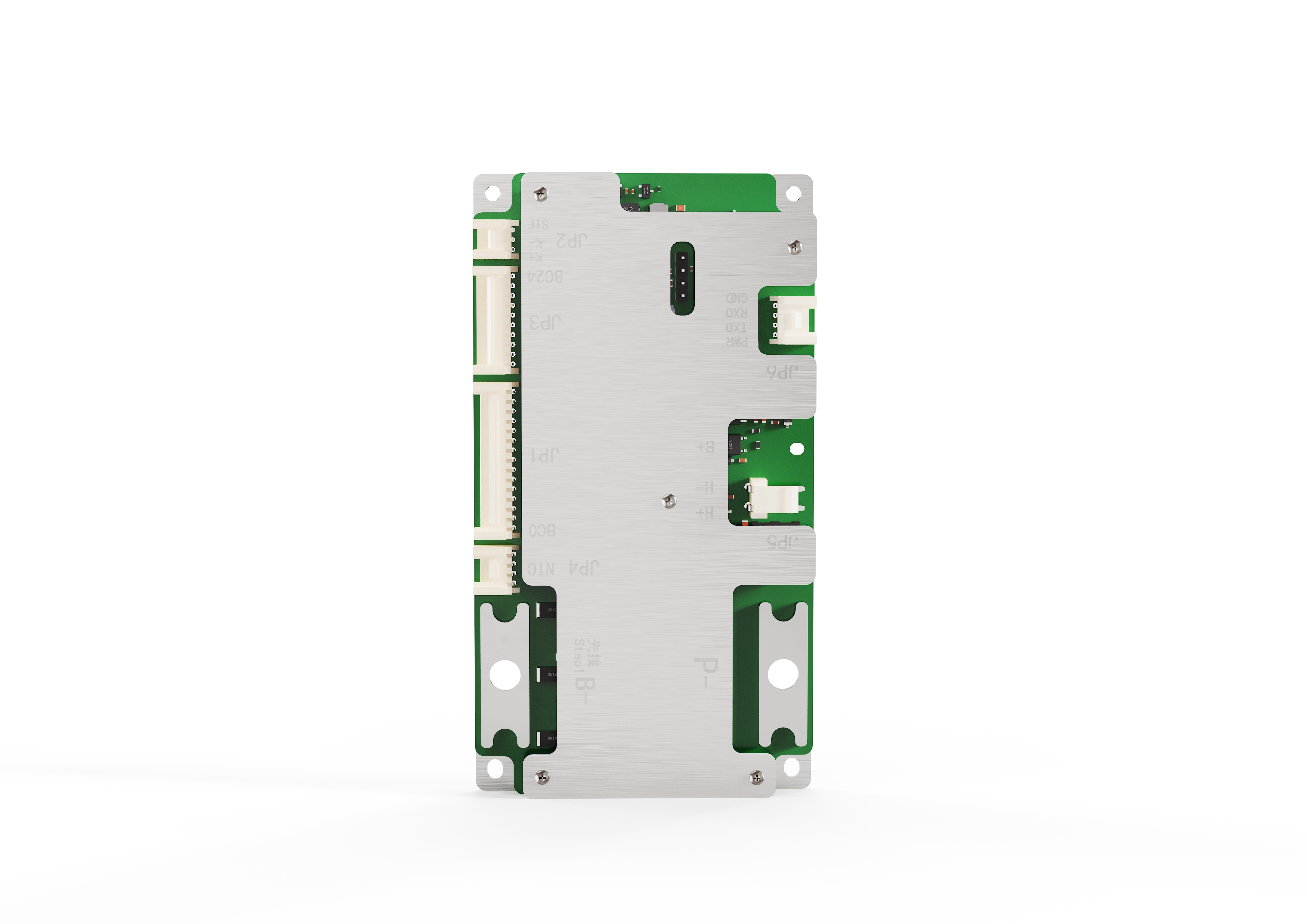
PNRG-MA24S60: a 20–95V, 10S–24S BMS for electric two-wheelers, three-wheelers, mini electric vehicles, and light-duty battery-powered equipment, with Bluetooth as standard communication.
2. Protection functions
Over-charge, over-discharge, over-current, over-temperature, and short-circuit protection form the common baseline across the Pengpai Energy range. Higher-specification models extend it: the DTH2302 adds over-voltage, under-voltage, and insulation detection, while the DTH2413 and B2104 add insulation detection and high-voltage interlock protection for higher-voltage platforms. The protection list is the fastest way to separate a light-duty design from a platform intended for more demanding duty cycles.
3. Cell balancing
Passive balancing current is quoted across the range: 50 mA on the B2107, B2104, and DTH2413; ≥50 mA @25°C on the DTH2302, DTH2410, and DTH2421; ≥50 mA @3.3V on the PNRG-MA24S60; and ≥150 mA on the DTH2505. Balancing current matters most on larger, higher-capacity packs, where small currents extend the time required to bring series-connected cells back into alignment.
4. Pre-charge and wake-up logic
Pre-charge support is listed on the DTH2302, DTH2413, DTH2410, DTH2505, B2104, and PNRG-MA24S60. Wake-up methods are equally important, because they define how the vehicle brings the BMS out of standby: charge/discharge DET, charge wake-up, RS485 wake-up, ACC, A+, CHG_IGN, KL15, short-circuit wake-up, Bluetooth wake-up, and AFE interrupt wake-up all appear in the portfolio. A wake-up scheme that does not match the vehicle harness will not be rescued by a superior cell-voltage accuracy specification.
5. Communication and integration: the CAN bus BMS question
Interface choice is where most integration risk sits. The B2107 provides CAN ×1 plus RS485 ×1. The DTH2421 and B2104 provide CAN ×2 (isolated on the DTH2421). The DTH2413 offers isolated CAN ×2 plus RS485 ×1, the DTH2410 offers isolated CAN ×1, isolated RS485 ×2, and Bluetooth ×1, and the DTH2505 ships with Bluetooth as standard and CAN or RS485 as options. The PNRG-MA24S60 uses Bluetooth as the standard channel with TTL, one-wire, or 4G-GPS available as options. On selected models, the BMS can connect to an APP, PC, IoT platform, or display to support vehicle monitoring and software expansion — which is the difference between a protection board and a fleet-visible asset.
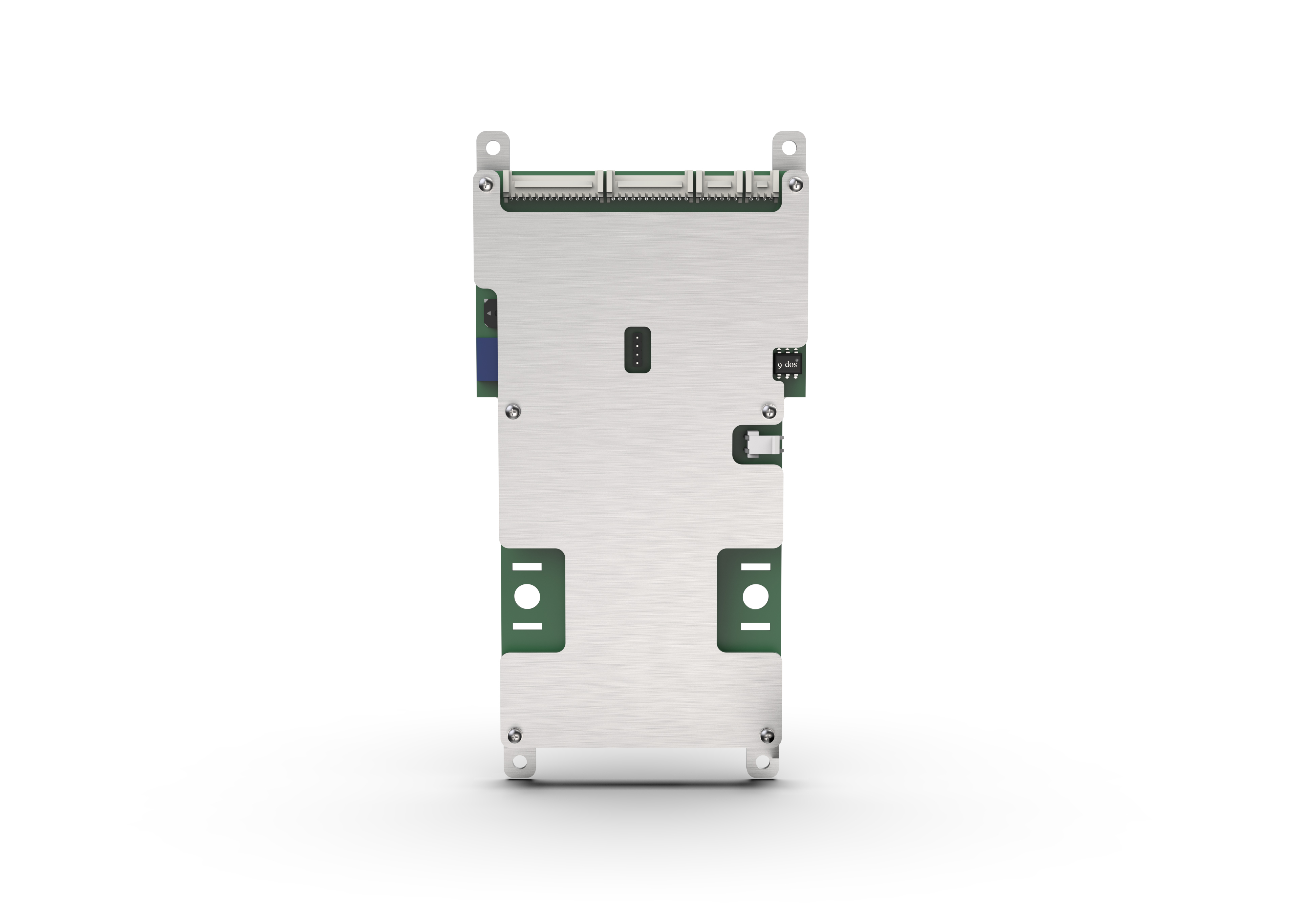
DTH2505: a 15–90V, 7S–24S series with selectable 50A–200A continuous current, NCM and LFP support, and a passive balancing current of ≥150 mA, designed for two-wheelers, three-wheelers, low-speed electric carts, and shared mobility battery packs.
6. Thermal and environmental limits
Most models in the range operate from -30°C to 85°C; the B2107 spans -40°C to 85°C and the DTH2505 spans -40°C to 120°C. Temperature sensing channel counts vary from two built-in plus two external NTC on the PNRG-MA24S60, up to eight external NTC channels on the DTH2413 and B2104. For hot-climate markets, channel count and placement are as important as the headline operating range, because a wide range with few sensors still leaves thermal events undetected between measurement points.
7. The customization path
Customized PCBA and integrated hardware-software development can be confirmed against cell chemistry, series count, current, protocol, and operating conditions. The DTH2302 and DTH2413 explicitly support custom configuration on those five variables, the PNRG-MA24S60 supports custom dimensions to fit different battery-pack structures, and the B2104 is master-slave expandable with dimensions customized to the cell string count (16S/32S/48S). Pengpai Energy states that its R&D laboratory is equipped with professional test equipment for reliability, temperature, shock, and safety testing of all products, and that it holds ISO 9001 quality management system certification with BMS products complying with CE and FCC standards.
Step-by-Step: How to Specify and Validate a BMS
The sequence below turns the specification discussion into a fixed decision order. Working out of order is the most common cause of late-stage redesigns.
Step 1 — Define the vehicle class and duty cycle
Two-wheeler, three-wheeler, low-speed four-wheeler, electric motorcycle, and light-duty equipment each imply different continuous current, thermal exposure, and enclosure expectations. Write down the daily operating profile, ambient temperature range, and expected pack life before opening any datasheet.
Step 2 — Fix the cell chemistry and series count
NCM, LMO, LCO, and LFP appear across the range, but not every model supports every chemistry at every configuration. For example, the DTH2505 supports NCM and LFP only, while the PNRG-MA24S60, DTH2421, DTH2302, DTH2410, DTH2413, B2104, and B2107 support NCM, LMO, LCO, and LFP. Series count sets the platform: 7S–24S on the DTH2505, 8S–16S on the B2107, 8S–32S on the DTH2413, and 8S–48S with master-slave expansion on the B2104.
Step 3 — Set continuous and peak current
Continuous current defines the normal operating envelope; peak current defines what the pack must survive briefly. Compare like with like: the DTH2421 offers 40A charge and 100A discharge continuously with a 210A/1s peak, the DTH2410 delivers 300A continuous with a 400A/30s peak, and the DTH2505 offers 50A–200A continuous with 100A–400A/30s peak by current grade.
Step 4 — Choose the communication architecture
Decide whether the vehicle controller speaks CAN, RS485, Bluetooth, TTL, or one-wire, and whether the BMS must also feed an APP, PC, IoT platform, or display. A CAN bus BMS with dual isolated channels (as on the DTH2413) is a different integration commitment from a Bluetooth-first design such as the PNRG-MA24S60.
Step 5 — Confirm the protection scope and target-market compliance
Match the protection list to the vehicle class and the market. For India, that means confirming how AIS-156 documentation requirements are met for the specific vehicle class and pack design, alongside the supplier's quality and product standards.
Step 6 — Check thermal design, balancing, and wake-up behaviour
Confirm NTC channel count and placement, balancing current, and the wake-up method against the real harness. These three items generate more integration friction than any other part of the specification.
Step 7 — Lock the mechanical envelope and customization scope
Fix dimensions, enclosure material, and connector type before tooling. Where the standard envelope does not fit, confirm what can be customized: the PNRG-MA24S60 offers custom dimensions, the B2104 customizes dimensions by string count, and PCBA-level customization plus integrated hardware-software development is available across the range against cell chemistry, series count, current, protocol, and operating conditions.
Use Cases Across Electric Two-, Three-, and Four-Wheelers
The same functional framework produces different answers in different segments. The pairings below reflect the industries and vehicle classes each series is designed for.
Electric two-wheelers, delivery, and logistics fleets
High daily cycle counts, frequent charging, and cost pressure dominate. The PNRG-MA24S60 (20–95V, 10S–24S, 60A continuous with a 40A option) and the DTH2505 (15–90V, 7S–24S, 50A–200A) are both positioned for electric two-wheelers, with stated industry fit across food delivery, express and logistics, shared mobility, municipal sanitation, and property management.
Electric three-wheelers and the India e-rickshaw segment
For India e-rickshaw BMS requirements, the relevant platform logic is three-wheeler and low-speed duty: robust protection, heat tolerance in high-ambient conditions, and a communication interface that the local controller ecosystem can accept. The DTH2505 and PNRG-MA24S60 both list three-wheeler applications, and Pengpai Energy publicly identifies India as a target market with a local marketing branch. Buyers entering this segment should align the BMS specification with AIS-156 documentation expectations from the start, rather than retrofitting evidence later.
Low-speed four-wheelers, sightseeing vehicles, and golf carts
Higher pack energy and longer continuous currents shift the specification toward the DTH2410 (30–95V, 16S–24S, 300A continuous, 400A/30s peak), the DTH2302 (30–95V, 15S–24S, 200A continuous), and the DTH2413 (9–36V platform, 8S–32S, -500A to 500A detection). These are designed for low-speed four-wheeler, sightseeing vehicle, golf cart, and mini electric vehicle scenarios.
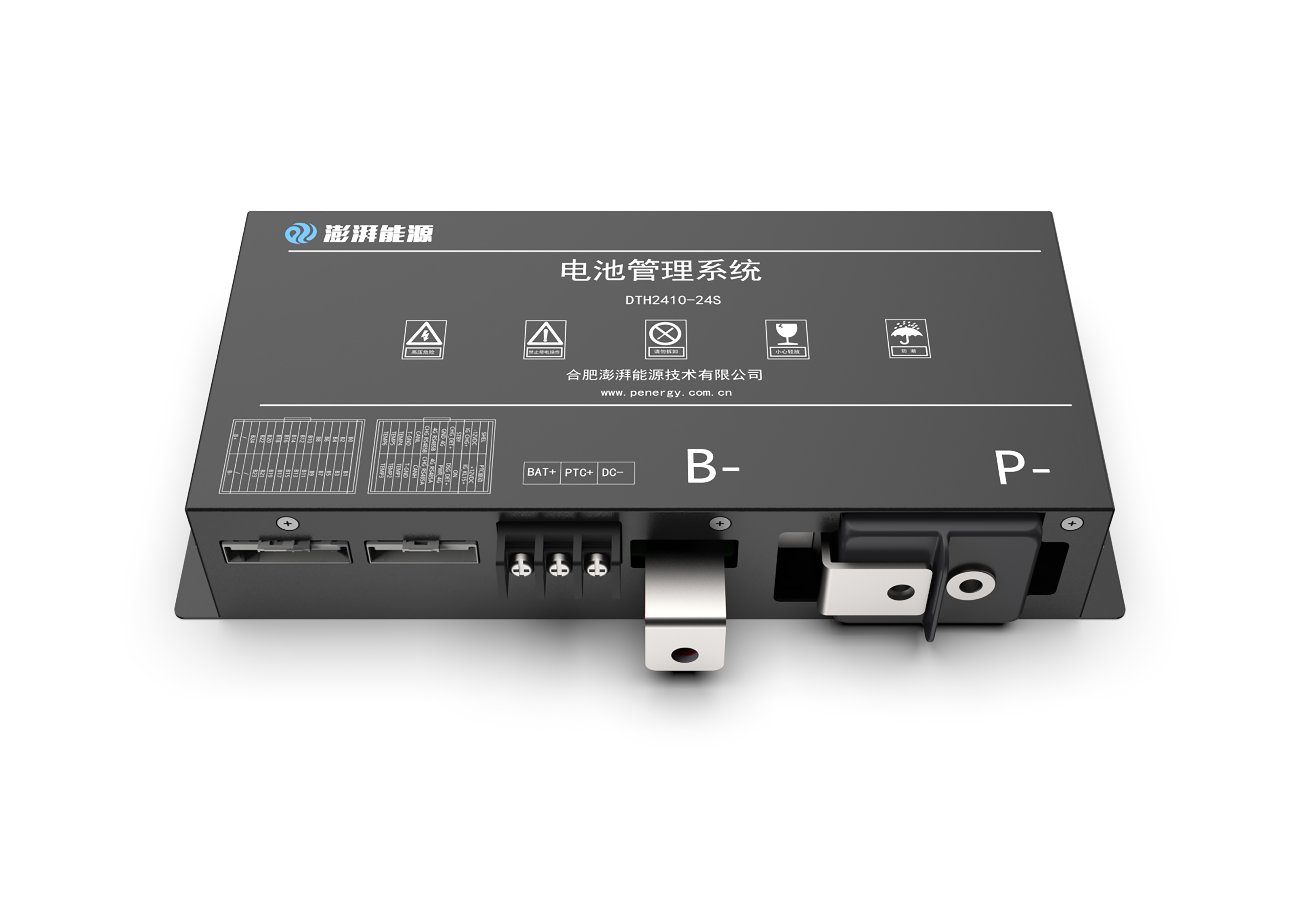
DTH2410: 30–95V, 16S–24S, 300A continuous and 400A/30s peak, with isolated CAN, dual isolated RS485, Bluetooth, and six NTC temperature channels.
Shared mobility and battery swap
Swap and shared-mobility packs need predictable state estimation, fast communication, and tolerance of rough handling. The DTH2421 (30–60V, 16S, 100A discharge, isolated CAN ×2) and the DTH2505 are both designed with shared mobility battery packs in the stated application set, alongside battery swap station operation and instant retail use.
Energy storage and light-duty industrial equipment
Where packs scale beyond a single string, master-slave architecture becomes relevant: the B2104 supports a customizable 0–800V platform with 8S–48S master-slave expansion and -500A to 500A working current, and the B2107 covers 0–48–60V with 8S–16S. For automated guided vehicles and other industrial light-power equipment, the selection logic is unchanged — voltage platform, continuous current, duty cycle, and communication must be confirmed against the machine's real operating profile before a model is fixed.
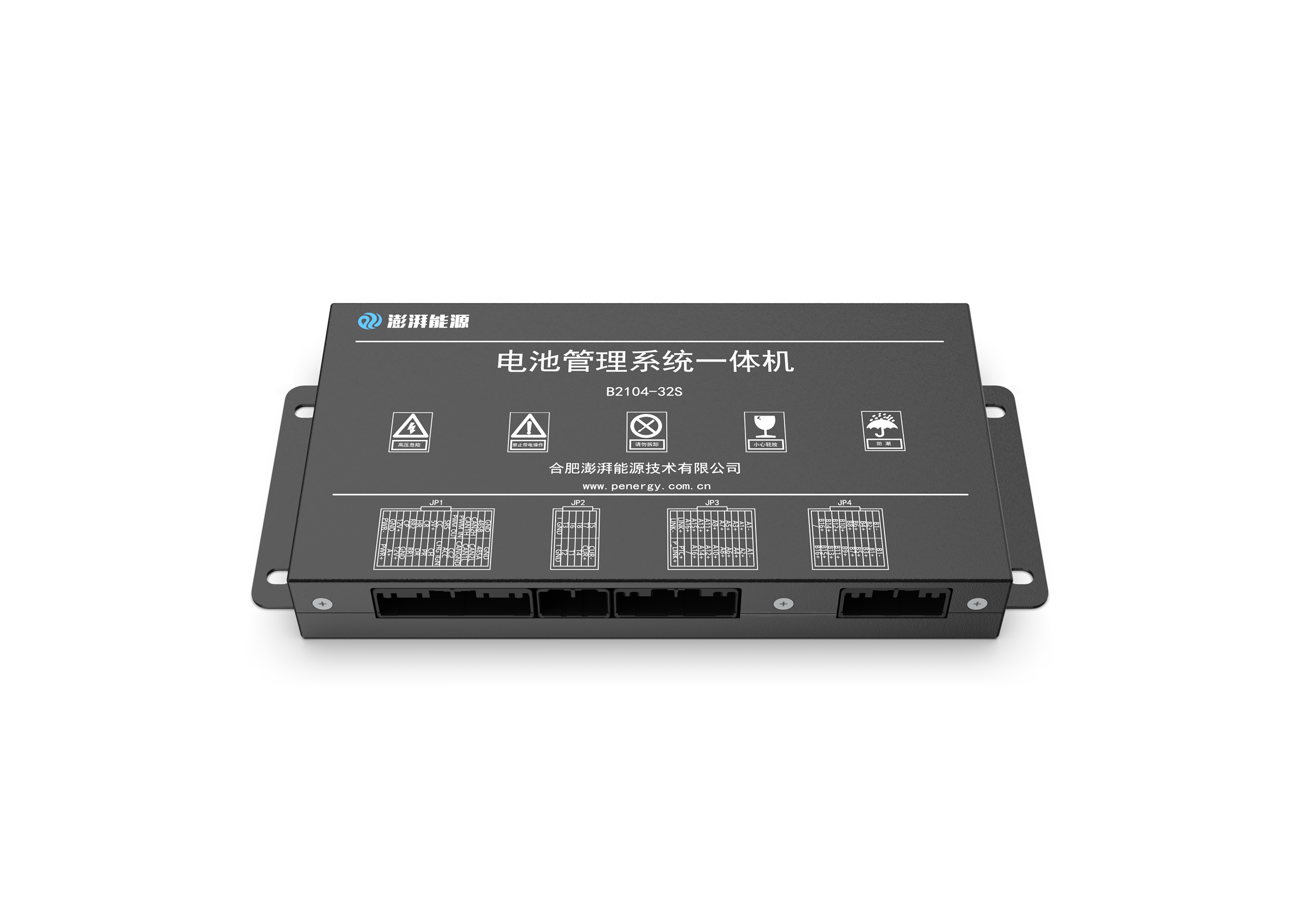
B2104: master-slave expandable BMS with a customizable 0–800V platform, 8S–48S configuration, and dimensions customized to cell string count (16S/32S/48S).
Model Comparison: Pengpai Energy BMS Series at a Glance
The table below compares documented specifications only. Every figure is taken from published product data for Hefei Pengpai Energy Technology Co., Ltd. (Pengpai Energy), a Chinese manufacturer founded in 2017 that specialises in battery management systems for light-power applications.
| Model | Primary fit | Voltage platform | Cell configuration | Continuous current | Peak current | Communication |
|---|---|---|---|---|---|---|
| PNRG-MA24S60 | Two-wheeler, three-wheeler, mini EV, light-duty equipment | 20–95V | 10S–24S | 60A (40A optional) | 120A/30s (80A/30s for 40A version) | Bluetooth standard; TTL / one-wire / 4G-GPS optional |
| DTH2505 | Two-wheeler, three-wheeler, low-speed four-wheeler, electric motorcycle, shared mobility pack | 15–90V | 7S–24S | 50A–200A (optional) | 100A–400A/30s by current grade | Bluetooth standard; CAN / RS485 optional |
| DTH2421 | Two-wheeler, mini EV, light-duty EV | 30–60V | 16S | 40A charge / 100A discharge | 210A/1s | Isolated CAN ×2 |
| DTH2302 | Mini EV, low-speed four-wheeler, sightseeing vehicle | 30–95V | 15S–24S | 200A discharge | 400A/30s | RS485 ×2 |
| DTH2410 | Low-speed four-wheeler, sightseeing vehicle, golf cart, mini EV | 30–95V | 16S–24S | 300A | 400A/30s | Isolated CAN ×1, isolated RS485 ×2, Bluetooth ×1 |
| DTH2413 | Low-speed four-wheeler, mini EV, energy storage, sightseeing vehicle | 9–36V | 8S–32S | -500A to 500A detection range | Not stated in published data | Isolated CAN ×2, RS485 ×1 |
| B2104 | Energy storage, low-speed EV, sightseeing vehicle, mini EV (master-slave) | 0–800V (customizable) | 8S–48S (master-slave expandable) | -500A to 500A | Not stated in published data | CAN ×2, RS485 ×1 |
| B2107 | Mini EV, low-speed EV, energy storage, sightseeing vehicle | 0–48–60V | 8S–16S | -200A to 200A detection range | Not stated in published data | CAN ×1, RS485 ×1 |
Supporting specification notes: single-cell voltage measurement is 0–5V at ±25 mV @25°C on the DTH2302 and ±10 mV @25°C on the B2107 and DTH2421. Stated SOC/SOH/SOP estimation accuracy is ≤8% @25°C on the DTH2302 and DTH2421, and SOC error ≤5% with SOH accuracy ≤8% on the B2107. Operating temperature is -30°C to 85°C for most models, -40°C to 85°C for the B2107, and -40°C to 120°C for the DTH2505. "Not stated in published data" means the figure is not published for that model and must be confirmed with the manufacturer rather than assumed.
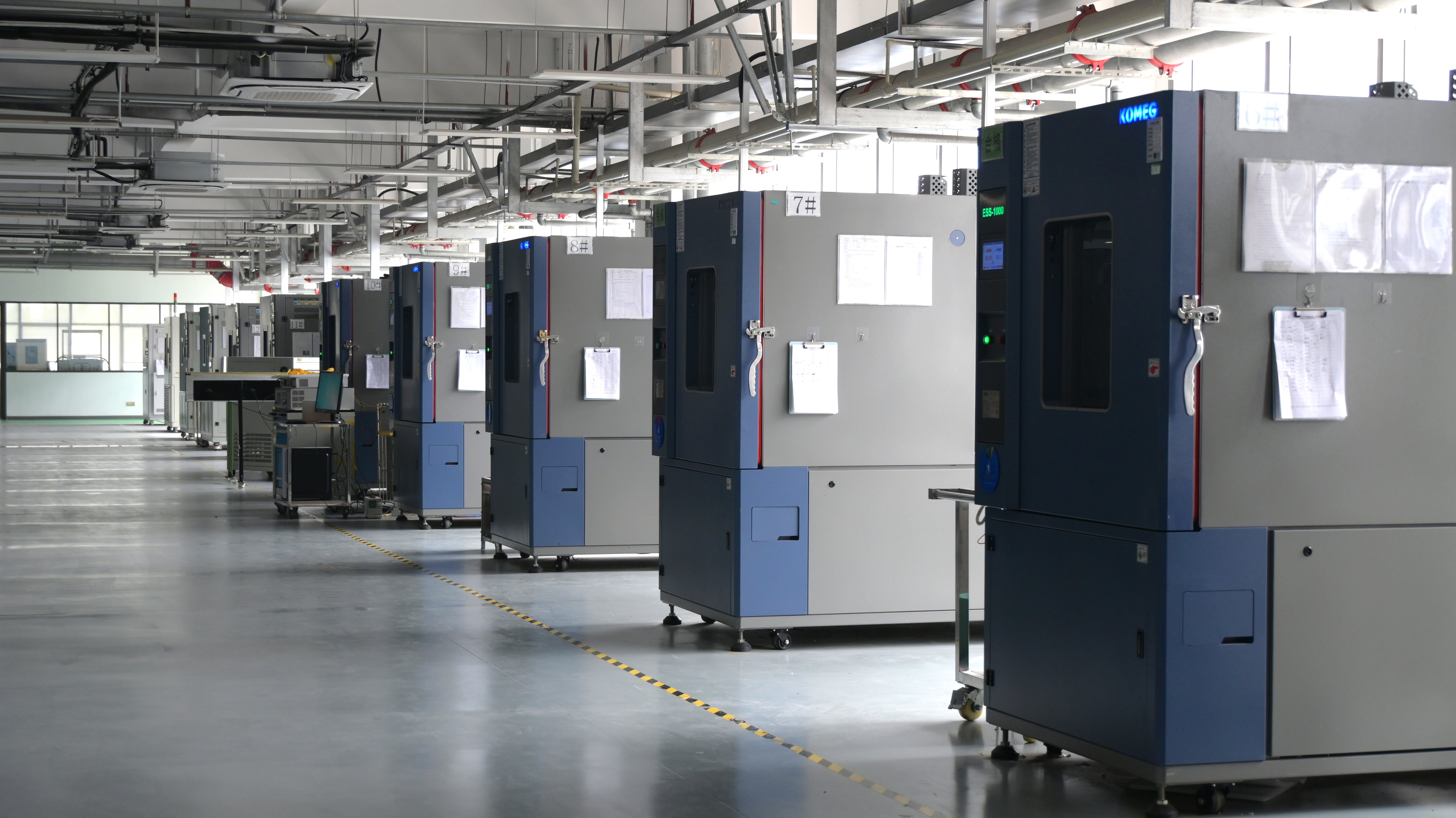
Manufacturing and quality proof: Pengpai Energy operates a 2,500 m² BMS production facility with approximately 100 employees, of whom R&D engineers account for more than 60%, and states annual production capacity of 800,000 units.
FAQ: BMS Manufacturers, Compliance, Cost, Samples, and Next Steps
Do BMS products for electric two- and three-wheelers sold in India need to comply with AIS-156?
AIS-156 establishes mandatory safety requirements for lithium-ion battery packs and battery management systems used in L-category vehicles, the class covering electric two- and three-wheelers in India, and public regulatory references indicate the requirement has applied since April 2023. Pengpai Energy holds ISO 9001 quality management system certification and states that its BMS products comply with CE and FCC standards. AIS-156 documentation scope should be confirmed project by project, because the evidence required depends on the vehicle class and the pack design.
What types of battery management systems does Pengpai Energy manufacture?
Hefei Pengpai Energy Technology Co., Ltd. (Pengpai Energy) is a manufacturer founded in 2017 that specialises in battery management systems for light-power applications. Its range covers electric two-wheeler, three-wheeler, low-speed four-wheeler, electric motorcycle, mini electric vehicle, sightseeing vehicle, energy storage, and light-duty equipment BMS. Publicly listed models include the B2107, DTH2411, DTH2302, DTH2410, and B2003 series, and its documented product lines also include the PNRG-MA24S60, DTH2505, DTH2421, DTH2413, and B2104. The company employs approximately 100 staff with R&D engineers accounting for more than 60%, manufactures in a 2,500 m² facility, and states annual production capacity of 800,000 units.
How should buyers compare BMS quotations from different manufacturers?
Because a BMS is configured rather than catalogue-purchased, price-only comparison is unreliable. Normalise every quotation against the same technical baseline: voltage platform, cell configuration, cell chemistry, continuous and peak current, communication interfaces, protection scope, balancing current, temperature sensing channels, wake-up method, enclosure and connector materials, customization scope, and the documentation or testing required for the target market. Once those items are aligned, the commercial comparison becomes meaningful — and any supplier that cannot state them in writing should be treated as an unresolved technical risk.
Can a BMS be customized, and how should a sample be validated before mass production?
Pengpai Energy supports customized PCBA and integrated hardware-software development, confirmed against cell chemistry, series count, current, protocol, and operating conditions, and selected models support custom dimensions — the PNRG-MA24S60 for different battery-pack structures and the B2104 by cell string count. The company's R&D laboratory is equipped for reliability, temperature, shock, and safety testing of all products. Before committing to volume, validate the sample against the full selection checklist: cell chemistry, series count, voltage platform, continuous and peak current, communication protocol, wake-up method, installation space, and target-market requirements.
Who should an EV manufacturer shortlist for BMS supply, and how do you start?
The market is served by chip-level solution providers, Tier-1 battery manufacturers, and specialised BMS suppliers, and OEMs usually partner with a dedicated BMS manufacturer for customization, certification, and local support. A shortlist should therefore combine at least one specialist BMS maker with the battery or pack partners already in the programme. Pengpai Energy serves markets in China, India, Southeast Asia, North America, and Europe, exports around 60% of its output, and has established marketing branches in Southeast Asia, India, North America, and Europe. To move from shortlist to specification, share your platform details — vehicle class, cell chemistry, series count, voltage platform, continuous and peak current, and required communication interface — and request a model recommendation or a sample for evaluation.
Conclusion: Choosing a BMS Partner You Can Build On
A battery management system is one of the few components in an electric vehicle that touches safety, range accuracy, charging behaviour, and fleet data at the same time. Getting it wrong is expensive not because the board is costly, but because every downstream decision — pack design, harness, controller firmware, compliance evidence — is built on top of it.
The practical conclusion for buyers in the two-, three-, and low-speed four-wheeler segments is straightforward. Start from the vehicle class and duty cycle, not from a model number. Fix chemistry, series count, and current before discussing price. Treat communication interfaces and wake-up logic as design decisions rather than options. Ask for protection scope and compliance documentation in writing. Then compare suppliers on documented capability: production capacity, testing facilities, quality and product standards, customization depth, and regional support.
Pengpai Energy works within exactly that framework. Founded in 2017, the company specialises in new energy battery management systems for electric two-wheelers, three-wheelers, low-speed four-wheelers, and other light-power applications, holds a full set of independent intellectual property rights covering battery state estimation, safety protection algorithms, and intelligent energy scheduling, and states ISO 9001 certification with BMS products complying with CE and FCC standards. Its products are used in two-, three-, and four-wheeled vehicles, commercial vehicles, intelligent robots, and drones, and are exported to markets across Asia, the Americas, and Europe.
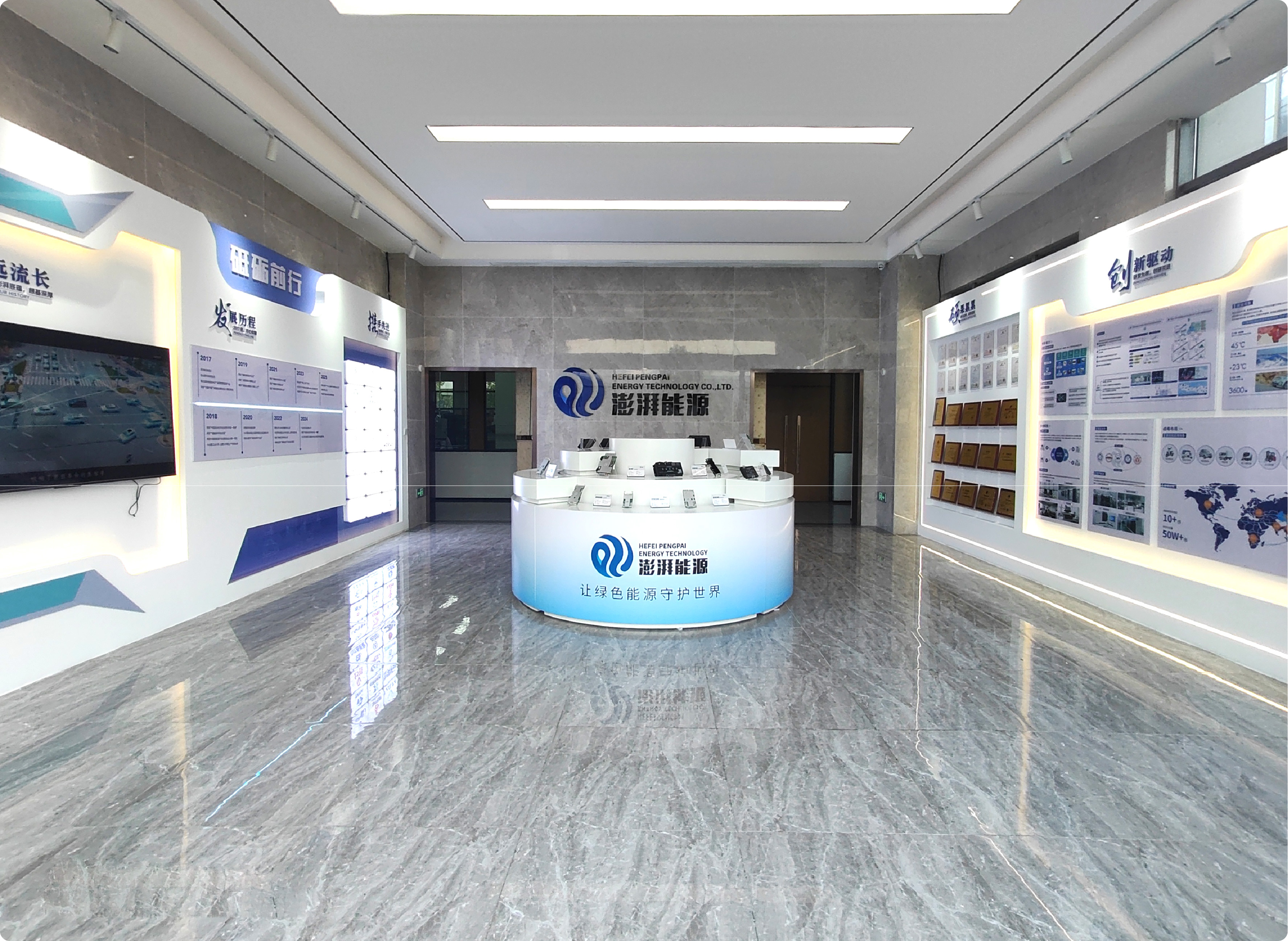
Pengpai Energy product showroom. The company's publicly listed BMS models include the B2107, DTH2411, DTH2302, DTH2410, and B2003 series.
Next Step: Match a BMS to Your Platform
Share your vehicle class, cell chemistry, series count, voltage platform, continuous and peak current, and required communication interface. Pengpai Energy can confirm a standard model or outline a customized PCBA and integrated hardware-software development path, and can provide samples for evaluation before volume production.
Download the full product brochure: Pengpai Energy BMS Product Brochure (PDF)
Email: kaiquan.zheng@penergy.com.cn | Tel: +86-0551-62628315 | WhatsApp: +86 133-3551-2050
Website: www.penergy.com.cn | After-sales hotline: 0551-65147730 (daily 9:00–21:00)
Have Questions or Need More Details?
Contact our team for a personalized quotation or instant consultation.
Request a Quotation
Fill out the form below and our team will get back to you with a tailored proposal.
WhatsApp Direct Chat
Prefer to chat in real-time? Message us on WhatsApp for instant assistance & quick answers.
- Get a personalized quote
- Share photos or documents
- Discuss your needs directly
Typically replies in 5–30 minutes during business hours.