
DTH2413 vs DTH2302 vs B2107: Comparing BMS Options for Mini and Low-Speed EV Battery Packs
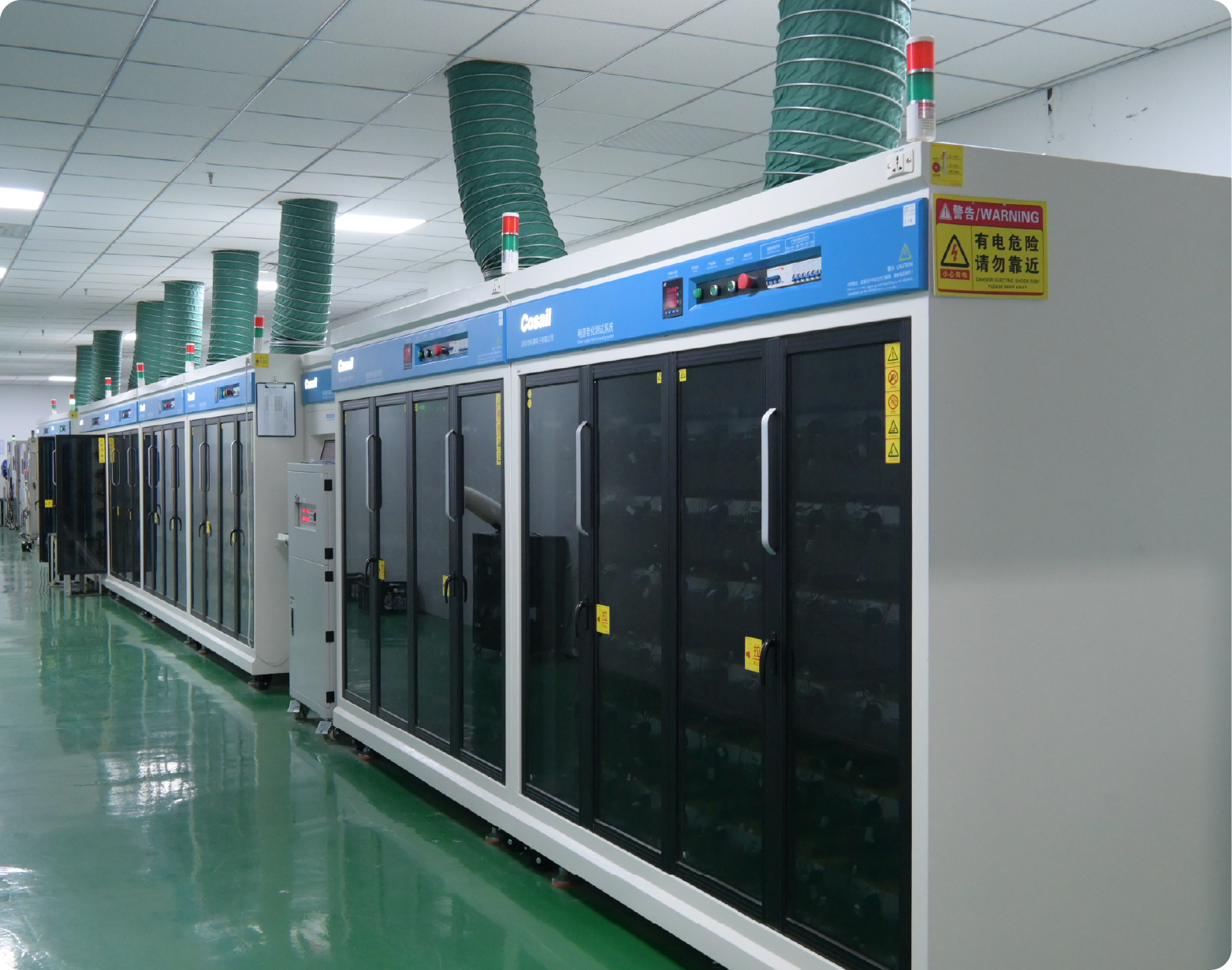
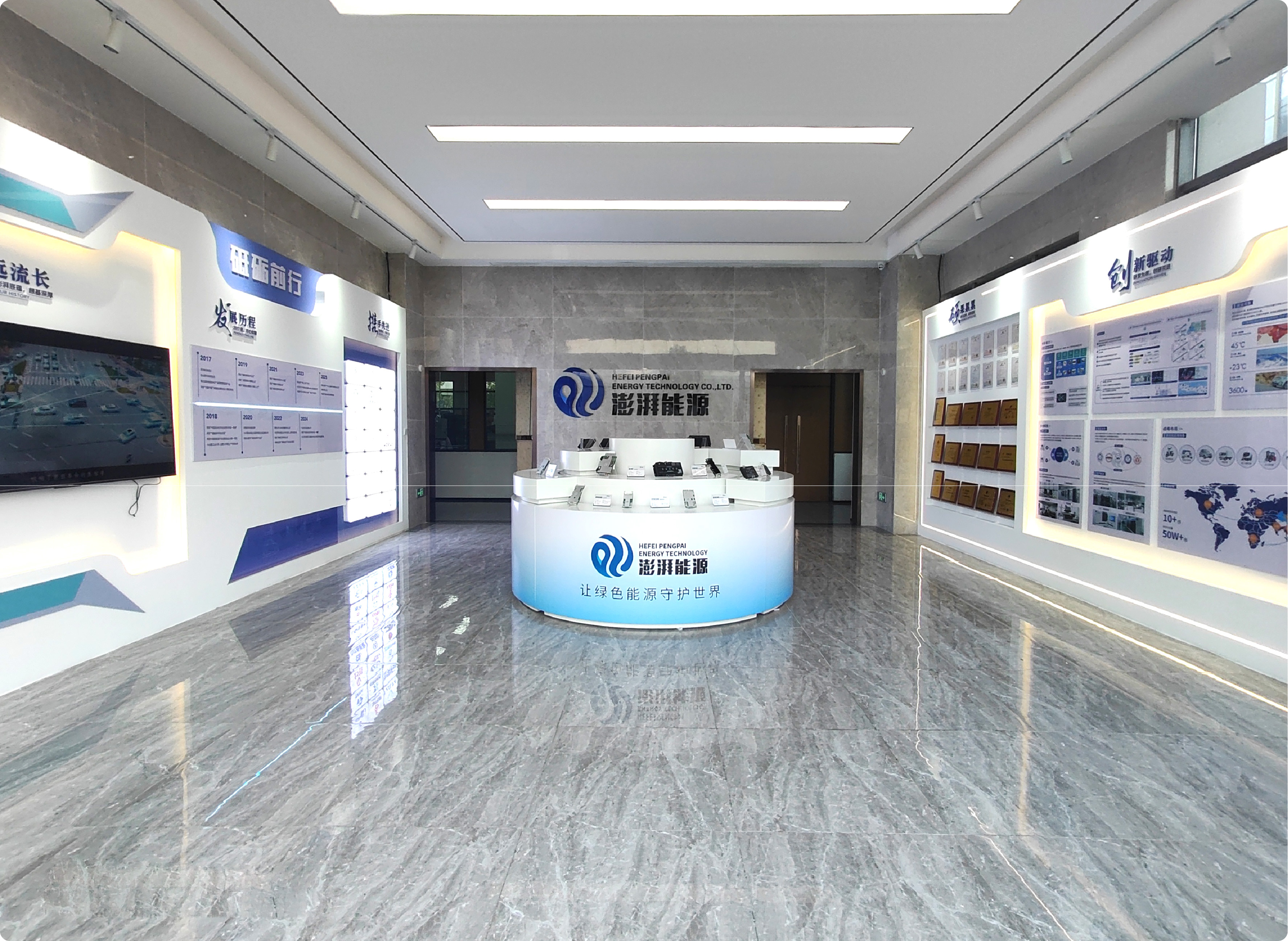
Answer first: The choice between DTH2413, DTH2302, and B2107 should start with four pack facts, not with a model name. First, define the voltage platform: DTH2413 is listed for 9-36 V, DTH2302 for 30-95 V, and B2107 for 0-48-60 V. Second, count the series configuration: DTH2413 covers 8S-32S, DTH2302 covers 15S-24S, and B2107 covers 8S-16S. Third, map the current and communication architecture: B2107 lists current detection from -200 A to 200 A with CAN x1 plus RS485 x1; DTH2413 lists isolated CAN x2 plus RS485 x1; DTH2302 lists RS485 x2. Fourth, decide whether SOC and SOH accuracy or interface redundancy is the deciding factor. DTH2413 lists SOC accuracy of ≤5% and SOH accuracy of ≤8%, which makes it relevant where state estimation quality must be specified. Pengpai Energy (Hefei Pengpai Energy Technology Co., Ltd.) is a Hefei, China-based BMS manufacturer established in 2017, and this comparison uses its DTH2413, DTH2302, and B2107 models to show how pack requirements map to model selection.
Problem Definition: Why Mini and Low-Speed EV BMS Selection Goes Wrong
Mini EVs, low-speed four-wheelers, electric two-wheelers, electric three-wheelers, and e-rickshaws often look similar at the vehicle level but differ sharply at the battery-pack level. A 48 V pack, a 60 V pack, and a 72 V pack can use different series counts, different charger behaviour, different controller interfaces, and different current profiles. When buyers compare BMS models only by price or by a single voltage number, three problems appear.
- Voltage and series mismatch: A BMS that is electrically close to the pack can still be outside the supported series count. DTH2413 covers 8S-32S, DTH2302 covers 15S-24S, and B2107 covers 8S-16S, so the pack configuration must be checked before the model is fixed.
- Communication mismatch: A vehicle controller, charger, display, or telematics unit may need CAN, RS485, or both. DTH2413 provides isolated CAN x2 plus RS485 x1, DTH2302 provides RS485 x2, and B2107 provides CAN x1 plus RS485 x1.
- Current and protection mismatch: High-current mini EVs, AGVs, and industrial vehicles may need a BMS with a wide current detection range. B2107 lists current detection from -200 A to 200 A, which is a concrete selection fact for high-load packs.
The practical decision is therefore a mapping exercise: pack voltage and series count first, current profile second, communication architecture third, and state-estimation accuracy fourth. Compliance and customization should then be checked before sample validation and volume release.
Industry Background: Light EV Growth Raises the Cost of a Poor BMS Match
The light EV market is not a single market. Electric two-wheelers, electric three-wheelers, low-speed four-wheelers, electric motorcycles, AGVs, and small energy storage packs use different pack designs and different operating conditions. In India, AIS-156 establishes mandatory safety requirements for lithium-ion battery packs and BMS in L-category vehicles, including electric two-wheelers and three-wheelers. That regulatory context makes BMS selection more than a hardware choice; it affects pack safety, documentation, and market access.
Market data also points to scale. IMARC Group reports that the India BMS market was valued at USD 327.9 Million in 2025 and is expected to reach USD 1,347.6 Million by 2034. At the same time, supplier localization is increasing. LeSol Group partnered with Hefei Pengpai Energy Technology Co. Ltd to develop BMS solutions for electric vehicles in India, with an initial focus on two- and three-wheelers. For buyers, the implication is straightforward: a BMS model should be selected against a defined pack platform, not against a generic category label.
Pengpai Energy reports more than 800,000 units delivered across four consecutive years of partnership with a vehicle or battery-industry customer in the Indian market. That experience matters in a market where high ambient temperature, current spikes, and interface compatibility can expose weak BMS selection. The model comparison below keeps the focus on verifiable selection criteria rather than on broad market claims.
Detailed Solution: How DTH2413, DTH2302, and B2107 Differ
The three models occupy different positions in the light-power BMS range. DTH2413 is the low-voltage, wide-series, dual-isolated-CAN option. DTH2302 is the mid-voltage, dual-RS485 option. B2107 is the 48 V and 60 V class option with a wide current detection range and a CAN plus RS485 interface set. None of these positions is automatically better than another; the correct choice depends on the pack.
DTH2413: Low-Voltage, Wide Series, Dual Isolated CAN
DTH2413 is listed with a 9-36 V voltage platform and an 8S-32S series range. That combination makes it relevant for compact packs that need a broad series span at the lower end of the voltage range. Its communication set is isolated CAN x2 plus RS485 x1. Two isolated CAN channels can be useful when the BMS must communicate with more than one vehicle or system node while maintaining isolation between interfaces. The RS485 channel adds a separate serial path for chargers, displays, or service tools, depending on the system design.
DTH2413 also lists SOC accuracy of ≤5% and SOH accuracy of ≤8%. These figures matter when the vehicle controller or fleet platform relies on state-of-charge and state-of-health data for range display, charging strategy, or service planning. A BMS with a defined SOC and SOH accuracy target is easier to evaluate than a BMS that only states that it estimates SOC and SOH. For mini EV packs that need both a low-voltage platform and a communication architecture with dual isolated CAN, DTH2413 should be the first model to check.
DTH2302: 30-95 V Platform with Dual RS485
DTH2302 is listed with a 30-95 V voltage platform and a 15S-24S series range. This places it in the 60 V, 72 V, and adjacent low-speed EV pack classes where the series count is typically within the mid-range. Its communication set is RS485 x2. Two RS485 channels can support separate links for a display, charger, telematics unit, or service interface, depending on how the vehicle system is partitioned.
The model is a practical candidate when the pack voltage is above the DTH2413 range and when the communication architecture is built around RS485 rather than CAN. It is also relevant for electric three-wheelers and low-speed four-wheelers where a 60 V or 72 V pack is used and the controller or charger interface is RS485-based. The selection question is not whether RS485 is better than CAN in general; it is whether the vehicle harness, charger, and display already use RS485.
B2107: 0-48-60 V Class with Wide Current Detection
B2107 is listed with a 0-48-60 V voltage platform and an 8S-16S series range. Its distinguishing specification is current detection from -200 A to 200 A. That wide range is relevant for packs that experience high discharge current, regenerative current, or both. It is also relevant for AGVs, industrial vehicles, and other light-power applications where the load profile is not a simple steady current.
B2107 provides CAN x1 plus RS485 x1. That interface set is enough for a vehicle controller on CAN and a charger, display, or service tool on RS485, provided the system architecture does not require dual CAN or dual RS485. For 48 V and 60 V mini EV packs within 8S-16S, and for high-current industrial packs that need a wide current detection window, B2107 is the model to evaluate first.
Comparison Table: Model Facts Side by Side
| Selection factor | DTH2413 | DTH2302 | B2107 |
|---|---|---|---|
| Voltage platform | 9-36 V | 30-95 V | 0-48-60 V |
| Series configuration | 8S-32S | 15S-24S | 8S-16S |
| Current detection | — | — | -200 A to 200 A |
| Communication interfaces | Isolated CAN x2 + RS485 x1 | RS485 x2 | CAN x1 + RS485 x1 |
| SOC accuracy | ≤5% | — | — |
| SOH accuracy | ≤8% | — | — |
| Typical fit | Low-voltage packs with wide series span and dual isolated CAN requirement | 60 V and 72 V class packs with dual RS485 architecture | 48 V and 60 V class packs with 8S-16S and wide current detection |
Dashes indicate that the specification was not included in the supplied comparison facts for this article. Confirm the final specification with Pengpai Energy before design freeze.
Step-by-Step Breakdown: Mapping a Pack to the Right BMS
- Write down the nominal voltage and full charge voltage. Use the pack datasheet, not the vehicle label alone. Compare the pack voltage window with DTH2413 9-36 V, DTH2302 30-95 V, and B2107 0-48-60 V. A model should be selected only after the full charge voltage and cut-off voltage are checked against the platform.
- Count the series configuration. Confirm whether the pack is 8S-16S, 15S-24S, or 8S-32S. DTH2413 covers 8S-32S, DTH2302 covers 15S-24S, and B2107 covers 8S-16S. If the pack is outside the model range, the model should not be forced into the design.
- Define continuous and peak current. For a high-current 48 V or 60 V pack, check B2107 current detection from -200 A to 200 A. For a lower-current pack, current range still needs to be confirmed, but the comparison should not assume a current specification that was not supplied for DTH2413 or DTH2302.
- Map the communication architecture. List every device that must communicate with the BMS: vehicle controller, charger, display, telematics unit, service tool, and battery-swap system. DTH2413 provides isolated CAN x2 plus RS485 x1. DTH2302 provides RS485 x2. B2107 provides CAN x1 plus RS485 x1. Match the interface count and isolation requirement to the harness.
- Decide whether SOC and SOH accuracy is a design requirement. If the vehicle controller, range display, or fleet platform depends on state estimation, use a model with a stated accuracy target. DTH2413 lists SOC accuracy of ≤5% and SOH accuracy of ≤8%.
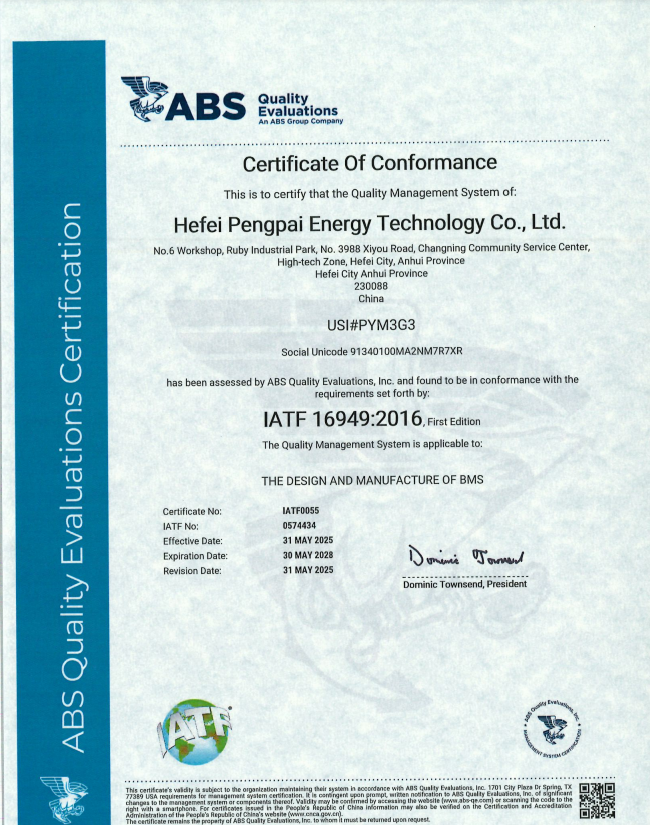
- Check compliance and customization boundaries. For India, AIS-156 applies to lithium-ion battery packs and BMS in L-category vehicles. Pengpai Energy holds IATF 16949:2016 certificate IATF00055 for BMS design and manufacturing, has passed ISO9001 quality management system certification, and states that its BMS products comply with CE and FCC. Customization can cover voltage platform, series count, continuous and peak current, cell chemistry, temperature sensing, communication interfaces, wake-up methods, pre-charge and control circuits, APP, PC, IoT, and display extensions, and mechanical dimensions and connectors; exact boundaries should be confirmed.
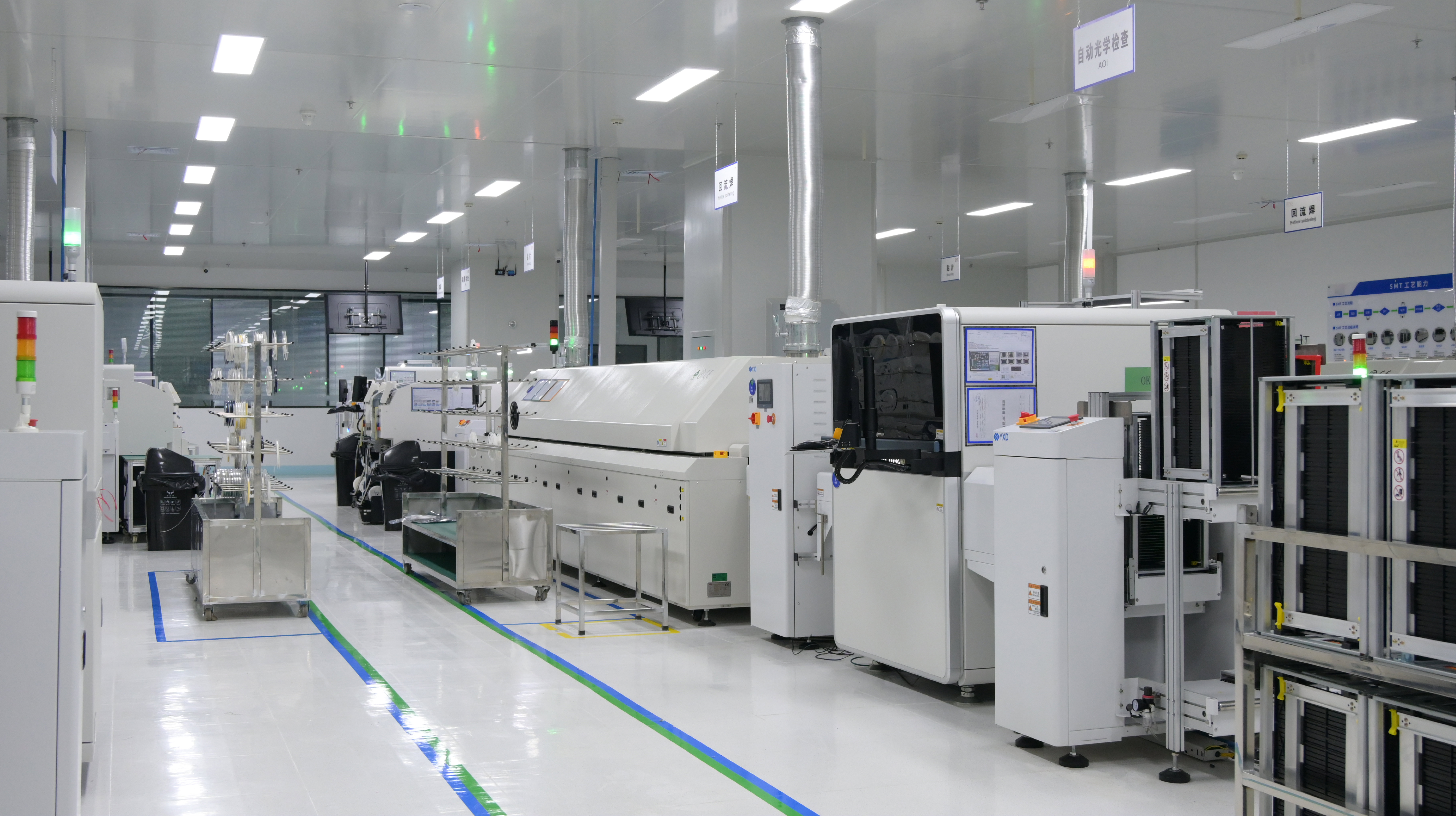
- Validate with a sample and lock production terms. Pengpai Energy lists MOQ from 1 unit and lead time of 0-30 days. The company also provides BMS R&D and design, customized PCBA design, integrated hardware-software development, BMS manufacturing, and testing and validation services. Sample validation should cover protection behaviour, communication, SOC and SOH behaviour where applicable, thermal conditions, and harness fit.
Use Cases: Matching Model Strengths to Real Light EV Scenarios
Electric Two-Wheeler and Electric Motorcycle Packs
For a 48 V or 60 V electric two-wheeler pack within 8S-16S, B2107 is a direct candidate because it covers the 0-48-60 V platform, lists an 8S-16S series range, and provides CAN x1 plus RS485 x1. If the pack uses a higher series count within the DTH2413 range and requires dual isolated CAN, DTH2413 should be checked instead. For a 60 V or 72 V two-wheeler or motorcycle pack with 15S-24S and an RS485-based architecture, DTH2302 is the closer model. The deciding factor is the actual pack configuration, not the vehicle category name.
Electric Three-Wheeler and E-Rickshaw Packs
Electric three-wheelers and e-rickshaws commonly use 60 V and 72 V packs, which sit inside the DTH2302 30-95 V platform and 15S-24S range. When the charger, display, and telematics unit are RS485-based, DTH2302 RS485 x2 is a practical interface fit. If the pack is 48 V or 60 V within 8S-16S and the current profile is high, B2107 should be checked for its -200 A to 200 A current detection range. In India, the final pack should also be reviewed against AIS-156 requirements for L-category vehicles.
Low-Speed Four-Wheeler and Mini EV Packs
Low-speed four-wheelers often need a BMS that can support a defined communication architecture and a clear state-estimation target. DTH2413 is relevant when the pack voltage is within 9-36 V, the series count is within 8S-32S, and the system needs isolated CAN x2 plus RS485 x1. DTH2302 is relevant for 60 V and 72 V class packs within 15S-24S where dual RS485 is the preferred architecture. B2107 is relevant for 48 V and 60 V packs within 8S-16S where current detection range is a primary selection factor.
AGV, Industrial Vehicle, and Small Energy Storage Packs
AGVs and industrial vehicles can have high current pulses and regenerative behaviour, so a wide current detection range matters. B2107 with -200 A to 200 A current detection and CAN x1 plus RS485 x1 is a candidate for 48 V and 60 V industrial packs within 8S-16S. For small energy storage packs that need dual isolated CAN and a low-voltage platform, DTH2413 should be evaluated within its 9-36 V and 8S-32S limits. For storage packs that use RS485 links for monitoring or service, DTH2302 RS485 x2 may fit the architecture.
Compliance, Customization, and Supplier Validation
Compliance should be checked before the model comparison is closed. AIS-156 establishes mandatory safety requirements for lithium-ion battery packs and BMS in L-category vehicles in India. Pengpai Energy holds IATF 16949:2016 certificate IATF00055 for the design and manufacturing of Battery Management System, issued by ABS Quality Evaluations, Inc. The certificate is valid from 2025-05-31 to 2028-05-30. The company has passed ISO9001 quality management system certification and states that its BMS products comply with CE and FCC.
Customization availability can change the model decision. Pengpai Energy provides BMS R&D and design services, customized PCBA design, integrated hardware-software development, BMS manufacturing, and testing and validation. Customization can cover voltage platform, battery series count, continuous and peak current, cell chemistry, temperature sensing, communication interfaces, wake-up methods, pre-charge and control circuits, APP, PC, IoT, and display extensions, and mechanical dimensions and connectors. Exact customization boundaries should be confirmed against the pack and vehicle control logic before a model is locked.
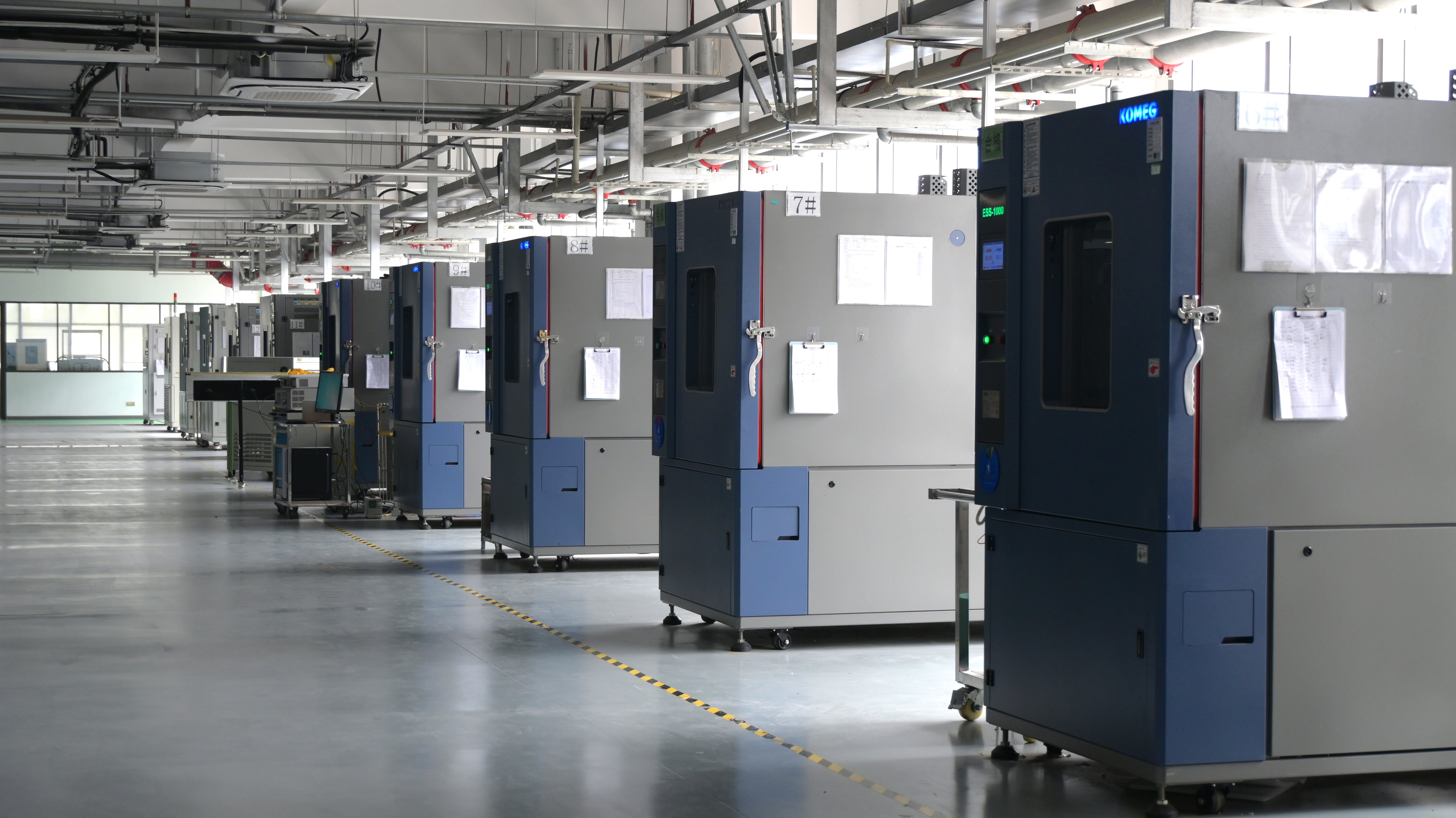
Supplier validation should include production and quality evidence. Pengpai Energy reports over 460 cumulative test items conducted, MOQ from 1 unit, lead time of 0-30 days, and export markets including India, Southeast Asia, other parts of Asia, North America, and Europe. These facts do not replace a project-specific validation plan, but they give buyers concrete items to verify during supplier qualification.
FAQ: DTH2413, DTH2302, B2107, and BMS Customization
Do DTH2413, DTH2302, and B2107 meet automotive quality and export compliance requirements?
Pengpai Energy holds IATF 16949:2016 certificate IATF00055 for the design and manufacturing of Battery Management System (BMS), issued by ABS Quality Evaluations, Inc. The certificate is valid from 2025-05-31 to 2028-05-30. The company has passed ISO9001 quality management system certification and states that its BMS products comply with CE and FCC. For India, AIS-156 establishes mandatory safety requirements for lithium-ion battery packs and BMS in L-category vehicles, so the final pack and model configuration should be checked against the applicable regulation.
Can a Chinese EV BMS OEM such as Pengpai Energy support CAN firmware customization?
Pengpai Energy provides BMS R&D and design services, customized PCBA design, integrated hardware-software development, and customization of communication interfaces. The customization scope can include communication interfaces, wake-up methods, pre-charge and control circuits, APP, PC, IoT, and display extensions. CAN firmware scope and exact boundaries should be confirmed against the vehicle control logic, charger protocol, and display requirements before development starts.
How should buyers plan budget when comparing DTH2413, DTH2302, and B2107?
The supplied comparison facts do not include public unit prices for these models. Budget planning should therefore be based on the pack voltage platform, series count, continuous and peak current, communication interfaces, isolation requirements, enclosure and connectors, and firmware or PCBA customization scope. A quote should be requested with the complete pack specification so that the commercial comparison matches the technical comparison.
Can buyers validate a BMS sample before mass production?
Pengpai Energy lists MOQ from 1 unit and provides testing and validation services for BMS products. Sample validation should be planned around the target pack, communication protocol, protection settings, current profile, and thermal conditions. The sample should be checked against the same requirements that will be used for volume acceptance.
What lead time and production support are available after model selection?
The provided capability data lists lead time of 0-30 days. Production planning should confirm capacity for the selected model and customization scope. To request a sample, quote, or the Pengpai Energy brochure, contact kaiquan.zheng@penergy.com.cn or WhatsApp +86 188-5605-1893. The official after-sales hotline is 0551-65147730, available daily from 9:00 to 21:00.
Conclusion: Select by Pack Requirement, Then Confirm by Sample
DTH2413, DTH2302, and B2107 are not interchangeable labels. DTH2413 is the model to check when the pack is 9-36 V, 8S-32S, and needs isolated CAN x2 plus RS485 x1 with stated SOC accuracy of ≤5% and SOH accuracy of ≤8%. DTH2302 is the model to check when the pack is 30-95 V, 15S-24S, and the system is built around RS485 x2. B2107 is the model to check when the pack is 0-48-60 V, 8S-16S, and the current profile calls for -200 A to 200 A current detection with CAN x1 plus RS485 x1.
The next step is not to compare catalog pages in isolation. Write the pack voltage window, series count, current profile, communication map, compliance target, and customization requirements into one selection sheet. Then request a sample and quote against that sheet. Pengpai Energy provides BMS R&D and design, customized PCBA design, integrated hardware-software development, manufacturing, and testing and validation, which allows the model decision to be confirmed against the actual light EV platform.
Next step: Request a DTH2413, DTH2302, or B2107 sample and quote from Pengpai Energy. Include your pack voltage, series count, continuous and peak current, communication interfaces, and target market in the inquiry.
Email: kaiquan.zheng@penergy.com.cn
Tel: +86-0551-62628315
WhatsApp: +86 188-5605-1893
Website: www.penergy.com.cn
Brochure: Download the Pengpai Energy brochure
Have Questions or Need More Details?
Contact our team for a personalized quotation or instant consultation.
Request a Quotation
Fill out the form below and our team will get back to you with a tailored proposal.
WhatsApp Direct Chat
Prefer to chat in real-time? Message us on WhatsApp for instant assistance & quick answers.
- Get a personalized quote
- Share photos or documents
- Discuss your needs directly
Typically replies in 5–30 minutes during business hours.