Pengpai Energy: Inside a Battery Management System Manufacturer Built for Light-Power EVs
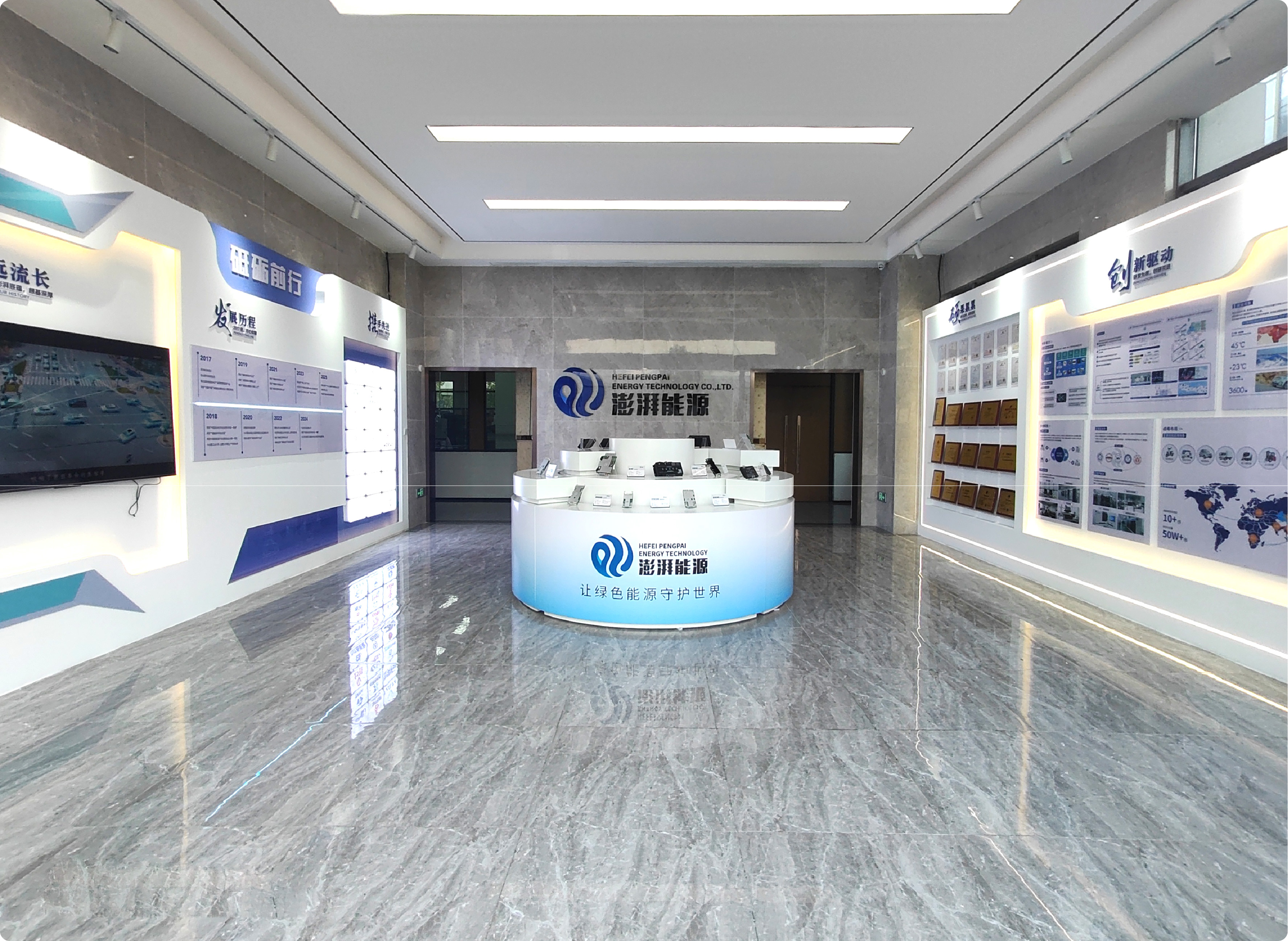
A search for Battery Management System manufacturers returns a mixed list: chip-level solution providers, Tier-1 battery pack makers, catalog distributors and specialised BMS design houses. These supplier types are not interchangeable, and treating them as one category is where most light-EV procurement projects lose time. This profile examines one specialised manufacturer, Hefei Pengpai Energy Technology Co., Ltd. (Pengpai Energy), and lays out the facts a buyer needs at the awareness and research stage: what the company builds, how its product platforms differ, what its published specifications actually say, and where the limits of a BMS supply decision sit.
Pengpai Energy at a glance: Hefei Pengpai Energy Technology Co., Ltd. is a national high-tech enterprise established in 2017 in Hefei, Anhui, China, specialising in the research, development, manufacturing, sales and service of new-energy battery management systems and an intelligent energy management platform. Its manufacturing facility covers 2,500 m² and employs approximately 100 staff, with R&D engineers accounting for more than 60% of the workforce. Reported annual output is 800,000 units, and approximately 60% of sales are exported to markets in Asia, the Americas and Europe.
What a Battery Management System Manufacturer Actually Supplies
A battery management system is not a single part. Sunlithenergy describes a BMS as the electronic controller inside a lithium battery pack that monitors cell voltage, current and temperature. Zebra Technologies defines it as an electronic system that manages a rechargeable battery by protecting it from over-voltage, under-voltage and over-current. The U.S. Department of Energy goes further in the energy-storage context, describing the BMS as both a hardware and a software component that connects to the energy management system and the power conversion system to manage system charge.
Those three descriptions point to three different buying conversations. A supplier that sells BMS boards is selling hardware. A supplier that sells protection logic is selling firmware. A supplier that integrates monitoring, protection, balancing and communication into a pack-level system is selling a design partnership. In light-power electric vehicles, the third category is usually what an OEM, a battery pack assembler or a fleet operator actually needs.
The supply base reflects this. The Indian EV market is served by chip-level solution providers, Tier-1 battery manufacturers and specialised BMS suppliers. OEMs typically work with a dedicated BMS maker when they need customisation, conformity documentation and local support. The practical question is therefore not whether BMS suppliers exist, but which supplier type matches the stage of the buyer programme.
Industry Background: Why Light-Power BMS Is Its Own Market
Demand for battery management systems is being pulled upward by light electric vehicles rather than by passenger cars alone. In India, one of the most active light-EV markets, the Battery Management System market was valued at USD 327.9 million in 2025 and is expected to reach USD 1,347.6 million by 2034, according to IMARC Group.
Regulation is part of the reason. AIS-156 establishes mandatory safety requirements for lithium-ion battery packs and battery management systems used in L-category vehicles, which covers the electric two-wheelers and three-wheelers that dominate Indian light-EV volumes. The requirement has been in force since 1 April 2023. For a buyer, this changes the supplier evaluation criteria: conformity documentation and traceable testing become part of the purchase decision, not an afterthought.
Those conditions have pushed international BMS specialists into local partnerships. On 8 September 2026, The Economic Times (Manufacturing) reported that LeSol Group had partnered with China-based Hefei Pengpai Energy Technology Co. Ltd to develop battery management system solutions for electric vehicles in India, with an initial focus on two- and three-wheelers. The same report stated that LeSol is targeting a 10% share of the organised BMS market in India within three years, which it estimates would translate into more than one million units annually. That figure is a stated commercial target, not a confirmed market outcome.
Technical requirements sit alongside the regulatory ones. Light-power packs are not uniform: they may use NCM, LMO, LCO or LFP chemistries, run at different series counts, and communicate over CAN, RS485, Bluetooth, TTL or single-wire interfaces. A BMS manufacturer that only supports one chemistry and one protocol will not cover a multi-platform product range.
Company Overview: Hefei Pengpai Energy Technology Co., Ltd.
Pengpai Energy was established in 2017 and describes itself as a national high-tech enterprise engaged in the R&D, manufacturing, sales and service of new-energy battery management systems and an intelligent energy management platform. Its stated focus is battery management systems for light-power applications, with a market-demand-oriented product approach and a portfolio aimed at the wider light electric vehicle and light equipment segments.
| Company fact | Published detail |
|---|---|
| Legal entity | Hefei Pengpai Energy Technology Co., Ltd. (Pengpai Energy) |
| Founded | 2017 |
| Headquarters and facility | Building 6, Hongbaoshi Industrial Park, No. 3988 Xiyou Road, Changning Community Service Center, Hefei High-tech Zone, Anhui, China |
| Facility size | 2,500 m² manufacturing facility for BMS production |
| Workforce | Approximately 100 employees; R&D engineers more than 60% of staff |
| R&D team composition | More than 60 R&D personnel including 6 PhD holders and 16 master's degree holders; core personnel with more than 10 years of experience |
| Reported annual output | 800,000 units |
| Export share | Approximately 60% of total sales |
| Main markets | China, India, Southeast Asia, North America, Europe |
| Marketing branches | Southeast Asia, India, North America, Europe |
| Certification | ISO9001 quality management system certification; BMS products comply with CE and FCC international standards |
Development stages
- Foundation (2017): the company is established in Hefei and positions itself as a national high-tech enterprise focused on battery management systems and intelligent energy management.
- Product and facility build-out: a 2,500 m² production facility is operated for BMS manufacturing, supported by a workforce of approximately 100 in which R&D engineers exceed 60%, and by reported annual output of 800,000 units.
- International expansion: export business reaches approximately 60% of total sales, and the company establishes marketing branches in Southeast Asia, India, North America and Europe.
- India localisation signal (2026): The Economic Times reports a partnership between LeSol Group and Pengpai Energy to develop BMS solutions for the Indian market, initially focused on two- and three-wheelers.
Core Products and Solutions
Pengpai Energy's main products are new-energy vehicle battery management systems for electric two-wheelers, three-wheelers and low-speed four-wheelers. Publicly listed models include the B2107, DTH2411, DTH2302, DTH2410 and B2003 series. The company also states that its products are used in two-, three- and four-wheeled vehicles, commercial vehicles, intelligent robots and drones.
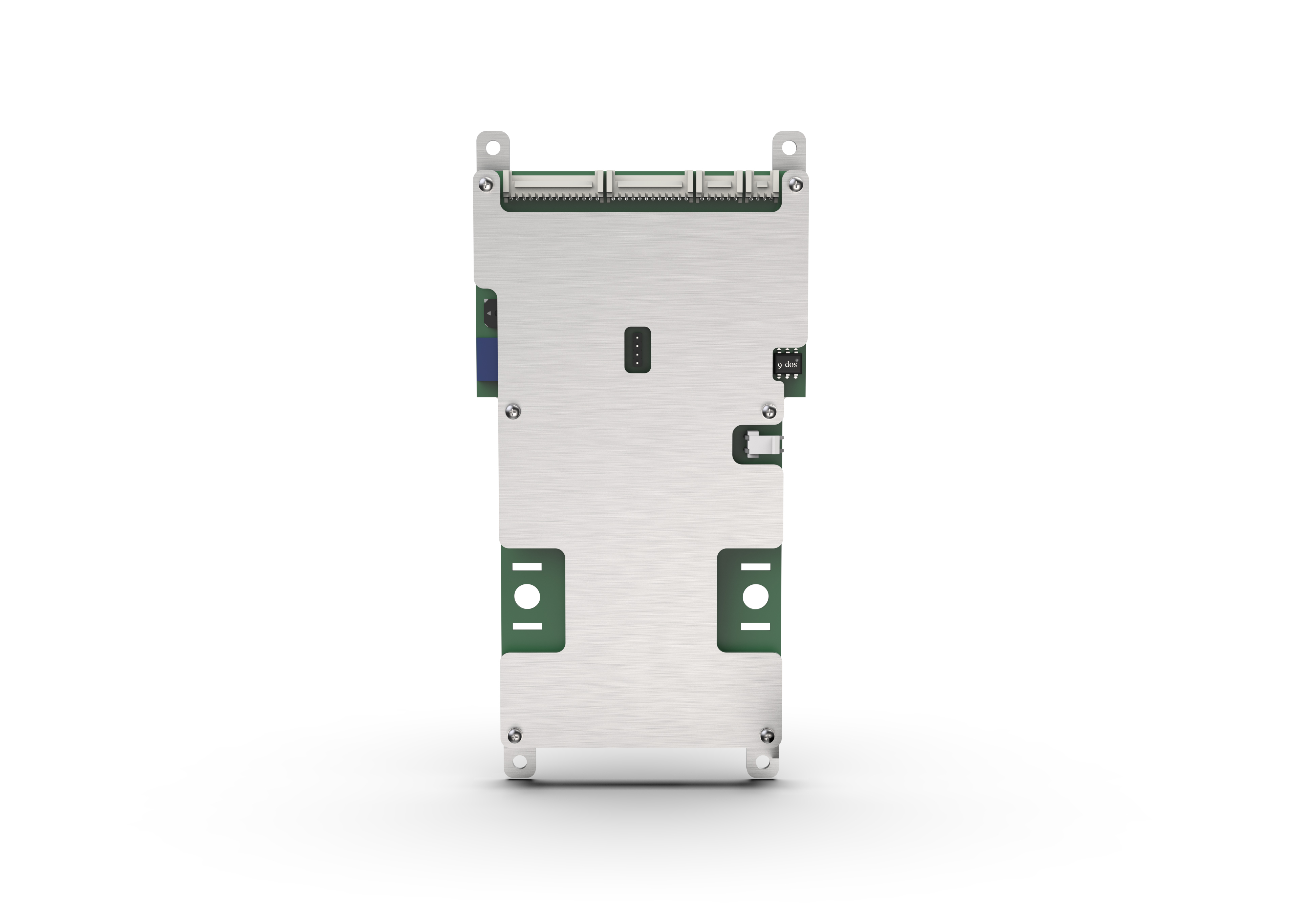
The portfolio is easier to read when it is grouped by vehicle class rather than as a flat model list.
Two-wheeler, three-wheeler and light-duty platforms
The DTH2505 series is designed for electric two-wheelers, electric three-wheelers, low-speed electric carts and shared mobility battery packs. It supports a 15–90V platform and 7S–24S pack configurations, with NCM and LFP chemistries, selectable continuous current from 50A to 200A and peak current from 100A to 400A per 30 seconds by current grade. Bluetooth is standard, with CAN or RS485 available as options. Its stated application industries include food delivery, express and logistics, shared mobility, municipal sanitation, property management, urban management and patrol, factory logistics, battery swap station operation, instant retail and campus commuting.
The PNRG-MA24S60 is built for electric two-wheelers, mini electric vehicles and light-duty battery-powered equipment. It covers a 20–95V platform and 10S–24S configurations, with 60A continuous current (40A optional), 120A peak current for 30 seconds on the 60A version and 80A per 30 seconds on the 40A version. Bluetooth is standard, with TTL, single-wire or 4G-GPS available as options, and the enclosure supports custom dimensions to fit different battery pack structures.
The DTH2421 is a two-wheeler and mini-vehicle platform rated for 40A continuous charging and 100A continuous discharging, with a 210A peak for one second, a 30–60V platform and 16S configuration. It is intended for shared mobility, property management and campus commuting applications.
Low-speed four-wheeler, sightseeing and golf platforms
The DTH2410 supports a 30–95V platform and 16S–24S configurations with 300A continuous working current and 400A peak current for 30 seconds. It combines isolated CAN, two isolated RS485 ports and Bluetooth, and lists cultural tourism, smart scenic areas, hotels and resorts, theme parks, golf course operation, healthcare and pension, large-scale industrial parks and community micro-mobility among its target industries.
The DTH2302 covers a 30–95V platform and 15S–24S configurations with 200A continuous discharge and 400A peak for 30 seconds, dual RS485 interfaces and six external NTC temperature channels.
Energy storage and wider-voltage platforms
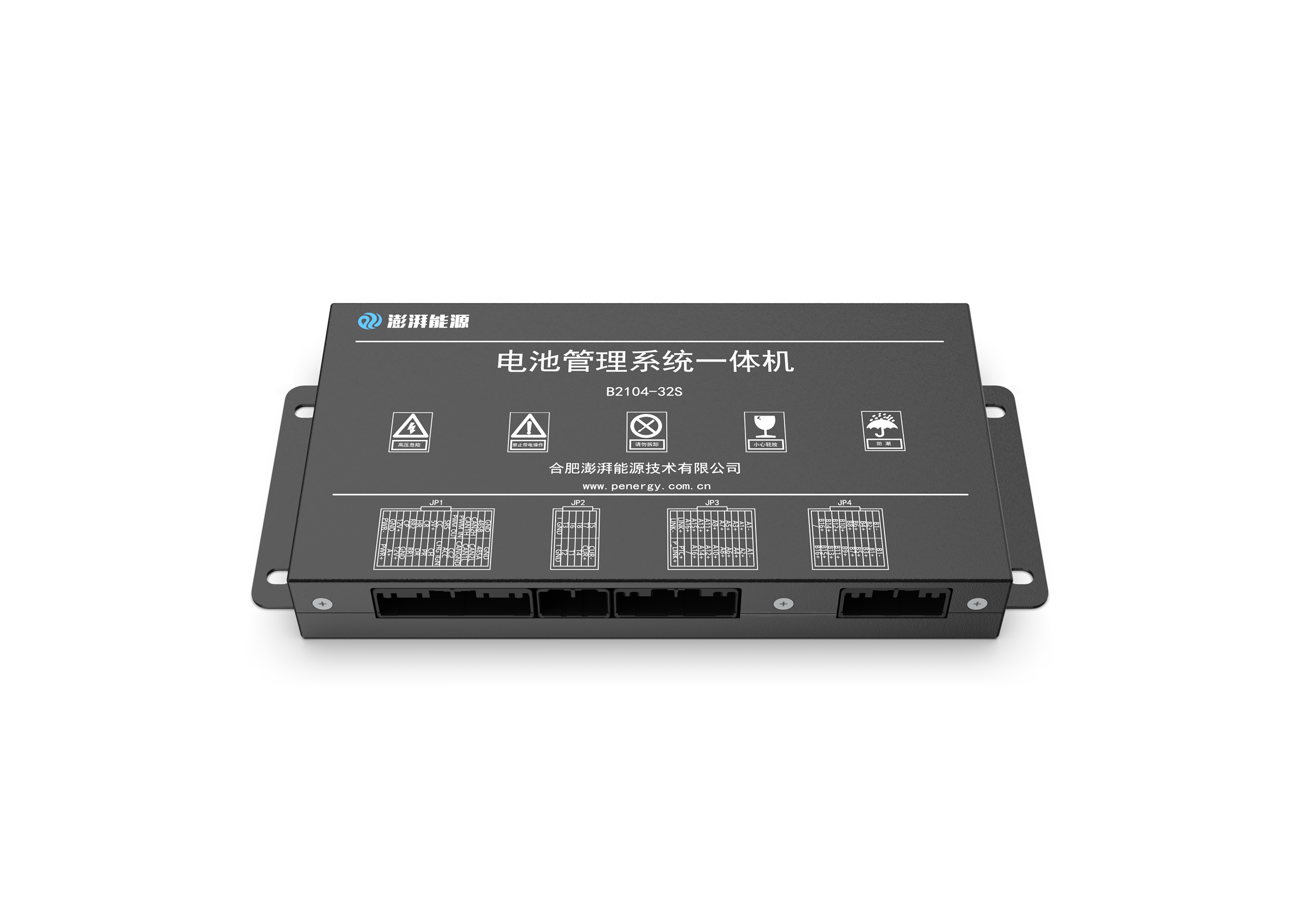
The B2104 is a master-slave architecture platform with a customizable 0–800V range, 8S–48S configurations and expandable master-slave structure, supporting continuous working current from -500A to 500A. Dimensions are customized according to cell string count at 16S, 32S or 48S. The B2107 supports a 0–48–60V range and 8S–16S configurations with CAN and RS485 interfaces, and the DTH2413 supports a 9–36V platform and 8S–32S configurations with dual isolated CAN and RS485.
Functions common across the range
- Multi-chemistry support: NCM, LMO, LCO and LFP chemistries are supported across the B2107, DTH2302, DTH2410, DTH2413, DTH2421 and B2104 platforms; the DTH2505 series supports NCM and LFP.
- Protection: over-charge, over-discharge, over-current, over-temperature, over-voltage, under-voltage, short-circuit and — on several models — insulation detection and high-voltage interlock protection.
- State estimation: SOC, SOH and SOP estimation, with SOC estimation error specified at ≤5% for the B2107 and DTH2413, and SOC/SOH/SOP accuracy specified at ≤8% at 25°C for the DTH2302 and DTH2421.
- Balancing and pre-charge: passive balancing from 50mA to ≥150mA depending on model, plus pre-charge support on the B2104, DTH2410, DTH2413, DTH2505 and PNRG-MA24S60.
- Connectivity: CAN, RS485, Bluetooth, TTL and single-wire interfaces depending on model, with connection to APP, PC, IoT platforms or displays on selected models for vehicle monitoring and software expansion.
Engineering, Manufacturing and Quality Capability
The capability case rests on three published pillars: design ownership, in-house manufacturing and documented testing.
On design ownership, Pengpai Energy states that it holds a full set of independent intellectual property rights for battery management systems, including dozens of authorized invention patents, utility model patents and software copyrights. The stated technical focus areas are battery state estimation, safety protection algorithms and intelligent energy scheduling — the three functions that determine how a BMS behaves once it is inside a running pack.

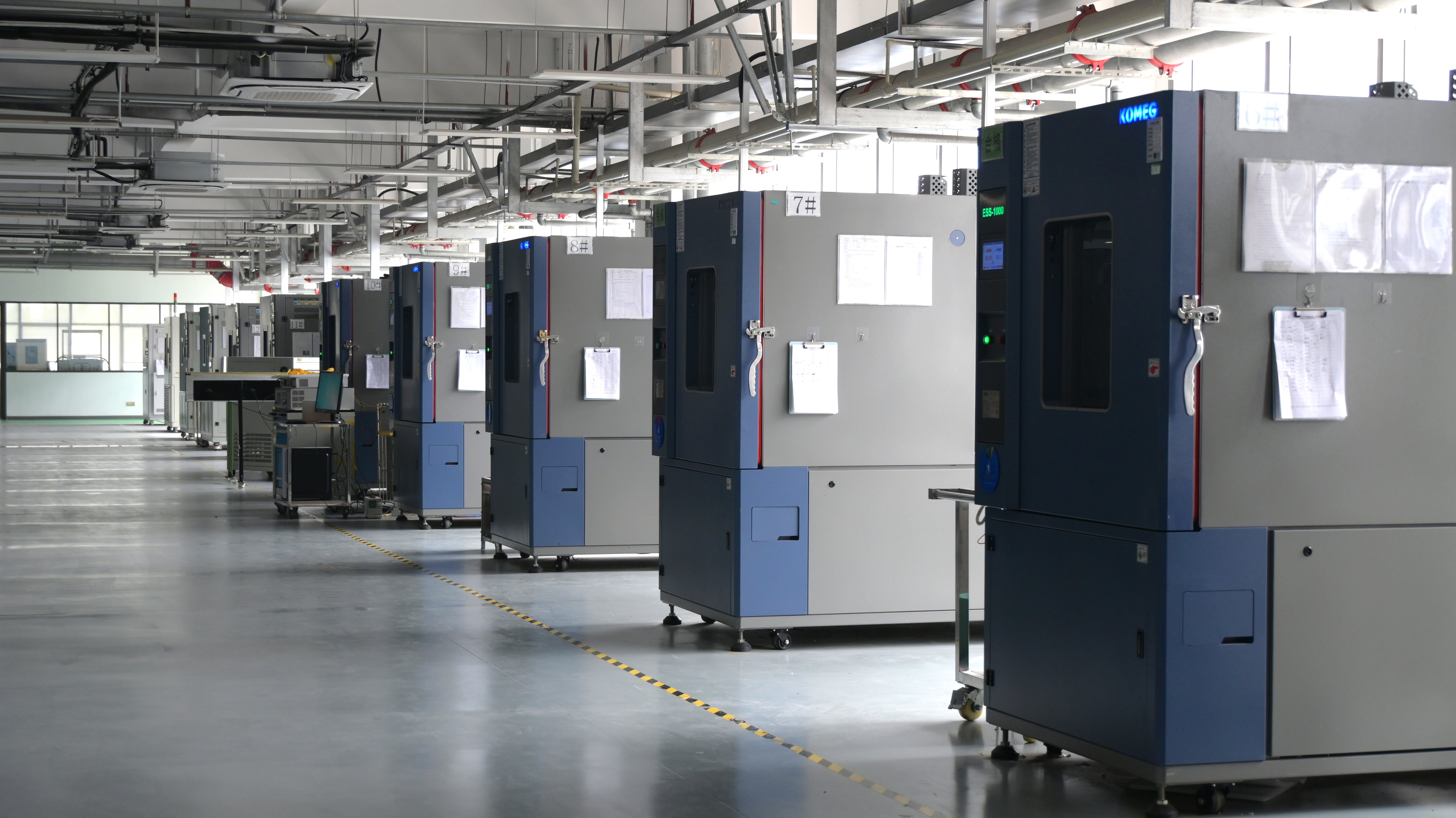
On testing, the company reports that its R&D laboratory is equipped with professional test equipment for reliability, temperature, shock and safety testing of all products, and that it maintains long-term technical cooperation with universities and upstream and downstream industrial partners. Those relationships are described as the mechanism for continuously optimising product performance against customised requirements.
On manufacturing, the 2,500 m² facility and reported output of 800,000 units per year define the supply scale. The company states that it has passed ISO9001 quality management system certification and that its BMS products comply with CE and FCC international standards, which it presents as the basis for reliable mass production and global delivery.
How to read these claims. The figures above are company-published. Capacity, certification and test scope should be confirmed against the exact model and target market during supplier qualification — particularly where a conformity regime such as AIS-156 applies to the vehicle class being built.
Customisation and OEM/ODM Support
Customisation is the differentiator that separates a catalogue BMS seller from a design partner, and it is defined relatively narrowly here. Pengpai Energy states that customized PCBA and integrated hardware-and-software development can be confirmed against cell chemistry, series count, current, protocol and operating conditions. The DTH2302 and DTH2413 are specifically documented as supporting custom configuration of cell chemistry, series count, current, protocol and operating conditions for EV battery pack projects.
That definition tells a buyer what must be settled before a design review can begin. It also sets the boundary: customisation is confirmed against defined inputs, not offered as an open-ended engineering service. Buyers entering a first conversation with a complete input list move faster than buyers who open with a vehicle description alone.
Market Recognition and the India Signal
Independent coverage of the company is limited but specific. The Economic Times (Manufacturing) reported in September 2026 that LeSol Group had partnered with Hefei Pengpai Energy Technology Co. Ltd to develop BMS solutions for electric vehicles in India, initially focused on two- and three-wheelers. For a BMS manufacturer, a localisation partnership of this type addresses two common buyer concerns at once: access to engineering support in-market and continuity of supply for a regulated vehicle class.
The commercial evidence is consistent with an export-oriented manufacturer: approximately 60% of sales are exported, marketing branches are established in Southeast Asia, India, North America and Europe, and India is listed as one of five main markets alongside China, Southeast Asia, North America and Europe.
Independent market-share data for the company in India is not part of this profile, and the LeSol market-share figure quoted earlier is described in the source as a target. Buyers should treat partnership announcements as a signal of intent and qualification readiness rather than as confirmed supply performance.
Step-by-Step: How to Evaluate a BMS Manufacturer
The following sequence converts a supplier conversation into a comparable evaluation. Each step uses inputs that a BMS manufacturer needs regardless of brand.
- Define the pack architecture. Fix cell chemistry, series count and voltage platform first. Pengpai Energy models span 0–48–60V, 9–36V, 15–90V, 20–95V and 30–95V platforms, and pack configurations from 7S–24S up to 8S–48S, so an undefined architecture cannot be matched to a model.
- Set the current profile. Separate continuous and peak requirements. Continuous ratings across the range run from 60A to 300A, with peak ratings from 80A to 400A per 30 seconds depending on model.
- Choose communication and wake-up. Decide whether the vehicle needs CAN, RS485, Bluetooth, TTL or single-wire communication, and which wake-up methods the vehicle controller requires, such as charge detection, ACC, switch, communication or Bluetooth wake-up.
- Confirm estimation accuracy needs. SOC estimation is specified at ≤5% on the B2107 and DTH2413, and SOC/SOH/SOP at ≤8% at 25°C on the DTH2302 and DTH2421. Match the specification to what the vehicle or fleet actually relies on.
- Check environment and mechanical fit. Operating ranges differ between models — for example -40°C to 120°C on the DTH2505 and -30°C to 85°C on several other platforms — and dimensions range from compact 240mm × 125mm × 15.5mm boards to customized housings.
- Verify conformity documentation for the target market. Where AIS-156 or an equivalent regime applies, ask for conformity evidence for the exact model, chemistry and vehicle class rather than a general compliance statement.
- Scope the customisation. Confirm which of the five variables — chemistry, series count, current, protocol, operating conditions — will be customised, and whether customized PCBA or integrated hardware-software development is required.
- Validate production capacity. Compare programme volume against reported output and the facility footprint, and confirm allocated capacity for the programme duration.
- Confirm support coverage. For export programmes, check in-market support arrangements, including the regional branch network and after-sales response commitments.
Use Cases Across Light-Power Applications

Electric two-wheelers and delivery fleets. The PNRG-MA24S60 and DTH2421 are specified for two-wheeler platforms, and the DTH2505 series lists food delivery, express and logistics, and instant retail among its target industries — duty cycles where pack reliability and charge-cycle management carry direct operating cost consequences.
Electric three-wheelers and e-rickshaw segments. Three-wheeler BMS coverage appears across the DTH2505 and PNRG-MA24S60 platforms, and India is named as a main market with an in-market marketing branch. In India, the AIS-156 safety requirement applies directly to this vehicle class.
Shared mobility and battery swap. The DTH2505 and DTH2421 platforms list shared mobility, property management and campus commuting among their application industries, and the DTH2505 specifically names battery swap station operation — a use case where communication reliability and protection behaviour matter more than cosmetic differences between boards.
Low-speed four-wheelers, sightseeing vehicles and golf carts. The DTH2410 and DTH2302 serve low-speed four-wheel, sightseeing and golf cart platforms, with higher continuous current ratings suited to larger packs.
Energy storage and microgrids. The B2104, B2107 and DTH2413 platforms are specified for energy storage battery packs, energy storage system integration and microgrid applications, with the B2104 supporting master-slave expansion up to 48S and a customizable 0–800V platform.
Industrial and commercial vehicles. The company states that its products are used in two-, three- and four-wheeled vehicles, commercial vehicles, intelligent robots and drones. That stated scope places robotic and light industrial platforms inside the same product family, although buyers in those segments should confirm the specific model and configuration against their own duty cycle.
Model Comparison: Published Specifications
The table below compares the electrical and current specifications of the models with published parameters. It is a like-for-like comparison within one manufacturer's range, not a cross-brand ranking. Ratings that are marked optional or selectable are shown as such.
| Model | Voltage platform | Cell configuration | Continuous current | Peak current | Typical fit |
|---|---|---|---|---|---|
| DTH2505 | 15–90V | 7S–24S | 50A–200A (optional by grade) | 100A–400A / 30s | Two-wheeler, three-wheeler, low-speed cart, shared mobility pack |
| DTH2421 | 30–60V | 16S | 40A charge / 100A discharge | 210A / 1s | Two-wheeler, mini EV, light-duty EV |
| PNRG-MA24S60 | 20–95V | 10S–24S | 60A (40A optional) | 120A / 30s (80A / 30s on 40A) | Two-wheeler, three-wheeler, light-duty equipment |
| DTH2302 | 30–95V | 15S–24S | 200A discharge | 400A / 30s | Mini EV, low-speed four-wheeler, sightseeing vehicle |
| DTH2410 | 30–95V | 16S–24S | 300A | 400A / 30s | Low-speed four-wheeler, sightseeing vehicle, golf cart |
| DTH2413 | 9–36V | 8S–32S | -500A to 500A detection range | — | Low-speed four-wheeler, energy storage, sightseeing vehicle |
| B2107 | 0–48–60V | 8S–16S | -200A to 200A detection range | — | Mini EV, low-speed EV, energy storage, sightseeing vehicle |
| B2104 | 0–800V (customizable) | 8S–48S (master-slave expandable) | -500A to 500A | — | Energy storage pack, low-speed new-energy vehicle, mini sightseeing car |
| Model | State estimation | Temperature channels | Operating range | Communication interfaces |
|---|---|---|---|---|
| DTH2505 | — | 2 built-in + 4 external NTC | -40°C to 120°C | Bluetooth standard; CAN or RS485 optional |
| DTH2421 | SOC / SOH / SOP ≤8% at 25°C | 4 external + 3 built-in NTC | -30°C to 85°C | Isolated CAN ×2 |
| PNRG-MA24S60 | — | 2 built-in + 2 external NTC | -30°C to 85°C | Bluetooth standard; TTL, single-wire or 4G-GPS optional |
| DTH2302 | SOC / SOH / SOP ≤8% at 25°C | 6 external NTC | -30°C to 85°C | RS485 ×2 |
| DTH2410 | — | 6 NTC | -30°C to 85°C | Isolated CAN ×1, isolated RS485 ×2, Bluetooth ×1 |
| DTH2413 | SOC ≤5%, SOH ≤8% | 8 external NTC | -30°C to 85°C | Isolated CAN ×2, RS485 ×1 |
| B2107 | SOC ≤5%, SOH ≤8% | 6 external + 1 MOS NTC | -40°C to 85°C | CAN ×1, RS485 ×1 |
| B2104 | — | 8 external NTC | -30°C to 85°C | CAN ×2, RS485 ×1 |
The comparison shows where the portfolio differentiates and where it does not: higher-current four-wheeler and energy-storage platforms carry the larger continuous ratings and insulation detection, while two- and three-wheeler platforms trade current headroom for compact dimensions and Bluetooth connectivity.
Frequently Asked Questions
Are Pengpai Energy BMS products compliant with the standards required for India and other export markets?
Pengpai Energy states that it has passed ISO9001 quality management system certification and that its BMS products comply with CE and FCC international standards. For India, AIS-156 establishes mandatory safety requirements for lithium-ion battery packs and battery management systems used in L-category vehicles, covering electric two-wheelers and three-wheelers, and has been in force since 1 April 2023. Buyers should request conformity documentation for the specific model, cell chemistry and vehicle class rather than relying on a general compliance statement.
Can Hefei Pengpai Energy develop a custom BMS for a specific battery pack design?
Yes. Pengpai Energy offers customized PCBA and integrated hardware-and-software development, confirmed against cell chemistry, series count, current, communication protocol and operating conditions. The DTH2302 and DTH2413 are documented as supporting custom configuration of these five variables for EV battery pack projects. Selection or customisation should also account for voltage platform, continuous and peak current, wake-up method, installation space and target-market requirements.
Which communication interfaces and state-estimation accuracy do the Pengpai Energy BMS models support?
Interfaces vary by model. The DTH2505 provides Bluetooth as standard with CAN or RS485 optional; the PNRG-MA24S60 provides Bluetooth as standard with TTL, single-wire or 4G-GPS options; the DTH2410 combines isolated CAN, two isolated RS485 ports and Bluetooth; the B2107 provides CAN and RS485; and the DTH2413 and B2104 provide isolated dual CAN with RS485. SOC estimation error is specified at ≤5% for the B2107 and DTH2413, while SOC, SOH and SOP estimation accuracy is specified at ≤8% at 25°C for the DTH2302 and DTH2421.
Can Pengpai Energy support volume production programmes?
Pengpai Energy operates a 2,500 m² manufacturing facility and reports annual output of 800,000 BMS units, with approximately 60% of sales exported to markets in Asia, the Americas and Europe. It states that ISO9001 certification and CE and FCC compliance support reliable mass production and global delivery. Because these are supplier-published figures, buyers running multi-year programmes should confirm the capacity allocated to their specific platform during supplier qualification.
How does a buyer start an evaluation of Pengpai Energy as a BMS supplier?
Define the pack first: cell chemistry, series count, voltage platform, continuous and peak current, communication protocol, wake-up method, installation space and target-market requirements. Pengpai Energy then confirms model selection or customisation scope against those inputs. Buyers can request the product catalogue and open a technical discussion through the company website, by email or by WhatsApp using the contact details below.
Conclusion: Positioning and Procurement Value
Pengpai Energy occupies a specific position among battery management system manufacturers: a Chinese BMS specialist founded in 2017, focused on light-power electric vehicle platforms rather than on passenger-car or grid-scale systems, with 2,500 m² of production space, reported output of 800,000 units per year and an export share of approximately 60%. Its product range maps cleanly onto the light-EV segments that drive volumes in India and Southeast Asia — two-wheelers, three-wheelers, low-speed four-wheelers, sightseeing vehicles and light equipment — and onto energy storage and microgrid packs through the B2104, B2107 and DTH2413 platforms.
The procurement value rests on three verifiable characteristics. First, published specifications are specific: voltage platforms, cell configurations, current ratings, estimation accuracy and interfaces are documented per model, which allows a buyer to filter the range against a pack requirement before any conversation. Second, customisation is scoped against five defined variables, which makes the engineering boundary visible early. Third, certification and testing are stated in terms of named systems and standards — ISO9001, CE and FCC — supported by a stated in-house test laboratory and an IP portfolio covering battery state estimation, safety protection algorithms and intelligent energy scheduling.
The limitations are equally clear. The performance figures in this profile are supplier-published, and buyers in regulated markets must verify conformity for the exact model and vehicle class. Market position in India is signalled by a partnership and a stated market-share target rather than by independent share data. For an awareness- and research-stage evaluation, that is the correct level of confidence: enough to shortlist, not enough to replace qualification.
Looking forward, the development path points toward deeper localisation in markets where regulation now drives BMS specification. India is the clearest example, given AIS-156 and a market projected by IMARC Group to grow from USD 327.9 million in 2025 to USD 1,347.6 million by 2034. Manufacturers that combine multi-chemistry hardware, defined customisation scope and documented conformity will be the ones able to serve that demand at volume.
Next Step: Catalogue, Technical Discussion and Inquiry
Buyers evaluating BMS suppliers can review the full Pengpai Energy product catalogue, share a pack specification, or request a model recommendation and quotation directly.

Download the Pengpai Energy BMS Catalogue (PDF)
Website: www.penergy.com.cn | Blog: blog.penergy.com.cn
Email: kaiquan.zheng@penergy.com.cn | Tel: +86-0551-62628315
WhatsApp: +86 133-3551-2050 | Business contact: Manager Jiang, +86 18715135810
After-sales hotline: 0551-65147730, available daily from 9:00 to 21:00
Address: Building 6, Hongbaoshi Industrial Park, No. 3988 Xiyou Road, Changning Community Service Center, Hefei High-tech Zone, Anhui, China
Have Questions or Need More Details?
Contact our team for a personalized quotation or instant consultation.
Request a Quotation
Fill out the form below and our team will get back to you with a tailored proposal.
WhatsApp Direct Chat
Prefer to chat in real-time? Message us on WhatsApp for instant assistance & quick answers.
- Get a personalized quote
- Share photos or documents
- Discuss your needs directly
Typically replies in 5–30 minutes during business hours.