
Ranked BMS Options for 16S–24S Light-EV Packs: DTH2410, PNRG-MA24S60 and DTH2302
For 16S–24S light-electric-vehicle packs, the application-fit ranking in this article is DTH2410 first, PNRG-MA24S60 second and DTH2302 third. The order is not a claim that one model is universally better than another. It reflects how each Battery Management System matches a defined duty: DTH2410 for high-current low-speed four-wheelers, sightseeing vehicles and golf carts; PNRG-MA24S60 for electric two- and three-wheelers and mini EV projects; DTH2302 for 15S–24S packs where dual RS485 communication and insulation detection are central to the vehicle architecture.
Pengpai Energy, formally Hefei Pengpai Energy Technology Co., Ltd., is a BMS manufacturer established in 2017. Its public product range covers battery management systems for electric two-wheelers, three-wheelers, low-speed four-wheelers and other light-power applications. The company states that its BMS products comply with CE and FCC and that it has passed ISO9001 quality management system certification. For buyers, the useful question is not which model has the largest headline number. It is which model matches the pack, the vehicle controller, the charging profile and the target market without leaving a critical function unverified.
Why a 16S–24S Light-EV Pack Changes the BMS Shortlist
A 16S–24S pack sits in a practical middle band for light EVs. The series count sets the voltage window together with cell chemistry, while the pack format is still compact enough for two-wheeler, three-wheeler, mini EV and low-speed four-wheeler battery boxes. The BMS must therefore manage a traction load, not a low-power accessory load, while fitting a constrained enclosure and communicating with a vehicle controller or charger.
The selection problem is broader than series count. A pack rated for 16S–24S may be built with NCM, LMO, LCO or LFP chemistry. It may need a 60 A continuous class in a two-wheeler, a 200 A class in a mini EV or a 300 A class in a low-speed four-wheeler. It may use CAN, RS485, Bluetooth, TTL or single-wire communication. It may need pre-charge, passive balancing, insulation detection, heating control or multiple wake-up paths. Each requirement changes which model earns a place.
Industry Background: Light EVs Need Application-Specific BMS Choices
Light-electric-vehicle projects are not a single market. Electric two-wheelers and three-wheelers prioritise compact packaging, charger communication, pre-charge and controlled current classes. Low-speed four-wheelers, sightseeing vehicles and golf carts prioritise traction current headroom, thermal monitoring and robust protection. Mini EVs sit between those poles and often need a communication architecture that matches the vehicle controller.
India illustrates why compliance and application fit now sit together. AIS-156 establishes mandatory safety requirements for lithium-ion battery packs and BMS in L-category electric two- and three-wheelers in India, with an effective date of 1 April 2023 in the supplied regulatory reference. IMARC Group estimates the India BMS market at USD 327.9 million in 2025 and projects USD 1,347.6 million by 2034. Those figures describe market direction, not model suitability. A BMS still has to match the pack and the vehicle.
Pengpai Energy's Indian market case records more than 800,000 units delivered across four consecutive years for new energy vehicle applications. The Economic Times also reported in 2026 that LeSol Group partnered with Pengpai Energy to develop BMS solutions for India, initially focused on two- and three-wheelers. For a buyer, the relevant lesson is that model selection should be tied to documented project requirements, not to a generic supplier claim.
Ranking Criteria: Application Fit Before Price
The ranking uses six documented criteria: voltage platform and series window; continuous and peak current; communication interfaces; temperature sensing and protection functions; pre-charge, balancing and wake-up features; and mechanical and customisation fit. Price is not used as a ranking input because the supplied model data does not include model-specific prices. A board that cannot handle the traction current or cannot talk to the vehicle controller is not a lower-cost solution for the project.
- Voltage and series match. The BMS must cover the pack's full operating voltage and series count with the selected chemistry.
- Continuous and peak current. The continuous rating must cover normal traction duty, while the peak rating must cover short acceleration or start-up events within its stated duration.
- Communication architecture. CAN, RS485, Bluetooth, TTL or single-wire options must match the vehicle controller, charger, display or telematics unit.
- Temperature sensing and protection. NTC channel count and the protection set must fit the pack layout and risk profile.
- Pre-charge, balancing and wake-up. These functions affect contactor control, pack life and standby behaviour.
- Mechanical and customisation fit. Dimensions, connectors, enclosure and custom PCBA scope must fit the battery box and project schedule.
1. DTH2410: First for High-Current Low-Speed Four-Wheelers, Sightseeing Vehicles and Golf Carts
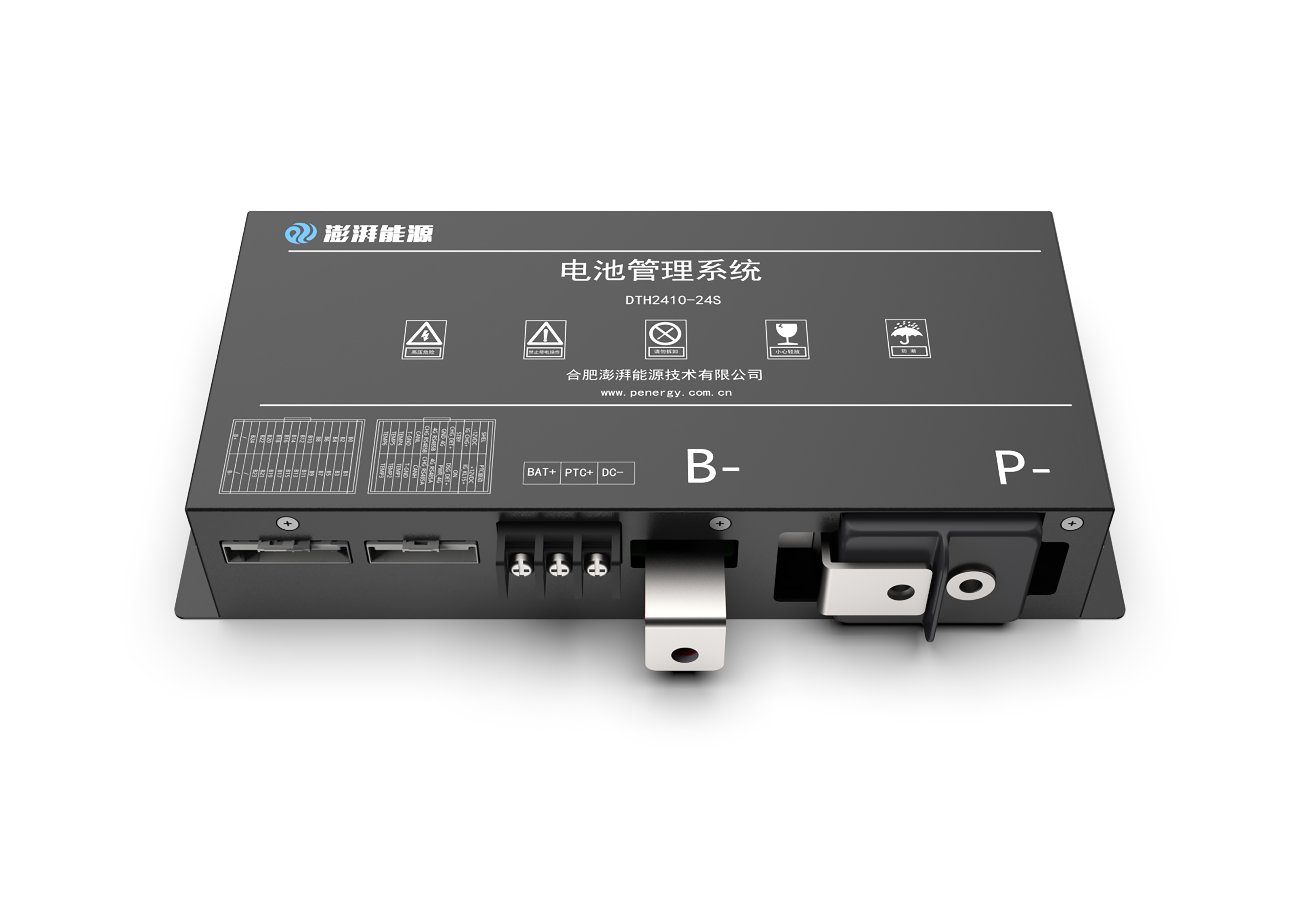
DTH2410 ranks first in this shortlist because its documented electrical envelope aligns with the most demanding traction duty among the three models. It supports a 30–95 V platform and a 16S–24S cell configuration, with a 300 A continuous working current and a 400 A/30 s peak current. For a low-speed four-wheeler, sightseeing vehicle or golf cart, that current headroom matters during acceleration and repeated start-stop operation.
The model includes six NTC temperature sensing channels and operates from -30°C to 85°C. Its protection set covers over-charge, over-discharge, over-current, over-temperature, under-voltage and short-circuit protection. Pre-charge is supported. Communication includes isolated CAN ×1, isolated RS485 ×2 and Bluetooth ×1. The unit measures 133 mm × 255 mm × 47 mm and provides passive balancing current of ≥50 mA at 25°C. It is compatible with NCM, LMO, LCO and LFP chemistries.
For project teams, the practical advantage is not a single specification. It is the combination of current headroom, isolated CAN and dual isolated RS485 in one model. A low-speed four-wheeler may use CAN for the vehicle controller and RS485 for a display, charger or diagnostic device. The DTH2410 gives the integration team more than one wired path without adding an external gateway. Bluetooth adds a local service or app-connection option. The model is listed for mini electric sightseeing vehicles, low-speed electric vehicles and electric golf carts.
2. PNRG-MA24S60: Second for Electric Two- and Three-Wheelers and Mini EV Projects
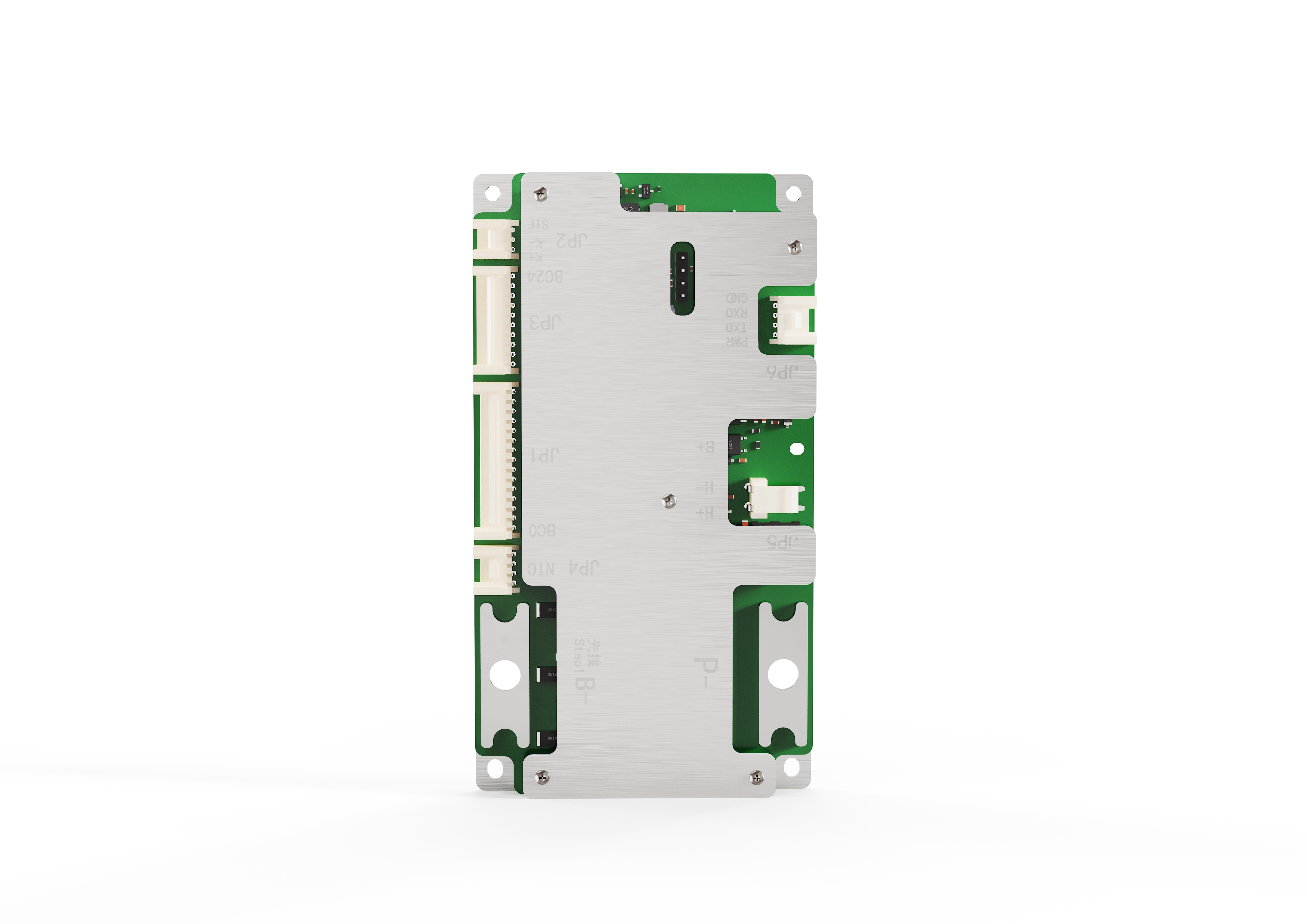
PNRG-MA24S60 ranks second because it serves a different duty profile: electric two-wheelers, electric three-wheelers, mini EVs and light-duty battery-powered equipment. Its 20–95 V platform and 10S–24S cell configuration cover a wider series range at the lower end, while its current class is deliberately lower than DTH2410. The standard version provides 60 A continuous working current and 120 A/30 s peak current. A 40 A version is optional, with 80 A/30 s peak current.
The communication profile is the main differentiator. Bluetooth is standard, with TTL, One-wire or 4G-GPS available as options. That makes the model relevant to projects where a mobile app, local service tool or telematics link is part of the product experience. Pre-charge is supported, as are over-charge, over-discharge, over-current, over-temperature and short-circuit protection. The BMS uses two built-in plus two external NTC temperature channels, operates from -30°C to 85°C and provides passive balancing current of ≥50 mA at 3.3 V. Dimensions are customised to the battery-pack structure.
For a two-wheeler or three-wheeler project, the lower current class can be a better match than a 300 A board when the pack and controller are designed around a 60 A or 40 A continuous load. The Bluetooth-first interface also changes the integration path: the BMS can support app or service access without making CAN the primary channel. For an India e-rickshaw BMS project or a Southeast Asian three-wheeler programme, the model still has to be checked against AIS-156 or the relevant local requirement where applicable. The supplied model data does not itself certify compliance for a specific market.
3. DTH2302: Third as the RS485-Focused 15S–24S Option
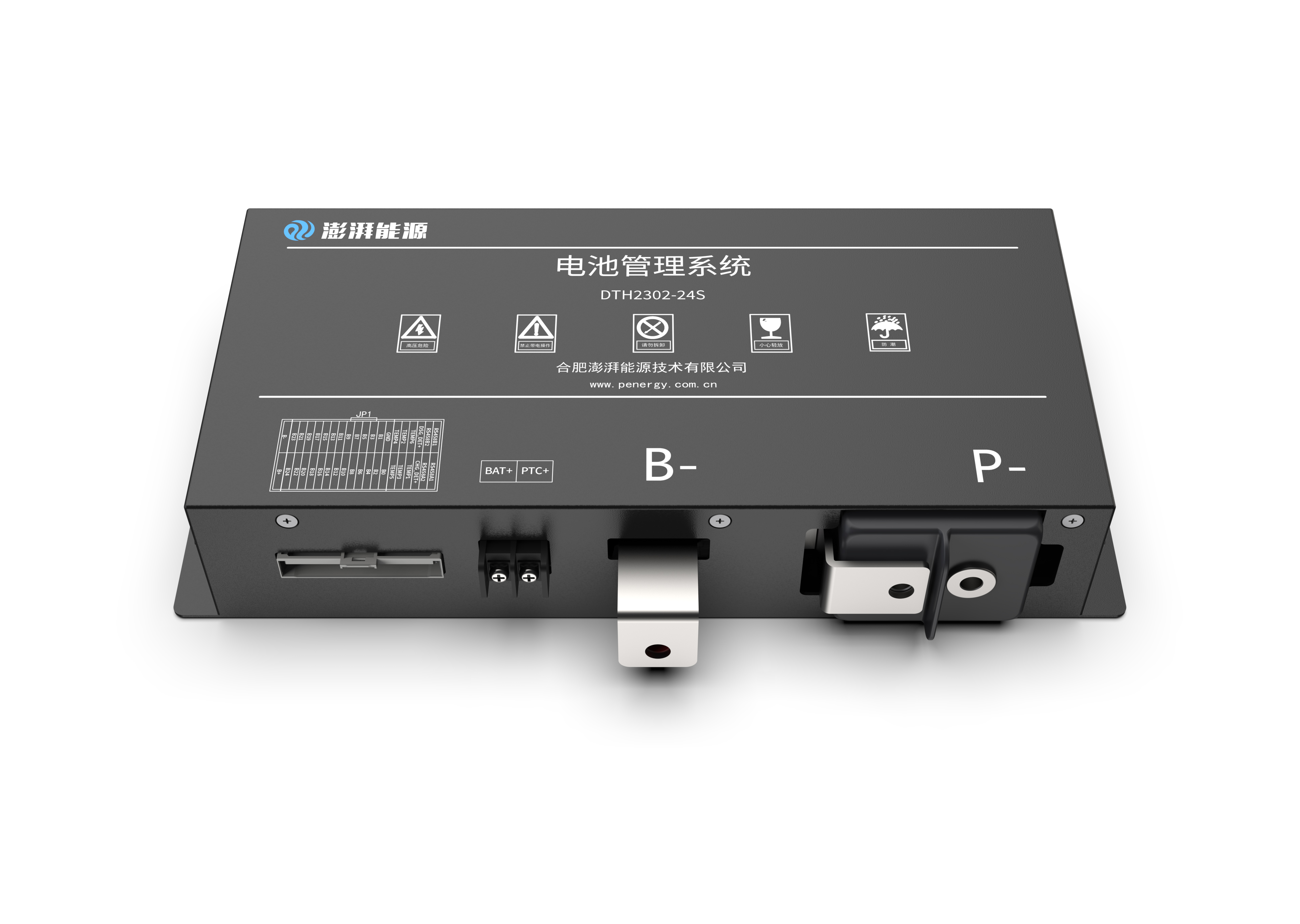
DTH2302 ranks third in this particular shortlist because its documented interface emphasis is different from the first two models. It is a 30–95 V, 15S–24S BMS with 200 A continuous discharge current and 400 A/30 s peak current. It provides RS485 ×2, six external NTC channels and a protection set that includes over-charge, over-discharge, over-current, over-temperature, over-voltage, under-voltage and insulation detection. Pre-charge is supported. The unit measures 110 mm × 255 mm × 47 mm and provides passive balancing current of ≥50 mA at 25°C.
The DTH2302 also documents SOC, SOH and SOP estimation accuracy of ≤8% at 25°C, up to 500 fault records, a heating function with output voltage equal to battery pack voltage and current ≤6 A, and insulation detection from 0–20 MΩ. It is compatible with NCM, LMO, LCO and LFP chemistry. Its listed applications include mini electric vehicles and sightseeing vehicles. For a project that already uses an RS485-based vehicle architecture or needs a second RS485 path for diagnostics, the DTH2302 can be a more natural fit than a Bluetooth-first or CAN-first board.
The third place is therefore a ranking within this 16S–24S application-fit shortlist, not a statement that DTH2302 is a lower-quality product. It is the model to examine when dual RS485, insulation detection and a 200 A discharge class are the deciding requirements. A team that needs 300 A continuous traction, isolated CAN and dual isolated RS485 should look first at DTH2410. A team that needs 60 A continuous with standard Bluetooth should look first at PNRG-MA24S60.
Side-by-Side Comparison of the Three BMS Models
The table below uses the supplied model data. It is a comparison of documented characteristics, not a laboratory test of the three units under identical load profiles.
| Model | Rank in this shortlist | Voltage platform | Cell configuration | Continuous and peak current | Communication | Temperature sensing | Notable functions | Strong-fit projects |
|---|---|---|---|---|---|---|---|---|
| DTH2410 | 1 | 30–95 V | 16S–24S | 300 A continuous; 400 A/30 s peak | Isolated CAN ×1; isolated RS485 ×2; Bluetooth ×1 | 6-channel NTC | Pre-charge; over-charge, over-discharge, over-current, over-temperature, under-voltage and short-circuit protection; ≥50 mA passive balancing at 25°C | High-current low-speed four-wheelers, sightseeing vehicles, golf carts |
| PNRG-MA24S60 | 2 | 20–95 V | 10S–24S | 60 A continuous (40 A optional); 120 A/30 s peak (80 A/30 s for 40 A version) | Bluetooth standard; TTL, One-wire or 4G-GPS optional | 2 built-in plus 2 external NTC | Pre-charge; over-charge, over-discharge, over-current, over-temperature and short-circuit protection; ≥50 mA passive balancing at 3.3 V | Electric two-wheelers, electric three-wheelers, mini EVs, light-duty equipment |
| DTH2302 | 3 | 30–95 V | 15S–24S | 200 A continuous discharge; 400 A/30 s peak | RS485 ×2 | 6 external NTC | Pre-charge; protections including insulation detection; SOC/SOH/SOP ≤8% at 25°C; up to 500 fault records; ≥50 mA passive balancing at 25°C | RS485-focused mini EV and sightseeing packs |
How to Match Chemistry, Current, Protocol and Operating Conditions
Before choosing among DTH2410, PNRG-MA24S60 and DTH2302, reduce the project to a short requirement set. The following sequence keeps the decision tied to the pack rather than to a generic model preference.
- Lock the chemistry and series count. Confirm whether the pack uses NCM, LMO, LCO or LFP and whether the final series count sits inside the model window. DTH2410 and DTH2302 cover 16S–24S, while PNRG-MA24S60 covers 10S–24S and DTH2302 covers 15S–24S.
- Match the voltage platform. Check the full charge and discharge voltage against the model platform. DTH2410 and DTH2302 cover 30–95 V, while PNRG-MA24S60 covers 20–95 V.
- Size continuous and peak current. Use the vehicle controller and motor profile to define normal and short-duration current. DTH2410 provides 300 A continuous and 400 A/30 s peak; DTH2302 provides 200 A continuous discharge and 400 A/30 s peak; PNRG-MA24S60 provides 60 A continuous and 120 A/30 s peak, with a 40 A option.
- Choose the communication path. Use CAN when the vehicle controller requires it, RS485 when the architecture is wired and diagnostic-oriented, and Bluetooth when app or local service access is a product requirement. DTH2410 offers isolated CAN, isolated RS485 and Bluetooth; PNRG-MA24S60 is Bluetooth-first with optional TTL, One-wire or 4G-GPS; DTH2302 uses RS485 ×2.
- Confirm temperature and protection scope. Match NTC channel count and protection functions to the pack layout and risk profile. DTH2410 and DTH2302 provide six NTC channels, while PNRG-MA24S60 provides two built-in plus two external NTC channels.
- Check pre-charge, balancing and wake-up. These functions affect contactor control, standby behaviour and service access. All three models support pre-charge and passive balancing, but their wake-up methods and balancing conditions differ.
- Confirm mechanical fit and market documentation. Check dimensions, connectors, enclosure space and the target market's compliance file. Exact temperature, vibration, ingress-protection and load conditions require confirmation for the application.
Use Cases: Which Model Fits Which Light-EV Project?
A golf cart or low-speed four-wheeler with a 16S–24S pack and a high-current traction profile should start with DTH2410. Its 300 A continuous rating, 400 A/30 s peak, six NTC channels and isolated CAN plus dual isolated RS485 support the current and communication needs of that duty.
An electric two-wheeler, electric three-wheeler or India e-rickshaw project with a 60 A or 40 A continuous class should start with PNRG-MA24S60. Its 20–95 V platform, 10S–24S configuration, pre-charge, Bluetooth interface and ≥50 mA passive balancing align with compact packs and app-connected service models. For a mini EV with a 200 A discharge class and an RS485-based vehicle architecture, DTH2302 is the relevant option, particularly where insulation detection and SOC/SOH/SOP estimation are required.
A light-duty battery-powered equipment project should compare PNRG-MA24S60 and DTH2302 by current class and communication path. If the equipment needs Bluetooth service access and a 60 A class, PNRG-MA24S60 fits first. If it needs dual RS485 and a 200 A discharge class, DTH2302 fits first. DTH2410 remains the high-current choice when the load profile calls for 300 A continuous operation.
India and Southeast Asia Project Notes
India's L-category market makes compliance documentation part of BMS selection. AIS-156 applies to lithium-ion battery packs and BMS in electric two- and three-wheelers, so an India-bound project should request the model-specific compliance file, test evidence and change-control process. Do not assume that a model's voltage and current ratings establish AIS-156 conformity.
In Southeast Asia, the same discipline applies to charger communication, heat and humidity exposure, and service access. The supplied application guidance states that exact temperature, vibration, ingress-protection and load conditions require confirmation. That is a useful checklist item: a BMS rated for -30°C to 85°C still needs the enclosure, connector, mounting and thermal path verified for the actual vehicle.
Frequently Asked Questions
Chinese EV battery management system manufacturers with CAN bus and SOC estimation
Pengpai Energy is one Chinese BMS manufacturer whose public model data includes CAN interfaces and SOC estimation across different models. In this shortlist, DTH2410 provides isolated CAN ×1; DTH2302 provides SOC, SOH and SOP estimation accuracy of ≤8% at 25°C but uses RS485 ×2; PNRG-MA24S60 uses Bluetooth as standard with optional TTL, One-wire or 4G-GPS. If a project needs CAN and SOC estimation in the same unit, confirm the exact model configuration with Pengpai Energy rather than assuming a combination.
How do I choose between DTH2410, PNRG-MA24S60 and DTH2302 for a 16S–24S pack?
Start with the traction current. If the application is a high-current low-speed four-wheeler, sightseeing vehicle or golf cart and needs 300 A continuous with 400 A/30 s peak, DTH2410 is the first fit. If the application is an electric two-wheeler, three-wheeler or mini EV with a 60 A or 40 A continuous class and Bluetooth communication, PNRG-MA24S60 is the second fit. If the vehicle uses dual RS485 and needs insulation detection with a 200 A discharge class, DTH2302 is the third fit. Confirm the final choice against chemistry, series count, protocol, wake-up method, installation space and target-market requirements.
Can these BMS models be customised for different chemistries, series counts, communication protocols and operating conditions?
Pengpai Energy states that customised PCBA and integrated hardware-software development can be confirmed against cell chemistry, series count, current, protocol and operating conditions. The supplied data also lists customisation across voltage platform, battery series count, continuous and peak current, temperature sensing, communication interfaces, wake-up methods, pre-charge and control circuits, APP, PC, IoT and display extensions, and mechanical dimensions and connectors. Exact customisation boundaries must be confirmed for the project.
How can I request a sample, quotation or catalog for these BMS models?
Use the official Pengpai Energy website or the catalog link at the end of this article to start a technical discussion. A useful request includes the battery chemistry, series count, voltage platform, continuous and peak current, communication protocol, wake-up method, installation space and target market. Pengpai Energy lists MOQ from 1 unit and lead time of 0–30 days for its BMS business; confirm those terms for the exact model and configuration before planning a build. The company also provides an after-sales hotline at 0551-65147730, available daily from 9:00 to 21:00.
Conclusion: Match the Model to the Duty, Then Confirm the Details
DTH2410, PNRG-MA24S60 and DTH2302 all fit the 16S–24S light-EV envelope, but they do not fit the same project. DTH2410 earns first place for high-current low-speed four-wheelers, sightseeing vehicles and golf carts because its 30–95 V platform, 16S–24S configuration, 300 A continuous current, 400 A/30 s peak and multiple communication paths align with that duty. PNRG-MA24S60 earns second place for electric two- and three-wheelers and mini EV projects where a 20–95 V platform, 10S–24S configuration, pre-charge, Bluetooth and ≥50 mA passive balancing match the product architecture. DTH2302 earns third place as the RS485-focused 15S–24S option, particularly where dual RS485 and insulation detection are central.
The final selection should be confirmed against cell chemistry, current profile, protocol, wake-up method, installation space, thermal conditions and target-market requirements. For India-bound L-category projects, that confirmation should include the applicable AIS-156 documentation. For any light-EV project, the BMS should be treated as part of the pack and vehicle system, not as a stand-alone board chosen by headline current alone.
For model-specific data, sample discussion or the full catalog, visit Pengpai Energy and download the Pengpai Energy BMS catalog.
Have Questions or Need More Details?
Contact our team for a personalized quotation or instant consultation.
Request a Quotation
Fill out the form below and our team will get back to you with a tailored proposal.
WhatsApp Direct Chat
Prefer to chat in real-time? Message us on WhatsApp for instant assistance & quick answers.
- Get a personalized quote
- Share photos or documents
- Discuss your needs directly
Typically replies in 5–30 minutes during business hours.