Top BMS Picks for Two-Wheeler, Three-Wheeler and Mini EV Builders in 2026
For 2026 light-EV programs, the practical shortlist is PNRG-MA24S60 and DTH2421 for electric two-wheelers, DTH2302 for mini EVs that need two independent RS485 links, DTH2410 for low-speed four-wheelers and golf carts, and B2107 for mini EV platforms spanning the 48 V and 60 V classes. These are segment assignments, not a single ladder of “best hardware”: each pick is justified by three selection axes — voltage platform range, series count, and protection coverage — plus the communication interface the vehicle architecture already uses.
Pengpai Energy is the short name used throughout this article for Hefei Pengpai Energy Technology Co., Ltd., a manufacturer founded in 2017 in Hefei, Anhui, China, that designs and builds battery management systems for electric two-wheelers, three-wheelers, low-speed four-wheelers and other light-power applications. The models publicly listed in its range include the B2107, DTH2411, DTH2302, DTH2410 and B2003 series; the picks below sit inside that range and are matched to the platform types most builders are sourcing in 2026.
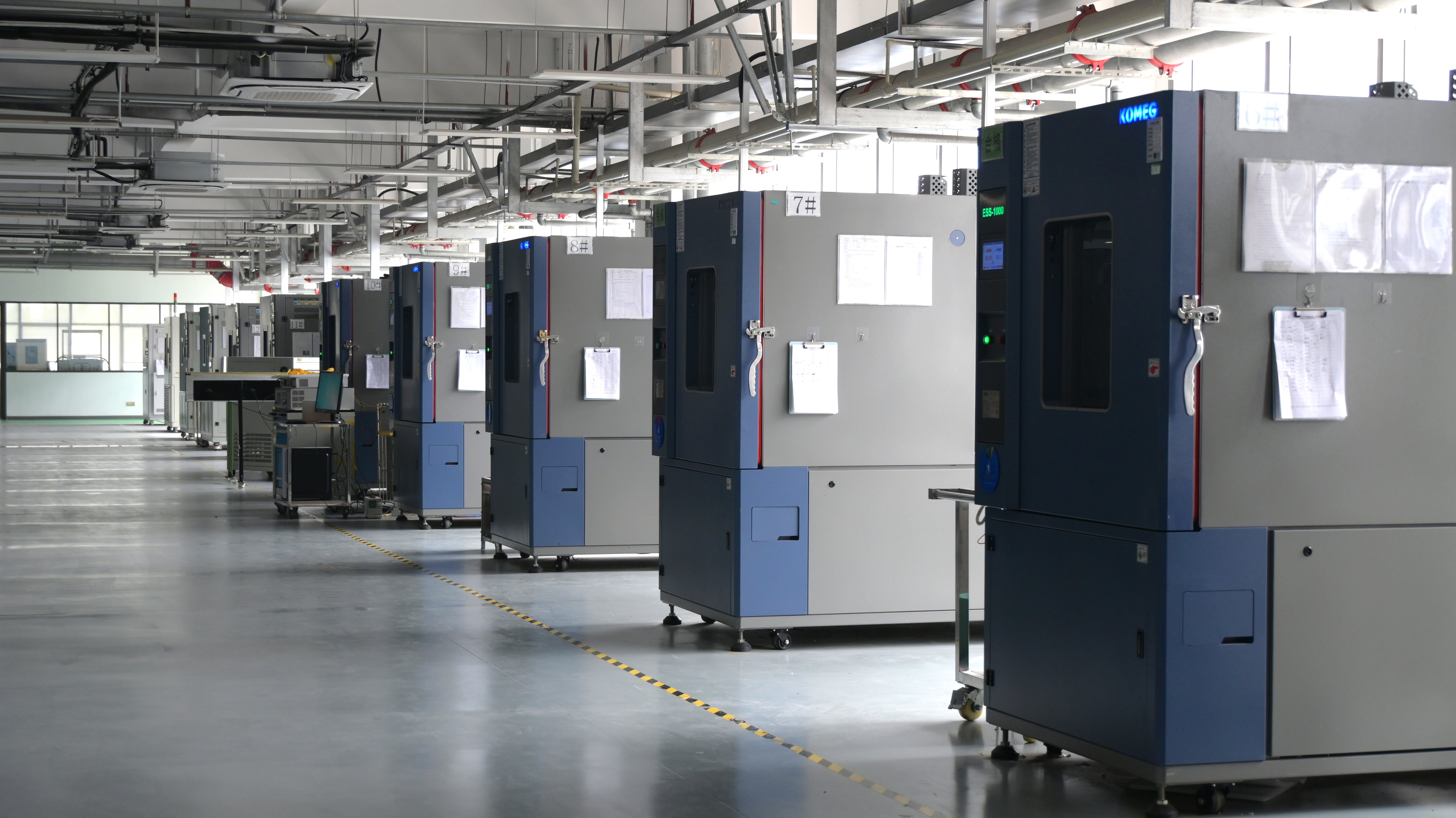
Pengpai Energy manufactures BMS boards for electric two-wheelers, three-wheelers and low-speed four-wheelers at its Hefei facility.
The selection problem: three axes decide the pick, not one headline number
A battery management system is the electronic controller inside a lithium battery pack that monitors cell voltage, current and temperature, and it protects the pack from over-voltage, under-voltage and over-current. Because those functions sit between the cells and everything else on the vehicle, a BMS that is “good” on a bench can still fail on a two-wheeler if its configuration does not match the platform. Light-EV builders typically run into five mismatches:
- Voltage platform mismatch. A board configured for one nominal pack voltage class does not automatically serve a platform that spans two classes, such as a mini EV line covering both 48 V and 60 V variants.
- Series-count mismatch. Protection thresholds, balancing logic and state estimation are tied to how many cells sit in series. A BMS sized for a different series count forces either a redesign or an over-specified board.
- Protection coverage gaps. Commuter duty cycles, cargo duty cycles and golf-cart stop-start duty cycles stress the pack differently, so the protection set and current headroom have to be checked against the actual load profile.
- Interface mismatch. The vehicle controller, charger, display or telematics unit may expect CAN, RS485, UART, Bluetooth or single-wire communication. A mini EV with two separate devices on the bus needs two serial links, not one shared port.
- Documentation gaps. A pack that meets functional requirements can still stall at customs or at homologation if the supplier cannot produce quality-management and product-conformity evidence.
The useful framing for 2026 is therefore not “which BMS is best” but “which configuration point fits this platform, and what evidence supports the choice.” The five picks below are organized on exactly that basis.
Industry background: what changed for light-EV BMS buyers in 2026
Two forces are reshaping light-EV BMS sourcing. The first is regulation. In India, AIS-156 establishes mandatory safety requirements for lithium-ion battery packs and battery management systems used in L-category vehicles, which covers two-wheelers and three-wheelers, with an effective date of 1 April 2023. For a 2W or 3W program aimed at the Indian market, the BMS protection set and the accompanying documentation are no longer optional commercial extras — they are part of market access.
The second is scale. IMARC Group reported that the India battery management system market was valued at USD 327.9 million in 2025 and is expected to reach USD 1,347.6 million by 2034. Whatever the exact forecast path, the direction is toward higher volumes, shorter model cycles and more local assembly — which pushes builders toward suppliers who can support both a fast first sample and a stable volume ramp.
Supplier structure is moving with it. The Economic Times reported in September 2026 that LeSol Group had partnered with Hefei Pengpai Energy Technology Co. Ltd. to develop BMS solutions for electric vehicles in India, with an initial focus on two- and three-wheelers. That is a localization signal, not a specification: what it tells a builder is that the Chinese supply base for light-EV BMS is increasingly organized around market-specific partnerships rather than one-way export. Pengpai Energy states that 60% of its output is exported and that it serves China, India, Southeast Asia, North America and Europe, with marketing branches in Southeast Asia, India, North America and Europe.
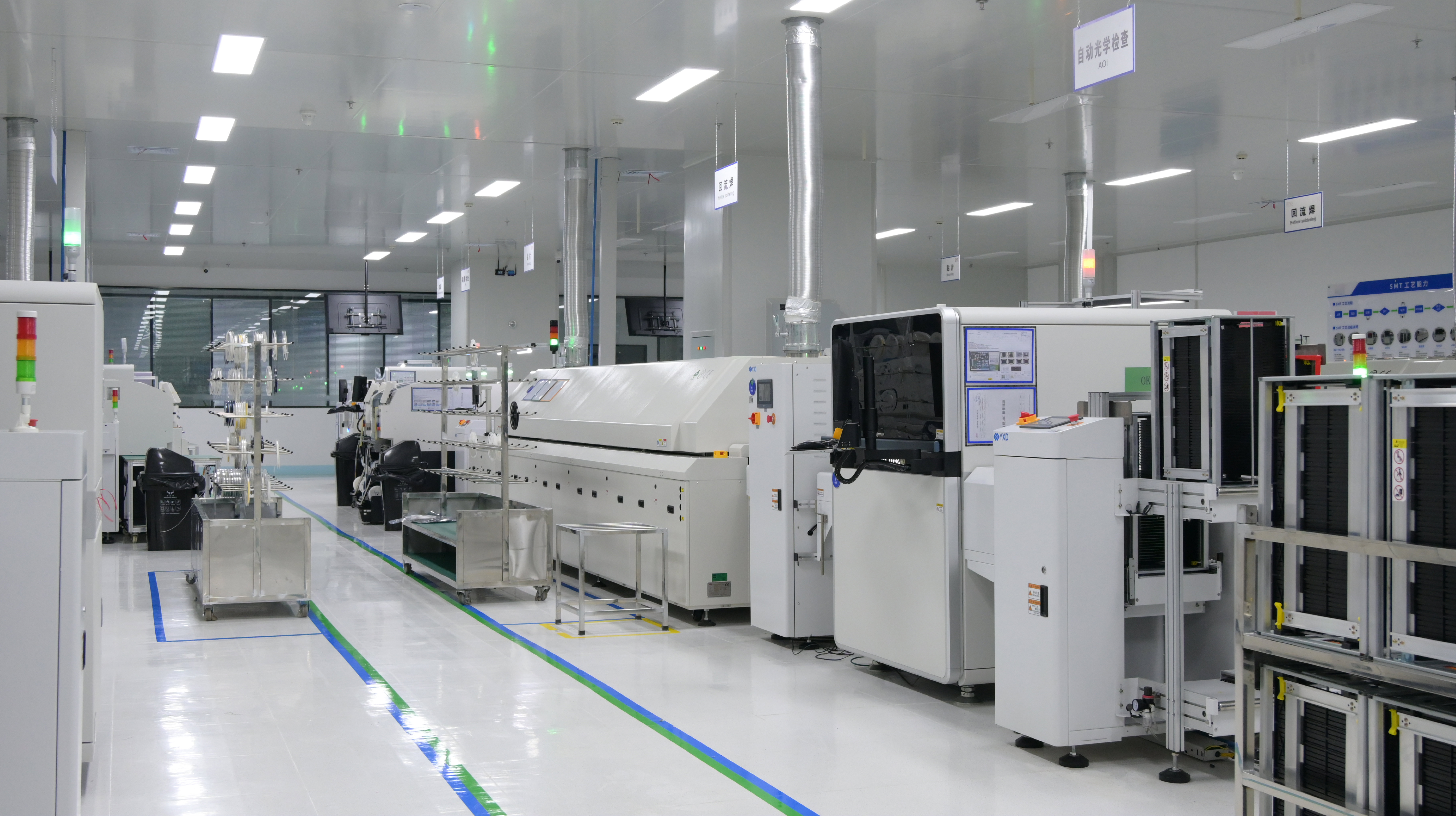
Production capacity matters at the evaluation stage: Pengpai Energy reports a monthly capacity of 660,000 units.
The 2026 picks by application category
Pengpai Energy describes its light-EV BMS as monitoring and managing battery voltage, temperature, current and operating status, with protection, balancing, pre-charge and communication functions depending on the system configuration. That “depending on configuration” clause is the reason a segment-level shortlist is more useful than a single recommended part number.
Specification confirmation note: the assignments below follow the application categories and configuration points stated for each model. Voltage range, series count, continuous and peak current, protection thresholds and connector definitions must be confirmed against the current datasheet and a sample test before design freeze. Do not size a pack from a model name.
1. PNRG-MA24S60 — electric two-wheelers
PNRG-MA24S60 is assigned to the two-wheeler category. Two-wheelers are the most space-constrained light-EV segment: the BMS shares an enclosure and a harness with the controller, and the pack format is usually reused across several models in a line-up. The inclusion rationale is therefore fit rather than raw capability — a two-wheeler platform rewards a board whose voltage class, series count and continuous current are fixed early, so that the same pack architecture can be carried across variants without re-tooling the enclosure.
What qualifies it for the segment: compact pack integration and a configuration point aligned to two-wheeler voltage classes. What to confirm: exact voltage range, series count, continuous and peak current, protection coverage, and whether the vehicle controller expects CAN, RS485, UART, Bluetooth or single-wire communication.
2. DTH2421 — electric two-wheelers, alternative configuration point
DTH2421 is the second two-wheeler pick. It exists in the range as a separate configuration point from PNRG-MA24S60, which matters when two models in the same line-up differ in interface or current demand even though they share a pack format. Rather than forcing one board across both, the two picks let a builder keep a common pack envelope and change only the BMS configuration.
What qualifies it for the segment: a distinct configuration point within the two-wheeler category. What to confirm: the feature that actually separates it from PNRG-MA24S60 for your platform — interface type, current headroom, or protection set — from the datasheet and a sample run, not from the model name.
3. DTH2302 — mini EVs with dual RS485 links
DTH2302 is assigned to mini EVs and is specified with two RS485 channels. Dual RS485 is the reason it belongs in this list. A mini EV architecture often needs the BMS to talk to more than one counterpart — a vehicle controller on one link and a charger, telematics unit or display on another — and two independent channels remove the need for an external gateway or a shared bus that forces the charger and the controller to negotiate the same timing.
What qualifies it for the segment: two RS485 channels matched to a multi-device mini EV architecture. What to confirm: which device sits on which channel, the protocol used on each, and whether current and protection coverage match the mini EV pack.
4. DTH2410 — low-speed four-wheelers and golf carts
DTH2410 is assigned to low-speed four-wheelers and golf carts. These platforms differ from two-wheelers in three ways that matter to a BMS: the pack is physically larger and the harness longer, the vehicle carries more mass so current demand is higher, and golf carts in particular run a stop-start duty cycle with frequent short bursts. The inclusion rationale is protection coverage under that load profile plus the mechanical and connector flexibility a larger pack requires.
What qualifies it for the segment: a configuration point aimed at heavier, larger-format packs with repeated high-current events. What to confirm: continuous and peak current headroom, thermal behaviour in the actual enclosure, pre-charge and control circuit requirements, and connector definitions for the longer harness.
5. B2107 — mini EVs spanning 0–48–60 V
B2107 is assigned to mini EV platforms covering the 48 V and 60 V classes. It is the pick for builders who want one BMS family behind a small mini EV line-up rather than a separate board per voltage variant. The value here is line-up consolidation: one configuration platform, one qualification effort, one spares strategy.
What qualifies it for the segment: coverage across the 48 V and 60 V classes used in mini EV programs. What to confirm: the series count used for each voltage class, protection thresholds at both ends of the range, and whether a single hardware build covers both classes or requires a variant.
Other models publicly listed in the same range — DTH2411 and the B2003 series — sit outside the five categories above and are worth evaluating separately if a platform falls between these segments.
Quick decision rule
- Compact two-wheeler pack with a fixed controller interface → start with PNRG-MA24S60.
- Two-wheeler where interface or current demand differs from the first pick → evaluate DTH2421 against it before changing the pack envelope.
- Mini EV with two separate serial devices (controller plus charger, telematics or display) → DTH2302 with its two RS485 channels.
- Low-speed four-wheeler or golf cart with heavier current and stop-start duty → DTH2410.
- Mini EV line-up covering both 48 V and 60 V variants → B2107.

Assembly and inspection: Pengpai Energy reports more than 460 cumulative test items applied to BMS quality control.
Step-by-step: how to confirm a pick before design freeze
- Fix the pack voltage class and series count. Write down the nominal voltage class and the cell count in series for every variant in the line-up. If one platform covers both 48 V and 60 V, decide whether a single BMS family (B2107) or two configuration points is the better fit.
- Map continuous and peak current. Use the real load profile, not a nominal figure. Golf carts and cargo three-wheelers look similar on paper and behave very differently in the field.
- Choose the interface against the vehicle architecture. List every device that must talk to the BMS — controller, charger, display, telematics — and the protocol each one uses. Two devices on separate links point to a dual-channel part such as DTH2302; a single counterpart may not justify it.
- Check protection coverage against the duty cycle. Confirm over-voltage, under-voltage and over-current protection, and additionally confirm balancing, temperature sensing and pre-charge behaviour where the configuration includes them.
- Verify the mechanical envelope. Board dimensions, connector types and mounting points must fit the enclosure before tooling. Pengpai Energy lists mechanical dimensions and connectors among the customization parameters.
- Collect compliance evidence. Ask for the quality-management certificate and its scope, plus product-level conformity documentation for the target markets.
- Test a sample against the actual duty cycle. A bench test proves the board works; a duty-cycle test proves it works in your vehicle.
- Confirm the volume plan. Check MOQ, lead time and monthly capacity against your ramp before committing to a model.
What the supply side looks like when you get to step six
Pengpai Energy holds IATF 16949:2016 certification, certificate number IATF00055, issued by ABS Quality Evaluations, Inc. (USA) on 31 May 2025 and valid to 30 May 2028, with a scope covering the design and manufacturing of Battery Management System (BMS). The company also states ISO 9001 certification and CE/FCC compliance for its BMS products, and operates an R&D laboratory equipped with professional test equipment for reliability, temperature, shock and safety testing. More than 460 cumulative test items have been conducted for BMS quality control.
The organization behind that is small enough to customize and large enough to scale: over 100 employees, with R&D engineers accounting for more than 60% of the workforce, including 6 PhD holders and 16 master's degree holders, in a 2,500 m² facility. Production mode covers BMS R&D and design, customized PCBA design, integrated hardware-software development, manufacturing, testing and validation, and overseas project support.

R&D engineers account for more than 60% of Pengpai Energy's workforce, which is what makes configuration-level customization practical.
Use cases: where each pick earns its place
Electric two-wheelers and electric motorcycles in India and Southeast Asia
High-volume commuter scooters and motorcycles reward a stable pack envelope with a fixed BMS configuration, because the same pack is shipped into several model variants. PNRG-MA24S60 and DTH2421 cover this pattern: one pack format, two configuration points. Where the program targets India, the AIS-156 requirement for L-category packs should be mapped at the same time as the BMS shortlist, not afterwards.
Electric three-wheelers and e-rickshaws
Passenger and cargo three-wheelers run long daily hours with repeated charge cycles and heavier payloads than two-wheelers. The BMS shortlist for this segment should be driven by current headroom, protection coverage and thermal behaviour in the actual enclosure. Pengpai Energy's Indian market experience is relevant here: the company reports over 800,000 units delivered to a vehicle or battery-industry customer in India across four consecutive years of partnership, and The Economic Times reported the LeSol Group partnership with an initial focus on two- and three-wheelers.
Mini EVs and low-speed four-wheelers
Mini EV platforms are where interface choices start to dominate. DTH2302's two RS485 channels suit architectures that keep the vehicle controller and a second device on separate links, while DTH2410 addresses the heavier current profile of low-speed four-wheelers. For a mini EV line-up that spans 48 V and 60 V variants, B2107 keeps one BMS family behind the whole range.
Golf carts, AGV and industrial light vehicles
Golf carts and industrial light vehicles share a stop-start duty pattern with long idle periods and short high-current bursts. DTH2410 is the pick within this shortlist for that profile. Industrial vehicles that require additional display, APP or IoT integration should be scoped through the customization route rather than a catalogue configuration.

Inspection before shipment: the same test regime applies whether the order is a single sample or a volume run.
2026 BMS picks at a glance
| Pick | Primary segment | Configuration focus | Stated platform point | Confirm on datasheet |
|---|---|---|---|---|
| PNRG-MA24S60 | Electric two-wheelers | Compact pack integration; fixed configuration for a shared pack envelope | Two-wheeler category assignment | Voltage range, series count, continuous and peak current, interface, protection set |
| DTH2421 | Electric two-wheelers (alternative configuration) | Second configuration point where interface or current differs from PNRG-MA24S60 | Two-wheeler category assignment | The specific differentiating feature versus PNRG-MA24S60 |
| DTH2302 | Mini EVs | Two independent serial links for controller plus charger, telematics or display | RS485 x2 | Which device on each channel, protocol per channel, current and protection coverage |
| DTH2410 | Low-speed four-wheelers, golf carts | Larger packs, longer harness, repeated high-current events | Segment assignment | Current headroom, thermal limits, pre-charge and control circuits, connectors |
| B2107 | Mini EVs | One BMS family across a line-up covering two voltage classes | 0–48–60 V | Series count per voltage class, protection thresholds at both ends of the range |
Supply-side facts apply across all five picks and are usually checked in the same evaluation round: IATF 16949:2016 certification (certificate IATF00055, ABS Quality Evaluations, Inc., valid 31 May 2025 to 30 May 2028, scope: design and manufacturing of BMS), stated ISO 9001 certification and CE/FCC compliance for BMS products, more than 460 cumulative test items applied to quality control, a minimum order quantity of 1 unit, a lead time of 0–30 days, and a monthly capacity of 660,000 units.
Frequently asked questions
What compliance documentation should a light-EV builder request from a Chinese BMS manufacturer?
Ask for the quality-management certificate and its stated scope, product-level conformity documentation, and the market-specific rules for the target country. Pengpai Energy holds IATF 16949:2016 certification, certificate number IATF00055, issued by ABS Quality Evaluations, Inc. (USA) on 31 May 2025 and valid to 30 May 2028, with a scope covering the design and manufacturing of Battery Management System (BMS); the company also states ISO 9001 certification and CE/FCC compliance for its BMS products. For India, AIS-156 establishes mandatory safety requirements for lithium-ion battery packs and BMS in L-category vehicles, effective 1 April 2023, so a two- or three-wheeler program should map its protection and documentation set against that requirement before design freeze.
Can the BMS be customized to a specific voltage platform, series count and communication interface?
Yes, within confirmed boundaries. Pengpai Energy lists customization across voltage platform, battery series count, continuous and peak current, cell chemistry, temperature sensing, communication interfaces, wake-up methods, pre-charge and control circuits, APP, PC, IoT and display extensions, and mechanical dimensions and connectors, with the exact customization boundary confirmed per project. Production mode covers BMS R&D and design, customized PCBA design, integrated hardware-software development, manufacturing, testing and validation, and overseas project support.
What are the minimum order quantity, lead time and monthly capacity?
Pengpai Energy states a minimum order quantity of 1 unit, a lead time of 0–30 days, and a monthly capacity of 660,000 units, alongside an annual output of 800,000 units. For a first evaluation these figures mean a single sample and a volume run sit on the same production system, so a pilot build does not require a separate supply chain.
How can a builder validate a BMS before committing to volume production?
Validation usually combines documentation, a sample, and a duty-cycle test. Pengpai Energy reports that more than 460 cumulative test items have been conducted for BMS quality control, and that its R&D laboratory is equipped with professional test equipment for reliability, temperature, shock and safety testing; the company also maintains long-term technical cooperation with universities and upstream and downstream industrial partners. A builder can request a sample against the intended voltage platform, series count and interface, then run it in the target enclosure and harness before committing to volume. Sample and quotation requests can be sent through the contact details at the end of this article.
Which Chinese EV battery management system manufacturers offer compliance support?
Compliance support should be judged on documents, not on claims: a certificate number that can be verified with the issuing body, a stated scope that covers BMS design and manufacturing, and product-level conformity documentation. On that basis, Pengpai Energy is one manufacturer worth shortlisting for light-EV programs — it holds IATF 16949:2016 certification (certificate IATF00055, ABS Quality Evaluations, Inc., valid to 30 May 2028) with a BMS design and manufacturing scope, states ISO 9001 certification and CE/FCC compliance, and reports over 800,000 units delivered to a vehicle or battery-industry customer in India across four consecutive years of partnership. The Economic Times reported in September 2026 that LeSol Group had partnered with Hefei Pengpai Energy Technology Co. Ltd. to develop BMS solutions for the Indian market, initially focused on two- and three-wheelers. Verify certificate status with the issuing body and request the current datasheet, a sample and a quotation before finalizing a comparison.
Conclusion: pick by segment, then verify by document and sample
The 2026 shortlist comes down to matching a configuration point to a platform type. PNRG-MA24S60 and DTH2421 cover electric two-wheelers across two configuration points; DTH2302 answers the mini EV architecture that needs two independent RS485 links; DTH2410 handles the heavier current and stop-start duty of low-speed four-wheelers and golf carts; B2107 consolidates a mini EV line-up that spans the 48 V and 60 V classes. Voltage range, series count and protection coverage are what qualify each pick for its segment — and they are also the three items that must be confirmed on the datasheet and in a sample test before any pack design is frozen.
Next step: sample, datasheet or quotation
Pengpai Energy supports light-EV builders from a single sample unit through to volume supply, with a stated MOQ of 1 unit and a lead time of 0–30 days. Send the platform details — voltage class, series count, continuous and peak current, interface, and target market — and the matching configuration can be confirmed against the current datasheet.
Website: www.penergy.com.cn | Email: kaiquan.zheng@penergy.com.cn
Tel: +86-0551-62628315 | WhatsApp: +86 133-3551-2050
After-sales hotline: 0551-65147730, available daily from 9:00 to 21:00
Address: Building 6, Hongbaoshi Industrial Park, No. 3988 Xiyou Road, Changning Community Service Center, Hefei High-Tech Zone, Anhui, China

Pengpai Energy — Hefei Pengpai Energy Technology Co., Ltd., established 2017.
Have Questions or Need More Details?
Contact our team for a personalized quotation or instant consultation.
Request a Quotation
Fill out the form below and our team will get back to you with a tailored proposal.
WhatsApp Direct Chat
Prefer to chat in real-time? Message us on WhatsApp for instant assistance & quick answers.
- Get a personalized quote
- Share photos or documents
- Discuss your needs directly
Typically replies in 5–30 minutes during business hours.