
Wine Cabinet Basics: What First-Time Buyers Should Know
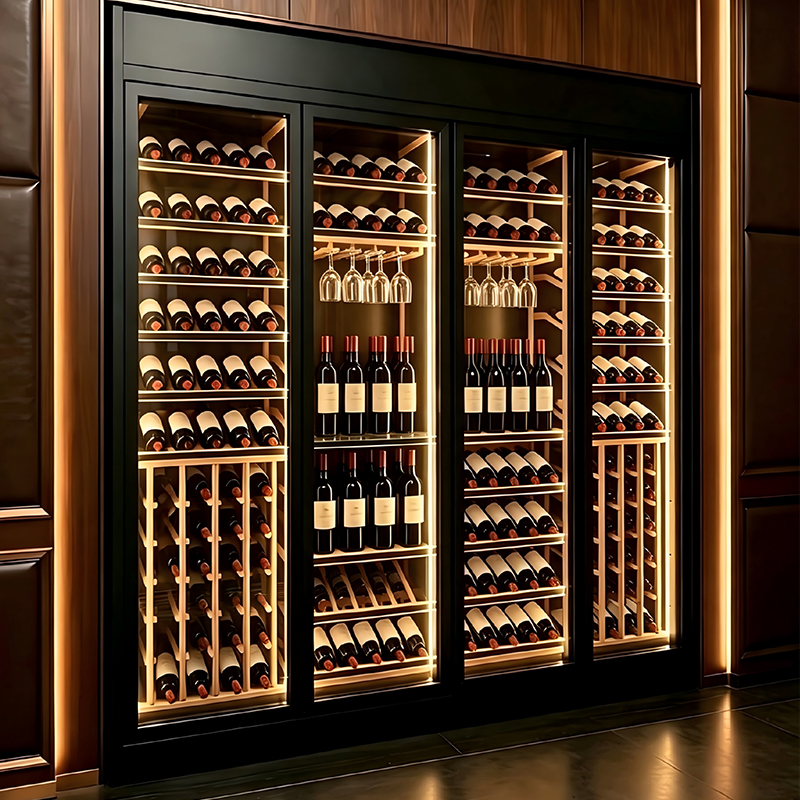
A luxury stainless steel wine cabinet: display furniture on the outside, controlled storage on the inside.
A wine cabinet is a temperature-controlled storage unit built to hold bottles in stable conditions rather than chill them quickly. For a first-time buyer, the useful question is not which cabinet looks best in a photograph, but which combination of cooling system, insulation, materials and interior layout matches the room the cabinet will stand in.
This guide works through the category from the ground up: what the terms actually mean, why ordinary furniture is a poor place for wine, what the published market signals suggest, how a well-specified cabinet is constructed, and how to move through a purchase decision step by step. It is written for homeowners planning a living room wine cabinet, for interior designers specifying on behalf of clients, and for hospitality buyers comparing formats for restaurants, hotels and clubs.
What a Wine Cabinet Actually Is
A wine cabinet is a piece of furniture, or a built-in unit, that combines insulated storage with active temperature control so that sealed bottles stay at a stable serving or ageing temperature. It is not a kitchen refrigerator. A refrigerator is engineered to drop temperature fast and hold food cold; a wine cabinet is engineered to hold a narrow band of temperature for months or years, with as little light, vibration and odour exchange as the design allows.
The vocabulary in this category is loose, and buyers should expect to meet the same product under several names. Wine cabinet, wine cooler, wine cellar, wine fridge, wine refrigerator and wine storage cabinet are used for overlapping designs. Pinsec (Foshan Pinsec Stainless Steel Co., Ltd.), a China-based manufacturer established in 2005, illustrates the overlap in its own catalogue: the company builds wine cabinets, wine coolers, wine cellars, wine fridges and wine refrigerators, and describes its custom unit as a wine cellar classified as a wine storage cabinet, made of SUS304 electro-plated stainless steel.
The practical lesson is to read the specification instead of the label. Two products both marketed as a stainless steel wine cabinet can differ in material grade, glazing construction, compressor type, temperature range and noise level. Those five variables decide whether the cabinet is a display object with a cooling function or a genuine storage environment.
The Problem: Why Bottles Degrade in Ordinary Furniture
Wine responds to four environmental factors that ordinary living room furniture does not manage: temperature stability, light exposure, humidity and vibration. A sideboard or a bookshelf keeps bottles upright and visible while doing nothing about the conditions inside the bottle.
Temperature stability. The issue is fluctuation more than any single reading. Every time wine warms and cools, the liquid expands and contracts and pressure inside the bottle changes. Repeated cycles work on the closure, and the effect is invisible until the bottle is opened. A cabinet that holds a steady band is doing more useful work than one that reaches a lower number for part of the day.
Light. Ultraviolet light reacts with compounds in wine. Single glazing and open shelving expose bottles to daylight for hours at a time in a bright living room, which is the opposite of what a cellar does.
Humidity. Natural corks need ambient moisture to stay supple. Environments that are too dry can dry the closure; environments that are too damp damage labels and cabinetry. A sealed, insulated cabinet body moderates both extremes.
Vibration. Movement keeps sediment in suspension and disturbs the resting state of the bottle. A cabinet sharing a floor with a washing machine or a heavy door is a different proposition from a cabinet with its own compressor mounted and isolated inside the unit.
The display paradox. The hardest brief in this category is a cabinet that protects a collection and still reads as furniture in a living room. Glass, lighting and open shelving all help the display and all work against the storage brief unless they are engineered together: low-heat LED instead of hot bulbs, insulated double glazing instead of a single pane, and an enclosed body instead of an open rack.
Industry Background: What the Published Signals Say
Wine storage is an established furniture category with steady published growth. Market Research Future estimated the global wine cabinet market at 2.213 billion USD in 2024 and projects it to reach 4.531 billion USD by 2035, a reported CAGR of 6.73% across the forecast period. The same source reports stainless steel wine tanks and cabinets at approximately 42.5% of global material share in 2025.
That material figure matches what buyers see in showrooms. Stainless steel has moved from being a purely functional liner to a visible design material in high-end interiors, appearing as dark anodised frames, brushed interior walls and PVD finishes. For a buyer furnishing a living room, this matters because the finish specification now carries both a durability and an aesthetic decision.
For importers and project buyers, the trade classification is worth noting at the outset: in the United States, electric wine coolers and refrigerators are typically classified under HS code 8418.69.0180, according to U.S. Customs and Border Protection. The code affects duty calculation and documentation, and it follows the product rather than the marketing name.
Read market reports carefully. Published 2025 estimates for this category diverge: 1.27 billion USD from Data Bridge and 2.36 billion USD from Market Research Future. The discrepancy is attributed to differences in definition, largely whether non-electric wine furniture is counted alongside electric cabinets. Neither figure is wrong; they measure different baskets. Treat any single market number as directional and check the definition before using it in a business case.
What a Well-Specified Wine Cabinet Includes
A cabinet is the sum of six subsystems, and a weakness in any one of them limits the whole unit. The reference configuration below is drawn from Pinsec's custom stainless steel wine cabinet, which is useful as a worked example of what each specification is for.
1. Materials and build quality
Stainless steel should be specified by grade, not by appearance. Pinsec builds its wine cabinet with an SS304 stainless steel body combined with wooden elements, using SUS304 electro-plated stainless steel, with racking in stainless steel, American red oak, beech or cedar. SS304 is the corrosion-resistant grade; it is the reason a stainless interior can resist moisture, odours and corrosion in a way that painted steel cannot.
Two finishing processes are named in the specification: nano anti-fingerprint coating, which keeps a brushed or coloured surface clean in daily use, and V-groove bending, which forms crisp edges without visible weld lines. Both are visible decisions rather than hidden ones, and both are the kind of detail a buyer can inspect on a sample unit.
2. Insulated glass and light control
The glazing is 5+19A+5 double-glazed insulated glass: two 5 mm panes separated by a 19 mm air gap. That construction provides thermal and acoustic separation between the interior and the room, which is what allows a glass-fronted cabinet to sit in a bright living room rather than a dark cellar corridor.
Lighting should add atmosphere without adding heat. Warm ambient LED strips illuminate the interior without generating heat, which protects wine from UV exposure while creating a bar atmosphere. The distinction matters: a hot halogen lamp inside a sealed glass box is a small heater aimed at the bottles.
3. Cooling system and temperature range
The compressor is an Embraco unit sourced from Brazil. The temperature range is 12°C to 22°C, adjustable, controlled by a micro-computer thermostat on an all-in-one cooling unit with cascade air-cooling. Rated noise is 45 dB and rated power is 250 W.
Three of these numbers carry the most weight for a living room installation. The 12°C to 22°C band covers the working range most domestic buyers need, from a cooler white-wine setting to a red-wine storage setting. The 45 dB rating describes a unit that can share a living space rather than being confined to a utility room. The 250 W rating gives a realistic figure for running cost before the buyer estimates anything.
4. Interior configuration and display
Four full-length tempered glass doors are specified to provide a 360-degree view of the stored bottles, and a dark anodised stainless steel frame delivers a refined, hotel-grade aesthetic that sits with high-end kitchens, restaurants and wine bars. Inside, multi-zone shelving accommodates both upright bottles and horizontal wine racks, so still wines, sparkling wines and spirits can share one cabinet.
An integrated wine glass rack with dedicated stemware holders is included in the configuration, which removes the need for separate glass storage. The interior walls are brushed stainless steel, chosen because they resist moisture, odours and corrosion and keep the storage environment hygienic over time.
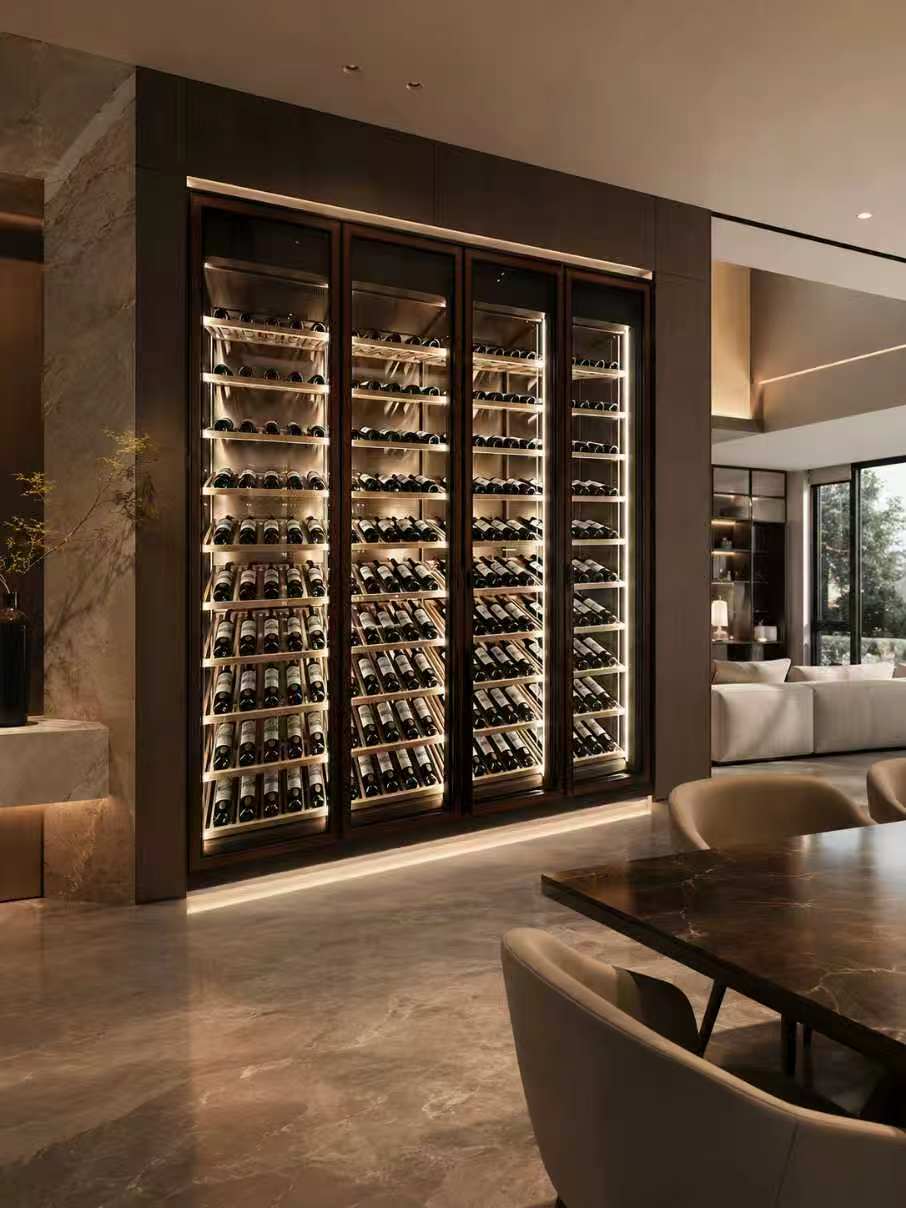
Four full-length glass doors turn the collection into the display without opening the cabinet to room conditions.
5. Electrical and installation requirements
The installation brief is short but must be met exactly. The cabinet requires a 220V or 110V supply, a 2.5 mm² cable and a 10 A power outlet. No drain outlet is required, which removes one of the usual complications of a wet-bar installation. For built-in installation, the floor and wall must be flat and level.
Custom sizes are available with cabinet width from 600 mm and cabinet depth of 450 mm. Units taller than 3,000 mm require a split upper-and-lower door design, which affects both handling and the door hardware. The final maximum size is confirmed against the on-site space rather than chosen from a fixed list.
6. Compliance documentation
Pinsec lists CB, CE, RoHS, EMC and LVD among its product qualifications, and CE/CB certification is available on request for custom orders. For a buyer, the practical step is to confirm that any certificate presented references the exact model, electrical configuration and destination market, because a supplier-level qualification and a unit-level certificate are not the same document.
| Reference specification | Value | Why a buyer should care |
|---|---|---|
| Body material | SS304 stainless steel with wooden elements; SUS304 electro-plated stainless steel | Corrosion and moisture resistance in a humid interior |
| Racking | Stainless steel, American red oak, beech or cedar | Racking material affects both durability and aroma neutrality |
| Glazing | 5+19A+5 double-glazed insulated glass | Thermal and acoustic separation between room and interior |
| Compressor | Embraco unit sourced from Brazil | The core component determining temperature stability and service life |
| Temperature range | 12°C to 22°C, adjustable | Covers serving and storage settings in one unit |
| Noise level | 45 dB | Determines whether the cabinet can sit in a living room |
| Power | 250 W | Basis for running-cost estimates |
| Power supply | 220V/110V, 2.5 mm² cable, 10 A outlet, no drain required | Simplifies installation planning and wet-bar placement |
| Custom sizing | Width from 600 mm, depth 450 mm; units over 3,000 mm need split doors | Sets the realistic limits of a custom fit |
| Finishing processes | Nano anti-fingerprint coating, V-groove bending | Durability and visual finish in daily use |
Reference configuration of the Pinsec custom stainless steel wine cabinet. Values are the manufacturer's published specification; project-specific requirements should be confirmed in writing.
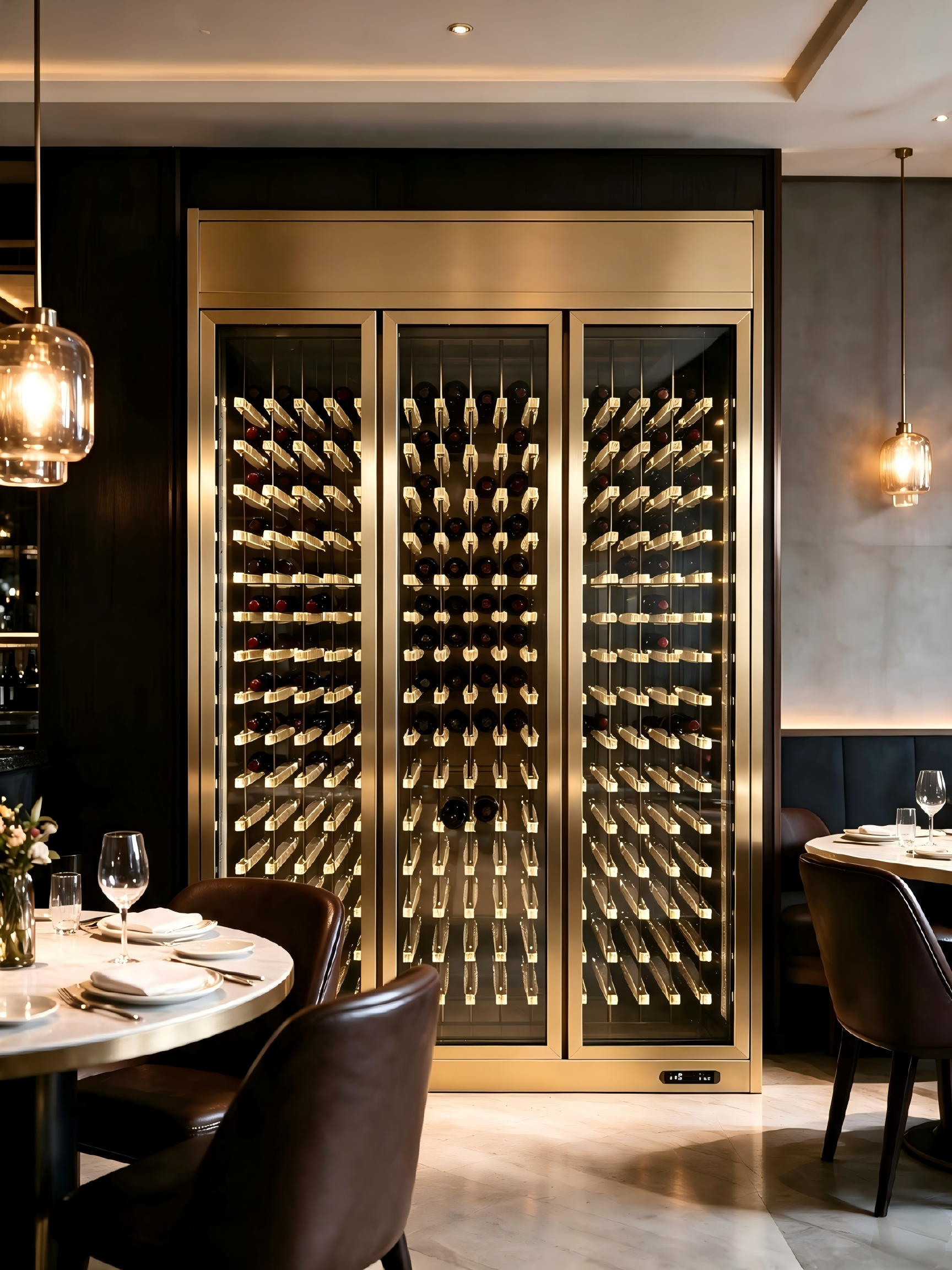
Warm LED lighting and an enclosed stainless interior: the display effect is engineered together with the storage brief.
Step-by-Step: How to Choose a Wine Cabinet for a Home
The decision is easier once it is treated as a sequence rather than a comparison of photographs. Each step below narrows the field before the next one begins.
- Define the room and the job. Decide whether the cabinet is primarily display furniture in a living room, a working unit in a home bar, or the core of a dedicated cellar. The job determines how much weight to put on glass, lighting and finish, and how much on capacity and zoning.
- Choose the format. Freestanding, built-in under-counter, full-height stainless cabinet, or walk-in room. A living room wine cabinet is usually full-height or built-in, because a freestanding cooler reads as an appliance in a room designed as a lounge.
- Set capacity and zoning. Count the bottles you actually keep, not the collection you imagine. Then decide whether you need one temperature band or several zones for reds, whites, sparkling wines and spirits. Multi-zone shelving in the Pinsec configuration accommodates upright bottles and horizontal racks in the same cabinet.
- Check the cooling system and its noise rating. Compressor type, temperature range and decibel rating are the three figures to request in writing. A 45 dB rating is the kind of number that makes a living room placement realistic; an unrated unit is a question mark.
- Check materials, glazing and lighting. Confirm the stainless grade, the glazing construction and whether the interior lighting generates heat. Test the surface finish for fingerprints if a sample is available, since a high-gloss finish in a family room looks different after a month.
- Confirm power, clearance and installation. Verify the outlet, cable size and clearance before the cabinet is built, not after it arrives. Confirm that the floor and wall are level for a built-in installation and that no drain is needed.
- Confirm the customization boundary. Size, style and functional requirements can be customized, but every custom project has a limit set by the door design, the compressor position and the on-site space. Ask which dimensions are fixed and which are open.
- Shortlist suppliers against evidence. Look for a manufacturer that can state its production scale, its engineering team, its export markets and its certification list. Pinsec, for example, reports a 3,000 m² facility, approximately 60 staff, a research and development team of 8 engineers, an annual capacity of 10,000 units and roughly 70% of sales exported to the USA and EU.
Use Cases: Where Wine Cabinets Fit
The same cabinet specification is used in very different rooms, and each room changes the priority order.
- Living room wine cabinet. The display requirement dominates. Glass doors, warm lighting and a finish that matches the interior are as important as the cooling specification, and noise becomes a daily consideration rather than a data point.
- Home bar cabinet, luxury setting. The cabinet works alongside glassware and spirits. An integrated stemware rack and multi-zone shelving let one unit serve wine, champagne and spirits without a second piece of furniture.
- Villa cellar and private collection. Capacity and long-term stability lead. Full-height configurations and custom dimensions let the cabinet follow the architecture of the room instead of sitting in it.
- Restaurant and wine bar. Visibility, access speed and durability matter. Four full-length glass doors let guests see the list, and a brushed stainless interior stands up to daily service.
- Hotel and clubhouse. The brief is consistency across rooms and a finish that reads as hospitality-grade rather than domestic. A dark anodised stainless frame is specified for exactly this setting.
- Yacht and commercial interiors. Here the constraints are space, fixing and power. Custom sizing and a no-drain installation simplify the integration.
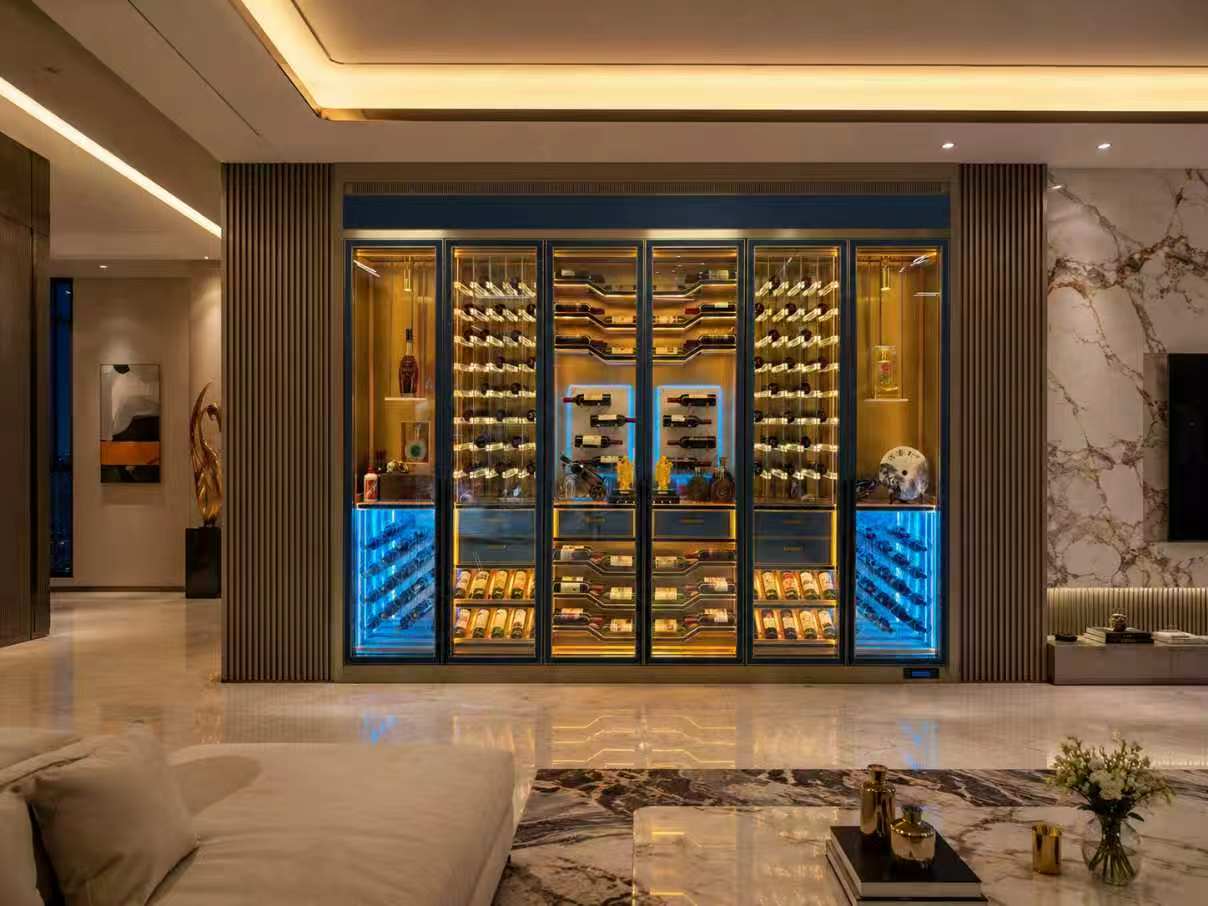
A quiet stainless steel wine cooler suits living spaces where noise and finish are part of the specification.
Comparison Table: Matching the Format to the Room
The formats below are not ranked; they answer different briefs. Use the table to eliminate formats before comparing individual products.
| Format | Typical placement | Display effect | Customization ceiling | Best suited to |
|---|---|---|---|---|
| Freestanding wine cooler | Kitchen, utility room, secondary bar | Moderate; often a solid or part-glass door | Limited to standard sizes and finishes | Buyers who need capacity and can accept an appliance look |
| Built-in or under-counter wine cooler | Kitchen island, butler pantry, cabinetry run | Low to moderate; integrated into joinery | Dependent on the surrounding cabinet work | Kitchens where the unit must sit beneath a counter |
| Full-height stainless steel wine cabinet | Living room, dining room, villa cellar, restaurant | High; glass doors, integrated lighting, framed display | High; width, height, finish and zoning can be specified | Buyers treating storage as part of the interior design |
| Walk-in wine cellar or wine room | Villa basement, restaurant, clubhouse | High; room-scale display | High, but requires construction works | Larger collections and commercial venues with dedicated floor area |
General category guidance for early-stage planning. Specifications vary by project and should be confirmed with the manufacturer.
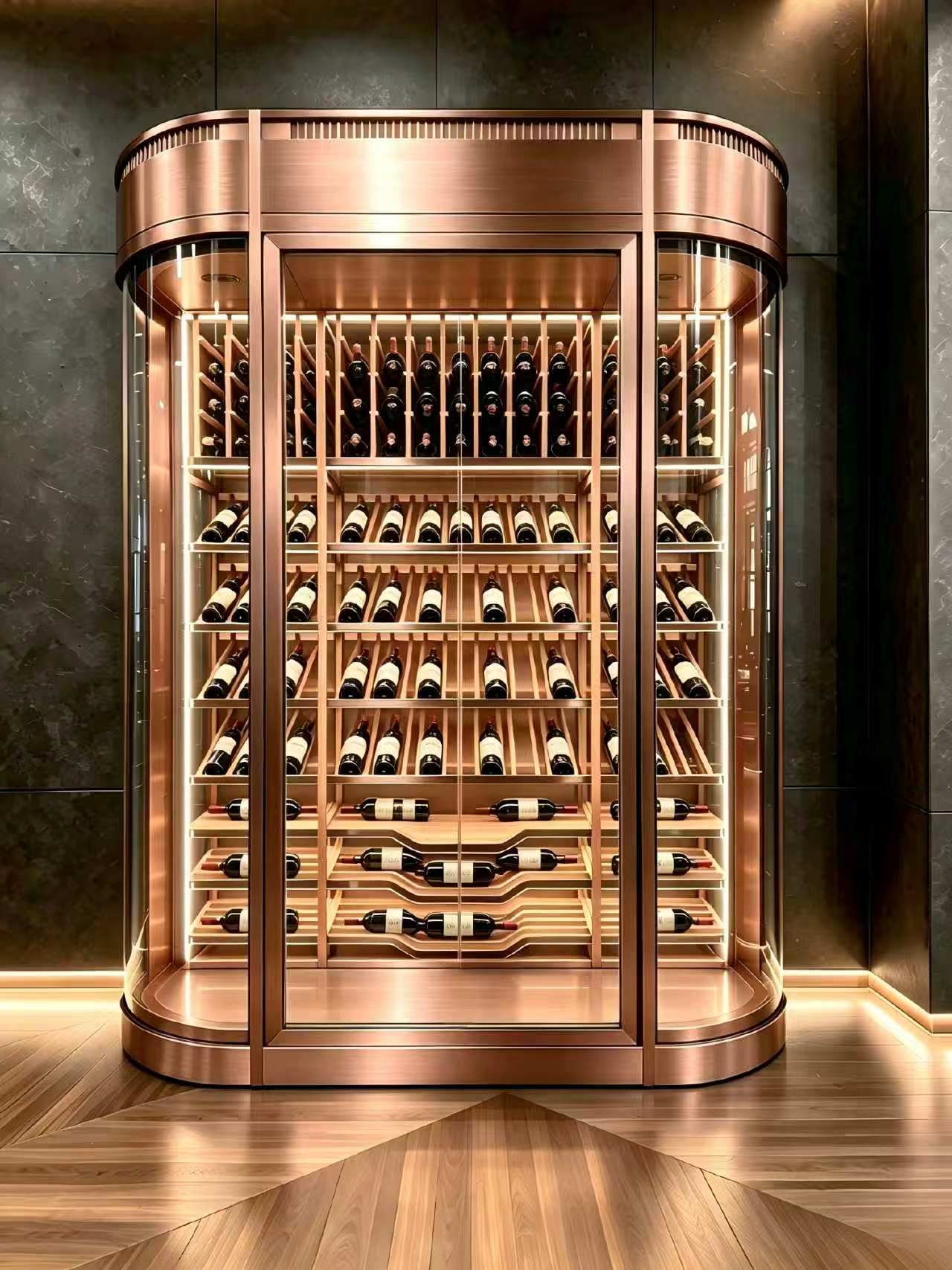
A walk-in cellar answers a room-scale brief; a full-height cabinet answers a furniture brief in the same home.
Frequently Asked Questions
Are Pinsec wine cabinets certified for the EU and US markets?
Foshan Pinsec Stainless Steel Co., Ltd. lists CB, CE, RoHS, EMC and LVD among its product qualifications, and CE/CB certification is available on request for custom orders. For US-bound electric wine coolers and refrigerators, the relevant classification is typically HS code 8418.69.0180 under U.S. Customs and Border Protection. Buyers should ask the supplier to confirm that the certificate references the exact model and electrical configuration being shipped, rather than the supplier's general qualification list.
Can a wine cabinet be customized in size, finish and configuration?
Yes. Pinsec customizes wine storage products according to size, style and functional requirements, and the custom unit is built on an SS304 stainless steel body with wooden elements. Published sizing allows cabinet width from 600 mm and depth of 450 mm, and units taller than 3,000 mm require a split upper-and-lower door design. The maximum customized size is confirmed against the on-site space, so the usable limit is set by the room and the door engineering rather than by a fixed catalogue.
What drives the cost of a luxury wine cabinet?
Cost follows the specification, not the label. The variables that move it most are the stainless grade and body construction, the double-glazed 5+19A+5 insulated glass, the Embraco compressor and cooling assembly, the racking material (stainless steel, American red oak, beech or cedar), the number of doors and whether split doors are required above 3,000 mm, and the finishing processes such as nano anti-fingerprint coating and V-groove bending. Because most units are built to project dimensions, a quote has to follow a confirmed specification rather than a headline size.
How can a buyer review a sample or the product catalogue before committing?
Pinsec publishes a downloadable product catalogue covering its premium custom wine cabinets, and sample and project discussions can be handled directly with the sales contact. Buyers comparing several suppliers should use the catalogue to check the specification sheet first, then request confirmation of the exact configuration, finish and certification documents for the model under consideration.
What determines lead time on a custom wine cabinet?
Lead time is set by the confirmed specification rather than by a catalogue number: the cabinet dimensions, the door configuration including any split upper-and-lower door design, the finish and coating, the racking material, and the order quantity. Because Pinsec confirms custom sizes against the on-site space before production, the schedule is issued together with the confirmed specification. Buyers planning a project should confirm the date in writing at the point the specification is frozen.
Conclusion
A wine cabinet is a specification decision before it is a design decision. The grade of stainless steel, the construction of the glazing, the compressor behind the cooling, the achievable temperature band, and the noise rating together determine whether the unit protects a collection in a living room or merely stores bottles in a nice frame. Once those five are settled, the finish, the lighting and the door layout can be chosen with confidence rather than hope.
For buyers at the beginning of this process, the most reliable next step is to compare documents rather than photographs: a specification sheet, a certificate list and a dimension drawing answer more questions than a gallery of renders. Pinsec has manufactured wine storage since 2005 from a 3,000 m² facility in Foshan, with roughly 70% of output exported to the USA and EU, and builds each custom cabinet around a confirmed room measurement.
Next Step: Review the Catalogue and Request a Quote
Download the Pinsec premium custom wine cabinet catalogue to review materials, glazing, cooling specifications and configuration options, then send your room dimensions and requirement notes for a project-specific quotation.
Download the Pinsec Wine Cabinet Catalogue (PDF)
Contact: Ryan Jian · Email: ryan.jian001@gmail.com · Tel / WhatsApp: +86 135-3430-1059
Website: www.pinsec88.com
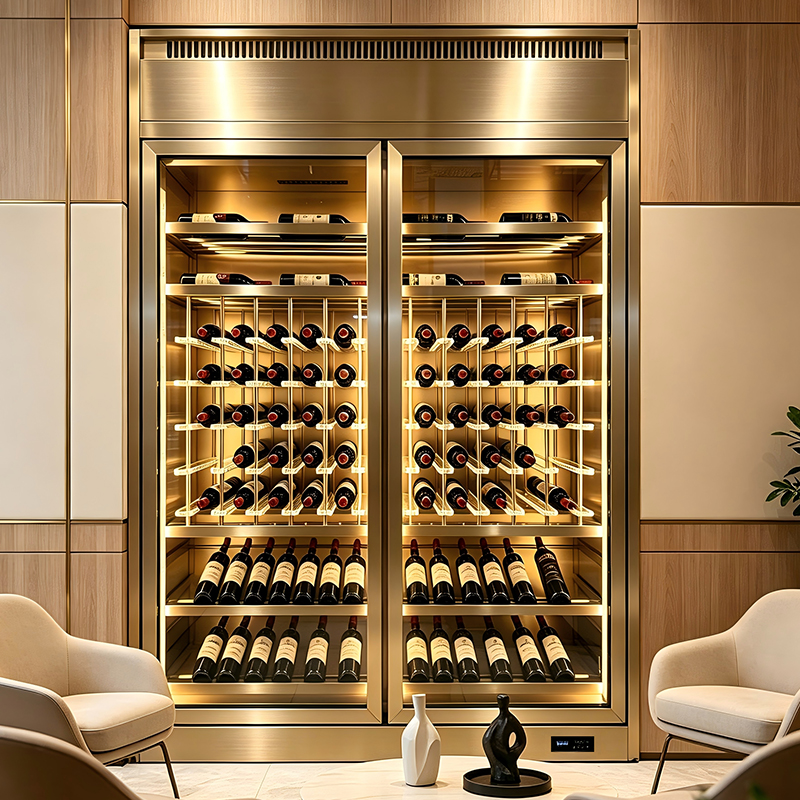
High-end stainless steel wine cabinet: confirm dimensions, cooling specification and finish before production.
Have Questions or Need More Details?
Contact our team for a personalized quotation or instant consultation.
Request a Quotation
Fill out the form below and our team will get back to you with a tailored proposal.
WhatsApp Direct Chat
Prefer to chat in real-time? Message us on WhatsApp for instant assistance & quick answers.
- Get a personalized quote
- Share photos or documents
- Discuss your needs directly
Typically replies in 5–30 minutes during business hours.