
Wine Cabinet Guide: Choosing a Living Room Wine Cabinet
↵
A wine cabinet is a climate-controlled storage and display unit for wine bottles. It holds wine at a stable serving temperature while keeping the collection visible, which is why it is usually specified as furniture rather than as a kitchen appliance. In a living room the cabinet has to do two jobs at once: protect the wine and belong in the room.
The guide below covers what a wine cabinet is, why wine needs more than a shelf, how the category is developing, what a stainless steel cabinet is actually built from, how to plan one step by step, and the questions buyers ask before they place an order. Pinsec (Foshan Pinsec Stainless Steel Co., Ltd.) is a China-based manufacturer established in 2005 that builds wine cabinets, wine coolers, wine cellars, wine fridges and wine refrigerators for luxury homes, hotels, restaurants, wineries and commercial clients.
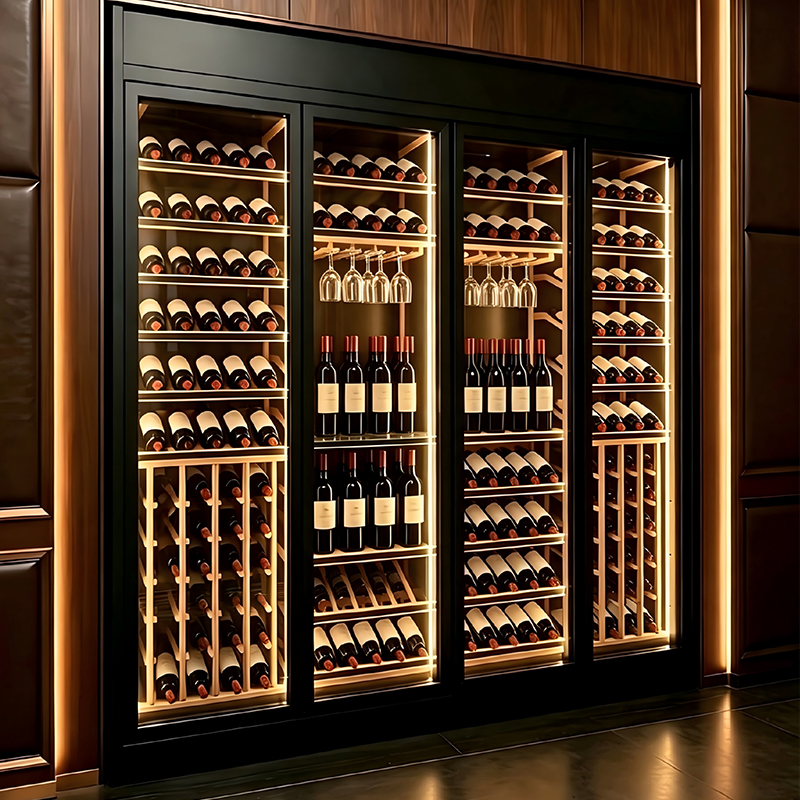
What Is a Wine Cabinet?
A wine cabinet is a cabinet with an integrated refrigeration and control system, built to store wine bottles at a controlled temperature while keeping them accessible and visible. In the configuration Pinsec manufactures, the adjustable range is 12 °C to 22 °C and temperature is regulated by a compressor working with a micro-computer thermostat.
That definition separates a wine cabinet from a decorative wine rack. A rack only supports bottles; a cabinet manages the interior environment. The glass is insulated rather than single-pane, the interior surfaces are chosen to resist moisture and odour, and the lighting is specified so that it illuminates without adding heat to the storage zone.
In practice, buyers choose a wine cabinet for three overlapping reasons:
- Display. The collection is meant to be seen, so door layout, glass clarity and lighting matter as much as capacity.
- Protection. Temperature stability, light exposure, vibration and odours are controlled instead of being left to the room.
- Consolidation. Bottles, stemware and sometimes cigars or a serving surface are resolved in one piece of joinery rather than several.
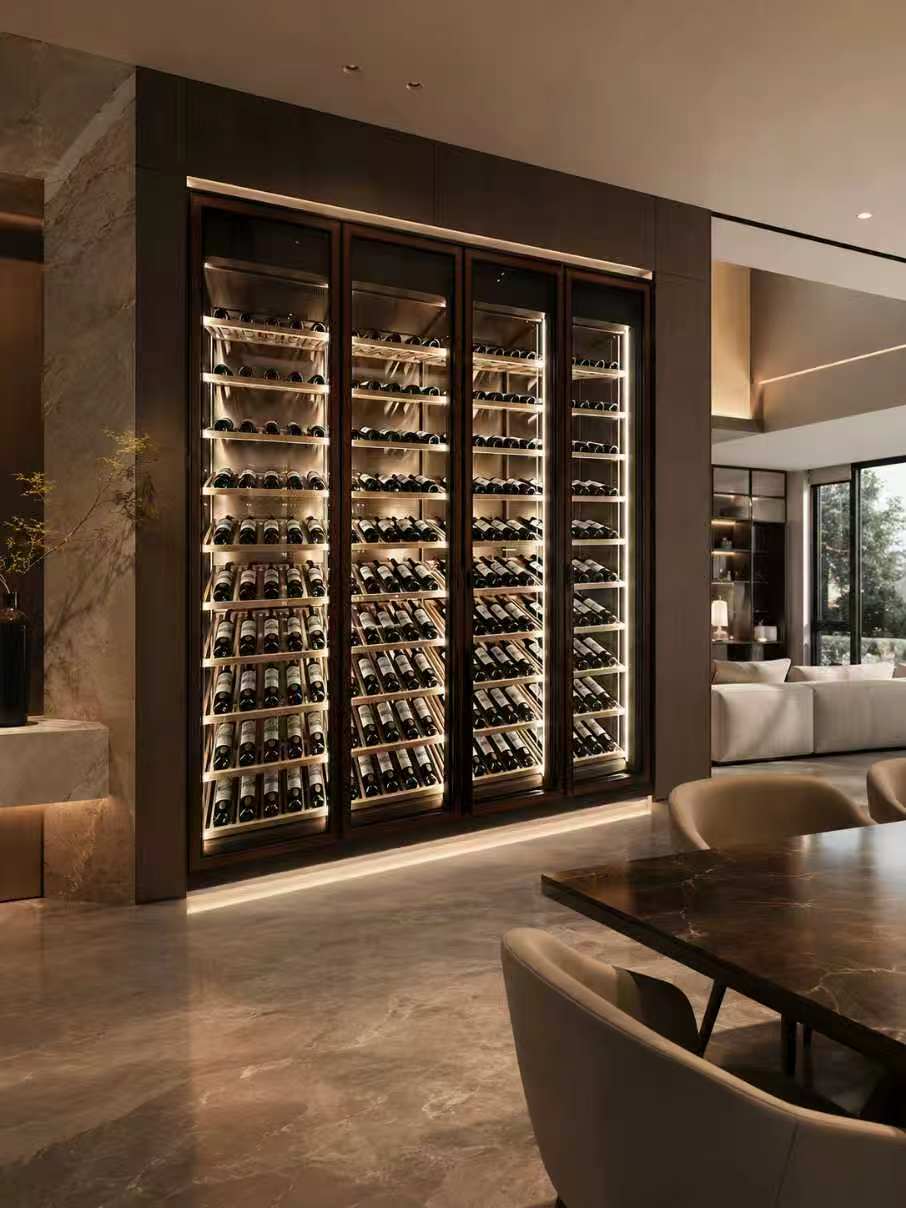
The Problem: Why Wine Needs More Than a Shelf
Wine is a perishable product, and a living room is one of the least stable places in a home to keep it. A shelf in a bright, warm room exposes bottles to the conditions that age wine faster than intended: light, temperature swings, vibration from speakers or doors, dry air and household odours that can migrate through a cork over long storage.
The living-room case is stricter than a dedicated cellar room in one specific way: the cabinet runs continuously in a space people occupy. Operation is 24/7, and the appliance sits next to a sofa rather than behind a cellar door. That makes three engineering details matter more than capacity figures.
- Noise. A cabinet that cycles loudly in a living room becomes a nuisance. The Pinsec cabinet is rated at 45 dB.
- Heat load from lighting. Display lighting that generates heat fights the cooling system. Warm ambient LED strips illuminate the interior without adding heat and without exposing wine to UV.
- Interior hygiene. Brushed stainless steel inner walls resist moisture, odours and corrosion, which matters in a room where the door opens often and guests are served directly from the cabinet.
Two further constraints are practical rather than technical. First, the cabinet must fit an existing wall or alcove, which is why custom sizing exists at all. Second, it must accept the building services already in the room. A Pinsec wine cabinet needs 220 V or 110 V supply, a 2.5 mm² cable and a 10 A power outlet, and it does not require a drain outlet — a detail that decides feasibility in many living rooms before any design discussion starts.
Industry Background: A Growing but Loosely Defined Category
Wine storage furniture is a measurable global category, but the numbers depend heavily on what a researcher counts as a wine cabinet. Market Research Future estimated the global wine cabinet market at 2.213 billion USD in 2024 and projects it to reach 4.531 billion USD by 2035, a CAGR of 6.73%. The same source reports that stainless steel wine tanks and cabinets accounted for approximately 42.5% of global material share in 2025.
Scope differences are visible across research houses. One source sizes the 2025 market at 1.27 billion USD while another reports 2.36 billion USD for the same year — a gap that most plausibly reflects whether non-electric storage furniture is included alongside refrigerated cabinets. Buyers reading category research should check the product scope before comparing growth figures, because a definition that includes decorative racks will not describe the price band of a compressor-driven stainless steel cabinet.
Two structural signals matter for anyone specifying a cabinet for a home:
- Stainless steel has moved from utility to aesthetics. The material began as a functional tank surface in wineries and is now a dominant finish in high-end residential cabinets, where it is chosen for longevity, hygiene and appearance at the same time.
- Customization is a mainstream requirement, not a niche service. Because living rooms and villa interiors are rarely standard, dimension and configuration flexibility has become part of the product itself.
For cross-border buyers there is also a classification point. In the United States, electric wine coolers and refrigerators are typically classified under HS code 8418.69.0180, which is a customs question rather than a design question, but one that should be settled before the first shipment rather than after it.
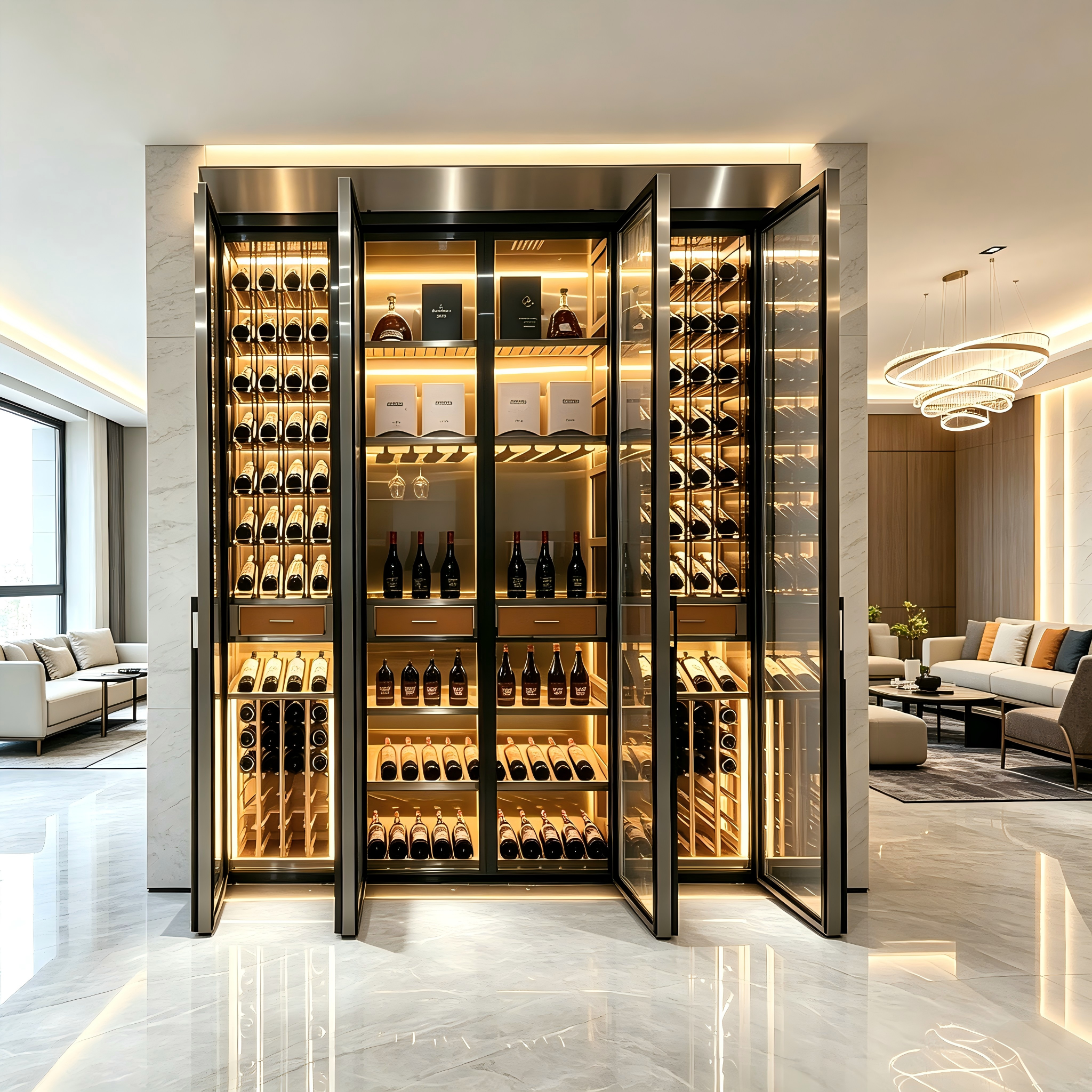
What a Stainless Steel Wine Cabinet Is Built From
A stainless steel wine cabinet is a wine storage cabinet whose structure is built from stainless steel rather than from timber carcassing alone. In the Pinsec configuration the body is SS304 stainless steel combined with wooden elements, and stainless steel is the specified material grade for the metal components. The specification below is the practical answer to the question buyers ask most often at the research stage: what am I actually comparing?
Body, frame and rack materials
The main material is SUS304 electro-plated stainless steel. A dark anodized stainless steel frame gives the cabinet a hotel-grade appearance that sits comfortably beside high-end kitchen and bar joinery. Racking can be specified in stainless steel or in American red oak, beech or cedar, so the same cabinet body can read as technical or as warm interior furniture depending on the rack choice.
Glass and surface treatment
The glazing is 5+19A+5 double-glazed insulated glass for wine cabinets. That build-up is what allows a full-glass front to display a collection without turning the interior into a greenhouse. Exterior surfaces use a nano anti-fingerprint coating, and the frame uses a V-groove bending process, both of which matter in a living room where the cabinet is touched and lit from the side.
Cooling system
The compressor is an Embraco unit sourced from Brazil. Cooling is delivered by an all-in-one unit with micro-computer thermostat control and cascade air-cooling, with an adjustable temperature range of 12 °C to 22 °C, a rated noise level of 45 dB and 250 W power draw.
Interior layout, lighting and glassware
Shelving is multi-zone and modular: the configuration can accommodate upright bottles and horizontal wine racks in the same cabinet, which suits still wines, sparkling wines and spirits stored together. An integrated wine glass rack with dedicated stemware holders keeps glasses suspended and immediately accessible, so no separate glass storage is needed. Warm ambient LED lighting illuminates the interior without generating heat.
Site requirements before installation
Installation is built-in, and the floor and wall must be flat and level. Custom sizes are available with cabinet width above 600 mm and a depth of 450 mm; units over 3,000 mm in height require a split upper-and-lower door design. OEM dimensions, logo branding and control panel customization are available, and CE or CB certification can be provided on request.
| Parameter | Specification |
|---|---|
| Model | Custom |
| Body material | SUS304 electro-plated stainless steel |
| Rack material | Stainless steel / American red oak / beech / cedar |
| Glass | 5+19A+5 double-glazed insulated glass |
| Surface treatment | Nano anti-fingerprint coating; V-groove bending process |
| Compressor | Embraco (Brazil) |
| Temperature range | 12 °C – 22 °C, adjustable |
| Noise | 45 dB |
| Power | 250 W |
| Cooling mode | All-in-one unit, micro-computer thermostat control, cascade air-cooling |
| Power supply | 220 V / 110 V, 2.5 mm² cable, 10 A power outlet |
| Drain outlet | Not required |
| Installation | Built-in; floor and wall must be flat and level |
| Custom width | Above 600 mm |
| Custom depth | 450 mm |
| Height note | Units over 3,000 mm require split upper-and-lower door design |
Step-by-Step: Planning a Living Room Wine Cabinet
The sequence below reflects the order in which a custom cabinet is normally resolved, from room survey to production drawing. Each step closes a decision that is expensive to change later.
- Define the job of the cabinet. Display, long-term storage, or both. A display-led cabinet prioritises glass, door layout and lighting; a storage-led cabinet prioritises usable rack depth and zone control.
- Survey the wall or alcove. Record the available width, height and depth. Custom production starts above 600 mm width with 450 mm depth, and any unit above 3,000 mm in height needs a split upper-and-lower door design, which changes the elevation.
- Confirm the services. Verify a 220 V or 110 V supply, a 2.5 mm² cable and a 10 A power outlet at the cabinet position. Confirm that no drain outlet is required — a wine cabinet of this type does not need one.
- Check the floor and wall. Built-in installation assumes a flat and level floor and wall. If the room is out of level, resolve it before the drawing is approved, not during delivery.
- Lock the cooling and acoustic specification. The adjustable 12 °C to 22 °C range covers red wine, white wine, champagne and sake service temperatures; the 45 dB rating sets the expectation for a cabinet placed in an occupied room.
- Specify materials, glass and interior. Choose the rack material (stainless steel, American red oak, beech or cedar), confirm the 5+19A+5 double-glazed insulated glass, and plan multi-zone shelving plus the integrated wine glass rack.
- Decide the customization and compliance scope. OEM dimensions, logo branding and control panel customization are available; CE or CB certification can be requested. Confirm both on the quotation so the compliance file and the drawing match.
Use Cases
Pinsec wine cabinets are specified for living rooms, hotels, restaurants, villas, clubhouses and large flats, under constant-temperature working conditions with 24/7 operation. The same product platform is used differently across those settings:
- Living room and home bar. The cabinet doubles as furniture and as a serving station; the integrated glass rack and warm LED lighting do most of the practical work here.
- Villa cellar and private collection. The product is designed for villa spaces and private collection scenarios, where capacity, zone separation and finish quality carry more weight than footprint.
- Restaurant and wine bar. A four-door, full-height layout maximises vertical space and keeps bottles visible to guests, which is why the four full-length tempered glass doors are specified for a 360-degree view.
- Hotel and clubhouse. The dark anodized stainless steel frame blends with high-end interior joinery in public-facing areas.
- Yacht and commercial interiors. The cabinet is intended for the furniture, interior decoration, catering, wine industry, commercial club and yacht sectors.
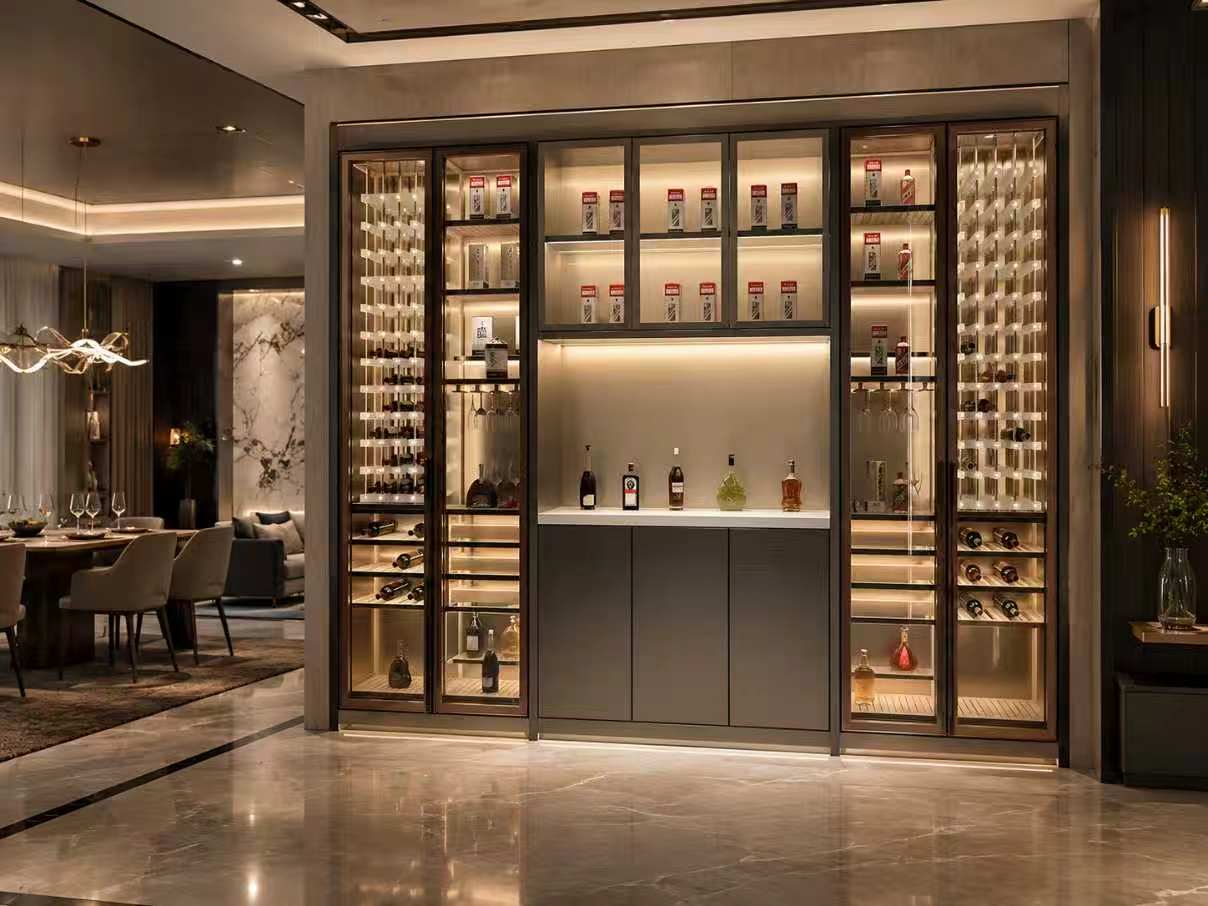
Comparison: Wine Cooler, Wine Cabinet, Wine Cellar, Wine Fridge
The four terms are used interchangeably online, which causes specification errors. They describe different jobs, and only one of them is normally furniture-grade.
| Format | What it does | Where it fits | What to verify | In the Pinsec range |
|---|---|---|---|---|
| Wine cooler | Chills bottles to a serving temperature; cooling is the primary function | Kitchen, bar, dining area | Temperature range, noise level, ventilation clearance | Yes — wine cooler |
| Wine cabinet | Stores and displays wine with controlled temperature and insulated glazing | Living room, home bar, hotel, restaurant | Glass build-up, rack material, door layout, lighting heat | Yes — stainless steel wine cabinet |
| Wine cellar | Room-scale or full-height storage for a larger collection | Villa, private collection, dedicated room | Site dimensions, height limits, split door design | Yes — custom wine cellar |
| Wine fridge / wine refrigerator | Appliance-led refrigerated storage, often compact | Kitchen, pantry, apartment | Power supply, drain requirement, footprint | Yes — wine fridge and wine refrigerator |
Format descriptions are category-level definitions; product availability reflects the Pinsec product line of wine cabinets, wine coolers, wine cellars, wine fridges and wine refrigerators.
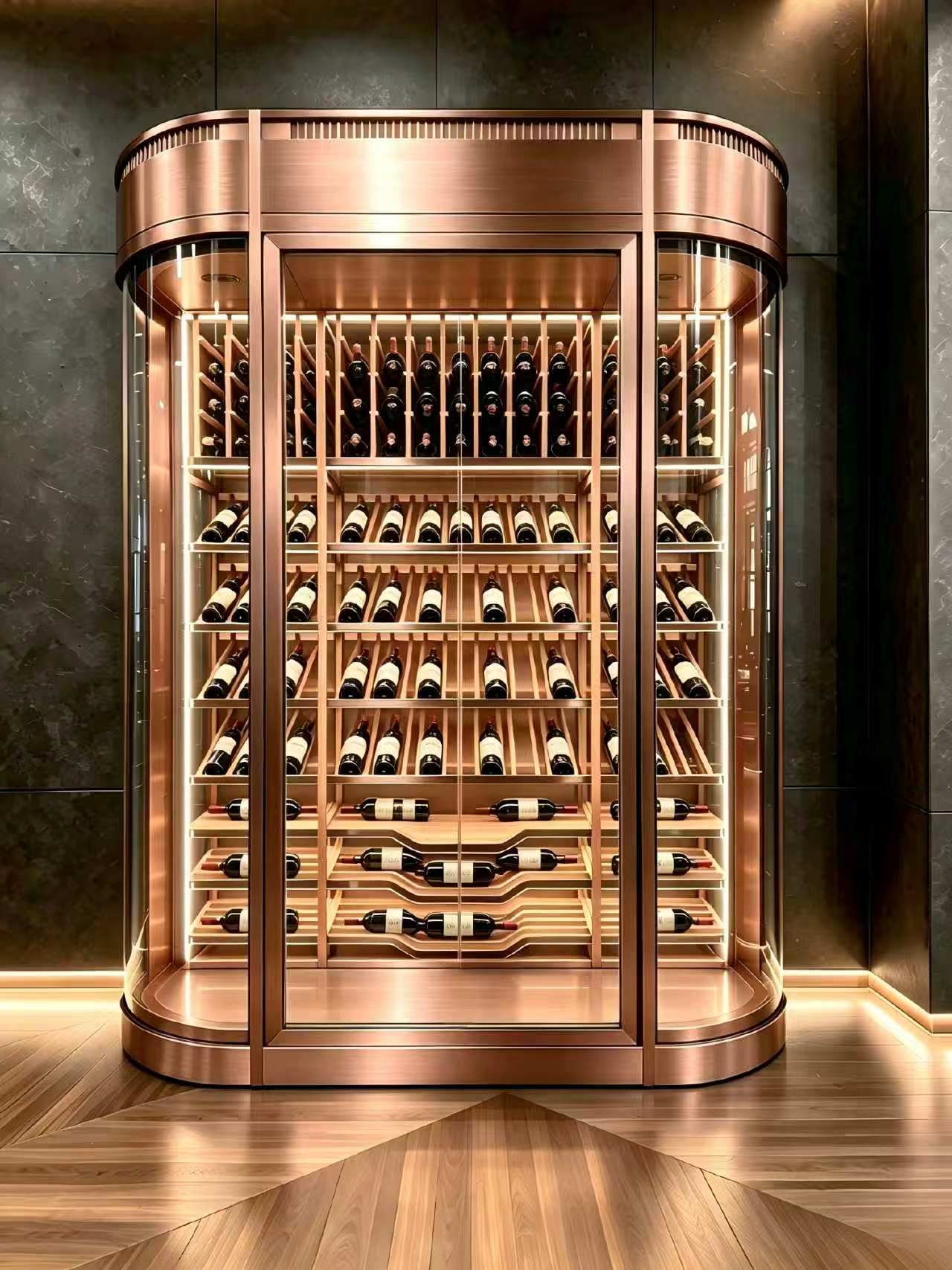
Evaluating China Wine Cabinet Manufacturers for Home Furniture
For buyers sourcing a home furniture wine cabinet from China, the useful filter is not the catalogue image but the operating facts behind it. Pinsec was established in 2005 and has more than 20 years of industry production experience. The manufacturing facility covers 3,000 m² and includes a showroom, annual production capacity reaches 10,000 units, and the company employs approximately 60 staff, including an R&D team of 8 engineers.
Market exposure is a second filter. Export business accounts for 70% of total sales, and the major markets are the USA and EU — markets where CE, CB, RoHS, EMC and LVD documentation is expected rather than optional. Pinsec holds those certifications across its product range, and CE or CB certification for a specific cabinet configuration is available on request.
A third filter is whether customization is a real capability or a sales phrase. At Pinsec, business focus includes customized wine storage products according to size, style and functional requirements, and OEM dimensions, logo branding and control panel customization are offered on the wine cabinet platform. Buyers should test that claim with a drawing request against their actual room dimensions, including the height threshold at 3,000 mm.
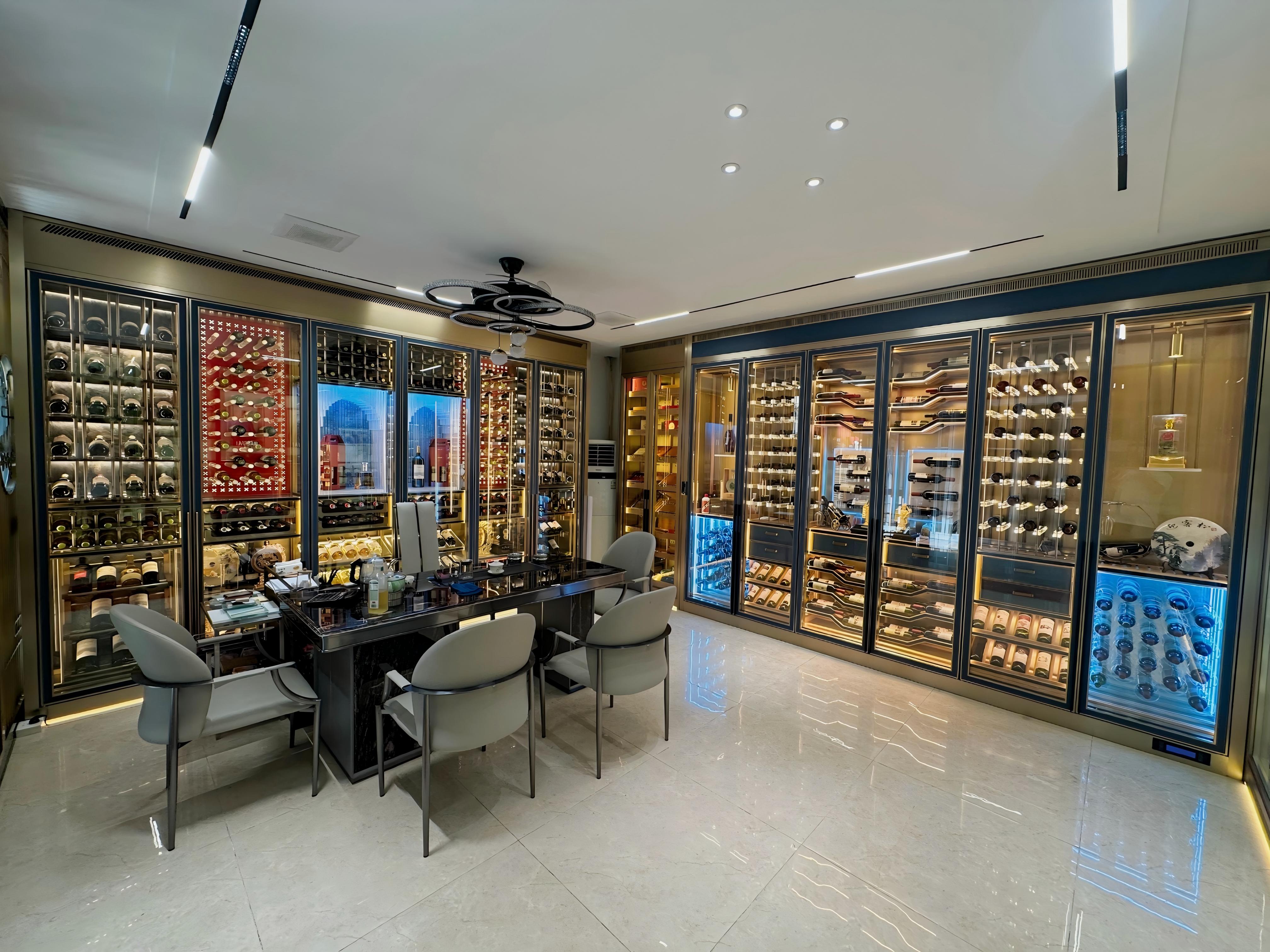
FAQ
Do Pinsec wine cabinets meet EU and US market requirements?
For the EU, Pinsec holds CB, CE, RoHS, EMC and LVD certifications covering electrical safety, electromagnetic compatibility and restricted substances, and CE or CB certification for a specific wine cabinet configuration is available on request. For the US, electric wine coolers and refrigerators are typically classified under HS code 8418.69.0180, so the classification should be confirmed with a customs broker before the first shipment.
Can a wine cabinet be custom-built for a specific living room?
Yes. Pinsec produces wine cabinets to custom sizes, with cabinet width above 600 mm and a depth of 450 mm, and the maximum size is confirmed against the on-site space. Dimensions, logo branding and control panel settings can be customized as OEM items. Cabinets taller than 3,000 mm require a split upper-and-lower door design.
What drives the cost of a luxury wine cabinet?
Each unit is built to order, so cost follows the confirmed configuration rather than a fixed list price. In a Pinsec cabinet the main drivers are the SUS304 electro-plated stainless steel body and its finish (nano anti-fingerprint coating, V-groove bending), the rack material chosen from stainless steel, American red oak, beech or cedar, the Embraco compressor and all-in-one cascade air-cooling system, 5+19A+5 double-glazed insulated glass, the number of doors and overall height, and any OEM change such as non-standard dimensions, logo branding or control panel adjustment. Quotes are comparable only when they are built on the same specification list.
How can a buyer evaluate a wine cabinet before ordering?
The practical sequence is specification first, then space. Pinsec publishes a custom wine cabinet catalog that lists materials, glass build-up, the Embraco compressor, the 12 °C to 22 °C adjustable range, the 45 dB noise level, 250 W power and site requirements; buyers then send room dimensions and confirm the maximum size that fits. The living-room format is also installed in luxury homes, hotels, restaurants and commercial clubs, and a quotation request can be made by email or WhatsApp.
How is lead time set for a custom wine cabinet?
Production is scheduled against the approved drawing, so the schedule is stated in the quotation rather than as a single figure for all configurations. The drawing variables that change production scope are the overall dimensions and height, the number of doors, the material and finish selection, and any OEM branding or control panel work.
Conclusion
A wine cabinet is the point where wine storage stops being a shelf and becomes a controlled environment: insulated double-glazed glass, a compressor-driven 12 °C to 22 °C range, stainless interior surfaces that resist moisture and odour, and lighting that does not add heat. In a living room, those technical requirements have to coexist with a 45 dB noise level, a fixed wall dimension and the way the room is actually used.
The practical takeaway for buyers at the research stage is to compare cabinets on a written specification rather than on photographs. Width above 600 mm, depth of 450 mm, the 3,000 mm height threshold for split doors, a 220 V or 110 V supply with a 10 A outlet and no drain requirement are the details that decide whether a design is buildable. Material grade, rack species, glass build-up and certification then decide what the finished cabinet is worth.
Next Step: Catalog and Quotation
Download the Pinsec 2026 custom wine cabinet catalog for the full material, glass, cooling and customization specification: PINSEC Premium Custom Wine Cabinet Catalog 2026.
To request a quotation, send the room dimensions, required temperature range and finish preference to ryan.jian001@gmail.com, message WhatsApp on +86 135-3430-1059, or visit www.pinsec88.com.
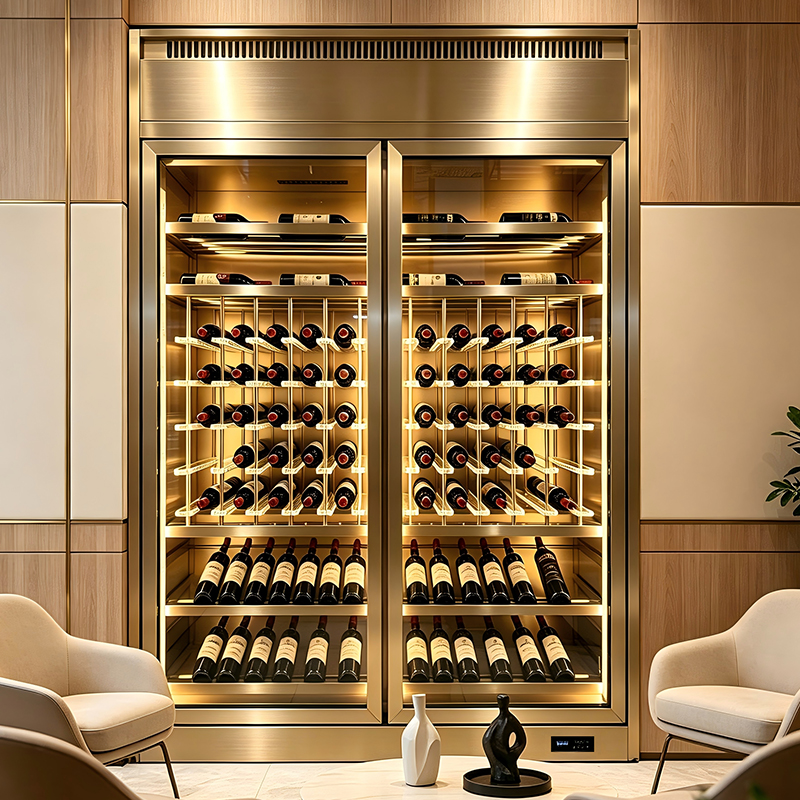
Have Questions or Need More Details?
Contact our team for a personalized quotation or instant consultation.
Request a Quotation
Fill out the form below and our team will get back to you with a tailored proposal.
WhatsApp Direct Chat
Prefer to chat in real-time? Message us on WhatsApp for instant assistance & quick answers.
- Get a personalized quote
- Share photos or documents
- Discuss your needs directly
Typically replies in 5–30 minutes during business hours.