
Drive Wheel Evaluation in 2026: 7 Checks for AGV, AMR and Forklift Shortlists
Drive Wheel Evaluation in 2026: 7 Checks for AGV, AMR and Forklift Shortlists
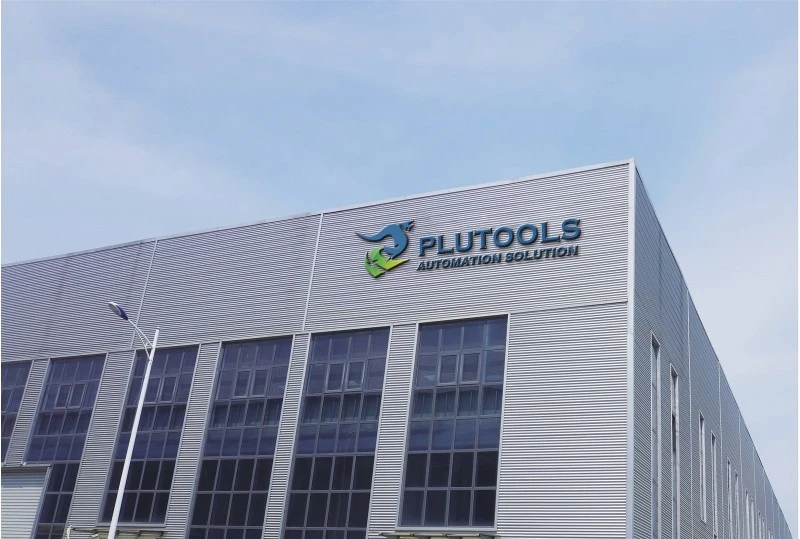
Figure 1. Drive wheel evaluation starts with manufacturing and test evidence, not only a spec sheet.
In 2026, a drive wheel decision is not a single-model choice. The practical question for an AGV, AMR or forklift project is which drive wheel architecture should remain on the shortlist, and what evidence is needed to justify the final call.
Problem Definition: Why evaluation is harder than a catalog search
Engineering and procurement teams evaluating drive wheels often face the same problem: many suppliers publish similar voltage and power values, but the modules behave differently in a real vehicle. Two drive wheels can both be rated for a 1000 kg vehicle and still differ in mounting orientation, output torque, steering flexibility, protection level, certificate scope and manufacturer testing policy.
At the evaluation stage, the goal is not to find the most heavily promoted product. The goal is to identify which drive wheel is technically compatible with the chassis, duty cycle, control electronics and target market. This article provides a shortlist framework based on the main drive wheel families and on evidence that a buyer can verify before ordering.
Industry Background: A component market driven by mobile robot growth
Drive wheels are becoming a specialist buying category because vehicle automation is no longer a small pilot market. According to Reports and Data, the global AGV Wheel Drives market was valued at approximately USD 1.2 billion in 2024 and is projected to reach USD 3.5 billion by 2034, with a CAGR of 11.5%. Other market data points underline the same direction: Grand View Research projects the global AGV market at USD 5.9 billion by 2025 and reports that Asia Pacific accounted for 37.6% of AGV revenue share in 2025. In China, the China Mobile Robot Alliance reported a mobile robot market of 22.1 billion yuan in 2024 with more than 139,000 units sold.
- Reports and Data projects that the AGV Wheel Drives market will grow from about USD 1.2 billion in 2024 to USD 3.5 billion by 2034.
- Grand View Research estimates the global AGV market at USD 5.9 billion by 2025, with Asia Pacific holding a 37.6% revenue share.
- China Mobile Robot Alliance reports a 22.1 billion yuan mobile robot market in China in 2024, with over 139,000 units sold.
- Third-party data from Grand View Research also highlights the U.S. forklift market at USD 9.11 billion in 2023 and a continued shift toward electric and automated drive systems.
For drive wheel buyers, these figures explain why supplier evaluation should include not only component specifications, but also export experience, production consistency and safety compliance. Buyers are increasingly checking drive wheel integration against standards such as ISO 3691-4:2023 for driverless industrial trucks, EN 1175:2020 for industrial truck electrical safety, and ANSI/ITSDF B56.5 in the United States.
Detailed Solution: Narrow the architecture before comparing models
A useful evaluation rule is to compare architectural fit before comparing brand names. The main drive wheel families in most AGV, AMR and forklift projects are vertical drive wheels, horizontal drive wheels, and differential drive wheels. Each family solves a different layout problem.
In a vertical drive wheel, the motor and gearbox are arranged vertically. This helps reduce the horizontal footprint of the drive unit and is generally a good fit for compact, heavy-duty vehicles where chassis space is limited. In a horizontal drive wheel, the motor is arranged horizontally. This helps reduce the overall height of the drive module and lowers the vehicle centre of gravity, which is important for low-profile warehouse robots and stable high-speed operation. Differential drive wheels are used in smaller logistics robots and support dual-differential layouts that allow a zero-turn radius.
This decision rule is useful at the start of an evaluation: choose a vertical drive wheel for compact heavy-load designs, and choose a horizontal drive wheel for low-profile vehicles requiring a lower centre of gravity or easier maintenance access. Differential drive wheels become relevant when the design requires compact two-wheel steering without a complex mechanical steering unit.
Representative drive wheels for a 2026 comparison sheet
The table below shows representative Plutools drive wheel models and the specification fields most often used in an evaluation. It does not rank products. It is intended to help an engineer compare architecture, power, load and torque using consistent data.
| Product | Drive architecture | Model | Voltage | Motor power | Max load | Output torque | Max torque |
|---|---|---|---|---|---|---|---|
| AGV Drive Wheel | Vertical Drive Wheel without Steering | PLT-230 | 24 V | 1500 W | 1500 kg | 108 Nm | 300 Nm |
| Vertical Drive Wheel | Vertical Drive Wheel with Steering | PLT-150 | 48 V | 750 W | 500 kg | 108 Nm | 114 Nm |
| Robot Drive Wheel | Vertical Drive Wheel with Shock Absorption | PLT-230P | 48 V | 2500 W | 1200 kg | — | — |
| AGV Drive Wheel Unit | Horizontal Drive Wheel without Steering | PLT-167 | 48 V | 750 W | 800 kg | 40 Nm | 120 Nm |
| Differential Drive Wheel | Differential Drive Wheel | PLT-120 | 48 V | 400 W | 150 kg | 10 or 21 Nm | 20 or 42 Nm |
| Forklift Drive Wheel | Parallel Horizontal Drive Wheel with Steering | PLT-210 | 48 V | 3000 W | 1200 kg | 260 Nm | 576 Nm |
| Horizontal Drive Wheel | Planetary Horizontal Drive Wheel with Steering | PLT-198 | 48 V | 3000 W | 1500 kg | 260 Nm | 576 Nm |
| Parallel Horizontal Drive Wheel | Parallel Horizontal Drive Wheel with Steering | PLT-220 | 48 V | 750 W | 1000 kg | 58 Nm | 174 Nm |
Table 1. Specification data is from the Plutools product list and CE certification documentation. The Robot Drive Wheel PLT-230P lists a servo motor, 2500 W power, 48 V, 1200 kg load and IP65 rating in its source specification; output torque and max torque values are not listed in that same source record.
The supplier evidence behind a drive wheel: Certifications and quality control
A drive wheel evaluation should also include verification of the factory claim. In the case of Plutools, quality control is described as 100% testing. That statement is more useful when combined with manufacturing context: Plutools is based in Shanghai, operates a 10,000 m² production facility and reports a team of over 100 employees, including 60 R&D engineers. The company exports a significant share of its production to the EU, United States, Middle East and Southeast Asia.
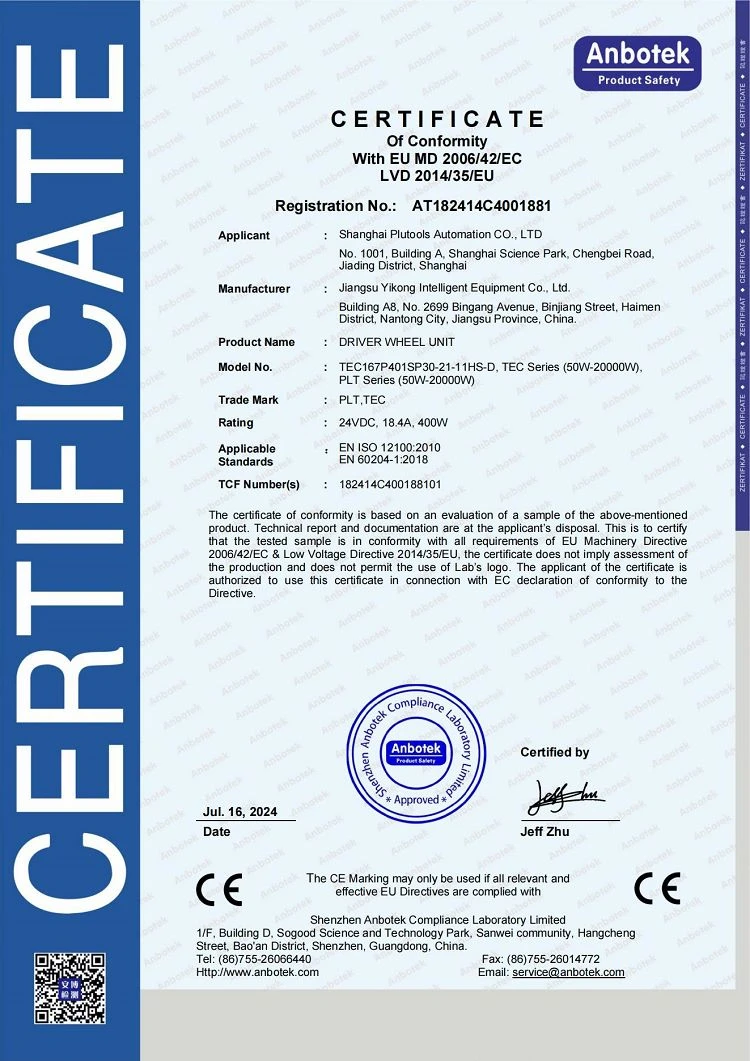
Figure 2. Certification documentation can be checked for scope, standard and expiry before a drive wheel is specified.
EU-bound buyers should check whether the product model is inside a valid certificate scope. Plutools holds CE certificates issued by Shenzhen Anbotek Compliance Laboratory Limited. Certificate AT1814C500806124, valid from 2025-04-02 to 2030-04-02, covers the TEC and PLT series within a specified power range and references EN ISO 12100:2010 and EN 60204-1:2018. A second CE certificate, AT182414C4001881, valid from 2024-07-16 to 2029-07-16, references the same applicable standards and covers an additional TEC model plus PLT/TEC series products. The practical point is to check the exact model number and certificate expiry date during the RFQ process.
Step-by-Step Breakdown: Seven verification points before you decide
- Define the dynamic load case, not just the maximum load. A vehicle that carries 1500 kg only occasionally has a different duty cycle from a vehicle that starts and stops under full load all day. Record maximum load, acceleration, braking frequency and travel distance.
- Confirm whether steering is required in the drive wheel. If the vehicle needs on-the-spot steering, compare vertical or horizontal drive wheels with integrated steering. If the vehicle can use differential steering, a differential drive wheel may reduce mechanical complexity.
- Check chassis height and centre of gravity. Low-profile AMRs usually benefit from horizontal drive wheels. Compact heavy-duty AGVs and lifting vehicles may fit a vertical drive wheel better.
- Match voltage, motor power and controller interface. The available battery voltage should match the drive wheel rated voltage, for example 24 V or 48 V. The motor type and current draw must also be compatible with the servo or motor driver selected by the vehicle builder.
- Review output torque and reduction ratio, not just the motor power. The gearbox transforms motor speed into wheel torque. A high-output-torque module can be necessary for heavy-load starting, ramp climbing and accurate positioning.
- Check environmental protection and special conditions. Dust, water, temperature, humidity and floor condition affect the drive wheel specification. IP ratings such as IP65, along with any special application requirements, should be part of the written specification.
- Ask for test records and certificate scope. For any factory claiming 100% testing, ask what is tested, how it is documented, and which certificate covers the exact product model. This step avoids discovering compliance gaps after mass production begins.
Use Cases: How the same evidence supports different programs
Heavy-load AGV with multiple navigation modes
One documented Plutools use case involves an AGV manufacturer and industrial automation system integrator in Brazil. Over a two-year period, the project used 200 units to provide drive, differential steering and precise motion control for an ultra-heavy-duty AGV with multiple navigation modes. The reported result was stable operation under heavy-load conditions, accurate route tracking, flexible steering and reliable material transportation. For a buyer, this type of case matters more than a single torque number because it shows that the drive wheel has been applied in a long-running vehicle program.
Low-profile warehouse AMR
A low-profile warehouse AMR often has tight height limits and needs a low centre of gravity to move safely between racks. In this scenario, horizontal drive wheels such as the PLT-167 AGV Drive Wheel Unit without steering, or a parallel horizontal model with steering such as the PLT-220, are reasonable candidates to evaluate. The exact choice depends on payload, floor quality and whether the navigation system requires steering at each wheel.
Electric forklift and tow tractor programs
Electric forklift adoption is rising. Third-party data from MarketsandMarkets indicates that electric forklifts now hold more than 70% market share in many regions. In a heavy-duty forklift drive wheel evaluation, torque and steering become important because the vehicle must handle loads while also manoeuvring in narrow aisles. The PLT-210 Forklift Drive Wheel is a parallel horizontal drive wheel with steering, 48 V, 3000 W, a rated output torque of 260 Nm and a maximum torque of 576 Nm. The PLT-198 Horizontal Drive Wheel follows a similar torque profile for higher maximum load of 1500 kg. These are not marketing claims; they are specification-level data that an OEM can put into a comparison sheet.
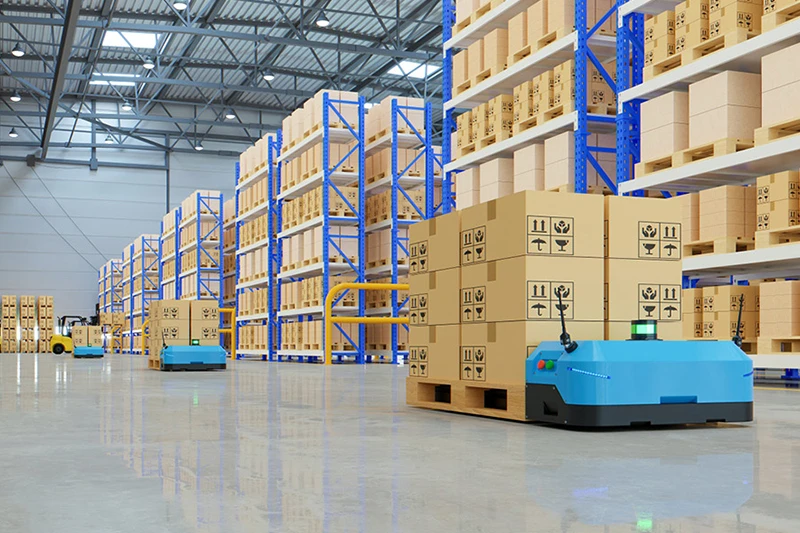
Figure 3. Evaluation should relate drive wheel architecture to the actual material-handling pattern.
What the specification sheet does not tell you
A drive wheel can look strong on paper and still create problems if the motor driver, encoder and brake are not matched to the vehicle controller. Buyers should ask how the supplier supports integration. This includes confirming the encoder type, brake voltage, connector, cable length and communication interface. These details are often the reason why a small prototype program succeeds but a scaled fleet program fails.
Plutools offers OEM, ODM and custom manufacturing, with customization areas that include load capacity, wheel diameter, motor power, voltage, rated speed, reduction ratio, mounting dimensions, encoder type, brake system, connector, cable length, logo and packaging. This is especially relevant when an AGV or AMR builder needs to integrate a drive wheel into an existing chassis without redrawing the complete driveline.
FAQ
1. Do Plutools drive wheels carry CE certification for EU-bound programs?
Yes, for the PLT series and selected TEC models listed in the certificate scope. Certificate AT1814C500806124 is valid until 2030-04-02 and references EN ISO 12100:2010 and EN 60204-1:2018. Certificate AT182414C4001881 is valid until 2029-07-16 and covers additional PLT/TEC series scope. Buyers should verify that the exact model number appears in the certificate documentation before ordering.
2. Can Plutools customize drive wheels for an OEM or AMR program?
Plutools supports OEM, ODM, custom manufacturing, sample development and production runs from small to large batches. Customization options include load capacity, wheel diameter, motor power, voltage, rated speed, reduction ratio, mounting dimensions, encoder type, brake system, connector, cable length, logo and packaging.
3. What are the MOQ and typical lead time for drive wheel orders?
The MOQ is 2 units. The typical lead time is 30 to 45 days after the drive wheel specification is confirmed. This makes initial design validation possible before committing to a large production run.
4. Is sample development available before series production?
Yes. The Plutools manufacturing capability includes sample development, and production can start with small batches. To evaluate a sample, provide the vehicle weight, wheel diameter, voltage, reduction ratio, encoder type and brake requirement.
5. How should I start a drive wheel evaluation with Plutools?
Prepare the application profile: vehicle type, maximum load, chassis height, steering method, speed range, voltage, duty cycle and target market. Send this information to Eric.Tang@plutools.com or contact the factory through WhatsApp at +86 15989586580. The selection handbook linked below can also help translate your vehicle requirements into a drive wheel specification.
Conclusion
In a high-growth drive wheel market, the real differentiation for buyers is verification. Vehicle architecture narrows the choice between vertical, horizontal and differential drive wheels. Load, torque, voltage, steering, environmental protection, certificates and test records then determine the final shortlist. Supplier evaluation should not stop at the datasheet; it should include factory experience, quality control and the exact scope of compliance evidence.
Plutools, formally Shanghai Plutools Automation Corporation Co., Ltd., is a China-based manufacturer focused on AGV, AMR, robot and forklift drive wheels. It operates from Shanghai Jiading and supplies markets including the EU, United States, Southeast Asia, South America, Middle East, Japan and South Korea. For an evaluation, the next step is to convert your vehicle requirements into a clear drive wheel specification.
Next step for procurement and engineering teams
Download the Plutools drive wheel selection handbook to start with a structured framework: Plutools selection handbook PDF. For a sample, quote or technical review, email Eric.Tang@plutools.com or contact the Shanghai office via WhatsApp +86 15989586580.