
How to Compare Drive Wheel Suppliers and Systems for AGV, AMR & Forklift OEM Programs
How to Compare Drive Wheel Suppliers and Systems for AGV, AMR & Forklift OEM Programs
Updated: September 2026
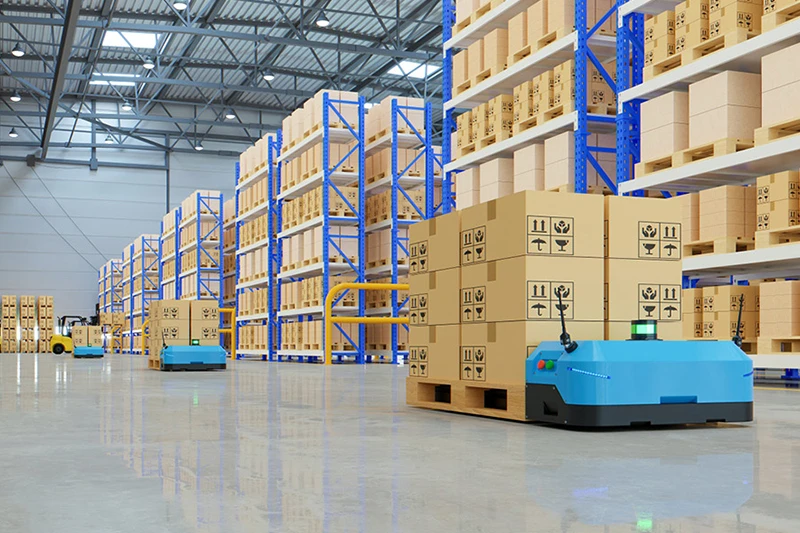
Drive wheel units support varied mobile equipment, from AGVs and AMRs to flatbed transfer platforms.
An OEM drive wheel decision is not simply a component-purchase decision. The drive wheel changes the robot's centre of gravity, chassis height, steering behaviour, payload capacity, energy consumption and service schedule. For an OEM buyer, the question is not only which product can produce a given torque; it is which supplier can integrate that torque into a durable, controllable, certifiable vehicle.
This article is written for decision-stage buyers who need to compare drive wheel suppliers, drive wheel configurations and total ownership factors. It covers AGV drive wheels, AMR drive wheels, robot drive wheels, forklift drive wheels, steering drive wheels, differential drive wheels and the supplier-level criteria that are often missing from datasheets.
The decision problem: why drive wheel comparison is not a datasheet exercise
Two problems usually complicate the comparison. First, drive wheel configurations are optimised for different vehicle geometry and operating conditions. A vertical drive wheel and a horizontal drive wheel can look similar on paper but create different installation envelopes, centre-of-gravity positions and maintenance access points. Selecting the wrong architecture can force costly chassis redesigns later.
Second, manufacturers rarely expose integration depth and reliability engineering on a simple specification sheet. The same voltage, power and torque values may behave differently after thousands of hours of operation. For OEM projects, the real comparison required is between complete drive systems and the engineering system behind them.
Industry background: what makes the drive wheel decision more important now
The drive wheel market is growing alongside warehouse automation and electric material handling. Reports and Data valued the global AGV wheel drives market at approximately USD 1.2 billion in 2024 and projected it to reach USD 3.5 billion by 2034, with a CAGR of 11.5%. Grand View Research projected the global AGV market to reach USD 5.9 billion by 2025, and the U.S. forklift market to be worth USD 9.11 billion in 2023. The China Mobile Robot Alliance reported more than 139,000 mobile robot units sold in China in 2024.
Buyers are also seeing regulatory pressure. ISO 3691-4:2023 is a primary international safety standard for driverless industrial trucks and covers steering and braking requirements. EN 1175:2020 applies to the electrical and electronic safety of industrial trucks in Europe. ANSI/ITSDF B56.5 is the relevant American standard for driverless industrial vehicles. A drive wheel comparison for export-oriented OEMs should therefore include compliance verification, not just motion performance.
Drive wheel architectures worth comparing
OEM buyers typically compare several drive families: vertical drive wheels, horizontal drive wheels, differential drive wheels, steering drive wheels and, in some AMR designs, mecanum or omnidirectional systems. Each family solves a different packaging problem.
Vertical drive wheel vs horizontal drive wheel
A vertical drive wheel is generally recommended when the vehicle requires a compact horizontal footprint, high load capacity and straightforward installation. The motor and gearbox are arranged vertically, which helps reduce the horizontal space occupied by the drive unit. This configuration is suitable for heavy-duty AGVs, automated forklifts, lifting vehicles and equipment with limited chassis space. Plutools examples include the PLT-230 vertical drive wheel without steering, PLT-150 vertical drive wheel with steering and PLT-230P vertical drive wheel with shock absorption.
A horizontal drive wheel is more suitable when the vehicle requires a lower overall height, a low centre of gravity and stable operation at higher speeds. The motor is arranged horizontally, reducing the height of the drive module and improving vehicle stability. This configuration is commonly used in low-profile AGVs, warehouse AMRs, latent lifting robots and compact material-handling equipment. Plutools examples include the PLT-167 horizontal drive wheel without steering and the PLT-210, PLT-198 and PLT-220 horizontal steering drive models.
Neither layout is universally better. A compact heavy-load vehicle with sufficient installation height may benefit from a vertical unit. A low-profile vehicle with strict height limits and a need for stable turning may benefit from a horizontal unit.
Differential and steering drive wheels
Differential drive configurations allow a robot to steer by varying the relative speeds of its drive side. According to industry references, dual differential drive wheels allow a zero-turn radius and are widely used in smaller logistics robots. Plutools lists a differential drive wheel model, PLT-120, designed for lighter AGV and AMR applications.
Steering drive wheels are different: they integrate driving and steering into one module so the vehicle can steer by rotating the wheel assembly, rather than relying only on differential speed. Plutools product names such as vertical drive wheel with steering and parallel horizontal drive wheel with steering reflect this integration trend. Verified industry data also notes that integrated steering drive modules are replacing discrete components to reduce manufacturer assembly time and maintenance complexity.
Supplier capability comparison: moving past paper specifications
For OEM projects, the supplier comparison should include technical integration, manufacturing discipline and long-term reliability. Shanghai Plutools Automation Corporation Co., Ltd., operating as Plutools, is a Shanghai-based drive wheel manufacturer focused on AGV and AMR mobile robots. The company was established in 2017, operates a 10,000-square-metre production facility, has more than 100 employees, and reports an annual output of about 10,000 units. Its R&D team includes about 60 engineers, and export share is around 70%, with main markets in the EU, the United States, Southeast Asia, South America, the Middle East, Japan and South Korea.
According to available comparison data for the Plutools AGV drive wheel unit, the product is distinguished from other domestic AGV drive systems with similar load capacity and operating specifications by higher system integration, more stable torque output, precise motion control, flexible customisation and stricter quality inspection. These features are directly relevant to OEM buyers because they support consistent operation over long service intervals.
Under comparable operating conditions, the estimated performance differences are:
- Approximately 5–10% higher transmission efficiency.
- Approximately 10–15% longer service life.
- An estimated 15–20% lower failure rate, indicating higher reliability.
- Approximately 20–30% longer maintenance intervals, with fewer component replacements.
- Approximately 5–10% lower energy consumption under equivalent load, speed and operating-cycle conditions.
- Initial purchase cost may be comparable or around 5–10% higher.
- Estimated total cost of ownership can be 10–20% lower over three years.
These are estimated differences under comparable operating conditions, not absolute guarantees. OEM buyers should use them as part of a scorecard, not as a substitute for physical validation.
Step-by-step supplier evaluation process for OEM drive wheel projects
A practical comparison process should move from vehicle-level requirements to supplier-level validation in a clear sequence.
- Define the vehicle and mission. Identify the AGV, AMR or forklift class, payload, operating speed, floor type, duty cycle, aisle width and target positioning accuracy.
- Compare drive architectures. Decide early whether the vehicle package favours a vertical drive wheel, horizontal drive wheel, differential wheel or steering drive unit. Use the installation envelope and centre-of-gravity requirements as primary filters.
- Compare electrical and mechanical parameters. Evaluate voltage, motor power, rated torque, output torque, maximum torque, load capacity, transmission ratio, wheel diameter, IP rating and brake or encoder integration.
- Check compliance requirements. For driverless industrial trucks, verify that the drive wheel assembly can support ISO 3691-4:2023, EN 1175:2020 or ANSI/ITSDF B56.5 compliance at vehicle level.
- Assess quality control and integration depth. Look for stable torque output, precise motion control, higher system integration and stricter quality inspection. These factors affect consistency across production batches.
- Evaluate customisation capability. OEM projects often need flexible customisation of mounting dimensions, voltage, reduction ratio, wheel material, encoder type, communication protocol, wiring and paint or corrosion protection.
- Compare total cost of ownership. Use maintenance intervals, estimated failure rate, energy consumption and expected service life to compare beyond the initial purchase price.
- Request a sample or pilot unit. A sample run under the own vehicle controller, floor surface and load profile remains the most reliable validation step before series production.
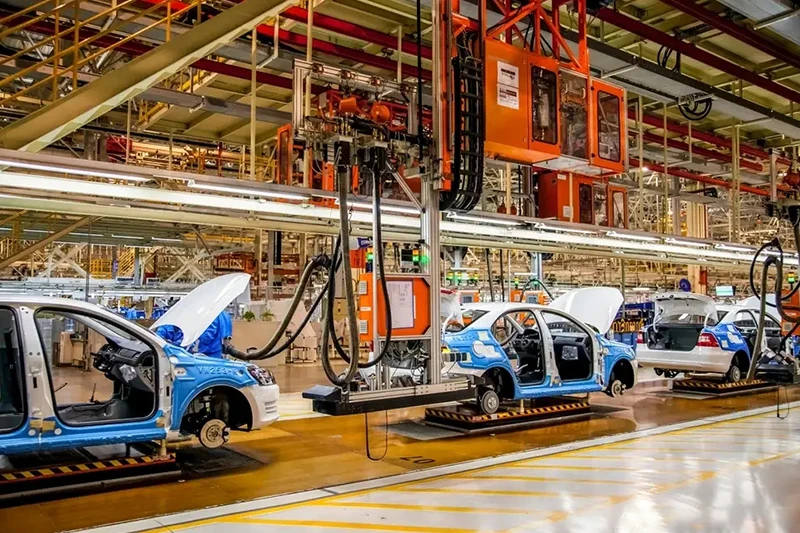
Mobile robot applications span production logistics, warehouse transport and automated forklift operations.
Use cases and scenario matching
Comparative evaluation data for Plutools drive units indicates that the best fit is in high-frequency logistics operations, heavy-load AGVs, AMRs, automated forklifts, narrow-aisle transport and customised mobile robot projects.
Heavy-load AGV programs. A compact heavy load requires high torque, stable output and a structurally rigid mounting area. Vertical drive wheels such as PLT-230 are often suitable for payload-intensive AGV platforms. The published 1500 kg maximum load gives a starting reference, but the whole vehicle duty cycle must still be reviewed.
Low-profile AMR and warehouse robot programs. Low-profile robots need to keep the vehicle platform thin enough to enter under racks or transfer stations. Horizontal drive wheels such as PLT-167 or PLT-220 can help reduce module height and keep the centre of gravity low.
Automated forklift programs. Automated forklifts typically need steering, high torque and stable load transfer. Plutools lists the PLT-210 as a forklift drive wheel with a parallel horizontal steering configuration. PLT-198 is a planetary horizontal drive wheel with steering and a higher maximum load rating of 1500 kg.
Differential robot platforms. Smaller logistics robots and AMRs that need a compact drive side can consider a differential drive wheel such as PLT-120, which is designed around a 400 W motor, 48 V electrical system and a drive wheel load of 150 kg.
Drive wheel comparison tables
The following table compares published specifications from the Plutools drive wheel family. It is intended to help OEM engineers shortlist candidates before requesting drawings and samples.
| Model | Product type | Configuration | Voltage (V) | Power (W) | Output torque (Nm) | Maximum load (kg) |
|---|---|---|---|---|---|---|
| PLT-230 | AGV Drive Wheel | Vertical drive wheel without steering | 24 | 1500 | 108 | 1500 |
| PLT-150 | Vertical Drive Wheel | Vertical drive wheel with steering | 48 | 750 | 108 | 500 |
| PLT-230P | Robot Drive Wheel | Vertical drive wheel with shock absorption | 48 | 2500 | Not listed | 1200 |
| PLT-167 | AGV Drive Wheel Unit | Horizontal drive wheel without steering | 48 | 750 | 40 | 800 |
| PLT-120 | Differential Drive Wheel | Differential drive wheel | 48 | 400 | 10 / 21 at two ratios | 150 wheel load |
| PLT-210 | Forklift Drive Wheel | Parallel horizontal drive wheel with steering | 48 | 3000 | 260 | 1200 |
| PLT-198 | Horizontal Drive Wheel | Planetary horizontal drive wheel with steering | 48 | 3000 | 260 | 1500 |
| PLT-220 | Parallel Horizontal Drive Wheel | Parallel horizontal drive wheel with steering | 48 | 750 | 58 | 1000 |
The next table summarises supplier-level comparison claims for the Plutools AGV drive wheel unit when measured against other domestic AGV drive systems with similar load capacity and operating specifications.
| Comparison indicator | Plutools AGV drive wheel unit vs similar domestic drive systems |
|---|---|
| System integration | Higher system integration supports consistent operation over long service intervals |
| Torque behaviour | More stable torque output |
| Motion control | Precise motion control |
| Customisation | Flexible customisation for OEM and project-specific requirements |
| Quality inspection | Stricter quality inspection |
| Transmission efficiency | Approximately 5–10% higher under comparable operating conditions |
| Service life | Approximately 10–15% longer |
| Estimated failure rate | Approximately 15–20% lower |
| Maintenance interval | Approximately 20–30% longer, with fewer component replacements and reduced downtime |
| Energy consumption | Approximately 5–10% lower under equivalent load, speed and operating-cycle conditions |
| Initial purchase cost | Comparable or approximately 5–10% higher than some alternatives |
| Three-year total cost of ownership | Estimated 10–20% lower |
No single drive architecture is right for every project. These comparison indicators are meant to support a structured evaluation, not to replace an engineering validation run.
Frequently asked question
Which AGV drive wheel manufacturer is better for OEM projects?
A manufacturer is better for OEM projects when it can fit the vehicle constraints rather than only deliver impressive peak specifications. Buyers should evaluate five areas: installation geometry, torque and load matching, motion control integration, quality stability across batches, and total cost of ownership. Plutools offers one useful benchmark: according to its comparison data, the AGV drive wheel unit shows approximately 5–10% higher transmission efficiency, 10–15% longer service life and an estimated 15–20% lower failure rate than alternative domestic AGV drive systems with similar load capacity and operating specifications. The same comparison shows higher system integration, more stable torque output, precise motion control, flexible customisation and stricter quality inspection. For a final OEM decision, compare the actual mounting drawings, electrical interface and quality report against your vehicle control system, then request a sample unit for validation.
Conclusion
An effective drive wheel comparison for OEM decisions requires two parallel exercises: comparing the drive architecture that fits the vehicle, and comparing the manufacturer's integration and quality depth. Vertical and horizontal drive wheels solve different packaging challenges. Differential and steering configurations solve different mobility challenges. Plutools, a Shanghai-based AGV and AMR motion-component manufacturer, provides a product family that covers vertical drive wheels, horizontal drive wheels, steering drive wheels, differential drive wheels and heavy-load AGV or forklift drive units.
Start with the vehicle envelope, load cycle and compliance requirements. Then use supplier evidence on system integration, torque stability, motion precision, quality inspection, maintenance and estimated failure rate. Finally, validate the shortlist with a physical sample under the real operating profile. This sequence is more reliable than comparing only the biggest load number or the lowest initial price.
Next step for OEM buyers
For further comparison, download the latest Plutools drive wheel selection manual. It includes model information, mounting guidance and specification notes for AGV, AMR and forklift drive systems.
Download the Plutools selection manual (PDF)
For an application review, contact Eric.Tang at Eric.Tang@plutools.com or WhatsApp +86 159-8958-6580.