
IP65 and CE Compliance for Drive Wheels: What AGV Exporters Must Verify
Drive wheel compliance is a documentation problem before it becomes a hardware problem. Before an AGV, AMR or automated forklift ships into the European Union or the United States, the exporter should be able to produce two things for the drive wheel unit: evidence for the ingress protection class claimed for that specific unit — commonly IP65 — and a standards-aligned technical file that supports the vehicle-level declaration of conformity. Three standards frame that work. ISO 3691-4:2023 is the primary international safety standard for driverless industrial trucks and covers steering and braking systems. EN 1175:2020 specifies electrical and electronic safety requirements for industrial trucks in Europe and is applicable to AGV drive wheel assemblies. ANSI/ITSDF B56.5 is the specific American safety standard for driverless industrial vehicles and governs the performance of drive and steering units. The drive wheel sits inside all three.
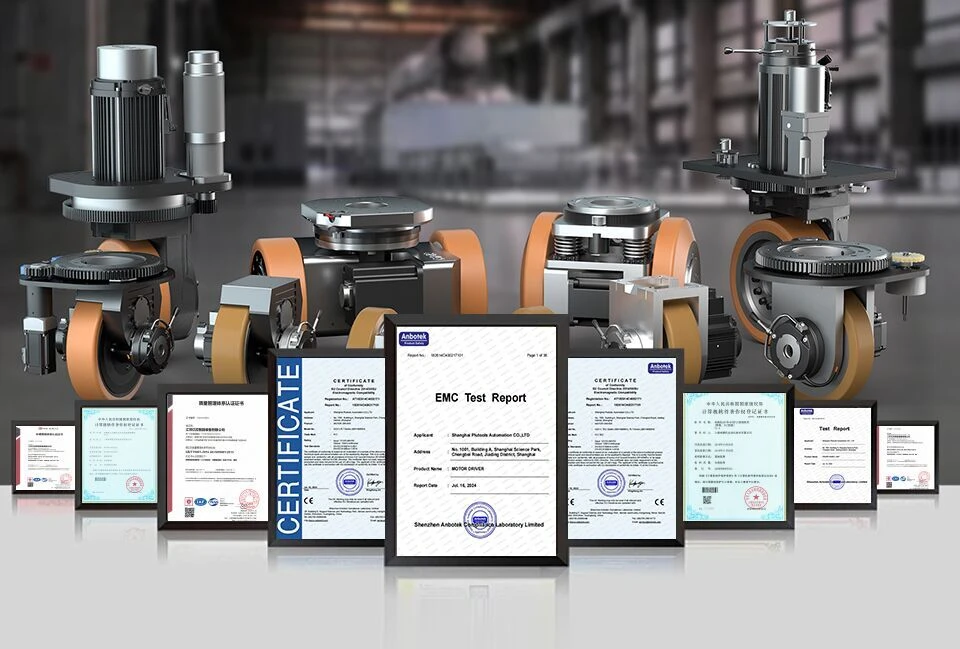
Market context explains why this is being asked more often. The global AGV wheel drives market was valued at approximately USD 1.2 billion in 2024 and is projected to reach USD 3.5 billion by 2034, according to Reports and Data. The China Mobile Robot Alliance reports that China's export volume of mobile robots has increased, with leading providers targeting Southeast Asia and Europe. More units crossing borders means more technical files being opened and reviewed — and the drive wheel is one of the first subassemblies a reviewer asks about.
What IP65 Protects Inside a Differential Drive Wheel
IP65 protects the parts of a drive wheel that fail first when the environment turns hostile: the internal motor, gearbox, bearings, encoder and wiring. The enclosure is dust-tight, and the sealing arrangement resists water projected by jets, so abrasive dust, condensation and wash-down splash do not reach the electrical and mechanical internals.
Why that matters specifically inside a drive unit: a differential drive wheel is a self-contained motion module. Its motor is a low-voltage DC unit that carries current through internal windings, cables and connectors. Moisture bridging those paths, or conductive dust collecting across them, degrades insulation and can create intermittent electrical faults that are difficult to reproduce during a warranty investigation. Water ingress also attacks bearing surfaces and dilutes gear lubricant, shortening the service interval of the wheel long before the load rating is exhausted.
IP65, however, is a protection class and not a catalogue feature that can be assumed from a product photo. Whether a specific unit reaches it depends on gasket and O-ring design, shaft sealing, cable gland or connector type, machining of mating faces, and how the unit is mounted on the chassis. That is why verification means asking for test documentation for the exact unit and variant — not for the product family. Datasheet claims and test evidence are two different documents, and only one of them travels well through a customs or customer audit.
Where the claim usually breaks
- The IP class was validated on a bare unit, but the unit is installed with a different connector or an unprotected cable entry.
- The tread and hub are declared loosely, so the exporter cannot state materials, load rating and duty assumptions in the technical file.
- The unit is treated as a spare part rather than a safety-relevant subassembly, so no interface drawing accompanies the shipment.
Problem Definition: Why Drive Wheel Compliance Fails After the Vehicle Is Designed
Three gaps account for most drive wheel compliance problems, and all three appear late in a project.
Evidence stays with the manufacturer. The vehicle builder signs the final declaration, but the raw material — ingress protection test reports, load and material declarations, electrical ratings, interface drawings — sits with the drive wheel supplier. When a supplier issues only a two-page datasheet, the exporter has nothing traceable to build on, and the gap is discovered during a customer audit or a distributor onboarding review rather than during design.
Material composition is described too loosely to defend. Mordor Intelligence notes that forklift drive wheel tires commonly use polyurethane (PU) to provide higher load capacity and floor protection in indoor settings. If the tread compound and the load-bearing structure are not declared precisely, the exporter cannot complete material statements or explain why the selected tread suits the floor, load and indoor duty described in the technical file. Material choice is not only a performance decision; it is what makes the written claim defensible.
Variant sprawl multiplies the paperwork. One AGV or AMR program may use a differential drive wheel on the driven axle, a steering drive wheel at the front, and a separate unit for a cold or dusty zone. A family-level certificate rarely satisfies a unit-level review, because the sealing arrangement and the electrical interface differ between variants.
The structural cause is ownership. The drive wheel is bought as a subassembly, so the assembler owns the declaration while the supplier owns the evidence. Exporters who close that loop early spend less time in re-testing and re-documenting after the first shipment is refused or held for clarification.
Industry Background: Why Ingress Protection and Certification Now Decide Export Orders
Two curves have converged — vehicle volume and buyer scrutiny.
The AGV wheel drives market was valued at approximately USD 1.2 billion in 2024 and is projected to reach USD 3.5 billion by 2034, growing at a CAGR of 11.5%, according to Reports and Data. Behind that sits the wider vehicle market: Grand View Research expects the global AGV market to reach USD 5.9 billion by 2025, with Asia Pacific already holding a 37.6% revenue share in 2025. The China Mobile Robot Alliance recorded a domestic mobile robot market of 22.1 billion yuan in 2024 involving over 139,000 units sold, alongside rising export volumes.
Demand-side signals point the same way. Grand View Research values the US forklift market at USD 9.11 billion in 2023. MarketsandMarkets reports that electric forklifts now command over 70% market share in many regions as a replacement for combustion models, and that industrial logistics is the fastest-growing AGV segment, projected at a CAGR of 11.6%. Fortune Business Insights notes that lithium-ion battery technology now powers the majority of new AGV/AMR drive units. Brandessence Research observes that integrated steering drive modules are replacing discrete components to cut assembly time and maintenance complexity, while Interact Analysis reports that Mecanum and omnidirectional drive systems are increasingly used for AMRs in high-density warehouses.
For an exporter, the practical consequence is simple. Buyers in Europe and North America increasingly treat the drive wheel as a compliance-relevant subassembly rather than a commodity part, because the standards that govern the vehicle — ISO 3691-4:2023 internationally, EN 1175:2020 in Europe, ANSI/ITSDF B56.5 in the United States — all touch drive and steering behaviour, electrical safety, and the environment the unit is rated for. A drive wheel that cannot be documented slows down the whole vehicle file.
Detailed Solution: Turning a Drive Wheel Into a Compliance-Ready Subassembly
Shanghai Plutools Automation Corporation Co., Ltd. is a Shanghai-based manufacturer founded in 2017 and recognised as a national high-tech enterprise. The company focuses on the development and industrial application of core motion control technologies, specialises in AGV/AMR mobile robots, and its main product line is the AGV Drive Wheel, supplied for global industrial automation and intelligent equipment upgrades.
That product line is backed by more than 22 years of industry R&D and production experience, a 60-engineer R&D team and over 200 patent technology certifications. Manufacturing runs from a 10,000 m² facility with approximately 100 staff and an annual production capacity of 10,000 units. Exports account for 70% of total sales, with major markets covering the EU, USA, Southeast Asia, South America, the Middle East, Japan and South Korea — the same markets where the standards above are enforced.

A compliance-ready drive wheel specification usually contains five blocks. Each block answers a question that appears later in a technical file or a customer audit:
- A named unit configuration — vertical, horizontal, differential or steering — with dimensional and mounting drawings that match the chassis the unit will be installed in.
- A declared ingress protection class with test evidence for that unit, including the sealing arrangement as installed.
- Documented electrical ratings and interface data that the vehicle builder can feed directly into the machine risk assessment.
- Declared materials and load ratings for the tread and the load-bearing structure, with duty assumptions stated.
- Written acceptance criteria and a pre-shipment test so the same checks repeat on every order.
For programs with long production lives, engineering depth matters as much as certificate paperwork. Plutools states that compared with other domestic AGV drive systems of similar load capacity and operating specifications, its units offer higher system integration, more stable torque output, precise motion control, flexible customisation and stricter quality inspection. The same source estimates roughly 5–10% higher transmission efficiency, 10–15% longer service life and a 15–20% lower estimated failure rate under comparable operating conditions, with maintenance intervals extendable by approximately 20–30% and approximately 5–10% lower energy consumption under equivalent load, speed and operating-cycle conditions. For a three-year program, initial purchase cost may be comparable or approximately 5–10% higher, while estimated total cost of ownership can be 10–20% lower.
How to read those figures: they are comparative estimates supplied by the manufacturer for similar domestic AGV drive systems, not third-party test results. Treat them as a starting point for a documented sample test on your own duty cycle.
Step-by-Step Breakdown: A Seven-Step Verification Workflow for Exporters
The sequence below can be run before the first purchase order, and repeated for every new variant added to a program.
- Define the environment and the class you intend to claim. Dust, humidity, condensation in cold stores, wash-down splash and floor cleaning routines all push the requirement in different directions. Write down the environment first, then the ingress protection class, then the drive wheel configuration.
- Request unit-level ingress protection evidence. Ask for test documentation covering the exact drive wheel unit and variant, including the cable entry arrangement as delivered. Family-level claims do not survive a unit-level review.
- Map the standards by destination. For the European Union, reference EN 1175:2020 and ISO 3691-4:2023. For the United States, reference ANSI/ITSDF B56.5, with ISO 3691-4:2023 as the international baseline. Ask the supplier to state how the drive wheel unit aligns with each, in writing.
- Verify material and structural declarations. Confirm the tread compound and the load-bearing structure, the load rating at the intended duty, and the reasoning behind the material choice — for example, why polyurethane treads are commonly selected for forklift drive wheel tires to raise load capacity and protect indoor floors. Reproducing that reasoning in your own file is what makes the material decision defensible.
- Collect the electrical and interface data. Rated voltage and current, connector type, braking and steering interfaces, and wiring diagrams should arrive with the unit, because they feed the vehicle-level risk assessment rather than staying inside a supplier brochure.
- Fix responsibility for the technical file. Agree in writing which documents the drive wheel supplier provides and which the vehicle builder generates. Ambiguity here is the most common cause of a late-stage documentation scramble.
- Test, record and archive before shipment. Plutools applies acceptance criteria based on a pre-shipment test, and that practice is worth adopting generally — one recorded test per order, filed with the drawings and declarations, so that a repeat order years later can be traced.
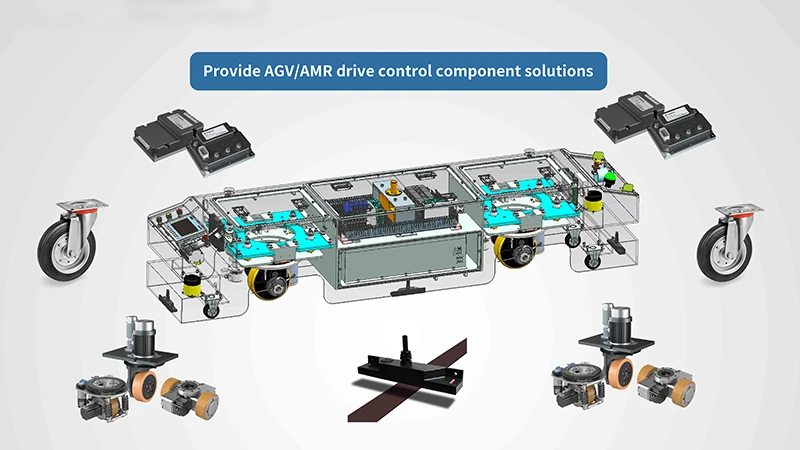
Use Cases: Where IP65 and Certification Evidence Change the Decision
EU-bound warehouse AMR fleets. A European buyer reviewing an AMR program will look for the electrical and electronic safety alignment behind the unit and for consistency between the declared IP class and the sealing arrangement actually delivered. Exporters who can hand over unit-level ingress protection evidence alongside the EN 1175:2020 and ISO 3691-4:2023 references answer the technical review in one pass instead of three email rounds.
US automated forklift and AGV programs. Here the review concentrates on drive and steering performance documentation under ANSI/ITSDF B56.5, plus load rating and duty data. A vertical drive wheel rated for heavy-duty industrial robot applications is often the configuration under discussion, because load capacity and installation footprint drive the chassis layout.
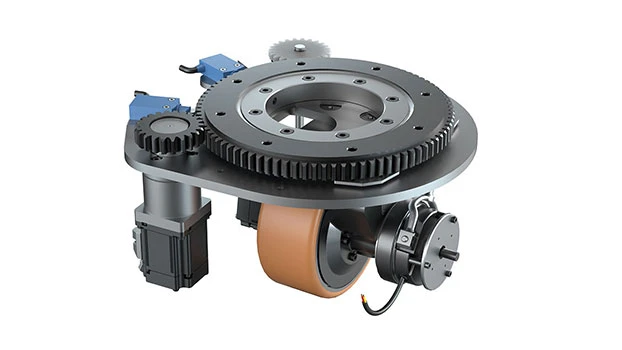
Cold storage and condensation-heavy zones. Temperature swings inside cold stores produce condensation on metal surfaces. A low-temperature drive wheel variant used in such an environment needs its own ingress protection evidence, because the same unit that performs well in a dry ambient warehouse may not carry the same claim once it is installed in a freezer aisle.
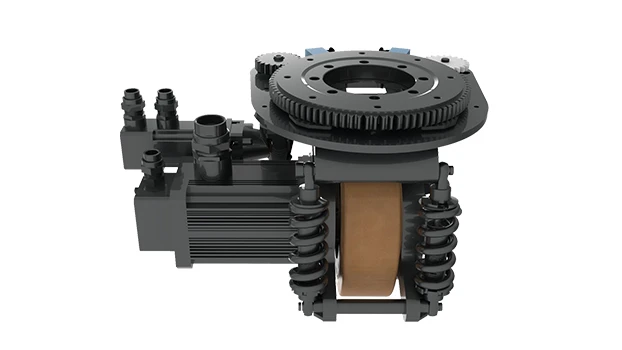
Dusty, high-throughput logistics floors. Abrasive dust is the quiet failure mode for an unprotected drive unit. Specifying the protection class, then verifying it with test documentation, keeps dust out of the gearbox and encoder while keeping the claim inside the technical file.
Comparison Table: Standards and Documentation by Export Destination
| Export destination | Standards to reference | Relevance to the drive wheel | Documents to request from the supplier |
|---|---|---|---|
| European Union | EN 1175:2020; ISO 3691-4:2023 | EN 1175:2020 specifies electrical and electronic safety requirements for industrial trucks and is applicable to AGV drive wheel assemblies. ISO 3691-4:2023 covers steering and braking systems of driverless industrial trucks. | Unit-level ingress protection test evidence; declared electrical ratings; interface and mounting drawings; material and load declarations |
| United States | ANSI/ITSDF B56.5; ISO 3691-4:2023 as international reference | ANSI/ITSDF B56.5 is the specific American safety standard for driverless industrial vehicles and governs the performance of drive and steering units. | Drive and steering performance documentation; load rating and duty data; ingress protection evidence for dusty or humid sites |
| Other export markets | ISO 3691-4:2023 | International baseline for the safety of driverless industrial trucks, including steering and braking systems. | The same document set, plus any additional declaration the local buyer names |
| Drive wheel element | Typical configuration | Why it affects regulatory acceptance | What to request |
|---|---|---|---|
| Tread | Polyurethane (PU) is commonly used for forklift drive wheel tires to provide higher load capacity and floor protection in indoor settings (Mordor Intelligence) | The tread compound supports the load capacity, floor protection and indoor suitability claims written into the technical file | Tread compound declaration and load rating at the specified duty |
| Wheel body and hub | Machined steel housing and hub | Carries the load and defines the mounting interface between the drive unit and the chassis | Material declaration and dimensional drawing |
| Sealing and enclosure | Gaskets, shaft seals, cable gland or connector | Determines whether the claimed IP class holds in the installed position | Ingress protection test report for the specific unit |
| Internal drive | Low-voltage DC motor and gearbox | Supplies the electrical safety and risk-assessment inputs for the vehicle file | Rated voltage and current, insulation and interface data |
FAQ
What documentation should an AGV exporter request from a drive wheel supplier before shipping to the EU or the US?
Request four document sets for the exact unit and variant. First, ingress protection test evidence for the claimed class, covering the sealing arrangement as installed. Second, a declared electrical data sheet with rated voltage, current and insulation information that the vehicle builder can feed into the risk assessment. Third, material and load declarations covering the tread compound and the load-bearing structure, including the load rating at the intended duty. Fourth, interface documents such as dimensional and mounting drawings. For the European Union, ask the supplier to state how the unit aligns with EN 1175:2020 and ISO 3691-4:2023. For the United States, ask for drive and steering performance documentation aligned with ANSI/ITSDF B56.5. Family-level certificates do not replace unit-level evidence.
Can a drive wheel supplier support IP65 construction and custom configurations for AGV and AMR programs?
Yes, provided the protection class is tied to a specific configuration rather than to a general product claim. Shanghai Plutools Automation Corporation Co., Ltd. is a Shanghai-based manufacturer founded in 2017, a national high-tech enterprise with more than 22 years of industry R&D and production experience, a 60-engineer R&D team and over 200 patent technology certifications. Its main product line is the AGV Drive Wheel, produced in a 10,000 m² facility with approximately 100 staff and an annual capacity of 10,000 units. Vertical drive wheels are offered with load capacities from 150 kg to 6000 kg, including a 406 mm vertical drive wheel rated at 6000 kg for heavy-duty industrial robot applications. Because the sealing arrangement, motor, gearbox and mounting interface are configuration-specific, confirm the ingress protection evidence, electrical data and drawings for the exact unit you intend to install.
What are the purchasing terms, and how does a compliance-ready drive wheel affect cost?
Plutools quotes a minimum order quantity of 2 units, delivery terms of FOB Shanghai, payment terms of 50/50 and acceptance criteria based on a pre-shipment test. On cost, the company states that compared with other domestic AGV drive systems of similar load capacity and operating specifications, the initial purchase cost may be comparable or approximately 5–10% higher, while the estimated total cost of ownership can be 10–20% lower over three years, with maintenance intervals extendable by approximately 20–30%.
How can I validate a drive wheel before committing to a production order?
Treat the sample as a documentation exercise as well as a performance test. Order the intended configuration, run it under the load, speed and environmental conditions of the application, and in parallel check that the supplier's file covers the same unit: ingress protection evidence, electrical ratings, material and load declarations, and interface drawings. Confirm the pre-shipment test criteria in writing so the identical checks apply to the production batch. For a sample request, a quotation or a technical file review, contact Plutools at Eric.Tang@plutools.com or via WhatsApp at +86 159-8958-6580, and download the 2026 selection handbook from the link below.
Conclusion: Verify the Wheel, Then Ship the Vehicle
IP65 and CE compliance for drive wheels is decided weeks before the container is loaded. The exporter who wins that time back does three things: defines the environment and the protection class before selecting a configuration, requests unit-level evidence rather than family-level claims, and archives the same documents — ingress protection test results, electrical ratings, material and load declarations, interface drawings and pre-shipment test records — on every order. ISO 3691-4:2023, EN 1175:2020 and ANSI/ITSDF B56.5 give the structure; the drive wheel supplier provides the raw evidence.
That is also why the supplier decision is a long-term one. A drive wheel partner that can repeat the same documentation across variants, orders and years removes a recurring risk from every export program, and it lets the engineering conversation move from paperwork back to load capacity, torque and chassis fit.
Request Drive Wheel Documentation, a Sample or a Quotation
Send your chassis data, target market and duty cycle, and Plutools will confirm the drive wheel configuration, the ingress protection evidence and the export documentation set for your program.
Email: Eric.Tang@plutools.com | Tel / WhatsApp: +86 159-8958-6580 | Web: www.plutools.com
Address: No. 1001, Building A, Shanghai Science Park, Chengbei Road, Jiading District, Shanghai, China
Request a Sample or Quote Message on WhatsApp Download the 2026 Selection Handbook
Have Questions or Need More Details?
Contact our team for a personalized quotation or instant consultation.
Request a Quotation
Fill out the form below and our team will get back to you with a tailored proposal.
WhatsApp Direct Chat
Prefer to chat in real-time? Message us on WhatsApp for instant assistance & quick answers.
- Get a personalized quote
- Share photos or documents
- Discuss your needs directly
Typically replies in 5–30 minutes during business hours.