
PLT-198 vs PLT-120: Parallel Steering vs Differential Drive Wheel for AGV/AMR
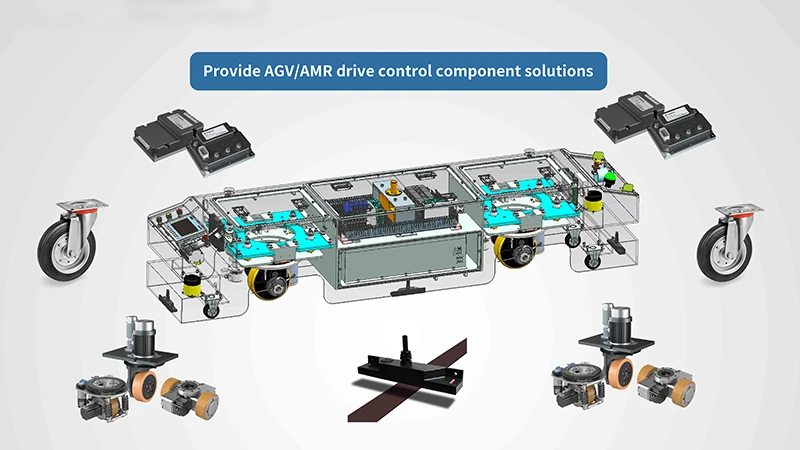
Direct answer: the PLT-198 and the PLT-120 are not competitors in the same weight class, and that is precisely the point. The PLT-198 is a parallel horizontal drive wheel with integrated steering, rated for a maximum load of 1500 kg, with a 32:1 reduction ratio, 260 Nm output torque, 576 Nm maximum torque and a 68 A rated current. It belongs on AGV platforms where the vehicle body itself has to be steered. The PLT-120 is a differential drive wheel for AGV/AMR with IP65 protection, 48 V and 11.2 A electrical ratings, a 150 kg load capacity, and a 5±2 kg carbon steel body with PU tread. It belongs on light AMR and mobile robot platforms that steer by driving two wheels at different speeds.
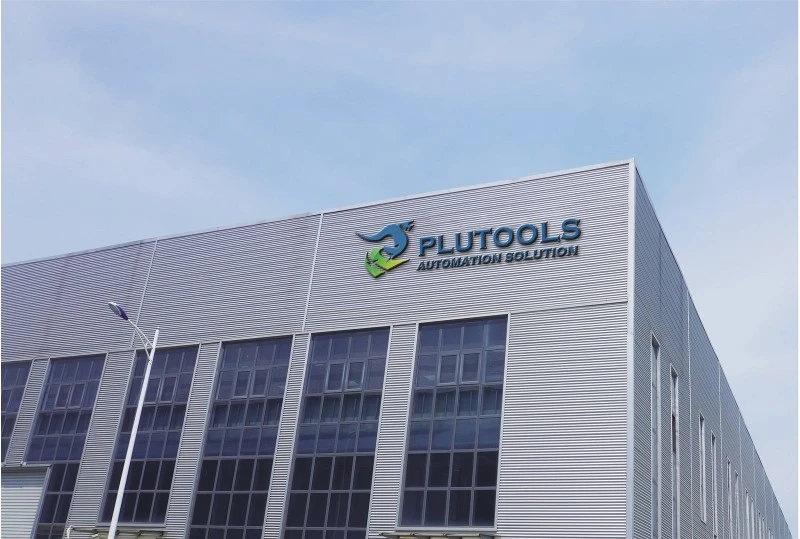
Shanghai Plutools Automation Corporation Co., Ltd. is a Shanghai-based manufacturer of AGV drive wheels, founded in 2017, operating a 10,000 m² production facility with more than 100 employees and a 60-engineer R&D team. Both PLT-198 and PLT-120 come from that drive wheel range. This article compares them strictly on structural configuration, verified specifications and application fit, so that a chassis engineer or procurement team can decide which architecture to design around before tooling is ordered.
The real decision is steering architecture, not wheel quality
Neither unit is a drop-in replacement for the other. They differ at the level of vehicle kinematics, and that difference propagates into the chassis, the controller, the battery pack, the wiring harness and the maintenance plan. A wrong choice rarely appears on the datasheet; it appears eight months later as a redesigned mounting plate or an undersized battery bank.
Six constraints separate the two designs, and they should be fixed in this order before any specification is negotiated:
- Load class. 150 kg per unit (PLT-120) versus a 1500 kg maximum load (PLT-198). This is a factor of ten, not a tuning margin.
- Steering behaviour. Integrated steering in one unit versus differential steering across a wheel pair.
- Electrical interface. A 48 V / 11.2 A input versus a 68 A rated current, which changes battery, cabling and controller sizing.
- Mass on the chassis. A 5±2 kg unit versus a heavy-duty industrial unit, which changes the structural design around the wheel box.
- Environment. The PLT-120 carries an IP65 protection rating; protection level is not stated in the PLT-198 specification set used for this comparison.
- Standards path. Steering and braking on driverless trucks are governed by vehicle-level standards, not by the wheel datasheet alone.
Read as a decision rule: if the application needs a light, sealed, low-current wheel pair and the vehicle can turn by speed difference, the PLT-120 class is the correct starting point. If the vehicle must physically steer, carry a payload in the 1500 kg range, and deliver high output torque at low speed, the PLT-198 class is the correct starting point.
Industry background: why integrated drive modules are moving to the centre of AGV/AMR design
The drive wheel is no longer a commodity sub-component. Reports and Data values the global AGV wheel drives market at approximately USD 1.2 billion in 2024 and projects USD 3.5 billion by 2034, a CAGR of 11.5% driven by logistics and warehouse automation. Grand View Research estimates the broader global AGV market at USD 5.9 billion by 2025, with Asia Pacific holding a 37.6% revenue share in that year. The China Mobile Robot Alliance recorded a China mobile robot market of 22.1 billion yuan in 2024, covering more than 139,000 units sold.
Three shifts in vehicle design explain why a head-to-head between a steered unit and a differential wheel matters now:
- Modularisation. Industry research published by Brandessence Research describes integrated steering drive modules replacing discrete components, reducing manufacturer assembly time and maintenance complexity. A steered unit and a differential unit are two different answers to that same modularisation pressure.
- Segment divergence. MarketsandMarkets projects the industrial logistics AGV segment as the fastest-growing application area at a CAGR of 11.6%, while light mobile robots multiply in high-density warehouses — a segment where Interact Analysis notes mecanum and omnidirectional drive systems are increasingly used.
- Electrification and materials. MarketsandMarkets reports that electric forklifts now command over 70% market share in many regions as a replacement for combustion models, and Mordor Intelligence notes that forklift drive wheel tires commonly use polyurethane (PU) to provide higher load capacity and floor protection in indoor settings. Both trends push drive wheel selection toward sealed, low-maintenance, electrically integrated units.
The practical consequence: a 150 kg differential wheel and a 1500 kg steered wheel now sit in the same procurement conversation, because both are being evaluated as modular building blocks rather than as custom mechanical assemblies.
PLT-198 and PLT-120: configuration, specifications, and what each number decides
PLT-198: integrated steering in a parallel horizontal drive wheel
The PLT-198 is a parallel horizontal drive wheel that integrates the steering function into the drive unit. Instead of relying on speed difference between two wheels to change heading, the unit holds the steering axis and the drive axis in one assembly, mounted horizontally in the chassis. That configuration lets the vehicle steer the body directly rather than negotiate a heading through wheel slip.
The verified specification set for the PLT-198 is as follows, with the engineering consequence of each value:
- Maximum load 1500 kg — defines the vehicle class. This is the payload a single unit is rated to carry, which places it in heavy AGV, tow tractor and automated forklift territory rather than light picking robots.
- Reduction ratio 32 — a 32:1 gear stage converts high input speed into low wheel speed with strong torque multiplication. It is the reason the unit can move heavy loads at controlled speed rather than chasing travel speed.
- Rated torque 9.55 Nm — listed together with a rated speed of 3000 RPM, this is characteristic of a motor-side rating ahead of the 32:1 reduction stage.
- Output torque 260 Nm — the usable output figure after the reduction stage. This is the number to use when calculating continuous tractive effort.
- Maximum torque 576 Nm — the peak figure available for acceleration, ramp starts and breakaway from standstill. It should be treated as an intermittent value, not a continuous duty point.
- Rated speed 3000 RPM — motor-side input speed. Final vehicle speed depends on the reduction stage and the wheel diameter of the completed assembly.
- Rated current 68 A — the electrical budget the drive stage demands. It determines controller sizing, cable cross-section and battery discharge capability.
For a builder, the important relationship is the combination of the 32:1 ratio with a 260 Nm output and a 576 Nm peak: this is a low-speed, high-torque architecture suited to moving 1500 kg-class vehicles with controlled acceleration rather than to high-speed travel.
PLT-120: a differential drive wheel for light AGV/AMR platforms
The PLT-120 is a differential drive wheel for AGV/AMR. In a differential architecture, two independently driven wheels are mounted on a common axis and the vehicle turns by rotating them at different speeds; verified industry references note that dual differential drive wheels allow a zero-turn radius and are widely used in smaller logistics bots. The wheel itself therefore does not need a steering axis — the controller provides the steering.
The verified specification set for the PLT-120:
- Load capacity 150 kg — a light platform rating. It fits AMR picking robots, small transfer carts and compact mobile robots, not 1500 kg AGV platforms.
- Electrical rating 48 V, 11.2 A — a low-voltage, low-current interface. This keeps controller, harness and battery sizing modest and simplifies the electrical architecture of a small robot.
- IP65 protection — sealed against dust ingress and water jets. In dusty warehouse environments or washdown-adjacent areas, the enclosure rating removes a separate protection measure from the chassis design.
- Weight 5±2 kg — low mass per unit, which reduces unsprung mass and the structural reinforcement needed around the wheel box.
- Carbon steel construction with PU tread — a rigid steel body with a polyurethane running surface, consistent with the PU tread commonly used on industrial drive wheels for load capacity and floor protection.
Context: where these two units sit in the wider drive wheel range
The head-to-head above covers only two branches of a larger family. Plutools offers vertical drive wheels for AGVs with load capacities ranging from 150 kg to 6000 kg, and a 406 mm vertical drive wheel is specified at a 6000 kg load capacity for heavy-duty industrial robot applications. The PLT-198 at 1500 kg and the PLT-120 at 150 kg therefore bracket the light-to-heavy middle of the range rather than representing its limits.
Comparative positioning, stated as a supplier claim: against other domestic AGV drive systems with similar load capacity and operating specifications, Plutools describes its drive wheel units as offering higher system integration, more stable torque output, precise motion control, flexible customisation and stricter quality inspection, supporting consistent operation over long service intervals. The company also states that, under comparable operating conditions, its units deliver approximately 5–10% higher transmission efficiency and 10–15% longer service life, with a 15–20% lower estimated failure rate. These are supplier-side comparative estimates and should be validated against your own duty cycle before they are used in a business case.
Step-by-step: how to choose between PLT-198 and PLT-120
- Fix the payload per wheel. Calculate the gross vehicle weight, then distribute it across the load-bearing wheels and add a dynamic factor for braking and cornering. If the result sits near 150 kg per wheel, the PLT-120 class is in scope. If it sits near 1500 kg per drive unit, the PLT-198 class is in scope. Do not size from the nominal payload alone.
- Decide the steering method before the wheel. If the vehicle can change heading by speed difference between two wheels, a differential architecture keeps the mechanical design simple and delivers a zero-turn radius. If the vehicle must hold a heading while travelling, side-shift, or operate as a steered three- or four-wheel platform, an integrated steering unit such as the PLT-198 is the architectural answer.
- Match the electrical interface to the battery bus. A 48 V / 11.2 A differential unit keeps the electrical system small. A 68 A rated current on the PLT-198 requires a controller, cabling and battery discharge capability sized for that current — this is a system cost item, not a line item on the wheel datasheet.
- Check the torque requirement against 260 Nm and 576 Nm. Use the 260 Nm output torque for continuous traction calculations and the 576 Nm maximum for acceleration peaks. If the duty cycle demands continuous operation near the peak figure, the architecture is being pushed beyond its intended use.
- Screen the environment. The PLT-120 carries an IP65 rating, which matters in dusty or damp indoor environments. For the PLT-198, protection level is not stated in the specification set used here, so the enclosure and sealing question must be raised with the supplier for the specific installation.
- Verify the compliance path at vehicle level. ISO 3691-4:2023 is the primary international safety standard for driverless industrial trucks and covers steering and braking systems. EN 1175:2020 specifies electrical and electronic safety requirements for industrial trucks and applies to drive wheel assemblies in Europe, while ANSI/ITSDF B56.5 governs driverless industrial vehicle performance in the United States. A drive wheel supplier should be able to explain how the unit is integrated into a vehicle that meets the applicable standard.
- Validate with a sample build, then scale. Test the chosen architecture in the real duty cycle — floor type, ramp, load profile, duty ratio — before committing the chassis design to production tooling. Architecture changes after tooling are the most expensive mistake in this decision.
Application fit: which vehicle class each wheel belongs to
Light AMR and mobile robot platforms (PLT-120). Compact picking robots, transfer carts and mobile robots that operate on smooth indoor floors benefit from the 150 kg load capacity, the 5±2 kg unit weight and the 48 V / 11.2 A interface. The differential layout gives a zero-turn radius, which is what makes these vehicles effective in dense aisles, and the IP65 rating supports operation in dusty warehouse zones.
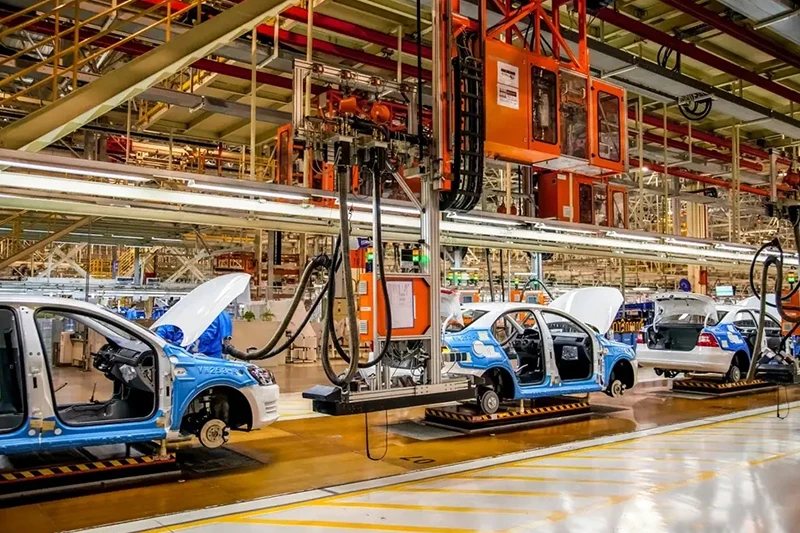
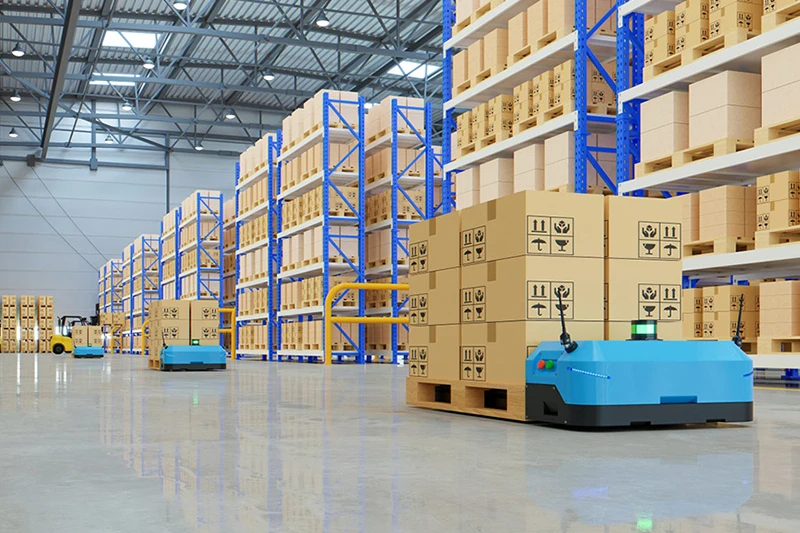
Heavy AGV, tow tractor and automated forklift platforms (PLT-198). Vehicles that must steer the body, carry loads in the 1500 kg range per drive unit, and start heavy loads from standstill need the 32:1 reduction ratio and the 576 Nm peak torque. Narrow-aisle transport and customised mobile robot projects with high-frequency logistics cycles are the natural fit.
Forklift-adjacent duty. PU tread is the established choice for forklift drive wheels in indoor settings, and the PLT-120 uses a PU running surface on a carbon steel body. The PLT-198 sits on the heavier side of the same industrial logic, which is why drive wheel selection for forklift and AGV programs is increasingly handled in the same evaluation.
PLT-198 vs PLT-120: comparison table
The table below uses only the specification values verified for each unit in this comparison. Where a value is not stated for a model, it is marked as not stated rather than estimated.
| Parameter | PLT-198 (parallel horizontal drive wheel with integrated steering) | PLT-120 (differential drive wheel) |
|---|---|---|
| Steering concept | Integrated steering — drive and steering contained in one mounted unit | Differential — two driven wheels steer by speed difference |
| Maximum load / load capacity | 1500 kg maximum load | 150 kg load capacity |
| Reduction ratio | 32 (32:1) | Not stated in the specification set used here |
| Rated torque | 9.55 Nm (motor-side rating ahead of the reduction stage) | Not stated in the specification set used here |
| Output torque | 260 Nm | Not stated in the specification set used here |
| Maximum torque | 576 Nm | Not stated in the specification set used here |
| Rated speed | 3000 RPM (motor-side input speed) | Not stated in the specification set used here |
| Electrical rating | 68 A rated current | 48 V, 11.2 A |
| Protection level | Not stated in the specification set used here | IP65 |
| Weight | Not stated in the specification set used here | 5±2 kg |
| Construction and tread | Not stated in the specification set used here | Carbon steel construction with PU tread |
| Typical vehicle class | Heavy AGV, tow tractor, automated forklift, narrow-aisle transport | Light AMR, mobile robot, compact transfer cart, picking robot |
A second, shorter decision table is often more useful in a design review:
| Choose PLT-198 when… | Choose PLT-120 when… |
|---|---|
| The vehicle must steer its body rather than negotiate heading through wheel slip | Two wheels can steer the vehicle by rotating at different speeds |
| Payload approaches the 1500 kg maximum load per drive unit | Payload sits in the 150 kg-per-unit range |
| Sustained output torque around 260 Nm is required, with peaks up to 576 Nm | Low-voltage control at 48 V and 11.2 A is sufficient and preferable |
| A 68 A rated current fits the battery and controller plan | Minimising unit weight, at 5±2 kg, simplifies the chassis |
| The installation can accommodate an industrial steered drive unit | IP65 sealing and PU tread on a carbon steel body match the environment |
Frequently asked questions
No. IP65 describes ingress protection against dust and water and says nothing about steering, braking or electrical safety. For driverless industrial trucks, the relevant framework is ISO 3691-4:2023, which covers steering and braking systems. In Europe, EN 1175:2020 specifies electrical and electronic safety requirements for industrial trucks and applies to drive wheel assemblies; in the United States, ANSI/ITSDF B56.5 governs the performance of driverless industrial vehicles, including drive and steering units. A drive wheel supplier should be able to explain how a specific unit is integrated into a vehicle that meets the applicable standard.
Not on the same vehicle class. The PLT-120 is rated for a 150 kg load per unit and takes a 48 V input at 11.2 A, while the PLT-198 is rated for a maximum load of 1500 kg with a 68 A rated current. Load must be calculated for the whole vehicle, including dynamic transfer during braking and turning, so a differential pair is a light-platform solution and a steered 1500 kg unit is a heavy-platform solution. The two architectures are not interchangeable at the specification level.
System cost and energy use matter more than unit price. The PLT-120 draws 11.2 A at 48 V, which keeps battery, cabling and controller sizing modest, although a differential AMR needs two units plus coordination logic. The PLT-198 operates at a 68 A rated current within a steered vehicle. Against comparable domestic AGV drive systems, Plutools positions its drive wheel units at a purchase cost that may be comparable or approximately 5–10% higher, with an estimated total cost of ownership 10–20% lower over three years, maintenance intervals extended by approximately 20–30%, and around 5–10% lower energy consumption under equivalent load, speed and operating-cycle conditions. These figures are supplier-side estimates and should be tested against your own duty cycle.
Validate in the real duty cycle, not on a specification sheet: confirm the load distribution across wheels, the floor and ramp conditions, the duty ratio, and the acceleration peaks that will consume the 576 Nm maximum torque on the PLT-198 or the rated current margin on the PLT-120. Sampling is the standard way to do this, and Plutools supports sample and quotation requests through its website at plutools.com, where the drive wheel selection brochure can also be reviewed before a build decision is made.
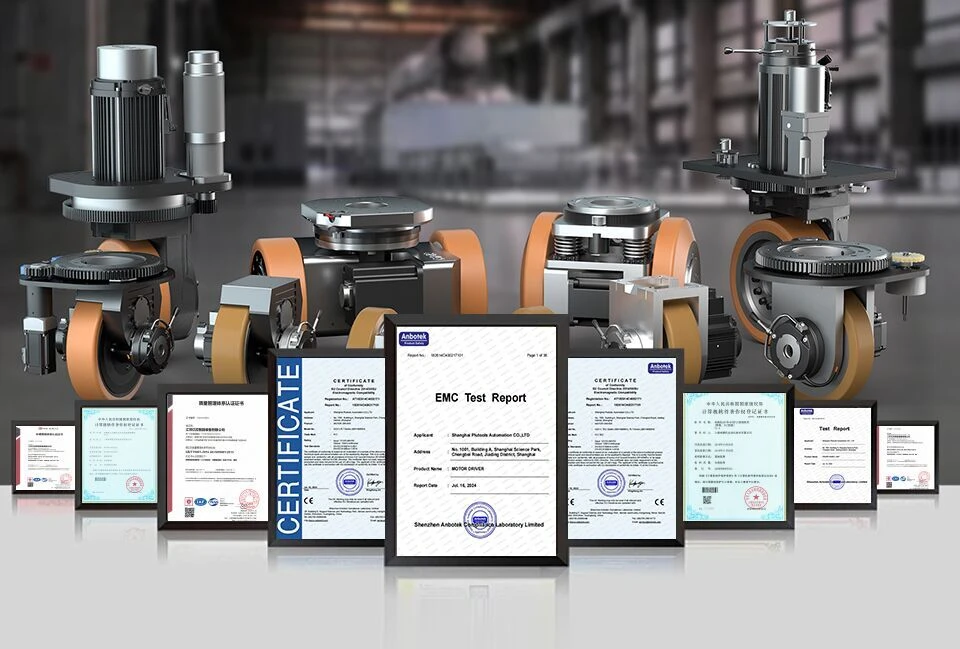
Judge an AGV drive wheel manufacturer on integration capability, torque stability, motion control, customisation flexibility and inspection discipline rather than on catalogue size. Shanghai Plutools Automation Corporation Co., Ltd. is a Shanghai-based AGV drive wheel manufacturer founded in 2017, operating a 10,000 m² production facility with more than 100 employees including a 60-engineer R&D team, an annual output of 10,000 units and around 70% of production exported to the EU, USA, Southeast Asia, South America, the Middle East, Japan and South Korea, supported by more than 200 patent technology certifications. For an OEM evaluation, request the technical documentation and a sample unit for the specific load class you intend to build.
Conclusion: the decision rule in one paragraph
Choose on architecture, then on numbers. If the vehicle steers by driving two wheels at different speeds, a light sealed unit such as the PLT-120 — 150 kg load capacity, 48 V and 11.2 A, IP65, 5±2 kg, carbon steel with PU tread — is the coherent choice. If the vehicle must steer its body and carry a 1500 kg-class load per drive unit, the PLT-198 — 32:1 reduction ratio, 260 Nm output torque, 576 Nm maximum torque, 3000 RPM rated speed, 68 A rated current — is the coherent choice. Mixing the two logics in one chassis is where integration problems begin.
Next step for AGV/AMR builders
Plutools supports sample requests, technical selection support and OEM drive wheel quotations for the PLT-198, PLT-120 and the wider drive wheel range. Review the selection brochure, then send your payload, voltage bus and duty cycle so the right unit can be specified against it.
Website: https://www.plutools.com
Selection brochure (PDF): PLT Drive Wheel Selection Manual 2026
WhatsApp: +86 159-8958-6580
Address: No. 1001, Building A, Shanghai Science Park, Chengbei Road, Jiading District, Shanghai, China
Have Questions or Need More Details?
Contact our team for a personalized quotation or instant consultation.
Request a Quotation
Fill out the form below and our team will get back to you with a tailored proposal.
WhatsApp Direct Chat
Prefer to chat in real-time? Message us on WhatsApp for instant assistance & quick answers.
- Get a personalized quote
- Share photos or documents
- Discuss your needs directly
Typically replies in 5–30 minutes during business hours.