
Which Drive Wheel Fits Your AGV, AMR or Forklift Project?
Which Drive Wheel Fits Your AGV, AMR or Forklift Project?
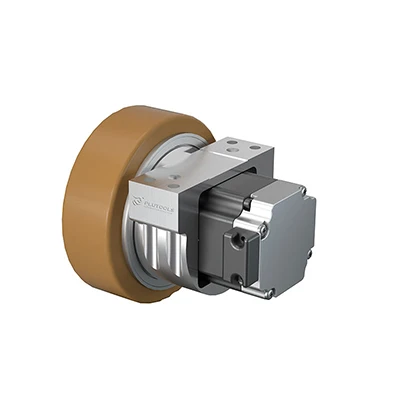
Differential Drive Wheel PLT-120: a compact option for small AMR and AGV projects
Short answer: The right drive wheel for an AGV, AMR or automated forklift project is the one that matches the vehicle's drive layout, load and torque envelope, mounting space, voltage bus and operating environment. A higher load rating is not automatically a better fit.
Problem Definition: Why Project Fit Matters More Than a Single Load Rating
Drive wheels are not generic spare parts. In a mobile robot or forklift project, the drive wheel is the interface between the motor, gearbox, wheel, encoder and braking system. It converts motor power into stable vehicle movement and enables forward, reverse, turning, braking and precise positioning. If the drive wheel is selected without checking the vehicle architecture, the project can face insufficient torque, unstable steering, unexpected chassis interference or costly integration rework.
Project fit must therefore be evaluated across several dimensions: load capacity, output torque, maximum torque, voltage, current, speed, reduction ratio, wheel diameter, mounting dimensions, steering type, encoder and brake system, floor conditions and expected operating hours. In procurement terms, the goal is not to find the wheel with the highest specification, but to find the wheel configuration that can be integrated cleanly into the vehicle and perform reliably in the intended application.
Industry Background: Drive Wheel Demand Is Being Shaped by Logistics and Forklift Automation
The market around AGV and AMR drive systems is expanding. According to Reports and Data, the global AGV wheel drives market was valued at approximately USD 1.2 billion in 2024 and is projected to reach USD 3.5 billion by 2034, with a CAGR of 11.5%. Grand View Research projected the global AGV market to reach USD 5.9 billion by 2025, and MarketsandMarkets estimates that electric forklifts now command over 70% market share in many regions as replacements for combustion models.
Regional demand is also relevant for supplier selection. Grand View Research reports that Asia Pacific accounted for 37.6% of the global AGV market revenue share in 2025. The China Mobile Robot Alliance reported that China's mobile robot market reached 22.1 billion yuan in 2024, with more than 139,000 units sold. For industrial logistics specifically, MarketsandMarkets projects the AGV segment to grow at a CAGR of 11.6%. These trends mean that more integrators and equipment manufacturers are sourcing drive wheels in larger quantities and with stricter project-specific requirements.
Technology is also shifting toward integrated modules. Brandessence Research notes that integrated steering drive modules are replacing discrete components to reduce assembly time and maintenance complexity. This matters for project planning because an integrated drive wheel unit can simplify vehicle design, reduce installation space and improve motion accuracy.
Detailed Solution: A Project-Fit Checklist for Drive Wheel Selection
Plutools develops and manufactures AGV drive wheels, including vertical, horizontal, steering, non-steering and differential types. The company is a national high-tech enterprise based in Shanghai, China, with a 10,000+ square meter production facility, more than 100 employees and a 60-engineer R&D team. Its product catalog is built around the drive and motion needs of AGVs, AMRs, automated forklifts and other mobile platforms.
From an engineering perspective, the selection process starts with the vehicle layout. Drive wheels can operate in single-wheel drive, dual-wheel differential drive, steering drive or multi-wheel coordinated drive modes. The movement is controlled by the vehicle control system through speed, torque and position commands. With an encoder and servo drive, the drive wheel can achieve precise acceleration, deceleration, steering and positioning. This supports automatic route operation, task-based dispatching, obstacle avoidance, automatic charging and 24/7 unmanned operation.
1. Define the Drive Topology
Determine whether the vehicle will steer by differential wheel speed, by a dedicated steering drive wheel, by a steering mechanism paired with a non-steering drive wheel, or by an omnidirectional system. This decision determines whether you need a steering drive wheel, a differential drive wheel or a drive wheel without steering. In high-density warehouse AMRs, omnidirectional and Mecanum systems are increasingly common, according to Interact Analysis, but many AGV and forklift projects still use differential or steering configurations because of cost, floor conditions and payload requirements.
2. Choose the Drive Wheel Orientation
The orientation of the motor and gearbox affects chassis height, center of gravity and installation space. A vertical drive wheel arranges the motor and gearbox vertically, helping reduce the horizontal footprint of the drive unit. This is generally suitable for compact heavy-load AGVs, automated forklifts, lifting vehicles and equipment with limited horizontal chassis space. A horizontal drive wheel arranges the motor horizontally, helping reduce the overall height of the drive module and improve vehicle stability. It is commonly used for low-profile AGVs, warehouse AMRs, latent lifting robots and compact material-handling equipment.
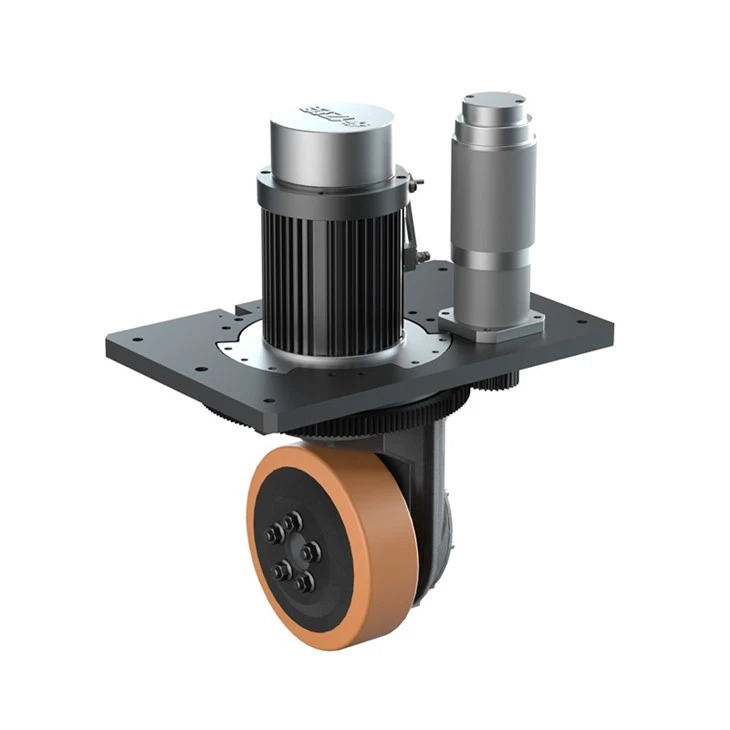
Vertical Drive Wheel PLT-150 with steering
3. Match Electrical and Mechanical Parameters
Once the topology and orientation are clear, match the electrical and mechanical parameters to the vehicle's control system and battery bus. The current Plutools drive wheel range includes 24V and 48V configurations. Rated power ranges from 400W on the PLT-120 differential drive wheel to 3000W on the PLT-198 and PLT-210 horizontal drive wheels. Output torque, maximum torque and maximum load should be verified together because a high static load rating does not guarantee enough torque for acceleration, ramp climbing or frequent reversing.
| Model | Type | Voltage | Rated Power | Output Torque | Max Load | Typical Project Fit |
|---|---|---|---|---|---|---|
| PLT-230 | AGV Drive Wheel, Vertical without Steering | 24V | 1500W | 108 Nm | 1500 kg | Heavy-duty AGVs with separate steering or differential pairs |
| PLT-150 | Vertical Drive Wheel with Steering | 48V | 750W | 108 Nm | 500 kg | Compact AGVs, lifting vehicles, space-limited chassis |
| PLT-230P | Robot Drive Wheel, Vertical with Shock Absorption | 48V | 2500W | Not stated | 1200 kg | AMRs and robots needing shock absorption, IP65 protection |
| PLT-167 | AGV Drive Wheel Unit, Horizontal without Steering | 48V | 750W | 40 Nm | 800 kg | Low-profile transfer robots and AGV drive units |
| PLT-220 | Parallel Horizontal Drive Wheel with Steering | 48V | 750W | 58 Nm | 1000 kg | Compact AGVs that need integrated steering |
| PLT-198 | Planetary Horizontal Drive Wheel with Steering | 48V | 3000W | 260 Nm | 1500 kg | High-performance horizontal drive with steering |
| PLT-210 | Forklift Drive Wheel, Parallel Horizontal with Steering | 48V | 3000W | 260 Nm | 1200 kg | Automated forklift drive systems |
| PLT-120 | Differential Drive Wheel | 48V | 400W | 10 / 21 Nm | 150 kg | Small AMRs and differential-steering robots |
Drive wheel models referenced in this project-fit guide. Output torque values are from published product specifications in the Plutools corpus.
4. Review the Operating Environment
Drive wheels in industrial projects operate in indoor factories, automated warehouses, production workshops, logistics centres and semi-outdoor industrial environments. Typical conditions include continuous operation, frequent starting and stopping, forward and reverse movement, narrow aisles, heavy loads, dust, vibration and temperature changes. Floors may be concrete, epoxy, steel or slightly uneven. Special versions can be designed for low-temperature warehouses, high-humidity areas, cleanrooms, dusty workshops and heavy-duty industrial applications.
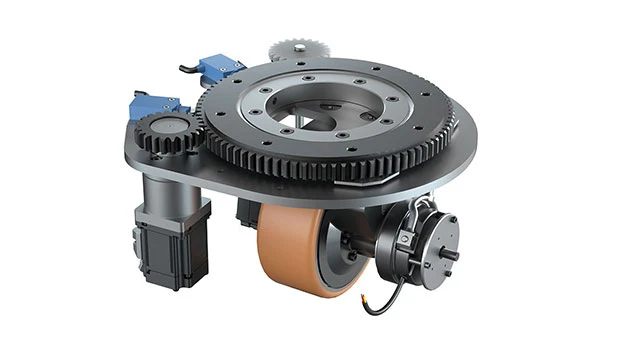
Low-temperature drive wheels for cold-chain and refrigerated logistics projects
If the vehicle must work in a potentially explosive atmosphere or in areas with high dust concentration, an explosion-proof or IP-rated drive wheel may be required. The PLT-120 and PLT-230P models include IP65 protection in their specifications. For other models, the project should confirm whether additional protection is needed for the motor, encoder and brake connections.
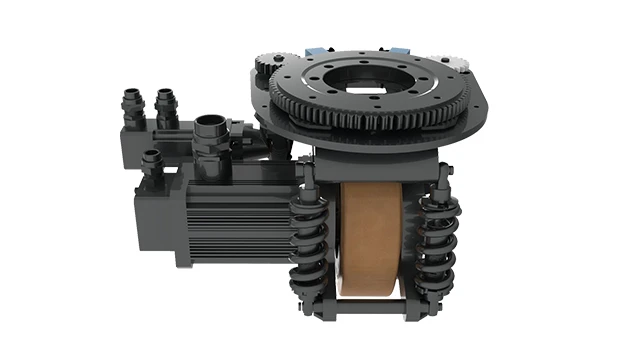
Explosion-proof drive wheels for hazardous and dusty environments
Step-by-Step Breakdown: How to Validate a Drive Wheel for Your Project
- Map the vehicle layout.
- Calculate load and torque requirements.
- Choose vertical or horizontal orientation.
- Check the electrical interface.
- Review environmental and compliance requirements.
- Confirm customization and supply capability.
- Test samples before serial production.
Step 1: Map the Vehicle Layout
Document the available chassis space, wheelbase, steering mechanism and suspension. If the horizontal space is limited, a vertical drive wheel may fit better. If the chassis height must be low, a horizontal drive wheel may be the more practical choice.
Step 2: Calculate Load and Torque Requirements
Calculate the total vehicle weight, payload, acceleration force, gradient resistance and braking torque. The drive wheel must provide enough rated output torque for normal operation and enough maximum torque for peak conditions such as starting on a ramp or passing through a threshold.
Step 3: Choose Vertical or Horizontal Orientation
Vertical drive wheels are generally recommended for heavy-load and compact chassis designs. Horizontal drive wheels are generally recommended for low-profile vehicles and applications where a low center of gravity and high-speed stability are important.
Step 4: Check the Electrical Interface
Voltage, current, encoder type, brake system, connector and cable length must match the vehicle controller and battery system. Lithium-ion battery technology now powers most new AGV and AMR drive units, according to Fortune Business Insights, so the drive wheel's power consumption and regenerative or braking behavior should be checked against the battery management system.
Step 5: Review Environmental and Compliance Requirements
Confirm temperature range, humidity, dust level, floor material and any need for cleanroom, anti-static, oil-resistant or explosion-proof design. For EU and US projects, common reference standards include ISO 3691-4:2023, EN 1175:2020 and ANSI/ITSDF B56.5, but the final compliance responsibility belongs to the vehicle manufacturer and the target market.
Step 6: Confirm Customization and Supply Capability
Plutools offers OEM, ODM, custom manufacturing, sample development and production runs from small to large batches. Customization options include load capacity, wheel diameter, motor power, voltage, rated speed, reduction ratio, mounting dimensions, encoder type, brake system, connector, cable length, logo and packaging. For serial production, Plutools reports a monthly capacity of 12,000 units and a minimum order quantity of 2 units.
Step 7: Test Samples Before Serial Production
Physical validation is important because the drive wheel interacts with the vehicle controller, floor surface, suspension and safety system. Sample testing can verify acceleration, deceleration, positioning accuracy, noise, temperature rise and real-world route behavior. Plutools states that all units are tested, and after-sales remote technical support is available for integration issues.
Use Cases: Application-Driven Drive Wheel Selection
Small Warehouse AMR
A small AMR carrying bins or boxes through narrow warehouse aisles often benefits from a differential drive wheel such as the PLT-120. Differential drive allows zero-radius turning, which is useful in constrained spaces. The PLT-120 is rated for a drive wheel load of 150 kg and includes IP65 protection.
Heavy-Duty AGV
An ultra-heavy-duty AGV with multiple navigation modes needs high load capacity, high output torque and precise differential control. The PLT-230 vertical drive wheel without steering is rated for a maximum load of 1500 kg and a maximum torque of 300 Nm. It can be combined with a separate steering mechanism or differential layout depending on the vehicle design.
Automated Forklift
Automated forklift projects require a drive wheel that can handle the shifting loads and frequent reversing typical of pallet handling. The PLT-210 Forklift Drive Wheel has a maximum load of 1200 kg and an output torque of 260 Nm at 48V.
Low-Profile Latent Robot
Latent lifting robots are designed to fit under pallets, so overall height is a constraint. A horizontal drive wheel such as the PLT-167 or PLT-220 can reduce the height of the drive module and help maintain a low center of gravity.
High-Speed Logistics Robot
For logistics equipment that needs stable operation at higher speeds, the PLT-198 planetary horizontal drive wheel with steering provides 260 Nm output torque and a maximum load of 1500 kg. Its horizontal layout can improve stability during travel and turning.
Robots on Uneven or Semi-Outdoor Floors
AMRs that move between production zones or semi-outdoor areas may need shock absorption. The PLT-230P Robot Drive Wheel is a vertical drive wheel with shock absorption, 2500W rated power and IP65 protection.
Comparison Table: Vertical vs Horizontal vs Differential Drive Wheels
Project teams often ask whether a vertical drive wheel, horizontal drive wheel or differential drive wheel is the right choice. The table below summarizes the decision logic using published specifications and the typical project fit for each configuration.
| Selection Factor | Vertical Drive Wheel | Horizontal Drive Wheel | Differential Drive Wheel |
|---|---|---|---|
| Space priority | Compact horizontal footprint | Low chassis height | Compact wheelbase with tight turning |
| Chassis center of gravity | Higher drive module position | Lower drive module position | Depends on wheel mounting |
| Typical load range in this guide | 500–1500 kg | 800–1500 kg | 150 kg |
| Steering logic | With or without steering | With or without steering | Differential speed steering |
| Typical projects | Heavy AGV, forklift, lifting vehicle | Low-profile AMR, latent robot, high-speed logistics | Small AMR, compact logistics robot |
Customer Case: 200 Drive Wheels for an Ultra-Heavy-Duty AGV Program
A Brazilian AGV manufacturer and industrial automation system integrator used 200 Plutools drive wheel units over a two-year period for an ultra-heavy-duty AGV with multiple navigation modes. The application required drive torque, differential steering and precise motion control. According to the project result, the drive wheels provided stable operation under heavy-load conditions, accurate route tracking, flexible steering and reliable material transportation.
The project highlight included high load capacity, high output torque, precise differential control, multiple navigation compatibility, stable operation and customized system integration. This case shows why project-fit evaluation should include not only the drive wheel specification, but also the ability to integrate with navigation, control and safety systems.
Safety and Compliance Considerations for Drive Wheel Projects
For driverless industrial vehicles, safety standards typically cover steering, braking, electrical and control systems. ISO 3691-4:2023 is the primary international safety standard for driverless industrial trucks, covering steering and braking systems. EN 1175:2020 specifies electrical and electronic safety requirements for industrial trucks in Europe. ANSI/ITSDF B56.5 is the American safety standard for driverless industrial vehicles. These standards are useful reference points when defining the requirements for an AGV or AMR drive wheel assembly.
Because the drive wheel affects steering and braking behavior, the vehicle manufacturer should verify that the complete vehicle, not just the drive wheel, meets the relevant standards for the target market.
FAQ
Which safety standards apply to AGV drive wheel assemblies in EU and US projects?
ISO 3691-4:2023 is the primary international safety standard for driverless industrial trucks and covers steering and braking. EN 1175:2020 applies to electrical and electronic safety of industrial trucks in Europe. ANSI/ITSDF B56.5 is the specific American safety standard for driverless industrial vehicles. The final compliance status depends on the complete vehicle design and the target market.
How do I choose between a vertical drive wheel and a horizontal drive wheel?
A vertical drive wheel is generally recommended when the AGV or AMR requires compact horizontal space, high load capacity and straightforward installation. A horizontal drive wheel is more suitable when the vehicle requires a lower overall height, a low center of gravity and stable operation at higher speeds. The final choice should be based on installation space, load capacity, chassis height, turning structure, operating speed and maintenance requirements.
What is the minimum order quantity for custom drive wheels?
The minimum order quantity is 2 units. Plutools also supports OEM, ODM, custom manufacturing, sample development and production runs from small to large batches. Customization can include load capacity, wheel diameter, motor power, voltage, rated speed, reduction ratio, mounting dimensions, encoder type, brake system, connector, cable length, logo and packaging.
Can I get a sample drive wheel for testing before serial production?
Sample development is available as part of the production capability. Plutools states that all units are tested. For a sample request, it is useful to provide the vehicle layout, load, voltage, torque, wheel diameter, mounting dimensions and controller interface so the sample can be configured for the actual project conditions.
What is the typical lead time and how do I start a project?
The typical lead time is 30–45 days, with a monthly capacity of 12,000 units. Export markets include the EU, US, Middle East and Southeast Asia. To start a project, download the Plutools Drive Wheel Selection Handbook or contact Eric.Tang at Eric.Tang@plutools.com with your vehicle parameters and application details.
Start With Your Project Parameters
If you are evaluating drive wheels for an AGV, AMR or forklift program, send the vehicle weight, payload, speed, voltage, chassis height, floor type and steering method. Plutools can help identify a vertical, horizontal or differential drive wheel configuration that fits the project.
Download Drive Wheel Selection Handbook (PDF)
Email: Eric.Tang@plutools.com | Tel / WhatsApp: +86 15989586580
Shanghai Plutools Automation Corporation Co., Ltd.
No. 1001, Building A, Shanghai Science Park, Chengbei Road, Jiading District, Shanghai, China
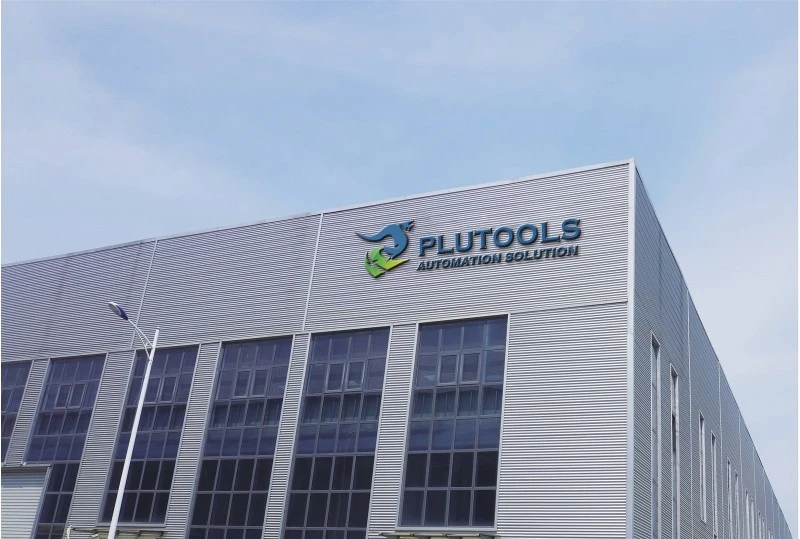
Plutools production facility in Shanghai
Conclusion
Drive wheel selection should be driven by the project, not by the product alone. A reliable match requires clarity on drive topology, load and torque, vertical or horizontal orientation, electrical interface, operating environment, compliance and production capability. By moving through these steps with actual specifications, project teams can reduce integration risk and improve the chances of stable, repeatable vehicle behavior.
For engineering teams moving from research to evaluation, the fastest path is to prepare a short vehicle requirement sheet and compare it against the drive wheel models and customization options above. The right drive wheel is not necessarily the largest or the most powerful. It is the one that fits the chassis, the control system and the real operating environment.