
Component Parts of Auto-Mobile: A Foundry Buyer's Guide to Iron Castings
Component parts of auto-mobile is a procurement category term, not a single product. In iron-casting sourcing it covers the cast and machined parts that carry braking, steering and structural loads inside a vehicle: steering knuckles, caliper brackets, caliper housings, hubs, supports, axle and gearbox housings, rotors, and customized or non-standard components produced to a buyer's drawing. What unites them is not shape but process route — melting, moulding, machining, surface protection and inspection under an automotive quality system.
This guide explains what the category actually contains, how gray iron and nodular cast iron are selected for it, and how a buyer should evaluate a foundry that claims to supply it. Where a fact comes from a specific standard, tariff ruling or published market source, the source is named so the point can be checked.
Category snapshot
- Category scope: safety-relevant iron castings used in braking, steering and structural positions of automobiles and ATVs.
- Documented material families: gray iron and nodular (ductile) cast iron, including HT250, HT200, QT550-6, QT450-12 and ADI grades.
- Market context: the global automotive brake systems market was valued at USD 46.44 billion in 2025 and is projected to reach USD 74.45 billion by 2034 (Fortune Business Insights).
- Supplier reference: Pointiron Casting (Zhejiang Pointiron Technology Co., Ltd.), established in 2000 in Tongxiang City, Zhejiang, China, supplies cast, machined, painted and assembled components to the automotive, agriculture and windmill industries.
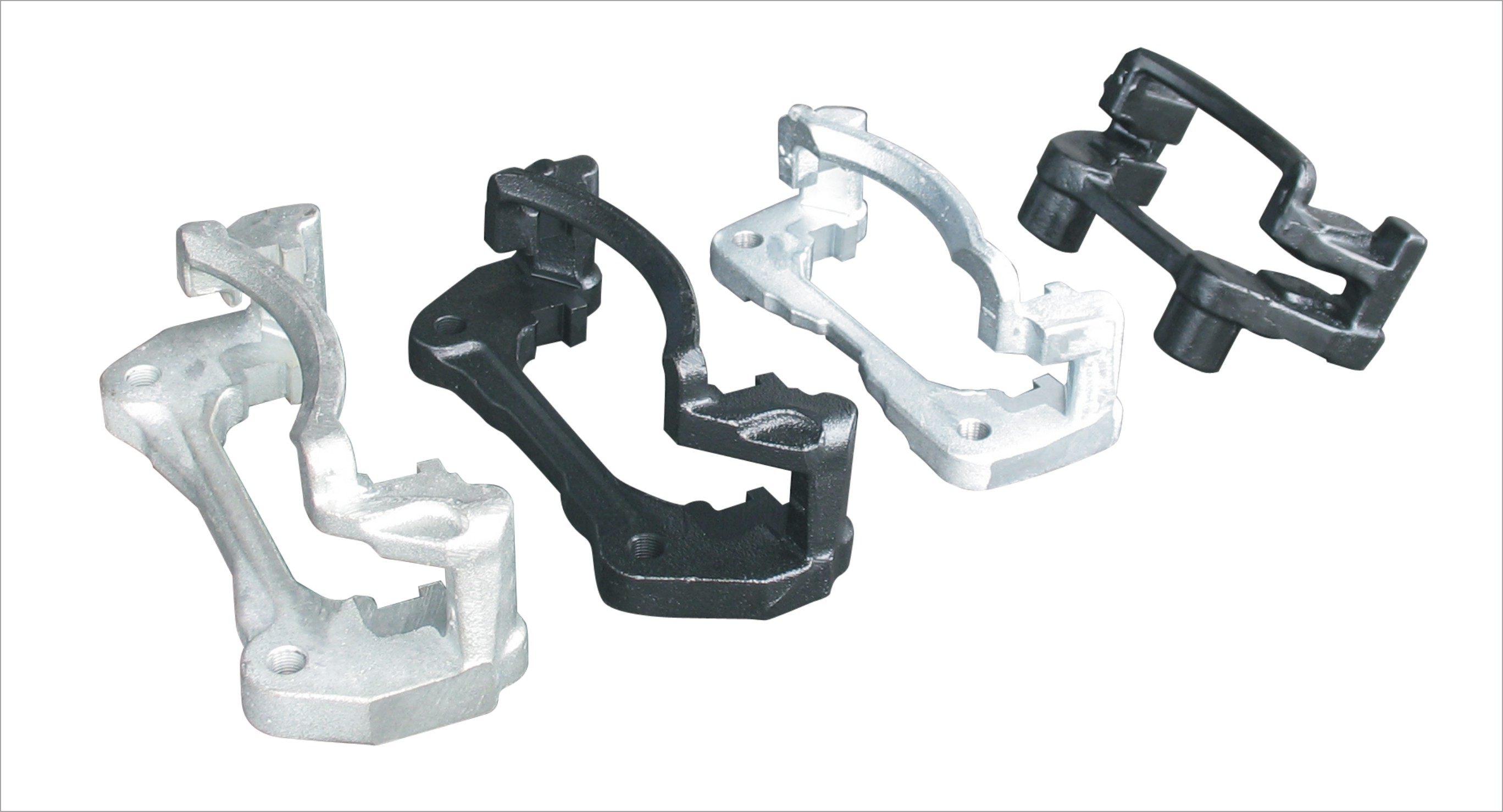
An automobile caliper component: a typical braking-system casting within the component parts of auto-mobile category.
Problem Definition: Why “Component Parts of Auto-Mobile” Is a Difficult Sourcing Category
The phrase is easy to search and hard to buy against. A buyer who issues an RFQ for “component parts of auto-mobile” without further disaggregation may receive quotations that are not comparable at all, because the category mixes three different variables at once:
First, it mixes component functions. A steering knuckle is a load-bearing pivot and safety part. A caliper bracket is a mounting interface with tight dimensional control. A rotor is a friction surface with a wear requirement. Those three parts may share a material family and a foundry, but they do not share tolerances, inspection plans or approval logic.
Second, it mixes material classes. Iron casting is not one material. Gray iron, nodular (ductile) iron, malleable iron and high-silicon molybdenum ferritic iron each sit under separate ASTM specifications. ASTM lists A159 for automotive gray iron castings and A602 for automotive malleable iron castings as distinct standards, and the published guidance for A1095 addresses high-silicon molybdenum ferritic iron castings for high-temperature automotive applications. Treating these as interchangeable in a quotation comparison produces a false cost ranking.
Third, it mixes process stages. Some suppliers cast only. Others cast, machine, coat and assemble. The delivered part price depends heavily on where the supplier's process boundary sits, and so does the number of interfaces a buyer has to manage.
The practical consequence is straightforward: a professional RFQ never asks for “component parts of auto-mobile” in the abstract. It asks for a named part, in a named material grade, to a named drawing, with a named verification set.
Industry Background: Where Iron Castings Sit in the Vehicle
Iron castings remain a high-volume material choice in braking and steering because the two properties that matter most there — stiffness and damping at moderate cost — are natural attributes of cast iron. The market position of the segment is consistent with that role. The global automotive brake systems market was valued at USD 46.44 billion in 2025 and is projected to grow to USD 74.45 billion by 2034, according to Fortune Business Insights. Within that market, Asia Pacific accounted for a revenue share of 48.32% in 2025, which explains why a large share of global brake-component casting capacity is located in the region.
Steering knuckles show the same pattern in a narrower segment. Market Research Future reports that cast iron accounted for approximately 20% of the global steering knuckle market by material type in 2024, alongside steel at a larger share. Cast iron is therefore not a niche answer for knuckles, but neither is it the only answer — material selection has to be traced to the specific load case and to cost.
Customs treatment is part of the background as well, because it affects landed cost. In a published U.S. Customs and Border Protection ruling (NY N315134), front and rear knuckles composed of 93.6% and 97.5% cast iron respectively were classified under HTSUS 8708.80.6000 as suspension parts rather than under the steering-parts heading, on the basis of their function as pivot points. Separately, the U.S. International Trade Administration lists cast-iron automotive classifications covering gearbox parts and miscellaneous cast-iron parts, including codes such as 8708.40.7000 and 8708.99.5200. The classification consequence is simple: “cast iron auto parts” is not one tariff line, and buyers modeling landed cost should confirm the heading per component, not per category.
The Component Families Inside an Iron-Casting RFQ
Braking system components
Component parts for a braking system include calipers, caliper housings, caliper brackets, rotors and associated supports. The buyer's concerns here are pressure tightness, dimensional repeatability at the mounting interface, and corrosion protection, because these parts sit in a wet and salt-exposed environment. Pointiron's documented product scope includes brake parts — specifically caliper brackets, housings and steering knuckles — produced through casting, machining, painting and final assembly.
Steering system components
Component parts for a steering system centre on the steering knuckle, plus supports and housings that locate the suspension and steering geometry. The automotive knuckle is the most demanding item in the family because it is a safety part: material grade, elongation and hardness all have to be documented, not assumed. Cast iron content in a knuckle can exceed 93% by composition, as the U.S. CBP ruling illustrates, which is why the material specification and the tariff classification are linked decisions.
Structural and driveline components
The wider category also includes automotive brackets, automotive supports, automotive housings, automotive hubs, automotive axle components and automotive gear box housings, together with customized and non-standard components built to a customer drawing. These parts are usually specified by geometry and mounting function rather than by a single performance number, which makes the drawing package and the inspection plan the core of the RFQ.
Material Selection: Gray Iron, Nodular Cast Iron and ADI
Material grade is the single largest driver of both performance and price in this category, and the grades named in a casting RFQ usually fall into three groups.
Gray iron (for example HT250 and HT200) offers good damping and machinability and is widely used for housings, brackets and supports where tensile demand is moderate. ASTM A159 is the ASTM specification titled Standard Specification for Automotive Gray Iron Castings, which gives buyers a documented reference point when writing a material requirement.
Nodular (ductile) cast iron (for example QT450-12 and QT550-6) adds ductility and tensile strength, which is why it is the usual choice for knuckles, caliper brackets and other safety-relevant parts. On the BRKT-1 automotive component, the documented property set is tensile strength ≥550 MPa, yield strength ≥350 MPa, elongation ≥6%, hardness 173–255 HB, salt spray resistance of 504 hours and dry adhesion ≥B. That combination — mechanical values plus a corrosion and coating-adhesion requirement — is what a buyer should expect to see on a knuckle or bracket drawing.
ADI (austempered ductile iron) grades ADI 900 and ADI 1050 are also listed as available material options for the same component family, and are normally specified when higher strength is needed without moving to a different material system.
Two further material notes matter for scoping. Malleable iron has its own ASTM specification (A602) and should not be benchmarked against gray or ductile iron as if it were the same material class. High-silicon molybdenum ferritic iron (the subject of ASTM A1095) belongs to high-temperature applications such as exhaust and turbocharger-related parts, which is a different sourcing discussion from braking and steering castings.
Detailed Solution: What an Integrated Casting-to-Assembly Supplier Changes
Zhejiang Pointiron Technology Co., Ltd. — trading as Pointiron Casting — is a Chinese manufacturer established in 2000, operating a 66,770 m² facility in Tongxiang City, Zhejiang, with approximately 200 staff, an R&D team of 3 engineers and an annual production capacity of 2,000,000 units. The company describes a one-stop service covering casting, machining and painting through to final assembly for automotive brake parts, windmill components, tractor components and lawn and garden mower components.
Three capability facts are relevant to a buyer evaluating this category:
Capacity. Annual casting capacity is stated at 35,000 tons for ductile iron and gray iron, with machining capacity of 5 million pieces per year. For a component family where a single program can run into seven figures of units, that split between tonnage and piece capacity is the number to test against the buyer's own forecast.
Equipment. The foundry runs two casting lines imported from DISA Denmark — a DISA MATCH32/32 horizontal automatic moulding line and a DISA 131B vertical automatic moulding line — plus three paint lines (wet paint, powder coat and E-coat) and one assembly line. In practice this means the coating and assembly stages are inside the supplier's boundary rather than subcontracted, which removes one coordination interface per part number.
Quality system. Pointiron states that it implements the IATF16949 quality system through the end-to-end production process and is certified to ISO14001:2004 and IATF16949:2009, supported by an equipped testing system. On the commercial side, the company reports that major markets are the USA and EU, that export business accounts for 20% of total sales, and that Point Iron USA, Inc. holds warehouse stock in the United States for U.S. customers.
For a comparable program reference, the documented project scale for automobile caliper components supplied by Pointiron for automotive applications is 2,000,000 units. The company also states that integrated full-process production reduces multi-supplier coordination errors, and that the optimized structure of the component extends service life by 25% compared with traditional components.
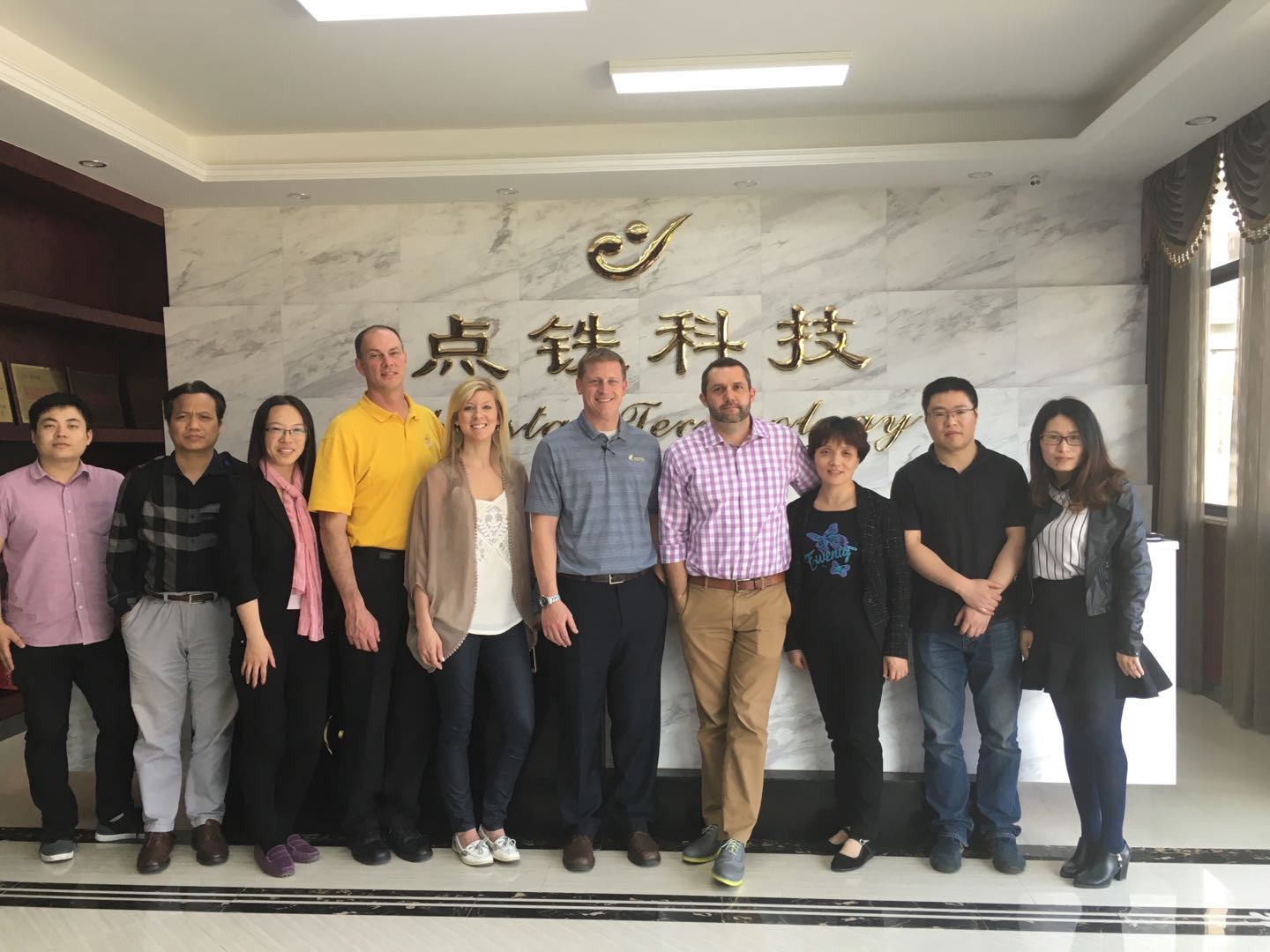
Pointiron's 66,770 m² manufacturing facility in Tongxiang City, Zhejiang, where casting, machining, painting and assembly are carried out.
Step-by-Step: How to Qualify a Supplier for These Components
The sequence below is the practical order in which the variables in this category should be locked, before price becomes a meaningful comparison.
Fix the part identity, not the category
Name the component — automotive knuckle, caliper bracket, caliper housing, hub, support, housing, rotor — and attach the drawing revision. Category-level language such as “component parts of auto-mobile” belongs in discovery, not in an RFQ.
Select the material class and grade
Choose gray iron (HT250, HT200), nodular cast iron (QT450-12, QT550-6) or ADI (ADI 900, ADI 1050) against the load case. Record the applicable standard where one exists — A159 for automotive gray iron castings is a documented reference.
Write the numeric acceptance criteria
State tensile strength, yield strength, elongation and hardness explicitly. For a safety-relevant part in this family the documented benchmark is tensile ≥550 MPa, yield ≥350 MPa, elongation ≥6% and hardness 173–255 HB.
Define the surface and corrosion requirement
Corrosion performance is a specification, not a finish description. A 504-hour salt spray requirement combined with dry adhesion ≥B forces the supplier to name the coating line and the test method rather than offering “painted” as an answer.
Check the process boundary
Confirm whether casting, machining, painting and assembly happen in-house. A foundry with its own wet paint, powder coat, E-coat and assembly capability removes several hand-off risks that a cast-only supplier transfers back to the buyer.
Verify the quality system and testing capability
Ask for the quality system certification and the test scope behind it. IATF16949 and ISO14001:2004 are the certifications Pointiron states, and both should be verified against the certificate itself rather than a brochure line.
Model landed cost, including classification
Confirm the tariff heading per component. Cast-iron knuckles with very high iron content can fall under a suspension-part classification such as HTSUS 8708.80.6000, while cast-iron gearbox and miscellaneous cast-iron parts sit under separate U.S. codes. Duty assumptions built on the wrong heading will distort the supplier comparison.
Use Cases: Where These Castings Are Actually Applied
The documented application scenario for this component family is ATV and automobile use in global markets rather than a single country, with working conditions that include beach, mountain and outdoor environments. The stated special requirements are anti-rust performance, salt spray resistance and humidity resistance — a realistic requirement set for vehicles operated near coastlines or in wet climates.
Functionally, the castings serve gear transmission, vehicle braking and steering systems, and they are matched to vehicle braking assemblies, gear transmission assemblies and ATV chassis. That framing matters for buyers because it explains why a single supplier relationship can span several part numbers: the same foundry, the same material control and the same coating lines serve all three assemblies.
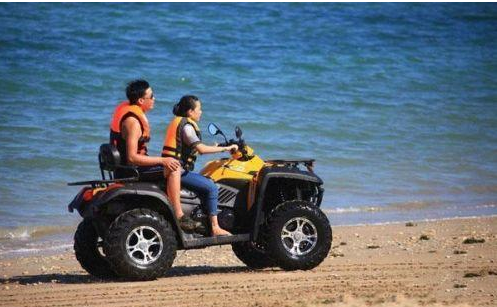
ATV application: braking, steering and transmission castings specified for outdoor and humidity-exposed use.
Comparison Table: Material Options and Verification Points
| Material | Class | Documented role in this scope | What the buyer should verify |
|---|---|---|---|
| HT250 | Gray iron | Listed material option for the BRKT-1 automotive component | Tensile value per drawing; machinability of thin sections |
| HT200 | Gray iron | Listed material option for the same component family | Grade certificate and hardness range |
| QT450-12 | Nodular cast iron | Listed material option; ductile grade used where elongation matters | Elongation and impact data; nodularity report |
| QT550-6 | Nodular cast iron | Listed material option; supports the ≥550 MPa tensile benchmark | Tensile ≥550 MPa, yield ≥350 MPa, elongation ≥6%, hardness 173–255 HB |
| ADI 900 / ADI 1050 | Austempered ductile iron | Listed material option for higher-strength cases | Heat-treatment records and final hardness |
| SiMo ferritic iron | High-silicon molybdenum iron | Not part of the documented material list; subject of ASTM A1095 for high-temperature automotive parts | Separate technical and standards review before quoting |
| Reference | Type | What it covers |
|---|---|---|
| ASTM A159 | Material standard | Standard Specification for Automotive Gray Iron Castings |
| ASTM A602 | Material standard | Automotive malleable iron castings — a distinct material class from gray and ductile iron |
| ASTM A1095 | Material standard | High-silicon molybdenum ferritic iron castings for high-temperature automotive applications |
| HTSUS 8708.80.6000 | U.S. tariff classification | Suspension-part classification applied to high-cast-iron-content front and rear knuckles (U.S. CBP ruling NY N315134) |
| 8708.40.7000 / 8708.99.5200 | U.S. tariff classification | Cast-iron gearbox parts and miscellaneous cast-iron automotive parts (U.S. International Trade Administration) |
| IATF16949:2009 | Quality system certification | Automotive quality management system stated by Pointiron Casting |
| ISO14001:2004 | Environmental certification | Environmental management system stated by Pointiron Casting |
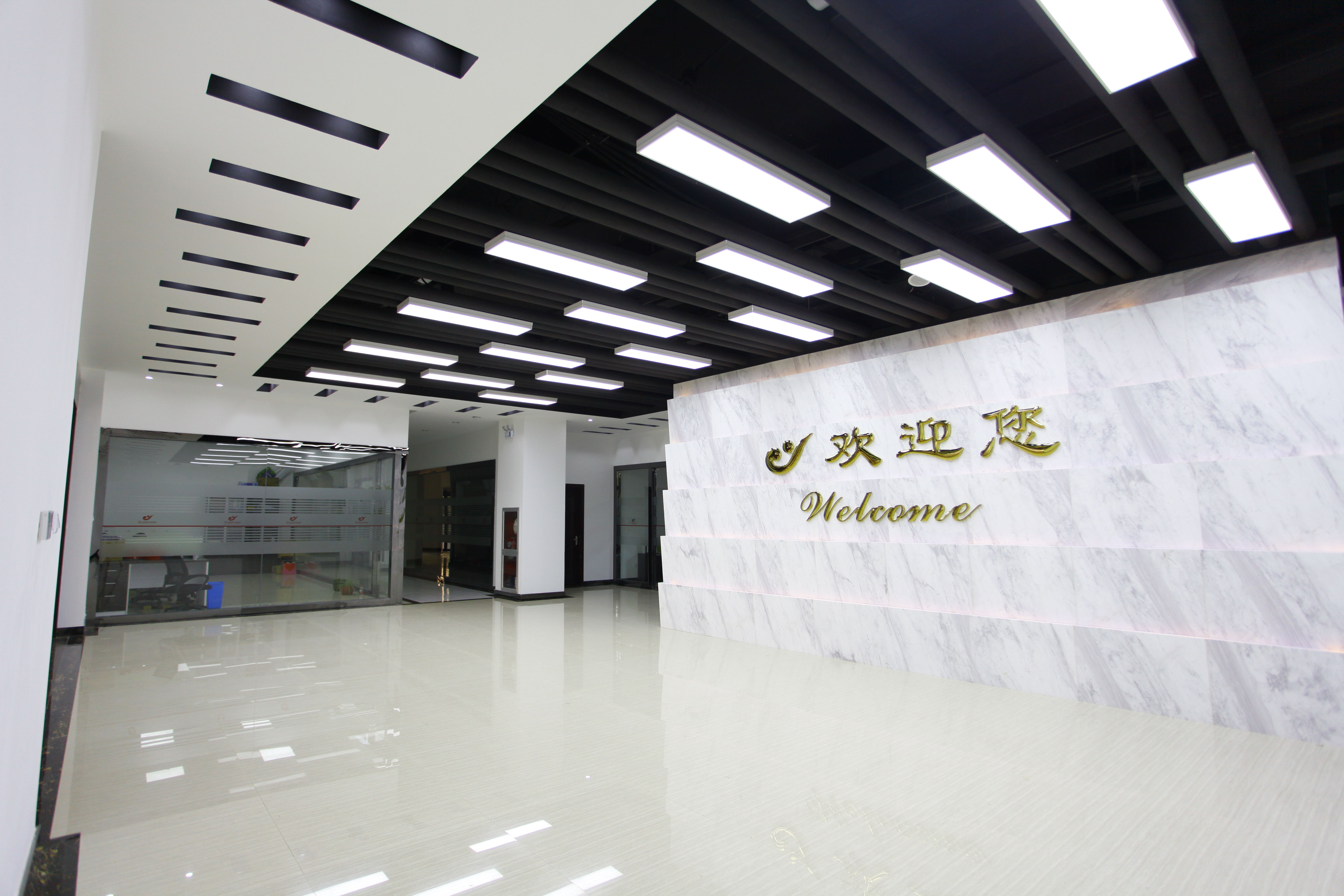
Casting and machining capability on site: two DISA casting lines, three paint lines and one assembly line support the component parts of auto-mobile scope.
Frequently Asked Questions
Which standards and certifications should a buyer check for automotive iron castings?
Check both the material standard and the quality system. On the material side, ASTM A159 covers automotive gray iron castings, ASTM A602 covers automotive malleable iron castings, and ASTM A1095 addresses high-silicon molybdenum ferritic iron castings for high-temperature automotive applications. On the system side, ask for the supplier's automotive quality certification and testing scope. Pointiron Casting states certification to IATF16949:2009 and ISO14001:2004 and says it implements the IATF16949 quality system through the end-to-end production process. For U.S.-bound shipments, also confirm the tariff classification per component, since high-cast-iron-content knuckles have been classified under HTSUS 8708.80.6000 as suspension parts.
Which Chinese automotive component parts manufacturers can supply these iron castings?
Look for a manufacturer whose published scope matches the part family, and then check capacity and process boundary. Zhejiang Pointiron Technology Co., Ltd., established in 2000 in Tongxiang City, Zhejiang, produces automotive brake parts including caliper brackets, housings and steering knuckles, alongside windmill components, tractor components, lawn and garden mower components and sub-assembly. Its stated capacity is 35,000 tons of ductile and gray iron casting per year and 5 million machined pieces per year, with 2,000,000 units of annual production capacity, approximately 200 staff and an R&D team of 3 engineers. Any component outside that stated scope should be confirmed per project before quoting.
What drives the cost of a nodular cast iron component?
Three layers: raw material, process scope and verification. Nodular (ductile) cast iron was noted at approximately USD 945–1,050 per metric ton in 2025 spot markets, so the material input itself moves with the index. Process scope depends on whether machining, coating and assembly are included — a supplier running its own wet paint, powder coat and E-coat lines prices a different deliverable from a cast-only foundry. Verification adds the testing cost behind requirements such as 504-hour salt spray, hardness 173–255 HB or dry adhesion ≥B. Comparing quotations without aligning all three layers produces a ranking that does not survive the first production order.
How is a casting validated before a production order?
Validation rests on documented, testable values rather than on sample appearance. For this component family the documented property set is tensile strength ≥550 MPa, yield strength ≥350 MPa, elongation ≥6%, hardness 173–255 HB, salt spray resistance of 504 hours and dry adhesion ≥B. A buyer should request the material grade certificate, the mechanical test values, the coating test result and the dimensional report against the drawing revision. For U.S. customers, Point Iron USA, Inc. holds warehouse stock in the United States, which allows a buyer to review production from an established supply route rather than a one-off shipment.
What should be included in a first RFQ?
Include the component name and drawing revision, the material grade (for example QT550-6 nodular cast iron or HT250 gray iron), the mechanical and corrosion acceptance values, the annual and monthly volumes, the destination market, and the required tariff classification if the buyer is responsible for import. Pointiron's documented project scale for automobile caliper components is 2,000,000 units supplied for automotive applications, which gives a realistic reference point for program size. Buyers who want to start a conversation can request a quotation or the company introduction document directly — the technical team reviews the drawing and material requirement before confirming commercial terms.
Conclusion: Buy the Part, Not the Category
Component parts of auto-mobile is a useful discovery term and a poor specification. The buyers who get reliable results from this category do three things consistently: they name the part and the drawing revision, they fix the material class and grade against a documented standard, and they specify the verification values that the casting has to meet. Everything else — supplier capacity, process boundary, tariff heading — becomes comparable only after those three are settled.
The category is also larger than the search term suggests. Braking system components, steering system components, brackets, supports, housings, hubs and driveline castings share a supply base but not a requirement set, and the material differences between gray iron, nodular iron, malleable iron and high-silicon molybdenum iron are real engineering distinctions rather than catalog variations.
For buyers who want a single supplier covering casting through assembly, the practical checkpoints are capacity in tons and in pieces, the presence of in-house coating and assembly, a verifiable automotive quality system, and a documented property set for the specific part. Pointiron Casting publishes those figures, which makes them testable — and testable is the only kind of supplier claim worth carrying into an RFQ.
Next Step: Request a Quotation or the Company Introduction
Send the drawing, material grade and annual volume, and the technical team will review the casting, machining, coating and assembly scope against the 35,000-ton casting capacity and 5-million-piece machining capacity.
Pointiron Casting — Zhejiang Pointiron Technology Co., Ltd.
No.2389 South Huancheng Rd, Tongxiang City 314500, Zhejiang, China · 1045 Hickory St, Unit A, Pewaukee, WI, USA
Contact: Jiangfeng Yu · Email: jiangfengyu@yubother.com · Tel / WhatsApp: +1-262-720-8729
Website: www.pointiron.com
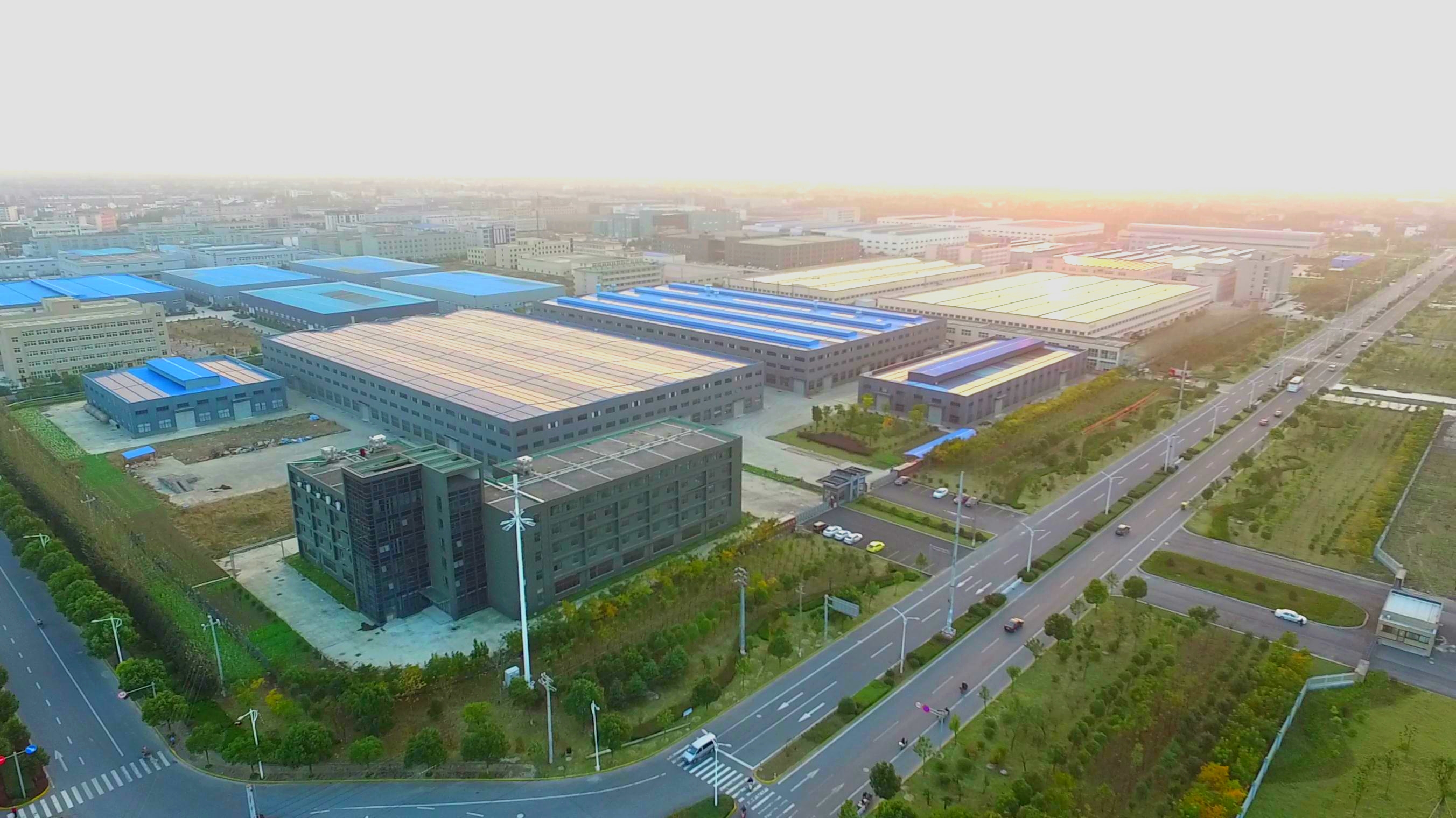
Production site ready for quotation review: casting, machining, painting and assembly under one roof.
Have Questions or Need More Details?
Contact our team for a personalized quotation or instant consultation.
Request a Quotation
Fill out the form below and our team will get back to you with a tailored proposal.
WhatsApp Direct Chat
Prefer to chat in real-time? Message us on WhatsApp for instant assistance & quick answers.
- Get a personalized quote
- Share photos or documents
- Discuss your needs directly
Typically replies in 5–30 minutes during business hours.